
Market Report · May 18, 2026

This market report covers trends, opportunities, and forecasts in the global photo printing market to 2031 by technology (film printing and digital printing), end use industry (instant kiosk, online stores, retail, and over the counter), and region (North America, Europe, Asia Pacific, and the Rest of the World)
We'll send your sample report shortly.
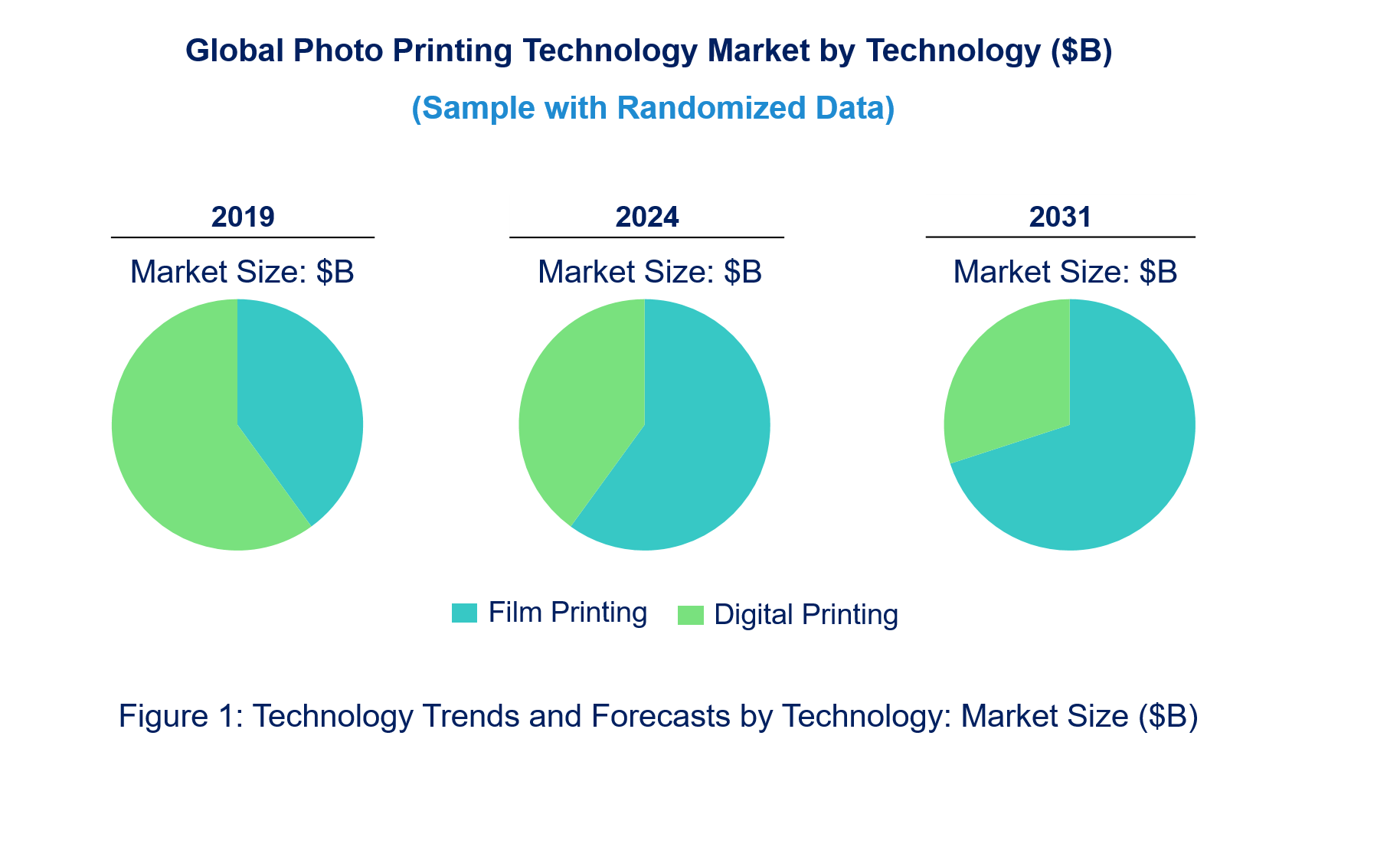
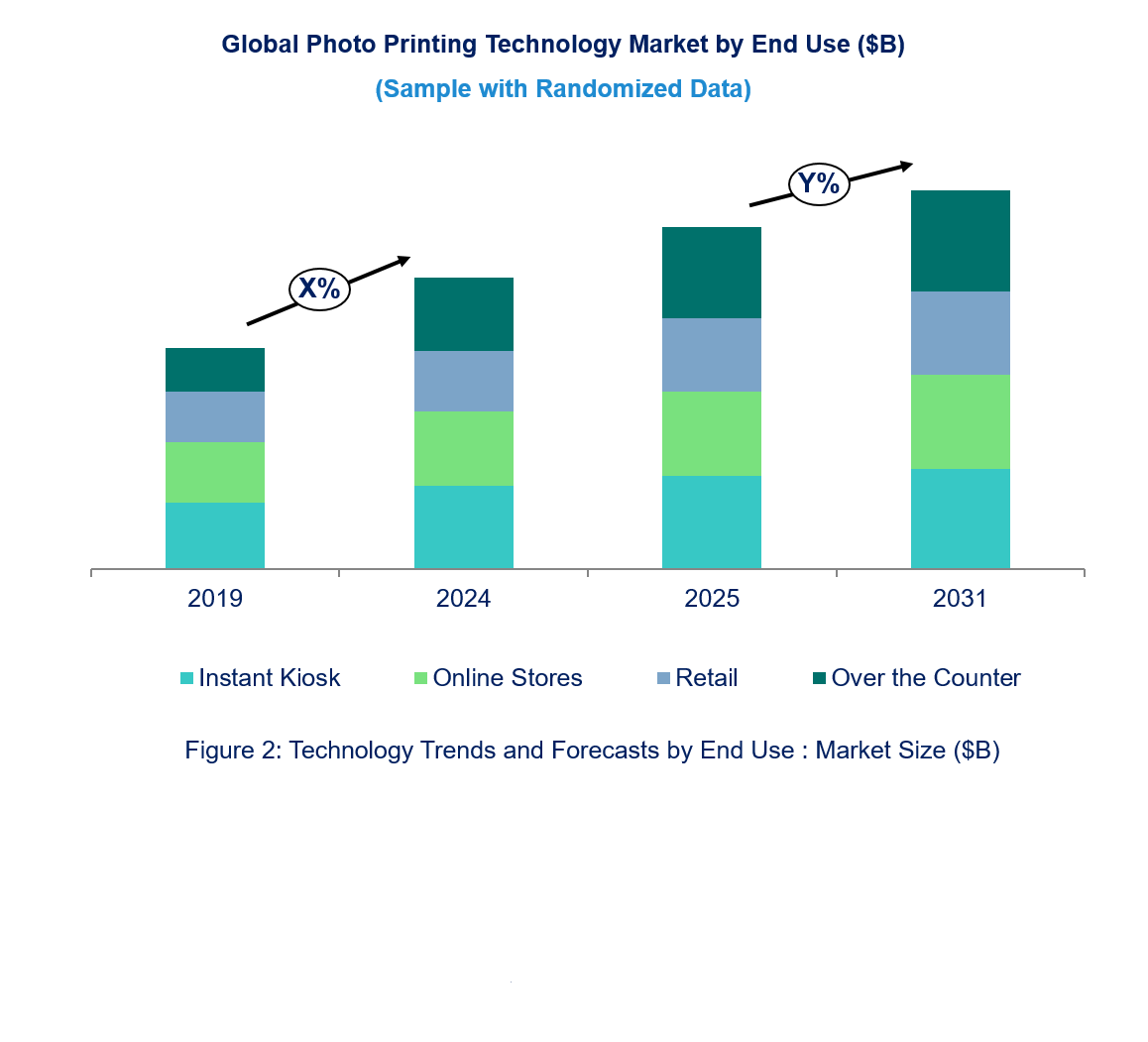
• Rise of Personalized and Custom Photo Products: The demand for personalized photo products has been growing rapidly, that is custom photo books, calendars, and canvas prints, among others. Consumers need unique ways to display memory, which is driving the usage of photo printing services that offer tailored products for special events like weddings and holidays.
• Implementation of Mobile Printing Solutions: With smartphones becoming the primary device for capturing photos, mobile printing solutions are gaining popularity. Many companies are developing apps and wireless printers that allow users to print photos directly from their smartphones, making the printing process more accessible, convenient, and spontaneous.
• Advancements in Print Quality and Technology: Innovations in printing technology, such as higher resolution printers, advanced color management, and improved ink systems, are also benefiting the photo printing market. These innovations result in better print quality, which is a great attraction for professional photographers as well as for consumers who want high-quality prints for personal or commercial use.
• Eco-Friendly and Sustainable Printing Practices: Sustainability is becoming a key concern for both consumers and businesses. As a result, many photo printing companies are adopting eco-friendly materials, such as recycled paper and biodegradable inks, as well as energy-efficient printing processes. This trend aligns with global environmental initiatives and caters to consumers who prioritize sustainability.
• Growth in On-Demand and Online Printing Services: Coupling this convenience with the ability through online printing platforms has added quite a vastness to its market. Consumers are being attracted to uploading, making customizations, and the ability to print photos themselves from home. This redefines the old photo business model to move toward something a little more digital-first but quite user-friendly. Advances in technology and personalization will shape this market, bringing it further toward sustainability. To move into the future and make services more customer-friendly, online services have grown, and high-quality prints have emerged as a result of mobile printing, eco-friendly solutions, and other key trends. They are thus not only shaping consumer photo-printing habits but are also influencing businesses in the same sphere.
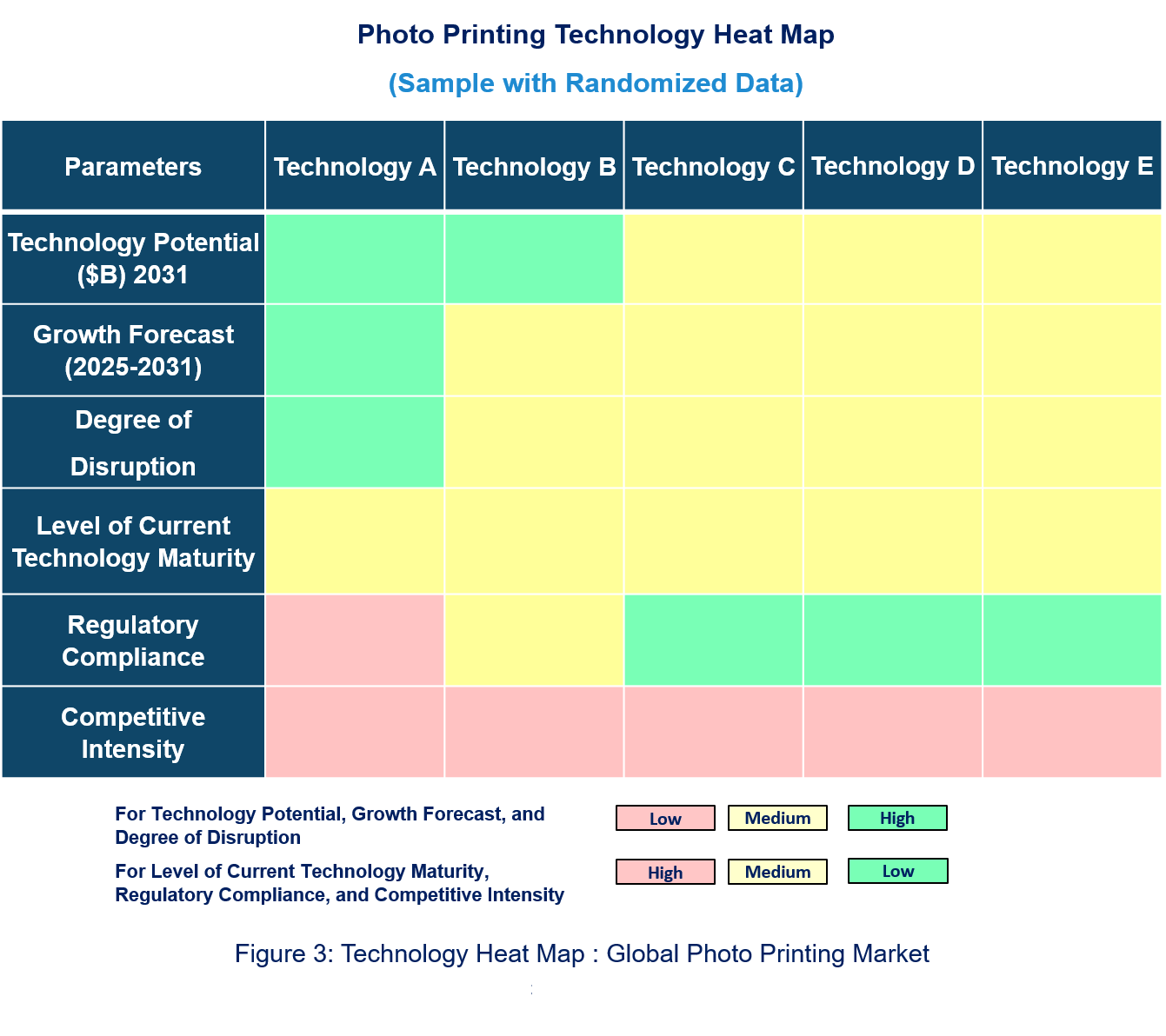
• Potential inTechnology: Photo printing technologies have the potential to produce high-quality, vibrant, and durable prints with enhanced color accuracy and fine detail. Market expansion is seen through new products such as 3D photo printing and instant photo printers that offer personalized and creative options for consumers. Digital advancements allow for faster production times and higher volume capabilities, which are commercial advantages.
• Degree of Disruption: Photo printing technologies have caused significant disruption in the shift from darkroom-based methods to digital-based ones. Such a change has made the technology accessible to more consumers while creating efficient workflows in professional settings. Digital printing and instant photo printers have transformed photo production in terms of cost savings and reduced environmental impact.
• Current Technology Maturity Level: Current photo printing technologies are already well-established, with inkjet and dye-sublimation printers dominating the market.
• Regulatory Compliance: These technologies are also compliant with industry standards in terms of quality and safety, with regulatory guidelines to ensure eco-friendly ink usage and adherence to health standards in printing materials.
• Cimpress: Cimpress, a global leader in mass customization and web-to-print solutions, expanded its reach in the photo printing sector by launching an AI-driven platform that allows users to create custom photo products. The new system offers enhanced automation and personalization features, enabling customers to design high-quality prints efficiently, especially for small and medium-sized businesses.
• Snapfish: The brand launched an extended lineup of photo gifts and home décor, enhanced with AR tools. Users are now able to view the designs before printing through augmented reality tools, offering a more interactive and personalized experience to their customers. Snapfish's focus on mobile-first solutions also allowed ease for its customers, enabling printing from the comfort of one's smartphone and social media account.
• Digitalab: Digitalab, the UK's leading photo printing company, launched a new high-definition digital photo printing service. This is to meet the increasing demand for high-quality photo prints. Advanced color calibration and precision technology have been integrated into Digitalab products to make them more visually appealing, especially for professional photographers.
• Mpix: Mpix introduced a new premium line of photo albums and prints with eco-friendly materials and sustainable production processes. It is in line with the growing consumer demand for green products and supports Mpix's long-term commitment to high-quality, sustainable photo printing services.
• Perion Network Ltd: Perion Network, through its subsidiary, launched an advanced photo printing solution using AI and machine learning algorithms to automatically enhance photos before printing. This development ensures consistent, high-quality output while providing consumers with the convenience of automatic photo editing.
• Eastman Kodak Company: Kodak unveiled a next-generation photo printing system for retail and commercial markets. With the improvement of inkjet printing technology, Kodak's new system can print at a much faster rate with higher resolution and thus will be ideal for high-volume photo printing at value-added prices.
• Shutterfly: The company launched a new cloud-based photo storage and printing platform, making it easier to store and print photos on any device. This helps in the automatic organization and printing of photos both for a consumer and a professional photographer.
• Bay Photo Lab: Bay Photo Lab is a high-quality photographic product company that introduced a line of new fine art prints and metal photo products. Bay Photo Lab has extended its product lines with new innovative materials, such as aluminum and acrylic, which has catered to amateur photographers and professional artists.
• AdorPix: AdorPix launched a niche photo printing service focusing on customized photo calendars and personalized gifts. The platform is social media-friendly, allowing users to create and order prints directly from their social media photo albums, thereby simplifying the process for users seeking unique, personalized products.
• ProDPI: ProDPI-a company specializing in photo printing-serves professional photographers. For example, the company created a new online ordering with better tools for bulk orders and to control projects. The new solution promises a better user experience with faster order handling times and better product quality, making it possible for professional photographers to conduct photo printing operations more comfortably and efficiently. These developments reflect the ongoing process of transformation of the Photo Printing Market, led by innovation through changing technology and evolving consumer, and professional needs.
• Rising Demand for Personalized and Customized Photo Products: The consumer demand for personalized, unique photo products, such as albums, posters, and gifts, is increasing. It promotes the demand for photo printing services with personalization options in both consumer and commercial sectors. This allows business enterprises to target niche markets by providing solutions tailored to the needs of that market.
• Advancement in Printing Technology: Technological innovations such as better print resolution, faster printing speeds, and improved color accuracy enhance the quality of photo prints. Such innovations allow photo printing companies to meet the expectations of professional photographers and general consumers alike, leading to increased demand for premium-quality photo products.
• Mobile Photography and Printing Solutions: As mobile photography continues on the rise, consumers increasingly want to print their smartphone images. Printing solutions that allow users to directly from their phones are gaining much popularity, thus providing convenience and driving much growth in the photo printing market by tapping into the vast user base of mobile.
• Rise in Popularity of Social Media and Digital Photo-Sharing: Social media platforms have popularized photo-sharing among users. More people want to print the memories created. The tendency to print and frame social media photos will spur the demand for services converting digital images into physical products that are either to be displayed or to be given as gifts.
• Increase in Online Printing Services: Online printing platforms that offer on-demand, customized printing services have seen significant growth. The ease of uploading photos and ordering prints online has transformed the market, making photo printing more accessible and convenient. This trend is expanding the consumer base and driving market growth, particularly in e-commerce. Challenges in the photo printing market are:
• Competition from Digital Media and Cloud Storage: With advancements in digital storage solutions such as cloud platforms and social media, more people store and view their photos digitally than print them. This fact has become a challenge for the photo printing industry, especially because many people have shifted preferences from physical prints to digital albums.
• Expensive printing equipment and materials: High-quality photo printers and also the cost of ink paper and other consumable items are very costly. Hence, it is a heavy entry barrier for small players to enter the market. Thus, it will increase the operational cost and, in turn, affect profitability along with the pricing strategies of any photo printing company.
• Environmental Concerns Over Waste and Sustainability: Photo printing is often criticized for its environmental impact, particularly in terms of paper waste and the chemicals used in printing. As sustainability becomes a key focus for consumers, photo printing companies face pressure to adopt eco-friendly practices, such as using recyclable materials and reducing waste, which can increase costs.
• Consumer Expectations for Instant Gratification: Consumers expect rapid delivery times and instant printing options, and photo printing businesses have to work with speed without compromising quality. This creates operational challenges for businesses and potentially increases the costs of doing business.
• Shifting Demand from Traditional Photo Prints: The growth of digital photography and the presence of instant-sharing sites result in a lower demand for traditional photo prints. Today's consumers have more preference to save or upload their images on their devices, rather than printing them. Hence, this trend influences the short-term sustainability of the existing photo printing services. The factors driving this market include personalization demand, technological advancements, and the growing mobile and online printing services. However, it still faces some challenges, such as competition from digital media, the high costs of operations, and sustainability. These are the elements that will help navigate the drivers and challenges of the market's continued growth and transformation.
• Cimpress
• Snapfish
• Digitalab
• Mpix
• Perion Network Ltd
• Eastman Kodak Company
• Technology Readiness by Technology Type: Film printing is mature but is becoming less relevant for high-volume, cost-effective photo printing. Digital printing is highly advanced with broad commercial and consumer applications. It conforms to regulatory compliance, especially on ecologically friendly printing and ink usage.
• Competitive Intensity and Regulatory Compliance: Film printing is less competitive in the new photo printing market with the advancement of digital technology, but still holds its niche in artistic prints. Digital printing is highly competitive in terms of regulatory standards for safety, especially for ink and paper in consumer products.
• Disruption Potential: Film printing is a traditional, analog technique with rich texture but has been disrupted by digital printing, which is faster and allows for quality customization. Digital printing flexibility, lower costs, and quicker turnaround make it the biggest player in the photo printing market.
• Film Printing
• Digital Printing
• Instant Kiosk
• Online Stores
• Retail
• Over the Counter
• North America
• Europe
• Asia Pacific
• The Rest of the World
• Latest Developments and Innovations in the Photo Printing Technologies
• Companies / Ecosystems
• Strategic Opportunities by Technology Type




Choose a license that fits your team. Instant PDF delivery.
Prices exclude taxes. Instant delivery. Custom licensing available on request.
Market Report · May 18, 2026
Market Report · May 18, 2026
Market Report · May 18, 2026
Trusted partner for strategic intelligence and business growth


Receive a complimentary market analysis tailored to your industry. Our analysts will identify key growth opportunities and competitive dynamics specific to your business.

Market size, growth rate, and key trend analysis for your specific sector.

Top competitor positioning and market share analysis.

Strategic recommendations backed by data-driven insights.
Get curated market intelligence and competitive moves straight to your inbox.
By subscribing, you agree to receive our monthly insights. Unsubscribe anytime.
Receive a complimentary market analysis tailored to your industry. Our analysts will identify key growth opportunities and competitive dynamics specific to your business.
Market size, growth rate, and key trend analysis for your specific sector.
Top competitor positioning and market share analysis.
Strategic recommendations backed by data-driven insights.
Get curated market intelligence, emerging trends, and competitive moves straight to your inbox each month.
By subscribing, you agree to receive our monthly insights. Unsubscribe anytime.
We'll send your sample report shortly.