
Porter's Five Forces · July 20, 2026

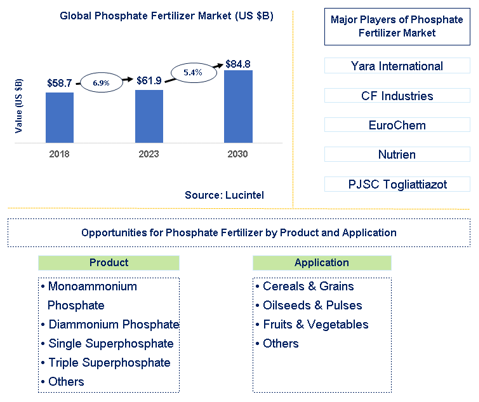
Key data points: The market size in 2024 = $84.8 billion, growth forecast = 5.4% annually next 7 years. Scroll below to get more insights. This market report covers trends, opportunities, and forecast in the global phosphate fertilizer market to 2030 by product (monoammonium phosphate , diammonium phosphate , single superphosphate, triple superphosphate, and others), application (cereals & grains, oilseeds & pulses, fruits & vegetables, and others), and region (North America, Europe, Asia Pacific, and the Rest of the World)
We'll send your sample report shortly.
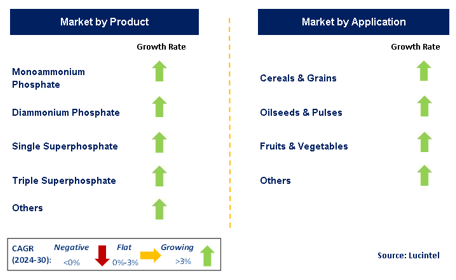
• Lucintel forecasts that monoammonium phosphate (MAP) will remain the largest segment over the forecast period.
• Within this market, cereal & grain will remain the largest segment.
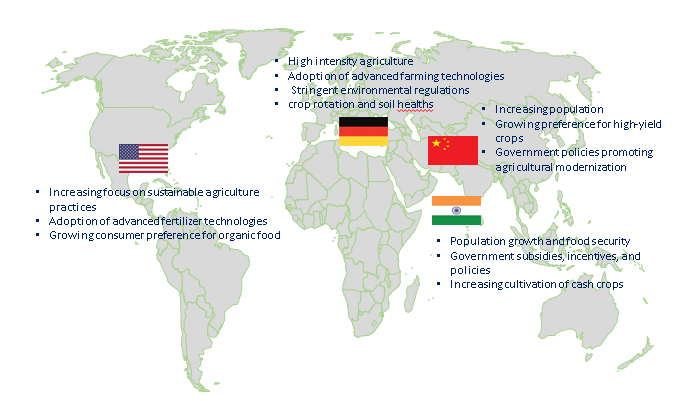
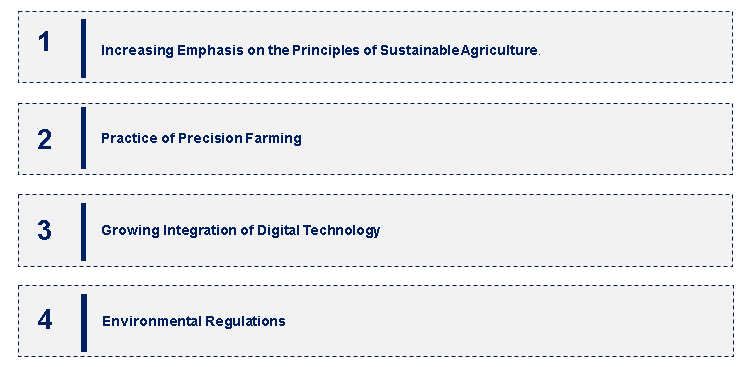
• Sustainability Initiatives: There is an increasing emphasis on the principles of sustainable agriculture, driving demand for phosphates that reduce environmental impact. Improved technologies and formulations are being invested in by companies to enhance nutrient use efficiency and minimize greenhouse gas emissions.
• Precision Agriculture: The practice of precision farming is becoming more popular, which calls for targeted and efficient fertilizer. Tailored phosphate fertilizers for specific crops and soil types are gaining momentum to maximize yields while minimizing waste.
• Alternative Sources of Phosphorus: Research has shown potential benefits in recycling phosphorous from organic wastes or industrial by-products as a replacement for mined phosphate rock. This trend targets dwindling mineral reserves and improved resource productivity.
• Digitalization and Data Analytics: There’s a growing integration of digital technology and data analytics into fertilizer application processes. Farmers have turned their eyes to data-driven insights that guide them on how to optimize the use of fertilizers with a view of raising production levels achieved sustainably.
• Regulatory Changes: Environmental regulations are changing around the world thereby influencing phosphate fertilizer market trends. Authorities across countries are getting tougher with regard to pollution from nutrients runoff as well as emissions alluding to the fact that companies need to become innovative as well be able to comply with sustainability standards.
• Nutrien: Nutrien has focused on enhancing its phosphate operations through technological advancements aimed at improving efficiency and sustainability. They have invested in upgrading their production facilities to reduce environmental impact while maintaining production capacity.
• Mosaic: Mosaic has been proactive in developing phosphate fertilizer products with enhanced nutrient efficiency. They have introduced new formulations that aim to optimize nutrient uptake by crops, thereby increasing yields while reducing the overall environmental footprint of fertilizer application.
• OCP Group: OCP Group has been expanding its phosphate fertilizer production capacity, particularly in Africa. They have launched new production facilities and logistics infrastructure to meet growing global demand for phosphate fertilizers, especially in emerging markets.
• EuroChem: EuroChem has been investing in innovative fertilizer technologies, including phosphate-based products that offer improved nutrient release characteristics. They are also focusing on sustainability initiatives such as reducing greenhouse gas emissions from their production processes.
• Increasing Population and Food Demand: Persistently growing global population combined with increasing incomes and changed diet continue to stimulate demand for agricultural products. For this reason, ample supplies of phosphate fertilizers are required not only to increase yields but also ensure food security in such areas as those which are rapidly urbanizing.
• Technological Advancements: Fertilizer technologies have evolved over time, including precision agriculture, digital farming solutions, and enhanced nutrient formulations for better efficiency of phosphate fertilizers. By use of these advances farmers can optimize the application of nutrients hence reducing losses and improving crop production.
• Sustainable Agriculture Practices: Global environmental concerns as well as regulatory pressures are increasingly promoting sustainable agriculture. Phosphate fertilizers that minimize environmental impact (by reducing nutrient runoff or enhancing soil health) are becoming more popular. Companies that invest in eco-friendly practices and products will be able to take advantage of this trend.
• Government Support and Policies: In order to facilitate balanced fertilizer application and reduce environmental pollution associated with agricultural activities governments across the globe offer subsidies, incentives, and regulations frameworks. Such policies foster the adoption of phosphate fertilizers that meet the environmental standards thereby resulting in market expansion.
• Emerging Markets: High population growth rates coupled with rapid urbanization; increased disposables incomes; rising agricultural intensification levels in emerging countries present growth opportunities for phosphate fertilizer manufacturers. Given that these regions are expanding their agricultural sectors while experiencing increased demand for high yield crops good fertilization techniques are imperative. Challenges
• Environmental Concerns: Inappropriate handling of phosphate fertilizers may lead to several environmental problems like water pollution from nutrient runoffs, soil degradation among others. As a result addressing these impacts by means of sustainability practices poses a number of challenges for industry players.
• Resource Constraints: Phosphate rock is the main raw material used in manufacturing phosphate based fertilizers whose deposits worldwide are finite hence limited quantities can be obtained at any given period. Moreover extraction and processing of phosphate rocks involve significant energy requirements and can have serious implications in terms of emission of greenhouse gases thereby creating sustainability problems.
• Price Volatility: The prices of phosphate fertilizers are highly volatile as they are influenced by factors such as costs for raw materials, geopolitical activities, global supply and demand forces, as well as currency fluctuations. Price variability has an impact on the profit margins and stability of fertilizer manufacturers and farmers.
• Regulatory Compliance: Phosphate fertilizer production and distribution are faced with complexities and costs due to environmental regulations that differ according to country-specific farming policies. Consequently in order for them to be compliant with regulatory changes always occurring companies must keep on incorporating new inventions in their operations.
• Competitive Market Dynamics: Many global players fight for a piece of the phosphate fertilizer market while many regional ones also compete. Thus, the businesses should be innovative by introducing various products so that they can compete effectively with other producers hence running profitably.
• Yara International
• CF Industries
• EuroChem
• Nutrien
• PJSC Togliattiazot
• Israel Chemicals
• Coromandel International These companies have established themselves as leaders in the phosphate fertilizer industry, with extensive product portfolios, global presence, and strong research and development capabilities. They continually strive to enhance their market positions through strategic partnerships, mergers and acquisitions, and product innovations. The market share dynamics within the phosphate fertilizer market are evolving, with the entry of new players and the emergence of innovative phosphate fertilizer technologies. Additionally, collaborations between material suppliers, manufacturers, and end-users are fostering technological advancements and expanding market opportunities.
• Monoammonium Phosphate
• Diammonium Phosphate
• Single Superphosphate
• Triple Superphosphate
• Others
• Cereals & Grains
• Oilseeds & Pulses
• Fruits & Vegetables
• Others
• North America
• Europe
• Asia Pacific
• The Rest of the World
• Yara International
• CF Industries
• EuroChem
• Nutrien
• PJSC Togliattiazot
• Israel Chemicals
• Coromandel International Q6. Which phosphate fertilizer market segment will be the largest in future? Answer: Lucintel forecasts that monoammonium phosphate (map) will remain the largest segment over the forecast period. Q7. In phosphate fertilizer market, which region is expected to be the largest in next 5 years? Answer: APAC will remain the largest region over the forecast period. Q8. Do we receive customization in this report? Answer: Yes, Lucintel provides 10% customization without any additional cost.


Choose a license that fits your team. Instant PDF delivery.
Prices exclude taxes. Instant delivery. Custom licensing available on request.
Porter's Five Forces · July 20, 2026
Trusted partner for strategic intelligence and business growth


Receive a complimentary market analysis tailored to your industry. Our analysts will identify key growth opportunities and competitive dynamics specific to your business.

Market size, growth rate, and key trend analysis for your specific sector.

Top competitor positioning and market share analysis.

Strategic recommendations backed by data-driven insights.
Get curated market intelligence and competitive moves straight to your inbox.
By subscribing, you agree to receive our monthly insights. Unsubscribe anytime.
Receive a complimentary market analysis tailored to your industry. Our analysts will identify key growth opportunities and competitive dynamics specific to your business.
Market size, growth rate, and key trend analysis for your specific sector.
Top competitor positioning and market share analysis.
Strategic recommendations backed by data-driven insights.
Get curated market intelligence, emerging trends, and competitive moves straight to your inbox each month.
By subscribing, you agree to receive our monthly insights. Unsubscribe anytime.
We'll send your sample report shortly.