
Market Report · July 29, 2026

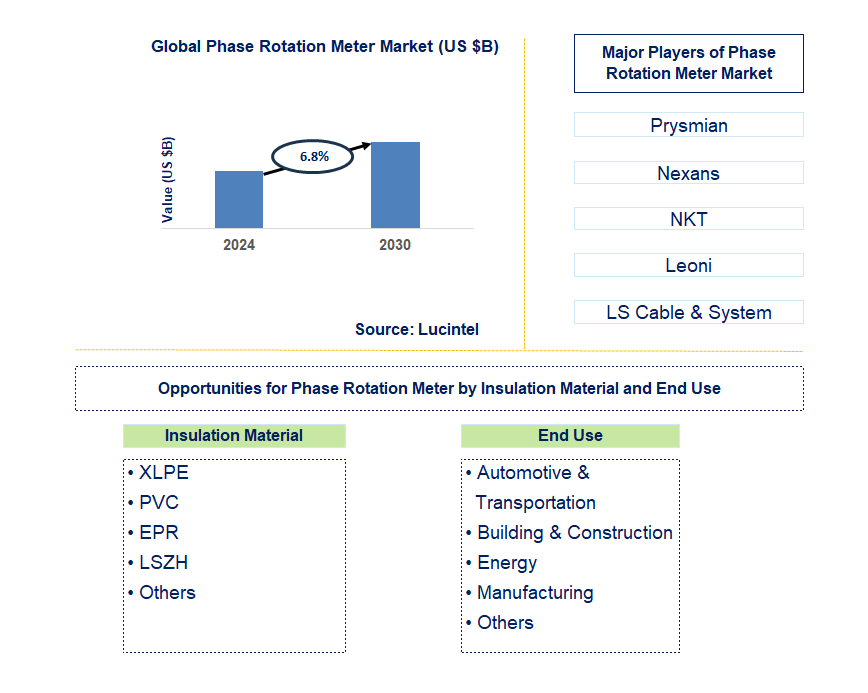
Key data points: The growth forecast = 6.8% annually for the next 6 years. Scroll below to get more insights. This market report covers trends, opportunities, and forecasts in the global phase rotation meter market to 2030 by type (rotating and static), application (motors, compressors, generators, drives & electrical systems, and others), and region (North America, Europe, Asia Pacific, and the Rest of the World)
We'll send your sample report shortly.
• Lucintel forecasts that, within the type category, the rotation is expected to witness a higher growth over the forecast period.
• Within the application category, motors will remain the largest segment.
• In terms of regions, APAC is expected to witness the highest growth over the forecast period due to rapid industrialization, infrastructure growth, and increased demand for accurate phase rotation assessment in electrical systems. Gain valuable insights for your business decisions with our comprehensive 150+ page report.
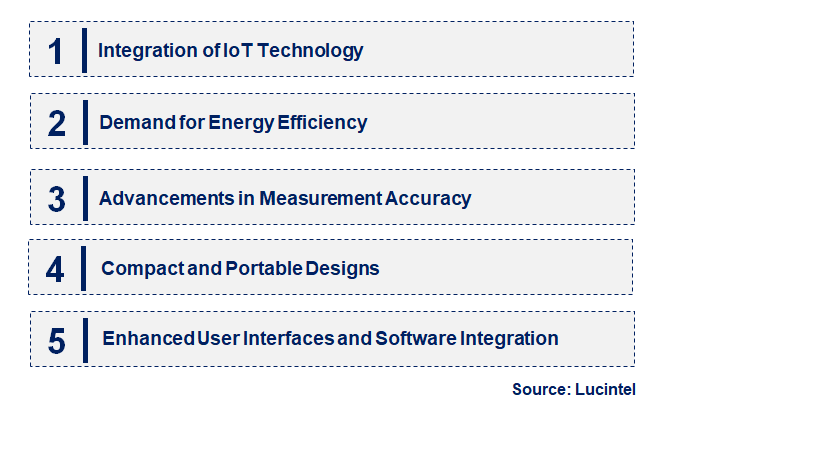
• Integration of IoT Technology: The integration of Internet of Things (IoT) technology into phase rotation meters allows for enhanced connectivity and real-time data monitoring. IoT-enabled phase rotation meters can transmit data to centralized systems, enabling remote monitoring and diagnostics. This real-time capability allows users to track performance metrics, identify issues proactively, and implement predictive maintenance strategies. By facilitating instant data access via mobile applications, IoT integration enhances decision-making processes and operational efficiency. This trend is particularly valuable in industries where downtime can lead to significant financial losses, thus making IoT integration a key driver for market growth.
• Demand for Energy Efficiency: Growing awareness of energy efficiency and sustainability is significantly impacting the phase rotation meter market. Industries are increasingly focusing on reducing energy consumption and minimizing waste. Phase rotation meters play a crucial role in achieving these goals by ensuring correct phase alignment, which optimizes energy use in electrical systems. This trend aligns with global efforts to enhance sustainability and reduce carbon footprints. As companies adopt more energy-efficient practices, the demand for advanced phase rotation meters that contribute to these objectives is expected to grow, positioning them as essential tools in modern energy management strategies.
• Advancements in Measurement Accuracy: Innovations in sensor technologies are leading to improvements in the measurement accuracy of phase rotation meters. Enhanced accuracy is critical for applications in sectors such as manufacturing, energy, and telecommunications, where precise measurements are necessary for optimal performance. Advanced sensors enable phase rotation meters to deliver reliable readings, thereby preventing costly mistakes and inefficiencies. This trend is driving manufacturers to invest in research and development to enhance product reliability. As industries seek to improve their operational standards, the demand for high-accuracy phase rotation meters will likely increase, bolstering market growth.
• Compact and Portable Designs: The trend toward compact and portable phase rotation meters is gaining traction, particularly in field applications. Lightweight and portable designs enhance user convenience, making it easier for technicians and engineers to carry and operate phase rotation meters in various settings. This trend is particularly important for industries where space is limited or where equipment needs to be frequently transported. Manufacturers are focusing on creating robust yet compact devices that maintain high performance standards. The increasing demand for portability is expected to expand the user base and applications for phase rotation meters across diverse sectors.
• Enhanced User Interfaces and Software Integration: Improved user interfaces and software integration are transforming the usability of phase rotation meters. Manufacturers are developing user-friendly designs and intuitive software that simplify the operation and analysis of phase rotation meters. Enhanced interfaces allow users, even those with limited technical expertise, to interpret results easily and manage electrical systems effectively. This trend reduces the learning curve associated with using these devices, promoting wider adoption across industries. As companies prioritize operational efficiency and user experience, the demand for phase rotation meters with advanced interfaces and software capabilities is expected to grow. The phase rotation meter market is undergoing transformative changes driven by trends such as IoT integration, energy efficiency, advancements in measurement accuracy, compact designs, and enhanced user interfaces. These developments not only improve the functionality and reliability of phase rotation meters but also make them indispensable tools for modern industries. As businesses increasingly prioritize efficiency and sustainability, the demand for innovative phase rotation meters is poised to rise, reshaping the market landscape in the coming years.
• IoT Integration: The integration of Internet of Things (IoT) technology into phase rotation meters is transforming the way these devices are utilized. IoT-enabled meters allow for real-time data transmission and monitoring, facilitating remote access and diagnostics. This development enables users to track system performance and address issues proactively, thereby enhancing operational efficiency. The ability to connect to centralized systems through mobile applications or cloud platforms empowers users with critical insights for decision-making. As industries increasingly embrace smart technologies, the demand for IoT-enabled phase rotation meters is expected to rise significantly.
• Advancements in Measurement Accuracy: Recent innovations in sensor technology have significantly improved the measurement accuracy of phase rotation meters. These advancements allow for more precise detection of phase sequence and voltage levels, which are essential for ensuring optimal performance in electrical systems. High-accuracy meters help prevent costly downtime and operational inefficiencies by providing reliable readings. As sectors such as manufacturing and renewable energy focus on quality control and operational excellence, the need for accurate phase rotation meters becomes paramount, driving manufacturers to prioritize precision in their product offerings.
• Compact and Portable Designs: There has been a noticeable shift toward the development of compact and portable phase rotation meters. These devices are designed to be lightweight and easy to transport, catering to the needs of field technicians who require flexibility in various environments. The trend toward portability is especially important in industries where space is constrained or equipment needs frequent relocation. Manufacturers are focusing on delivering robust solutions that maintain performance while being user-friendly. This evolution enhances accessibility and broadens the potential applications for phase rotation meters across different sectors.
• Enhanced User Interfaces: Modern phase rotation meters are increasingly incorporating enhanced user interfaces that prioritize usability and accessibility. These developments involve intuitive designs that simplify operation, making it easier for users, including those with limited technical expertise, to understand readings and manage electrical systems effectively. Advanced graphical displays and simplified menu navigation improve the overall user experience. As industries aim for greater efficiency and productivity, the demand for user-friendly phase rotation meters is growing, prompting manufacturers to invest in developing interfaces that meet these needs.
• Focus on Energy Efficiency: The emphasis on energy efficiency is driving the adoption of phase rotation meters across various industries. These meters help ensure that electrical systems operate optimally, preventing energy waste and enhancing overall system performance. As companies strive to meet sustainability goals and regulatory requirements, the role of phase rotation meters becomes increasingly critical. Recent developments include features that allow for better monitoring of energy consumption and system performance, enabling users to implement energy-saving strategies effectively. This focus on efficiency is expected to continue shaping the market as industries prioritize sustainability. Recent developments in the phase rotation meter market reflect the growing demand for advanced, efficient, and user-friendly measurement tools. The integration of IoT technology, advancements in measurement accuracy, compact designs, enhanced user interfaces, and a focus on energy efficiency are all driving the evolution of this market. As industries adapt to modern challenges and seek to optimize their electrical systems, the demand for innovative phase rotation meters is set to increase, positioning these devices as essential tools for operational success.
• Manufacturing Industry: The manufacturing sector presents a robust growth opportunity for phase rotation meters, particularly as industries seek to improve operational efficiency and reduce downtime. Accurate phase measurement is crucial for ensuring that motors and equipment operate effectively, minimizing the risk of failure. As manufacturers increasingly adopt automation and smart technologies, the need for advanced phase rotation meters equipped with real-time monitoring capabilities is rising. This demand for reliable instruments that enhance productivity and maintain equipment reliability positions phase rotation meters as essential tools in the modern manufacturing landscape.
• Renewable Energy Sector: The renewable energy sector is experiencing rapid growth, creating significant opportunities for phase rotation meters. As wind and solar energy systems become more prevalent, accurate phase measurement is essential for optimizing performance and grid integration. Phase rotation meters help ensure that energy systems operate within specified parameters, preventing losses and enhancing efficiency. With governments worldwide promoting sustainable energy solutions, the increasing adoption of phase rotation meters in renewable energy applications is likely to grow, supporting the industry's transition toward cleaner energy sources.
• Telecommunications: The telecommunications industry is another key application area for phase rotation meters. With the rise of advanced communication technologies and the expansion of network infrastructures, accurate phase measurement is vital for maintaining signal integrity and optimizing performance. Phase rotation meters can help prevent phase-related issues that can disrupt service quality. As telecommunications providers invest in upgrading their networks to support higher data rates and greater reliability, the demand for phase rotation meters will continue to increase, creating growth opportunities in this sector.
• Construction and Electrical Contracting: The construction and electrical contracting industries are increasingly recognizing the importance of phase rotation meters in ensuring electrical safety and efficiency. Accurate phase measurement is critical during the installation and maintenance of electrical systems in new buildings. Phase rotation meters help contractors verify correct phase alignment, preventing potential equipment damage and enhancing safety. As construction activities continue to rise globally, the demand for reliable phase rotation meters among electrical contractors will grow, positioning these devices as essential tools in the electrical installation process.
• Automotive Industry: The automotive industry presents a unique opportunity for phase rotation meters, particularly with the increasing adoption of electric and hybrid vehicles. Accurate phase measurement is crucial for ensuring the proper functioning of electric motors and power systems within these vehicles. As automakers invest in developing more efficient electric drivetrains, the need for precise phase rotation measurement becomes vital. This trend toward electric vehicles will drive demand for phase rotation meters, positioning them as key components in the automotive manufacturing process. The phase rotation meter market is well-positioned for growth across various applications, driven by the increasing need for accuracy and efficiency in electrical systems. Opportunities in manufacturing, renewable energy, telecommunications, construction, and the automotive industry highlight the versatility and importance of phase rotation meters in modern applications. As industries continue to evolve and embrace technological advancements, the demand for these measurement tools is expected to rise, creating a favorable environment for market expansion.
• Technological Advancements: Technological advancements are a significant driver for the phase rotation meter market. Innovations in sensor technology and data processing capabilities have led to the development of more accurate, reliable, and user-friendly meters. IoT integration allows for real-time monitoring and remote access, enhancing operational efficiency. As industries increasingly adopt smart technologies, the demand for advanced phase rotation meters equipped with these features is expected to rise. Continuous improvements in technology not only enhance product performance but also expand the potential applications for phase rotation meters across various sectors.
• Rising Demand for Energy Efficiency: The global push for energy efficiency is driving the demand for phase rotation meters. These devices play a crucial role in ensuring the optimal operation of electrical systems, preventing energy waste and reducing operational costs. With organizations increasingly focused on sustainability and regulatory compliance, accurate phase measurement becomes essential for energy management. As industries strive to meet energy efficiency goals and lower their carbon footprints, phase rotation meters are becoming vital tools in achieving these objectives, leading to higher market demand.
• Growth in Renewable Energy Sector: The expansion of the renewable energy sector is significantly impacting the phase rotation meter market. As wind and solar power generation becomes more prevalent, accurate phase measurement is essential for grid integration and system optimization. Phase rotation meters help monitor and maintain the efficiency of renewable energy systems, ensuring they operate within designated parameters. With governments worldwide pushing for cleaner energy solutions, the increasing adoption of phase rotation meters in renewable energy applications is anticipated to drive market growth.
• Increased Automation in Industries: The trend toward automation in various industries is boosting the demand for phase rotation meters. Automated systems require precise electrical measurements to ensure optimal performance and minimize downtime. Phase rotation meters are integral to maintaining the functionality of these automated systems, as they ensure correct phase alignment and operational efficiency. As industries invest in automation technologies to enhance productivity, the need for reliable phase rotation meters will continue to rise, creating further growth opportunities in the market.
• Regulatory Compliance: Regulatory compliance related to electrical safety and efficiency standards is another key driver for the phase rotation meter market. Many industries are subject to strict regulations that mandate the use of accurate measurement tools to ensure safety and efficiency in electrical systems. Phase rotation meters help organizations meet these regulatory requirements by providing reliable data for system monitoring and performance assessment. As compliance becomes increasingly critical in various sectors, the demand for phase rotation meters will likely grow, supporting market expansion. Challenges in the phase rotation meter market are:
• Rapid Technological Changes: One of the primary challenges facing the phase rotation meter market is the rapid pace of technological change. As new technologies emerge, manufacturers must continuously innovate to keep up with industry standards and customer expectations. This necessitates significant investment in research and development, which can be a barrier for smaller companies. Additionally, existing products may quickly become outdated, requiring manufacturers to adapt their offerings to remain competitive. Balancing innovation with cost-effectiveness presents a complex challenge for stakeholders in the market.
• High Initial Costs: The high initial costs associated with advanced phase rotation meters can deter potential buyers, particularly small and medium-sized enterprises. While these devices offer long-term benefits in terms of efficiency and cost savings, the upfront investment can be a significant hurdle. Companies may hesitate to adopt new technologies if they perceive the costs as prohibitive. This challenge is compounded by the need for additional training and integration into existing systems, making it essential for manufacturers to provide value propositions that clearly demonstrate the return on investment.
• Compliance with Diverse Regulations: Navigating the complex landscape of regulations across different regions can pose a challenge for manufacturers and users of phase rotation meters. Compliance with various standards related to safety, accuracy, and environmental impact is essential but can vary significantly by country or industry. This complexity may hinder market entry for new players and complicate product development for existing manufacturers. As regulations continue to evolve, staying compliant while delivering innovative solutions will be crucial for maintaining competitiveness in the phase rotation meter market. The phase rotation meter market is shaped by significant drivers, including technological advancements, rising energy efficiency demands, growth in renewable energy, increased automation, and regulatory compliance. However, challenges such as rapid technological changes, high initial costs, and diverse regulatory requirements must be navigated effectively. Understanding these dynamics is essential for stakeholders to capitalize on growth opportunities while mitigating potential risks in this evolving market.
• Prysmian
• Nexans
• NKT
• Leoni
• LS Cable & System
• Jiangnan
• Tratos
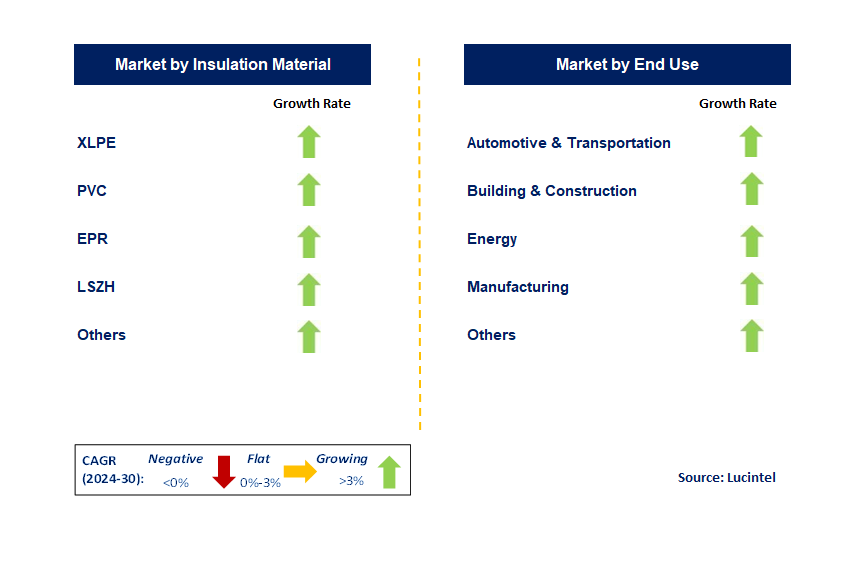
• XLPE
• PVC
• EPR
• LSZH
• Others
• Automotive & Transportation
• Building & Construction
• Energy
• Manufacturing
• Others
• North America
• Europe
• Asia Pacific
• The Rest of the World
• United States: In the United States, the phase rotation meter market is experiencing growth due to the increasing demand for smart grid technologies and energy efficiency solutions. Recent developments include the introduction of advanced phase rotation meters that incorporate IoT capabilities, allowing for real-time monitoring and data analytics. Manufacturers are focusing on enhancing the user experience by integrating mobile applications for remote access and control. The emphasis on renewable energy sources and grid stability is driving the adoption of these devices, making them integral to modern electrical infrastructure and improving operational efficiency across various sectors.
• China: The China phase rotation meter market is expanding rapidly, fueled by the country's robust industrial growth and emphasis on electrical safety. Recent advancements include the development of compact, high-precision phase rotation meters that cater to both industrial and residential applications. The integration of digital technology has enhanced measurement accuracy and user convenience. Furthermore, government initiatives promoting energy efficiency and smart manufacturing are boosting the adoption of these devices. As China's industrial sector continues to modernize, the demand for reliable phase rotation meters is expected to rise, supporting sustainable growth in the market.
• Germany: In Germany, known for its engineering excellence, the phase rotation meter market is advancing through innovations focused on reliability and precision. Recent developments include the adoption of phase rotation meters with advanced diagnostic capabilities that provide detailed insights into electrical systems. The emphasis on Industry 4.0 has driven manufacturers to integrate these meters with smart technologies for improved monitoring and predictive maintenance. As Germany transitions to more sustainable energy practices, the need for accurate phase measurement in renewable energy systems is also increasing, positioning phase rotation meters as essential tools in the energy transition.
• India: The India phase rotation meter market is on the rise, driven by rapid industrialization and infrastructural development. Recent advancements include the introduction of cost-effective, user-friendly phase rotation meters designed for small and medium enterprises. Manufacturers are focusing on enhancing portability and ease of use, making these devices accessible to a broader range of users. Government initiatives aimed at improving electrical safety standards are also contributing to market growth. As the country continues to invest in modernization and safety in electrical installations, the demand for phase rotation meters is expected to grow significantly.
• Japan: In Japan, the phase rotation meter market is evolving with a focus on precision and technological integration. Recent developments include the introduction of high-frequency phase rotation meters that cater to specialized applications in industries such as robotics and automotive. The integration of AI and machine learning in these devices allows for predictive maintenance and enhanced diagnostic capabilities.


• Prysmian
• Nexans
• NKT
• Leoni
• LS Cable & System
• Jiangnan
• Tratos Q5. Which phase rotation meter market segment will be the largest in future? Answer: Lucintel forecasts that rotation is expected to witness a higher growth over the forecast period. Q6. In phase rotation meter market, which region is expected to be the largest in next 5 years? Answer: APAC is expected to witness the highest growth over the forecast period due to rapid industrialization, infrastructure growth, and increased demand for accurate phase rotation assessment in electrical systems. Q.7 Do we receive customization in this report? Answer: Yes, Lucintel provides 10% customization without any additional cost.


Choose a license that fits your team. Instant PDF delivery.
Prices exclude taxes. Instant delivery. Custom licensing available on request.
Market Report · July 29, 2026
Market Report · July 20, 2026
Market Report · July 20, 2026
Trusted partner for strategic intelligence and business growth


Receive a complimentary market analysis tailored to your industry. Our analysts will identify key growth opportunities and competitive dynamics specific to your business.

Market size, growth rate, and key trend analysis for your specific sector.

Top competitor positioning and market share analysis.

Strategic recommendations backed by data-driven insights.
Get curated market intelligence and competitive moves straight to your inbox.
By subscribing, you agree to receive our monthly insights. Unsubscribe anytime.
Receive a complimentary market analysis tailored to your industry. Our analysts will identify key growth opportunities and competitive dynamics specific to your business.
Market size, growth rate, and key trend analysis for your specific sector.
Top competitor positioning and market share analysis.
Strategic recommendations backed by data-driven insights.
Get curated market intelligence, emerging trends, and competitive moves straight to your inbox each month.
By subscribing, you agree to receive our monthly insights. Unsubscribe anytime.
We'll send your sample report shortly.