
Report Feature
Pet Tech Market Trends and Forecast
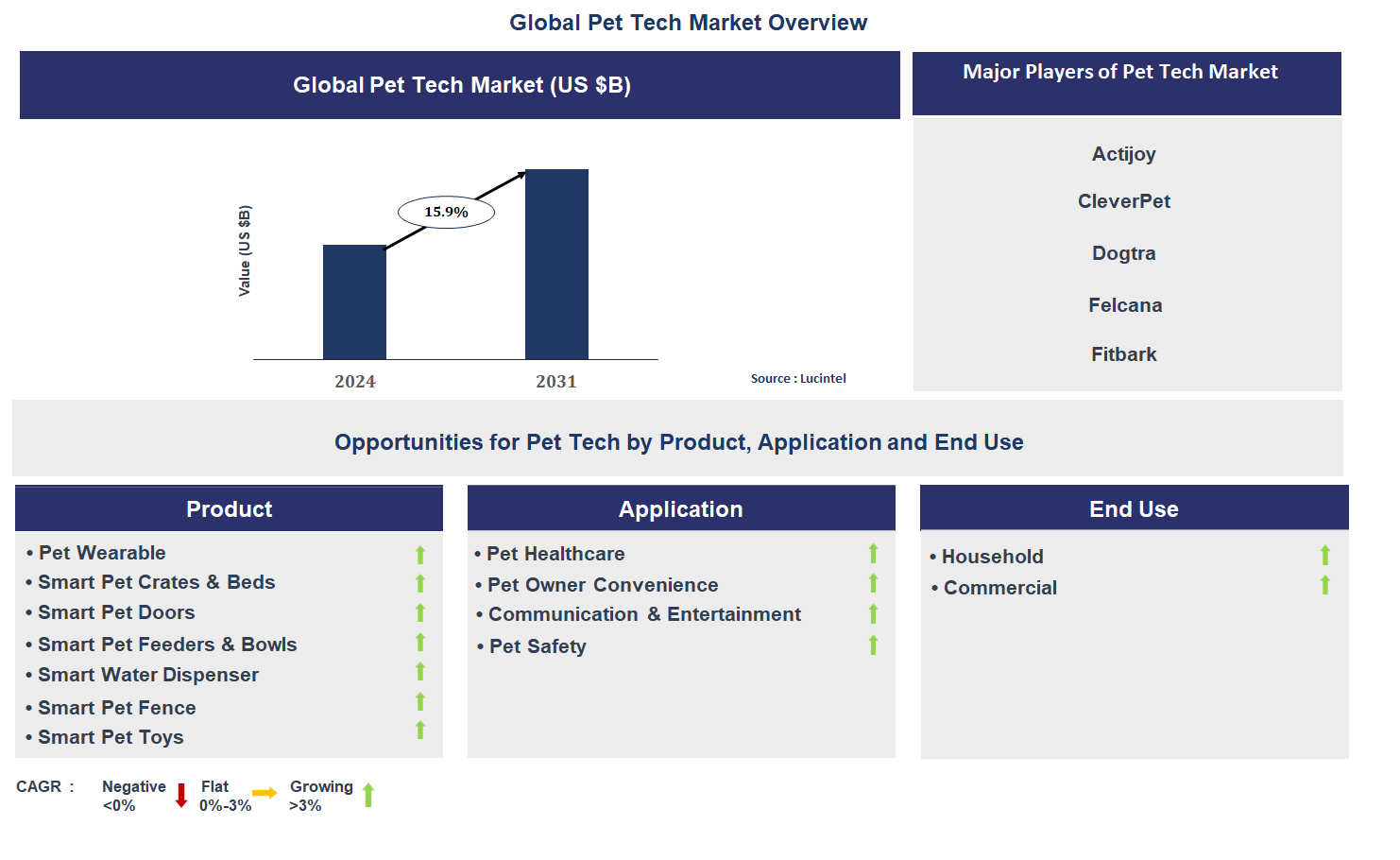
The future of the global pet tech market looks promising with opportunities in the household and commercial markets. The global pet tech market is expected to grow with a CAGR of 15.9% from 2025 to 2031. The major drivers for this market are he increasing demand for smart pet care solutions, the rising adoption of wearable tech for pets, and the growing interest in pet health monitoring devices.• Lucintel forecasts that, within the product category, pet wearable is expected to witness the highest growth over the forecast period.
• Within the end use category, household is expected to witness higher growth.
• In terms of region, APAC is expected to witness the highest growth over the forecast period. Gain valuable insights for your business decisions with our comprehensive 150+ page report. Sample figures with some insights are shown below.
Emerging Trends in the Pet Tech Market
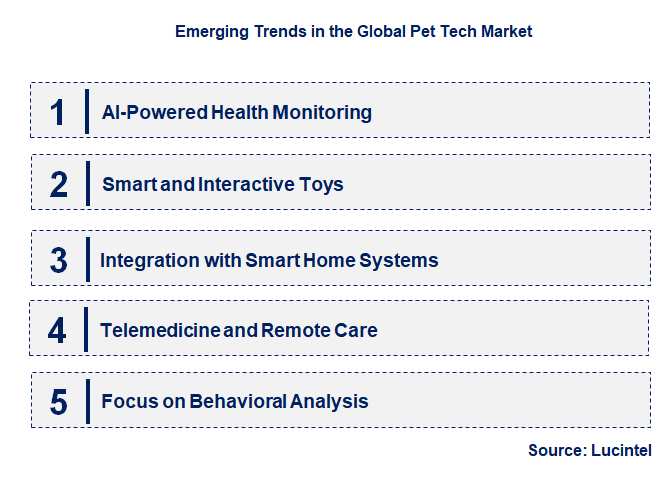
The pet tech market is being reshaped by several key trends, which are pushing the industry toward greater innovation and specialization. These trends are driven by a convergence of technological advancements, a focus on health and safety, and a heightened emphasis on convenience, all of which are influencing product offerings and consumer behavior.• AI-Powered Health Monitoring: A key trend is the use of artificial intelligence (AI) and machine learning to analyze pet data from wearables and cameras. This technology is being used to provide early disease detection, personalized health recommendations, and behavioral insights. This trend is appealing to pet owners who want a more proactive approach to their pet’s health.
• Smart and Interactive Toys: There is a significant trend toward smart and interactive toys that keep pets engaged and mentally stimulated. These toys, often controlled via a mobile app, can dispense treats, move unpredictably, or even engage in a game of fetch. This trend is driven by pet humanization and the need to provide entertainment for pets left alone at home.
• Integration with Smart Home Systems: A major trend is the integration of pet tech devices with smart home ecosystems. This allows pet owners to control smart feeders, cameras, and air purifiers with voice commands or a central app. This trend is making pet care a more seamless part of the modern, connected home and is a key driver of convenience.
• Telemedicine and Remote Care: The market is seeing a growing trend toward telemedicine and remote veterinary care. Mobile apps and connected devices allow pet owners to consult with veterinarians, share health data, and receive diagnoses and prescriptions from home. This trend is a direct response to a major health concern and is making professional care more accessible.
• Focus on Behavioral Analysis: The market is witnessing a strong trend toward products that analyze pet behavior. Devices are being developed to monitor a pet’s stress levels, sleep patterns, and vocalizations to provide owners with a better understanding of their pet’s emotional state. This trend is a result of a deeper emotional bond between owners and their pets. These emerging trends are fundamentally reshaping the pet tech market by prioritizing pet health, owner convenience, and data-driven insights. The focus on AI and health monitoring is enhancing product functionality and well-being benefits. Meanwhile, the shift toward smart home integration and telemedicine is transforming how pet owners manage care, creating a more sophisticated and connected industry.
Recent Development in the Pet Tech Market
The pet tech market is experiencing a period of significant development, marked by a surge in innovation and a strategic focus on specific end-user needs. These changes are influencing product offerings, distribution channels, and market growth, with a clear emphasis on enhancing product performance and meeting the evolving demands of consumers.• Rise of AI-Powered Wearables: A key recent development is the rise of AI-powered wearables for pets. These devices go beyond basic tracking and use machine learning to analyze a pet’s activity, sleep, and behavioral patterns to provide actionable health insights. This development is catering to a modern, tech-savvy consumer base and providing a new level of proactive care.
• Introduction of Smart Feeders: A significant development is the widespread introduction of smart feeders and water fountains with app connectivity. These products allow pet owners to schedule feeding times, control portion sizes, and receive notifications from their smartphones. This development is a direct response to a major consumer pain point, offering convenience and promoting healthy feeding habits.
• Launch of Pet-Specific Telemedicine Platforms: The market is witnessing a notable development in the launch of pet-specific telemedicine platforms. These platforms connect pet owners with licensed veterinarians for remote consultations, eliminating the need for in-person visits for non-emergency issues. This development has transformed how pet owners access professional care, making it more convenient and affordable.
• Growth of DTC and E-commerce: A recent development is the rapid growth of direct-to-consumer (DTC) sales and online retail for pet tech products. Brands are using their websites and social media to sell products directly to consumers, bypassing traditional retail channels. This development allows for a wider product range and a more direct relationship with customers.
• Focus on Behavioral Training Devices: A recent development is the increased focus on tech-enabled behavioral training devices. Products like smart treat dispensers and interactive cameras are being used to help with separation anxiety and provide mental stimulation. This development is driven by a greater understanding of pet behavior and a desire to improve a pet’s quality of life. These recent developments are profoundly impacting the pet tech market by elevating the standards of technology, health, and consumer convenience. The shift toward AI-powered devices and telemedicine is enhancing product functionality, while the growth of online retail and the focus on behavioral solutions are transforming how brands are created and distributed to meet the modern pet owner’s needs.
Strategic Growth Opportunities in the Pet Tech Market
The pet tech market presents numerous strategic growth opportunities across various key applications. These opportunities are driven by the need for enhanced product quality, health, and efficacy in a wide range of products. Companies can leverage these trends to innovate and expand their market presence.• Pet Healthcare and Diagnostics: The pet healthcare and diagnostics segment presents a prime growth opportunity. By creating devices that can monitor a pet’s vital signs, detect early signs of illness, and integrate with veterinary platforms, companies can appeal to health-conscious pet owners. This niche allows for premium pricing and can lead to a loyal customer base.
• Smart Feeding and Nutrition: The smart feeding and nutrition segment offers a significant growth opportunity. By designing automated feeders that can be programmed for specific dietary needs, companies can address the growing consumer demand for personalized pet nutrition. This market appeals to a segment that is willing to invest in their pet’s long-term health and well-being.
• Smart Home Integration: The smart home integration segment is a major growth area. There is a strong demand for pet tech products that can seamlessly connect with existing smart home systems, such as smart cameras that can be controlled with voice commands. This allows companies to create a unique value proposition and tap into the growing home automation market.
• E-commerce and Subscription Models: The e-commerce and subscription model is a high-growth segment. By offering a convenient, recurring delivery service for consumables and software updates for devices, companies can build a loyal customer base, ensure a steady supply, and generate recurring revenue. This model is particularly appealing to consumers who value convenience.
• International Market Expansion: International markets, particularly in Asia, offer a lucrative opportunity. With rising disposable incomes and a growing interest in pet ownership, companies can expand their presence through strategic partnerships and localized marketing efforts. This strategy can significantly boost brand visibility and sales in untapped markets. Strategic growth opportunities in the pet tech market are concentrated in high-value, consumer-centric segments. By focusing on pet healthcare, smart feeding, smart home integration, e-commerce, and international expansion, companies can align their strategies with the most dynamic parts of the market. This targeted approach will drive product innovation and market leadership, ensuring sustained growth and profitability.
Pet Tech Market Driver and Challenges
The pet tech market is influenced by a dynamic interplay of technological, economic, and regulatory factors. The major drivers are creating a strong demand for high-quality and functional solutions, pushing the industry forward. However, several challenges related to costs, regulations, and market competition must be addressed for sustained growth. The factors responsible for driving the pet tech market include: 1. Increasing Pet Humanization: A major driver is the increasing humanization of pets, where pet owners view their animals as family members. This trend leads to a greater willingness to spend on high-quality, specialized, and technologically advanced pet products, driving a shift from basic accessories to smart and innovative solutions. 2. Rising Pet Ownership: A key driver is the global increase in pet ownership, particularly in urban areas and among younger generations. As more households adopt pets, the demand for tech solutions to manage their care and well-being rises, creating a larger consumer base and a strong market for both basic and advanced products. 3. Technological Advancements: The rapid pace of technological advancements in areas like AI, IoT, and sensor technology is a major driver. These innovations are enabling the creation of more sophisticated and effective pet tech products, such as wearables with advanced health monitoring and cameras with real-time video and audio. 4. Growth of E-commerce Platforms: The proliferation of e-commerce platforms is a major driver. Online retail offers a wide variety of products, competitive pricing, and the convenience of shopping from home, making it easier for consumers to find niche and specialized pet tech that may not be available in local stores. 5. Focus on Pet Health and Safety: The growing focus on pet health and safety is a key driver. Consumers are demanding tech solutions that serve a functional purpose, such as GPS trackers for safety and health monitors for preventive care. This demand is leading to the development of innovative, purpose-driven products. Challenges in the pet tech market are: 1. High Cost of Products: A significant challenge is the high cost associated with many pet tech products. While consumers are willing to spend on their pets, the high price point of smart collars and automated feeders can be a barrier to entry for many consumers, limiting mass market adoption. 2. Interoperability and Standardization: The market faces a major challenge with the lack of interoperability and standardization between different brands and devices. Many products operate on proprietary platforms, which can frustrate consumers who want to use products from different companies, hindering a seamless user experience and slowing market growth. 3. Data Privacy and Security: The use of connected devices raises significant data privacy and security challenges. Pet tech products often collect sensitive information about a pet’s location and health. Ensuring the security of this data and building consumer trust in data protection is a critical challenge for companies operating in the market. The pet tech market is experiencing robust growth driven by the powerful trends of pet humanization, rising pet ownership, and technological innovation. However, this growth is tempered by significant challenges, including the high cost of products, a lack of interoperability between devices, and data privacy and security concerns. The ability of companies to innovate and provide a unique value proposition while addressing these challenges will be crucial for sustained market growth.List of Pet Tech Companies
Companies in the market compete on the basis of product quality offered. Major players in this market focus on expanding their manufacturing facilities, R&D investments, infrastructural development, and leverage integration opportunities across the value chain. With these strategies pet tech companies cater increasing demand, ensure competitive effectiveness, develop innovative products & technologies, reduce production costs, and expand their customer base. Some of the pet tech companies profiled in this report include-• Actijoy
• CleverPet
• Dogtra
• Felcana
• Fitbark
• Furbo
• Garmin International
• Halo Collar
• Link My Pet
• Loc8tor
Pet Tech Market by Segment
The study includes a forecast for the global pet tech market by product, application, end use, and region.Pet Tech Market by Product [Value from 2019 to 2031]:
• Pet Wearable
• Smart Pet Crates & Beds
• Smart Pet Doors
• Smart Pet Feeders & Bowls
• Smart Water Dispenser
• Smart Pet Fence
• Smart Pet Toys
Pet Tech Market by Application [Value from 2019 to 2031]:
• Pet Healthcare
• Pet Owner Convenience
• Communication & Entertainment
• Pet Safety
Pet Tech Market by End Use [Value from 2019 to 2031]:
• Household
• Commercial
Pet Tech Market by Region [Value from 2019 to 2031]:
• North America
• Europe
• Asia Pacific
• The Rest of the World
Country Wise Outlook for the Pet Tech Market
The global pet tech market is undergoing a significant transformation, driven by a growing focus on pet well-being, convenience, and technological integration. Recent developments in major countries are characterized by a strong emphasis on smart wearables with advanced health monitoring, the proliferation of e-commerce platforms, and a shift toward AI-powered solutions that provide owners with a deeper understanding of their pets.• United States: The U.S. market is a leader in innovation and adoption. Recent developments include a surge in demand for multi-functional smart wearables that combine GPS tracking with health monitoring, such as heart rate and sleep patterns. Major players are expanding their portfolios through strategic acquisitions and partnerships, and there’s a strong focus on data-driven insights and app-based ecosystems.
• China: China’s pet tech market is experiencing explosive growth, fueled by a burgeoning middle class and a rising number of younger pet owners. Recent developments are marked by a rapid expansion of local brands and a strong focus on e-commerce platforms. There is a high demand for smart feeders, interactive toys, and surveillance cameras that cater to busy lifestyles, often with a high degree of aesthetic design.
• Germany: Germany’s market is characterized by a strong focus on quality and data security. Recent developments are centered on the demand for highly reliable GPS trackers to prevent lost pets. The market is also seeing a rise in pet wearables that integrate with veterinary care, allowing for a more holistic approach to pet health by providing clinics with valuable data for diagnoses and treatment plans.
• India: India’s pet tech market is in a rapid growth phase, fueled by its young, tech-savvy population and rising disposable incomes. Recent developments include the emergence of online-first brands that offer affordable yet functional smart products. There is a growing awareness of the need for tech solutions for pet safety and well-being, driving sales of products like smart feeders and monitoring cameras.
• Japan: Japan’s pet tech market is highly sophisticated, focusing on precision, minimalist aesthetics, and advanced functionality. Recent developments include a growing demand for smart home integration, allowing pet owners to monitor their pets remotely and control various aspects like temperature. The market is also seeing a strategic shift toward behavioral analysis and emotional well-being, using AI to interpret pet signals.

Features of the Global Pet Tech Market
Market Size Estimates: Pet tech market size estimation in terms of value ($B). Trend and Forecast Analysis: Market trends (2019 to 2024) and forecast (2025 to 2031) by various segments and regions. Segmentation Analysis: Pet tech market size by product, application, end use, and region in terms of value ($B). Regional Analysis: Pet tech market breakdown by North America, Europe, Asia Pacific, and Rest of the World. Growth Opportunities: Analysis of growth opportunities in different products, applications, end uses, and regions for the pet tech market. Strategic Analysis: This includes M&A, new product development, and competitive landscape of the pet tech market. Analysis of competitive intensity of the industry based on Porter’s Five Forces model.
FAQ
Q1. What is the growth forecast for pet tech market? Answer: The global pet tech market is expected to grow with a CAGR of 15.9% from 2025 to 2031. Q2. What are the major drivers influencing the growth of the pet tech market? Answer: The major drivers for this market are he increasing demand for smart pet care solutions, the rising adoption of wearable tech for pets, and the growing interest in pet health monitoring devices. Q3. What are the major segments for pet tech market? Answer: The future of the pet tech market looks promising with opportunities in the household and commercial markets. Q4. Who are the key pet tech market companies? Answer: Some of the key pet tech companies are as follows:• Actijoy
• CleverPet
• Dogtra
• Felcana
• Fitbark
• Furbo
• Garmin International
• Halo Collar
• Link My Pet
• Loc8tor Q5. Which pet tech market segment will be the largest in future? Answer: Lucintel forecasts that, within the product category, pet wearable is expected to witness the highest growth over the forecast period. Q6. In pet tech market, which region is expected to be the largest in next 5 years? Answer: In terms of region, APAC is expected to witness the highest growth over the forecast period. Q7. Do we receive customization in this report? Answer: Yes, Lucintel provides 10% customization without any additional cost.
Table of Contents
List of Figures
List of Tables
Methodology
- In-depth interviews of the major players in this market
- Detailed secondary research from competitors’ financial statements and published data
- Extensive searches of published works, market, and database information pertaining to industry news, company press releases, and customer intentions
- A compilation of the experiences, judgments, and insights of Lucintel’s professionals, who have analyzed and tracked this market over the years.


Buy Now
Choose a license that fits your team. Instant PDF delivery.
Prices exclude taxes. Instant delivery. Custom licensing available on request.
Key Questions
- • What are some of the most promising, high-growth opportunities for the pet tech market by product (pet wearable, smart pet crates & beds, smart pet doors, smart pet feeders & bowls, smart water dispenser, smart pet fence, and smart pet toys), application (pet healthcare, pet owner convenience, communication & entertainment, and pet safety), end use (household and commercial), and region (North America, Europe, Asia Pacific, and the Rest of the World)?
- • Which segments will grow at a faster pace and why?
- • Which region will grow at a faster pace and why?
- • What are the key factors affecting market dynamics? What are the key challenges and business risks in this market?
- • What are the business risks and competitive threats in this market?
- • What are the emerging trends in this market and the reasons behind them?
- • What are some of the changing demands of customers in the market?
- • What are the new developments in the market? Which companies are leading these developments?
- • Who are the major players in this market? What strategic initiatives are key players pursuing for business growth?
- • What are some of the competing products in this market and how big of a threat do they pose for loss of market share by material or product substitution?
- • What M&A activity has occurred in the last 5 years and what has its impact been on the industry? For any questions related to Pet Tech Market, Pet Tech Market Size, Pet Tech Market Growth, Pet Tech Market Analysis, Pet Tech Market Report, Pet Tech Market Share, Pet Tech Market Trends, Pet Tech Market Forecast, Pet Tech Companies, write Lucintel analyst at email: helpdesk@lucintel.com. We will be glad to get back to you soon.


