
Market Report · July 22, 2026

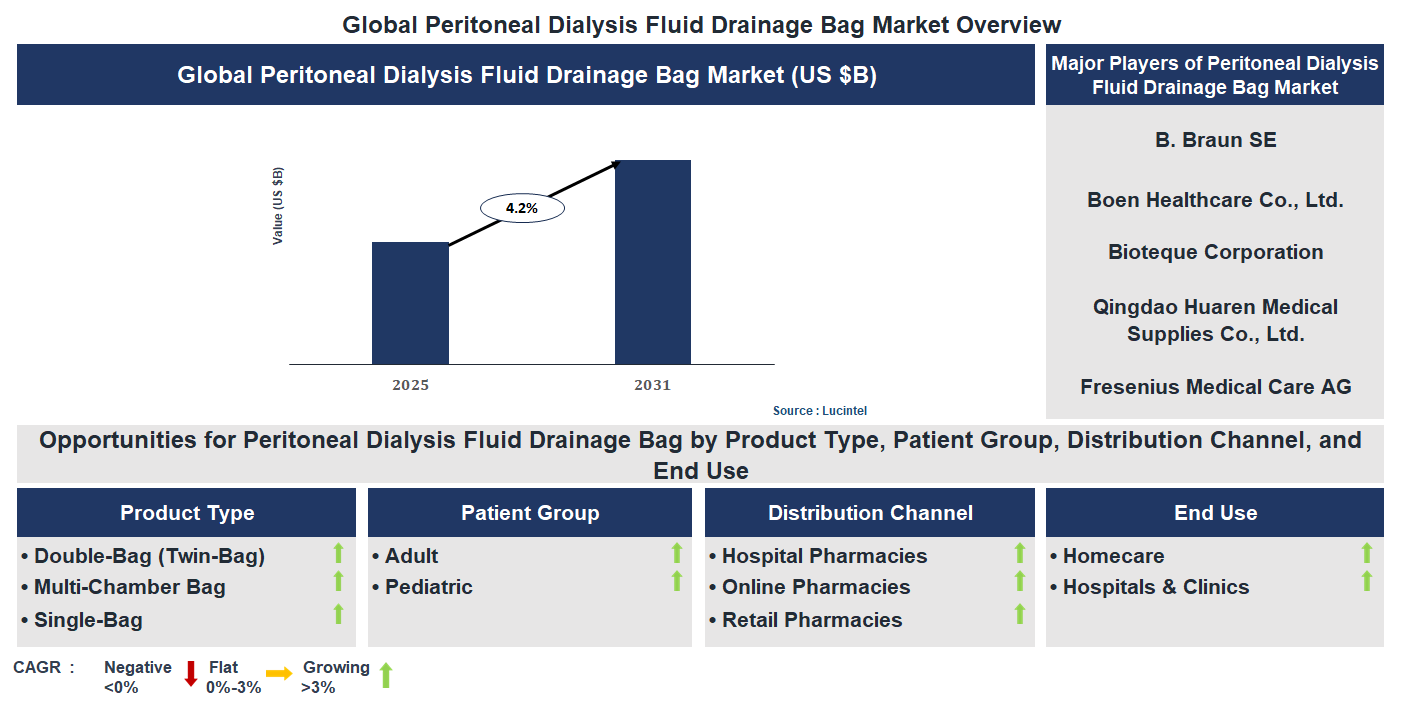
Key data points: The growth forecast = 4.2% annually for the next 6 years. Scroll below to get more insights. This market report covers trends, opportunities and forecasts in peritoneal dialysis fluid drainage bag market to 2031 by product type (double-bag (twin-bag), multi-chamber bag, and single-bag), patient group (adult and pediatric), distribution channel (hospital pharmacies, online pharmacies, and retail pharmacies), end use (homecare and hospitals & clinics), and region (North America, Europe, Asia Pacific, and the Rest of the World)
We'll send your sample report shortly.
• Lucintel forecasts that, within the product type category, multi-chamber bag is expected to witness the highest growth over the forecast period.
• Within the end use category, homecare is expected to witness higher growth.
• In terms of region, APAC is expected to witness the highest growth over the forecast period. Gain valuable insights for your business decisions with our comprehensive 150+ page report. Sample figures with some insights are shown below.
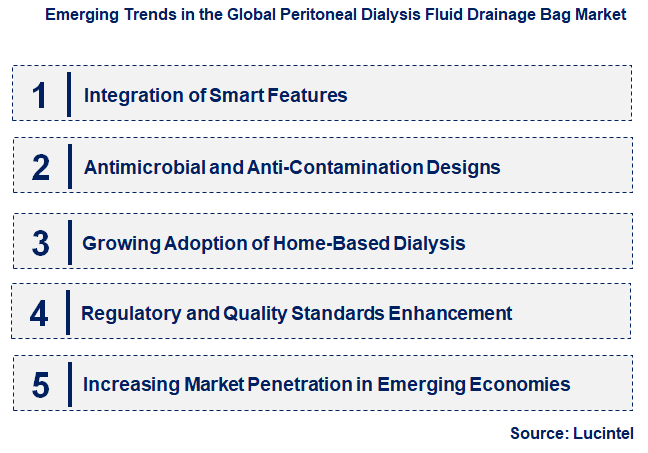
• Integration of Smart Features: Smart drainage bags equipped with sensors and IoT connectivity are revolutionizing patient monitoring. These devices enable real-time tracking of fluid drainage, detect blockages or leaks, and transmit data to healthcare providers remotely. This innovation enhances patient safety, reduces complications, and allows for personalized treatment adjustments. As technology advances, the adoption of smart bags is expected to increase, leading to improved clinical outcomes and more efficient healthcare delivery.
• Antimicrobial and Anti-Contamination Designs: With infection prevention being paramount, manufacturers are developing drainage bags with antimicrobial materials and anti-contamination features. These include antimicrobial coatings, sealed connections, and disposable components that minimize infection risks. Such innovations are critical in reducing peritonitis and other complications associated with peritoneal dialysis. The emphasis on infection control is driving product development and regulatory standards, ultimately improving patient safety and reducing healthcare costs.
• Growing Adoption of Home-Based Dialysis: Patients and healthcare providers are increasingly favoring home-based peritoneal dialysis due to its convenience and cost-effectiveness. This trend is fueling demand for user-friendly, portable drainage bags that facilitate self-care. Market players are focusing on designing lightweight, easy-to-use drainage systems that support patient independence. The shift towards home dialysis is expanding market reach, reducing hospital visits, and improving quality of life for patients with chronic kidney disease.
• Regulatory and Quality Standards Enhancement: Stringent regulatory requirements are prompting manufacturers to improve product quality and safety standards. Enhanced testing protocols, certification processes, and compliance with international guidelines are shaping the market landscape. These regulations ensure that drainage bags meet high safety and efficacy standards, fostering trust among healthcare providers and patients. As standards evolve, companies are investing in R&D to develop compliant, innovative products that meet global demands.
• Increasing Market Penetration in Emerging Economies: Rising healthcare infrastructure, increasing awareness, and expanding insurance coverage are driving market growth in emerging economies. Manufacturers are tailoring products to meet local needs, often at lower costs, to penetrate these markets. This trend broadens access to peritoneal dialysis, improves patient outcomes, and stimulates market expansion. The increased penetration is also encouraging local manufacturing and innovation, contributing to a more competitive and diverse global market. In summary, these trends are collectively transforming the peritoneal dialysis fluid drainage bag market by fostering innovation, enhancing safety, expanding access, and improving patient care. As technological, regulatory, and market dynamics evolve, stakeholders must adapt to stay competitive and meet the growing demand for effective dialysis solutions worldwide.
• Innovation in Bag Materials: Enhanced biocompatible and durable materials are being developed to reduce infection risk and improve patient comfort, leading to safer dialysis procedures and longer-lasting products. These advancements are expected to lower complication rates and increase adoption among healthcare providers, ultimately expanding market reach and improving patient quality of life.
• Smart Drainage Bags: Integration of IoT technology allows real-time monitoring of fluid drainage, providing healthcare professionals with critical data on patient status. This innovation improves treatment precision, reduces complications, and enables remote patient management. The adoption of smart bags is expected to revolutionize dialysis care, making it more efficient and personalized, thereby boosting market growth.
• Portable and Disposable Designs: The development of lightweight, portable, and single-use drainage bags enhances patient mobility and convenience. These designs facilitate home-based dialysis, reduce infection risks, and lower sterilization costs. As patients seek more flexible treatment options, demand for portable solutions is rising, significantly impacting market expansion and encouraging manufacturers to innovate further.
• Cost-Effective Manufacturing: Advances in manufacturing processes are reducing production costs, enabling affordable pricing for end-users. This affordability increases accessibility, especially in emerging markets, and encourages healthcare providers to adopt newer technologies. Cost-effective solutions are vital for expanding market penetration and addressing the needs of a broader patient population.
• Regulatory and Safety Standards: Stricter regulatory guidelines are prompting manufacturers to enhance product safety and efficacy. Compliance ensures market credibility and patient trust, while also fostering innovation in safety features. These standards are shaping the market landscape, encouraging high-quality product development, and ensuring sustainable growth in the industry. The overall impact of these developments is a more efficient, safe, and accessible market, with increased adoption of advanced drainage solutions. This growth is expected to improve patient outcomes, reduce healthcare costs, and expand market opportunities globally, fostering innovation and competition in the peritoneal dialysis fluid drainage bag market.
• Expansion of Home Healthcare and Telemedicine Driving Demand for Portable Drainage Bags: The shift towards home-based dialysis treatments is fueling demand for portable, easy-to-use drainage bags. Patients prefer solutions that offer convenience, safety, and minimal maintenance, encouraging manufacturers to develop lightweight, discreet, and user-friendly products. Telemedicine integration further supports remote monitoring, enhancing patient compliance and reducing hospital visits, thus expanding market opportunities in home healthcare settings.
• Technological Innovations Enhancing Safety and Efficiency of Drainage Bags: Advances in materials, design, and sensor technology are improving the safety and efficiency of drainage bags. Features like anti-reflux valves, antimicrobial coatings, and real-time flow monitoring are reducing infection risks and enhancing patient comfort. These innovations attract healthcare providers seeking reliable, high-performance products, driving market growth through improved clinical outcomes and patient satisfaction.
• Increasing Adoption of Automated and Connected Drainage Systems: The integration of automation and connectivity in drainage bags is transforming peritoneal dialysis management. Smart drainage systems with IoT capabilities enable real-time data collection, remote monitoring, and early complication detection. This technological shift supports personalized treatment plans, reduces manual errors, and improves overall care quality, creating substantial growth opportunities for manufacturers investing in connected healthcare solutions.
• Rising Prevalence of Kidney Diseases and Chronic Conditions Globally: The increasing incidence of chronic kidney disease and related conditions worldwide is directly boosting demand for peritoneal dialysis solutions. As the patient population grows, healthcare providers seek cost-effective, scalable, and accessible drainage options. This trend encourages market expansion, especially in emerging economies, where healthcare infrastructure is developing to meet rising treatment needs.
• Strategic Collaborations and Regulatory Approvals Accelerating Market Penetration: Collaborations between device manufacturers, healthcare providers, and research institutions facilitate product innovation and market expansion. Securing regulatory approvals ensures compliance and builds trust among clinicians and patients. These strategic moves enable faster market penetration, wider adoption, and the development of advanced drainage solutions, ultimately supporting sustained growth in the peritoneal dialysis fluid drainage bag market. These growth opportunities collectively are poised to significantly influence the market by fostering innovation, expanding access, and improving patient outcomes, thereby driving long-term industry expansion.
• Technological Innovations: The development of advanced drainage bags with improved safety features, ease of use, and infection control has significantly propelled market growth. Innovations such as lightweight, portable, and sterile systems enhance patient comfort and compliance. These technological advancements reduce complications and improve treatment outcomes, making peritoneal dialysis more accessible and appealing to both patients and healthcare providers. As R&D continues, the market is expected to see further improvements, fostering increased adoption worldwide.
• Rising Prevalence of Kidney Diseases: The increasing incidence of chronic kidney disease (CKD) and end-stage renal disease (ESRD) globally is a major driver. Factors such as diabetes, hypertension, and aging populations contribute to this rise. As more patients require dialysis, the demand for reliable drainage bags escalates. Governments and healthcare systems are investing more in renal care infrastructure, further fueling market expansion. This growing patient base ensures sustained demand for innovative drainage solutions tailored to diverse needs.
• Economic Growth and Healthcare Expenditure: Growing healthcare budgets and economic development in emerging markets have expanded access to dialysis treatments. Increased insurance coverage and government initiatives support the procurement of advanced drainage bags. As affordability improves, more patients can access peritoneal dialysis, boosting market sales. Additionally, private sector investments in healthcare infrastructure and medical device manufacturing contribute to a competitive and expanding market landscape.
• Regulatory Approvals and Standards: Stringent regulatory frameworks ensure the safety, efficacy, and quality of drainage bags. Approval from agencies such as the FDA and EMA facilitates market entry and builds trust among healthcare providers and patients. Compliance with international standards encourages manufacturers to innovate and improve product features. Regulatory support also accelerates the adoption of new technologies, fostering market growth while maintaining high safety standards.
• Increasing Awareness and Adoption: Growing awareness about the benefits of peritoneal dialysis, including its convenience and cost-effectiveness, encourages adoption. Educational campaigns and improved patient education empower individuals to opt for home-based dialysis solutions. Healthcare providers are increasingly recommending peritoneal dialysis as a first-line treatment, especially in remote or underserved areas. This shift in perception and practice supports market expansion and the development of specialized drainage products. The challenges facing this peritoneal dialysis fluid drainage bag market include:
• High Cost of Equipment and Supplies: The cost of peritoneal dialysis kits, including drainage bags, remains a significant barrier, especially in low-income regions. High prices limit accessibility for many patients, restricting market growth. Additionally, ongoing expenses for supplies and maintenance can burden patients and healthcare systems. Manufacturers face pressure to reduce costs without compromising quality, which is challenging but essential for broader adoption.
• Regulatory and Approval Delays: Navigating complex regulatory pathways can delay product launches and innovations. Lengthy approval processes, varying standards across regions, and compliance costs pose hurdles for manufacturers. These delays can hinder timely access to improved drainage solutions, impacting market competitiveness and innovation pace. Smaller companies may find it particularly challenging to meet diverse regulatory requirements.
• Supply Chain Disruptions: Global supply chain issues, including shortages of raw materials and logistical challenges, affect the production and distribution of drainage bags. Such disruptions can lead to delays, increased costs, and stock shortages, impacting patient care. Ensuring a reliable supply chain is critical for market stability, especially during global crises like pandemics, which exacerbate these vulnerabilities. In summary, the peritoneal dialysis fluid drainage bag market is driven by technological advancements, increasing disease prevalence, economic growth, regulatory support, and rising awareness. However, high costs, regulatory delays, and supply chain issues pose significant challenges. These factors collectively shape the markets trajectory, requiring stakeholders to innovate, adapt, and collaborate to ensure sustainable growth and improved patient outcomes. The interplay of these drivers and challenges will determine the pace and direction of market development in the coming years.
• B. Braun SE
• Boen Healthcare Co., Ltd.
• Bioteque Corporation
• Qingdao Huaren Medical Supplies Co., Ltd.
• Fresenius Medical Care AG
• MITRA Industries
• WEIGAO GROUP
• Vitaimed Instrument Co., Ltd.
• Weihai Lianqiao New Material Science and Technology Co., Ltd.
• Nipro Corporation
• Double-Bag (Twin-Bag)
• Multi-Chamber Bag
• Single-Bag
• Adult
• Pediatric
• Hospital Pharmacies
• Online Pharmacies
• Retail Pharmacies
• Homecare
• Hospitals & Clinics
• North America
• Europe
• Asia Pacific
• The Rest of the World
• United States: The US market has seen a surge in the adoption of advanced drainage bags with antimicrobial properties to reduce infection risks. Innovations in portable and user-friendly designs are gaining popularity, driven by patient preference for home-based dialysis. Regulatory agencies like the FDA are emphasizing safety standards, encouraging manufacturers to develop high-quality, compliant products. The increasing prevalence of chronic kidney disease (CKD) and end-stage renal disease (ESRD) has further boosted demand. Additionally, collaborations between healthcare providers and device manufacturers are fostering product innovation and expanding access to dialysis solutions across the country.
• China: China’s market is rapidly expanding due to a rising incidence of kidney-related health issues and government initiatives to improve healthcare infrastructure. Local manufacturers are investing in R&D to develop cost-effective, durable drainage bags suitable for large-scale use. The country is also witnessing a shift towards disposable and single-use products to enhance hygiene and reduce infection risks. The government’s focus on increasing healthcare coverage and the growing number of dialysis centers are contributing to market growth. Moreover, technological integration, such as smart drainage bags with monitoring features, is beginning to emerge, aligning with China’s digital health initiatives.
• Germany: Germany’s market is characterized by a focus on high-quality, innovative products that meet stringent safety and environmental standards. The country is leading in the development of eco-friendly drainage bags made from sustainable materials. German companies are investing in research to improve product ergonomics and patient comfort, including lightweight and discreet designs. The healthcare system’s emphasis on personalized treatment and minimally invasive procedures is driving demand for advanced drainage solutions. Additionally, Germany’s strong regulatory framework ensures product reliability, fostering trust among healthcare providers and patients alike.
• India: The Indian market is witnessing rapid growth due to increasing awareness of kidney health and expanding healthcare infrastructure. Local manufacturers are focusing on affordable, durable drainage bags to cater to a large population with limited access to premium healthcare. The government’s initiatives to promote dialysis centers and improve healthcare access are fueling demand. Innovations include the development of single-use, sterile drainage bags that are easy to use and transport. The rising prevalence of diabetes and hypertension, major risk factors for kidney disease, is further propelling market growth. Efforts to improve supply chain logistics are also enhancing product availability across rural and urban areas.
• Japan: Japan’s market is driven by an aging population with a high prevalence of CKD and ESRD. The country emphasizes advanced, minimally invasive drainage solutions that improve patients quality of life. Japanese companies are pioneering in the development of smart drainage bags with integrated monitoring systems for real-time health tracking. Regulatory standards are strict, ensuring high safety and efficacy levels. The focus on reducing infection risks and enhancing comfort has led to innovations in material technology and ergonomic design. Japan’s healthcare system supports extensive research and development, positioning it as a leader in high-tech dialysis drainage products.


• B. Braun SE
• Boen Healthcare Co., Ltd.
• Bioteque Corporation
• Qingdao Huaren Medical Supplies Co., Ltd.
• Fresenius Medical Care AG
• MITRA Industries
• WEIGAO GROUP
• Vitaimed Instrument Co., Ltd.
• Weihai Lianqiao New Material Science and Technology Co., Ltd.
• Nipro Corporation Q5. Which peritoneal dialysis fluid drainage bag market segment will be the largest in future? Answer: Lucintel forecasts that, within the product type category, multi-chamber bag is expected to witness the highest growth over the forecast period. Q6. In peritoneal dialysis fluid drainage bag market, which region is expected to be the largest in next 5 years? Answer: In terms of region, APAC is expected to witness the highest growth over the forecast period. Q7. Do we receive customization in this report? Answer: Yes, Lucintel provides 10% customization without any additional cost.


Choose a license that fits your team. Instant PDF delivery.
Prices exclude taxes. Instant delivery. Custom licensing available on request.
Market Report · July 22, 2026
Market Report · July 22, 2026
Market Report · July 22, 2026
Trusted partner for strategic intelligence and business growth


Receive a complimentary market analysis tailored to your industry. Our analysts will identify key growth opportunities and competitive dynamics specific to your business.

Market size, growth rate, and key trend analysis for your specific sector.

Top competitor positioning and market share analysis.

Strategic recommendations backed by data-driven insights.
Get curated market intelligence and competitive moves straight to your inbox.
By subscribing, you agree to receive our monthly insights. Unsubscribe anytime.
Receive a complimentary market analysis tailored to your industry. Our analysts will identify key growth opportunities and competitive dynamics specific to your business.
Market size, growth rate, and key trend analysis for your specific sector.
Top competitor positioning and market share analysis.
Strategic recommendations backed by data-driven insights.
Get curated market intelligence, emerging trends, and competitive moves straight to your inbox each month.
By subscribing, you agree to receive our monthly insights. Unsubscribe anytime.
We'll send your sample report shortly.