
Report Feature
Percutaneous Urinary Catheter Market Trends and Forecast
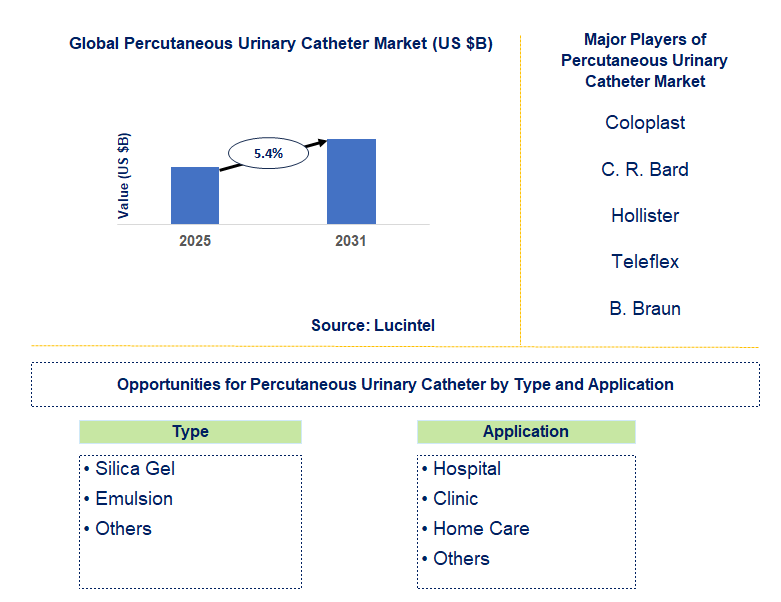
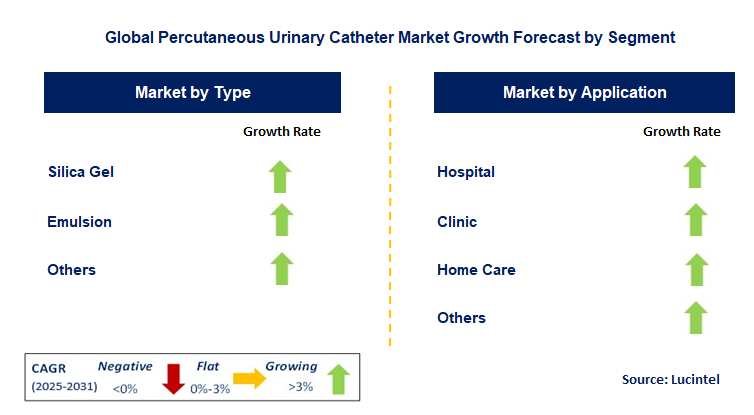
The future of the global percutaneous urinary catheter market looks promising with opportunities in the hospital, clinic, and home care markets. The global percutaneous urinary catheter market is expected to grow with a CAGR of 5.4% from 2025 to 2031. The major drivers for this market are the increasing prevalence of urinary incontinence cases, the rising geriatric population needing catheterization solutions, and the growing demand for minimally invasive procedures.• Lucintel forecasts that, within the type category, silica gel is expected to witness higher growth over the forecast period.
• Within the application category, home care is expected to witness the highest growth.
• In terms of region, APAC is expected to witness the highest growth over the forecast period. Gain valuable insights for your business decisions with our comprehensive 150+ page report. Sample figures with some insights are shown below.
Emerging Trends in the Percutaneous Urinary Catheter Market
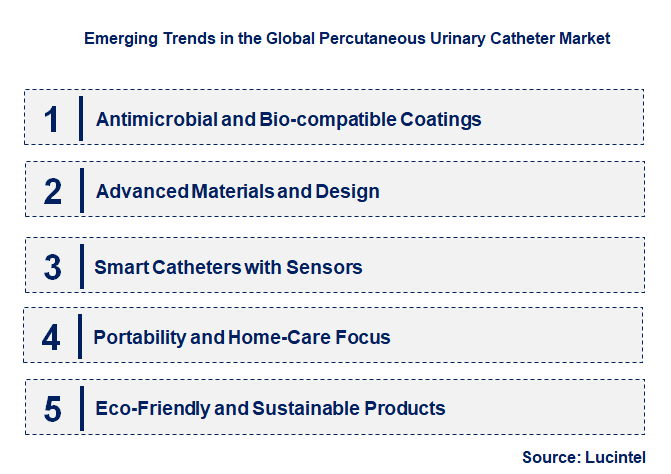
The percutaneous urinary catheter market is undergoing a significant transformation with emerging trends focused on improving patient safety, comfort, and clinical outcomes. These trends are moving beyond simple functionality to address the critical issues of infection control and user experience. The market is evolving with a greater emphasis on innovation in materials, design, and usability to meet the complex needs of patients and healthcare providers.• Antimicrobial and Bio-compatible Coatings: This trend involves applying specialized coatings to catheters to inhibit bacterial growth and reduce the risk of catheter-associated urinary tract infections (CAUTIs). The impact is a significant reduction in infection rates, which is a major concern in healthcare. This trend not only improves patient safety but also reduces healthcare costs associated with treating infections.
• Advanced Materials and Design: There is a growing preference for catheters made from advanced materials like pure silicone, which is more flexible and less likely to cause irritation. Designs are also becoming more ergonomic and streamlined. The impact is enhanced patient comfort and a reduction in urethral trauma during insertion and removal, which is critical for long-term catheter users and their quality of life.
• Smart Catheters with Sensors: This trend involves integrating small sensors into catheters to monitor urine flow, bladder pressure, or even detect early signs of infection. The data can be transmitted wirelessly to a monitoring system. The impact is a proactive approach to patient care. This technology allows for real-time monitoring and timely intervention, preventing complications before they become severe.
• Portability and Home-Care Focus: There is a growing demand for compact, easy-to-use percutaneous catheters designed for home-care settings. These products are often sold in kits with all necessary supplies. The impact is a significant shift in care from hospitals to the home, which is more convenient and cost-effective for patients, especially those with chronic conditions requiring long-term catheterization.
• Eco-Friendly and Sustainable Products: This trend is focused on developing catheters from biodegradable or recyclable materials to reduce environmental impact. The medical device industry is under increasing pressure to adopt sustainable practices. The impact is a market that is more aligned with global environmental goals and a growing segment of consumers and hospitals who prioritize sustainability. These trends are collectively reshaping the market by transforming percutaneous urinary catheters from simple medical devices into sophisticated, patient-centric, and environmentally conscious tools. The focus has shifted to a holistic approach that prioritizes safety, comfort, and sustainability, while also enabling a more efficient and cost-effective delivery of healthcare.
Recent Development in the Percutaneous Urinary Catheter Market
The percutaneous urinary catheter market is experiencing a series of recent developments that are significantly influencing its growth and product offerings. These advancements are driven by a combination of technological innovation, evolving patient needs, and a greater emphasis on efficient healthcare solutions. These developments are making catheters more effective, safer, and user-friendly for a diverse range of applications.• Introduction of Pre-lubricated Catheters: Recent developments include the widespread availability of catheters that come pre-lubricated with a hydrophilic coating. This makes insertion smoother and less painful for the patient. The impact is a major improvement in patient comfort and a reduction in the risk of urethral damage, which in turn leads to higher patient compliance with long-term catheter use.
• Enhanced Balloon and Inflation Systems: The market has seen developments in balloon design and inflation systems for percutaneous catheters. These systems ensure uniform inflation and easy deflation, reducing the risk of tissue damage. The impact is a safer and more secure fit for the catheter, which is crucial for preventing leakage and dislodgment during use.
• Development of Catheter Stabilization Devices: There is a growing focus on external devices that secure the catheter to the patient's body. These devices prevent accidental pulling and movement. The impact is a significant reduction in the risk of catheter dislodgment and subsequent trauma to the patient, leading to improved outcomes and less need for re-insertion.
• Integration of Securement and Drainage Systems: The market is moving towards integrated systems that combine the catheter, securement device, and a closed drainage system in a single kit. This streamlines the process for healthcare providers and reduces the risk of contamination. The impact is a more hygienic and efficient workflow in clinical settings and a lower risk of infection for the patient.
• Use of Tapered Catheter Tips: Recent developments have led to the design of catheters with a tapered tip. This makes the catheter easier to insert through the skin and tissue, particularly for patients with difficult anatomy. The impact is a less traumatic procedure, which is critical for patient comfort and can lead to a reduced recovery time. These developments are collectively impacting the market by fostering a more patient-centric and technology-driven approach to urinary catheterization. They are not only improving the quality of life for patients but are also creating a more efficient and safer environment for healthcare professionals.
Strategic Growth Opportunities in the Percutaneous Urinary Catheter Market
The percutaneous urinary catheter market is presenting significant strategic growth opportunities across key applications, driven by an aging global population and the increasing prevalence of urological disorders. By targeting these specific applications, companies can expand their market presence and cater to the unique needs of different user segments, from hospital settings to long-term care facilities.• Hospital and Surgical Settings: This is a major growth opportunity as hospitals are the primary users of percutaneous catheters for pre-operative and post-operative care. The opportunity lies in providing high-quality, sterile, and advanced catheters for a range of surgical procedures. The impact is a focus on a high-volume, high-standard market, where reliability and infection control are paramount.
• Long-Term and Chronic Care: This application presents a significant growth opportunity due to the rising number of patients with chronic conditions like urinary incontinence or benign prostatic hyperplasia (BPH) who require long-term catheterization. The impact is a focus on developing durable, comfortable, and discreet catheters suitable for extended use in nursing homes and at home.
• Pediatric and Neonatal Care: This is a niche but high-growth application for percutaneous catheters designed for infants and children. These products require specific features like smaller sizes, softer materials, and precise fit. The impact is the creation of a specialized market segment that caters to a vulnerable population, requiring a high degree of customization and safety.
• Home-Care and Self-Catheterization: The trend of home-based care presents a major growth opportunity. The market can grow by providing user-friendly catheters and kits for self-catheterization. The impact is a shift from clinical to consumer-driven products, leading to a broader consumer base and a focus on convenience, privacy, and ease of use.
• Urology and Interventional Radiology: The opportunity lies in providing advanced catheters for complex urological procedures, such as percutaneous nephrostomy. These catheters are used for direct drainage from the kidneys. The impact is a high-value, specialized market segment that requires a strong focus on clinical expertise, product performance, and partnerships with specialized medical professionals. These opportunities are impacting the market by encouraging diversification and specialization. Companies are now able to create products and services that cater to the unique needs of different applications, leading to a more segmented and competitive market that is better equipped to serve the distinct needs of a wide range of patients and healthcare providers.
Percutaneous Urinary Catheter Market Driver and Challenges
The percutaneous urinary catheter market is influenced by a combination of key drivers and challenges, which include various technological, economic, and regulatory factors. Understanding these forces is essential for market players to develop effective strategies and maintain a competitive edge. The market's trajectory is shaped by factors that both foster growth and create significant obstacles. The factors responsible for driving the percutaneous urinary catheter market include: 1. Growing Geriatric Population: The global increase in the elderly population is a primary driver. As people age, they are more susceptible to urological conditions that require catheterization. This demographic shift provides a large and stable customer base, particularly for long-term and chronic care applications. 2. Rising Prevalence of Urological Disorders: The increasing incidence of conditions such as urinary incontinence, BPH, and bladder cancer is a major driver. These health issues directly necessitate the use of urinary catheters for diagnosis, treatment, and management. This trend creates a consistent and expanding need for the products. 3. Advancements in Material and Design: The development of new materials and designs that are less prone to causing infections and irritation is a key driver. Innovations like antimicrobial coatings, biocompatible silicone, and ergonomic designs improve patient outcomes and comfort. This leads to higher patient compliance and greater adoption of advanced products. 4. Increased Awareness of CAUTIs: A growing global awareness among healthcare professionals and patients about the risks of catheter-associated urinary tract infections is a major driver. This is pushing the market toward safer, single-use, and infection-resistant catheters. This focus on safety is a key selling point for manufacturers and a priority for hospitals. 5. Shift towards Home-Care: The global trend of patients receiving care in their homes instead of hospitals is a significant driver. This increases the demand for user-friendly, self-catheterization products and kits. This trend is driven by patient preference for comfort and convenience, as well as cost savings for healthcare systems. Challenges in the percutaneous urinary catheter market are: 1. Risk of Catheter-Associated Infections: Despite advancements, the risk of CAUTIs remains a significant challenge. Infections can lead to severe complications, extended hospital stays, and increased healthcare costs. This risk can deter both patients and healthcare providers from using catheters, leading to the search for alternative solutions. 2. Lack of Reimbursement Policies: In many developing countries, there are limited or no reimbursement policies for advanced or single-use catheters. This high out-of-pocket cost is a major barrier to adoption for many patients. The lack of financial support can limit market penetration and growth in key regions. 3. Product Commoditization: The market for basic percutaneous catheters is highly commoditized, with many low-cost alternatives available, especially from local manufacturers in emerging economies. This makes it difficult for companies with innovative, premium products to compete on price alone. It puts pressure on profit margins and makes market differentiation a challenge. The overall impact of these drivers and challenges is a market that is evolving rapidly but also faces significant hurdles. While strong demand and technological innovation are propelling the market forward, issues like infection risks, cost, and a highly competitive landscape necessitate that companies focus on producing safe, high-quality, and cost-effective products to succeed in this dynamic environment.List of Percutaneous Urinary Catheter Companies
Companies in the market compete on the basis of product quality offered. Major players in this market focus on expanding their manufacturing facilities, R&D investments, infrastructural development, and leverage integration opportunities across the value chain. With these strategies percutaneous urinary catheter companies cater increasing demand, ensure competitive effectiveness, develop innovative products & technologies, reduce production costs, and expand their customer base. Some of the percutaneous urinary catheter companies profiled in this report include-• Coloplast
• C. R. Bard
• Hollister
• Teleflex
• B. Braun
• Medtronic
• Adapta medical
• APEXMED
• ASID BONZ
• ConvaTec
Percutaneous Urinary Catheter Market by Segment
The study includes a forecast for the global percutaneous urinary catheter market by type, application, and region.Percutaneous Urinary Catheter Market by Type [Value from 2019 to 2031]:
• Silica Gel
• Emulsion
• Others
Percutaneous Urinary Catheter Market by Application [Value from 2019 to 2031]:
• Hospital
• Clinic
• Home Care
• Others
Percutaneous Urinary Catheter Market by Region [Value from 2019 to 2031]:
• North America
• Europe
• Asia Pacific
• The Rest of the World
Country Wise Outlook for the Percutaneous Urinary Catheter Market
Recent developments in the percutaneous urinary catheter market are shaped by the need to reduce catheter-associated urinary tract infections (CAUTIs) and improve patient comfort. Innovations are focusing on advanced materials, specialized coatings, and enhanced designs that facilitate easier insertion and long-term use. The market is also being driven by a growing emphasis on home healthcare and a rising geriatric population.• United States: The U.S. market is a leader in product innovation, with a strong focus on antimicrobial and biocompatible catheter materials. Recent developments include FDA approvals for new devices with enhanced safety features to reduce CAUTIs, a major concern in U.S. hospitals. The market is also driven by robust home healthcare services and favorable reimbursement policies for advanced devices.
• China: The Chinese market is experiencing rapid growth, driven by an expanding patient base and increasing healthcare expenditure. Recent developments are focused on the domestic production of cost-effective percutaneous catheters to meet the high demand. There is a growing emphasis on improving product quality and safety to align with international standards, while maintaining affordability for a large population.
• Germany: Germany's market is characterized by a strong emphasis on high-quality, long-lasting products with a focus on patient comfort. Key developments include the use of advanced silicone and hydrogel-coated catheters that reduce irritation and the risk of infection. The market is also seeing an increase in R&D for innovative designs that are less invasive and easier to manage for both patients and healthcare providers.
• India: The Indian market is witnessing significant growth, fueled by a large and aging population and an improving healthcare infrastructure. A key development is the rising demand for affordable percutaneous catheters, with a focus on local manufacturing to reduce costs. The market is also seeing a shift towards more advanced, single-use catheters to minimize infection risks in hospitals.
• Japan: Japan's market is distinguished by its high adoption of sophisticated medical technologies and a rapidly aging population. Recent developments include the use of miniaturized and highly flexible catheters for less invasive procedures. The market is also seeing a strong demand for products that are easy for both medical professionals and elderly patients to use at home, reflecting a focus on aging in place.

Features of the Global Percutaneous Urinary Catheter Market
Market Size Estimates: Percutaneous urinary catheter market size estimation in terms of value ($B). Trend and Forecast Analysis: Market trends (2019 to 2024) and forecast (2025 to 2031) by various segments and regions. Segmentation Analysis: Percutaneous urinary catheter market size by type, application, and region in terms of value ($B). Regional Analysis: Percutaneous urinary catheter market breakdown by North America, Europe, Asia Pacific, and Rest of the World. Growth Opportunities: Analysis of growth opportunities in different types, applications, and regions for the percutaneous urinary catheter market. Strategic Analysis: This includes M&A, new product development, and competitive landscape of the percutaneous urinary catheter market. Analysis of competitive intensity of the industry based on Porter’s Five Forces model.
FAQ
Q1. What is the growth forecast for percutaneous urinary catheter market? Answer: The global percutaneous urinary catheter market is expected to grow with a CAGR of 5.4% from 2025 to 2031. Q2. What are the major drivers influencing the growth of the percutaneous urinary catheter market? Answer: The major drivers for this market are the increasing prevalence of urinary incontinence cases, the rising geriatric population needing catheterization solutions, and the growing demand for minimally invasive procedures. Q3. What are the major segments for percutaneous urinary catheter market? Answer: The future of the percutaneous urinary catheter market looks promising with opportunities in the hospital, clinic, and home care markets. Q4. Who are the key percutaneous urinary catheter market companies? Answer: Some of the key percutaneous urinary catheter companies are as follows:• Coloplast
• C. R. Bard
• Hollister
• Teleflex
• B. Braun
• Medtronic
• Adapta medical
• APEXMED
• ASID BONZ
• ConvaTec Q5. Which percutaneous urinary catheter market segment will be the largest in future? Answer: Lucintel forecasts that, within the type category, silica gel is expected to witness higher growth over the forecast period. Q6. In percutaneous urinary catheter market, which region is expected to be the largest in next 5 years? Answer: In terms of region, APAC is expected to witness the highest growth over the forecast period. Q7. Do we receive customization in this report? Answer: Yes, Lucintel provides 10% customization without any additional cost.
Table of Contents
Methodology
- In-depth interviews of the major players in this market
- Detailed secondary research from competitors’ financial statements and published data
- Extensive searches of published works, market, and database information pertaining to industry news, company press releases, and customer intentions
- A compilation of the experiences, judgments, and insights of Lucintel’s professionals, who have analyzed and tracked this market over the years.


Buy Now
Choose a license that fits your team. Instant PDF delivery.
Prices exclude taxes. Instant delivery. Custom licensing available on request.
Key Questions
- • What are some of the most promising, high-growth opportunities for the percutaneous urinary catheter market by type (silica gel, emulsion, and others), application (hospital, clinic, home care, and others), and region (North America, Europe, Asia Pacific, and the Rest of the World)?
- • Which segments will grow at a faster pace and why?
- • Which region will grow at a faster pace and why?
- • What are the key factors affecting market dynamics? What are the key challenges and business risks in this market?
- • What are the business risks and competitive threats in this market?
- • What are the emerging trends in this market and the reasons behind them?
- • What are some of the changing demands of customers in the market?
- • What are the new developments in the market? Which companies are leading these developments?
- • Who are the major players in this market? What strategic initiatives are key players pursuing for business growth?
- • What are some of the competing products in this market and how big of a threat do they pose for loss of market share by material or product substitution?
- • What M&A activity has occurred in the last 5 years and what has its impact been on the industry? For any questions related to Percutaneous Urinary Catheter Market, Percutaneous Urinary Catheter Market Size, Percutaneous Urinary Catheter Market Growth, Percutaneous Urinary Catheter Market Analysis, Percutaneous Urinary Catheter Market Report, Percutaneous Urinary Catheter Market Share, Percutaneous Urinary Catheter Market Trends, Percutaneous Urinary Catheter Market Forecast, Percutaneous Urinary Catheter Companies, write Lucintel analyst at email: helpdesk@lucintel.com. We will be glad to get back to you soon.


