
Market Report · July 22, 2026

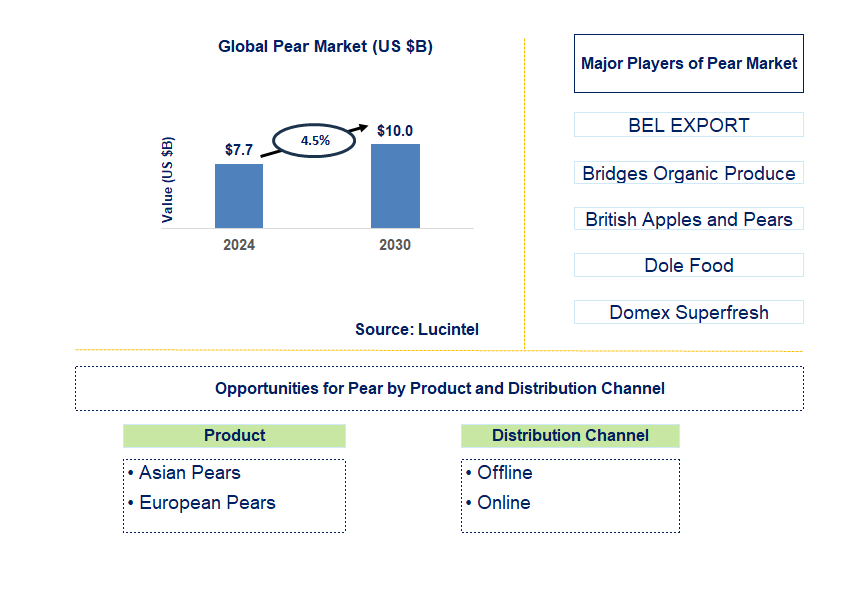
Key data points: The market size in 2030 = $10 billion, growth forecast = 4.5% annually for the next 6 years. Scroll below to get more insights. This market report covers trends, opportunities, and forecasts in the global pear market to 2030 by product (Asian pears and European pears), distribution channel (offline and online), and region (North America, Europe, Asia Pacific, and the Rest of the World)
We'll send your sample report shortly.
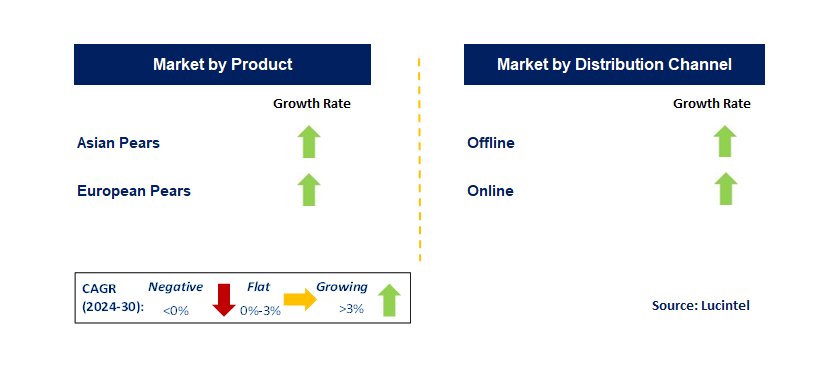
• Lucintel forecasts that, within product category, Asian pear is expected to witness a higher growth over the forecast period due to rising use of Asian pears for raw and cooked applications.
• Within distribution channel category, offline is expected to witness a higher growth due to increase in the number of retailers offering pear under their brands.
• In terms of regions, APAC is expected to witness the highest growth over the forecast period due to growing demand for healthy food. A more than 150-page report is developed to help in your business decisions.
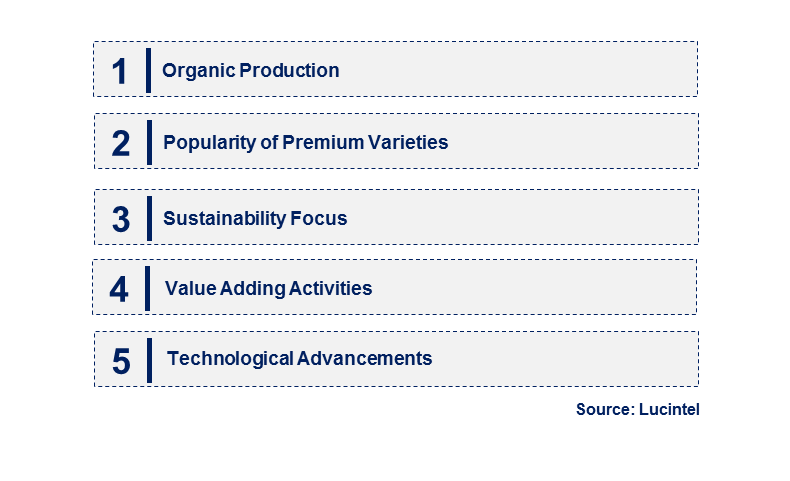
• Organic Production: An increase in organic pears in the market as more consumers become health-conscious and environmentally aware.
• Popularity of Premium Varieties: Growing awareness and demand for unique and high-quality pear cultivars.
• Sustainability Focus: A greater emphasis on the sustainability of pear farming operations and the low carbon footprint of the production process.
• Value-Adding Activities: An expanding range of pear-derived products, including juices, snacks, and bottled preserves.
• Technological Advancements: Modern agricultural practices are being employed to enhance both the quantity and quality of production, as well as improve post-harvest handling.
• Export Growth: Improved quality and favorable trade agreements have led to increased pear exports to international markets.
• Traceability: The supply chain, from farms to markets to consumers, is becoming more transparent and secure due to the development of traceability systems. The emerging trends in the pear market suggest structural transformations, including the growth of high-value-added organic products and the development and implementation of advanced technologies to support the future of pear farming and consumption.
• Improved Cultivation Techniques: The adoption of modern farming methods, such as precision agriculture and modern irrigation, to achieve higher yields and better fruit quality.
• Organic and Specialty Varieties: The production and consumption of organic and specialty pears are on the rise due to health and quality reasons.
• Technological Integration: The use of advanced techniques in harvesting, storing, and shipping pears to minimize post-harvest loss and extend shelf life.
• Sustainability Efforts: Increased efforts toward sustainable agriculture practices, including low pesticide and green farming methods that benefit the environment.
• Expanded Export Markets: Enhanced quality standards and stronger international trade relations have led to an increase in pear exports.
• Product Innovation: New value-added pear products, such as pear juices, pear snacks, and pear baked goods, are being developed to meet diverse consumer needs.
• Enhanced Supply Chain: The deployment of advanced supply chain management systems to improve traceability, efficiency, and quality control. Traditional pear market behaviors are evolving toward more sophisticated cultivation methods, technological integration, and network building, driven by changing consumer demands and sustainability practices.
• Organic Market Expansion: Capitalizing on the rapidly growing organic pear market through increased organic farming and marketing activities.
• Premium Varieties: Developing and marketing distinct premium pear varieties with rich flavors and high quality to capture the high-value segment.
• Technology Adoption: Investing in modern agricultural and post-harvest technologies to improve the effectiveness and quality of pear production.
• New Product Development: Exploring new product lines, such as pear-based drinks and snacks, to appeal to new customer segments.
• Export Opportunities: Identifying new markets and expanding export activities to reduce dependence on the domestic market.
• Sustainability Initiatives: Implementing improved farming techniques and certifications for organic markets and eco-conscious consumers.
• Supply Chain Optimization: Enhancing supply chain management and traceability to ensure better product quality that meets customer expectations. In the pear market, growth strategies should include expanding the organic product line, as well as introducing premium and value-added pear products to capture new market opportunities.
• Health and wellness trends: The health consciousness trend has increased demand for fresh fruits like pears among consumers. Technological Innovations: Improvement in agricultural and post-harvest technology that increases yields, quality, and shelf life of the pears. Sustainability Focus: There are more and more people who are interested in purchasing goods using more sustainable and organic methods.
• Product Diversification: Creation of consumer products, juices, concentrate, and cocktails, made from the pear fruit.
• Export Potential: More possibilities for export growth as production is of better quality and trade opportunities are available.
• Market Expansion: The increase in emerging markets and the urban population creating demand for the market. Challenges in the pear market are:
• Climate Change: Effects of climate change on the production of pears like weather changes and pests burden.
• Market Competition: There is stiff competition against other fruits and producers in the market influencing pricing and market share.
• Regulatory Issues: Dealing with different regulations and hurdles of organic and plant-based in other territories.
• Supply Chain Disruptions: Situations related to supply chain management causing interruptions in distribution and availability of the product.
• Pest and Disease Management: Issue pertaining to pests and diseases of the fruit that lowers the quality or productivity of the par fruit.
• Consumer Preferences: Changes in consumers’ ways and preferences regarding the fruits and markets. Health awareness, current technologies, and ecological considerations foster pear market growth, however, climate change, market rivalry, and regulations act as growth restraints. In order to accelerate and sustain growth, it will be important to meet those challenges while forging ahead with market drivers.
• BEL EXPORT
• Bridges Organic Produce
• British Apples and Pears
• Dole Food
• Domex Superfresh Growers
• Duckwall Fruit
• Fruit Modena
• Asian Pears
• European Pears
• Offline
• Online
• North America
• Europe
• Asia Pacific
• The Rest of the World
• USA: The pear industry in the USA has seen several developments in recent years. Organic and specialty pears are growing in popularity due to the increasing number of consumers who favor organic foods. The use of precision agriculture is boosting both production levels and fruit quality. Recently, there has been a movement toward more eco-friendly farming practices.
• China: The pear market in China has experienced tremendous growth, mainly driven by domestic consumption and export. Recent developments include the adoption of greenhouse technologies for modern orchard management and post-harvest practices that enhance fruit quality and shelf life. Traditional strategies emphasize high-value addition and a premium market, particularly for organic and niche pears. The growing middle class and urbanization have further driven pear consumption, while efforts to penetrate new international markets are strengthening global trade relations.
• India: The pear market in India is growing as consumers become more knowledgeable and demand fresh fruits. Recent improvements in cultivation practices and the introduction of high-yielding pear varieties suited for specific climates are key developments. There is also increased interest in establishing pear orchards in regions with favorable climates and soils to meet domestic consumption needs. Strategies are being developed to improve the cold chain and distribution facilities, reducing post-harvest losses. Organic pears and value-added pear products are gaining traction among Indian consumers.
• Japan: In Japan, the pear market is focused on high-end, quality segments, with a particular interest in innovative pear cultivars. Recent developments include improvements in melting-pulp cultivation methods to enhance the taste of the fruit. The domestic market is seeing increased demand for specialty pears, with premium Japanese varieties sought after both domestically and internationally. Additionally, there is growing interest in using pears in traditional Japanese recipes and creating innovative alternative uses for the fruit.


• BEL EXPORT
• Bridges Organic Produce
• British Apples and Pears
• Dole Food
• Domex Superfresh Growers
• Duckwall Fruit
• Fruit Modena Q6. Which pear market segment will be the largest in future? Answer: Lucintel forecasts that Asian pear is expected to witness a higher growth over the forecast period due to rising use of Asian pears for raw and cooked applications. Q7. In pear market, which region is expected to be the largest in next 5 years? Answer: APAC is expected to witness the highest growth over the forecast period due to growing demand for healthy food. Q.8 Do we receive customization in this report? Answer: Yes, Lucintel provides 10% customization without any additional cost.


Choose a license that fits your team. Instant PDF delivery.
Prices exclude taxes. Instant delivery. Custom licensing available on request.
Market Report · July 22, 2026
Market Report · July 22, 2026
Market Report · July 22, 2026
Trusted partner for strategic intelligence and business growth


Receive a complimentary market analysis tailored to your industry. Our analysts will identify key growth opportunities and competitive dynamics specific to your business.

Market size, growth rate, and key trend analysis for your specific sector.

Top competitor positioning and market share analysis.

Strategic recommendations backed by data-driven insights.
Get curated market intelligence and competitive moves straight to your inbox.
By subscribing, you agree to receive our monthly insights. Unsubscribe anytime.
Receive a complimentary market analysis tailored to your industry. Our analysts will identify key growth opportunities and competitive dynamics specific to your business.
Market size, growth rate, and key trend analysis for your specific sector.
Top competitor positioning and market share analysis.
Strategic recommendations backed by data-driven insights.
Get curated market intelligence, emerging trends, and competitive moves straight to your inbox each month.
By subscribing, you agree to receive our monthly insights. Unsubscribe anytime.
We'll send your sample report shortly.