
Market Report · July 16, 2026

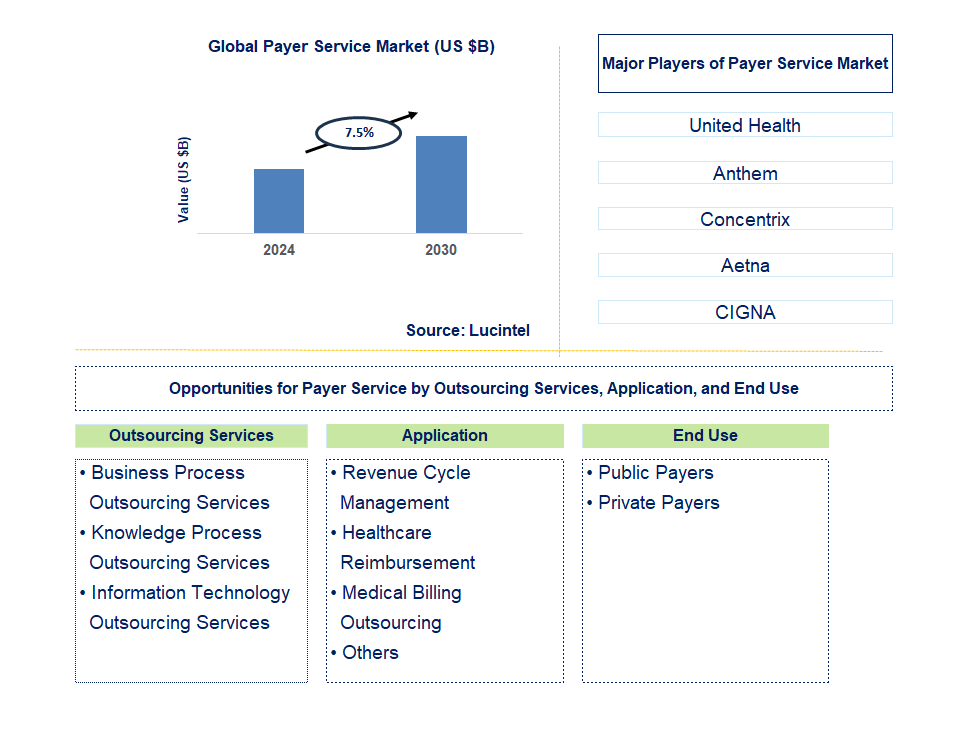
Key data points: The growth forecast = 7.5% annually next 6 years. Scroll below to get more insights. This market report covers trends, opportunities, and forecast in the global payer service market to 2030 by outsourcing services (business process outsourcing services, knowledge process outsourcing services, and information technology outsourcing services), application (revenue cycle management, healthcare reimbursement, medical billing outsourcing, and others), end use (public payers and private payers), and region (North America, Europe, Asia Pacific, and the Rest of the World)
We'll send your sample report shortly.
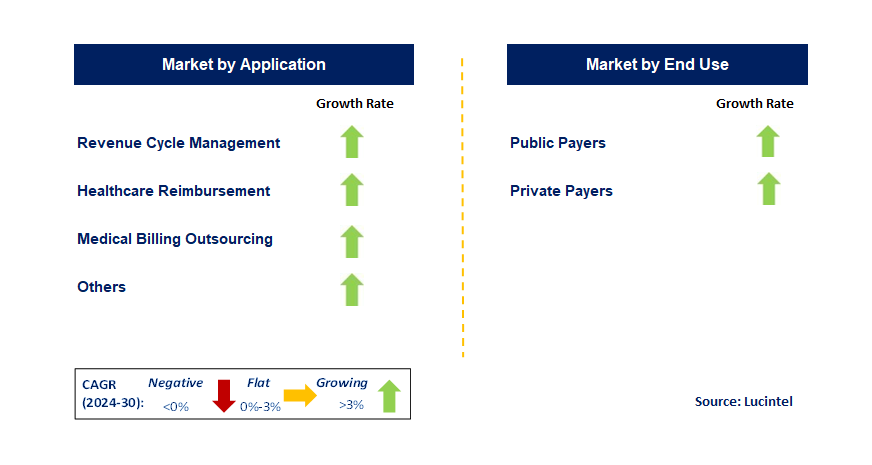
• Lucintel forecasts that revenue cycle management is expected to witness highest growth over the forecast period.
• Within this market, private payers will remain the largest segment.
• North America will remain the largest region over the forecast period due to presence of advanced healthcare infrastructure, regulatory frameworks, and substantial investment in payer services. A more than 150-page report is developed to help in your business decisions.
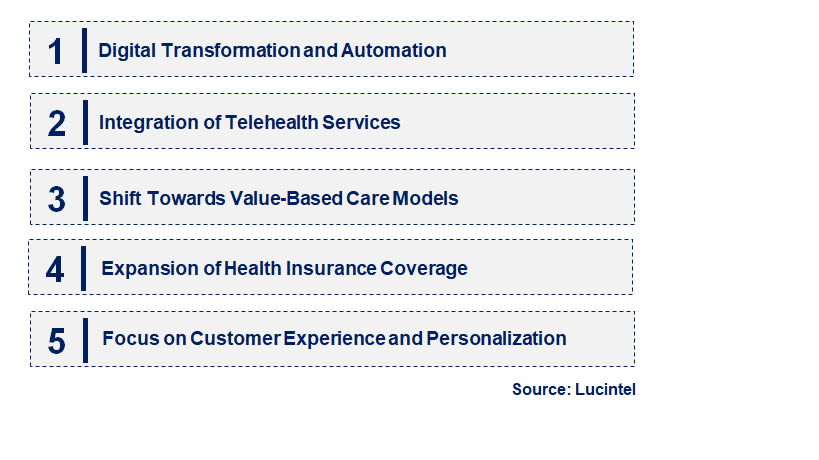
• Digital Transformation and Automation: Digital transformation is a significant trend in the payer service market, involving the adoption of advanced technologies such as AI, machine learning, and blockchain. Automation of claims processing, customer service, and fraud detection is enhancing operational efficiency and reducing administrative costs. By implementing digital tools, payers can streamline workflows, improve accuracy, and offer faster, more reliable services to customers. This trend is crucial for modernizing payer operations and meeting the increasing expectations of a tech-savvy customer base.
• Integration of Telehealth Services: The integration of telehealth services into payer platforms is becoming increasingly prevalent. This trend is driven by the growing demand for remote healthcare options and the need for more accessible care solutions. Payers are incorporating telehealth into their service offerings to improve patient access to healthcare, manage chronic conditions, and reduce overall healthcare costs. By supporting telehealth, payers can enhance the flexibility and convenience of care delivery, aligning with evolving patient preferences and expanding their service capabilities.
• Shift Towards Value-Based Care Models: There is a growing shift towards value-based care models in the payer service market. Unlike traditional fee-for-service models, value-based care focuses on improving patient outcomes and quality of care while managing costs. Payers are increasingly adopting value-based payment models that incentivize providers based on performance metrics and patient health outcomes. This trend aims to enhance care quality, promote preventative measures, and reduce healthcare spending by aligning financial incentives with patient-centered care.
• Expansion of Health Insurance Coverage: The expansion of health insurance coverage is a key trend impacting the payer service market. Governments and insurers are working to broaden coverage options and include more comprehensive benefits to meet diverse healthcare needs. Initiatives such as universal health coverage schemes and subsidized insurance plans are aimed at increasing accessibility and affordability of healthcare services. By expanding coverage, payers can address gaps in access and ensure a larger segment of the population has financial protection against health-related expenses.
• Focus on Customer Experience and Personalization: Improving customer experience and personalization is becoming a central focus for payer services. Payers are leveraging data analytics and customer insights to offer tailored insurance plans, personalized communication, and proactive support. Enhancing the customer journey involves providing easy-to-navigate digital platforms, responsive customer service, and personalized health management solutions. This trend is driven by the need to meet evolving customer expectations and differentiate services in a competitive market, ultimately aiming to improve customer satisfaction and loyalty. The payer service market is undergoing significant changes driven by digital transformation, the integration of telehealth, the shift towards value-based care, expansion of insurance coverage, and a focus on personalized customer experiences. These trends reflect a broader movement towards more efficient, accessible, and patient-centered healthcare services. By embracing these developments, payer organizations can enhance their service offerings, improve operational efficiency, and better meet the needs of a diverse and evolving healthcare landscape. As these trends continue to evolve, they will play a crucial role in shaping the future of payer services and healthcare management.
• Digital Health Platform Integration: The integration of digital health platforms is a major development in the payer service market. Insurers are increasingly adopting digital tools to streamline processes such as claims management, customer service, and provider interactions. This includes mobile apps and web-based platforms that enable easier access to services, real-time updates, and enhanced user experiences. The impact of this development is substantial, improving operational efficiency, reducing administrative costs, and providing customers with more convenient access to their insurance services.
• Adoption of Artificial Intelligence (AI) and Machine Learning: AI and machine learning are being integrated into payer services to enhance data analysis and decision-making. AI technologies are used for predictive analytics, fraud detection, and personalized customer interactions. This advancement allows for more accurate risk assessments, improved claim processing speeds, and better customer service through automated responses and tailored recommendations. The adoption of AI is transforming how payers manage data and interact with customers, leading to more efficient and effective service delivery.
• Regulatory Changes and Compliance Updates: Recent regulatory changes are shaping the payer service market, including updated guidelines for data privacy, reporting requirements, and coverage mandates. For instance, new regulations may impact how insurers handle personal health information or require expanded coverage for certain treatments. Payers must navigate these evolving regulations to ensure compliance and avoid penalties. The impact of these changes includes increased administrative complexity and the need for investment in compliance management systems, influencing operational costs and business practices.
• Expansion of Value-Based Care Models: There is a growing shift towards value-based care models, where payers focus on outcomes rather than the volume of services provided. This involves implementing payment structures that reward providers for delivering high-quality care and improving patient health outcomes. The expansion of value-based care models is impacting payer services by promoting better care coordination, reducing unnecessary procedures, and fostering preventative care practices. This shift aims to enhance patient satisfaction and lower overall healthcare costs by aligning incentives with health outcomes.
• Increased Focus on Telehealth Services: The rise of telehealth services represents a significant development in the payer market. Payers are expanding coverage for telehealth consultations, recognizing their value in providing accessible and convenient care. This includes integrating telehealth into insurance plans and supporting platforms that facilitate virtual visits between patients and healthcare providers. The impact of this development is profound, as it improves access to care, supports continuity of treatment, and addresses barriers such as geographical limitations and patient preferences for remote consultations. The payer service market, including digital health platform integration, AI adoption, regulatory changes, value-based care expansion, and the focus on telehealth, are reshaping the industry. These advancements enhance operational efficiency, improve customer experiences, and align payer services with evolving healthcare needs and regulatory requirements. As these developments continue to evolve, they are driving innovation and transformation within the payer service market, ultimately leading to more effective and patient-centered healthcare solutions.
• Telehealth Integration: Expanding telehealth services represents a significant growth opportunity in the payer market. By incorporating telehealth into insurance offerings, payers can enhance access to care, particularly in underserved or remote areas. This integration involves developing partnerships with telehealth providers, expanding coverage options for virtual consultations, and implementing user-friendly digital platforms. Embracing telehealth can improve patient engagement, reduce healthcare costs, and meet the growing demand for flexible, remote care options.
• Personalized Health Management: The development of personalized health management solutions offers a promising growth opportunity. By leveraging data analytics and AI, payers can create customized health plans that cater to individual patient needs and preferences. This includes tailored wellness programs, preventive care strategies, and personalized treatment recommendations..
• Advanced Data Analytics: The application of advanced data analytics in payer services can drive growth by improving decision-making and operational efficiency. Utilizing big data and predictive analytics enables payers to better understand risk factors, optimize claims processing, and enhance fraud detection. Implementing robust data analytics tools can lead to more accurate risk assessments, cost savings, and streamlined administrative processes. This opportunity supports the development of data-driven strategies that enhance service quality and operational performance.
• Value-Based Care Programs: Expanding value-based care programs presents a key growth opportunity by aligning payer services with quality outcomes rather than volume. Implementing value-based payment models that reward providers for achieving specific health outcomes and patient satisfaction can improve care coordination and reduce unnecessary procedures
• Regulatory Compliance Solutions: Addressing regulatory compliance challenges represents an opportunity for growth by developing solutions that help payers navigate evolving regulations. This includes investing in compliance management systems, legal consulting, and training programs to ensure adherence to new guidelines and standards. The payer service market, including telehealth integration, personalized health management, advanced data analytics, value-based care programs, and regulatory compliance solutions, offer significant potential for expansion and innovation. By capitalizing on these opportunities, payers can enhance their service offerings, improve operational efficiency, and better meet the needs of a diverse and evolving healthcare landscape. Embracing these growth areas will be crucial for driving market success and advancing the future of payer services.
• United Health
• Anthem
• Concentrix
• Aetna
• CIGNA
• HealthPartners
• Blue Cross Blue Shield of Massachusetts
• Business Process Outsourcing Services
• Knowledge Process Outsourcing Services
• Information Technology Outsourcing Services
• Revenue Cycle Management
• Healthcare Reimbursement
• Medical Billing Outsourcing
• Others
• Public Payers
• Private Payers
• North America
• Europe
• Asia Pacific
• The Rest of the World
• United States: In the United States, recent developments in the payer service market are marked by a significant push towards digital transformation. Health insurers are increasingly adopting advanced technologies like AI and machine learning to streamline claims processing and enhance fraud detection. The growth of value-based care models is also influencing payer services, as insurers work to align their offerings with quality outcomes rather than volume.
• China: China is experiencing notable advancements in its payer service market, driven by government initiatives and technological innovation. The country is expanding its social health insurance schemes to cover a broader range of services and improve accessibility. Recent developments include the integration of digital health platforms and mobile apps to facilitate easier access to healthcare services and streamline claim submissions.
• Germany: In Germany, recent developments in the payer service market are characterized by a strong focus on digitalization and integration of electronic health records (EHRs). The country is advancing its initiatives to digitize patient data and streamline administrative processes, improving efficiency in claims processing and reducing paperwork.
• India: India payer service market is evolving rapidly with a focus on expanding health insurance coverage and leveraging technology to improve service delivery. Recent developments include the rollout of the Ayushman Bharat scheme, which aims to provide health insurance coverage to economically vulnerable populations. The integration of digital tools and platforms is also improving the efficiency of claims processing and customer service.
• Japan: Japan payer service market is seeing advancements centered around improving customer experience and integrating technology. Recent developments include the adoption of digital tools for managing health insurance claims and enhancing customer support services. The country is also focusing on integrating long-term care insurance with other health insurance services to provide a more cohesive approach to healthcare management.


• United Health
• Anthem
• Concentrix
• Aetna
• CIGNA
• HealthPartners
• Blue Cross Blue Shield of Massachusetts Q5. Which payer service market segment will be the largest in future? Answer: Lucintel forecasts that revenue cycle management is expected to witness highest growth over the forecast period. Q6. In payer service market, which region is expected to be the largest in next 5 years? Answer: North America will remain the largest region over the forecast period due to presence of advanced healthcare infrastructure, regulatory frameworks, and substantial investment in payer services. Q.7 Do we receive customization in this report? Answer: Yes, Lucintel provides 10% customization without any additional cost.


Choose a license that fits your team. Instant PDF delivery.
Prices exclude taxes. Instant delivery. Custom licensing available on request.
Market Report · July 16, 2026
Market Report · May 18, 2026
Market Report · May 18, 2026
Trusted partner for strategic intelligence and business growth


Receive a complimentary market analysis tailored to your industry. Our analysts will identify key growth opportunities and competitive dynamics specific to your business.

Market size, growth rate, and key trend analysis for your specific sector.

Top competitor positioning and market share analysis.

Strategic recommendations backed by data-driven insights.
Get curated market intelligence and competitive moves straight to your inbox.
By subscribing, you agree to receive our monthly insights. Unsubscribe anytime.
Receive a complimentary market analysis tailored to your industry. Our analysts will identify key growth opportunities and competitive dynamics specific to your business.
Market size, growth rate, and key trend analysis for your specific sector.
Top competitor positioning and market share analysis.
Strategic recommendations backed by data-driven insights.
Get curated market intelligence, emerging trends, and competitive moves straight to your inbox each month.
By subscribing, you agree to receive our monthly insights. Unsubscribe anytime.
We'll send your sample report shortly.