
Market Report · July 22, 2026

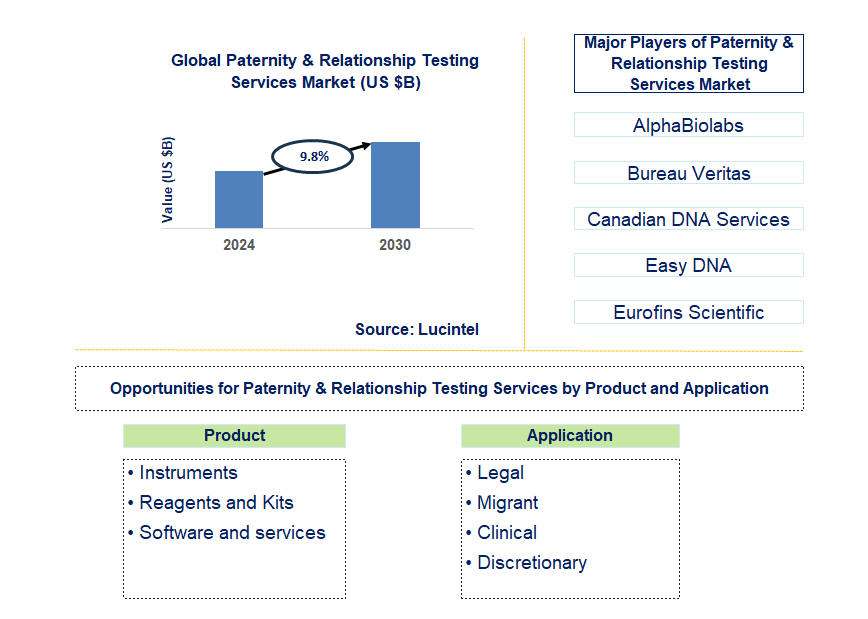
Key data points: The growth forecast = 9.8% annually for the next 6 years. Scroll below to get more insights. This market report covers trends, opportunities, and forecasts in the global paternity & relationship testing services market to 2030 by product (instruments, reagents and kits, and software and services), application (legal, migrant, clinical, and discretionary), and region (North America, Europe, Asia Pacific, and the Rest of the World)
We'll send your sample report shortly.
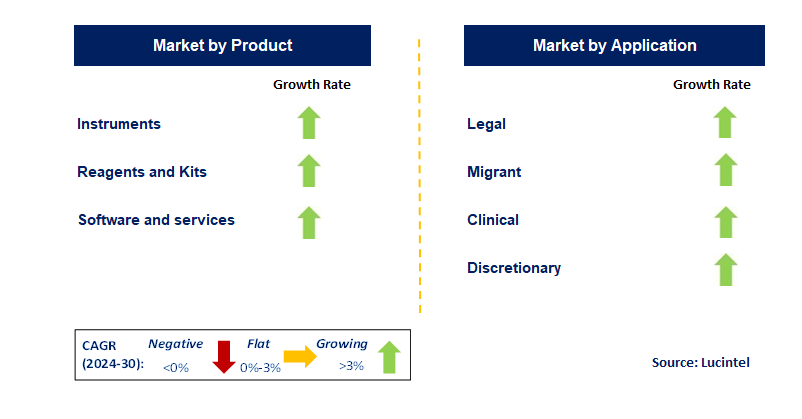
• Lucintel forecasts that, within the product category, reagents and kits will remain the largest segment as it includes DNA extraction kits, PCR kits, and reagents for gel electrophoresis and other analytical techniques that are important for performing paternity and relationship testing.
• Within the application category, legal will remain the largest segment due to the rising need for establishing paternity for child support and other legal purposes and thus resolving child custody disputes.
• In terms of regions, North America will remain the largest segment over the forecast period due to well-established healthcare infrastructure in the region. Gain valuable insights for your business decisions with our comprehensive 150+ page report.
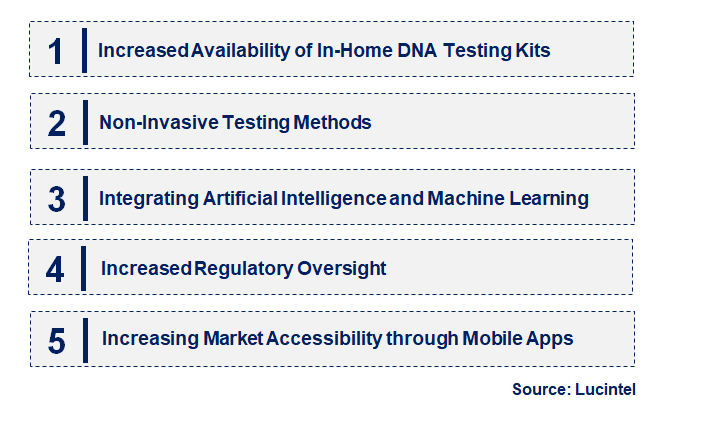
• Increased availability of in-home DNA testing kits: This is considered a significant factor in convenience and privacy. The kits are increasingly user-friendly, which has lowered the cost and improved consumer utilization. They allow individuals to access genetic information without visiting a lab, improving reach and appeal within the market.
• Non-invasive testing methods: Non-invasive paternity testing during pregnancy is becoming more accurate and widely available. These tests require only a blood sample from the mother, improving comfort and safety. Technological improvements and greater consumer awareness of prenatal care options drive the expanding appeal.
• Integrating artificial intelligence and machine learning: The application of AI and machine learning is on the rise to better analyze genetic data more precisely and effectively. These technologies enhance the precision of test results while reducing processing time, and speeding up the process for more reliable output.
• Increased regulatory oversight: Regulatory bodies are instituting strict guidelines to ensure that paternity testing is done in a manner that uses genetic information accurately, privately, and ethically. A trend like this creates avenues for higher standards and more reliable services at reduced prices; however, the cost of compliance increases for testing companies.
• Increasing market accessibility through mobile apps: Mobile apps improve the accessibility of paternity and relationship testing services. These applications assist users in accessing testing results, educational services, and customer care, promoting further market growth by making genetic testing more usable and accessible. The emerging trends are reconfiguring the paternity and relationship testing market. Improved testing methodology, technological innovations, and regulatory changes are contributing to increased accuracy, availability, and desirability of testing services. As these trends continue, transformation will occur in an untapped yet rapidly developing market.
• Technological advancements in testing methods: Innovations such as next-generation sequencing (NGS) are enhancing the precision and speed of paternity testing. These technologies allow for more comprehensive genetic analysis, leading to more reliable results and expanding the scope of relationship testing.
• More emphasis on privacy and safety of data: As concerns over the privacy of genetic data continue to rise, businesses are embracing strict security measures to protect consumer information. Stronger data protection is being introduced through the adaptation of regulations and assurance of consumer concerns, building confidence in testing services.
• Market expansion of genetic testing services: Companies are expanding their offerings to include genetic tests for ancestry and health-related purposes. This expansion helps attract a larger number of consumers and increases the overall attractiveness of the market.
• Regulatory changes and compliance: New legislation is being enacted to guarantee the accuracy and ethical use of paternity testing. In light of these regulations, companies are improving their compliance policies, which in turn influence operational practices and market entry strategies.
• Growth in market accessibility: The availability of testing services is increasing due to the proliferation of online platforms and at-home testing kits. This growth is making paternity and relationship testing more accessible to a broader audience, driving market expansion. These changes are driving major improvements in the paternity and relationship testing market, including better test accuracy, enhanced data security, and increased accessibility of services. This reflects the overall trend of greater consumer involvement and broader regulatory compliance, which is shaping the future of the market.
• Emerging market expansion: Significant potential lies in targeting emerging markets with growing middle-class populations. Companies can tap into the increasing awareness and demand for paternity testing in these regions by offering affordable and accessible testing solutions.
• Non-invasive testing options: The investment in the development of non-invasive testing methods, such as blood-based prenatal tests, appeals to the market. These methods provide better comfort and safety, increasing their appeal to a wider consumer base and driving further market growth.
• Digital technologies: The integration of digital technologies can streamline service delivery and enhance customer engagement. Companies can use these technologies to improve the testing process and offer additional value through educational resources and support.
• Enhancement of full genetic testing services: By expanding into genetic ancestry and health-related testing, companies can capture a broader market share and attract consumers interested in comprehensive genetic insights.
• Collaboration with health providers: Partnering with healthcare providers can significantly increase the reach of paternity and relationship testing services. Such collaborations can help integrate genetic testing into mainstream healthcare practices, improving accessibility and market penetration. These strategic opportunities are strong drivers for expansion and innovation within the paternity and relationship testing market. In conclusion, targeting emerging markets, developing non-invasive options, and integrating digital technologies will enhance competitive advantage and meet changing customer needs.
• Technological advancements: Innovations in genetic testing technologies, such as next-generation sequencing and non-invasive methods, are driving market growth. These advancements improve testing accuracy and accessibility, attracting more consumers and expanding market potential.
• Greater consumer awareness: Increasing awareness of the benefits of genetic testing is driving demand for paternity and relationship tests. Greater knowledge of the availability and advantages of testing is directly related to increased market adoption.
• Regulatory support: Favorable regulatory frameworks and guidelines build credibility and reliability for paternity testing services. Well-defined regulations ensure accurate results and ethical practices, which stimulates consumer confidence and promotes market growth.
• Increasing disposable incomes: Rising disposable incomes in emerging markets improve access to paternity and relationship testing services. With better economic conditions, demand for genetic testing services is expected to grow.
• Increased market accessibility: The availability of at-home testing kits and online services has made paternity and relationship testing more accessible. This convenience influences market growth by attracting a larger number of consumers. Challenges in the paternity and relationship testing services market are:
• Regulatory hurdles: Due to varying regional regulations, organizations find it difficult to navigate and comply with them. Adhering to these different regulations requires time and resources, affecting market entry and operational efficiency.
• Privacy and security issues: The ownership and protection of genetic data are critical concerns for consumers. Privacy concerns can erode consumer confidence, particularly with the widespread adoption of genetic testing.
• Market saturation: Increased competition has led to market saturation, reducing profitability for companies. To survive in a crowded market, companies must differentiate themselves through innovation and value-added services. The paternity and relationship testing market is influenced by technological advancements, consumer awareness, and regulatory support, while challenges such as regulatory hurdles, privacy concerns, and market saturation remain. Addressing these challenges will be key to sustaining growth in this market.
• AlphaBiolabs
• Bureau Veritas
• Canadian DNA Services
• Easy DNA
• Eurofins Scientific
• Gene by Gene
• Genex Diagnostics
• Intelligenetics
• Invitae Corporation
• Laboratory Corporation of America
• Instruments
• Reagents and Kits
• Software and services
• Legal
• Migrant
• Clinical
• Discretionary
• North America
• Europe
• Asia Pacific
• The Rest of the World
• United States: Increasing demand for genetic testing at home is the result of greater awareness and availability throughout the United States. Comprehensive genetic analysis has expanded the services offered by major firms. Legal recognition of these tests has increased their utility in various personal and legal contexts.
• China: The paternity testing segment has experienced notable growth due to rising disposable incomes and growing awareness of genetic testing. The government is gradually regulating the market, ensuring the accuracy and privacy of results, while local companies are innovating advanced DNA testing technologies to meet growing demand.
• Germany: Germany has strict regulatory standards that ensure highly accurate and ethical paternity tests. Recent trends show the incorporation of modern genomic technologies, and growing awareness, along with societal factors, will drive high demand for legal paternity tests.
• India: The Indian market is experiencing tremendous growth in paternity testing due to increased awareness of genetic testing among middle-class consumers. Recent developments include the availability of affordable and accessible testing options, as well as the entry of private companies offering a range of tests to meet local needs.
• Japan: The paternity testing market in Japan is focused on privacy and advanced technologies. Recent developments include improved non-invasive testing methods and greater availability of testing services, driven by growing consumer interest and technological advances in genetic analysis.


• AlphaBiolabs
• Bureau Veritas
• Canadian DNA Services
• Easy DNA
• Eurofins Scientific
• Gene by Gene
• Genex Diagnostics
• Intelligenetics
• Invitae Corporation
• Laboratory Corporation of America Q5. Which paternity & relationship testing services market segment will be the largest in future? Answer: Lucintel forecasts that reagents and kits will remain the largest segment as it includes DNA extraction kits, PCR kits, and reagents for gel electrophoresis and other analytical techniques which are important for performing paternity and relationship testing. Q6. In paternity & relationship testing services market, which region is expected to be the largest in next 5 years? Answer: North America will remain the largest segment over the forecast period due to rising awareness towards mental health and presence of highly developed healthcare infrastructure in the region. Q.7 Do we receive customization in this report? Answer: Yes, Lucintel provides 10% customization without any additional cost.


Choose a license that fits your team. Instant PDF delivery.
Prices exclude taxes. Instant delivery. Custom licensing available on request.
Market Report · July 22, 2026
Market Report · July 22, 2026
Market Report · July 22, 2026
Trusted partner for strategic intelligence and business growth


Receive a complimentary market analysis tailored to your industry. Our analysts will identify key growth opportunities and competitive dynamics specific to your business.

Market size, growth rate, and key trend analysis for your specific sector.

Top competitor positioning and market share analysis.

Strategic recommendations backed by data-driven insights.
Get curated market intelligence and competitive moves straight to your inbox.
By subscribing, you agree to receive our monthly insights. Unsubscribe anytime.
Receive a complimentary market analysis tailored to your industry. Our analysts will identify key growth opportunities and competitive dynamics specific to your business.
Market size, growth rate, and key trend analysis for your specific sector.
Top competitor positioning and market share analysis.
Strategic recommendations backed by data-driven insights.
Get curated market intelligence, emerging trends, and competitive moves straight to your inbox each month.
By subscribing, you agree to receive our monthly insights. Unsubscribe anytime.
We'll send your sample report shortly.