
Market Report · May 18, 2026

This market report covers trends, opportunities, and forecasts in the global passport reader market to 2031 by technology (rfid, barcode, and ocr), end use (airport security, border control, and others), and region (North America, Europe, Asia Pacific, and the Rest of the World)
We'll send your sample report shortly.
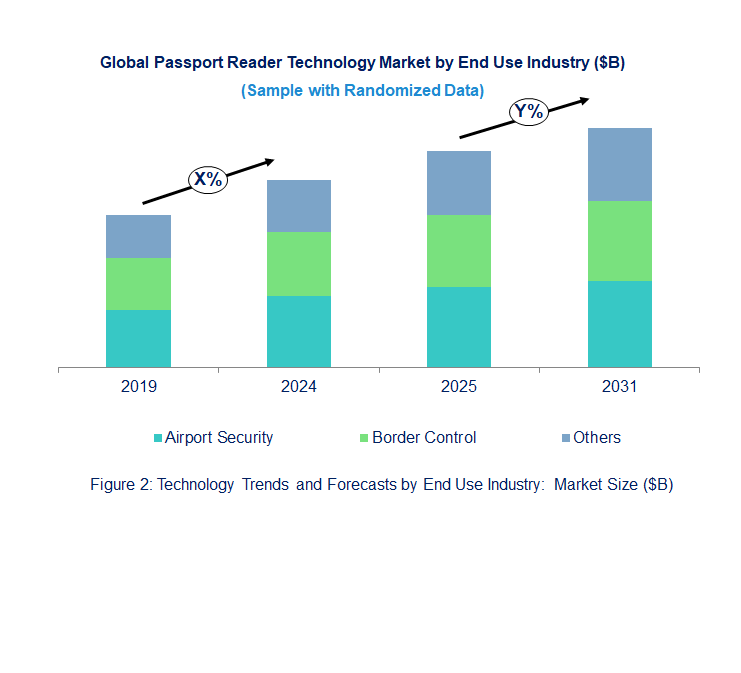
• Biometric Authentication Integration: The integration of biometric technologies, such as facial recognition and fingerprint scanning, alongside traditional passport reading systems, is enhancing security. This trend allows for more accurate identity verification and a seamless travel experience, thus reducing the risk of fraudulent activities.
• Contactless Technology Adoption: Contactless passport readers, which use RFID and NFC (Near Field Communication) technology, are becoming increasingly popular. These systems make it possible to perform faster passport verification by reading data in a contactless manner, thus reducing processing time and improving passenger flow at checkpoints.
• Cloud-Based Solutions: Cloud-based passport reader systems are emerging, allowing for easier data management, integration with other security systems, and real-time updates. This trend offers scalability, flexibility, and enhanced data storage capabilities for airports and border security agencies.
• Advanced OCR and Machine Learning Integration: Optical Character Recognition (OCR) is becoming increasingly sophisticated with machine learning capabilities, thereby improving the accuracy of text extraction from passports. This trend enables better handling of varying document formats and enhances the speed of verification, contributing to faster processing at security checkpoints.
• Increased Focus on Privacy and Data Security; As security concerns continue to rise, there is growing interest in ensuring that passport reader systems comply with global privacy regulations such as GDPR. This trend will protect personal information and ensure that sensitive data is handled securely, thus improving system trustworthiness. All of these emerging trends in biometric authentication, contactless technology, cloud-based solutions, advanced OCR with machine learning, and a focus on privacy are transforming the passport reader market. These collectively lead to a revolution in security, efficiency, and user experience while changing how passenger verification is managed by border control and airport checkpoints.
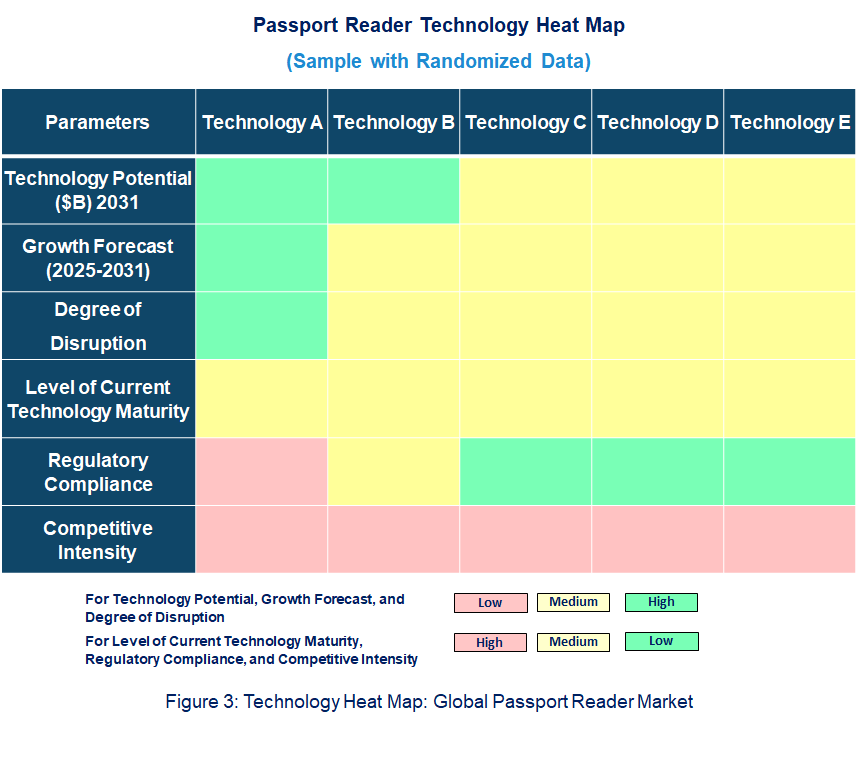
• Technology Potential: Passport readers are increasingly integrated with biometric systems, such as facial recognition and fingerprint scanning. The potential of this technology is vast, enhancing security and providing seamless passenger flow at high-traffic locations, reducing fraud and errors.
• Degree of Disruption: Technologies like RFID, NFC, and biometric authentication are significantly disrupting traditional passport reading methods. They allow for faster, contactless verification, reducing wait times and improving security, especially in high-volume checkpoints like airports.
• Level of Current Technology Maturity: The technology maturity in the passport reader market is advanced, with systems already widely deployed globally. RFID, OCR, and biometric technologies are already integrated into most border control systems, with biometric authentication becoming the standard for modern passport readers.
• Regulatory Compliance: As privacy concerns grow, passport reader systems must comply with international data protection regulations, such as the General Data Protection Regulation (GDPR). These systems are designed to ensure that personal data is handled securely, mitigating privacy risks while maintaining efficient security protocols.
• Access Limited: Access Limited offers advanced biometric-enabled passport readers featuring facial recognition and fingerprint scanners. These innovations improve security through better identity verification and a smoother, contactless travel process. These technologies reduce the risks associated with fraudulent activities, contributing to enhanced passenger flow efficiency.
• Adaptive Recognition: Adaptive Recognition has focused on improving OCR and biometric solutions. Their passport readers use machine learning and sophisticated optical character recognition to scan a wider variety of passport types and improve text extraction accuracy. This enhancement allows for faster and more accurate verification, leading to shorter processing times at borders and airport checkpoints.
• DESKO: DESKO has introduced multi-purpose passport readers that feature both a barcode scanner and biometric recognition. These systems offer multi-layered security by verifying both the passport information and the traveler’s identity. The versatility of these devices makes them ideal for use in airports, border control gates, and embassies.
• IER Group: IER Group introduced passport readers that employ RFID technology along with biometric authentication. These contactless, quick passport readers allow for easy passage through security points with minimal wait times. The use of RFID ensures effortless and secure data reading, while biometric features provide enhanced identity validation.
• Lintech Enterprises: Lintech Enterprises offers high-end passport readers equipped with advanced RFID technology for fast, contactless reading. Their solutions support various data formats and provide faster processing for large volumes of passengers. Focusing on scalability and efficiency, their systems help reduce bottlenecks and improve operational efficiency at busy checkpoints.
• Thales Group: Thales Group has developed secure and efficient passport reader solutions that integrate advanced biometric systems, including facial recognition and fingerprint scanning. Their devices comply with global privacy regulations, ensuring proper handling of personal data. Thales' solutions are particularly suitable for high-security environments such as airports, enhancing both security and passenger throughput. These developments indicate a clear trend toward more secure, efficient, and user-friendly passport reading technologies, with a growing emphasis on biometrics and contactless solutions. These innovations are revolutionizing the processing of travelers at checkpoints, making travel faster and safer while improving overall operational efficiency.
• Technological Changes: Advancements in biometric technologies such as facial recognition and fingerprint scanning have enhanced passport reader capabilities. These improvements enable safer and faster recognition, resulting in smoother, quicker processing at security checkpoints, reduced wait times, and improved travel flow.
• Increasing Security Concerns: The increasing global security concerns are driving demand for reliable passport readers to prevent identity fraud and ensure safe border control. As threats related to terrorism and unlawful activities rise, the advancement of secure passport reader technologies is becoming more critical.
• Growing Demand for Contactless Solutions: Contactless passport readers, which utilize RFID and NFC technologies, are becoming increasingly popular. These systems provide faster and more efficient passport verification without physical contact, improving the passenger experience and helping manage larger crowds. They make security procedures smoother and more efficient. Challenges in the passport reader market are:
• Regulatory Compliance Requirements: Governments around the world, such as the European Union with GDPR, are enforcing strict regulations to protect data and privacy. Passport readers must comply with these regulations, which sometimes complicates their implementation process and leads to higher costs for manufacturers and end-users.
• High Initial Costs: Although the technology has advanced, deploying passport reader systems, especially those with biometrics and advanced features, remains expensive. Many airports and border control agencies lack the funds to upgrade their existing systems. Technological advancements, growing security concerns, and the demand for contactless solutions are driving change in the passport reader market. Challenges such as regulatory compliance and high initial costs persist, but these developments are improving security, efficiency, and passenger experience. The market is expanding as innovations in biometric authentication enhance the speed and security of travel processing.
• Access Limited
• Adaptive Recognition
• DESKO
• IER Group
• Lintech Enterprises
• Thales Group
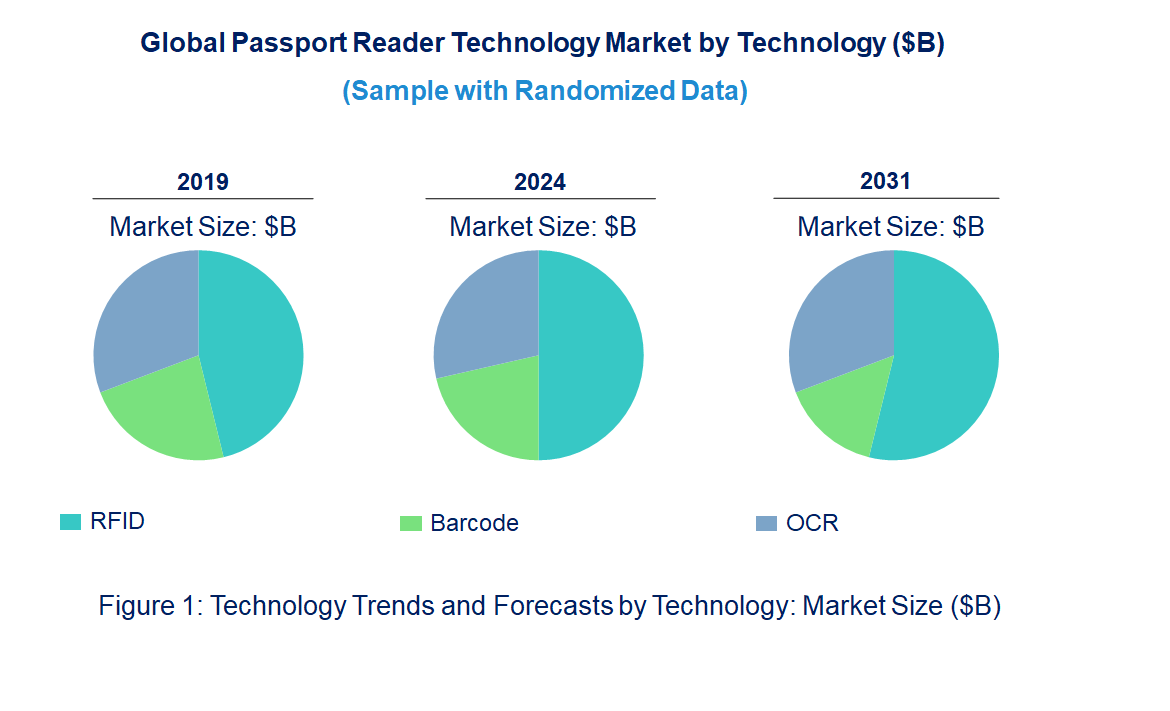
• Technology Readiness by Technology Type for Passport Reader Market: RFID technology is highly mature and widely adopted, offering seamless, contactless verification, and is highly competitive in high-traffic areas like airports. It complies well with global regulations and is applicable in most modern passport control systems. Barcode technology, while less advanced, remains cost-effective and is suitable for low-risk environments, but faces challenges with regulatory compliance, especially regarding data security. OCR technology, particularly when combined with machine learning, has advanced significantly, offering high accuracy and efficiency in reading passports of various formats. It is competitive in terms of accuracy but requires significant investment in integration with other systems to fully comply with privacy regulations and global standards.
• Competitive Intensity and Regulatory Compliance of Different Technologies for Passport Reader Market: In the passport reader Market, the competitive intensity of RFID, Barcode, and OCR technologies is high, as companies continually innovate to offer faster, more secure, and cost-effective solutions. RFID and OCR technologies are in the lead due to their higher efficiency and broader application in global security operations. Barcode technology, although less advanced, remains relevant for simpler applications. Regulatory compliance, such as GDPR and data protection laws, impacts all these technologies, especially in terms of data privacy and storage. While RFID and OCR are better equipped to handle compliance with global standards, Barcode systems may face more challenges in meeting stringent privacy requirements.
• Disruption Potential of Different Technologies for Passport Reader Market: The disruption potential of RFID, Barcode, and OCR technologies in the Passport Reader Market lies in their ability to streamline passport verification processes. RFID offers contactless data reading, enhancing speed and passenger flow, while Barcode technology provides a cost-effective and widely compatible solution. OCR technology improves text extraction accuracy, enabling efficient handling of various document formats. As these technologies evolve, they drive greater automation and security in passport reading systems, enabling faster processing, reduced human error, and better fraud detection. The integration of these technologies with biometric systems further enhances their disruptive potential, offering seamless, efficient, and secure travel experiences.
• RFID
• Barcode
• OCR
• Airport Security
• Border Control
• Others
• North America
• Europe
• Asia Pacific
• The Rest of the World
• Latest Developments and Innovations in the Passport Reader Technologies
• Companies / Ecosystems
• Strategic Opportunities by Technology Type


Choose a license that fits your team. Instant PDF delivery.
Prices exclude taxes. Instant delivery. Custom licensing available on request.
Market Report · May 18, 2026
Market Report · May 18, 2026
Market Report · May 18, 2026
Trusted partner for strategic intelligence and business growth


Receive a complimentary market analysis tailored to your industry. Our analysts will identify key growth opportunities and competitive dynamics specific to your business.

Market size, growth rate, and key trend analysis for your specific sector.

Top competitor positioning and market share analysis.

Strategic recommendations backed by data-driven insights.
Get curated market intelligence and competitive moves straight to your inbox.
By subscribing, you agree to receive our monthly insights. Unsubscribe anytime.
Receive a complimentary market analysis tailored to your industry. Our analysts will identify key growth opportunities and competitive dynamics specific to your business.
Market size, growth rate, and key trend analysis for your specific sector.
Top competitor positioning and market share analysis.
Strategic recommendations backed by data-driven insights.
Get curated market intelligence, emerging trends, and competitive moves straight to your inbox each month.
By subscribing, you agree to receive our monthly insights. Unsubscribe anytime.
We'll send your sample report shortly.