
Report Feature
Passenger Emergency Oxygen Deployment System Market Trends and Forecast
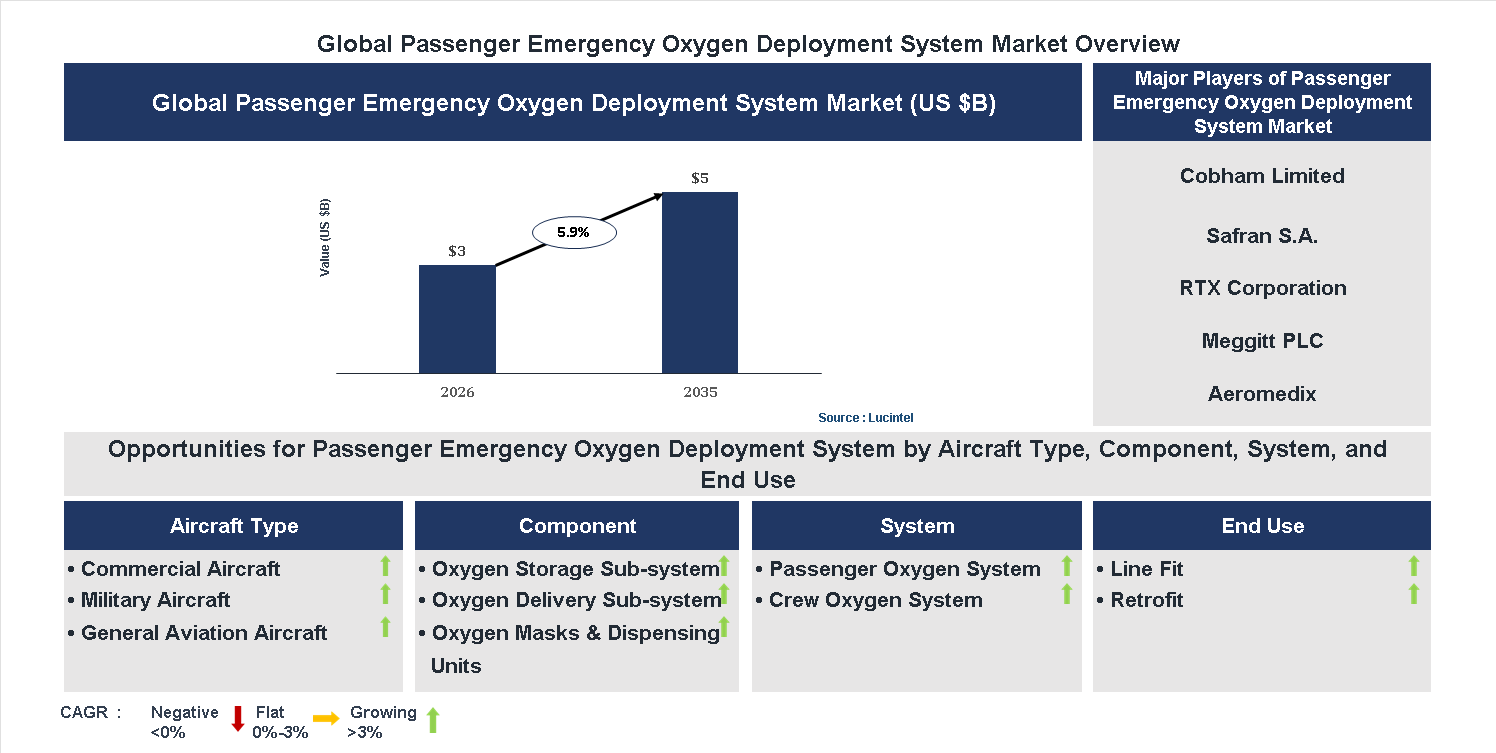
The future of the global passenger emergency oxygen deployment system market looks promising with opportunities in the line fit and retrofit markets. The global passenger emergency oxygen deployment system market is expected to reach an estimated $5 billion by 2035 with a CAGR of 5.9% from 2026 to 2035. The major drivers for this market are the increasing focus on passenger safety standards, the rising demand for aviation safety systems, and the growing adoption of advanced emergency technologies.• Lucintel forecasts that, within the aircraft type category, commercial aircraft is expected to witness the highest growth over the forecast period.
• Within the end use category, line fit is expected to witness higher growth.
• In terms of region, North America is expected to witness the highest growth over the forecast period. Gain valuable insights for your business decisions with our comprehensive 150+ page report. Sample figures with some insights are shown below.
Emerging Trends in the Passenger Emergency Oxygen Deployment System Market
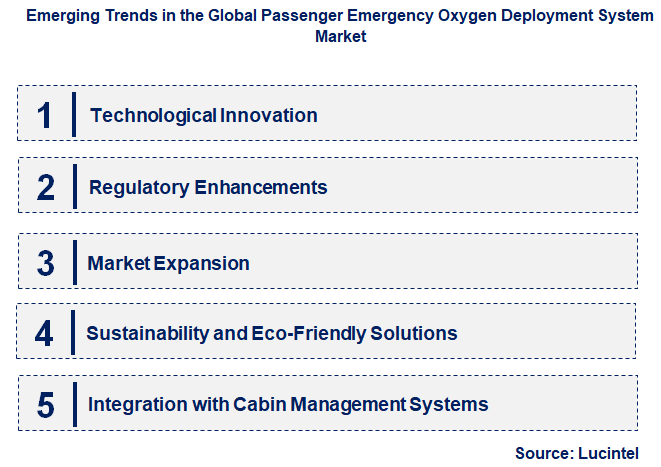
The passenger emergency oxygen deployment system market is experiencing rapid evolution driven by technological advancements, safety regulations, and increasing passenger safety awareness. As airlines and manufacturers prioritize passenger well-being, innovative solutions are emerging to enhance emergency preparedness and response. These developments are reshaping the market landscape, creating new opportunities for growth and competition. The integration of smarter, more efficient systems is also influencing regulatory standards and passenger confidence. Understanding these key trends is essential for stakeholders aiming to stay ahead in this dynamic environment, ensuring safety, compliance, and market competitiveness.• Technological Innovation: Advancements in Deployment Mechanisms : New deployment systems are becoming more reliable, faster, and easier to operate, incorporating smart sensors and automation. These innovations improve safety by ensuring oxygen is delivered promptly during emergencies, reducing passenger risk. Enhanced materials and miniaturization also contribute to more compact, lightweight systems, facilitating easier installation and maintenance. The integration of IoT technology allows real-time monitoring and diagnostics, enabling proactive maintenance and ensuring system readiness. Overall, technological innovation is driving the development of more effective and user-friendly emergency oxygen systems, boosting passenger safety and operational efficiency.
• Regulatory Enhancements: Stricter Safety Standards and Compliance : Governments and aviation authorities are updating safety regulations to mandate more rigorous standards for emergency oxygen systems. These include requirements for faster deployment, better coverage, and improved reliability. Regulatory bodies are also emphasizing the importance of compliance with international standards, prompting manufacturers to innovate and adapt their products accordingly. Enhanced regulations are encouraging airlines to upgrade existing systems and invest in newer, compliant solutions. This trend ensures higher safety levels across the industry but also increases market demand for compliant, certified systems, fostering innovation and competition among manufacturers.
• Market Expansion: Growing Demand in Emerging Markets : Emerging economies are witnessing increased air travel, leading to higher demand for passenger safety systems, including emergency oxygen deployment. Rapid airport infrastructure development and rising airline fleets in regions like Asia-Pacific and the Middle East are fueling market growth. Local airlines and airports are adopting advanced safety systems to meet international standards and passenger expectations. This expansion offers manufacturers new opportunities to penetrate these markets with tailored, cost-effective solutions. As passenger numbers grow, so does the need for reliable emergency oxygen systems, making emerging markets a key growth driver in this sector.
• Sustainability and Eco-Friendly Solutions: Focus on Environmentally Responsible Materials and Processes : The market is shifting towards sustainable practices, with manufacturers exploring eco-friendly materials for system components and packaging. Efforts include reducing the use of hazardous substances and improving energy efficiency during manufacturing. Some companies are developing recyclable or biodegradable components to minimize environmental impact. This trend aligns with broader industry goals of reducing carbon footprints and promoting sustainability. Eco-friendly systems not only appeal to environmentally conscious consumers and airlines but also help companies comply with evolving environmental regulations, fostering a more sustainable market landscape.
• Integration with Cabin Management Systems: Enhanced Passenger Experience and Safety : Emergency oxygen systems are increasingly integrated with broader cabin management and safety systems. This integration allows for coordinated responses during emergencies, providing real-time alerts and status updates to crew and passengers. It also enables seamless activation and monitoring, improving overall safety and efficiency. Enhanced integration supports personalized passenger experiences, such as automated announcements and instructions during emergencies. This trend reflects a move towards smarter, interconnected aircraft systems that improve safety, operational management, and passenger confidence, ultimately transforming the passenger experience and safety protocols in the aviation industry. These trends are collectively transforming the passenger emergency oxygen deployment system market by fostering innovation, ensuring compliance, expanding market reach, emphasizing sustainability, and enhancing system integration. These developments are not only improving passenger safety and operational efficiency but also driving competitive differentiation and market growth in a rapidly evolving industry.
Recent Development in the Passenger Emergency Oxygen Deployment System Market
The passenger emergency oxygen deployment system market is experiencing rapid advancements driven by safety regulations, technological innovations, and increasing air travel demand. Airlines and manufacturers are investing in more reliable, efficient, and user-friendly systems to enhance passenger safety during emergencies. These developments are shaping the future landscape of in-flight safety protocols, creating new opportunities for market growth and technological integration. The following key developments highlight the current trajectory and potential of this vital market sector.• Regulatory Enhancements: Stricter safety standards and compliance requirements are prompting airlines to upgrade emergency oxygen systems, ensuring passenger safety during unexpected cabin depressurization. Governments and aviation authorities are mandating advanced deployment mechanisms, which drive innovation and market expansion. These regulations foster increased adoption of reliable, compliant systems, boosting market growth and encouraging manufacturers to develop more effective solutions aligned with international safety standards.
• Technological Innovations: Integration of smart sensors, automated deployment, and real-time monitoring are transforming emergency oxygen systems. These innovations improve system responsiveness, reduce deployment errors, and enhance passenger safety. Advanced materials and miniaturization are making systems more lightweight and easier to install. The adoption of IoT-enabled systems allows for remote diagnostics and maintenance, leading to increased reliability and customer confidence, ultimately expanding market opportunities and driving competitive differentiation.
• Rising Air Travel Demand: The surge in global air travel, especially in emerging markets, increases the need for robust emergency safety systems. Airlines are investing in upgraded oxygen deployment solutions to meet passenger safety expectations and regulatory requirements. This growth in passenger numbers amplifies the demand for efficient, quick-deploying oxygen systems, creating a significant market opportunity for manufacturers to supply innovative, scalable solutions tailored to diverse aircraft types and passenger capacities.
• Focus on Passenger Safety and Comfort: Manufacturers are designing oxygen systems that prioritize ease of use, quick deployment, and passenger comfort. User-friendly interfaces and clear instructions are being integrated to ensure effective emergency responses. Enhanced safety features, such as automatic activation and fail-safe mechanisms, are reducing risks during emergencies. These improvements increase passenger confidence and airline compliance, fostering market growth by aligning safety with comfort, and encouraging widespread adoption across commercial and private aircraft.
• Market Expansion through Strategic Partnerships: Collaborations between aerospace companies, safety equipment providers, and regulatory bodies are accelerating system development and deployment. Joint ventures facilitate technology sharing, cost reduction, and faster certification processes. These partnerships enable the creation of comprehensive safety solutions, expanding market reach into new regions and aircraft segments. Strategic alliances also foster innovation, ensuring systems meet evolving safety standards and customer expectations, thus driving overall market growth and competitiveness. The overall impact of these developments is a more reliable, efficient, and widespread adoption of passenger emergency oxygen deployment systems, enhancing safety standards globally. Increased regulatory focus, technological advancements, rising air travel, passenger safety priorities, and strategic collaborations are collectively propelling market growth, creating new opportunities for innovation and expansion in the aviation safety sector.
Strategic Growth Opportunities in the Passenger Emergency Oxygen Deployment System Market
The passenger emergency oxygen deployment system market is experiencing significant growth driven by increasing safety regulations, technological advancements, and rising air travel demand. Airlines and manufacturers are investing in innovative solutions to enhance passenger safety and comply with international standards. The market presents numerous opportunities for expansion across various applications, including commercial, private, and cargo aircraft. Strategic investments and technological integration are key to capturing market share and ensuring safety compliance in this evolving industry landscape.• Growing Demand for Enhanced Passenger Safety Systems: The increasing emphasis on passenger safety standards worldwide is driving the adoption of advanced emergency oxygen deployment systems. Airlines seek reliable, quick-deploy solutions to meet stringent safety regulations, reduce passenger risk during emergencies, and improve overall safety records. Technological innovations such as automatic deployment and real-time monitoring are making these systems more effective, encouraging widespread adoption across commercial and private aircraft.
• Technological Innovations in Oxygen Deployment Mechanisms: Advances in deployment mechanisms, including automated and rapid-release systems, are transforming the market. These innovations improve response times, ease of installation, and system reliability. Integration of smart sensors and IoT technology allows for real-time system diagnostics and maintenance alerts, reducing downtime and operational costs. Such technological progress enhances passenger safety and operational efficiency, making these systems more attractive to airlines and aircraft manufacturers.
• Increasing Adoption in Private and Business Aircraft: The private aviation sector is witnessing a surge in demand for passenger emergency oxygen systems due to rising safety awareness and regulatory requirements. Wealthy individuals and corporate clients prioritize safety features, prompting manufacturers to develop compact, lightweight, and customizable solutions suitable for private jets. This segment offers significant growth potential as private aircraft operators seek to upgrade safety standards and differentiate their offerings in a competitive market.
• Expansion of Market Through Regulatory Compliance and Certification: Stringent safety regulations by authorities such as FAA, EASA, and ICAO are compelling airlines and manufacturers to adopt certified emergency oxygen systems. Certification processes ensure system reliability and safety, fostering market growth. As regulatory frameworks evolve, demand for compliant systems increases, encouraging manufacturers to innovate and meet new standards. This compliance-driven growth supports market stability and encourages technological advancements aligned with international safety protocols.
• Rising Focus on Cabin Safety and Passenger Experience: Airlines are increasingly integrating emergency oxygen systems into broader cabin safety and passenger comfort strategies. Enhanced safety features, including discreet and user-friendly deployment options, improve passenger confidence and satisfaction. Additionally, airlines are investing in training and awareness programs to ensure proper system use during emergencies. This focus on safety and experience drives demand for sophisticated, reliable oxygen deployment solutions that align with modern cabin design and passenger expectations. These growth opportunities collectively shape a dynamic passenger emergency oxygen deployment system market, emphasizing safety, technological innovation, and regulatory compliance. As airlines and manufacturers prioritize passenger safety and operational efficiency, the market is poised for substantial expansion. Strategic investments in advanced systems and adherence to evolving standards will be crucial for capturing emerging opportunities, ultimately enhancing safety standards across the aviation industry worldwide.
Passenger Emergency Oxygen Deployment System Market Driver and Challenges
The passenger emergency oxygen deployment system market is influenced by a variety of technological, economic, and regulatory factors. Advances in aerospace safety technology, increasing airline passenger traffic, stringent safety regulations, and rising awareness of passenger safety are key drivers shaping this market. Conversely, challenges such as high system costs, regulatory compliance complexities, and technological integration issues pose significant hurdles. Understanding these drivers and challenges is essential for stakeholders aiming to innovate and adapt in this evolving landscape. The interplay of these factors determines the market’s growth trajectory, influencing product development, regulatory standards, and overall industry competitiveness. The factors responsible for driving the passenger emergency oxygen deployment system market include:-• Technological Advancements: The continuous development of lightweight, reliable, and easy-to-deploy oxygen systems is a major driver. Innovations such as automated deployment mechanisms and improved oxygen delivery methods enhance passenger safety and comfort. These advancements reduce system weight and maintenance costs, making them more attractive to airlines. As aircraft designs evolve, integrating advanced oxygen systems becomes crucial, encouraging manufacturers to invest in R&D. The push for smarter, more efficient safety systems aligns with regulatory requirements and passenger expectations, further fueling market growth.
• Increasing Air Travel Demand: The surge in global air travel, driven by economic growth and expanding middle-class populations, significantly boosts demand for passenger safety systems. Airlines prioritize safety enhancements to meet rising passenger numbers and ensure compliance with international safety standards. This increased traffic necessitates more comprehensive safety measures, including emergency oxygen systems, to mitigate risks during in-flight emergencies. As the aviation industry continues to grow, the demand for reliable oxygen deployment systems is expected to rise proportionally, creating substantial market opportunities.
• Stringent Regulatory Frameworks: Governments and aviation authorities worldwide are implementing strict safety regulations that mandate the installation and maintenance of emergency oxygen systems. These regulations aim to enhance passenger safety during in-flight decompression events. Compliance with standards set by organizations such as the FAA and EASA compels airlines to upgrade existing systems and adopt new technologies. Regulatory pressures drive market players to innovate and ensure their products meet evolving safety standards, thereby expanding the market and encouraging technological improvements.
• Focus on Passenger Safety and Comfort: Airlines and manufacturers are increasingly emphasizing passenger safety and comfort as key differentiators. The deployment of advanced emergency oxygen systems ensures rapid response during emergencies, reducing passenger risk and anxiety. Enhanced safety features also contribute to brand reputation and customer loyalty. As passenger expectations grow, airlines are investing more in sophisticated safety systems that are unobtrusive yet highly effective, fostering a competitive market environment that encourages innovation and higher safety standards.
• Market Expansion in Emerging Economies: Rapid economic development in regions such as Asia-Pacific and the Middle East is leading to increased air travel and new airline operations. These markets are witnessing a rise in demand for modern safety systems, including passenger emergency oxygen deployment. Local governments are updating safety regulations, and airlines are investing in advanced safety infrastructure to meet international standards. This expansion offers significant growth opportunities for market players, encouraging regional manufacturing and technology transfer, and fostering a more competitive global market landscape. The challenges facing the passenger emergency oxygen deployment system market include:-
• High System Costs: The development, certification, and maintenance of advanced oxygen deployment systems involve substantial costs. Airlines, especially in price-sensitive markets, may hesitate to invest heavily in new safety technologies without clear cost-benefit advantages. High costs can limit market penetration and slow adoption rates, particularly among smaller carriers. Manufacturers face the challenge of balancing technological sophistication with affordability, which is crucial for widespread market acceptance and growth.
• Regulatory Compliance Complexities: Navigating the diverse and evolving regulatory landscape across different countries presents a significant challenge. Each jurisdiction has specific standards and certification processes, which can delay product deployment and increase costs. Ensuring compliance with international safety standards requires extensive testing and documentation, which can be time-consuming and resource-intensive. This complexity can hinder rapid market expansion and create barriers for new entrants trying to establish a foothold in multiple regions.
• Technological Integration Challenges: Integrating new emergency oxygen systems into existing aircraft architectures can be complex. Compatibility issues, space constraints, and the need for seamless operation with other onboard systems pose technical challenges. Additionally, ensuring system reliability under various operational conditions requires rigorous testing and validation. These integration issues can delay product deployment, increase development costs, and impact overall system performance, thereby affecting market growth and customer confidence. The passenger emergency oxygen deployment system market is driven by technological innovations, rising air travel, regulatory mandates, safety priorities, and regional market expansion. However, high costs, regulatory complexities, and integration challenges pose significant hurdles. The interplay of these factors will shape the market’s future, requiring stakeholders to innovate efficiently, navigate regulatory landscapes, and address technical challenges to capitalize on growth opportunities. Overall, the market’s evolution hinges on balancing safety advancements with economic and technical feasibility, ensuring sustainable growth and enhanced passenger safety worldwide.
List of Passenger Emergency Oxygen Deployment System Companies
Companies in the market compete on the basis of product quality offered. Major players in this market focus on expanding their manufacturing facilities, R&D investments, infrastructural development, and leverage integration opportunities across the value chain. With these strategies passenger emergency oxygen deployment system companies cater increasing demand, ensure competitive effectiveness, develop innovative products & technologies, reduce production costs, and expand their customer base. Some of the passenger emergency oxygen deployment system companies profiled in this report include-• Cobham Limited
• Safran S.A.
• RTX Corporation
• Meggitt PLC
• Aeromedix
• Precise Flight Inc.
• Diehl Stiftung & Co. KG
• Aerox Aviation Oxygen Systems
• Eaton
• Tronair
Passenger Emergency Oxygen Deployment System Market by Segment
The study includes a forecast for the global passenger emergency oxygen deployment system market by aircraft type, component, system, end use, and region.Passenger Emergency Oxygen Deployment System Market by Aircraft Type [Value from 2019 to 2035]:
• Commercial Aircraft
• Military Aircraft
• General Aviation Aircraft
Passenger Emergency Oxygen Deployment System Market by Component [Value from 2019 to 2035]:
• Oxygen Storage Sub-system
• Oxygen Delivery Sub-system
• Oxygen Masks & Dispensing Units
Passenger Emergency Oxygen Deployment System Market by System [Value from 2019 to 2035]:
• Passenger Oxygen System
• Crew Oxygen System
Passenger Emergency Oxygen Deployment System Market by End Use [Value from 2019 to 2035]:
• Line Fit
• Retrofit
Passenger Emergency Oxygen Deployment System Market by Region [Value from 2019 to 2035]:
• North America
• Europe
• Asia Pacific
• The Rest of the World
Country Wise Outlook for the Passenger Emergency Oxygen Deployment System Market
The passenger emergency oxygen deployment system market has experienced significant advancements driven by safety regulations, technological innovations, and increasing airline safety standards worldwide. As airlines seek to enhance passenger safety and comply with international aviation regulations, the market has seen the development of more efficient, lightweight, and user-friendly oxygen deployment systems. These developments are influenced by rising air travel demand, safety concerns, and technological progress in emergency response equipment. Countries are adopting new standards and investing in research to improve system reliability and ease of use, shaping the future landscape of passenger safety equipment globally.• United States: The US market has seen substantial growth due to strict FAA regulations mandating emergency oxygen systems on commercial aircraft. Innovations include lightweight, portable oxygen masks with improved filtration and ease of deployment. Major airlines are investing in advanced training programs for crew members to ensure quick and effective use of these systems. Additionally, US manufacturers are focusing on integrating smart technology for real-time monitoring and maintenance of oxygen systems, enhancing safety and operational efficiency.
• China: China’s passenger oxygen deployment market is expanding rapidly, driven by increasing air travel and government initiatives to modernize aviation safety standards. Chinese manufacturers are developing cost-effective, compact oxygen systems suitable for both commercial and regional aircraft. The government’s emphasis on aviation safety and infrastructure development has led to increased adoption of advanced emergency oxygen solutions. Collaborations with international firms are also facilitating technology transfer and innovation, positioning China as a key player in the market.
• Germany: Germany’s market is characterized by high safety standards and technological innovation, with a focus on integrating oxygen systems into modern aircraft cabins. German companies are pioneering lightweight, durable oxygen masks with enhanced comfort and automatic deployment features. The country’s strict regulatory environment ensures continuous improvement and compliance with European Aviation Safety Agency (EASA) standards. Germany is also investing in research to develop environmentally sustainable oxygen deployment systems, aligning with broader European sustainability goals.
• India: The Indian market is witnessing rapid growth due to rising air passenger traffic and increasing safety regulations. Indian manufacturers are focusing on developing affordable, easy-to-use oxygen deployment systems suitable for regional and low-cost carriers. The government’s push for modernization of aviation infrastructure and safety standards is encouraging adoption of advanced emergency oxygen solutions. Additionally, local companies are forming strategic partnerships with international firms to enhance technology and meet global safety benchmarks.
• Japan: Japan’s passenger oxygen deployment market is driven by advanced technological integration and stringent safety regulations. Japanese firms are developing innovative oxygen masks with features like automatic deployment, enhanced comfort, and real-time monitoring capabilities. The country’s focus on maintaining high safety standards in its aviation sector has led to continuous upgrades of emergency systems. Japan is also investing in research to improve the environmental sustainability of oxygen deployment systems, aligning with its broader commitment to eco-friendly innovations in aviation safety.

Features of the Global Passenger Emergency Oxygen Deployment System Market
Market Size Estimates: Passenger emergency oxygen deployment system market size estimation in terms of value ($B). Trend and Forecast Analysis: Market trends (2019 to 2025) and forecast (2026 to 2035) by various segments and regions. Segmentation Analysis: Passenger emergency oxygen deployment system market size by various segments, such as by aircraft type, component, system, end use, and region in terms of value ($B). Regional Analysis: Passenger emergency oxygen deployment system market breakdown by North America, Europe, Asia Pacific, and Rest of the World. Growth Opportunities: Analysis of growth opportunities in different aircraft types, components, systems, end uses, and regions for the passenger emergency oxygen deployment system market. Strategic Analysis: This includes M&A, new product development, and competitive landscape of the passenger emergency oxygen deployment system market. Analysis of competitive intensity of the industry based on Porter’s Five Forces model.
FAQ
Q1. What is the passenger emergency oxygen deployment system market size? Answer: The global passenger emergency oxygen deployment system market is expected to reach an estimated $5 billion by 2035. Q2. What is the growth forecast for passenger emergency oxygen deployment system market? Answer: The global passenger emergency oxygen deployment system market is expected to grow with a CAGR of 5.9% from 2026 to 2035. Q3. What are the major drivers influencing the growth of the passenger emergency oxygen deployment system market? Answer: The major drivers for this market are the increasing focus on passenger safety standards, the rising demand for aviation safety systems, and the growing adoption of advanced emergency technologies. Q4. What are the major segments for passenger emergency oxygen deployment system market? Answer: The future of the passenger emergency oxygen deployment system market looks promising with opportunities in the line fit and retrofit markets. Q5. Who are the key passenger emergency oxygen deployment system market companies? Answer: Some of the key passenger emergency oxygen deployment system companies are as follows:• Cobham Limited
• Safran S.A.
• RTX Corporation
• Meggitt PLC
• Aeromedix
• Precise Flight Inc.
• Diehl Stiftung & Co. KG
• Aerox Aviation Oxygen Systems
• Eaton
• Tronair Q6. Which passenger emergency oxygen deployment system market segment will be the largest in future? Answer: Lucintel forecasts that, within the aircraft type category, commercial aircraft is expected to witness the highest growth over the forecast period. Q7. In passenger emergency oxygen deployment system market, which region is expected to be the largest in next 8 years? Answer: In terms of region, North America is expected to witness the highest growth over the forecast period. Q8. Do we receive customization in this report? Answer: Yes, Lucintel provides 10% customization without any additional cost.
Table of Contents
List of Figures
List of Tables
Methodology
- In-depth interviews of the major players in this market
- Detailed secondary research from competitors’ financial statements and published data
- Extensive searches of published works, market, and database information pertaining to industry news, company press releases, and customer intentions
- A compilation of the experiences, judgments, and insights of Lucintel’s professionals, who have analyzed and tracked this market over the years.


Buy Now
Choose a license that fits your team. Instant PDF delivery.
Prices exclude taxes. Instant delivery. Custom licensing available on request.
Key Questions
- • What are some of the most promising, high-growth opportunities for the passenger emergency oxygen deployment system market by aircraft type (commercial aircraft, military aircraft, and general aviation aircraft), component (oxygen storage sub-system, oxygen delivery sub-system, and oxygen masks & dispensing units), system (passenger oxygen system and crew oxygen system), end use (line fit and retrofit), and region (North America, Europe, Asia Pacific, and the Rest of the World)?
- • Which segments will grow at a faster pace and why?
- • Which region will grow at a faster pace and why?
- • What are the key factors affecting market dynamics? What are the key challenges and business risks in this market?
- • What are the business risks and competitive threats in this market?
- • What are the emerging trends in this market and the reasons behind them?
- • What are some of the changing demands of customers in the market?
- • What are the new developments in the market? Which companies are leading these developments?
- • Who are the major players in this market? What strategic initiatives are key players pursuing for business growth?
- • What are some of the competing products in this market and how big of a threat do they pose for loss of market share by material or product substitution?
- • What M&A activity has occurred in the last 5 years and what has its impact been on the industry? For any questions related to Passenger Emergency Oxygen Deployment System Market, Passenger Emergency Oxygen Deployment System Market Size, Passenger Emergency Oxygen Deployment System Market Growth, Passenger Emergency Oxygen Deployment System Market Analysis, Passenger Emergency Oxygen Deployment System Market Report, Passenger Emergency Oxygen Deployment System Market Share, Passenger Emergency Oxygen Deployment System Market Trends, Passenger Emergency Oxygen Deployment System Market Forecast, Passenger Emergency Oxygen Deployment System Companies, write Lucintel analyst at email: helpdesk@lucintel.com. We will be glad to get back to you soon.


