
Report Feature
Passenger Car Powertrain System Market Trends and Forecast
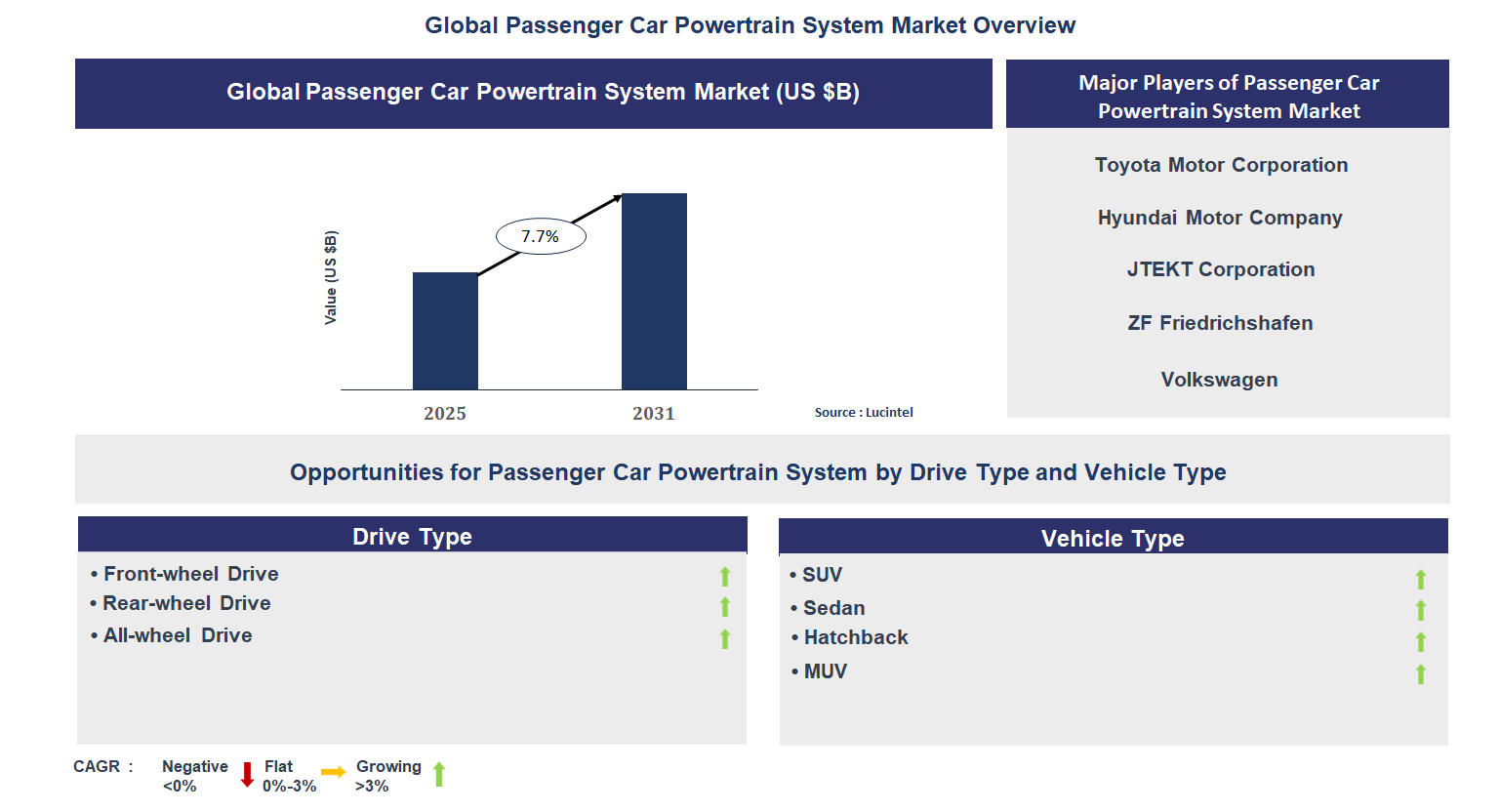
The future of the global passenger car powertrain system market looks promising with opportunities in the SUV, sedan, hatchback, and MUV markets. The global passenger car powertrain system market is expected to grow with a CAGR of 7.7% from 2025 to 2031. The major drivers for this market are the increasing demand for fuel-efficient powertrains, the rising adoption of electric vehicle technologies, and the growing focus on reducing carbon emissions.• Lucintel forecasts that, within the drive type category, front-wheel drive is expected to witness the highest growth over the forecast period.
• Within the vehicle type category, SUV is expected to witness the highest growth.
• In terms of region, APAC is expected to witness the highest growth over the forecast period. Gain valuable insights for your business decisions with our comprehensive 150+ page report. Sample figures with some insights are shown below.
Emerging Trends in the Passenger Car Powertrain System Market
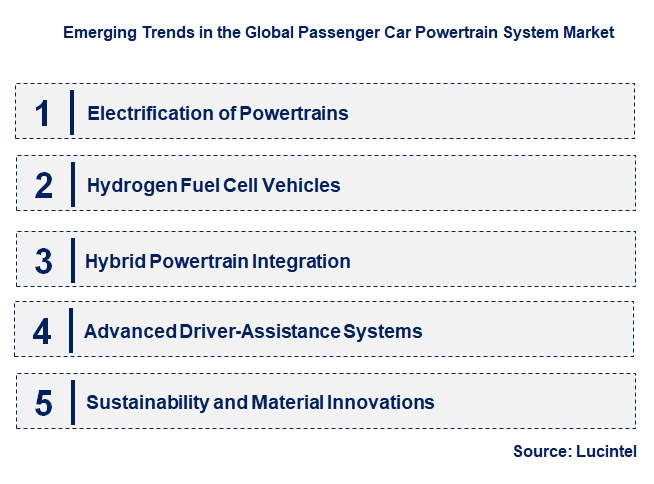
The passenger car powertrain system market is witnessing significant shifts due to evolving technologies, consumer demand, and global regulatory frameworks. Emerging trends such as electrification, sustainability, and performance optimization are reshaping the future of powertrain systems across various markets.• Electrification of Powertrains: Governments and manufacturers worldwide are investing heavily in electrification to reduce carbon emissions and fuel dependency. Electric powertrains, including BEVs and PHEVs, are becoming mainstream, offering lower operating costs and eco-friendly performance. EV adoption is driven by improving battery technology and expanded charging infrastructure.
• Hydrogen Fuel Cell Vehicles: Hydrogen powertrains are emerging as a clean alternative to battery electric vehicles, particularly in markets like Japan and Germany. These vehicles offer fast refueling times and longer ranges, addressing some of the limitations of EVs. The development of hydrogen refueling stations is essential for widespread adoption.
• Hybrid Powertrain Integration: Hybrid powertrains are becoming a bridge between traditional internal combustion engines (ICE) and fully electric vehicles. They are particularly relevant in markets like Japan and Europe, where manufacturers are integrating both combustion engines and electric motors to improve fuel efficiency and reduce emissions.
• Advanced Driver-Assistance Systems: Powertrain systems are increasingly being integrated with ADAS technologies. These systems optimize power delivery, improving energy efficiency and vehicle performance. The rise of autonomous driving features and AI-driven optimization is driving the development of more intelligent powertrains.
• Sustainability and Material Innovations: The development of lightweight materials and more efficient manufacturing processes is reducing the overall environmental footprint of powertrain systems. Manufacturers are increasingly using sustainable materials in the construction of engines, batteries, and motors to align with global sustainability goals. These emerging trends are significantly altering the passenger car powertrain landscape, with a clear shift towards electrification, hybridization, and sustainability. While electric vehicles dominate, hydrogen powertrains and advanced technologies like AI and ADAS are expected to play pivotal roles. Sustainability is also a central focus, prompting manufacturers to innovate in materials and efficiency, ensuring long-term growth in the market.
Recent Development in the Passenger Car Powertrain System Market
Recent advancements in passenger car powertrain system market reflect a combination of regulatory, technological, and market forces. These developments indicate the industry’s transition toward more sustainable, efficient, and performance-oriented solutions, with a growing emphasis on electric and hybrid technologies.• Electric Powertrain Expansion: Many automakers are focusing on enhancing electric powertrain efficiency by improving battery performance and optimizing energy management. Increased investment in EV platforms and modular powertrains is allowing for more versatile and cost-effective electric vehicles. Companies are scaling up production to meet rising demand for EVs.
• Hybrid Powertrain Integration: Hybrid systems are gaining traction due to stricter emission norms and higher fuel costs. Auto manufacturers are integrating hybrid powertrains into various vehicle segments to provide a balance between performance and fuel efficiency. This integration is helping automakers meet both regulatory demands and consumer preferences for greener alternatives.
• Battery Innovation: The development of next-gen batteries, such as solid-state and lithium-sulfur batteries, is key to improving the range and reducing charging times for electric vehicles. As battery technology advances, the cost of EVs is expected to decrease, making them more accessible to a broader range of consumers.
• Hydrogen Fuel Cell Development: Hydrogen-powered vehicles are emerging as a solution for long-range, zero-emissions transportation. Countries like Japan and Germany are heavily investing in fuel cell technology and infrastructure. This is providing an alternative to EVs, especially for applications where charging infrastructure is lacking or impractical.
• Regulatory Changes and Incentives: Governments are setting ambitious targets to reduce emissions and promote sustainable mobility, pushing manufacturers to accelerate the development of electric and hybrid powertrains. Policies such as stricter fuel efficiency standards, tax credits for EVs, and penalties for excessive emissions are driving investment in advanced powertrain technologies. The developments in passenger car powertrain systems are primarily driven by the shift towards sustainable solutions like electric, hybrid, and hydrogen technologies. The improvements in battery performance and hybrid powertrain integration are addressing consumer concerns regarding range and fuel efficiency. Simultaneously, government regulations are steering the market towards greener solutions, ensuring long-term growth in the powertrain sector.
Strategic Growth Opportunities in the Passenger Car Powertrain System Market
The passenger car powertrain system market offers several growth opportunities, especially with increasing demand for electric and hybrid vehicles. These opportunities span across applications, with a growing focus on sustainability and performance optimization.• Electric Vehicle Powertrain: With the surge in EV adoption, the market for electric powertrains is experiencing rapid growth. Manufacturers are focusing on improving battery technology, energy management systems, and motor efficiency. As EV adoption increases globally, the demand for innovative electric powertrains is expected to rise, presenting significant growth opportunities.
• Hybrid Powertrain Systems: The integration of hybrid powertrains in mainstream vehicles provides automakers a way to meet emissions standards while offering improved fuel efficiency. Hybrid systems are gaining popularity in regions with stringent emissions regulations, including Europe, and are seen as a stepping stone toward full electrification.
• Battery Technology Innovations: Advances in battery technologies, including solid-state and fast-charging batteries, present growth opportunities in the EV market. The development of longer-lasting, faster-charging batteries will enhance the attractiveness of electric vehicles, encouraging consumers to make the switch from traditional gasoline-powered vehicles.
• Hydrogen Powertrain Infrastructure: With countries like Japan and Germany focusing on hydrogen as a clean alternative to electric powertrains, the development of hydrogen infrastructure presents significant growth potential. This includes investments in refueling stations, production facilities, and fuel cell vehicle technologies.
• AI and Automation in Powertrains: Artificial intelligence (AI) and automation are enabling more efficient powertrain systems. AI-driven optimization of energy usage, as well as autonomous driving capabilities, is driving the next generation of powertrain systems. Manufacturers are looking to incorporate these technologies to improve fuel efficiency and vehicle performance. The increasing demand for electric and hybrid powertrains, coupled with advancements in battery and hydrogen technologies, is driving substantial growth in the powertrain market. Manufacturers are capitalizing on these opportunities to innovate and enhance the overall vehicle performance, contributing to the ongoing transformation of the automotive industry towards cleaner and more efficient transportation systems.
Passenger Car Powertrain System Market Driver and Challenges
The passenger car powertrain market is shaped by technological innovations, shifting consumer preferences, regulatory requirements, and environmental concerns. The key drivers include the push for greener technologies, while challenges involve the high cost of new technologies and infrastructure limitations. Understanding these drivers and challenges is crucial for navigating the market’s evolution. The factors responsible for driving the passenger car powertrain system market include: 1. Government Regulations and Policies: Stricter emissions standards and regulations globally are driving the demand for more efficient and sustainable powertrain technologies. Policies promoting electric vehicle adoption, such as tax incentives and subsidies, are incentivizing automakers to invest in advanced powertrain systems. These regulatory frameworks are acting as catalysts for the transition to electric and hybrid powertrains. 2. Technological Advancements: Advancements in battery technology, fuel cells, and electric motors are driving the evolution of powertrain systems. Innovations like solid-state batteries, fast charging, and wireless charging are improving the performance and affordability of electric vehicles, which is a key driver for market growth. Additionally, hybrid powertrain solutions are becoming more efficient and cost-effective. 3. Environmental Concerns: Growing awareness about climate change and the environmental impact of traditional combustion engines is driving consumer preference for cleaner alternatives. Automakers are investing in electric and hybrid powertrains as part of their sustainability strategies. Environmental concerns are prompting both manufacturers and governments to focus on reducing emissions from the automotive sector. 4. Consumer Demand for Efficiency: As fuel prices rise and the cost of electricity remains relatively low, consumers are increasingly opting for vehicles with better fuel efficiency and lower operating costs. This demand for efficiency is driving the adoption of hybrid and electric vehicles, where powertrain systems play a pivotal role in enhancing overall energy management and fuel economy. 5. Performance Improvements: Consumers are not just looking for environmentally friendly vehicles but also high-performance capabilities. Advances in powertrain systems that provide more power, torque, and efficiency without compromising fuel economy are key drivers in the market. Manufacturers are focused on delivering both high performance and sustainability through innovations in electric and hybrid technologies. Challenges in the passenger car powertrain system market are: 1. High Cost of New Technologies: The development of electric and hybrid powertrains requires substantial investment in research and development, which can drive up vehicle prices. Consumers may be hesitant to adopt these vehicles due to the higher upfront cost, despite long-term savings. Manufacturers face the challenge of making these technologies more affordable to encourage widespread adoption. 2. Infrastructure Limitations: For electric and hydrogen vehicles, the lack of charging or refueling infrastructure remains a significant barrier. In many regions, the limited availability of charging stations is hindering the growth of EV markets. Without adequate infrastructure, consumers may be reluctant to switch to electric or hydrogen vehicles, slowing the overall adoption of these powertrain systems. 3. Supply Chain Issues: The powertrain market is facing challenges related to the supply of critical raw materials, such as lithium, cobalt, and rare earth metals, which are essential for battery production. Supply chain disruptions and price fluctuations for these materials are affecting the production and cost of electric vehicles, making it harder for manufacturers to scale up production. The passenger car powertrain market is heavily influenced by government policies, technological innovations, environmental concerns, and consumer demand for efficient and high-performance vehicles. However, challenges like high costs, infrastructure limitations, and supply chain issues are slowing the pace of adoption. The resolution of these challenges is key to unlocking the markets full potential, fostering innovation and growth in the powertrain system industry.List of Passenger Car Powertrain System Companies
Companies in the market compete on the basis of product quality offered. Major players in this market focus on expanding their manufacturing facilities, R&D investments, infrastructural development, and leverage integration opportunities across the value chain. With these strategies passenger car powertrain system companies cater increasing demand, ensure competitive effectiveness, develop innovative products & technologies, reduce production costs, and expand their customer base. Some of the passenger car powertrain system companies profiled in this report include-• Toyota Motor Corporation
• Hyundai Motor Company
• JTEKT Corporation
• ZF Friedrichshafen
• Volkswagen
• Ford Motor Company
• General Motors Company
• GKN
• Borgwarner
• Aisin Seiki
Passenger Car Powertrain System Market by Segment
The study includes a forecast for the global passenger car powertrain system market by drive type, vehicle type, and region.Passenger Car Powertrain System Market by Drive Type [Value from 2019 to 2031]:
• Front-wheel Drive
• Rear-wheel Drive
• All-wheel Drive
Passenger Car Powertrain System Market by Vehicle Type [Value from 2019 to 2031]:
• SUV
• Sedan
• Hatchback
• MUV
Passenger Car Powertrain System Market by Region [Value from 2019 to 2031]:
• North America
• Europe
• Asia Pacific
• The Rest of the World
Country Wise Outlook for the Passenger Car Powertrain System Market
The passenger car powertrain system market is rapidly evolving, driven by technological advancements, shifting consumer preferences, and stricter regulatory requirements. These developments have impacted countries like the United States, China, Germany, India, and Japan. Each nation is responding differently, focusing on electrification, hybrid technologies, and fuel efficiency improvements to align with sustainability goals.• United States: The U.S. has accelerated its transition to electric vehicles (EVs) and plug-in hybrid electric vehicles (PHEVs). The government’s push for carbon neutrality by 2050, along with increased investments in EV infrastructure, is reshaping the powertrain market. Companies are focusing on high-performance battery technologies, improving range, and optimizing energy efficiency, driving the market towards sustainable solutions.
• China: China is the world’s largest EV market, with major investments in electric powertrain development and battery technology. The government has provided strong incentives to manufacturers, helping China dominate the global EV industry. The focus is on improving battery life, reducing cost, and enhancing the efficiency of electric motors, which has led to widespread EV adoption.
• Germany: Germany has become a leader in integrating hybrid and electric powertrain systems. German automakers are focused on reducing CO2 emissions and adopting hybrid powertrains in mainstream vehicles. Government incentives and stricter emissions regulations are pushing manufacturers like Volkswagen and BMW to accelerate the development of electric powertrains, as well as improving the efficiency of combustion engines.
• India: India’s passenger car powertrain market is undergoing a shift towards hybridization and EVs, with a focus on improving fuel efficiency. The government has introduced incentives for electric vehicles, while hybrid vehicles are becoming more popular in response to rising fuel prices and environmental concerns. The market remains in the early stages but shows substantial growth potential.
• Japan: Japan has long been a pioneer in hybrid powertrain systems, with companies like Toyota and Honda leading the charge. The country is focusing on advancing hybrid powertrains and developing hydrogen fuel cell technologies. The government is also supporting the transition to EVs, and Japanese manufacturers are investing heavily in both electric and hydrogen-powered vehicles.

Features of the Global Passenger Car Powertrain System Market
Market Size Estimates: Passenger car powertrain system market size estimation in terms of value ($B). Trend and Forecast Analysis: Market trends (2019 to 2024) and forecast (2025 to 2031) by various segments and regions. Segmentation Analysis: Passenger car powertrain system market size by drive type, vehicle type, and region in terms of value ($B). Regional Analysis: Passenger car powertrain system market breakdown by North America, Europe, Asia Pacific, and Rest of the World. Growth Opportunities: Analysis of growth opportunities in different drive types, vehicle types, and regions for the passenger car powertrain system market. Strategic Analysis: This includes M&A, new product development, and competitive landscape of the passenger car powertrain system market. Analysis of competitive intensity of the industry based on Porter’s Five Forces model.
FAQ
Q1. What is the growth forecast for passenger car powertrain system market? Answer: The global passenger car powertrain system market is expected to grow with a CAGR of 7.7% from 2025 to 2031. Q2. What are the major drivers influencing the growth of the passenger car powertrain system market? Answer: The major drivers for this market are the increasing demand for fuel-efficient powertrains, the rising adoption of electric vehicle technologies, and the growing focus on reducing carbon emissions. Q3. What are the major segments for passenger car powertrain system market? Answer: The future of the passenger car powertrain system market looks promising with opportunities in the SUV, sedan, hatchback, and MUV markets. Q4. Who are the key passenger car powertrain system market companies? Answer: Some of the key passenger car powertrain system companies are as follows:• Toyota Motor Corporation
• Hyundai Motor Company
• JTEKT Corporation
• ZF Friedrichshafen
• Volkswagen
• Ford Motor Company
• General Motors Company
• GKN
• Borgwarner
• Aisin Seiki Q5. Which passenger car powertrain system market segment will be the largest in future? Answer: Lucintel forecasts that, within the drive type category, front-wheel drive is expected to witness the highest growth over the forecast period. Q6. In passenger car powertrain system market, which region is expected to be the largest in next 5 years? Answer: In terms of region, APAC is expected to witness the highest growth over the forecast period. Q7. Do we receive customization in this report? Answer: Yes, Lucintel provides 10% customization without any additional cost.
Table of Contents
List of Figures
List of Tables
Methodology
- In-depth interviews of the major players in this market
- Detailed secondary research from competitors’ financial statements and published data
- Extensive searches of published works, market, and database information pertaining to industry news, company press releases, and customer intentions
- A compilation of the experiences, judgments, and insights of Lucintel’s professionals, who have analyzed and tracked this market over the years.


Buy Now
Choose a license that fits your team. Instant PDF delivery.
Prices exclude taxes. Instant delivery. Custom licensing available on request.
Key Questions
- • What are some of the most promising, high-growth opportunities for the passenger car powertrain system market by drive type (front-wheel drive, rear-wheel drive, and all-wheel drive), vehicle type (SUV, sedan, hatchback, and MUV), and region (North America, Europe, Asia Pacific, and the Rest of the World)?
- • Which segments will grow at a faster pace and why?
- • Which region will grow at a faster pace and why?
- • What are the key factors affecting market dynamics? What are the key challenges and business risks in this market?
- • What are the business risks and competitive threats in this market?
- • What are the emerging trends in this market and the reasons behind them?
- • What are some of the changing demands of customers in the market?
- • What are the new developments in the market? Which companies are leading these developments?
- • Who are the major players in this market? What strategic initiatives are key players pursuing for business growth?
- • What are some of the competing products in this market and how big of a threat do they pose for loss of market share by material or product substitution?
- • What M&A activity has occurred in the last 5 years and what has its impact been on the industry? For any questions related to Passenger Car Powertrain System Market, Passenger Car Powertrain System Market Size, Passenger Car Powertrain System Market Growth, Passenger Car Powertrain System Market Analysis, Passenger Car Powertrain System Market Report, Passenger Car Powertrain System Market Share, Passenger Car Powertrain System Market Trends, Passenger Car Powertrain System Market Forecast, Passenger Car Powertrain System Companies, write Lucintel analyst at email: helpdesk@lucintel.com. We will be glad to get back to you soon.


