
Market Report · July 31, 2026

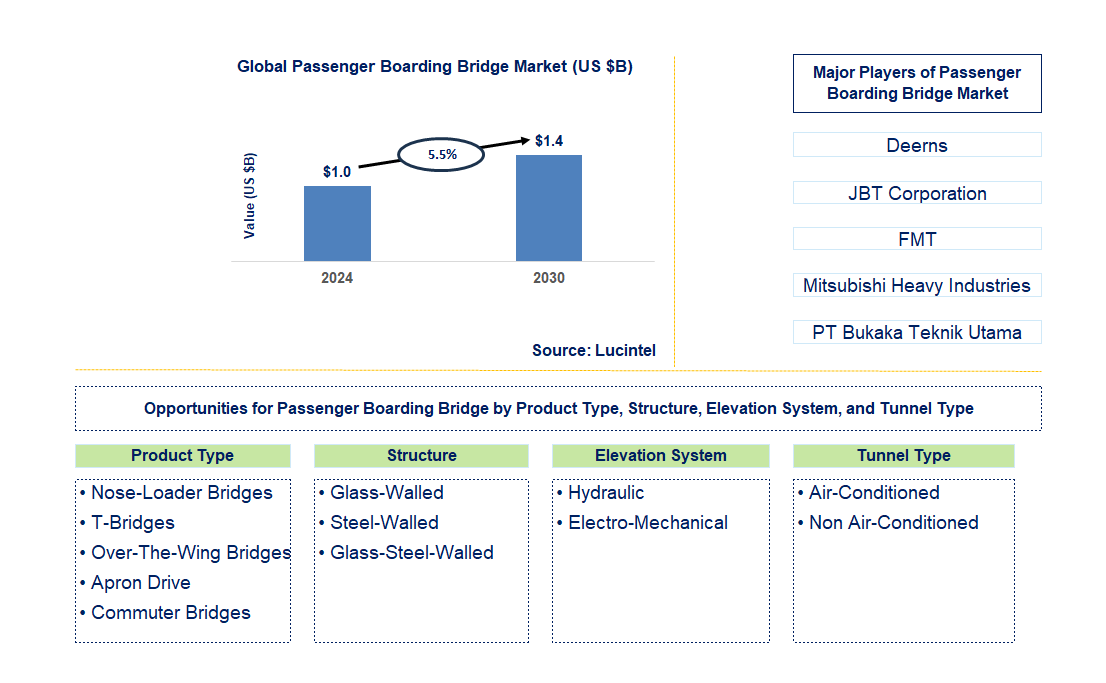
Key data points: The market size in 2030 = $1.4 billion, growth forecasts = 5.5% annually for the next 6 years. Scroll below to get more insights. This market report covers trends, opportunities, and forecasts in the global passenger boarding bridge market to 2030 by product type (nose-loader bridges, t-bridges, over-the-wing bridges, apron drive, and commuter bridges), structure (glass-walled, steel-walled, and glass-steel-walled), elevation system (hydraulic and electro-mechanical), tunnel type (air-conditioned and non air-conditioned), and region (North America, Europe, Asia Pacific, and the Rest of the World)
We'll send your sample report shortly.
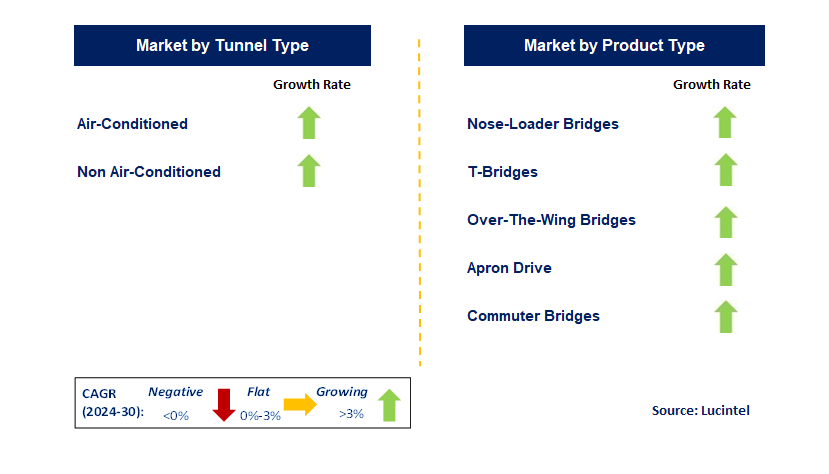
• Lucintel forecasts that,within the tunnel type category, air-conditioned will remain a larger segment over the forecast period.
• Within the product type category , commuter bridge will remain the largest segment over the forecast period.
• In terms of regions, North America will remain the largest region over the forecast period. A more than 150-page report is developed to help in your business decisions.
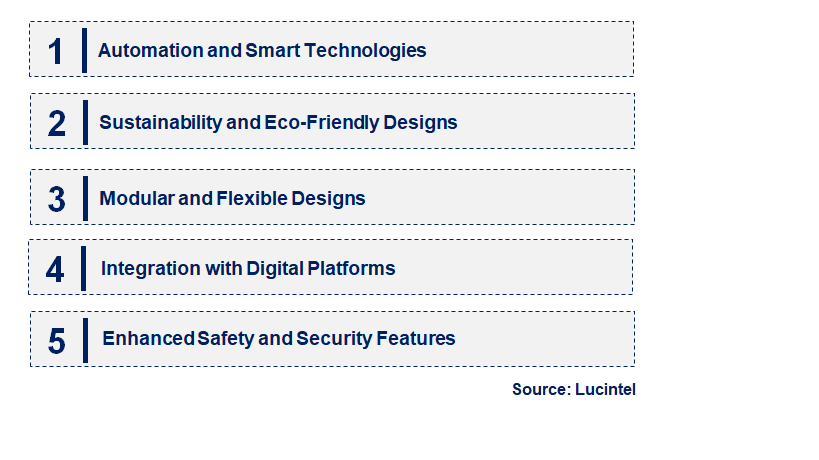
• Automation and Smart Technologies: The integration of automation and smart technologies in passenger boarding bridges is revolutionizing airport operations. Automated boarding systems, including self-service kiosks and smart control panels, streamline the boarding process, reduce manual intervention, and enhance passenger experience. These systems often feature real-time data analytics, which help in monitoring and managing boarding efficiency. The adoption of smart technologies also supports predictive maintenance, reducing downtime and operational disruptions.
• Sustainability and Eco-Friendly Designs: There is a growing emphasis on sustainability within the passenger boarding bridge market, with a shift towards eco-friendly designs and materials. New passenger boarding bridge models are incorporating energy-efficient systems, such as LED lighting and solar panels, to reduce environmental impact. Additionally, manufacturers are focusing on recyclable and low-impact materials to minimize the carbon footprint of passenger boarding bridge installations. This trend aligns with broader airport sustainability goals and regulatory requirements.
• Modular and Flexible Designs: Modular and flexible passenger boarding bridge designs are gaining traction as airports seek solutions that can be easily adapted to changing needs. Modular passenger boarding bridges allow for quicker installation and reconfiguration, making them ideal for airports undergoing expansion or renovation. This flexibility also facilitates the accommodation of different aircraft types and sizes, enhancing operational efficiency. The trend towards modularity supports rapid deployment and cost-effective upgrades.
• Integration with Digital Platforms: The integration of passenger boarding bridge systems with digital platforms is enhancing operational efficiency and passenger experience. Digital platforms provide real-time monitoring, data analytics, and remote control capabilities, enabling better management of boarding processes and maintenance activities. This integration helps airports optimize passenger boarding bridge usage, improve safety protocols, and provide timely updates to passengers. It also supports advanced features such as dynamic gate assignment and real-time problem resolution.
• Enhanced Safety and Security Features: Enhanced safety and security features are becoming a key focus in passenger boarding bridge design. New passenger boarding bridge models are equipped with advanced safety systems, including collision avoidance sensors, emergency evacuation protocols, and surveillance cameras. These features aim to ensure passenger safety during boarding and disembarking, address potential hazards, and comply with stringent security regulations. The emphasis on safety reflects the industry's commitment to creating secure and reliable airport environments. These emerging trends are fundamentally reshaping the passenger boarding bridge market, driving improvements in automation, sustainability, and flexibility. The shift towards smart technologies and digital integration enhances operational efficiency and passenger satisfaction, while modular designs offer adaptability to evolving airport needs. Sustainability initiatives align with global environmental goals, and advanced safety features ensure secure travel experiences. Collectively, these trends are fostering a more efficient, responsive, and environmentally conscious passenger boarding bridge market.
• Advanced Automation Systems: The introduction of advanced automation systems in passenger boarding bridges is a major development. Automated boarding bridges feature self-adjusting mechanisms that align with various aircraft sizes, reducing manual adjustments and operational delays. These systems often include automated guidance for passengers and improved control interfaces for airport staff. The automation trend enhances efficiency, minimizes human error, and streamlines the boarding process.
• Integration of Smart Technologies: The integration of smart technologies into passenger boarding bridges is transforming their functionality. Smart passenger boarding bridges are equipped with sensors and data analytics tools that monitor operational status, detect potential issues, and provide real-time updates. These technologies enable predictive maintenance, reducing downtime and improving overall reliability. The use of smart technologies also enhances passenger experience through features like real-time boarding information and adaptive lighting.
• Sustainability Initiatives: Sustainability is a key focus in recent passenger boarding bridge developments, with new designs emphasizing eco-friendly practices. passenger boarding bridge manufacturers are incorporating energy-efficient systems such as LED lighting, low-power hydraulics, and recyclable materials. These initiatives aim to reduce the environmental impact of passenger boarding bridges and align with broader airport sustainability goals. Sustainable passenger boarding bridge designs also help airports meet regulatory requirements and achieve environmental certifications.
• Modular and Customizable Designs: Modular and customizable passenger boarding bridge designs are gaining popularity as airports seek adaptable solutions. Modular passenger boarding bridges allow for flexible configurations and quick installation, making them suitable for both new airports and upgrades to existing facilities. Customizable features enable airports to tailor passenger boarding bridges to specific operational needs and aircraft types, enhancing versatility and cost-effectiveness. This development supports rapid responses to changing airport demands.
• Enhanced Safety Features: Recent passenger boarding bridge developments include enhanced safety features to ensure secure boarding and disembarking processes. New passenger boarding bridge models are equipped with advanced safety systems such as collision avoidance sensors, automated emergency protocols, and integrated surveillance cameras. These features address potential hazards and comply with stringent safety regulations, improving overall security and passenger confidence during airport operations. Recent developments in the passenger boarding bridge market are driving significant improvements in automation, technology integration, and sustainability. Advanced automation systems and smart technologies enhance operational efficiency and passenger experience, while sustainability initiatives support environmental goals. Modular designs offer flexibility and rapid deployment, and enhanced safety features ensure secure boarding processes. Collectively, these developments are reshaping the passenger boarding bridge market, reflecting the evolving needs of modern airports and their commitment to efficiency, safety, and environmental responsibility.
• Expansion of Airport Infrastructure: As airports around the world expand to handle growing passenger volumes, there is a substantial opportunity for passenger boarding bridge manufacturers. New terminals and expanded gates require the installation of additional passenger boarding bridges to accommodate larger and more diverse aircraft. This growth opportunity is driven by increased air travel and the need for improved boarding processes. Airports investing in expansion projects are prioritizing modern passenger boarding bridge systems to enhance efficiency and passenger experience, resulting in increased demand for advanced passenger boarding bridge solutions.
• Modernization of Existing Airports: The modernization of existing airport facilities presents a significant growth opportunity for passenger boarding bridge providers. Many airports are upgrading their infrastructure to incorporate the latest technology and improve operational efficiency. This includes replacing outdated passenger boarding bridge systems with newer models featuring automation, smart technology, and sustainability features. Modernization projects are aimed at enhancing passenger flow, reducing boarding times, and meeting new environmental regulations, creating a robust market for state-of-the-art passenger boarding bridge installations and retrofits.
• Development of New Airports in Emerging Markets: Emerging markets are seeing rapid growth in new airport developments, particularly in regions such as Asia-Pacific and Africa. As these regions invest in building new airports to support increasing air travel, there is a growing demand for passenger boarding bridges. New airports often require a comprehensive set of passenger boarding bridges to accommodate a range of aircraft sizes and passenger needs. This opportunity is driven by economic growth, urbanization, and expanding middle classes in these regions, fueling the demand for modern passenger boarding bridge systems.
• Adoption of Sustainable and Energy-Efficient passenger boarding bridge Designs: There is a rising trend towards sustainability in airport infrastructure, including passenger boarding bridges. Airports are increasingly adopting energy-efficient and eco-friendly passenger boarding bridge designs that align with global environmental goals. This includes features such as LED lighting, solar panels, and recyclable materials. The push for sustainability is driven by regulatory pressures and a growing emphasis on reducing carbon footprints. passenger boarding bridge manufacturers have the opportunity to innovate and offer solutions that meet these environmental standards, appealing to airports committed to green initiatives.
• Integration of Advanced Technologies and Automation: The integration of advanced technologies and automation into passenger boarding bridge systems represents a major growth opportunity. Technologies such as self-service boarding, real-time data analytics, and automated adjustments enhance operational efficiency and passenger convenience. Airports are increasingly investing in passenger boarding bridges that offer these advanced features to streamline operations and improve the boarding experience. The demand for smart, automated passenger boarding bridge systems is growing as airports seek to modernize and optimize their infrastructure. The passenger boarding bridge market is poised for growth due to strategic opportunities in airport expansion, modernization, new developments, sustainability, and technological integration. These opportunities are driving demand for advanced passenger boarding bridge systems that enhance efficiency, accommodate increasing passenger traffic, and align with environmental goals. As airports invest in these areas, the passenger boarding bridge market is experiencing significant transformation, reflecting the evolving needs of the aviation industry and the pursuit of operational excellence.
• Increasing Air Travel Demand: The global rise in air travel demand is a major driver for the passenger boarding bridge market. With more passengers traveling internationally and domestically, airports are expanding and upgrading their infrastructure to accommodate higher traffic volumes. This includes installing additional passenger boarding bridges to improve efficiency and reduce boarding times. The increasing frequency of flights and larger aircraft further fuels the demand for advanced passenger boarding bridge solutions.
• Technological Advancements in passenger boarding bridge Systems: Technological advancements are driving growth in the passenger boarding bridge market. Innovations such as automation, smart technologies, and advanced control systems enhance the functionality and efficiency of passenger boarding bridges. These technologies improve passenger experience by streamlining boarding processes and reducing delays. As airports invest in modernizing their facilities, the demand for technologically advanced passenger boarding bridge systems is increasing, creating opportunities for manufacturers to offer cutting-edge solutions.
• Airport Modernization and Expansion Projects: Ongoing modernization and expansion projects at airports are a significant driver for the passenger boarding bridge market. Airports are upgrading their infrastructure to meet current standards and accommodate larger aircraft. This includes replacing outdated passenger boarding bridges with newer models that offer better performance and features. The focus on improving airport operations and passenger experience is driving the demand for modern passenger boarding bridge systems in both new and existing airports.
• Regulatory and Environmental Pressures: Increasing regulatory and environmental pressures are influencing the passenger boarding bridge market. Governments and regulatory bodies are imposing stricter environmental standards, encouraging airports to adopt sustainable practices. passenger boarding bridge manufacturers are responding by developing energy-efficient designs and incorporating eco-friendly materials. Compliance with these regulations not only helps airports meet legal requirements but also aligns with global sustainability goals, driving demand for green passenger boarding bridge solutions.
• Growth in Emerging Markets: The growth of emerging markets is a key driver for the passenger boarding bridge market. Rapid economic development and increasing air travel in regions such as Asia-Pacific and Africa are leading to new airport construction and upgrades. Emerging markets are investing in modern airport infrastructure, including passenger boarding bridge systems, to support growing passenger volumes and improve connectivity. This expansion creates significant opportunities for passenger boarding bridge manufacturers to enter and grow in these high-potential markets. Challenges in the passenger boarding bridge market are:
• High Initial Investment Costs: One of the major challenges in the passenger boarding bridge market is the high initial investment required for purchasing and installing advanced passenger boarding bridge systems. The cost of new technology, installation, and maintenance can be substantial, particularly for airports with limited budgets. This challenge may delay or limit the adoption of modern passenger boarding bridge solutions, affecting overall market growth. Airports must carefully evaluate the return on investment and potential benefits when considering passenger boarding bridge upgrades.
• Technological Complexity and Integration: The complexity of integrating advanced technologies into existing airport infrastructure poses a challenge. Airports must ensure that new passenger boarding bridge systems are compatible with current systems and operations. The integration of smart technologies and automation requires careful planning and coordination to avoid disruptions. Additionally, ongoing maintenance and updates may be needed to ensure the continued functionality of these advanced systems, adding to the complexity and cost.
• Regulatory Compliance and Safety Standard: Meeting regulatory compliance and safety standards is a significant challenge for the passenger boarding bridge market. Airports and manufacturers must adhere to stringent safety regulations and certification requirements, which can be complex and vary by region. Ensuring that passenger boarding bridge systems meet these standards while incorporating advanced features and maintaining operational efficiency requires ongoing effort and investment. Regulatory compliance is essential for market acceptance and operational safety but can pose challenges for both new and existing passenger boarding bridge systems. The passenger boarding bridge market is influenced by a mix of drivers and challenges that shape its growth trajectory. Increasing air travel demand, technological advancements, and airport modernization projects are key drivers, fueling the need for advanced passenger boarding bridge solutions. However, high initial investment costs, technological complexity, and regulatory compliance present significant challenges. Addressing these challenges while leveraging growth drivers is crucial for stakeholders to navigate the evolving passenger boarding bridge market and capitalize on emerging opportunities. Overall, understanding these factors helps in strategic planning and decision-making within the passenger boarding bridge industry.
• Deerns
• JBT Corporation
• FMT
• Mitsubishi Heavy Industries
• PT Bukaka Teknik Utama
• Vataple Group
• Avicorp
• UBS Airport Systems
• CIMC Group
• ShinMaywa Industries
• Nose-Loader Bridges
• T-Bridges
• Over-The-Wing Bridges
• Apron Drive
• Commuter Bridges
• Glass-Walled
• Steel-Walled
• Glass-Steel-Walled
• Hydraulic
• Electro-Mechanical
• Air-Conditioned
• Non Air-Conditioned
• North America
• Europe
• Asia Pacific
• The Rest of the World
• United States: The U.S. has seen significant advancements in passenger boarding bridge technology with the integration of automated systems and enhanced connectivity features. Newer passenger boarding bridge models are equipped with advanced safety systems, including collision avoidance and improved passenger guidance. Airports are also focusing on upgrading their existing bridges to accommodate larger aircraft and improve efficiency. Additionally, sustainability initiatives are driving the adoption of energy-efficient designs and materials in new passenger boarding bridge installations.
• China: China is rapidly expanding its airport infrastructure, leading to a surge in passenger boarding bridge installations. The focus is on integrating high-tech features such as automated boarding systems and smart sensors to streamline passenger flow. Major airports like Beijing Capital and Shanghai Pudong are incorporating advanced passenger boarding bridge systems to handle increased passenger volumes and enhance operational efficiency. There's also a push towards modular designs that allow for quicker installation and flexibility in adapting to changing airport needs.
• Germany: Germany passenger boarding bridge market is characterized by a focus on environmental sustainability and technological innovation. German airports are investing in eco-friendly passenger boarding bridge designs, incorporating energy-efficient systems and materials. The development of multi-level passenger boarding bridges is also gaining traction to accommodate larger and more diverse aircraft types. Additionally, there is an emphasis on integrating passenger boarding bridge systems with digital platforms for real-time monitoring and maintenance, enhancing operational reliability and passenger experience.
• India: In India, the passenger boarding bridge market is expanding as the country modernizes its airport infrastructure to handle growing passenger traffic. New installations are focused on improving accessibility and efficiency, with a particular emphasis on designs that cater to diverse climatic conditions. The adoption of advanced features like automated jet bridges and real-time monitoring systems is on the rise. Additionally, there is a growing trend towards public-private partnerships to accelerate the deployment of new passenger boarding bridge systems at major airports.
• Japan: Japan passenger boarding bridge market is advancing with a focus on technological sophistication and operational efficiency. The country is adopting cutting-edge automation technologies, including self-boarding and smart control systems. There is also a strong emphasis on earthquake-resistant designs due to Japan's seismic activity. Airports like Tokyo Haneda and Narita are investing in upgrading their passenger boarding bridge infrastructure to enhance passenger experience and accommodate larger aircraft. Innovations in modular and retractable designs are also being explored to optimize space utilization.


• Deerns
• JBT Corporation
• FMT
• Mitsubishi Heavy Industries
• PT Bukaka Teknik Utama
• Vataple Group
• Avicorp
• UBS Airport Systems
• CIMC Group
• ShinMaywa Industries Q6. Which passenger boarding bridge market segment will be the largest in future? Answer: Lucintel forecasts that air-conditioned will remain larger segment over the forecast period. Q7. In passenger boarding bridge market, which region is expected to be the largest in next 5 years? Answer: North America will remain the largest region over the forecast period. Q.8 Do we receive customization in this report? Answer: Yes, Lucintel provides 10% customization without any additional cost.


Choose a license that fits your team. Instant PDF delivery.
Prices exclude taxes. Instant delivery. Custom licensing available on request.
Market Report · July 31, 2026
Market Report · July 31, 2026
Market Report · July 31, 2026
Trusted partner for strategic intelligence and business growth


Receive a complimentary market analysis tailored to your industry. Our analysts will identify key growth opportunities and competitive dynamics specific to your business.

Market size, growth rate, and key trend analysis for your specific sector.

Top competitor positioning and market share analysis.

Strategic recommendations backed by data-driven insights.
Get curated market intelligence and competitive moves straight to your inbox.
By subscribing, you agree to receive our monthly insights. Unsubscribe anytime.
Receive a complimentary market analysis tailored to your industry. Our analysts will identify key growth opportunities and competitive dynamics specific to your business.
Market size, growth rate, and key trend analysis for your specific sector.
Top competitor positioning and market share analysis.
Strategic recommendations backed by data-driven insights.
Get curated market intelligence, emerging trends, and competitive moves straight to your inbox each month.
By subscribing, you agree to receive our monthly insights. Unsubscribe anytime.
We'll send your sample report shortly.