
Market Report · July 31, 2026

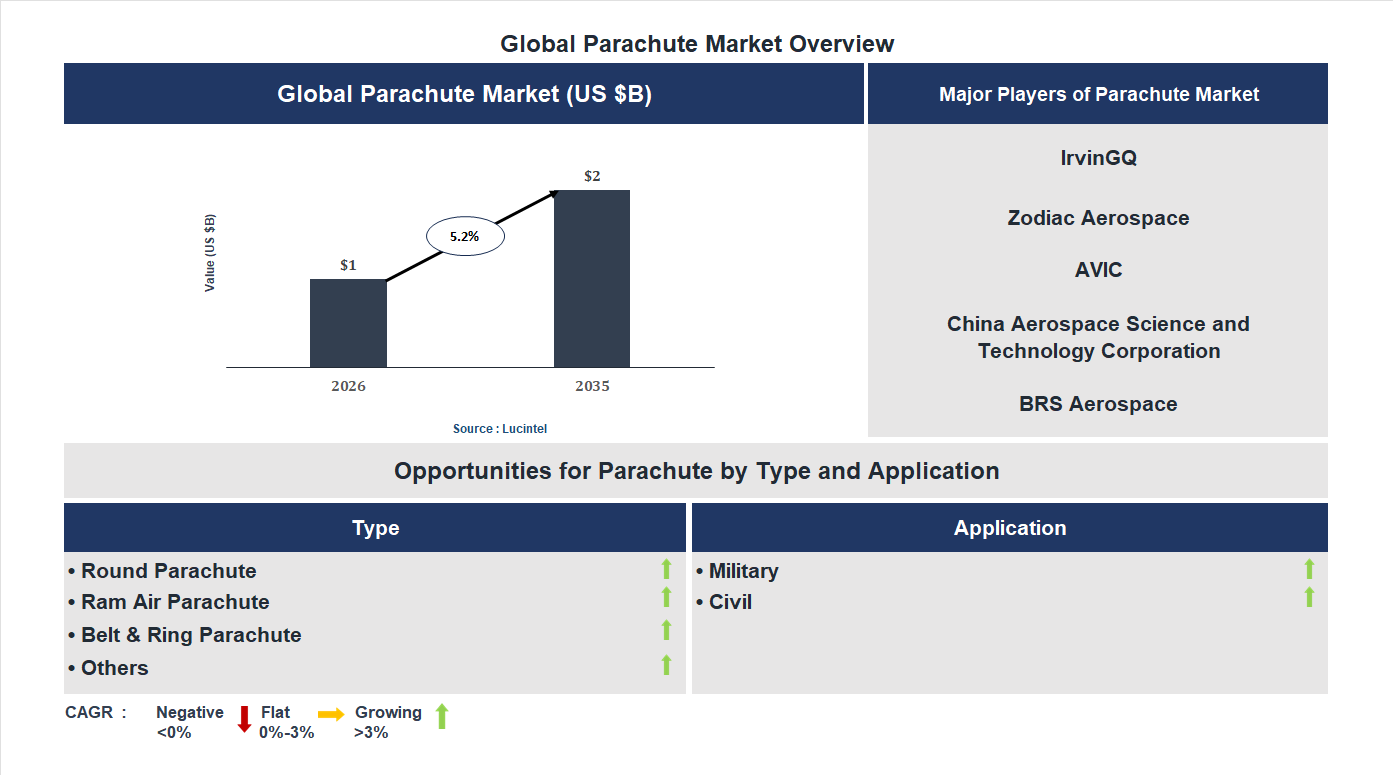
Key data points: The market size in 2035 = $2 billion, growth forecast = 5.2% annually for the next 8 years. Scroll below to get more insights. This market report covers trends, opportunities and forecasts in parachute market to 2035 by type (round parachute, ram air parachute, belt & ring parachute, and others), application (military and civil), and region (North America, Europe, Asia Pacific, and the Rest of the World)
We'll send your sample report shortly.
• Lucintel forecasts that, within the type category, ram air parachute is expected to witness the highest growth over the forecast period.
• Within the application category, military is expected to witness higher growth.
• In terms of region, APAC is expected to witness the highest growth over the forecast period. Gain valuable insights for your business decisions with our comprehensive 150+ page report. Sample figures with some insights are shown below.
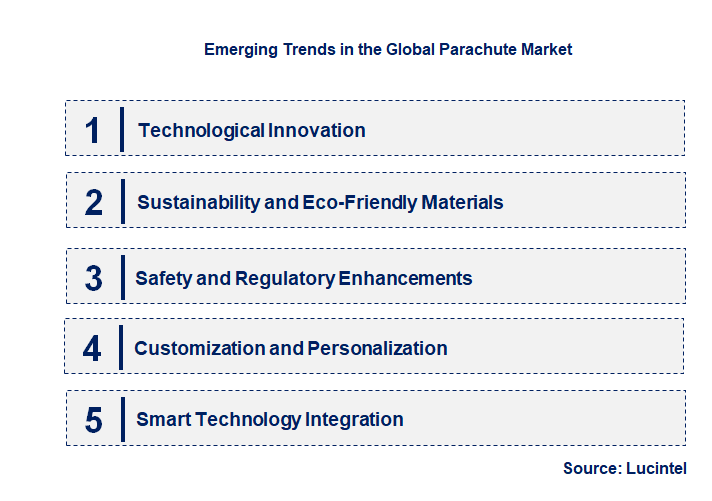
• Technological Innovation: The integration of advanced materials and design improvements is revolutionizing parachute performance. Lightweight, durable fabrics like ripstop nylon and high-performance textiles enhance safety and maneuverability. Innovations such as automated deployment systems and aerodynamic enhancements improve user experience and safety standards. These technological advancements are enabling parachutes to be more reliable, easier to use, and suitable for a broader range of applications, from military to recreational sports, thereby expanding market reach and customer confidence.
• Sustainability and Eco-Friendly Materials: Growing environmental concerns are prompting manufacturers to adopt sustainable practices. Use of biodegradable fabrics and eco-friendly manufacturing processes reduces environmental impact. Companies are exploring recyclable materials and sustainable sourcing to appeal to environmentally conscious consumers. This trend not only aligns with global sustainability goals but also differentiates brands in a competitive market, attracting new customer segments and fostering long-term loyalty, especially among outdoor enthusiasts and adventure sports participants.
• Safety and Regulatory Enhancements: Increasing safety regulations and standards are driving innovation in parachute design and testing. Enhanced safety features such as reserve parachutes, automatic activation devices, and improved packing techniques are becoming standard. Regulatory bodies are imposing stricter compliance requirements, prompting manufacturers to invest in rigorous testing and certification processes. These measures boost consumer confidence, reduce accident rates, and open up new markets in regions with stringent safety standards, ultimately fostering trust and expanding market penetration.
• Customization and Personalization: The demand for personalized parachutes tailored to individual preferences and specific activities is rising. Custom designs, color options, and branding opportunities are popular among recreational users and sports teams. Advanced manufacturing techniques like 3D printing and modular designs facilitate customization at scale. This trend enhances user engagement, brand loyalty, and market differentiation, especially in niche segments such as competitive skydiving, military training, and promotional events, thereby broadening the market’s appeal.
• Smart Technology Integration: The incorporation of sensors, GPS, and data analytics into parachutes is transforming the user experience. Smart parachutes can monitor performance, provide real-time feedback, and assist in navigation and deployment. These innovations improve safety, training, and operational efficiency, particularly in military and professional applications. The adoption of IoT-enabled parachutes is also attracting tech-savvy consumers and adventure enthusiasts seeking enhanced safety and connectivity, thus opening new avenues for revenue and technological leadership in the market. These emerging trends—technological innovation, sustainability, safety enhancements, customization, and smart technology—are collectively reshaping the parachute market. They are driving product development, expanding application areas, and attracting diverse customer segments. As these trends continue to evolve, the market is poised for sustained growth, increased competitiveness, and greater emphasis on safety and environmental responsibility, ultimately redefining the future landscape of parachuting products and services.
• Technological Innovations in Material Science: New lightweight, durable fabrics and advanced suspension systems are improving parachute performance, safety, and ease of deployment. These innovations reduce weight, increase stability, and extend lifespan, making parachutes suitable for diverse applications such as military, sports, and emergency rescue. Enhanced materials also enable customization for specific needs, boosting market growth and customer confidence.
• Expansion of Military and Defense Applications: Increasing defense budgets and modernization efforts are driving demand for advanced military parachutes. These include high-performance systems for troop deployment, cargo drops, and special operations. Improved safety features and reliability are critical, leading to innovations like stealth parachutes and precision-guided systems. This expansion significantly boosts market revenue and encourages R&D investments in military-grade parachutes.
• Growth in Sports and Recreational Activities: The rising popularity of skydiving, BASE jumping, and other adventure sports is fueling demand for specialized parachutes. Innovations in design, safety, and comfort are attracting more enthusiasts. The market benefits from increased training facilities and safety regulations, which promote consumer confidence. This segments growth is also supported by tourism and adventure travel sectors, expanding the overall market scope.
• Increasing Use in Emergency and Rescue Operations: Parachutes are vital in disaster response, firefighting, and medical evacuations. Advances in rapid deployment and reliability are enhancing their effectiveness in critical situations. Governments and organizations are investing in modern rescue parachutes with improved safety features, leading to broader adoption. This trend underscores the markets importance in safety and emergency preparedness, creating new growth avenues.
• Rising Adoption of Smart Parachutes with Integrated Sensors: The integration of IoT and sensor technology is transforming parachute systems into smart devices. These parachutes provide real-time data on deployment, altitude, and environmental conditions, improving safety and operational efficiency. Military, commercial, and recreational sectors are adopting these innovations, which also facilitate maintenance and performance monitoring. The development of smart parachutes is expected to significantly influence future market dynamics and technological standards. These developments are collectively transforming the parachute market by enhancing safety, performance, and application diversity. Technological advancements and expanding use cases are driving growth, attracting new customers, and encouraging innovation. As these trends continue, the market is poised for sustained expansion, with increased competitiveness and opportunities across military, sports, emergency, and commercial sectors.
• Defense and Military Applications: The defense sector remains a primary driver for parachute demand, with military operations requiring advanced, reliable parachutes for troop deployment, cargo drops, and special operations. Innovations in high-performance materials and precision deployment systems are enhancing safety and operational efficiency. The increasing focus on tactical and stealth parachutes for special forces, along with the need for durable, lightweight designs, presents substantial growth opportunities. Governments worldwide are investing in modernizing their military parachute inventories, further boosting market prospects.
• Recreational Skydiving and Adventure Sports: The rising popularity of recreational skydiving, BASE jumping, and other adventure sports is significantly expanding the parachute market. Enthusiasts seek safer, more comfortable, and customizable parachutes, prompting manufacturers to develop innovative designs with improved aerodynamics and materials. The growth of skydiving clubs, training centers, and tourism activities in regions like North America and Europe is fueling demand. Additionally, technological advancements in automatic activation devices and safety features are attracting new participants, further driving market expansion.
• Emergency and Rescue Operations: Parachutes play a critical role in emergency response, including rescue missions, firefighting, and disaster relief. The need for rapid deployment and reliable safety features makes this segment vital. Innovations such as high-strength fabrics, lightweight designs, and automated deployment systems are improving rescue efficiency. Governments and organizations are investing in specialized parachutes for medical evacuations, firefighting, and humanitarian aid, creating a steady growth trajectory. The increasing frequency of natural disasters globally underscores the importance of advanced parachute solutions in emergency scenarios.
• Commercial Cargo and Logistics: The rise of drone technology and aerial delivery systems is transforming commercial logistics, creating new opportunities for parachute applications. Parachutes are used for safe, precise delivery of goods, medical supplies, and e-commerce parcels in hard-to-reach areas. Innovations in lightweight, compact, and reusable parachutes are enhancing operational efficiency. The development of autonomous delivery systems and the integration of GPS technology are further expanding this segment. As e-commerce and rapid delivery demands grow, so does the need for reliable parachute-based logistics solutions.
• Space and Aerospace Applications: The space industry is increasingly utilizing parachutes for spacecraft landing, satellite deployment, and re-entry modules. Advanced parachute systems are essential for ensuring safe landings of space capsules and cargo. Innovations in multi-stage deployment, high-strength fabrics, and lightweight materials are critical for space missions. The growing number of commercial space launches and government space programs presents substantial opportunities for specialized parachute solutions. As space exploration advances, the demand for reliable, high-performance parachutes will continue to rise, supporting safe and efficient space operations. These growth opportunities across defense, recreational, emergency, commercial, and space applications are poised to significantly influence the parachute market. Technological innovations and expanding application areas will drive market growth, offering substantial benefits for manufacturers and stakeholders. Embracing these opportunities will be crucial for maintaining competitiveness and capitalizing on emerging trends in this dynamic industry.
• Technological Innovation: The development of advanced materials and manufacturing processes has significantly improved parachute performance, safety, and durability. Innovations such as lightweight fabrics, automated deployment systems, and enhanced design techniques have expanded applications from recreational to military and commercial sectors. These technological advancements attract new customers and enable existing players to differentiate their products, fostering market growth. Continuous R&D investments are expected to sustain this momentum, leading to more reliable and versatile parachutes that meet diverse user needs.
• Growing Adventure Sports and Recreational Activities: The rising popularity of adventure sports like skydiving, paragliding, and BASE jumping has driven demand for high-quality parachutes. Increased participation in these activities, fueled by a growing youth demographic and expanding tourism infrastructure, boosts market sales. Moreover, the trend towards experiential tourism and extreme sports has created a niche for premium and specialized parachutes, encouraging manufacturers to innovate and diversify their offerings to cater to this expanding customer base.
• Military and Defense Sector Expansion: Governments worldwide are investing heavily in military training and tactical operations, which require reliable parachuting equipment. The modernization of armed forces and increased procurement of military-grade parachutes for personnel and cargo transport are significant growth drivers. These contracts often involve stringent quality standards, pushing manufacturers to develop high-performance, durable parachutes that meet military specifications, thereby expanding the market scope and revenue streams.
• Regulatory and Safety Standards: Stringent safety regulations and certification requirements imposed by aviation authorities and safety organizations influence market dynamics. Compliance with standards such as EN and ISO certifications ensures product reliability and safety, which is crucial for consumer confidence and legal approval. These regulations also encourage innovation in safety features, such as automatic activation devices and improved harness systems, fostering a safer and more trustworthy market environment.
• Rising Disposable Income and Urbanization: Increasing disposable incomes, especially in emerging economies, enable more consumers to participate in adventure sports and recreational activities involving parachutes. Urbanization trends also contribute by creating a larger customer base seeking leisure and thrill-seeking experiences. This economic shift supports higher sales volumes and encourages manufacturers to expand distribution channels and product varieties to meet diverse consumer preferences. The challenges facing the parachute market include:
• Stringent Regulatory Compliance: While regulations ensure safety, they also pose significant barriers due to complex certification processes and evolving standards. Manufacturers must invest heavily in testing, quality assurance, and compliance procedures, which can increase costs and time-to-market. Navigating these regulatory landscapes requires expertise and resources, potentially limiting entry for smaller players and slowing overall market growth.
• High Manufacturing Costs: The use of advanced materials and precision manufacturing techniques results in elevated production costs. These costs can be transferred to consumers, making high-quality parachutes less affordable and limiting market penetration in price-sensitive regions. Additionally, fluctuations in raw material prices, such as nylon and specialized fabrics, further impact profitability and pricing strategies.
• Market Competition and Price Pressures: The increasing number of domestic and international players intensifies competition, leading to price wars and reduced profit margins. Companies are compelled to innovate continuously while maintaining cost efficiency, which can strain resources. This competitive environment may also lead to market fragmentation, making it challenging for new entrants to establish a foothold and for existing players to sustain long-term growth. The parachute market is shaped by rapid technological advancements, expanding recreational and military applications, and evolving safety standards. However, regulatory complexities, high manufacturing costs, and intense competition pose significant challenges. These factors collectively influence market dynamics, requiring stakeholders to innovate strategically, optimize costs, and adapt to regulatory changes. Overall, the markets future growth hinges on balancing these drivers and overcoming challenges through innovation, strategic planning, and compliance, ensuring sustainable development and increased consumer confidence.
• IrvinGQ
• Zodiac Aerospace
• AVIC
• China Aerospace Science and Technology Corporation
• BRS Aerospace
• Fujikura Parachute
• Performance Designs
• VITAL Parachute
• Mills Manufacturing
• Vertical do Ponto
• Round Parachute
• Ram Air Parachute
• Belt & Ring Parachute
• Others
• Military
• Civil
• North America
• Europe
• Asia Pacific
• The Rest of the World
• United States: The US market has seen innovations in safety features, including automatic activation systems and lightweight materials. Military and recreational sectors are expanding, with companies investing in research to improve durability and ease of use. The adoption of advanced testing protocols has increased safety standards, boosting consumer confidence and market growth.
• China: China is rapidly expanding its parachute manufacturing capabilities, focusing on cost-effective production and quality improvements. The country is also investing in research to develop high-performance parachutes for military and commercial use. Domestic demand is rising due to increased recreational activities and military modernization efforts.
• Germany: Germany emphasizes high-quality, safety-oriented parachutes, integrating advanced materials and aerodynamic designs. The country’s focus on innovation has led to the development of specialized parachutes for sports, rescue operations, and military applications. Regulatory standards are strict, ensuring high safety and performance levels.
• India: India’s parachute market is growing due to increased adventure tourism and military modernization. The country is investing in indigenous manufacturing capabilities and training programs. Innovations include lightweight, durable parachutes suitable for diverse terrains and conditions, supporting both recreational and defense needs.
• Japan: Japan is advancing parachute technology with a focus on safety, precision, and lightweight materials. The market is driven by military modernization and recreational sports. Japanese companies are developing parachutes with enhanced stability and control features, aligning with strict safety regulations and technological standards.


• IrvinGQ
• Zodiac Aerospace
• AVIC
• China Aerospace Science and Technology Corporation
• BRS Aerospace
• Fujikura Parachute
• Performance Designs
• VITAL Parachute
• Mills Manufacturing
• Vertical do Ponto Q6. Which parachute market segment will be the largest in future? Answer: Lucintel forecasts that, within the type category, ram air parachute is expected to witness the highest growth over the forecast period. Q7. In parachute market, which region is expected to be the largest in next 8 years? Answer: In terms of region, APAC is expected to witness the highest growth over the forecast period. Q8. Do we receive customization in this report? Answer: Yes, Lucintel provides 10% customization without any additional cost.


Choose a license that fits your team. Instant PDF delivery.
Prices exclude taxes. Instant delivery. Custom licensing available on request.
Market Report · July 31, 2026
Market Report · July 31, 2026
Market Report · July 31, 2026
Trusted partner for strategic intelligence and business growth


Receive a complimentary market analysis tailored to your industry. Our analysts will identify key growth opportunities and competitive dynamics specific to your business.

Market size, growth rate, and key trend analysis for your specific sector.

Top competitor positioning and market share analysis.

Strategic recommendations backed by data-driven insights.
Get curated market intelligence and competitive moves straight to your inbox.
By subscribing, you agree to receive our monthly insights. Unsubscribe anytime.
Receive a complimentary market analysis tailored to your industry. Our analysts will identify key growth opportunities and competitive dynamics specific to your business.
Market size, growth rate, and key trend analysis for your specific sector.
Top competitor positioning and market share analysis.
Strategic recommendations backed by data-driven insights.
Get curated market intelligence, emerging trends, and competitive moves straight to your inbox each month.
By subscribing, you agree to receive our monthly insights. Unsubscribe anytime.
We'll send your sample report shortly.