
Market Report · May 18, 2026

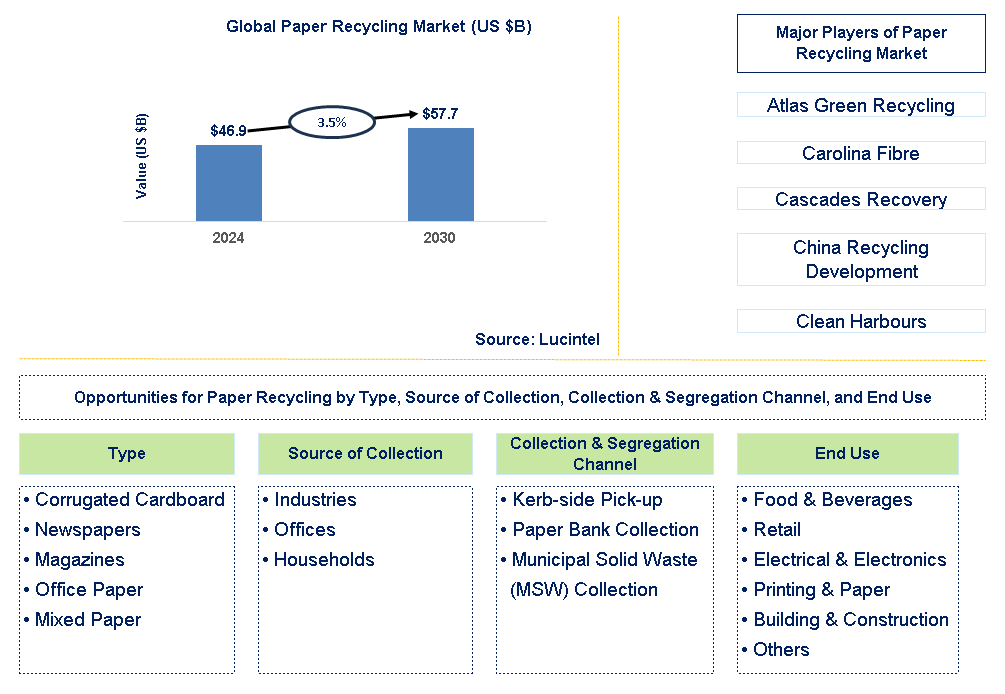
Key data points: The market size in 2030 = $57.7 billion, growth forecast = 3.5% annually for the next 6 years. Scroll below to get more insights. This market report covers trends, opportunities, and forecasts in the global paper recycling market to 2030 by type (corrugated cardboard, newspapers, magazines, office paper, and mixed paper), source of collection (industries, offices, and households), collection & segregation channel (kerb-side pick-up, paper bank collection, and municipal solid waste (MSW) collection), end use (food & beverages, retail, electrical & electronics, printing & paper, building & construction, and others), and region (North America, Europe, Asia Pacific, and the Rest of the World)
We'll send your sample report shortly.
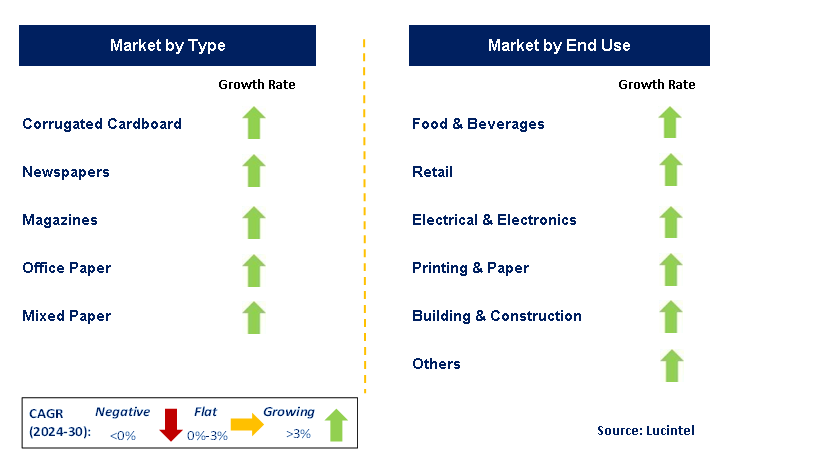
• Lucintel forecasts that, within type category, corrugated cardboard is expected to witness the highest growth over the forecast period.
• Within the end use category, printing & paper is expected to witness the highest growth over the forecast period.
• In terms of regions, APAC is expected to witness highest growth over the forecast period. Gain valuable insight for your business decisions with our comprehensive 150+ page report. The paper recycling market is undergoing significant changes globally, driven by heightened environmental awareness, government regulations, and advancements in recycling technologies. As countries strive to reduce waste and improve sustainability practices, the demand for recycled paper products is increasing. The United States, China, Germany, India, and Japan are at the forefront of these developments, each implementing unique strategies to enhance their recycling capabilities and reduce reliance on virgin materials. This overview highlights key advancements in the paper recycling landscape across these nations.
• United States: In the U.S., the paper recycling market is gaining momentum due to stricter regulations and corporate sustainability initiatives. Recent developments include increased investments in recycling infrastructure and technologies that improve processing efficiency. Major companies are committing to higher recycled content in their products, while public awareness campaigns are encouraging consumer participation in recycling programs. These efforts aim to enhance the overall recycling rate and reduce landfill waste.
• China: China has shifted its focus towards improving its domestic paper recycling capabilities following the ban on imported waste. The government is investing heavily in local recycling facilities and has introduced policies to promote the use of recycled paper in manufacturing. These efforts are aimed at reducing pollution and enhancing resource efficiency. The country's push for self-sufficiency in paper production is leading to advancements in recycling technologies and increased collection rates.
• Germany: Germany continues to lead in paper recycling within Europe, with an impressive recycling rate exceeding 75%. Recent developments include the implementation of advanced sorting technologies that enhance the quality of recycled paper. The government has introduced incentives for businesses to increase the use of recycled materials, contributing to a circular economy. Collaborative initiatives between companies and municipalities are also improving public recycling participation and awareness.
• India: India is rapidly expanding its paper recycling market, spurred by increasing environmental concerns and government initiatives. Recent efforts focus on improving collection systems and enhancing processing technologies. The introduction of policies encouraging the use of recycled paper in educational institutions and government projects is expected to boost recycling rates. However, challenges remain regarding infrastructure and public awareness, which need to be addressed for greater impact.
• Japan: Japan has a well-established paper recycling system, with a strong emphasis on sustainable practices. Recent developments include the adoption of advanced recycling technologies and the promotion of a circular economy. The government is encouraging manufacturers to increase the use of recycled paper, supported by public awareness campaigns. Collaborations among industry stakeholders are enhancing recycling efficiency, ultimately contributing to lower waste generation and improved resource management. A more than 150-page report is developed to help in your business decisions.
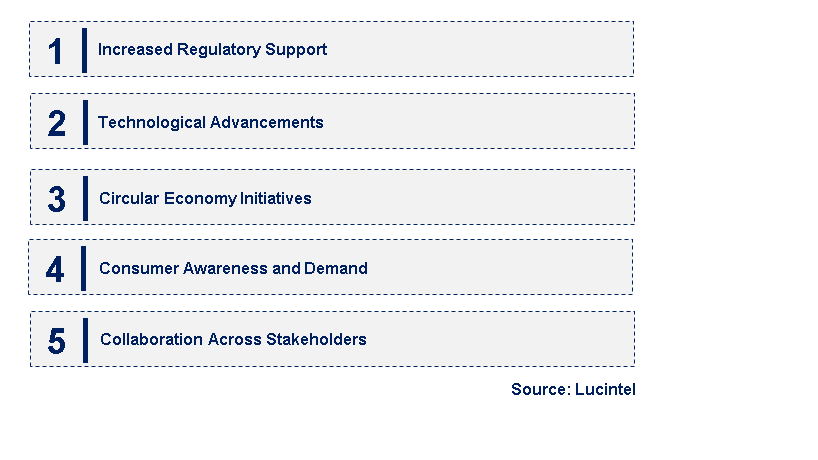
• Increased regulatory support: Governments worldwide are implementing stricter regulations to promote recycling and reduce waste. These regulations encourage industries to adopt more sustainable practices, leading to higher recycling rates and improved environmental outcomes.
• Technological advancements: Innovations in recycling technologies are enhancing the efficiency and effectiveness of paper recycling processes. Improved sorting, processing, and deinking methods are increasing the quality and marketability of recycled paper products.
• Circular economy initiatives: The emphasis on circular economy principles is driving the adoption of recycled materials across various industries. Companies are integrating recycling into their supply chains, leading to a reduced reliance on virgin materials and improved resource efficiency.
• Consumer awareness and demand: Growing consumer awareness regarding environmental issues is influencing purchasing decisions. Consumers are increasingly seeking products made from recycled materials, prompting manufacturers to enhance their sustainability practices.
• Collaboration across stakeholders: Partnerships among businesses, governments, and NGOs are becoming more common. Collaborative efforts aim to improve recycling infrastructure, increase collection rates, and enhance public participation in recycling programs. These emerging trends are reshaping the paper recycling market by promoting sustainability, enhancing technological capabilities, and fostering collaborative efforts. Regulatory support and rising consumer demand for eco-friendly products are driving innovation and acceptance of recycled paper. Collectively, these trends are establishing a more resilient market that prioritizes environmental stewardship and resource efficiency.
• Enhanced collection systems: Many countries are improving their paper collection systems to increase recycling rates. Investments in curbside recycling programs and public drop-off centers are making it easier for consumers to recycle.
• Investment in processing technologies: Advanced processing technologies are being adopted to improve the efficiency of recycling facilities. Innovations such as automated sorting systems are helping to enhance the quality of recycled paper.
• Government incentives: Governments are offering financial incentives for businesses to use recycled materials. Grants and subsidies for recycling facilities are promoting investment in the sector and driving growth.
• Public awareness campaigns: Educational initiatives aimed at increasing public awareness about the importance of recycling are being implemented. These campaigns are crucial for encouraging consumer participation and improving recycling rates.
• Sustainability partnerships: Collaborations between companies and environmental organizations are fostering innovative solutions in paper recycling. Joint ventures focus on improving recycling practices and enhancing the overall sustainability of the industry. These developments are transforming the paper recycling market by enhancing its capabilities, increasing awareness, and fostering a supportive regulatory environment. The focus on technology, education, and collaboration is crucial for overcoming challenges and positioning paper recycling as a key component in sustainable waste management.
• Packaging industry: The demand for sustainable packaging solutions is rising, providing significant opportunities for recycled paper products. As brands seek to reduce their environmental impact, recycled paper packaging is gaining traction.
• Office supplies: The office supplies sector is increasingly adopting recycled paper for products such as notebooks and printer paper. This trend reflects a broader commitment to sustainability within corporate practices.
• Construction materials: Recycled paper products can be utilized in construction applications, such as insulation and wallboard. This emerging market offers growth potential as the construction industry prioritizes sustainable materials.
• Printing and publishing: The printing and publishing industries are moving towards using recycled paper to meet consumer demand for eco-friendly products. This shift presents opportunities for growth as more companies commit to sustainability.
• Education and non-profit sector: Schools and non-profit organizations are increasingly adopting recycled paper in their operations. This focus on sustainability in educational materials is creating a new market for recycled products. These strategic growth opportunities highlight the potential of paper recycling across various applications. By capitalizing on these markets, industries can enhance their sustainability profiles while addressing the growing demand for eco-friendly materials. This shift is beneficial for both the environment and the overall market, positioning recycled paper products as essential components in sustainable practices.
• Regulatory support: Governments are enacting regulations that promote recycling and sustainable practices. This support is essential for driving demand for recycled paper products and enhancing recycling infrastructure.
• Sustainability initiatives: The growing emphasis on sustainability is motivating industries to adopt recycling practices. Companies are recognizing the environmental and economic benefits of using recycled materials.
• Technological innovations: Advances in recycling technologies are improving processing efficiency and product quality. These innovations are enabling higher recycling rates and better market competitiveness for recycled paper.
• Rising consumer awareness: Increased public awareness regarding environmental issues is driving demand for recycled products. Consumers are actively seeking out eco-friendly alternatives, encouraging manufacturers to prioritize sustainability.
• Economic incentives: The potential cost savings associated with using recycled materials are significant. Businesses are motivated to adopt recycling practices to reduce material costs and improve their bottom line. Challenges in the paper recycling market are:
• Quality control: Ensuring consistent quality in recycled paper can be challenging. Variability in collection and processing can lead to concerns about performance, hindering acceptance in certain applications.
• Infrastructure limitations: Inadequate recycling infrastructure in some regions can restrict the availability of recycled paper. This limitation can affect overall recycling rates and hinder market growth.
• Market perception: Despite regulatory support, some consumers and businesses may still be skeptical about the quality of recycled paper products. Overcoming negative perceptions is crucial for increasing market acceptance. These drivers and challenges are shaping the paper recycling market's future. While supportive regulations and rising consumer demand create opportunities for growth, issues related to quality control and market perception require careful management. Addressing these challenges will be essential for realizing the full potential of paper recycling in promoting sustainable practices.
• Atlas Green Recycling
• Carolina Fibre
• Cascades Recovery
• China Recycling Development
• Clean Harbours
• Cleanaway Waste Management
• Covanta Energy
• DS Smith
• Ecogen Recycling
• Evergreen Paper Recycling
• Corrugated Cardboard
• Newspapers
• Magazines
• Office Paper
• Mixed Paper
• Industries
• Offices
• Households
• Kerb-side Pick-up
• Paper Bank Collection
• Municipal Solid Waste (MSW) Collection
• Food & Beverages
• Retail
• Electrical & Electronics
• Printing & Paper
• Building & Construction
• Others
• North America
• Europe
• Asia Pacific
• The Rest of the World


• Atlas Green Recycling
• Carolina Fibre
• Cascades Recovery
• China Recycling Development
• Clean Harbours
• Cleanaway Waste Management
• Covanta Energy
• DS Smith
• Ecogen Recycling
• Evergreen Paper Recycling Q6. Which paper recycling market segment will be the largest in future? Answer: Lucintel forecasts that corrugated cardboard is expected to witness the highest growth over the forecast period. Q7. In paper recycling market, which region is expected to be the largest in next 5 years? Answer: APAC is expected to witness highest growth over the forecast period. Q.8 Do we receive customization in this report? Answer: Yes, Lucintel provides 10% customization without any additional cost.


Choose a license that fits your team. Instant PDF delivery.
Prices exclude taxes. Instant delivery. Custom licensing available on request.
Market Report · May 18, 2026
Market Report · May 18, 2026
Market Report · May 18, 2026
Trusted partner for strategic intelligence and business growth


Receive a complimentary market analysis tailored to your industry. Our analysts will identify key growth opportunities and competitive dynamics specific to your business.

Market size, growth rate, and key trend analysis for your specific sector.

Top competitor positioning and market share analysis.

Strategic recommendations backed by data-driven insights.
Get curated market intelligence and competitive moves straight to your inbox.
By subscribing, you agree to receive our monthly insights. Unsubscribe anytime.
Receive a complimentary market analysis tailored to your industry. Our analysts will identify key growth opportunities and competitive dynamics specific to your business.
Market size, growth rate, and key trend analysis for your specific sector.
Top competitor positioning and market share analysis.
Strategic recommendations backed by data-driven insights.
Get curated market intelligence, emerging trends, and competitive moves straight to your inbox each month.
By subscribing, you agree to receive our monthly insights. Unsubscribe anytime.
We'll send your sample report shortly.