
Market Report · July 15, 2026

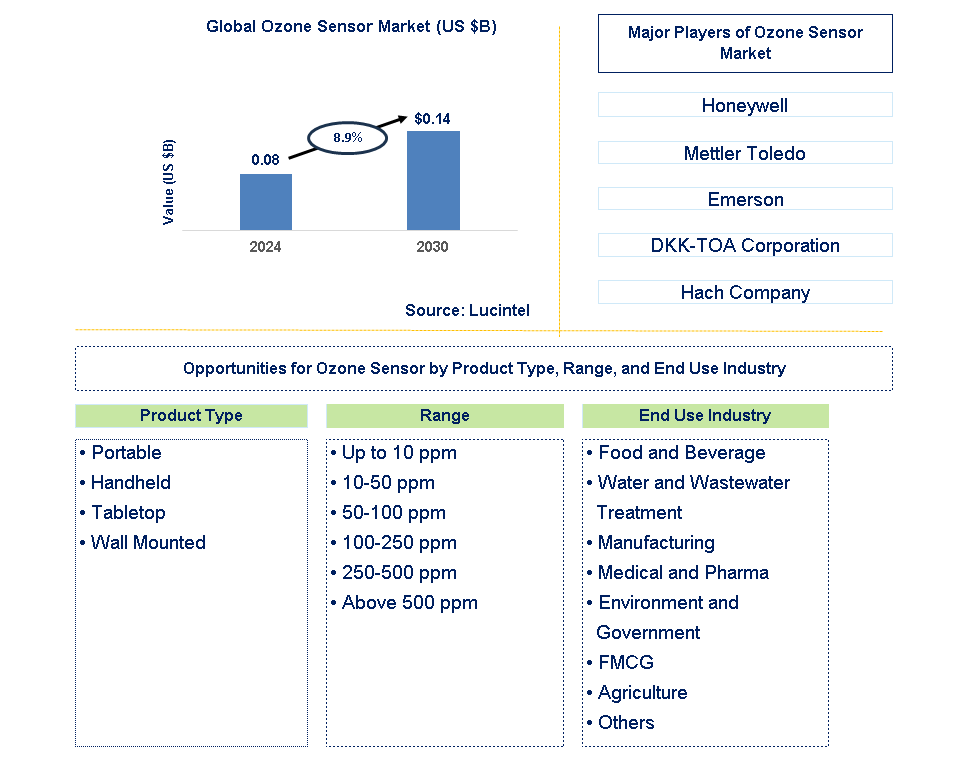
Key data points: The market size in 2030 = $0.14 billion, growth forecasts = 8.9% annually for the next 6 years. Scroll below to get more insights. This market report covers trends, opportunities, and forecasts in the global ozone sensor market to 2030 by product type (portable, handheld, tabletop, and wall mounted), range (up to 10 ppm, 10-50 ppm, 50-100 ppm, 100-250 ppm, 250-500 ppm, and above 500 ppm), end use industry (food and beverage, water and wastewater treatment, manufacturing, medical and pharma, environment and government, FMCG, agriculture, and others), and region (North America, Europe, Asia Pacific, and the Rest of the World)
We'll send your sample report shortly.
• United States Some of the latest trends observed in the U.S. ozone sensor market include the use of a newer generation of sensor technologies, including electrochemical and laser-based sensors among others. Innovation in data analytics and integration of IoT platforms will further enhance real-time monitoring capabilities. Besides, stringent environmental regulations will fuel growth prospects for high-precision sensors.
• China: In China, due to the severe air pollution, there is a huge push towards developing ozone sensors at affordable costs. Supportive government funding in research and development programs is enhancing the performance and accuracy of sensors, thus offering better-quality and longer-lived sensors. Growing industrial activities further drive growth in this market, coupled with rising demand for enhanced air quality monitoring solutions.
• Germany: The German market of ozone sensors is saturated with high-quality, accurate sensors to cater to the stringent regulations that are at par with the laws of the European Union. It is also showing much interest in integrating these into smart city infrastructure. The market is also observing sensor miniaturization and power efficiency.
• India: The Indian market is highly in demand due to the availability of reasonably priced and compact sizes that suit urban and rural areas. Awareness concerning air quality is increased, and governmental policies present very favorable conditions for growth. The growth in environmental NGOs and government-based programs influences the market positively.
• Japan : Japan emphasizes advanced sensor technology, particularly in systems that integrate ozone sensors with automated environmental monitoring systems. The country focuses on improving sensor reliability and accuracy for industrial and residential applications. Another key factor driving the market is the proactive attitude of Japan towards environmental protection. A more than 150-page report is developed to help in your business decisions.
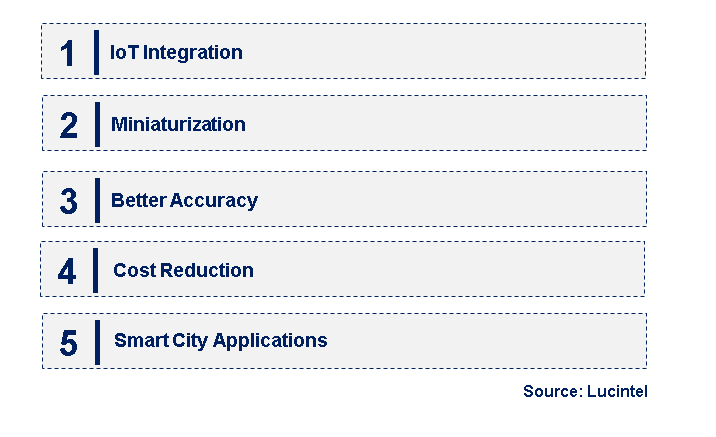
• IoT Integration: IoT integration allows real-time data collection and monitoring, making ozone sensors more versatile and user-friendly. This trend will continue to drive the advancement of connected sensor networks that provide comprehensive air quality data to empower better response and operational efficiencies.
• Miniaturization: Miniaturization will make ozone sensors increasingly feasible and easy to operate in most environments. Smaller sensors have a cost and flexibility advantage that enables their widespread use in personal air quality monitors and portable devices.
• Better Accuracy: Advances in sensor technologies result in continuously improving the accuracy and reliability of ozone measurements. The increased accuracy is necessary for being within regulatory limits and for applications that require accurate air quality monitoring, such as industrial processes and research studies.
• Cost Reduction: Continuous innovations in making ozone sensors force down their prices, making them affordable for a wider variety of applications. This will reduce costs and widen the reach, hence encouraging the adoption in emerging markets and small-scale projects.
• Smart City Applications: Ozone sensors find growing application for the so-called 'smart' city. Such sensors contribute to broader environmental monitoring systems supporting urban management and public health initiatives by providing real-time air quality data. These trends are, in turn, reshaping the market for ozone sensors by increasing accessibility, enhancing functionality, and broadening the areas of application. Integration with IoT and smart city applications results in sensors that are growingly more integral parts of environmental monitoring systems. Miniaturization and cost reduction increase market adoption, while enhancing accuracy ensures sensors meet the most stringent regulatory requirements and enable critical applications.
• Advanced Sensor Technologies: Innovations such as electrochemical and laser-based sensors are improving accuracy and sensitivity. These technologies provide superior performance and reliability to meet the demands of industrial and residential requirements.
• Integration with IoT: Inclusion of IoT technology allows for real-time monitoring and analysis of data. The advancement of remote access will improve the management of air quality data, thereby enhancing decision-making and responsiveness.
• Increased environmental regulations are developed, further aiding in the development of high-precision ozone sensors. More precisely, the need for entry into the market and regulatory success is driving innovation in sensor design and functionality.
• Cost Efficiency The technological advancements across the manufacturing process are reducing production costs, hence making the ozone sensors more affordable. This cost reduction expands the market reach and promotes greater adoption across various sectors.
• Smart City Initiatives: Smart city initiatives are enhancing the integration of ozone sensors into their projects in a bid to enhance urban air quality management. These initiatives leverage sensor data to provide better public health and environmental monitoring in urban areas. These developments further the growth of the ozone sensor market through increased technological advancements, affordability, and regulatory compliances. Smart city integrations and IoT connectivity are the trends in this market, which would ensure greater diffusions and more effective air quality management solutions.
• Industrial Applications: Ozone sensors are very instrumental in industrial applications and are in great demand on account of growing regulatory needs and further detailed monitoring of industrial emissions. Such sensors assist in ensuring compliance, improving operational efficiency, and ensuring better urban planning and public health.
• Smart Cities: Integrating ozone sensors into the infrastructure of smart cities opens up new avenues for innovative management of urban air quality. These sensors form a part of fully integrated ambient environmental monitoring systems.
• Personal Air Quality Monitoring: There is an increasing interest in personal air quality monitors to provide real-time information on surrounding air quality to the person. Consumers are more aware, and a small, easy-to-use sensor is in demand.
• Environmental Research: Ozone sensors play a vital role in environmental research and monitoring programs. Advancement in sensor technology allows for more precise and detailed study of atmospheric conditions or levels of pollution.
• Automotive Industry: Ozone sensors also find their application in the automotive sector for the control of vehicle emissions. Applications like this go to satisfy environmental legislation and ensure cleaner air. All these emerging opportunities are hence expanding the ozone sensor market, influencing creative innovation and rising demand from diverse sectors. It is, therefore, an industrially applied, smart city, personally monitored, research-oriented, and automotive-shaped dynamic and ever-changing marketplace.
• Technology Innovation: Sensor technology, including electrochemical and laser-based sensors amongst others, enables considerably better accuracy and performance. Technology development provides greater value to the solutions of air quality monitoring and hence is a strong driver in the market.
• Regulatory Demand: The rise of various environmental regulations necessitates highly accurate ozone measurement and monitoring. And it is due to this very regulatory compliance that the demand for higher-grade ozone sensors is arising from various industries.
• Increasing Awareness about Air Quality: Growing awareness among people about air pollution and health effects is creating demand for effective solutions to monitor air quality. The increased awareness further helps in the expansion of the market and innovation in it.
• Smart City Development: Application of ozone sensors in smart cities is one of the major growth factors. These sensors create a part of the complete systems for environmental monitoring, which supports the management in urban areas by enhancing the health of the citizens.
• The cost of sensors continues to decrease with the development of technology and economies of scale. Where the price decreases, ozone sensors become viable and their penetration rate increases within different applications. Challenges in the ozone sensor market are:
• Expensive Initial Investment: Even with cost reductions, initial costs for advanced ozone sensors can be very high. The cost may act as a barrier to the small-scale application and emerging markets.
• Calibration and Maintenance: Ozone sensors do often require periodic calibration and frequent maintenance. Because of this, the continuous need might put long-term reliability and operational costs somewhat at risk.
• Regulatory Compliance: Stringent environmental regulations governing the process are intricate and costly to maintain. How to work through the regulations requires continuous changes and investments in sensor technology and related operations. These are some of the factors that drive and challenge the growth of the ozone sensor market. The technological advancements and demands created by the regulatory needs are, no doubt, one of the strong growth drivers, while high costs, maintenance needs, and compliance issues still persist to present challenges. In a nutshell, these are some key aspects to be focused on in the market for the participants to reap benefits and, accordingly, to overcome obstacles.
• Honeywell
• Mettler Toledo
• Emerson
• DKK-TOA Corporation
• Hach Company
• ProMinent
• PCE Instruments
• BMT Messtechnik
• KWJ Engineering
• Aeroqual
• Portable
• Handheld
• Tabletop
• Wall Mounted
• Up to 10 ppm
• 10-50 ppm
• 50-100 ppm
• 100-250 ppm
• 250-500 ppm
• Above 500 ppm
• Food and Beverage
• Water and Wastewater Treatment
• Manufacturing
• Medical and Pharma
• Environment and Government
• FMCG
• Agriculture
• Others
• North America
• Europe
• Asia Pacific
• The Rest of the World


• Honeywell
• Mettler Toledo
• Emerson
• DKK-TOA Corporation
• Hach Company
• ProMinent
• PCE Instruments
• BMT Messtechnik
• KWJ Engineering
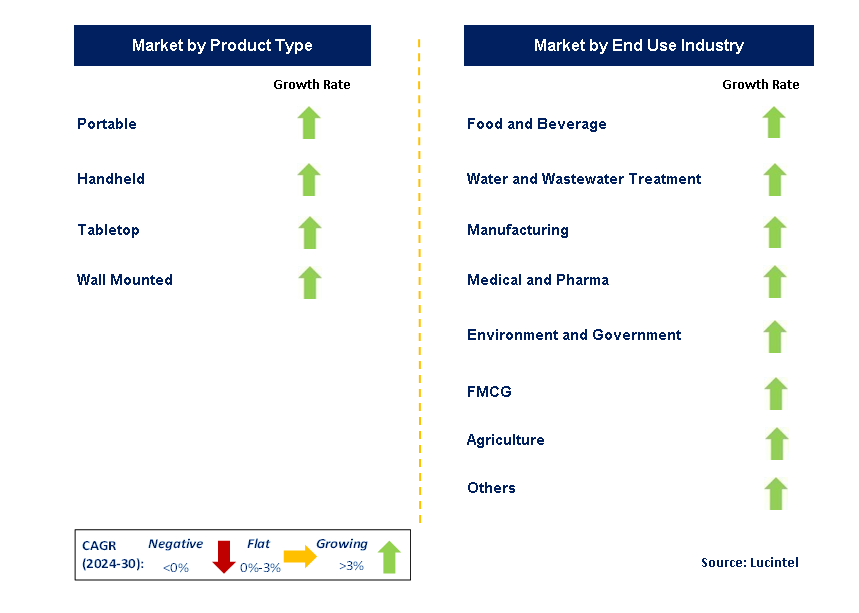
• Aeroqual Q6. Which ozone sensor market segment will be the largest in future? Answer: Lucintel forecasts that portable is expected to witness the highest growth over the forecast period due to its increasing adoption in healthcare, manufacturing, and other industries. Q7. In ozone sensor market, which region is expected to be the largest in next 5 years? Answer: North America will remain the largest region over the forecast period due to presence of a large number of ozone sensor manufacturers in the region. Q.8 Do we receive customization in this report? Answer: Yes, Lucintel provides 10% customization without any additional cost.


Choose a license that fits your team. Instant PDF delivery.
Prices exclude taxes. Instant delivery. Custom licensing available on request.
Market Report · July 15, 2026
Market Report · July 13, 2026
Market Report · July 13, 2026
Trusted partner for strategic intelligence and business growth


Receive a complimentary market analysis tailored to your industry. Our analysts will identify key growth opportunities and competitive dynamics specific to your business.

Market size, growth rate, and key trend analysis for your specific sector.

Top competitor positioning and market share analysis.

Strategic recommendations backed by data-driven insights.
Get curated market intelligence and competitive moves straight to your inbox.
By subscribing, you agree to receive our monthly insights. Unsubscribe anytime.
Receive a complimentary market analysis tailored to your industry. Our analysts will identify key growth opportunities and competitive dynamics specific to your business.
Market size, growth rate, and key trend analysis for your specific sector.
Top competitor positioning and market share analysis.
Strategic recommendations backed by data-driven insights.
Get curated market intelligence, emerging trends, and competitive moves straight to your inbox each month.
By subscribing, you agree to receive our monthly insights. Unsubscribe anytime.
We'll send your sample report shortly.