
Market Report · July 22, 2026

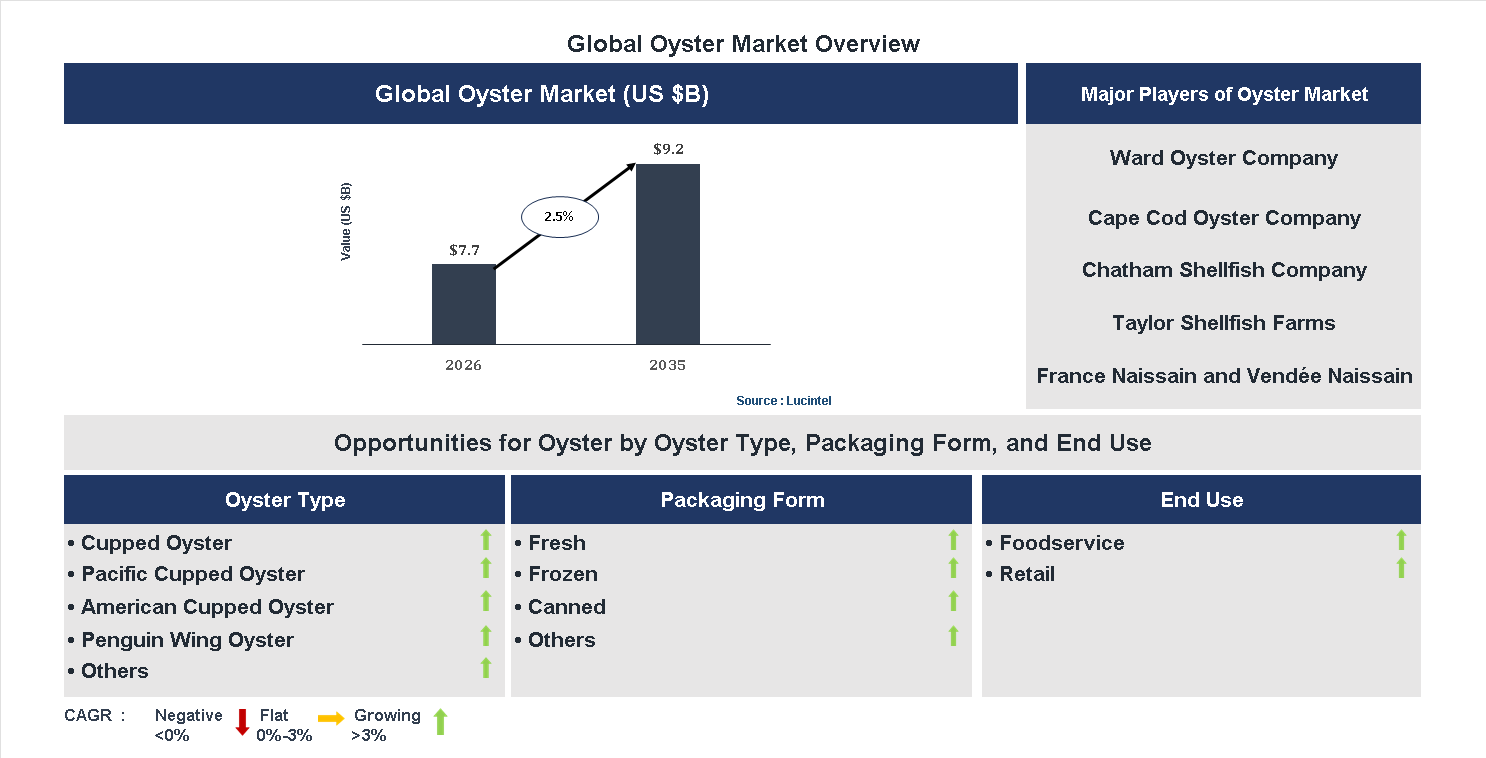
Key data points: The market size in 2035 = $9.2 billion, growth forecast = 2.5% annually for the next 8 years. Scroll below to get more insights. This market report covers trends, opportunities and forecasts in oyster market to 2035 by oyster type (cupped oyster, pacific cupped oyster, american cupped oyster, penguin wing oyster, and others), packaging form (fresh, frozen, canned, and others), end use (foodservice and retail), and region (North America, Europe, Asia Pacific, and the Rest of the World)
We'll send your sample report shortly.
• Lucintel forecasts that, within the oyster type category, american cupped oyster is expected to witness the highest growth over the forecast period.
• Within the end use category, retail is expected to witness higher growth.
• In terms of region, APAC is expected to witness the highest growth over the forecast period. Gain valuable insights for your business decisions with our comprehensive 150+ page report. Sample figures with some insights are shown below.
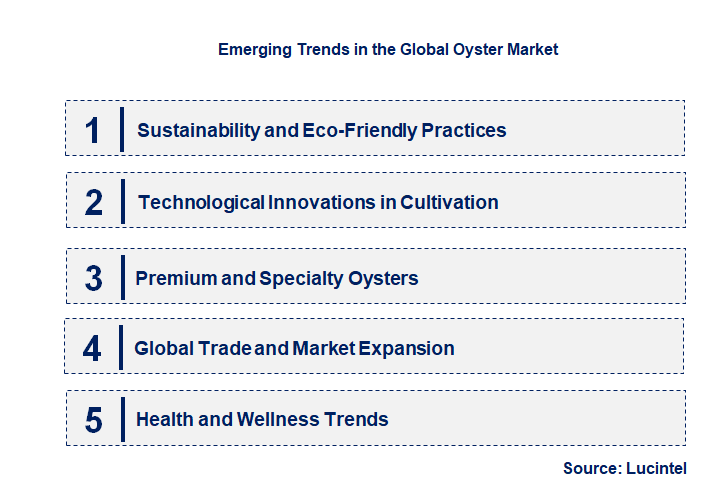
• Sustainability and Eco-Friendly Practices: Increasing consumer awareness about environmental impact is pushing oyster producers to adopt sustainable harvesting and farming methods. This includes implementing aquaculture techniques that reduce habitat disruption, utilizing biodegradable materials, and promoting responsible harvesting. These practices not only help preserve marine ecosystems but also appeal to eco-conscious buyers, enhancing brand reputation and market share. As sustainability becomes a key purchasing criterion, companies investing in eco-friendly practices are gaining a competitive edge, fostering long-term industry growth.
• Technological Innovations in Cultivation: Advances in aquaculture technology are revolutionizing oyster farming. Automated systems, water quality monitoring sensors, and selective breeding techniques improve yield, quality, and disease resistance. These innovations enable farmers to optimize production, reduce costs, and ensure consistent product quality. Additionally, innovations like offshore farming and recirculating systems expand cultivation possibilities. The integration of technology enhances efficiency and sustainability, allowing the industry to meet rising global demand while maintaining high standards, ultimately transforming traditional farming practices.
• Premium and Specialty Oysters: There is a growing consumer demand for premium, rare, and specialty oysters, driven by a desire for unique flavors and experiences. This trend encourages producers to experiment with different oyster varieties, terroirs, and harvesting techniques. The rise of oyster bars and gourmet markets further fuels this demand. As a result, the market is shifting towards higher-value products, with branding and provenance becoming critical factors. This focus on quality and exclusivity is creating new market segments and increasing profit margins for producers who can meet these sophisticated preferences.
• Global Trade and Market Expansion: The oyster market is experiencing increased international trade, facilitated by improved logistics and trade agreements. Export opportunities are expanding, especially to markets with rising disposable incomes and seafood consumption. This globalization allows producers to access new markets but also introduces competition. Market expansion is driven by consumer interest in diverse oyster varieties and the desire for exotic seafood experiences. As a result, producers are exploring new geographic markets, which diversifies revenue streams and accelerates industry growth, but also requires adaptation to different regulatory and consumer preferences.
• Health and Wellness Trends: Growing awareness of oysters health benefits, such as high protein content, omega-3 fatty acids, and minerals, is boosting demand. Consumers are increasingly seeking nutritious, natural, and functional foods, positioning oysters as a healthy choice. This trend is supported by marketing campaigns emphasizing health benefits and sustainability. Additionally, concerns about food safety and quality standards are prompting stricter regulations and certifications. The focus on health and wellness is expanding the consumer base and encouraging innovation in product offerings, such as ready-to-eat or packaged oysters, thereby reshaping market strategies. These trends are collectively transforming the oyster market by emphasizing sustainability, technological advancement, premiumization, global expansion, and health benefits. They are fostering a more innovative, responsible, and consumer-focused industry, opening new avenues for growth and competitiveness in a dynamic global marketplace.
• Growing Consumer Demand for Sustainable Seafood: Increasing awareness of environmental impact and health benefits is boosting demand for sustainably farmed oysters. Consumers are prioritizing eco-friendly products, encouraging producers to adopt sustainable practices. This shift is expanding market reach and fostering brand loyalty, ultimately driving sales growth. The focus on sustainability also attracts environmentally conscious investors, supporting industry expansion and innovation.
• Technological Advancements in Aquaculture: Innovations such as automated farming systems, water quality monitoring, and disease control are enhancing oyster production efficiency. These technologies reduce costs, improve yield quality, and minimize environmental impact. As a result, producers can meet rising demand more effectively, ensuring a consistent supply. The adoption of advanced technology also opens avenues for scaling operations and improving product quality, strengthening the industry’s competitive edge.
• Expansion into New Global Markets: Emerging economies and increasing seafood consumption are opening new markets for oysters. Export opportunities are growing in regions like Asia, the Middle East, and Africa, driven by rising disposable incomes and changing dietary preferences. Market expansion is encouraging local production and fostering international trade relationships. This global outreach is vital for industry growth, diversification, and resilience against regional market fluctuations.
• Rising Focus on Health Benefits and Premium Products: Consumers are increasingly seeking oysters for their nutritional value, including high protein, omega-3 fatty acids, and essential minerals. This health consciousness is driving demand for premium, high-quality oysters. Producers are responding by offering specialty products, such as organic or wild-caught oysters, which command higher prices. This trend enhances market segmentation and encourages innovation in product offerings, boosting overall industry profitability.
• Impact of Regulatory Changes and Food Safety Standards: Stricter regulations and safety standards are shaping industry practices. Compliance ensures product safety, boosting consumer confidence and market credibility. While regulatory requirements may increase operational costs, they also promote industry modernization and quality assurance. Adapting to these standards helps producers access premium markets and reduces risks associated with contamination or disease outbreaks, fostering sustainable growth. The recent developments in sustainability, technology, market expansion, health focus, and regulation are collectively transforming the oyster market. These opportunities are driving growth, improving product quality, and expanding global reach. As a result, the industry is becoming more resilient, innovative, and aligned with consumer preferences, ensuring long-term market stability and profitability.
• Expanding Aquaculture Technologies for Sustainable Production: Advancements in aquaculture technology are crucial for increasing oyster yields sustainably. Innovations such as recirculating systems, selective breeding, and disease management improve productivity and reduce environmental impact. These technologies enable producers to meet rising global demand while maintaining ecological balance. Investment in research and development is essential to optimize growth conditions, reduce costs, and ensure consistent quality, positioning the market for long-term expansion.
• Growing Demand for Premium and Specialty Oysters: Consumers are increasingly seeking premium, locally-sourced, and specialty oysters for culinary experiences. This trend is driven by rising disposable incomes, food tourism, and a focus on quality. Producers can capitalize on this by offering unique varieties, organic options, and sustainable certifications. Marketing efforts emphasizing provenance and quality can attract high-end markets, boosting profitability and expanding the market’s scope beyond traditional segments.
• Increasing Adoption of Sustainable and Eco-Friendly Practices: Sustainability is becoming a key factor influencing consumer choices and regulatory policies. Implementing eco-friendly farming practices, such as habitat restoration and pollution control, enhances brand reputation and compliance. Certification programs like MSC or ASC can add value and appeal to environmentally conscious consumers. Emphasizing sustainability can open new markets, foster partnerships, and ensure long-term resource availability, thereby strengthening the overall market position.
• Rising Global Market Penetration and Export Opportunities: Emerging markets in Asia, the Middle East, and Africa present significant growth potential due to increasing seafood consumption and urbanization. Expanding export infrastructure and establishing trade agreements can facilitate market entry. Developing localized supply chains and adapting products to regional preferences will enhance competitiveness. This global expansion can diversify revenue streams, reduce dependence on traditional markets, and accelerate overall market growth.
• Innovation in Packaging and Preservation Technologies: Advanced packaging solutions, such as vacuum sealing and modified atmosphere packaging, extend oyster shelf life and maintain freshness during transportation. These innovations are vital for expanding distribution networks and accessing distant markets. Additionally, cold chain logistics improvements reduce spoilage and waste. Investing in preservation technology enhances product quality, supports export growth, and meets consumer expectations for freshness, ultimately driving market expansion and consumer confidence. The overall outlook indicates that leveraging these growth opportunities will significantly enhance market resilience, diversify product offerings, and expand global reach. Stakeholders who adopt innovative, sustainable, and consumer-focused strategies will be well-positioned to capitalize on emerging trends. This dynamic environment promises sustained growth, increased competitiveness, and a broader consumer base, shaping the future trajectory of the oyster market.
• Technological Innovations: The development of sustainable aquaculture techniques and breeding methods has significantly increased oyster production efficiency. These innovations reduce costs, improve yield quality, and enable year-round harvesting, thus expanding market reach. Enhanced disease management and automation further streamline operations, making oyster farming more viable and scalable. As technology continues to evolve, it will likely open new avenues for growth and diversification within the market.
• Rising Consumer Demand for Healthy Foods: Increasing awareness of oysters as a nutritious, low-fat, and high-protein food source has driven consumer interest globally. The trend toward healthy eating and seafood consumption, coupled with the perception of oysters as an aphrodisiac, boosts demand across various regions. This shift in consumer preferences encourages producers to expand their offerings and innovate in product presentation, thereby fueling market expansion.
• Environmental Sustainability and Conservation Efforts: Growing emphasis on sustainable harvesting practices and environmental conservation has led to stricter regulations and certifications. These initiatives promote eco-friendly farming methods, such as reef restoration and water quality management, which appeal to environmentally conscious consumers. Such efforts not only ensure the long-term viability of oyster populations but also enhance market reputation and consumer trust, fostering industry growth.
• Economic Growth and Seafood Trade Dynamics: Economic development in emerging markets increases disposable income and seafood consumption, including oysters. International trade agreements and improved logistics facilitate export opportunities, expanding market access. Fluctuations in global seafood prices and tariffs influence profitability and investment decisions, impacting overall market stability and growth prospects.
• Climate Change and Ocean Conditions: Changes in ocean temperature, acidity, and pollution levels directly affect oyster habitats and health. While some regions experience habitat loss and disease outbreaks, others may see shifts in suitable farming zones. Adaptation strategies, such as selective breeding and site relocation, are crucial for maintaining production levels. These environmental factors pose both risks and opportunities, shaping future industry resilience and innovation. The challenges facing the oyster market include:
• Regulatory and Environmental Restrictions: Stringent regulations aimed at protecting marine ecosystems often impose operational limitations on oyster farms. Licensing, water quality standards, and conservation policies can increase compliance costs and restrict expansion. Navigating complex legal frameworks requires significant investment and expertise, which may hinder growth, especially for small-scale producers.
• Disease and Environmental Threats: Oyster populations are vulnerable to diseases like Dermo and MSX, as well as pollution and harmful algal blooms. These threats can cause mass mortality events, leading to substantial economic losses. Managing health risks involves investment in disease-resistant strains and water quality monitoring, but unpredictable environmental conditions remain a persistent challenge.
• Market Volatility and Price Fluctuations: Oyster prices are subject to seasonal variations, supply-demand imbalances, and global trade dynamics. Price volatility can impact profitability and investment planning, discouraging new entrants and affecting existing producers. Additionally, competition from other seafood and alternative protein sources pressures market stability and growth. The oyster market is shaped by technological advancements, consumer health trends, sustainability initiatives, economic factors, and environmental conditions. While these drivers present significant growth opportunities, regulatory constraints, environmental threats, and market volatility pose substantial challenges. The industrys future depends on innovative adaptation, sustainable practices, and strategic market positioning to navigate these complexities effectively.
• Ward Oyster Company
• Cape Cod Oyster Company
• Chatham Shellfish Company
• Taylor Shellfish Farms
• France Naissain and Vendée Naissain
• Woodstown Bay Shellfish Ltd.
• East 33 Deliveries Pty Ltd
• Hog Island Oyster Co.
• Colville Bay Oyster Co. Ltd.
•
• Cupped Oyster
• Pacific Cupped Oyster
• American Cupped Oyster
• Penguin Wing Oyster
• Others
• Fresh
• Frozen
• Canned
• Others
• Foodservice
• Retail
• North America
• Europe
• Asia Pacific
• The Rest of the World
• United States: The US oyster market has seen increased focus on sustainable aquaculture practices, with innovations in disease management and water quality monitoring. Expansion of oyster farming in coastal regions like the Gulf Coast and Chesapeake Bay has boosted production. There is also a rising consumer demand for locally sourced, organic oysters, prompting growers to adopt eco-friendly methods. Additionally, technological advancements in hatchery techniques have improved seed quality and yield. The US government supports research initiatives to combat environmental challenges such as ocean acidification, ensuring the long-term sustainability of the industry.
• China: China remains the worlds largest oyster producer, with rapid growth driven by technological modernization and government support. The country has invested heavily in large-scale aquaculture farms, utilizing advanced breeding and disease control technologies. Domestic consumption is rising due to increasing health awareness and culinary popularity. China is also expanding export markets, especially to Southeast Asia and the Middle East. Efforts are underway to improve environmental management and reduce pollution impacts on oyster beds. The government promotes sustainable practices and innovation to maintain its dominant position in the global oyster market.
• Germany: The German oyster market is characterized by a focus on high-quality, premium products for export and domestic markets. Recent developments include the adoption of eco-friendly farming techniques and certification standards such as the MSC (Marine Stewardship Council). There is a growing interest in organic and sustainable oysters, driven by consumer preferences for environmentally responsible seafood. Germany is also investing in research to improve oyster breeding and disease resistance. The country benefits from its strategic location within the European Union, facilitating trade and market expansion. Overall, sustainability and quality assurance are key priorities shaping Germany’s oyster industry.
• India: The Indian oyster market is emerging as a significant player in Southeast Asia, with increased government support and private sector investment. Coastal states like Maharashtra and West Bengal are expanding oyster farming through aquaculture initiatives. Recent developments include the adoption of low-cost, sustainable farming techniques and improved hatchery facilities. The market is driven by rising domestic demand for seafood and export opportunities to the Middle East and Southeast Asia. Efforts are also being made to address environmental concerns such as pollution and habitat degradation. The Indian government aims to boost oyster production as part of its blue economy strategy, promoting rural livelihoods and export growth.
• Japan: Japan’s oyster market is characterized by a focus on premium, high-quality products, especially for domestic consumption and export. Recent advancements include innovations in aquaculture technology, such as automated farming systems and disease management. The country emphasizes sustainable practices, including water quality control and habitat conservation. Japanese consumers show strong preferences for locally farmed oysters, supporting regional producers. The government promotes research into breeding and environmental resilience to adapt to climate change impacts. Japan also explores new markets in Asia and North America, leveraging its reputation for quality and safety standards. Sustainability and technological innovation remain central to Japan’s oyster industry development.


• Ward Oyster Company
• Cape Cod Oyster Company
• Chatham Shellfish Company
• Taylor Shellfish Farms
• France Naissain and Vendée Naissain
• Woodstown Bay Shellfish Ltd.
• East 33 Deliveries Pty Ltd
• Hog Island Oyster Co.
• Colville Bay Oyster Co. Ltd.
• Hoopers Island Oyster Company Q6. Which oyster market segment will be the largest in future? Answer: Lucintel forecasts that, within the oyster type category, american cupped oyster is expected to witness the highest growth over the forecast period. Q7. In oyster market, which region is expected to be the largest in next 5 years? Answer: In terms of region, APAC is expected to witness the highest growth over the forecast period. Q8. Do we receive customization in this report? Answer: Yes, Lucintel provides 10% customization without any additional cost.


Choose a license that fits your team. Instant PDF delivery.
Prices exclude taxes. Instant delivery. Custom licensing available on request.
Market Report · July 22, 2026
Market Report · July 22, 2026
Market Report · July 22, 2026
Trusted partner for strategic intelligence and business growth


Receive a complimentary market analysis tailored to your industry. Our analysts will identify key growth opportunities and competitive dynamics specific to your business.

Market size, growth rate, and key trend analysis for your specific sector.

Top competitor positioning and market share analysis.

Strategic recommendations backed by data-driven insights.
Get curated market intelligence and competitive moves straight to your inbox.
By subscribing, you agree to receive our monthly insights. Unsubscribe anytime.
Receive a complimentary market analysis tailored to your industry. Our analysts will identify key growth opportunities and competitive dynamics specific to your business.
Market size, growth rate, and key trend analysis for your specific sector.
Top competitor positioning and market share analysis.
Strategic recommendations backed by data-driven insights.
Get curated market intelligence, emerging trends, and competitive moves straight to your inbox each month.
By subscribing, you agree to receive our monthly insights. Unsubscribe anytime.
We'll send your sample report shortly.