
Market Report · July 29, 2026

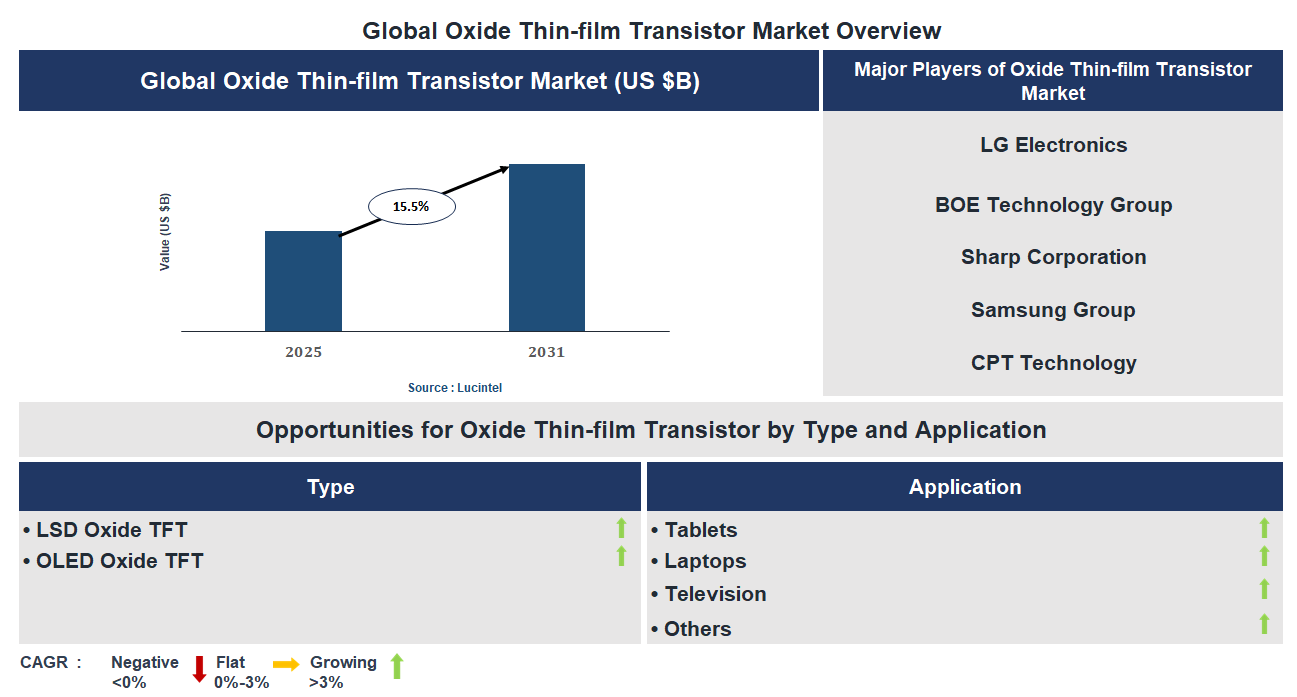
Key data points: The growth forecast = 15.5% annually for the next 7 years. Scroll below to get more insights. This market report covers trends, opportunities and forecasts in oxide thin-film transistor market to 2031 by type (LCD oxide TFT and OLED oxide TFT), application (tablets, laptops, television, and others), and region (North America, Europe, Asia Pacific, and the Rest of the World)
We'll send your sample report shortly.
• Lucintel forecasts that, within the type category, OLED oxide TFT is expected to witness higher growth over the forecast period.
• Within the application category, television is expected to witness the highest growth.
• In terms of region, APAC is expected to witness the highest growth over the forecast period. Gain valuable insights for your business decisions with our comprehensive 150+ page report. Sample figures with some insights are shown below.
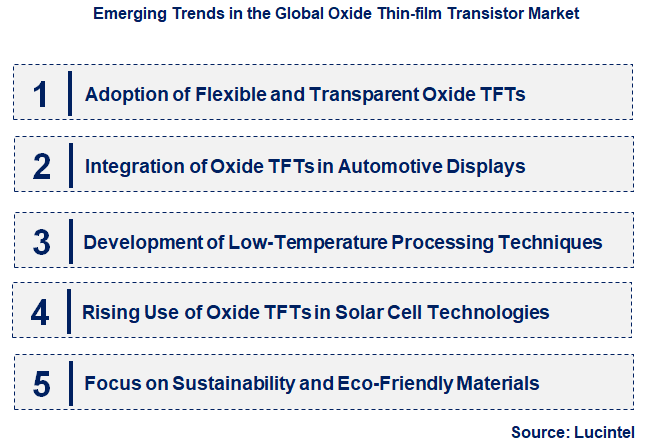
• Adoption of Flexible and Transparent Oxide TFTs: The demand for flexible and transparent displays is fueling the development of oxide TFTs that can be integrated into wearable devices, foldable screens, and transparent electronics. These TFTs offer excellent electrical performance, mechanical flexibility, and optical transparency, making them ideal for next-generation consumer electronics. This trend is driving innovation in materials and manufacturing techniques, enabling more versatile and durable electronic products. As a result, manufacturers are investing in R&D to improve the performance and scalability of flexible oxide TFTs, which is expected to expand their application scope significantly.
• Integration of Oxide TFTs in Automotive Displays: The automotive industry is increasingly adopting oxide TFTs for advanced driver-assistance systems (ADAS), infotainment, and heads-up displays (HUDs). These TFTs provide high-resolution, energy-efficient, and durable display solutions suitable for harsh automotive environments. The trend is driven by the need for smarter, safer, and more connected vehicles, prompting automakers to incorporate oxide TFT-based displays. This integration is expected to enhance user experience, improve safety features, and support the development of autonomous vehicles, thereby opening new revenue streams and market segments for oxide TFT manufacturers.
• Development of Low-Temperature Processing Techniques: To enable large-scale, cost-effective production, researchers are focusing on low-temperature processing methods for oxide TFTs. These techniques allow fabrication on flexible substrates like plastics, reducing manufacturing costs and enabling roll-to-roll production. The trend is crucial for expanding the application of oxide TFTs in flexible electronics and wearable devices. Advances in low-temperature processing are also improving the environmental footprint of manufacturing, aligning with sustainability goals. As these techniques mature, they will facilitate mass production and broader adoption of oxide TFT-based devices across various industries.
• Rising Use of Oxide TFTs in Solar Cell Technologies: Oxide TFTs are increasingly being integrated into solar energy systems, particularly in transparent solar panels and photovoltaic modules. Their high transparency and electrical conductivity make them suitable for enhancing the efficiency and aesthetic appeal of solar devices. This trend supports the development of building-integrated photovoltaics (BIPV) and portable solar solutions. The adoption of oxide TFTs in solar technology is expected to accelerate renewable energy deployment, reduce costs, and promote sustainable energy solutions. This integration signifies a convergence of display and energy sectors, opening new avenues for market growth.
• Focus on Sustainability and Eco-Friendly Materials: The market is witnessing a shift towards environmentally sustainable oxide TFTs, driven by regulatory pressures and consumer preferences. Manufacturers are exploring eco-friendly materials, reducing hazardous substances, and improving energy efficiency in production processes. This trend aims to minimize environmental impact while maintaining high performance standards. The adoption of sustainable practices is enhancing brand reputation and compliance with global standards. As sustainability becomes a key criterion, the market is likely to see increased innovation in green materials and processes, shaping a more responsible and resilient industry landscape. In summary, these emerging trends are collectively transforming the oxide thin-film transistor market by fostering innovation, expanding application areas, and emphasizing sustainability. They are enabling the development of smarter, more flexible, and eco-friendly electronic solutions, thereby reshaping industry standards and opening new growth opportunities for stakeholders.
• Adoption of New Materials: Researchers are exploring novel oxide materials like indium gallium zinc oxide (IGZO) and zinc oxide to enhance TFT performance. These materials offer higher electron mobility and better stability, leading to more efficient and durable displays. This development is enabling the production of thinner, more flexible screens with improved resolution, thus expanding application possibilities in smartphones, tablets, and wearable devices.
• Integration with Flexible Electronics: The integration of oxide TFTs into flexible substrates is gaining momentum. Innovations in low-temperature processing techniques allow these transistors to be fabricated on bendable materials, facilitating the development of foldable and rollable displays. This advancement is opening new markets for flexible consumer electronics, automotive dashboards, and wearable health devices, thereby boosting market growth.
• Cost Reduction through Manufacturing Innovations: New manufacturing techniques, such as solution processing and printing methods, are reducing production costs of oxide TFTs. These cost-effective processes enable large-scale, high-throughput fabrication, making oxide TFT-based displays more affordable. This development is crucial for expanding the adoption of oxide TFTs in budget-friendly consumer electronics and emerging markets.
• Enhanced Device Performance: Recent improvements in oxide TFT design, including better channel control and interface engineering, have resulted in higher mobility and lower leakage currents. These enhancements lead to brighter, more energy-efficient displays with longer lifespans. The impact is significant in applications requiring high-resolution screens, such as premium smartphones and high-end monitors.
• Expansion into New Application Areas: The versatility of oxide TFTs is leading to their adoption in areas beyond displays, such as sensors, photovoltaic devices, and integrated circuits. This diversification is driven by their transparency, low power consumption, and compatibility with various substrates. It broadens the market scope, creating new revenue streams and fostering innovation across multiple sectors. In summary, these recent developments are transforming the oxide thin-film transistor market by improving device performance, reducing costs, and expanding application horizons. The market is becoming more versatile and accessible, which is expected to accelerate growth and innovation in display technologies and beyond.
• Consumer Electronics: Expansion of high-resolution displays : Increasing adoption of oxide TFTs in smartphones, tablets, and wearable devices enhances display quality, energy efficiency, and durability, driving market growth and enabling innovative product designs.
• Automotive Industry: Advanced display integration : The integration of oxide TFTs in automotive dashboards and heads-up displays improves visibility, responsiveness, and durability, supporting the shift toward smarter, more connected vehicles.
• Renewable Energy: Solar panel efficiency improvements : Oxide TFTs are used in photovoltaic modules to enhance energy conversion efficiency, supporting the growth of solar energy solutions and sustainable power generation.
• Healthcare Devices: Development of flexible displays : The use of oxide TFTs in flexible, lightweight medical devices and wearable health monitors enables better patient monitoring and telemedicine applications, expanding healthcare markets.
• Industrial Automation: Enhanced display systems : Oxide TFTs facilitate robust, high-performance displays for industrial control systems, automation equipment, and smart manufacturing, improving operational efficiency and safety. In summary, these growth opportunities are significantly impacting the oxide thin-film transistor market by broadening application scopes and fostering innovation. They are driving market expansion, encouraging technological advancements, and opening new revenue streams across multiple sectors. As these opportunities mature, they will shape the future landscape of the market, making it more versatile and resilient.
• Technological Innovation: The rapid development of oxide semiconductor materials, such as indium gallium zinc oxide (IGZO), has significantly enhanced TFT performance. These innovations enable higher electron mobility, lower power consumption, and improved display quality, making oxide TFTs ideal for next-generation displays like OLEDs and flexible screens. As manufacturers seek to deliver sharper, more energy-efficient devices, technological advancements continue to accelerate market growth, fostering new applications and expanding market reach.
• Growing Consumer Electronics Demand: The surge in demand for smartphones, tablets, wearable devices, and large-screen televisions is a primary driver. Consumers increasingly prefer high-resolution, lightweight, and flexible displays, which oxide TFTs facilitate due to their transparency and flexibility. This demand fuels investments in oxide TFT manufacturing and innovation, leading to broader adoption across various electronic devices and driving overall market expansion.
• Expansion in Display Technologies: The transition from traditional LCDs to OLED and flexible displays has created a substantial market for oxide TFTs. These transistors are crucial for controlling pixel switching in advanced displays, offering benefits like better contrast ratios and thinner profiles. The ongoing development of foldable and rollable screens further amplifies the need for flexible oxide TFTs, positioning them as a cornerstone technology in next-generation display solutions.
• Environmental and Regulatory Factors: Increasing emphasis on sustainable manufacturing practices and eco-friendly materials influences the market. Regulations aimed at reducing hazardous substances and promoting recyclability encourage the adoption of oxide semiconductors, which are often less toxic and more environmentally friendly than traditional materials. Compliance with these standards not only ensures market access but also enhances brand reputation, driving manufacturers to innovate within regulatory frameworks. The challenges facing oxide thin-film transistor Market include:
• Supply Chain Disruptions: The oxide TFT market relies heavily on the availability of raw materials like indium and gallium, which are subject to geopolitical tensions and supply constraints. Disruptions in sourcing these materials can lead to increased costs and production delays, hampering market growth. Additionally, global logistics issues, such as transportation bottlenecks, further exacerbate supply chain vulnerabilities, affecting manufacturers ability to meet demand efficiently.
• Technological Limitations: Despite advancements, oxide TFTs face challenges related to stability, uniformity, and scalability. Achieving consistent performance across large-area displays remains complex, and issues like threshold voltage shifts and degradation over time can impact device longevity. Overcoming these technical hurdles requires significant research and development investment, which can slow down commercialization and adoption rates.
• High Manufacturing Costs: The production of oxide TFTs involves sophisticated fabrication processes that are capital-intensive. The need for cleanroom environments, precise deposition techniques, and advanced equipment increases manufacturing expenses. These high costs can limit the affordability of oxide TFT-based devices, restrict market penetration, and pose barriers for smaller players trying to enter the market. In summary, the oxide thin-film transistor market is driven by rapid technological innovations, increasing consumer demand for advanced displays, and a shift towards environmentally sustainable practices. However, it faces significant challenges such as supply chain vulnerabilities, technical limitations, and high manufacturing costs. These factors collectively influence the markets growth potential, requiring stakeholders to navigate complexities carefully. Strategic investments in R&D, supply chain resilience, and cost optimization will be crucial for sustained expansion and competitive advantage in this evolving landscape.
• LG Electronics
• BOE Technology Group
• Sharp Corporation
• Samsung Group
• CPT Technology
• LCD Oxide TFT
• OLED Oxide TFT
• Tablets
• Laptops
• Television
• Others
• North America
• Europe
• Asia Pacific
• The Rest of the World
• United States: The US market has seen substantial investments in research, leading to the development of high-performance oxide materials and flexible TFTs. Major tech companies are integrating oxide TFTs into next-generation displays and wearable devices, emphasizing energy efficiency and durability. Innovation in manufacturing processes and collaborations with academic institutions are accelerating commercialization. The US also focuses on sustainable production methods, reducing environmental impact while maintaining high quality standards.
• China: China remains a dominant force in the oxide TFT market, driven by rapid industrialization and a large consumer electronics sector. The country has made significant progress in scaling up production capabilities and reducing costs through advanced manufacturing techniques. Chinese firms are expanding into flexible and transparent display applications, with a focus on automotive and large-area screens. Government support and strategic investments are fostering innovation, making China a key player in global supply chains.
• Germany: Germanys market is characterized by a strong emphasis on high-precision manufacturing and quality control. The country is advancing in the development of oxide TFTs for industrial displays, automotive applications, and high-end consumer electronics. German research institutions are pioneering new oxide materials with enhanced stability and performance. The focus on sustainable and energy-efficient solutions aligns with Europes broader environmental goals, positioning Germany as a leader in premium oxide TFT applications.
• India: India is emerging as a significant player in the oxide TFT market, primarily through increasing domestic manufacturing and technological adoption. The country is investing in research to develop cost-effective oxide materials suitable for affordable consumer electronics and display solutions. Startups and local companies are exploring flexible and lightweight TFTs for portable devices. Government initiatives aimed at boosting electronics manufacturing are expected to further accelerate growth and innovation in this sector.
• Japan: Japan continues to innovate in oxide TFT technology, emphasizing high-performance and reliable displays for consumer electronics, automotive, and industrial sectors. Japanese firms are focusing on improving oxide material stability and scalability for large-area displays. The country is also exploring eco-friendly manufacturing processes and sustainable materials. Collaboration between industry and academia is fostering breakthroughs in flexible and transparent TFTs, maintaining Japans position as a leader in advanced display technologies.


• LG Electronics
• BOE Technology Group
• Sharp Corporation
• Samsung Group
• CPT Technology Q5. Which oxide thin-film transistor market segment will be the largest in future? Answer: Lucintel forecasts that, within the type category, OLED oxide TFT is expected to witness higher growth over the forecast period. Q6. In oxide thin-film transistor market, which region is expected to be the largest in next 5 years? Answer: In terms of region, APAC is expected to witness the highest growth over the forecast period. Q7. Do we receive customization in this report? Answer: Yes, Lucintel provides 10% customization without any additional cost.


Choose a license that fits your team. Instant PDF delivery.
Prices exclude taxes. Instant delivery. Custom licensing available on request.
Market Report · July 29, 2026
Market Report · July 20, 2026
Market Report · July 20, 2026
Trusted partner for strategic intelligence and business growth


Receive a complimentary market analysis tailored to your industry. Our analysts will identify key growth opportunities and competitive dynamics specific to your business.

Market size, growth rate, and key trend analysis for your specific sector.

Top competitor positioning and market share analysis.

Strategic recommendations backed by data-driven insights.
Get curated market intelligence and competitive moves straight to your inbox.
By subscribing, you agree to receive our monthly insights. Unsubscribe anytime.
Receive a complimentary market analysis tailored to your industry. Our analysts will identify key growth opportunities and competitive dynamics specific to your business.
Market size, growth rate, and key trend analysis for your specific sector.
Top competitor positioning and market share analysis.
Strategic recommendations backed by data-driven insights.
Get curated market intelligence, emerging trends, and competitive moves straight to your inbox each month.
By subscribing, you agree to receive our monthly insights. Unsubscribe anytime.
We'll send your sample report shortly.