
Market Report · July 22, 2026

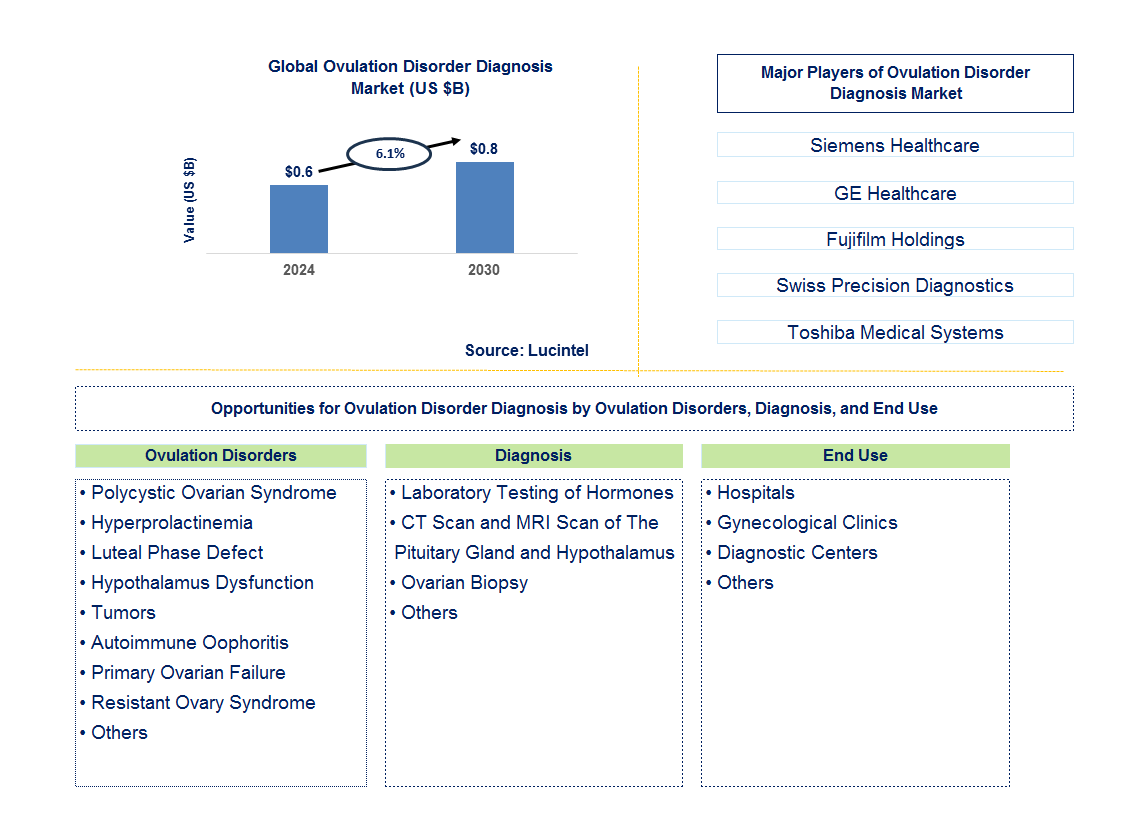
Key data points: The market size in 2030 = $0.8 billion, growth forecast = 6.1% annually next 6 years. Scroll below to get more insights. This market report covers trends, opportunities, and forecast in the global ovulation disorder diagnosis market to 2030 by ovulation disorders (polycystic ovarian syndrome, hyperprolactinemia, luteal phase defect, hypothalamus dysfunction, tumors, autoimmune oophoritis, primary ovarian failure, resistant ovary syndrome, and others), diagnosis (laboratory testing of hormones, CT scan & MRI scan of the pituitary gland & hypothalamus, ovarian biopsy, and others), end use (hospitals, gynecological clinics, diagnostic centers, and others), and region (North America, Europe, Asia Pacific, and the Rest of the World)
We'll send your sample report shortly.
• United States: There are reasons to believe that the Ovulation Disorder Diagnostic market in the U.S. is enhanced by the development of mobile health applications and home testing kits enabling women to self monitor their periods and ovulation status. The majority of the companies are considering investment of resources on technology aiming at the production of better and more accurate diagnostic instruments. Furthermore, provision of telehealth services has increased the range of specialists available leading to rapid diagnosis and treatment customization. Studies related to the condition Poly Cystic Ovarian Syndrome (PCOS) are also finding their way into the market with new diagnostic guidelines taken up to facilitate awareness and treatment of the condition.
• China: Along similar lines, in China ovulation disorder diagnostics are in high demand due to a raise in women’s awareness concerning their respective health. Following the standard also aids women’s health issues is the state’s endorsement of fertility health care education. Various technologies, for instance, ovulation apps and devices for digital monitoring of ovulation are becoming popular among the women who wish to know more about fertility. Furthermore, such collaboration with local start-ups and health care providers is helping to develop new diagnostic tools for the Chinese market.
• Germany: Seals and other forms of protective packaging has advanced in the European ovulation disorder diagnostic market, by high concentration on the research and development Coverage. The country also hosts various biotech firms that deal with unique diagnostic methods including hormonal tests and DNA testing. More clinicians are utilizing the evidence-based methods of diagnosis and treatment, hence, improving the health of their patients. In addition to this, the development of diagnostic systems with artificial intelligence is improving the effectiveness and accuracy of such systems enabling provision of ongoing treatment of fertility issues.
• India: Given the growing reproductive health awareness and infertility prevalence, Ovulation Disorder Diagnostic market in India is undergoing rapid transformation. There is a rise in the number of diagnostic centers providing more value added services such as hormonal assays as well as imaging services. In addition, there are mobile health applications being used which assist women in tracking their cycles effectively. The government initiatives aimed at the women’s health and fertility awareness campaigns are also drivers for the growth of this market on appliances caring facilitating timely diagnosis along with early stage of treatment process.
• Japan: There is more focus on the precision medicine in the Ovulation Disorder Diagnostic market in Japan through investing on researches that seek to understand causes of ovulatory disorder. In addition, advances in imaging technologies and hormonal assays are becoming common in the treatment options. What is more, the tendency towards extended treatment modalities which easily helps address the unique needs of the patients is also increasing. Such campaigns, as awareness on reproductive health, encourage screening and diagnostic testing targeting ovulatory disorders.
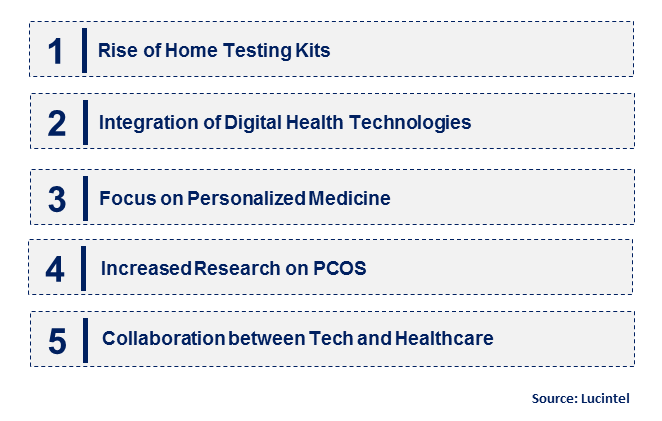
• Rise of Home Testing Kits: Home ovulation test kits have become appealing to women due to the ever-increasing demand to self-monitor their ovulation. It encourages women to take control of their reproductive health by providing feedback otherwise known in real-time.
• Integration of Digital Health Technologies: Mobile applications that ensure better oversight of menstrual and ovulation cycles have gained wide acceptance as well as wearable health devices. They collect data that women present to doctors for diagnosis and treatment.
• Focus on Personalized Medicine: Interest in the personalized diagnosis and treatment of ovulation disorders is also on the rise. Prescribing treatment that is not only based on norms is more efficient, and makes patients more satisfied.
• Increased Research on PCOS: There is a growing body of research regarding polycystic ovary syndrome symptoms, which has resulted in better diagnosis and treatment. The need for new understanding and awareness regarding PCOS is fueling the market growth for such tests.
• Collaboration between Tech and Healthcare: There is a synergy between companies that develop diagnostic products and health care services that has resulted in innovation. The outcome is the enhancement of the accuracy and ease of diagnosis of ovulation disorder. These trends are equally changing the Ovulation Disorder Diagnostic market by taking user empowerment a notch higher, improving precision of diagnosing disorders and enhancing the quality of care.
• Progress in Hormone Testing: The use of hormonal testing methods is not stagnant as new ways of hormonal testing are coming up and the ovulation disorders are much better evaluated. These advances allow practitioners to diagnose such disorders as Polycystic ovary syndrome and Luteal phase defect with much more accuracy.
• Expanding Influence of Telehealth: Despite the challenges that researchers face in understanding differences across cultures, temples and countries, telehealth increasingly enables patients with ovulation disorders to be evaluated by specialists. Healthcare providers can now perform consultations and provide services remotely to the patients, which has enabled timely diagnosis and better management of reproductive health.
• AI-Based Improvements: Ovarian disorder diagnostics have benefited from the use of artificial intelligence, especially in the prediction of ovulation and hormone levels. AI has the ability to process and evaluate patient records much faster thus providing better ways of targeting each patient appropriately.
• Increased Use of Fertility Apps: The expansion of fertility app use is aiding the self-monitoring of cycles by women. They also contain educative content which helps users to appreciate their health status more.
• Launching of Campaigns to Educate the Public: A number of countries have initiated awareness campaigns regarding ovulation disorders and reproductive health. Such campaigns are directed to women, informing them about the conditions of their health, the need for seeking help early and the need for constant undergoing screenings. These changes are affecting the Ovulation Disorder Diagnostic market by bringing about clearer diagnoses, improving the accessibility of care to patients, and raising awareness around reproductive health.
• Development of Fertility Clinics: There is a growing need for fertility services presenting new avenues for establishment of fertility clinics that exclude comprehensive assessment testing of ovulation disorder. Such clinics can design focused treatment appliances necessitated by proper diagnosis.
• Creating Advanced Diagnostic Devices: Concentrating on the research of creation of modern tools for diagnostics, for example next generations of hormone level testing or imaging will make diagnosing ovulation disorders more precise, as well as enable serving more patients differently.
• Use of Telemedicine Platforms: The establishment of telemedicine platforms for the provision of reproductive health may enhance the availability of the appropriate specialists especially in the remote areas. They can serve as a means of carrying out consultations, diagnosis and treatment of the patient.
• Collaboration with Women’s Health Organizations: Women’s health organizations can serve to educate and create awareness about ovulation disorders if partnered with. Such partnerships are aimed at improving the rate of screening and early diagnosis.
• Research and Development Enhancement: There is a need for investment in R&D in order to finance new approaches for ovulation disorders diagnostic and oligo menorrhea conception prevention as a result of understanding better the genetic and environmental causes for these disorders. This investigation will improve the accuracy of diagnoses and treatment approaches. These growth drivers are compelling the innovation Ovulation Disorder Diagnostic market. Advancing better access to treatment as well as overall reproductive health care associated with these opportunities.
• Siemens Healthcare
• GE Healthcare
• Fujifilm Holdings
• Swiss Precision Diagnostics
• Toshiba Medical Systems
• Carestream Health
• Genova Diagnostics
• Quest Diagnostics
• Labcorp
• Esaote
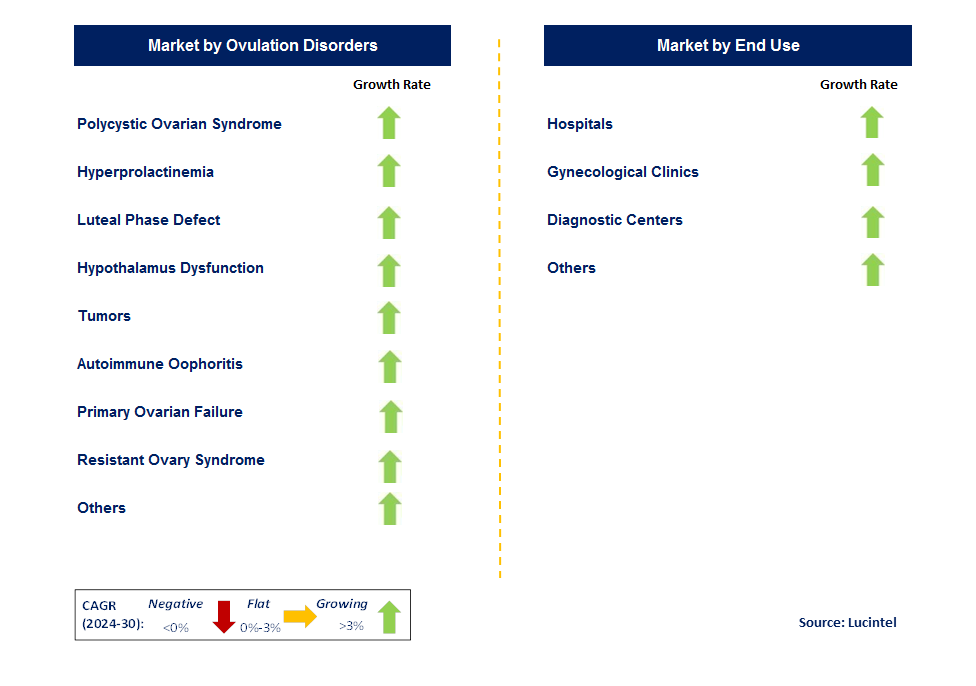
• Polycystic Ovarian Syndrome
• Hyperprolactinemia
• Luteal Phase Defect
• Hypothalamus Dysfunction
• Tumors
• Autoimmune Oophoritis
• Primary Ovarian Failure
• Resistant Ovary Syndrome
• Others
• Laboratory Testing of Hormones
• CT Scan and MRI Scan of The Pituitary Gland and Hypothalamus
• Ovarian Biopsy
• Others
• Hospitals
• Gynecological Clinics
• Diagnostic Centers
• Others
• North America
• Europe
• Asia Pacific
• The Rest of the World


• Siemens Healthcare
• GE Healthcare
• Fujifilm Holdings
• Swiss Precision Diagnostics
• Toshiba Medical Systems
• Carestream Health
• Genova Diagnostics
• Quest Diagnostics
• LabCorp
• Esaote Q6. Which ovulation disorder diagnosis market segment will be the largest in future? Answer: Lucintel forecasts that polycystic ovarian syndrome is expected to witness highest growth over the forecast period due to increasing incidence of PCOD in patients with type 2 diabetes. Q7. In ovulation disorder diagnosis market, which region is expected to be the largest in next 6 years? Answer: North America is expected to witness highest growth over the forecast period due to presence of advanced healthcare infrastructure and growing awareness in public towards ovulation disorder diagnosis. Q.8 Do we receive customization in this report? Answer: Yes, Lucintel provides 10% customization without any additional cost.


Choose a license that fits your team. Instant PDF delivery.
Prices exclude taxes. Instant delivery. Custom licensing available on request.
Market Report · July 22, 2026
Market Report · July 22, 2026
Market Report · July 22, 2026
Trusted partner for strategic intelligence and business growth


Receive a complimentary market analysis tailored to your industry. Our analysts will identify key growth opportunities and competitive dynamics specific to your business.

Market size, growth rate, and key trend analysis for your specific sector.

Top competitor positioning and market share analysis.

Strategic recommendations backed by data-driven insights.
Get curated market intelligence and competitive moves straight to your inbox.
By subscribing, you agree to receive our monthly insights. Unsubscribe anytime.
Receive a complimentary market analysis tailored to your industry. Our analysts will identify key growth opportunities and competitive dynamics specific to your business.
Market size, growth rate, and key trend analysis for your specific sector.
Top competitor positioning and market share analysis.
Strategic recommendations backed by data-driven insights.
Get curated market intelligence, emerging trends, and competitive moves straight to your inbox each month.
By subscribing, you agree to receive our monthly insights. Unsubscribe anytime.
We'll send your sample report shortly.