
Market Report · July 15, 2026

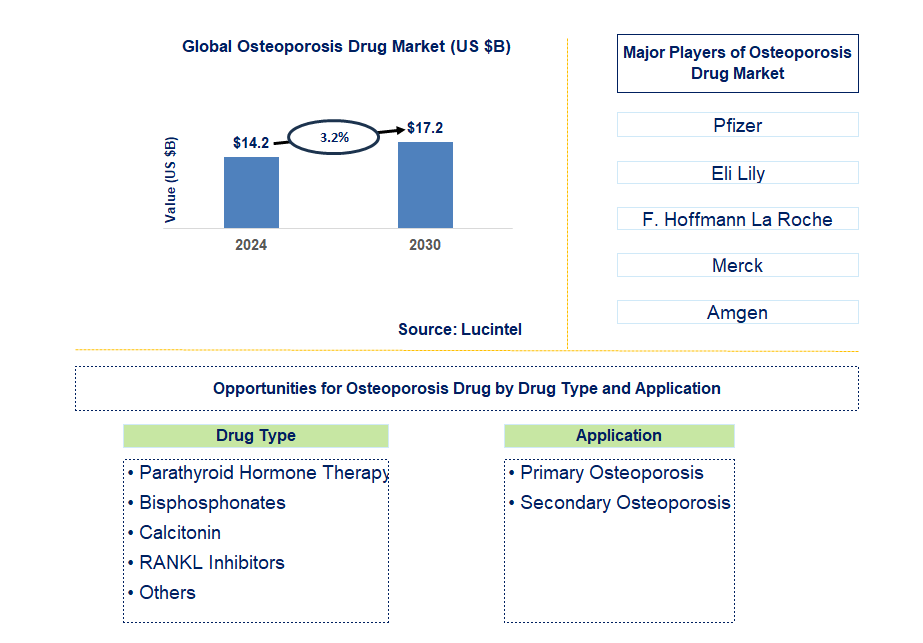
Key data points: The market size in 2030 = $17.2 billion, growth forecast = 3.2% annually for the next 6 years. Scroll below to get more insights. This market report covers trends, opportunities, and forecasts in the global osteoporosis drug market to 2030 by drug type (parathyroid hormone therapy, bisphosphonates, calcitonin, RANKL inhibitors, and others), application (primary osteoporosis and secondary osteoporosis), and region (North America, Europe, Asia Pacific, and the Rest of the World)
We'll send your sample report shortly.
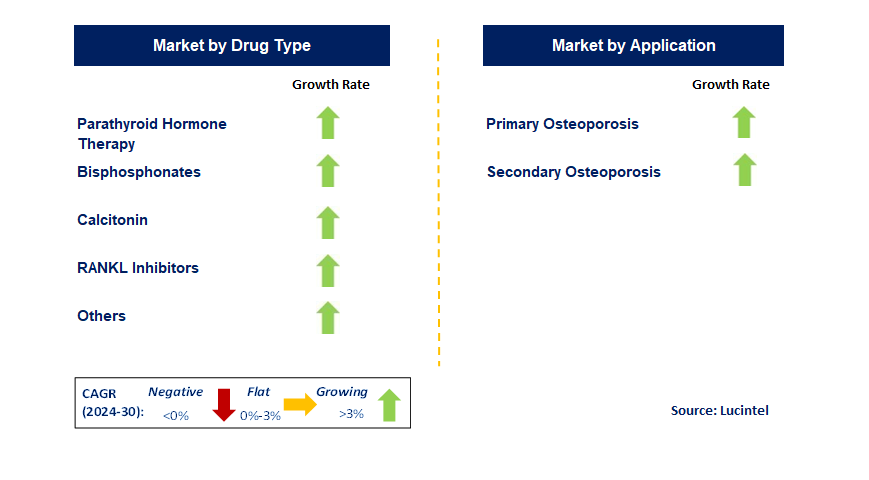
• Lucintel forecasts that, within the drug type category, RANKL inhibitor will remain the largest segment over the the forecast period due to its increasing adoption to treat osteoporosis in patients with high risk of fractures.
• Within the appliaction category, primary osteoporosis will remain a larger segment due to surging aging population and growing awareness towards osteoporosis among consumers.
• In terms of region, North America will remain the largest region over the forecast period due to existence of major players, rising prevalence of osteoporosis patients, and easy accessibility of branded medications in the region. Gain valuable insights for your business decisions with our comprehensive 150+ page report.
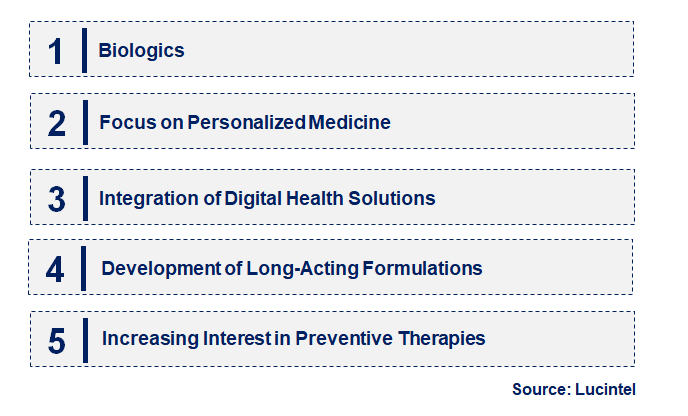
• Biologics: A newer trend is toward biologic drugs, which include monoclonal antibodies. These medications allow targeted action with better efficacy compared to conventional treatments. They address osteoporosis in a more effective and less damaging way.
• Focus on personalized medicine: Increasing emphasis on personalized medicine is driving the development of tailored treatments based on genetic and biomarker information. This approach aims to optimize therapeutic outcomes and minimize adverse effects for individual patients.
• Integration of digital health solutions: Digital health solutions, including apps and wearable devices, are being integrated into osteoporosis management. These technologies assist in monitoring bone health, medication adherence, and lifestyle modifications, enhancing overall patient care.
• Development of long-acting formulations: There is increasing interest in developing long-acting formulations with reduced dosing frequency. Extended-release and depot formulations improve patient compliance and ensure prolonged therapeutic effects.
• Increasing interest in preventive therapies: There is a growing interest in developing preventive therapies or very early intervention strategies. Some new medications and therapies studied aim to prevent the development of osteoporosis by reducing risk factors before clinically significant bone loss occurs. These trends are transforming the osteoporosis drug market by driving development in drug innovation, personalization, adherence, and the integration of new technologies into patient care. This dynamic environment is improving the efficacy of treatments and patient outcomes.
• Approval of New Monoclonal Antibodies: Recently approved monoclonal antibodies, such as denosumab, have been important additions. They act on specific pathways of bone resorption and thus treat the disease with minimal side effects compared to many other drugs.
• Introduction of Extended-Release Formulations: Extended-release formulations are being introduced; these include injectable formulations that exhibit longer action. These improve patient adherence due to less frequent administration.
• Advances in Combination Therapies: Combination therapies, including bisphosphonates and anabolic agents, have been developed to provide comprehensive treatment. These therapies target multiple pathways to enhance bone density and reduce fracture risk.
• Growth of Biosimilars: The entry of biosimilars for existing osteoporosis biologics is a factor driving the growth of this market, given their cost-effectiveness. Biosimilars have similar efficacy and safety profiles, thereby improving access to more advanced treatments.
• Increased Focus on Prevention: New drugs and approaches seek to prevent osteoporosis among segments of the population that are at greater risk of developing the disease. This includes early intervention strategies and preventive treatments to address risk factors before significant bone loss occurs. Some of the factors that have reshaped this market include increasing treatment options, improvements in formulations, and enhanced access. These reflect continuous innovation aimed at better management of osteoporosis to meet the needs of patients.
• Emerging markets: Emerging markets represent significant growth potential as the prevalence of osteoporosis increases. Expanding market presence and access to more affordable treatments offer substantial growth in these regions.
• Development of next-generation biologics: The development of next-generation biologics with enhanced efficacy and safety profiles presents an opportunity for investment. These advanced therapies will address unmet needs and lead to better outcomes for patients.
• Digital health tools integration: The integration of digital health tools into the management of osteoporosis opens up new possibilities. These tools will enhance patient monitoring and adherence, contributing to better care and providing value-added services that positively influence treatment outcomes.
• Prevention and early-stage treatments: An important area of development and promotion is the prevention of osteoporosis and the treatment of early-stage bone loss. Utilizing preventive therapies and early interventions will reduce future healthcare costs while improving the quality of life for patients.
• Partnerships and collaboration: Strong partnerships and collaborations with research institutions and technology companies may drive innovation, thereby accelerating the development of new treatments. Such collaboration will enhance research and development capabilities and bring advanced therapies to market more quickly. These emerging opportunities highlight the areas of development and innovation materializing across the osteoporosis drug market. This evolution of needs is likely to progress further as companies target emerging markets, advance drug development, and integrate new technologies, thus driving market growth.
• Technological advancements: New biologics and extended-release formulations have been introduced in drug development, which are innovations driving market growth. These advancements enhance treatment efficacy and patient adherence, thus addressing the needs of osteoporosis patients more effectively.
• Increasing prevalence of osteoporosis: The growing prevalence of osteoporosis among aging populations continues to raise demand for effective treatments. This increases the patient population and creates more opportunities for market growth and new therapies.
• Emphasis on personalized medicine: Emphasizing personalized medicine, treatment tailored to individual genetic and biomarker profiles, will continue to enhance therapeutic results. Personalized approaches make treatments more effective and enjoyable for patients.
• Emerging market expansion: The expansion of the market in emerging countries due to the rise in prevalence of osteoporosis offers significant avenues for growth. The demand for treatments that are more affordable and accessible is being met by developing economies, contributing to the increasing market.
• Integration of digital health solutions: Better patient management and adherence are enabled by integrating digital health solutions, such as apps and wearable devices. These technologies provide quality care for the condition through superior monitoring, acting as a catalyst for market growth. Challenges in the osteoporosis drug market include:
• High costs of innovative therapies: High costs associated with innovative osteoporosis therapies limit access and affordability. Controlling these costs while ensuring effective treatments remains a challenge for the market.
• Regulatory and compliance issues: Complex regulatory requirements and strict compliance with standards can be challenging in practice. Moreover, regulatory barriers can prolong the approval period and availability of new treatments.
• Economic fluctuations: Economic fluctuations and healthcare budget constraints can affect investment in new osteoporosis treatments. Economic conditions may influence market dynamics and spending on advanced therapies. From the drivers and challenges in the osteoporosis drug market, it is clear that the industry is dynamic. These crucial elements, if addressed, can lead to improvements in treatment options, increased market exposure, and better quality and outcomes for patients.
• Pfizer
• Eli Lily
• F. Hoffmann La Roche
• Merck
• Amgen
• Radius Health
• Teva Pharmaceutical Industries
• Parathyroid Hormone Therapy
• Bisphosphonates
• Calcitonin
• RANKL Inhibitors
• Others
• Primary Osteoporosis
• Secondary Osteoporosis
• North America
• Europe
• Asia Pacific
• The Rest of the World
• United States: The U.S. market continues to witness remarkable progress, with approvals of newer osteoporosis drugs, including bisphosphonates and monoclonal antibodies. Several recent regulatory approvals have included medicines associated with better efficacy and lower adverse event profiles, leading to improved patient compliance and outcomes.
• China: China is an emerging market for osteoporosis drugs, with increasing access to innovative therapies and a focus on treatment affordability. More approvals are being granted both locally and internationally, and attention is currently placed on incorporating new therapies into standard care.
• Germany: The German pharmaceutical industry has been at the forefront of integrating advanced treatments for osteoporosis, including biologics and hormone replacement therapies. Recently, the focus has been on optimizing the use of existing drugs and combinations thereof for better patient outcomes and a reduction in fracture risk.
• India: The Indian market is developing, with an increase in the availability of various treatments for osteoporosis, including generics. Efforts are underway to make newer therapies more accessible and affordable, emphasizing prevention and patient education.
• Japan: Japan is a leader in bone health and continues to introduce new drugs and modes of delivery in the treatment of osteoporosis. Newer formulations and longer-acting treatments offer prospects for better compliance and a possible reduction in fracture rates based on the latest developments.


• Pfizer
• Eli Lily
• F. Hoffmann La Roche
• Merck
• Amgen
• Radius Health
• Teva Pharmaceutical Industries Q6. Which osteoporosis drug market segment will be the largest in future? Answer: Lucintel forecasts that RANKL inhibitor will remain the largest segment over the the forecast period due to its increasing adoption to treat osteoporosis in patients with high risk of fractures. Q7. In osteoporosis drug market, which region is expected to be the largest in next 5 years? Answer: North America will remain the largest region over the forecast period due to existence of major players, rising prevalence of osteoporosis patients, and easy accessibility of branded medications in the region. Q.8 Do we receive customization in this report? Answer: Yes, Lucintel provides 10% customization without any additional cost.


Choose a license that fits your team. Instant PDF delivery.
Prices exclude taxes. Instant delivery. Custom licensing available on request.
Market Report · July 15, 2026
Market Report · June 26, 2026
Market Report · May 18, 2026
Trusted partner for strategic intelligence and business growth


Receive a complimentary market analysis tailored to your industry. Our analysts will identify key growth opportunities and competitive dynamics specific to your business.

Market size, growth rate, and key trend analysis for your specific sector.

Top competitor positioning and market share analysis.

Strategic recommendations backed by data-driven insights.
Get curated market intelligence and competitive moves straight to your inbox.
By subscribing, you agree to receive our monthly insights. Unsubscribe anytime.
Receive a complimentary market analysis tailored to your industry. Our analysts will identify key growth opportunities and competitive dynamics specific to your business.
Market size, growth rate, and key trend analysis for your specific sector.
Top competitor positioning and market share analysis.
Strategic recommendations backed by data-driven insights.
Get curated market intelligence, emerging trends, and competitive moves straight to your inbox each month.
By subscribing, you agree to receive our monthly insights. Unsubscribe anytime.
We'll send your sample report shortly.