
Organophosphorus Flame Retardant Market Trends and Forecast
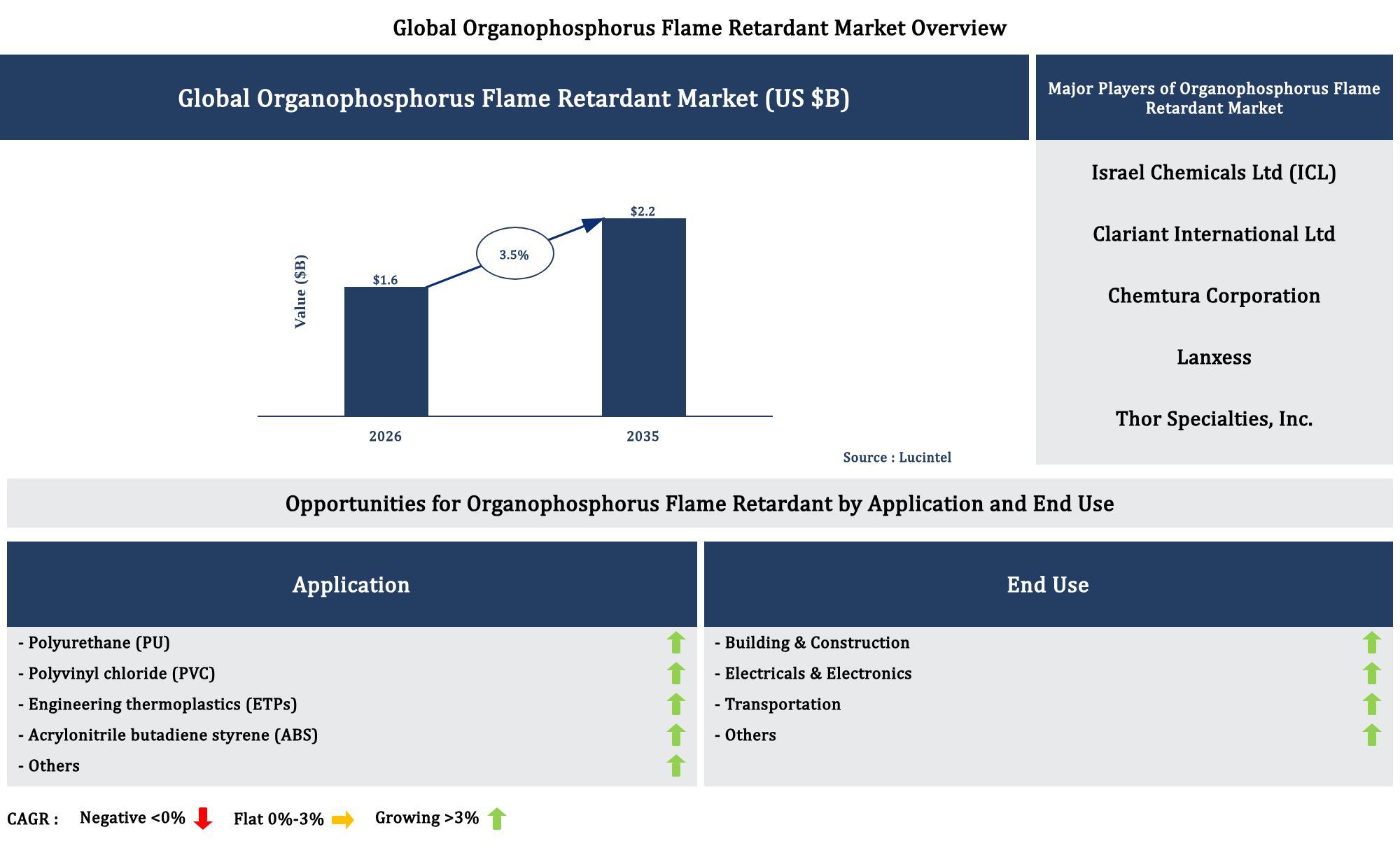
The future of the global organophosphorus flame retardant market looks promising with opportunities in the building & construction, electrical & electronic, and transportation markets. The global organophosphorus flame retardant market is expected to reach an estimated $2,203 million by 2035 with a CAGR of 3.5% from 2026 to 2035. The major drivers for this market are the rising demand for electronics for flame resistant components, the growing demand for electrical insulation materials, and the increasing demand for use construction for fire safety compliance.
• Lucintel forecasts that, within the Application category, polyvinyl chloride (PVC) is expected to witness the highest growth over the forecast period.
• Within the end use category, building & construction is expected to witness the highest growth.
• In terms of region, APAC is expected to witness the highest growth over the forecast period.
Gain valuable insights for your business decisions with our comprehensive 150+ page report. Sample figures with some insights are shown below.
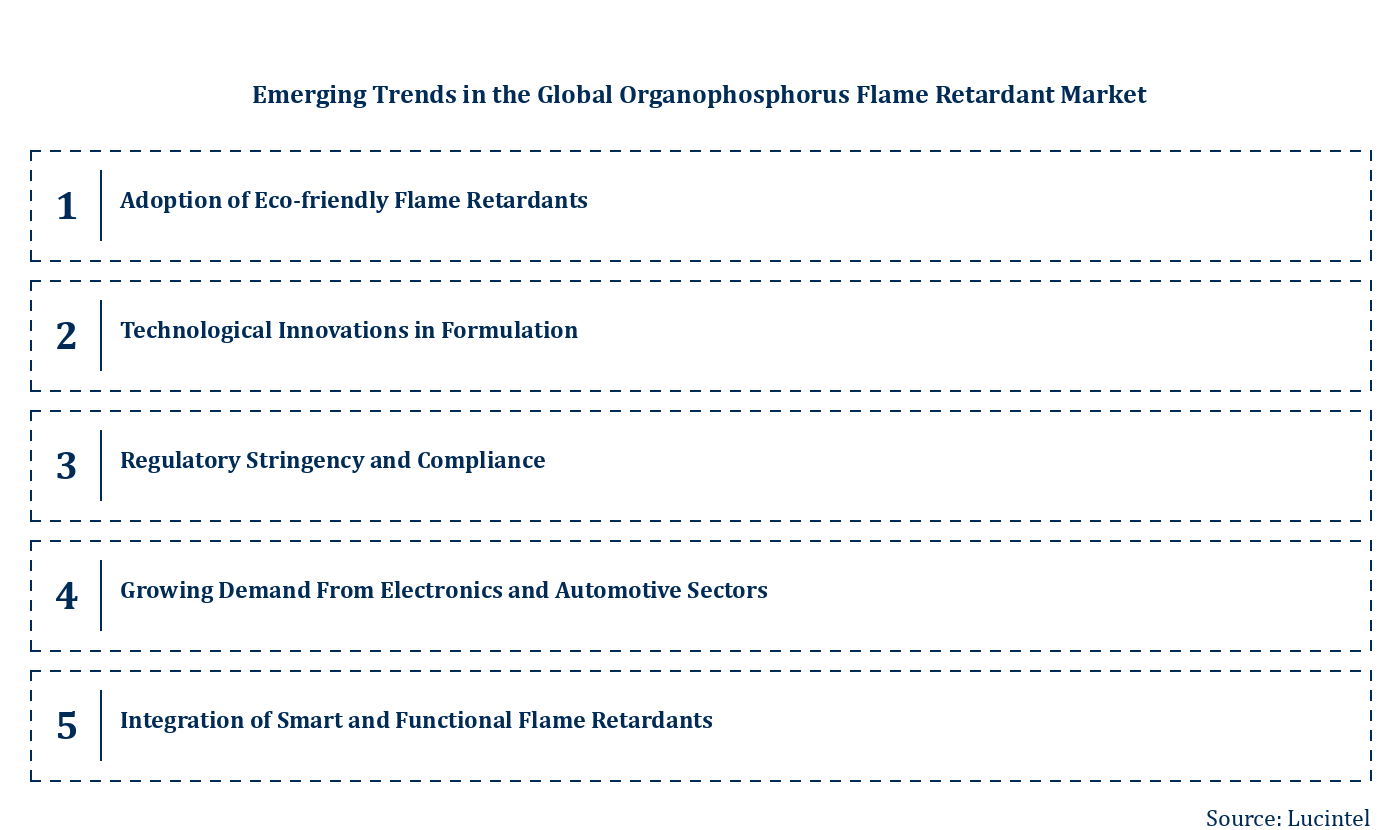
Emerging Trends in the Organophosphorus Flame Retardant Market
The organophosphorus flame retardant market is experiencing rapid evolution driven by increasing safety regulations, technological advancements, and a growing demand for eco-friendly solutions across various industries. As industries such as electronics, textiles, and construction seek safer and more sustainable flame retardants, market players are innovating to meet these needs. The market‘s growth is also influenced by regulatory pressures to reduce hazardous substances and the rising awareness of fire safety. These developments are shaping a dynamic landscape where innovation, sustainability, and regulatory compliance are key drivers. Understanding these emerging trends is essential for stakeholders aiming to capitalize on future opportunities in this sector.
• Adoption of Eco-Friendly Flame Retardants: The shift towards environmentally sustainable products is prominent. Manufacturers are developing bio-based and phosphorus-nitrogen compounds that reduce toxic emissions during combustion. This trend is driven by stricter environmental regulations and consumer demand for safer products. Eco-friendly flame retardants offer comparable or superior performance while minimizing health and environmental risks, making them increasingly preferred in electronics, textiles, and building materials. This shift not only enhances safety but also aligns with global sustainability goals, opening new market segments and fostering innovation.
• Technological Innovations in Formulation: Advances in chemical formulations are enhancing the efficacy and safety of flame retardants. Researchers are focusing on nanotechnology, synergistic blends, and novel polymer matrices to improve flame retardant properties without compromising material integrity. These innovations enable the development of lightweight, durable, and highly effective flame-retardant materials suitable for high-performance applications. The impact includes extended product lifespan, improved fire safety standards, and reduced environmental footprint, which collectively boost market competitiveness and open avenues for new product development.
• Regulatory Stringency and Compliance: Governments and international bodies are implementing stricter fire safety and environmental regulations. These regulations mandate the use of safer, non-toxic flame retardants and restrict hazardous substances like halogenated compounds. Companies are compelled to innovate and reformulate products to meet compliance standards, which influences market dynamics significantly. This trend encourages the adoption of phosphorus-based and other eco-friendly retardants, fostering a shift away from traditional, hazardous options. Compliance not only ensures market access but also enhances brand reputation and consumer trust.
• Growing Demand from Electronics and Automotive Sectors: The expanding electronics industry, including consumer gadgets and electric vehicles, is a major driver. These sectors require high-performance flame retardants that are lightweight, non-corrosive, and compatible with sensitive components. The automotive industry’s focus on safety and sustainability further amplifies demand. This trend results in increased R&D investments and customized solutions tailored to specific industry needs. The impact is a surge in market size, diversification of product offerings, and heightened competition among manufacturers to deliver innovative, sector-specific flame retardants.
• Integration of Smart and Functional Flame Retardants: The market is witnessing the emergence of flame retardants with added functionalities such as UV resistance, antimicrobial properties, and self-healing capabilities. These multifunctional solutions cater to advanced applications in aerospace, electronics, and textiles. The integration of smart features enhances material performance and safety, reducing the need for multiple additives. This trend promotes the development of high-value, innovative products that meet complex industry requirements, thereby expanding market opportunities and encouraging cross-sector collaborations.
These emerging trends are fundamentally reshaping the organophosphorus flame retardant market by emphasizing sustainability, technological innovation, regulatory compliance, sector-specific solutions, and multifunctionality. These developments are driving market growth, fostering innovation, and ensuring safer, more sustainable products across diverse industries.
Recent Development in the Organophosphorus Flame Retardant Market
The organophosphorus flame retardant market is experiencing rapid growth driven by increasing demand across various industries such as electronics, construction, and textiles. Innovations in chemical formulations and stricter safety regulations are propelling market expansion. Additionally, rising awareness of fire safety and environmental concerns are influencing product development. Market players are investing in research to develop eco-friendly and efficient flame retardants. These developments are shaping a dynamic landscape, offering new opportunities for manufacturers and stakeholders to meet evolving safety standards and consumer preferences.
• Growing Demand in Electronics Industry: The electronics sector‘s expansion necessitates advanced flame retardants to meet safety standards, boosting market growth.
• Development of Eco-Friendly Flame Retardants: Increasing environmental regulations drive innovation toward sustainable, non-toxic flame retardants, expanding market options.
• Technological Advancements in Formulations: Improved chemical formulations enhance product efficacy and safety, attracting new applications and increasing market competitiveness.
• Rising Safety Regulations Worldwide: Stricter fire safety laws compel industries to adopt high-performance flame retardants, fueling market demand.
• Expansion into Emerging Markets: Developing regions‘ infrastructure growth and industrialization create new opportunities for flame retardant applications, broadening market reach.
The market is experiencing significant growth due to rising demand from electronics, construction, and textiles, driven by safety regulations and technological innovations. Eco-friendly and sustainable flame retardants are gaining prominence, aligning with environmental policies and consumer preferences. Advances in chemical formulations improve product performance, safety, and environmental profile, fostering industry innovation. Stricter safety regulations worldwide are compelling industries to adopt advanced flame retardants, ensuring compliance and safety. Emerging markets present substantial growth opportunities as infrastructure development and industrialization accelerate, expanding the market globally.
Strategic Growth Opportunities in the Organophosphorus Flame Retardant Market
The organophosphorus flame retardant market is experiencing significant growth driven by increasing safety regulations, expanding end-use industries, and technological advancements. As industries such as electronics, textiles, and construction seek effective fire safety solutions, the demand for organophosphorus flame retardants is expected to rise. Market players are focusing on innovation, sustainability, and regional expansion to capitalize on emerging opportunities. This dynamic environment offers numerous avenues for strategic growth, making it essential for stakeholders to identify and leverage key opportunities effectively.
• Growing Demand from Electronics Industry for Safer, High-Performance Flame Retardants: The electronics sector requires flame retardants that meet stringent safety standards while maintaining product performance. Organophosphorus compounds are increasingly preferred due to their low toxicity and high efficiency. As consumer electronics and electrical appliances proliferate globally, manufacturers seek advanced flame retardants to ensure compliance and safety, creating substantial growth opportunities for market players through product innovation and tailored solutions.
• Expansion in Construction and Building Materials for Fire Safety Compliance: The construction industry is adopting stricter fire safety regulations, driving demand for flame retardant-treated materials. Organophosphorus flame retardants are favored for their effectiveness and compatibility with various substrates like plastics, foams, and textiles used in building insulation, wall panels, and furniture. This trend encourages manufacturers to develop specialized formulations, fostering market expansion in regions with robust construction activities and evolving safety standards.
• Increasing Adoption in Textiles for Flame-Resistant Apparel and Furnishings: The textile industry is integrating flame retardants into fabrics used in apparel, upholstery, and curtains to meet safety standards. Organophosphorus flame retardants offer durability and low environmental impact, making them suitable for various textile applications. Rising awareness of fire safety and regulatory mandates are propelling demand, prompting innovation in textile-specific formulations and opening new growth avenues for manufacturers targeting this sector.
• Rising Focus on Environmentally Friendly and Sustainable Flame Retardant Solutions: Environmental concerns are prompting a shift towards bio-based and non-toxic organophosphorus flame retardants. Market players are investing in sustainable chemistries that reduce hazardous emissions and improve biodegradability. This focus on eco-friendly solutions aligns with regulatory pressures and consumer preferences, creating opportunities for innovation, differentiation, and expansion into markets prioritizing sustainability, especially in Europe and North America.
• Strategic Regional Expansion into Emerging Markets with Increasing Industrialization: Rapid industrialization in Asia-Pacific, Latin America, and Africa is fueling demand for fire safety products, including organophosphorus flame retardants. Companies are establishing local manufacturing and distribution channels to capitalize on these markets‘ growth potential. Regional expansion enables access to new customer bases, compliance with local regulations, and adaptation to regional preferences, positioning firms for sustained growth amid increasing safety standards and industrial development.
These growth opportunities are poised to significantly influence the organophosphorus flame retardant market by driving innovation, expanding applications, and fostering regional development. Embracing these avenues will enable market participants to strengthen their competitive position, meet evolving safety and environmental standards, and capitalize on the expanding global demand for fire safety solutions.
Organophosphorus Flame Retardant Market Driver and Challenges
The organophosphorus flame retardant market is influenced by a variety of technological, economic, and regulatory factors. Advances in chemical manufacturing and sustainable product development drive innovation, while economic growth in emerging markets increases demand for safety and compliance. Regulatory frameworks aimed at reducing hazardous substances impact product formulations and market strategies. Additionally, environmental concerns and consumer awareness shape industry practices. Navigating these complex drivers and challenges is essential for market players to sustain growth, ensure compliance, and meet evolving customer needs in a competitive landscape.
The factors responsible for driving the organophosphorus flame retardant market include:-
• Technological Innovation: The development of advanced, eco-friendly flame retardants enhances safety and compliance, encouraging manufacturers to adopt newer formulations that meet stringent standards. Innovations in chemical synthesis and application techniques improve product efficacy and reduce environmental impact, fostering market growth.
• Regulatory Compliance: Governments worldwide are implementing strict regulations to limit hazardous substances in consumer and industrial products. This drives demand for safer, compliant flame retardants, prompting manufacturers to innovate and adapt their product portfolios to meet evolving legal standards.
• Growing Construction and Electronics Sectors: Rapid urbanization and technological proliferation increase demand for flame-retardant materials in construction, electronics, and textiles. These sectors require high-performance, durable, and safe flame retardants, fueling market expansion.
• Rising Awareness of Fire Safety: Increased awareness among consumers and industries about fire safety standards encourages the adoption of flame retardants. This trend supports market growth as stakeholders prioritize safety in product design and infrastructure development.
The challenges facing the organophosphorus flame retardant market include:-
• Environmental and Health Concerns: Organophosphorus flame retardants are often scrutinized for their potential environmental persistence and health risks. Regulatory agencies are imposing restrictions, which can limit market growth and necessitate the development of safer alternatives.
• Stringent Regulations and Standards: Evolving legal frameworks require continuous compliance efforts, increasing costs for manufacturers. Navigating diverse regional regulations can be complex, impacting market entry and expansion strategies.
• Volatility in Raw Material Prices: Fluctuations in the cost of raw materials used in manufacturing flame retardants can affect profit margins and pricing strategies. Supply chain disruptions and market uncertainties further challenge consistent production and growth.
The organophosphorus flame retardant market is shaped by technological advancements, regulatory pressures, and increasing safety demands, which collectively promote growth. However, environmental concerns, regulatory complexities, and raw material volatility pose significant challenges. Market players must innovate responsibly, adapt to legal requirements, and manage supply chain risks to sustain competitiveness. Overall, the market‘s future hinges on balancing innovation with safety and compliance, ensuring sustainable growth amid evolving global standards.
List of Organophosphorus Flame Retardant Companies
Companies in the market compete on the basis of product quality offered. Major players in this market focus on expanding their manufacturing facilities, R&D investments, infrastructural development, and leverage integration opportunities across the value chain. With these strategies organophosphorus flame retardant companies cater increasing demand, ensure competitive effectiveness, develop innovative products & technologies, reduce production costs, and expand their customer base. Some of the organophosphorus flame retardant companies profiled in this report include-
• Israel Chemicals Ltd (ICL)
• Clariant International Ltd
• Chemtura Corporation
• Lanxess
• Thor Specialties, Inc.
• Daihachi Chemical Industry Co. Ltd
• Delamin
• Dupont
• Amfine Chemicals
• Huber Engineered Materials
Organophosphorus Flame Retardant Market by Segment
The study includes a forecast for the global organophosphorus flame retardant market by application, end use, and region.
Organophosphorus Flame Retardant Market by Application [Value from 2019 to 2035]:
• Polyurethane (PU)
• Polyvinyl chloride (PVC)
• Engineering thermoplastics (ETPs)
• Acrylonitrile butadiene styrene (ABS)
• Others
Organophosphorus Flame Retardant Market by End Use [Value from 2019 to 2035]:
• Building & Construction
• Electricals & Electronics
• Transportation
• Others
Organophosphorus Flame Retardant Market by Region [Value from 2019 to 2035]:
• North America
• Europe
• Asia Pacific
• The Rest of the World
Country Wise Outlook for the Organophosphorus Flame Retardant Market
The organophosphorus flame retardant market has experienced significant shifts driven by technological innovations, regulatory changes, and increasing demand for safer, eco-friendly materials across various industries. Countries are adopting new regulations and investing in research to develop sustainable flame retardants, impacting global supply chains and market dynamics. The United States, China, Germany, India, and Japan are at the forefront of these developments, each contributing uniquely to the evolving landscape through policy adjustments, technological advancements, and expanding industrial applications.
• United States: The US market has seen increased adoption of bio-based and environmentally friendly flame retardants, driven by stricter regulations and consumer demand for safer products. Major companies are investing in R&D to develop innovative solutions that meet safety standards while reducing environmental impact. The government’s focus on sustainability has also led to incentives for green chemistry initiatives, boosting market growth.
• China: China remains a dominant player, with rapid industrialization fueling demand for flame retardants in electronics, construction, and textiles. Recent policies emphasize environmental protection, prompting manufacturers to shift towards less toxic, phosphorus-based retardants. The country is also investing heavily in research to improve product performance and compliance with international standards, strengthening its global market position.
• Germany: Germany’s market is characterized by a focus on high-performance, eco-friendly flame retardants, especially in automotive and construction sectors. Stringent EU regulations have pushed companies to innovate in sustainable chemistry. Germany is also leading in the development of flame retardants with reduced health risks, integrating advanced materials and nanotechnology to enhance safety and efficiency.
• India: India’s market is expanding rapidly due to increasing infrastructure development and industrialization. The government’s initiatives to promote sustainable manufacturing practices are encouraging the adoption of environmentally friendly flame retardants. Local manufacturers are investing in technology upgrades and R&D to meet international standards, aiming to capture a larger share of the global market.
• Japan: Japan continues to focus on advanced, high-performance flame retardants, particularly for electronics and transportation industries. The country emphasizes innovation through nanotechnology and chemical engineering to develop safer, more effective products. Regulatory frameworks promote the use of non-toxic, sustainable materials, fostering a competitive environment for cutting-edge flame retardant solutions.
Features of the Global Organophosphorus Flame Retardant Market
Market Size Estimates: Organophosphorus flame retardant market size estimation in terms of value ($M).
Trend and Forecast Analysis: Market trends (2019 to 2025) and forecast (2026 to 2035) by various segments and regions.
Segmentation Analysis: Organophosphorus flame retardant market size by application, end use, and region in terms of value ($M).
Regional Analysis: Organophosphorus flame retardant market breakdown by North America, Europe, Asia Pacific, and Rest of the World.
Growth Opportunities: Analysis of growth opportunities in different application, end use, and regions for the organophosphorus flame retardant market.
Strategic Analysis: This includes M&A, new product development, and competitive landscape of the organophosphorus flame retardant market.
Analysis of competitive intensity of the industry based on Porter’s Five Forces model.
FAQ
Q1. What is the organophosphorus flame retardant market size?
Answer: The global organophosphorus flame retardant market is expected to reach an estimated $2,203 million by 2035.
Q2. What is the growth forecast for organophosphorus flame retardant market?
Answer: The global organophosphorus flame retardant market is expected to grow with a CAGR of 3.5% from 2026 to 2035.
Q3. What are the major drivers influencing the growth of the organophosphorus flame retardant market?
Answer: The major drivers for this market are the rising demand for electronics for flame resistant components, the growing demand for electrical insulation materials, and the increasing demand for use construction for fire safety compliance.
Q4. What are the major segments for organophosphorus flame retardant market?
Answer: The future of the organophosphorus flame retardant market looks promising with opportunities in the building & construction, electrical & electronic, and transportation markets.
Q5. Who are the key organophosphorus flame retardant market companies?
Answer: Some of the key organophosphorus flame retardant companies are as follows:
• Israel Chemicals Ltd (ICL)
• Clariant International Ltd
• Chemtura Corporation
• Lanxess
• Thor Specialties, Inc.
• Daihachi Chemical Industry Co. Ltd
• Delamin
• Dupont
• Amfine Chemicals
• Huber Engineered Materials
Q6. Which organophosphorus flame retardant market segment will be the largest in future?
Answer: Lucintel forecasts that, within the Application category, polyvinyl chloride (PVC) is expected to witness the highest growth over the forecast period.
Q7. In organophosphorus flame retardant market, which region is expected to be the largest in next 8 years?
Answer: In terms of region, APAC is expected to witness the highest growth over the forecast period.
Q8. Do we receive customization in this report?
Answer: Yes, Lucintel provides 10% customization without any additional cost.
This report answers following 11 key questions:
Q.1. What are some of the most promising, high-growth opportunities for the organophosphorus flame retardant market by application (polyurethane (PU), polyvinyl chloride (PVC), engineering thermoplastics (ETPs), acrylonitrile butadiene styrene (ABS), and others), end use (building & construction, electricals & electronics, transportation, and others), and region (North America, Europe, Asia Pacific, and the Rest of the World)?
Q.2. Which segments will grow at a faster pace and why?
Q.3. Which region will grow at a faster pace and why?
Q.4. What are the key factors affecting market dynamics? What are the key challenges and business risks in this market?
Q.5. What are the business risks and competitive threats in this market?
Q.6. What are the emerging trends in this market and the reasons behind them?
Q.7. What are some of the changing demands of customers in the market?
Q.8. What are the new developments in the market? Which companies are leading these developments?
Q.9. Who are the major players in this market? What strategic initiatives are key players pursuing for business growth?
Q.10. What are some of the competing products in this market and how big of a threat do they pose for loss of market share by material or product substitution?
Q.11. What M&A activity has occurred in the last 7 years and what has its impact been on the industry?
For any questions related to Organophosphorus Flame Retardant Market, Organophosphorus Flame Retardant Market Size, Organophosphorus Flame Retardant Market Growth, Organophosphorus Flame Retardant Market Analysis, Organophosphorus Flame Retardant Market Report, Organophosphorus Flame Retardant Market Share, Organophosphorus Flame Retardant Market Trends, Organophosphorus Flame Retardant Market Forecast, Organophosphorus Flame Retardant Companies, write Lucintel analyst at email: helpdesk@lucintel.com. We will be glad to get back to you soon.
