
Market Report · July 15, 2026

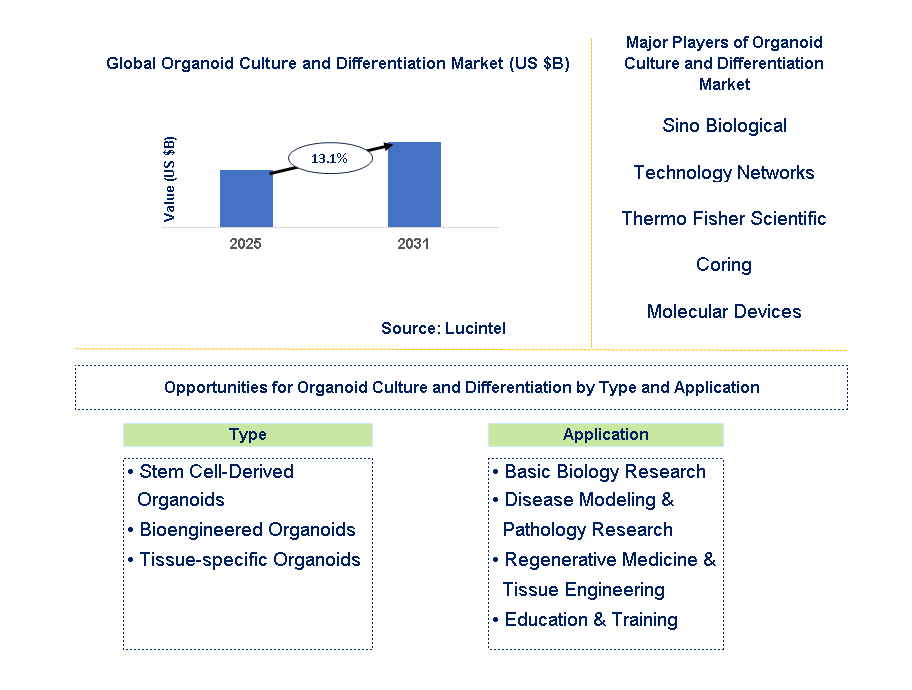
Key data points: The growth forecast = 13.1% annually for the next 7 years. Scroll below to get more insights. This market report covers Trends, opportunities and forecasts in organoid culture and differentiation market to 2031 by type (stem cell-derived organoids, bioengineered organoids, and tissue-specific organoids), application (basic biology research, disease modeling & pathology research, regenerative medicine & tissue engineering, and education & training), and region (North America, Europe, Asia Pacific, and the Rest of the World)
We'll send your sample report shortly.
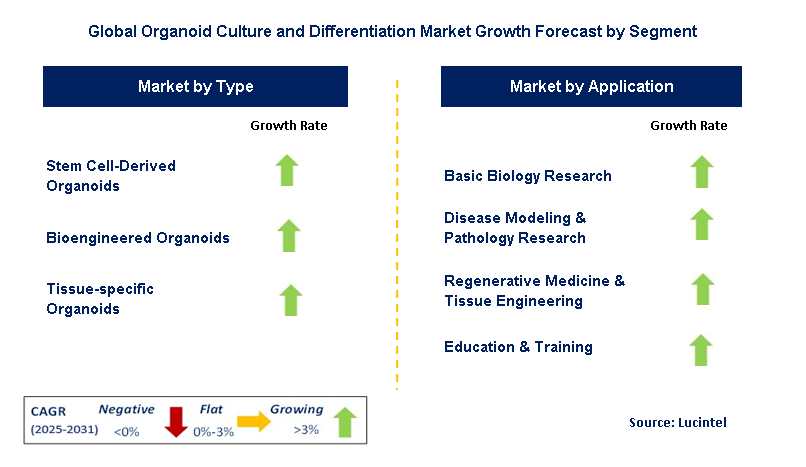
• Lucintel forecasts that, within the type category, stem cell-derived organoid is expected to witness the highest growth over the forecast period due to the rising use in disease modeling.
• Within the application category, disease modeling & pathology research is expected to witness the highest growth due to the growing need for accurate models.
• In terms of region, North America is expected to witness the highest growth over the forecast period due to the increasing focus on personalized medicine.
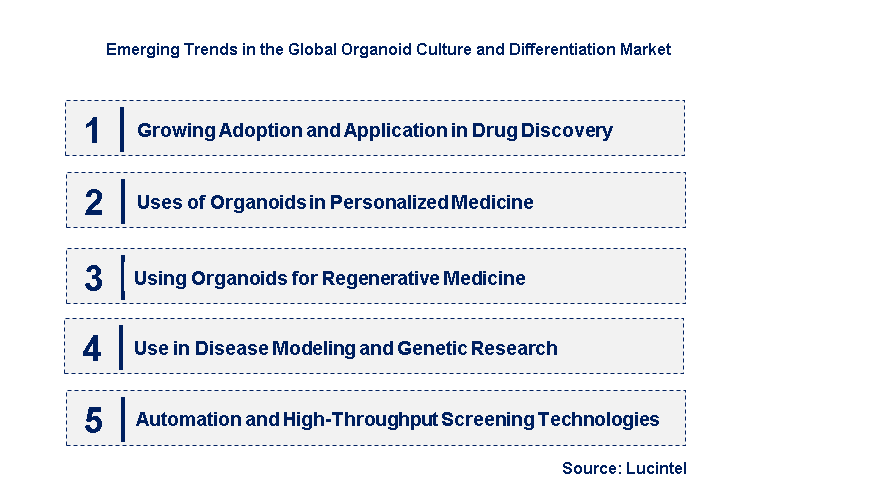
• Growing Adoption and Application in Drug Discovery: Organoid Cultures have fully replaced animal testing during the most advanced pharmaceutical research. Growing ability of organoids to replicate organ functions and disease mechanisms allows much more accurate evaluation of drug responses. This greatly enhances the precision of drug efficacy and toxicity testing while also significantly reducing the use of animal testing. This is anticipated to improve the drug development process, especially with regard to personalized medicine, and increase the efficacy and safety of clinical trials.
• Uses of Organoids in Personalized Medicine: One of the fastest growing fields capitalize on new technologies is personalized medicine, which uses organoids extensively. Patient specific organoids allow healthcare providers to assess how a patient will respond to various drugs and tailor treatment plans accordingly. This approach is expected to change the treatment paradigm of several diseases including cancer and other complex genetic disorders by providing specific therapies for the identified genetic markers and thereby increasing positive patient outcomes while minimizing complications from medication.
• Using Organoids for Regenerative Medicine: Organoids are redefining regenerative medicine, particularly in organ and tissue engineering for transplantation and in the treatment of diseased tissues. This phenomenon is critically important for enhancing the supply of transplantable organs and improving the treatment of organ failure conditions such as liver cirrhosis and heart disease.
• Use in Disease Modeling and Genetic Research: Organoids are being utilized for the modeling of diseases which include the most complex ones like cancer, metabolic disorders, and even neurological diseases. Researchers are now able to create patient-specific organoids to further investigate disease progression and the different genetic changes that occur, providing superior models than cell cultures. This enables scientists to study the mechanisms of diseases in further detail and discover new potential treatments and targets that could change the gene’s actions, enhancing the field of genetic research and helping with the new available options for treatment.
• Automation and High-Throughput Screening Technologies:To support the demand in organoid differentiation and culture, automation tools and high throughput screening platforms are becoming popular. These tools allow the production and testing on a wider scale to support the further advances in medical research and support the organoid model for drug discovery and toxicology studies. Automation allows reduction in manual work expenses, improving the reproducibility of experiments, speeding the time for research, and making organoid through automation platforms easier for countless research institutions and commercial enterprises. There are exciting opportunities for growth and innovation in organoid culture and differentiation, where stems cells and biotechnology come together for drug discovery and development. Organoids are promising in regenerative and personalized medicine, and research is evolving from the integration of new tools and techniques. With the automation of organoid applications and the implantation of high-throughput screening systems, there is further improvement in organoid-based systems. This phenomena would transform the biomedical research and therapeutics landscape in a more targeted and individualized manner.
• Innovations in Stem Cell Technology: The latest changes in stem cell technology have improved the induced pluripotent stem cell (iPSC) organoid model technology. These advancements enable the production of higher order functional organoids that imitate human organs. The use of patient-specific stem cells to create organoids is a breakthrough in personalized medicine and disease modeling, permitting more accurate and efficient treatment strategies.
• Enabled Improved Reproducibility and Reliability of Organoid Models: The improvement of organoid models begins with enhanced techniques in culturing and differentiating organoid cells. The ability to create organoids from brain, liver, and gut tissues made it possible to achieve better organoid models. Such progress ensures a more exact disease modeling and improves the drug testing platforms which expands possibilities within pharmaceutical development and tailored therapy solutions.
• Diverse Use Cases Until Now: Organoids are emerging critical components in modelling different types of diseases, especially cancer, complex neurodegenerative diseases, and disorders that affect the gastrointestinal tract. The ability to construct more advanced organoid models that replicate the patient's specific organs makes it easier to understand the underlying mechanism of diseases and how they progress. This skill presents new horizons in drug design and patient-oriented therapy which renders organoids as an essential tool in clinical research and studies.
• Regenerative Medicine and Tissue Engineering Innovations: Rethinking the approach to medicine and organ damage restoration has put organoids in the spotlight for their ability to repair damaged tissues and organs. The engineering of functional tissues is gradually inching towards the world of practical use, whether it be for liver or kidney regeneration, and with it comes hope for patients that are in desperate need of organ transplants along with the advanced treatments for organ failure.
• Commercialization and Industry Growth: Organoid based culture along with stem cell differentiation techniques are being embraced by the industry at a higher pace than what was previously observed. Investments from biotech and pharmaceutical companies are on the rise, and as more sophisticated drug discovery and organoid based personalized medicine systems are put into place, so too will the partnership between research institutions and industry targets aid in pushing the market. As the focus shifts from primary research to application based models, so too does the commercial interest in organoid technology begin to deepen. The recent advancements of the organoid culture and differentiation market capture the progress made in stem cell research and the modeling of diseases as well as advancements in regenerative medicine. Innovations in technology and new procedures are helping researchers develop more realistic and functional organoid models which are accelerating their use in personalized medicine, drug development, and tissue engineering. The commercialization of organoid technologies is continuously improving enabling the market to expand, which can greatly transform the healthcare and biomedical research industries.
• Personalized Medicine Applications: As previously mentioned, personalized medicine has grown tremendously with organoid technologies in oncology and other genetic problems. Patient-derived organoids allow for even more custom drug testing and treatment planning that is more efficient and effective. As customized therapies increase, organoid culture will also improve precision medicine and target therapy.
• Pharmaceutical Drug Discovery and Development: Drug testing is changing for the better with the incorporation of organoids in drug development. Lab grown, disease-specific organ Models greatly lessen the need for animal testing as well as improving the efficacy of clinical trials. Interest in novel organoid based platforms from the fast increasing pharma industry has spurred funding and development for many orphan drugs and other unmet medical needs.
• Regenerative Medicine and Organ Replacement: Organoids have certainly pioneered the initial steps of regenerative medicine rather constructing viable tissues or entire organ for replacement. Developing transplantable organoids, for example liver or kidney organoids, can potentially solve the organ shortage problem and provide a novel therapeutic option for end-stage organ failures. As engineering of tissues becomes more sophisticated, organoids will find wider acceptance in stem cell therapy.
• Modeling Disease and Conducting Genetic Research: The use of organoids in disease modeling, particularly concerning cancer and other genetic diseases, represents an important growth opportunity. Such organoids allow disease progression and genetic mutations to be studied in greater detail, making it possible to devise more sophisticated treatments and therapies based on an individual’s genetic profile. As a result, organoid technologies will help propel genetic research and personalized medicine to new heights. which makes organoid technologies a significant contributor towards improving genetic research and precision medicine.
• Performing Drug Toxity Testing: Advanced drug toxicity testing will increase significantly using organoids, as they represent an efficient and scalable method of assessing the possible adverse effects of drugs before clinical usage. This growth opportunity fits well with the persistent need for improved clinical testing, which will ensure enhanced drug safety and lower the chances of failures in the later phases of the trials. With organoids, the speed and accuracy of pharmaceutical testing will increase, making them a fundamental part of the development pipeline. There are numerous promising growth prospective in organoid culture and differentiation market, especially regarding personalized medicine, drug discovery, regenerative medicine, and genetic research. The advancement and increasing commercialization of organoid technologies will further stimulate innovation in these areas marking a new era in the healthcare and medical research. The rising use of organoid systems in drug development and regenerative medicine demonstrates the increasing significance of organoids in addressing multifaceted medical problems more accurately and efficiently.
• Sino Biological
• Technology Networks
• Thermo Fisher Scientific
• Coring
• Molecular Devices
• Stem Cell-Derived Organoids
• Bioengineered Organoids
• Tissue-specific Organoids
• Basic Biology Research
• Disease Modeling & Pathology Research
• Regenerative Medicine & Tissue Engineering
• Education & Training
• North America
• Europe
• Asia Pacific
• The Rest of the World
• US: Regions like the United States have remained leaders in organoid culture and differentiation because of biotechnology companies and research institutions for organoid cultures. Major advancements include organoids as tools for personalized medicine and disease modeling especially in oncology, neurology, and various other infectious diseases. In the Stem Cell and Regenerative Medicine field, the US government have also funded through the NIH institute. Sustaining a robust biotech edge is likely to enable the US to continue to lead the world in developing various organoid technologies which include drug discovery, disease modeling, and other therapeutic uses.
• China: In China, organoid culture and differentiation activities developed quickly due to strong support from the government on biotechnological research as well as increasing academic and industrial collaborations. Chinese research institutions have made significant progress in developing human organoids to study diseases of the liver, lung, and gastrointestinal tract. The government has also boosted spending on stem cell research and biotechnology innovations, which positions China strategically in the global market. Considering investment growth in the biotech sector, China is expected to be among the leading markets on active participation in the innovations and commercialization of organoid technologies.
• Germany: Germany is now a frontrunner in the organoid research and differentiation market in Europe, especially for pharmaceuticals and biomedical industries. The country’s research institutions are using organoid models to study drug effects, toxicity, and tissue engineering. The combination of advanced healthcare services and research along with cooperation among universities, hospitals, and industry enables Germany to improve quickly in science and technology. Furthermore, Germany has pioneered the development of organoid-based disease models for precision medicine, where these models are used extensively in teaching and research and drug development by the industry.
• India: India’s organoid culture and differentiation market may be small, but the growing interest in personalized medicine and disease modeling is helping it develop at a substantial pace. Major research centers are putting efforts in creating organoid models to be used in drug screening for various cancers and infectious diseases. Along with the growing biotechnology industry in the country, government support towards R & D in stem cell biology is strengthening the market. With the increasing efforts made in stem cell research in India, the country is likely to become a global leader in the organoid market in context of economically viable healthcare solutions.\
• Japan: Japan is one of the organoid culture and differentiation industry leaders in the Asia~Pacific, excelling in regenerative medicine and drug development. The rest of the world’s cancer researchers, and even those focused on drug testing or disease modeling, know Japan employs organoid technologies. Japanese scholars already incorporate sophisticated stem cell methods into organoid modeling of human organ systems, which allows creation of more advanced organ systems models. This facilitated Japan to emerge as a leader in Asia in organoid technologies due to government backing in biotechnology and investments into improving the healthcare system. Japan will remain a major contributor to organoid technologies and their application in the Asia-Pacific region.


• Sino Biological
• Technology Networks
• Thermo Fisher Scientific
• Coring
• Molecular Devices Q5. Which organoid culture and differentiation market segment will be the largest in future? Answer: Lucintel forecasts that, within the type category, stem cell-derived organoid is expected to witness the highest growth over the forecast period due to the rising use in disease modeling. Q6. In organoid culture and differentiation market, which region is expected to be the largest in next 5 years? Answer: In terms of region, North America is expected to witness the highest growth over the forecast period due to the increasing focus on personalized medicine. Q7. Do we receive customization in this report? Answer: Yes, Lucintel provides 10% customization without any additional cost.


Choose a license that fits your team. Instant PDF delivery.
Prices exclude taxes. Instant delivery. Custom licensing available on request.
Market Report · July 15, 2026
Market Report · May 18, 2026
Market Report · May 18, 2026
Trusted partner for strategic intelligence and business growth


Receive a complimentary market analysis tailored to your industry. Our analysts will identify key growth opportunities and competitive dynamics specific to your business.

Market size, growth rate, and key trend analysis for your specific sector.

Top competitor positioning and market share analysis.

Strategic recommendations backed by data-driven insights.
Get curated market intelligence and competitive moves straight to your inbox.
By subscribing, you agree to receive our monthly insights. Unsubscribe anytime.
Receive a complimentary market analysis tailored to your industry. Our analysts will identify key growth opportunities and competitive dynamics specific to your business.
Market size, growth rate, and key trend analysis for your specific sector.
Top competitor positioning and market share analysis.
Strategic recommendations backed by data-driven insights.
Get curated market intelligence, emerging trends, and competitive moves straight to your inbox each month.
By subscribing, you agree to receive our monthly insights. Unsubscribe anytime.
We'll send your sample report shortly.