
Report Feature
Organic Shampoo Market Trends and Forecast
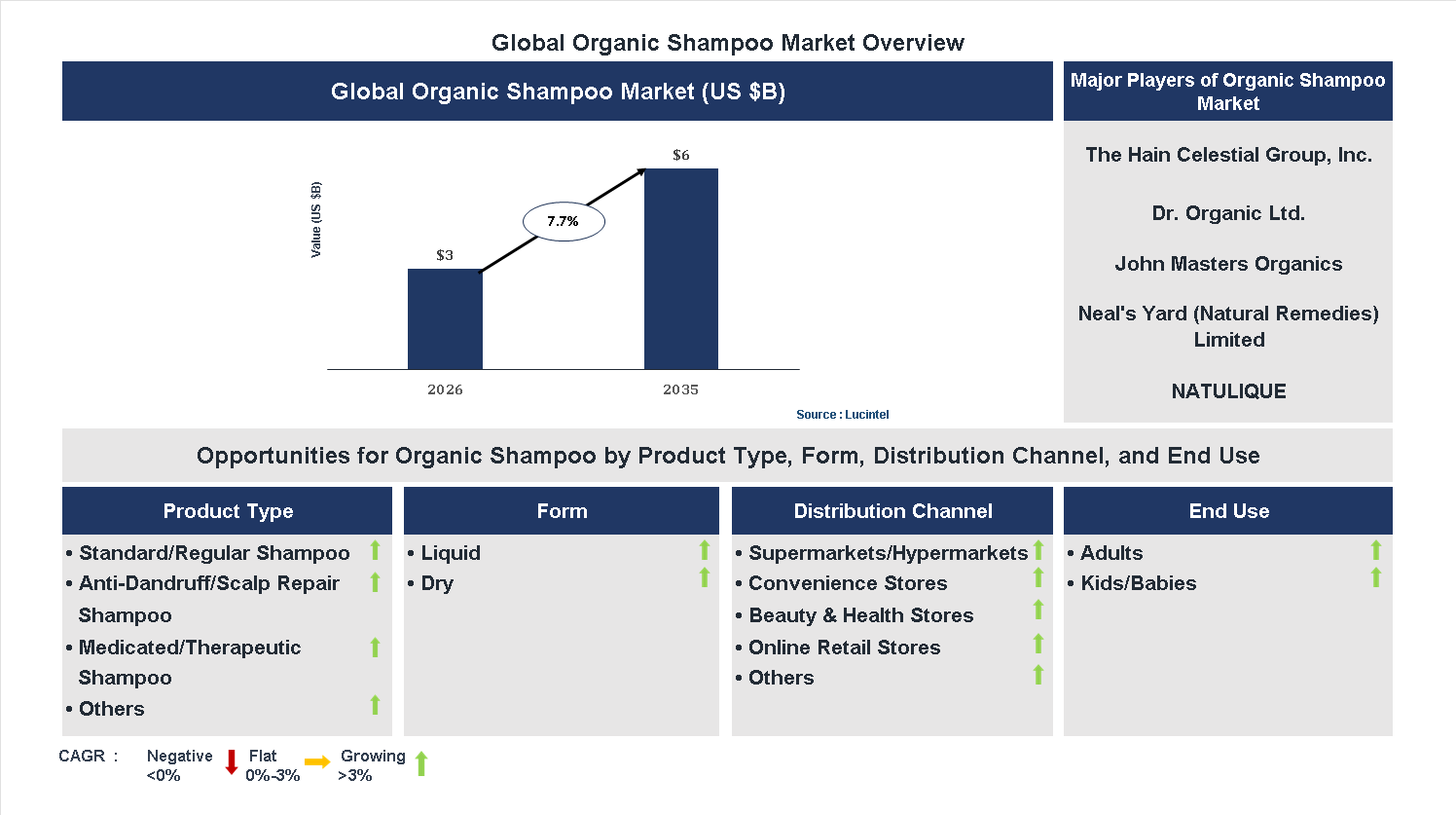
The future of the global organic shampoo market looks promising with opportunities in the supermarket/hypermarket, convenience store, beauty & health store, and online retail store markets. The global organic shampoo market is expected to reach an estimated $6 billion by 2035 with a CAGR of 7.7% from 2026 to 2035. The major drivers for this market are the growing demand for natural & organic personal care products, the rising demand for cruelty-free & vegan cosmetic products, and the increasing availability of organic shampoos in online & retail stores.• Lucintel forecasts that, within the product type category, standard/regular shampoo is expected to witness higher growth over the forecast period.
• Within the distribution channel category, beauty & health store is expected to witness the highest growth.
• In terms of region, APAC is expected to witness the highest growth over the forecast period. Gain valuable insights for your business decisions with our comprehensive 150+ page report. Sample figures with some insights are shown below.
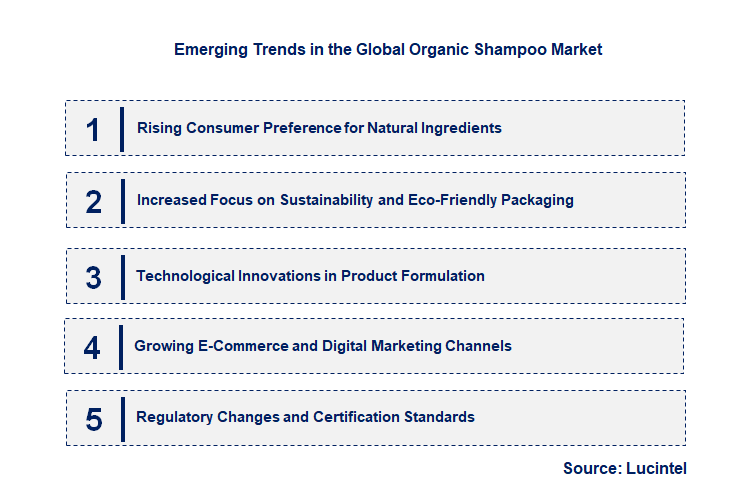
Emerging Trends in the Organic Shampoo Market
The organic shampoo market is experiencing rapid growth driven by increasing consumer awareness of health, environmental sustainability, and natural ingredients. As consumers seek safer and eco-friendly hair care options, brands are innovating to meet these demands. Technological advancements, changing lifestyles, and regulatory pressures are also shaping the market landscape. These developments are not only expanding market size but also redefining product offerings, marketing strategies, and consumer engagement. Understanding these emerging trends is crucial for stakeholders aiming to capitalize on the markets potential and address evolving consumer preferences effectively.• Rising Consumer Preference for Natural Ingredients: Consumers are increasingly seeking organic shampoos made from natural, plant-based ingredients. This trend is driven by concerns over chemical exposure and a desire for eco-friendly products. As a result, brands are reformulating products to eliminate synthetic chemicals, parabens, and sulfates, emphasizing transparency and ingredient sourcing. This shift enhances brand trust and appeals to health-conscious consumers, fueling market growth and encouraging innovation in ingredient development.
• Increased Focus on Sustainability and Eco-Friendly Packaging: Sustainability is a key driver in the organic shampoo market. Companies are adopting eco-friendly packaging solutions such as biodegradable bottles, refillable containers, and minimal packaging to reduce environmental impact. This trend aligns with consumer values of environmental responsibility and enhances brand reputation. Sustainable practices also include sourcing ingredients ethically and reducing carbon footprints, which collectively influence purchasing decisions and foster long-term customer loyalty.
• Technological Innovations in Product Formulation: Advances in formulation technology are enabling the development of more effective and longer-lasting organic shampoos. Innovations include the use of bio-based preservatives, natural surfactants, and plant-derived active ingredients that improve product performance without compromising natural integrity. These technological improvements help brands differentiate themselves in a competitive market, meet consumer expectations for efficacy, and comply with stricter regulations on cosmetic ingredients.
• Growing E-commerce and Digital Marketing Channels: The rise of e-commerce platforms and digital marketing has significantly expanded the reach of organic shampoo brands. Online channels facilitate direct consumer engagement, personalized marketing, and easy access to a wide range of products. Social media influencers and digital campaigns are boosting brand visibility and educating consumers about the benefits of organic hair care. This trend enables brands to target niche markets, gather consumer feedback, and adapt quickly to changing preferences.
• Regulatory Changes and Certification Standards: Increasing regulatory scrutiny and certification standards are shaping the market landscape. Governments and industry bodies are implementing stricter guidelines for organic labeling, ingredient transparency, and safety testing. Certifications such as USDA Organic, COSMOS, and Ecocar are becoming essential for market credibility. These standards ensure product authenticity, build consumer trust, and prevent misleading claims, thereby elevating industry quality standards and encouraging brands to adhere to higher compliance levels. These emerging trends are transforming the organic shampoo market by emphasizing natural ingredients, sustainability, technological innovation, digital engagement, and regulatory compliance. Collectively, they are driving market expansion, fostering innovation, and aligning products more closely with consumer values, ultimately reshaping the competitive landscape and setting new industry standards.
Recent Development in the Organic Shampoo Market
The organic shampoo market is experiencing rapid growth driven by increasing consumer awareness of natural ingredients and environmental sustainability. As consumers seek healthier hair care options, brands are innovating with eco-friendly formulations and transparent sourcing. Technological advancements and regulatory support further boost market expansion. This evolving landscape presents significant opportunities for brands to capture market share, meet consumer demands, and promote sustainable practices. The following developments highlight key areas shaping the future of the organic shampoo industry.• Growing Consumer Demand for Natural Products: Consumer preference for chemical-free, eco-friendly hair care products is fueling market growth. Increased awareness of harmful ingredients and environmental impact encourages consumers to choose organic shampoos. This shift is prompting brands to reformulate and innovate, leading to a broader product range. As demand rises, companies investing in organic, cruelty-free, and sustainable options are gaining competitive advantage, expanding market reach and fostering brand loyalty.
• Innovation in Formulations and Ingredients: Advances in natural ingredient sourcing and formulation techniques are enhancing product efficacy and safety. New botanical extracts, essential oils, and plant-based actives are being incorporated to improve performance. This innovation attracts health-conscious consumers seeking effective yet gentle products. It also allows brands to differentiate themselves through unique formulations, driving market expansion. Continuous R&D efforts are essential to meet evolving consumer expectations and regulatory standards.
• Expansion of E-commerce and Digital Marketing: The rise of online shopping platforms and digital marketing strategies is significantly increasing product accessibility and brand visibility. E-commerce enables consumers to easily compare, review, and purchase organic shampoos from anywhere. Digital campaigns, influencer collaborations, and social media engagement foster brand awareness and consumer trust. This expansion is particularly vital for reaching younger demographics and rural markets, accelerating sales growth and market penetration.
• Regulatory Support and Certification Standards: Governments and industry bodies are establishing stricter regulations and certification standards for organic products. Certifications like USDA Organic and Ecocar ensure product authenticity and quality, boosting consumer confidence. Regulatory support encourages transparency and sustainable practices among manufacturers. This environment promotes fair competition, reduces counterfeit products, and enhances market credibility, ultimately fostering consumer trust and encouraging industry growth.
• Increasing Investment in Sustainable Packaging: Eco-friendly packaging innovations are gaining traction to reduce environmental impact. Brands are adopting biodegradable, recyclable, and minimalistic packaging solutions. This focus aligns with consumer values and regulatory pressures for sustainability. Investment in sustainable packaging not only enhances brand image but also reduces costs and waste. As environmental concerns grow, this development is expected to influence industry standards and consumer purchasing decisions positively. The overall impact of these developments is a dynamic, expanding market characterized by innovation, sustainability, and increased consumer engagement. These opportunities are driving industry growth, fostering competitive differentiation, and promoting environmentally responsible practices, ultimately shaping a resilient and future-ready organic shampoo industry.
Strategic Growth Opportunities in the Organic Shampoo Market
The organic shampoo market is experiencing rapid growth driven by increasing consumer awareness of natural ingredients, environmental concerns, and a shift towards sustainable personal care products. Consumers are seeking chemical-free, eco-friendly options that promote hair health without harmful additives. Market players are innovating with plant-based formulations and eco-conscious packaging to meet rising demand. This evolving landscape presents significant opportunities for brands to expand their product lines, enhance brand loyalty, and capture new customer segments committed to health and sustainability.• Growing Consumer Preference for Natural and Chemical-Free Hair Care Products: The demand for organic shampoos is surging as consumers become more health-conscious and seek products free from synthetic chemicals, parabens, and sulfates. This shift is driven by increased awareness of potential health risks associated with conventional shampoos and a desire for environmentally friendly options. Brands that emphasize transparency, ingredient purity, and eco-friendly practices are gaining a competitive edge, fueling market expansion and innovation in organic formulations.
• Increasing Awareness of Environmental Sustainability and Eco-Friendly Packaging: Consumers are increasingly prioritizing brands that demonstrate environmental responsibility through sustainable sourcing and eco-conscious packaging. Companies adopting biodegradable, recyclable, or refillable packaging solutions appeal to eco-minded buyers. This trend encourages brands to innovate in packaging design, reduce carbon footprints, and communicate sustainability efforts, thereby strengthening brand loyalty and attracting environmentally conscious consumers, ultimately driving growth in the organic shampoo market.
• Rising Demand in Emerging Markets with Expanding Middle-Class Populations: Rapid urbanization and rising disposable incomes in emerging economies are fueling demand for premium personal care products, including organic shampoos. Consumers in these regions are increasingly seeking natural, safe, and effective hair care options. Market players are expanding distribution channels and tailoring products to local preferences, which presents significant growth opportunities. This trend is expected to accelerate market penetration and revenue generation in developing countries.
• Innovation in Plant-Based and Herbal Formulations to Meet Consumer Preferences: The development of innovative, plant-based, and herbal formulations is a key growth driver. Consumers favor products with recognizable, natural ingredients that promise hair health benefits. Companies investing in R&D to create unique blends and formulations are gaining competitive advantages. This focus on botanical ingredients aligns with consumer demand for holistic, chemical-free solutions, fostering product differentiation and market expansion in the organic shampoo segment.
• Expansion of Online Retail Channels and Direct-to-Consumer Sales Models: The rise of e-commerce platforms and DTC channels has transformed how consumers access organic shampoos. Online sales offer convenience, wider product selection, and direct engagement with brands. Companies leveraging digital marketing, subscription models, and influencer partnerships are experiencing increased sales and brand visibility. This channel expansion enables brands to reach niche markets, gather consumer feedback, and adapt quickly, significantly contributing to overall market growth. The overall impact of these opportunities is a robust expansion of the organic shampoo market, driven by consumer demand for natural, sustainable, and innovative products. Companies that capitalize on these trends through product development, sustainable practices, and digital engagement are poised to strengthen their market position. As awareness and accessibility grow, the market is expected to see sustained growth, benefiting both consumers and industry stakeholders.
Organic Shampoo Market Driver and Challenges
The organic shampoo market is influenced by a variety of technological, economic, and regulatory factors that shape its growth trajectory. Increasing consumer awareness about chemical-free products, advancements in natural ingredient extraction, and stricter regulations on synthetic chemicals are key drivers. Simultaneously, challenges such as high production costs, limited availability of organic raw materials, and regulatory complexities pose hurdles. The interplay of these factors determines market expansion, innovation, and consumer adoption. As consumers prioritize health and sustainability, the market is poised for growth, but it must navigate regulatory landscapes and supply chain constraints to sustain momentum. The factors responsible for driving the organic shampoo market include:-• Growing Consumer Preference for Natural Products: Consumers are increasingly seeking chemical-free, eco-friendly personal care options. This shift is driven by health concerns, environmental awareness, and a desire for sustainable lifestyles. Organic shampoos, perceived as safer and healthier, are gaining popularity across demographics. This demand encourages brands to innovate and expand their product lines, fueling market growth. Additionally, social media and influencer marketing amplify awareness, further boosting consumer interest. As awareness about the benefits of organic ingredients spreads, the market is expected to see sustained expansion, driven by consumer trust and preference for transparency and natural formulations.
• Technological Advancements in Natural Ingredient Extraction: Innovations in extraction and formulation techniques have improved the quality and efficacy of organic shampoos. Techniques such as cold pressing, supercritical fluid extraction, and bioengineering enable the preservation of active compounds while reducing chemical use. These advancements allow for more potent, stable, and longer-lasting products, appealing to consumers seeking effective natural solutions. Moreover, R&D investments have led to the development of novel organic ingredients, expanding product diversity. As technology continues to evolve, manufacturers can optimize costs and improve product performance, thereby strengthening their market position and encouraging further adoption.
• Increasing Regulatory Support and Certification Standards: Governments and regulatory bodies are implementing stricter standards for organic labeling and ingredient transparency. Certification programs like USDA Organic and Ecocar ensure product authenticity, building consumer trust. These regulations compel manufacturers to adhere to higher quality standards, which can act as a barrier for smaller players but also elevate overall market credibility. Compliance with these standards encourages innovation in sourcing and formulation, fostering a competitive environment focused on quality. As regulatory frameworks become more robust, they promote consumer confidence and facilitate market expansion into new regions, ultimately supporting sustainable growth of the organic shampoo industry.
• Rising Awareness of Personal Care and Wellness: The global wellness movement emphasizes holistic health, including personal care routines. Consumers are increasingly integrating organic shampoos into their daily wellness practices, associating them with healthier lifestyles. This trend is reinforced by rising awareness of the harmful effects of synthetic chemicals and the benefits of natural ingredients. Educational campaigns and influencer endorsements further promote organic products as part of self-care. As consumers become more health-conscious, demand for organic shampoos is expected to grow, encouraging brands to develop innovative, wellness-oriented formulations that align with this lifestyle shift.
• Expansion of E-commerce and Digital Marketing: The proliferation of online retail channels and digital marketing strategies has significantly expanded market reach. E-commerce platforms provide consumers with easy access to a wide range of organic shampoos, often with detailed product information and reviews. Digital marketing enables brands to target niche segments and educate consumers about the benefits of organic products effectively. This accessibility and targeted outreach accelerate adoption, especially among younger demographics. Additionally, online sales channels reduce distribution costs and allow for direct consumer feedback, fostering product improvements. As digital penetration increases, the market is poised for rapid growth driven by convenience and consumer engagement. The challenges facing the organic shampoo market include:-
• High Production Costs and Price Sensitivity: Producing organic shampoos involves sourcing premium, certified organic ingredients, which are often more expensive than synthetic alternatives. Additionally, manufacturing processes adhering to organic standards can be costlier and more complex. These higher costs translate into elevated retail prices, making organic shampoos less accessible to price-sensitive consumers. This price barrier can limit market penetration, especially in developing regions. To remain competitive, brands must balance quality with affordability, which can be challenging given the premium nature of organic ingredients. Overcoming cost barriers is essential for broader adoption and sustained market growth.
• Limited Availability of Organic Raw Materials: The supply chain for organic ingredients is often constrained by seasonal variations, geographic limitations, and certification requirements. This scarcity can lead to inconsistent product quality and supply disruptions, impacting production schedules and market availability. Additionally, the cultivation of organic raw materials requires significant land, water, and labor, which can be resource-intensive. These supply constraints hinder scalability and increase costs, posing a challenge for manufacturers aiming to meet rising demand. Developing sustainable sourcing strategies and diversifying ingredient sources are critical to overcoming these limitations and ensuring steady market growth.
• Regulatory Complexities and Certification Challenges: Navigating diverse regulatory environments across regions can be complex and costly. Certification processes for organic products are rigorous, time-consuming, and require substantial documentation, which can delay product launches and increase compliance costs. Variations in standards between countries may also create barriers to international expansion. Smaller companies may find it difficult to meet these regulatory requirements, limiting their market entry. Furthermore, ongoing compliance monitoring adds to operational costs. Addressing these regulatory challenges is vital for market players to expand globally and maintain consumer trust through verified organic claims. The organic shampoo market is driven by increasing consumer demand for natural, safe, and sustainable products, supported by technological innovations and regulatory standards. However, high costs, raw material scarcity, and regulatory complexities pose significant challenges. The markets future growth hinges on overcoming these hurdles through innovation, sustainable sourcing, and regulatory compliance. As consumer awareness and digital channels continue to expand, the market is poised for robust growth, provided companies can navigate the operational and regulatory landscape effectively. The overall impact of these drivers and challenges will shape the markets evolution, influencing product development, pricing strategies, and global expansion efforts.
List of Organic Shampoo Companies
Companies in the market compete on the basis of product quality offered. Major players in this market focus on expanding their manufacturing facilities, R&D investments, infrastructural development, and leverage integration opportunities across the value chain. With these strategies organic shampoo companies cater increasing demand, ensure competitive effectiveness, develop innovative products & technologies, reduce production costs, and expand their customer base. Some of the organic shampoo companies profiled in this report include-• The Hain Celestial Group, Inc.
• Dr. Organic Ltd.
• John Masters Organics
• Neals Yard (Natural Remedies) Limited
• NATULIQUE
• Juicy Chemistry
• Purity Cosmetics (100% Pure)
• Midsona AB
• Lotus Herbals Pvt Limited
• LOGOCOS Naturkosmetik GmbH & Co. KG
Organic Shampoo Market by Segment
The study includes a forecast for the global organic shampoo market by product type, form, distribution channel, end use, and region.Organic Shampoo Market by Product Type [Value from 2019 to 2035]:
• Standard/Regular Shampoo
• Anti-Dandruff/Scalp Repair Shampoo
• Medicated/Therapeutic Shampoo
• Others
Organic Shampoo Market by Form [Value from 2019 to 2035]:
• Liquid
• Dry
Organic Shampoo Market by Distribution Channel [Value from 2019 to 2035]:
• Supermarkets/Hypermarkets
• Convenience Stores
• Beauty & Health Stores
• Online Retail Stores
• Others
Organic Shampoo Market by End Use [Value from 2019 to 2035]:
• Adults
• Kids/Babies
Organic Shampoo Market by Region [Value from 2019 to 2035]:
• North America
• Europe
• Asia Pacific
• The Rest of the World
Country Wise Outlook for the Organic Shampoo Market
The organic shampoo market has experienced significant growth globally, driven by increasing consumer awareness of health, environmental sustainability, and natural ingredients. As consumers seek chemical-free and eco-friendly hair care options, various countries are innovating and expanding their offerings. Technological advancements, regulatory changes, and shifting preferences are shaping the market landscape in different regions. The United States, China, Germany, India, and Japan are key players with unique developments reflecting their market dynamics and consumer demands. These countries are witnessing innovations in product formulations, sustainable packaging, and marketing strategies to capture the growing organic segment.• United States: The US organic shampoo market has seen rapid growth, driven by rising consumer awareness of health and environmental issues. Major brands are expanding their
• organic product lines, emphasizing cruelty-free and eco-friendly ingredients. Innovative formulations with plant-based extracts and natural preservatives are gaining popularity. Retailers are increasing shelf space for organic shampoos, and online sales channels are expanding. Regulatory standards are becoming stricter, encouraging transparency and certification. The US market also witnesses a surge in small, niche brands focusing on organic and sustainable hair care solutions, catering to diverse consumer preferences.
• China: Chinas organic shampoo market is experiencing robust growth due to increasing urbanization and rising disposable incomes. Consumers are becoming more conscious of product safety and ingredient transparency. Domestic brands are investing in R&D to develop effective, natural formulations tailored to local preferences. E-commerce platforms like Alibaba and JD.com are playing a crucial role in market expansion, offering a wide range of organic options. International brands are entering the market, leveraging certifications and eco-labels to build trust. The government is also promoting green and sustainable products, further boosting the organic shampoo industry in China.
• Germany: Germanys organic shampoo market is characterized by high consumer awareness and stringent regulations on natural cosmetics. The market is driven by a strong preference for environmentally friendly and cruelty-free products. Leading brands are adopting sustainable sourcing, biodegradable packaging, and transparent labeling. Innovations include herbal and botanical-based formulations with minimal synthetic ingredients. The market also benefits from a well-established certification system, such as BDIH and NATRUE, which assures product authenticity. Consumer demand for ethical and sustainable products continues to grow, encouraging brands to invest in eco-friendly production processes and marketing strategies.
• India: The Indian organic shampoo market is witnessing rapid expansion, fueled by increasing awareness of natural and chemical-free hair care. Traditional herbal ingredients like neem, aloe vera, and hibiscus are being incorporated into modern formulations. Local brands are gaining prominence by offering affordable, organic options tailored to Indian hair types. E-commerce platforms and rural outreach programs are expanding access to organic products. Government initiatives promoting organic farming and sustainable practices are positively impacting the market. Additionally, rising urban middle-class populations and changing beauty standards are driving demand for premium organic shampoos, making India a significant growth hub in this sector.
• Japan: Japans organic shampoo market is characterized by a focus on purity, safety, and high-quality ingredients. Consumers prefer products with minimal synthetic chemicals and natural extracts. The market is driven by a strong cultural emphasis on health and wellness, with many brands emphasizing traditional herbal ingredients. Innovative formulations include fermented and probiotic-based shampoos that promote scalp health. Certification labels such as JAS (Japanese Agricultural Standard) are important for consumer trust. The market also sees a trend toward sustainable packaging and eco-conscious branding. As awareness of environmental issues grows, Japanese consumers increasingly seek organic shampoos that align with their eco-friendly values.

Features of the Global Organic Shampoo Market
Market Size Estimates: Organic shampoo market size estimation in terms of value ($B). Trend and Forecast Analysis: Market trends (2019 to 2025) and forecast (2026 to 2035) by various segments and regions. Segmentation Analysis: Organic shampoo market size by various segments, such as by product type, form, distribution channel, end use, and region in terms of value ($B). Regional Analysis: Organic shampoo market breakdown by North America, Europe, Asia Pacific, and Rest of the World. Growth Opportunities: Analysis of growth opportunities in different product types, forms, distribution channels, end uses, and regions for the organic shampoo market. Strategic Analysis: This includes M&A, new product development, and competitive landscape of the organic shampoo market. Analysis of competitive intensity of the industry based on Porter’s Five Forces model.
FAQ
Q1. What is the organic shampoo market size? Answer: The global organic shampoo market is expected to reach an estimated $6 billion by 2035. Q2. What is the growth forecast for organic shampoo market? Answer: The global organic shampoo market is expected to grow with a CAGR of 7.7% from 2026 to 2035. Q3. What are the major drivers influencing the growth of the organic shampoo market? Answer: The major drivers for this market are the growing demand for natural & organic personal care products, the rising demand for cruelty-free & vegan cosmetic products, and the increasing availability of organic shampoos in online & retail stores. Q4. What are the major segments for organic shampoo market? Answer: The future of the organic shampoo market looks promising with opportunities in the supermarket/hypermarket, convenience store, beauty & health store, and online retail store markets. Q5. Who are the key organic shampoo market companies? Answer: Some of the key organic shampoo companies are as follows:• The Hain Celestial Group, Inc.
• Dr. Organic Ltd.
• John Masters Organics
• Neals Yard (Natural Remedies) Limited
• NATULIQUE
• Juicy Chemistry
• Purity Cosmetics (100% Pure)
• Midsona AB
• Lotus Herbals Pvt Limited
• LOGOCOS Naturkosmetik GmbH & Co. KG Q6. Which organic shampoo market segment will be the largest in future? Answer: Lucintel forecasts that, within the product type category, standard/regular shampoo is expected to witness higher growth over the forecast period. Q7. In organic shampoo market, which region is expected to be the largest in next 5 years? Answer: In terms of region, APAC is expected to witness the highest growth over the forecast period. Q8. Do we receive customization in this report? Answer: Yes, Lucintel provides 10% customization without any additional cost.
Table of Contents
List of Figures
List of Tables
Methodology
- In-depth interviews of the major players in this market
- Detailed secondary research from competitors’ financial statements and published data
- Extensive searches of published works, market, and database information pertaining to industry news, company press releases, and customer intentions
- A compilation of the experiences, judgments, and insights of Lucintel’s professionals, who have analyzed and tracked this market over the years.


Buy Now
Choose a license that fits your team. Instant PDF delivery.
Prices exclude taxes. Instant delivery. Custom licensing available on request.
Key Questions
- • What are some of the most promising, high-growth opportunities for the organic shampoo market by product type (standard/regular shampoo, anti-dandruff/scalp repair shampoo, medicated/therapeutic shampoo, and others), form (liquid and dry), distribution channel (supermarkets/hypermarkets, convenience stores, beauty & health stores, online retail stores, and others), end use (adults and kids/babies), and region (North America, Europe, Asia Pacific, and the Rest of the World)?
- • Which segments will grow at a faster pace and why?
- • Which region will grow at a faster pace and why?
- • What are the key factors affecting market dynamics? What are the key challenges and business risks in this market?
- • What are the business risks and competitive threats in this market?
- • What are the emerging trends in this market and the reasons behind them?
- • What are some of the changing demands of customers in the market?
- • What are the new developments in the market? Which companies are leading these developments?
- • Who are the major players in this market? What strategic initiatives are key players pursuing for business growth?
- • What are some of the competing products in this market and how big of a threat do they pose for loss of market share by material or product substitution?
- • What M&A activity has occurred in the last 7 years and what has its impact been on the industry? For any questions related to Organic Shampoo Market, Organic Shampoo Market Size, Organic Shampoo Market Growth, Organic Shampoo Market Analysis, Organic Shampoo Market Report, Organic Shampoo Market Share, Organic Shampoo Market Trends, Organic Shampoo Market Forecast, Organic Shampoo Companies, write Lucintel analyst at email: helpdesk@lucintel.com. We will be glad to get back to you soon.


