
Market Report · July 20, 2026

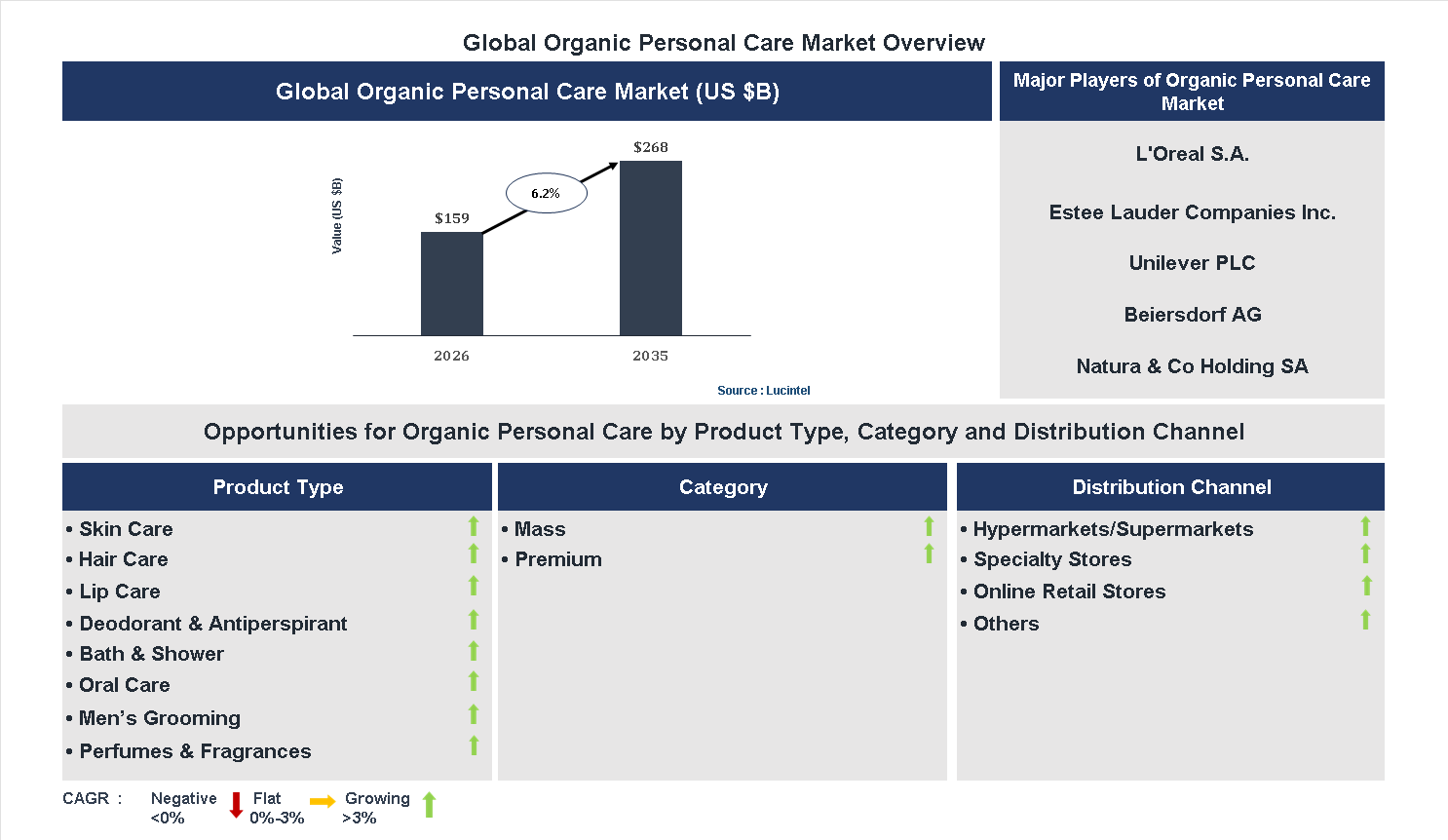
Key data points: The market size in 2035 = $268 billion, growth forecast = 6.2% annually for the next 8 years. Scroll below to get more insights. This market report covers trends, opportunities and forecasts in organic personal care market to 2035 by product type (skin care, hair care, lip care, deodorant & antiperspirant, bath & shower, oral care, men’s grooming, and perfumes & fragrances), category (mass and premium), distribution channel (hypermarkets/supermarkets, specialty stores, online retail stores, and others), and region (North America, Europe, Asia Pacific, and the Rest of the World)
We'll send your sample report shortly.
• Lucintel forecasts that, within the product type category, skin care is expected to witness the highest growth over the forecast period.
• Within the distribution channel category, specialty store is expected to witness the highest growth.
• In terms of region, APAC is expected to witness the highest growth over the forecast period. Gain valuable insights for your business decisions with our comprehensive 150+ page report. Sample figures with some insights are shown below.
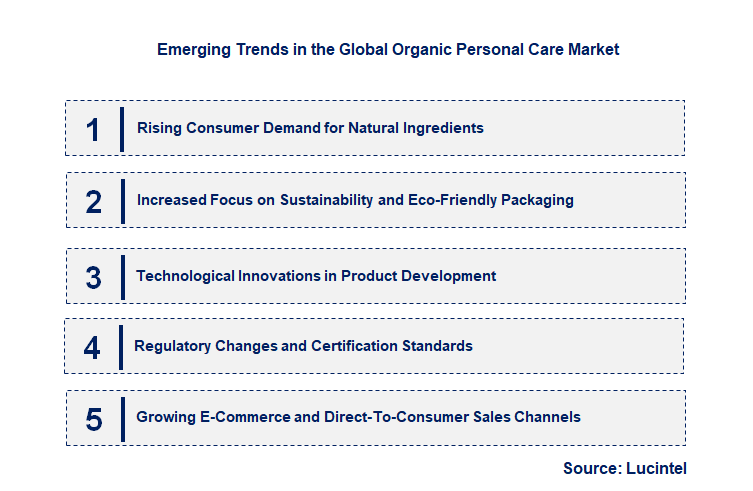
• Rising Consumer Demand for Natural Ingredients: Growing awareness of health and environmental issues is driving consumers to prefer products with natural, organic ingredients. This trend encourages brands to reformulate products, emphasizing transparency and ingredient sourcing. As consumers become more educated, they seek products free from synthetic chemicals, parabens, and artificial fragrances, which boosts market growth and pushes companies to innovate with plant-based and ethically sourced ingredients.
• Increased Focus on Sustainability and Eco-Friendly Packaging: Sustainability is a key concern for consumers, prompting brands to adopt eco-friendly packaging solutions such as biodegradable, recyclable, or refillable containers. This shift reduces environmental impact and aligns with consumer values. Companies are also investing in sustainable sourcing and production practices, which enhances brand reputation and appeals to eco-conscious buyers, further fueling market expansion.
• Technological Innovations in Product Development: Advances in biotechnology, formulation techniques, and ingredient extraction are enabling the creation of more effective and innovative organic personal care products. These technologies improve product stability, shelf life, and efficacy, meeting consumer expectations for high-performance natural products. Innovation also allows for personalized skincare solutions, catering to individual needs and preferences, thus broadening market appeal.
• Regulatory Changes and Certification Standards: Governments and industry bodies are implementing stricter regulations and certification standards for organic personal care products. Certifications like USDA Organic, COSMOS, and Ecocar ensure product authenticity and quality, building consumer trust. These regulations influence product formulation, labeling, and marketing strategies, creating a more transparent and trustworthy market environment that benefits both consumers and reputable brands.
• Growing E-commerce and Direct-to-Consumer Sales Channels: The rise of online shopping platforms has expanded access to organic personal care products, especially in emerging markets. E-commerce enables brands to reach a broader audience, offer personalized experiences, and gather consumer data for targeted marketing. The direct-to-consumer model fosters brand loyalty and reduces distribution costs, accelerating market growth and providing consumers with convenient access to a diverse range of organic products. These trends are fundamentally reshaping the organic personal care market by emphasizing transparency, sustainability, innovation, regulation, and digital engagement. They are driving product development, influencing consumer behavior, and creating new opportunities for brands to differentiate themselves in a competitive landscape. As these trends continue to evolve, the market is poised for sustained growth and increased consumer trust.
• Rising Consumer Demand for Natural Ingredients: The increasing preference for products with natural, organic ingredients is transforming the market. Consumers are prioritizing health, safety, and environmental impact, leading brands to reformulate products with plant-based, chemical-free components. This shift encourages innovation in sourcing and product development, fostering a competitive edge for companies that can meet these expectations. As a result, the market is expanding, with more diverse and sustainable product lines emerging to satisfy consumer needs.
• Technological Innovations in Product Formulation: Advances in formulation technology are enabling the creation of more effective, longer-lasting organic personal care products. Innovations such as plant-based preservatives and natural emulsifiers improve product stability and shelf life without compromising organic integrity. These developments enhance consumer trust and satisfaction, driving sales. Additionally, technology allows for customization and targeted solutions, broadening market appeal and opening new avenues for brands to differentiate themselves in a crowded marketplace.
• Regulatory Frameworks Promoting Transparency: Governments and industry bodies are implementing stricter regulations to ensure product safety and transparency. Clear labeling standards and certification processes are increasing consumer confidence in organic claims. Companies investing in compliance and certification are gaining a competitive advantage, as transparency becomes a key purchasing factor. These regulatory developments also encourage industry-wide quality improvements, fostering trust and encouraging more brands to enter the organic personal care space.
• Growing E-commerce and Digital Marketing Channels: The rise of online shopping and digital marketing is significantly impacting market reach and consumer engagement. E-commerce platforms facilitate access to a broader audience, especially in emerging markets. Digital marketing strategies, including social media and influencer collaborations, enhance brand visibility and credibility. This shift allows brands to educate consumers about organic benefits, gather feedback, and tailor offerings, ultimately accelerating market growth and enabling smaller players to compete with established brands.
• Sustainability Initiatives and Eco-Friendly Packaging: Increasing focus on sustainability is prompting brands to adopt eco-friendly packaging solutions and sustainable sourcing practices. Consumers are more conscious of environmental impacts, favoring brands that demonstrate responsibility. Innovations such as biodegradable packaging and refillable containers reduce waste and appeal to eco-conscious buyers. These initiatives not only enhance brand reputation but also align with global sustainability goals, driving market growth and encouraging industry-wide adoption of greener practices. The overall impact of these developments is a more dynamic, transparent, and consumer-centric organic personal care market. Increased innovation, regulatory support, and digital engagement are expanding market size and consumer trust. Sustainability efforts further strengthen brand loyalty and environmental responsibility. Collectively, these trends are fostering a competitive, sustainable, and rapidly evolving industry poised for continued growth.
• Growing Consumer Preference for Natural Ingredients: The increasing awareness of the harmful effects of synthetic chemicals is driving consumers toward organic personal care products. This shift is supported by a desire for safer, eco-friendly, and sustainable options, leading brands to reformulate and innovate with plant-based, chemical-free ingredients. The demand spans skincare, haircare, and cosmetics, creating opportunities for new product development and market expansion in both developed and emerging markets.
• Expansion of Product Offerings in Skincare and Haircare Segments: The market is witnessing a surge in organic skincare and haircare products, including cleansers, moisturizers, shampoos, and conditioners. Companies are investing in R&D to develop effective, natural formulations that cater to diverse skin and hair types. This expansion is driven by consumer demand for multifunctional, cruelty-free, and eco-conscious products, opening avenues for brands to differentiate themselves and increase market penetration through innovative, targeted solutions.
• Increasing Adoption of E-commerce and Direct-to-Consumer Channels: Digital platforms are transforming how consumers access organic personal care products. E-commerce provides wider reach, convenience, and personalized shopping experiences, enabling brands to connect directly with consumers. The rise of online marketplaces, social media marketing, and subscription models enhances brand visibility and customer engagement. This trend allows companies to gather valuable consumer data, tailor offerings, and accelerate growth in both mature and emerging markets.
• Rising focus on Sustainability and Eco-Friendly Packaging: Sustainability is a key driver influencing consumer purchasing decisions. Brands are adopting eco-friendly packaging solutions such as biodegradable, recyclable, and refillable containers to reduce environmental impact. This focus aligns with consumer values and regulatory pressures, fostering brand loyalty and differentiation. Investment in sustainable packaging also opens opportunities for innovation, partnerships, and certifications, reinforcing the market’s commitment to environmental responsibility and appealing to eco-conscious consumers.
• Strategic Collaborations and Certifications to Enhance Credibility: Partnerships with organic certifying bodies, dermatologists, and eco-label organizations bolster product credibility and consumer trust. Certifications like USDA Organic, Ecocar, and Leaping Bunny serve as quality indicators, influencing purchasing decisions. Collaborations with influencers and wellness experts further promote brand authenticity. These strategies help companies differentiate in a competitive market, expand their consumer base, and meet increasing regulatory standards, ultimately driving growth and market acceptance of organic personal care products. The overall impact of these opportunities is a robust, innovative, and sustainable market poised for continued growth. Companies that leverage consumer preferences for natural, eco-friendly, and ethically produced products will strengthen their market position. As the industry evolves, embracing technological advancements, strategic partnerships, and sustainability initiatives will be crucial for capturing emerging opportunities and ensuring long-term success.
• Growing Consumer Preference for Natural Products: Increasing awareness about health and environmental issues has led consumers to prefer organic personal care products. This shift is driven by concerns over synthetic chemicals, allergens, and environmental sustainability. As consumers seek safer, eco-friendly options, demand for organic skincare, haircare, and cosmetics has surged. This trend encourages brands to innovate with natural ingredients, expand product lines, and adopt transparent marketing practices, ultimately fueling market growth and encouraging industry players to invest in organic formulations.
• Technological Advancements in Product Formulation: Innovations in natural ingredient extraction, preservation, and formulation techniques have significantly enhanced product efficacy and shelf life. Advanced technologies enable the development of more stable, potent, and appealing organic products that meet consumer expectations. These innovations also facilitate the creation of personalized and multifunctional products, broadening market offerings. As technology continues to evolve, companies can improve product quality, reduce costs, and accelerate time-to-market, thereby strengthening their competitive edge in the organic personal care industry.
• Increasing Awareness of Environmental Sustainability: Consumers and companies are increasingly prioritizing eco-friendly practices, such as biodegradable packaging, cruelty-free testing, and sustainable sourcing of ingredients. This environmental consciousness drives demand for products that align with sustainable values, encouraging brands to adopt greener practices. Regulatory bodies are also promoting sustainability standards, which further incentivize companies to innovate eco-conscious products. This focus on sustainability not only enhances brand reputation but also opens new market segments, fostering long-term growth in the organic personal care sector.
• Expansion of E-commerce and Digital Marketing: The rise of online retail platforms and digital marketing strategies has expanded access to organic personal care products globally. E-commerce offers consumers convenience, a wider product selection, and access to niche brands that may not be available in traditional stores. Digital marketing enables targeted advertising, influencer collaborations, and consumer engagement, boosting brand visibility and sales. This digital shift has lowered entry barriers for new entrants and facilitated market penetration, making organic personal care products more accessible and appealing to a broader audience.
• Increasing Regulatory Support and Certification Standards: Governments and industry bodies are implementing stricter regulations and certification standards to ensure product safety, transparency, and authenticity. Certifications like USDA Organic, COSMOS, and Ecocar provide credibility and build consumer trust. Regulatory support encourages companies to adhere to high-quality standards, fostering innovation and differentiation. These standards also help prevent false claims and ensure product integrity, which is vital for consumer confidence and market stability. As regulatory frameworks evolve, they will continue to shape product development and marketing strategies within the organic personal care industry. The challenges in the organic personal care market are:-
• High Product Costs and Price Sensitivity: Organic personal care products often involve higher raw material and production costs due to sustainable sourcing and natural ingredients. These costs translate into higher retail prices, which can limit accessibility for price-sensitive consumers. This price barrier hampers market penetration, especially in emerging economies where consumers are more cost-conscious. Companies must balance quality and affordability, which can be challenging, and may require innovative cost-reduction strategies without compromising product integrity, to sustain growth in a competitive landscape.
• Regulatory Complexities and Certification Processes: Navigating the evolving regulatory environment and obtaining certifications can be complex and time-consuming. Different regions have varying standards, making compliance challenging for global brands. The certification process involves rigorous testing, documentation, and adherence to strict guidelines, which can delay product launches and increase costs. Small and medium-sized enterprises may find it particularly difficult to meet these requirements, potentially limiting innovation and market entry. Ensuring compliance while maintaining product quality remains a significant hurdle for industry players.
• Market Saturation and Intense Competition: The rapid growth of the organic personal care sector has led to increased competition and market saturation. Numerous brands, from startups to established giants, are vying for consumer attention, often with similar product offerings. Differentiating products and establishing brand loyalty becomes challenging in a crowded marketplace. Additionally, price wars and marketing battles can erode profit margins. Companies need to innovate continuously and develop unique value propositions to stand out, which requires significant investment and strategic planning amid intense competition. The organic personal care market is driven by rising consumer demand for natural, sustainable, and technologically advanced products. Innovations and regulatory support foster growth, while challenges such as high costs, regulatory hurdles, and market saturation pose obstacles. Navigating these factors effectively will determine the market’s future trajectory, with opportunities for differentiation and expansion for proactive industry players. Overall, the market’s growth potential remains strong, provided companies can address these challenges while leveraging emerging drivers.
• LOreal S.A.
• Estee Lauder Companies Inc.
• Unilever PLC
• Beiersdorf AG
• Natura & Co Holding SA
• Shiseido Company, Limited
• Procter & Gamble Company
• Groupe Rocher
• Carter and Jane LLC
• Weleda AG
• Skin Care
• Hair Care
• Lip Care
• Deodorant & Antiperspirant
• Bath & Shower
• Oral Care
• Men’s Grooming
• Perfumes & Fragrances
• Mass
• Premium
• Hypermarkets/Supermarkets
• Specialty Stores
• Online Retail Stores
• Others
• North America
• Europe
• Asia Pacific
• The Rest of the World
• United States: The U.S. market has seen rapid growth with a focus on clean-label products, transparency, and cruelty-free certifications. Major brands are expanding their organic lines, and e-commerce channels are boosting accessibility. Regulatory bodies are emphasizing ingredient safety, encouraging innovation in natural formulations. Consumer demand for sustainable packaging and vegan options is also rising, making the U.S. a leader in product development and marketing strategies within the organic personal care sector.
• China: China’s organic personal care market is expanding due to rising middle-class income and increasing health consciousness. Local brands are gaining popularity by offering affordable, natural products tailored to regional preferences. International brands are entering the market, adapting to local tastes and regulatory standards. E-commerce platforms like Tmall and JD.com are crucial for distribution, and government policies are supporting organic certification processes, fostering growth and consumer trust in organic products.
• Germany: Germany remains a mature market with a strong emphasis on environmental sustainability and product efficacy. Consumers prefer products with certified organic ingredients and minimal synthetic chemicals. The country’s strict regulations and certification standards, such as BDIH and NATRUE, ensure product authenticity. Innovation in biodegradable packaging and plant-based formulations is prominent. The market also benefits from a high level of consumer awareness and a preference for cruelty-free and vegan products, driving continuous product development.
• India: The Indian organic personal care market is witnessing rapid growth fueled by increasing awareness of natural ingredients and traditional Ayurveda practices. Local brands are gaining prominence by offering affordable, herbal, and organic products. The rise of e-commerce and social media marketing is expanding reach, especially among younger consumers. Government initiatives promoting organic farming and certification are supporting industry growth. Consumers are increasingly seeking chemical-free, herbal, and sustainable products, leading to innovation in formulations and packaging.
• Japan: Japan’s market is characterized by a high demand for premium, high-quality organic personal care products. Consumers prioritize safety, efficacy, and natural ingredients, often influenced by traditional herbal medicine. The market is driven by aging populations seeking gentle, effective skincare solutions. Certification standards such as JAS (Japanese Agricultural Standards) ensure product authenticity. Companies are investing in research to develop innovative, plant-based formulations, and eco-friendly packaging aligns with Japan’s strong environmental consciousness. The market continues to evolve with a focus on luxury and wellness-oriented products.


• LOreal S.A.
• Estee Lauder Companies Inc.
• Unilever PLC
• Beiersdorf AG
• Natura & Co Holding SA
• Shiseido Company, Limited
• Procter & Gamble Company
• Groupe Rocher
• Carter and Jane LLC
• Weleda AG Q6. Which organic personal care market segment will be the largest in future? Answer: Lucintel forecasts that, within the product type category, skin care is expected to witness the highest growth over the forecast period. Q7. In organic personal care market, which region is expected to be the largest in next 5 years? Answer: In terms of region, APAC is expected to witness the highest growth over the forecast period. Q8. Do we receive customization in this report? Answer: Yes, Lucintel provides 10% customization without any additional cost.


Choose a license that fits your team. Instant PDF delivery.
Prices exclude taxes. Instant delivery. Custom licensing available on request.
Market Report · July 20, 2026
Market Report · July 15, 2026
Market Report · July 15, 2026
Trusted partner for strategic intelligence and business growth


Receive a complimentary market analysis tailored to your industry. Our analysts will identify key growth opportunities and competitive dynamics specific to your business.

Market size, growth rate, and key trend analysis for your specific sector.

Top competitor positioning and market share analysis.

Strategic recommendations backed by data-driven insights.
Get curated market intelligence and competitive moves straight to your inbox.
By subscribing, you agree to receive our monthly insights. Unsubscribe anytime.
Receive a complimentary market analysis tailored to your industry. Our analysts will identify key growth opportunities and competitive dynamics specific to your business.
Market size, growth rate, and key trend analysis for your specific sector.
Top competitor positioning and market share analysis.
Strategic recommendations backed by data-driven insights.
Get curated market intelligence, emerging trends, and competitive moves straight to your inbox each month.
By subscribing, you agree to receive our monthly insights. Unsubscribe anytime.
We'll send your sample report shortly.