
Market Report · May 18, 2026

This market report covers trends, opportunities, and forecasts in the global optical genome mapping market to 2031 by technology (dna labeling and staining technology, imaging systems, fluorescence microscopy, single molecule imaging, and data analysis and bioinformatics software), end use industry (biotechnology & pharmaceutical companies, hospitals & clinical laboratories, and academic research institutes), and region (North America, Europe, Asia Pacific, and the Rest of the World)
We'll send your sample report shortly.
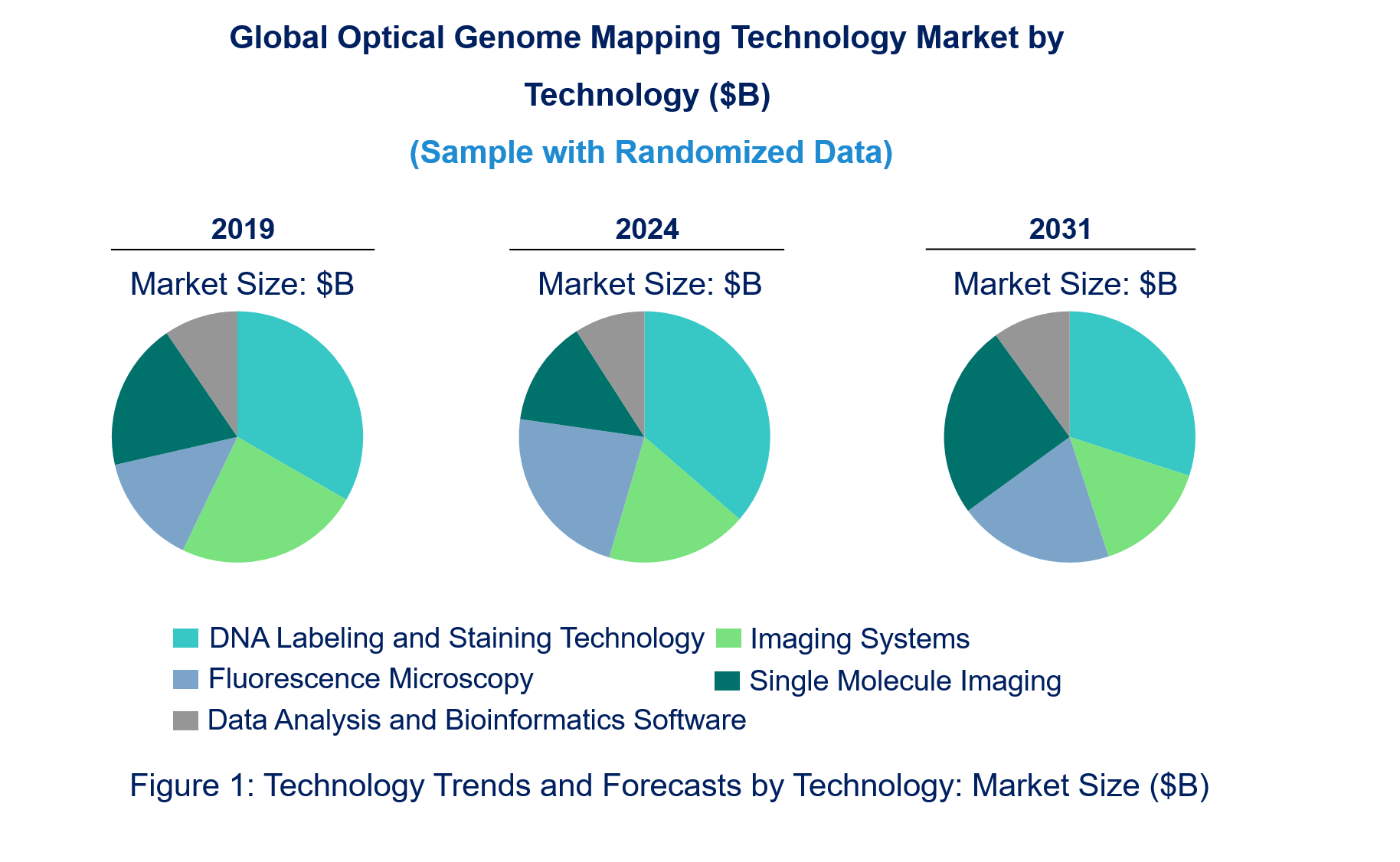
• Advances in DNA labeling and staining technology: The use of more precise and efficient labeling techniques has replaced the more traditional DNA labeling methods used in the past. Resolution and accuracy in genome mapping have improved dramatically.
• Integration of AI and machine learning in data analysis: AI-based algorithms are increasingly being integrated into bioinformatics software to enhance the speed of data processing and interpretation, thus speeding up the genome analysis process.
• Development of advanced imaging systems: The shift from conventional fluorescence microscopy to more advanced single-molecule imaging systems provides higher resolution for mapping complex genomes, thus increasing the demand for more advanced imaging technologies.
• Portable and on-site genome mapping systems: The transition to compact and portable optical genome mapping platforms enables on-site genome analysis, reducing dependence on centralized labs and making diagnostics more accessible.
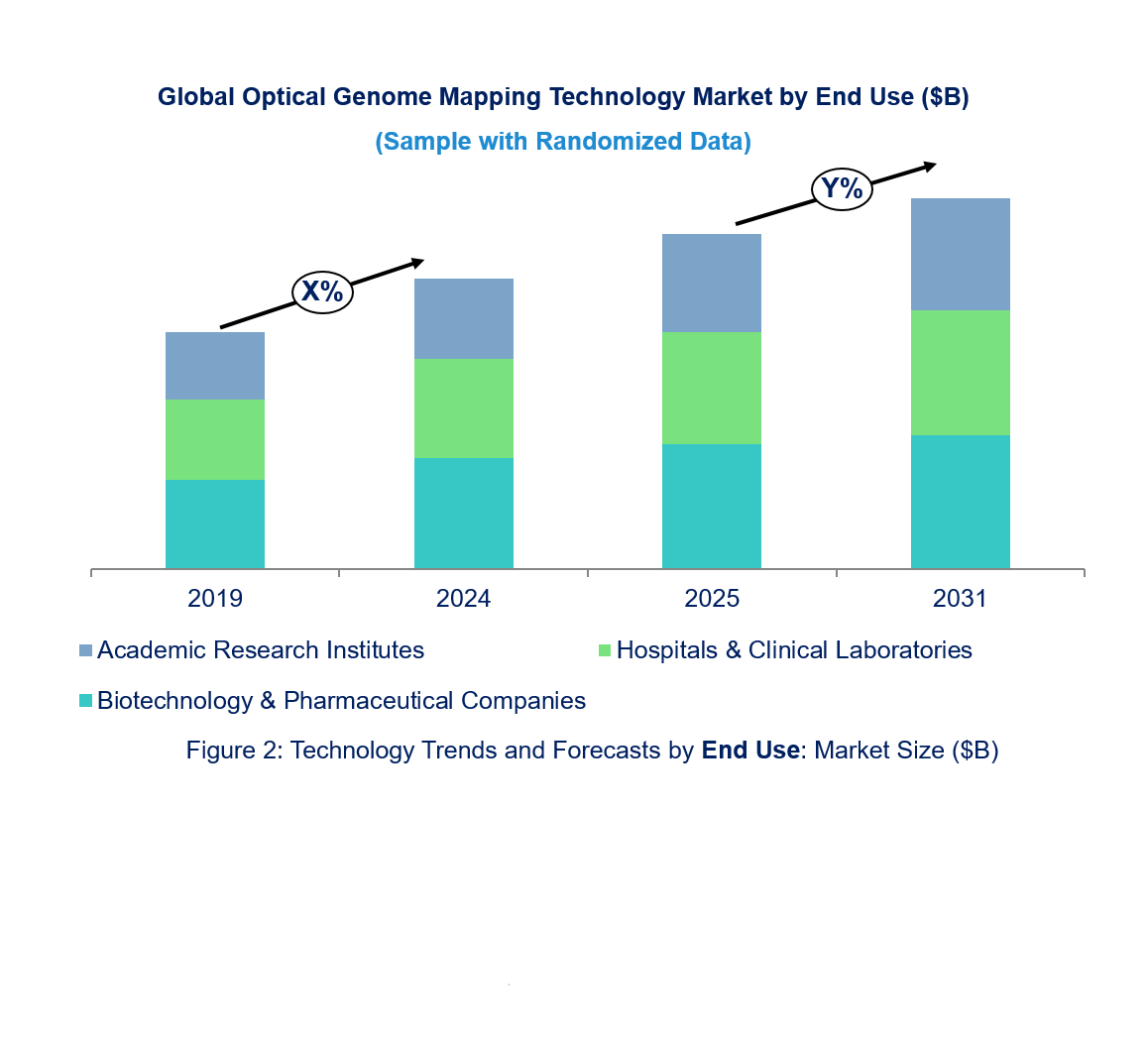
• Biotechnology and pharmaceutical industries: With the advancement of optical genome mapping techniques, biotech, and pharmaceutical companies are increasingly applying these tools in drug development, especially in genomic research and personalized medicine. All of these trends point to growth in the market for more precise, efficient, and accessible optical genome mapping technologies.
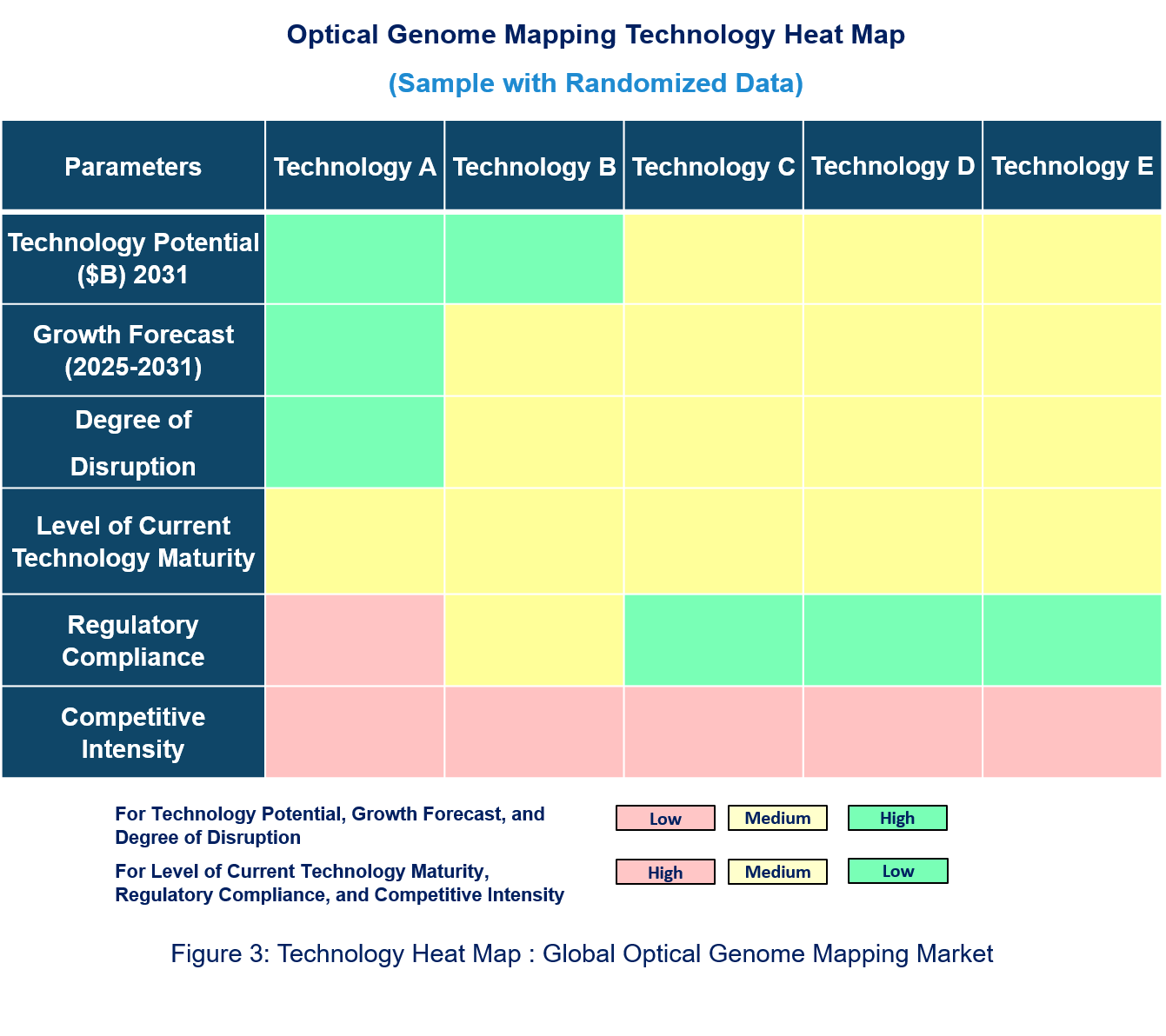
• Potential in Technology: Optical genome mapping holds substantial potential in advancing genomics by providing high-resolution, long-read mapping that reveals structural variations in the genome. It supports diverse applications, including disease research, personalized medicine, and diagnostics, improving accuracy over traditional methods like PCR and sequencing.
• Degree of Disruption: Optical genome mapping is poised to disrupt traditional methods of genomic analysis by providing faster and more detailed results. The technology enables researchers and clinicians to find genomic alterations previously undetectable, thus revolutionizing precision medicine and molecular diagnostics, and potentially replacing some older techniques.
• Current Technology Maturity Level: Optical genome mapping is rapidly advancing, yet the technology is still under development. Commercial systems are available; however, scalability, cost-efficiency, and data analysis issues remain. Widespread application in clinical and research environments will require continuous advancements in both hardware and software.
• Regulatory Compliance: Optical genome mapping technologies face significant regulatory scrutiny, especially in clinical applications. Adhering to standards such as FDA approval and CLIA regulations is crucial for gaining market acceptance, ensuring patient safety, and aligning with legal frameworks in healthcare. The optical genome mapping technology promises transformative applications, but regulatory hurdles and technological improvements must be addressed for broader use.
• Bionano Genomics developed the Saphyr system, a breakthrough in genome mapping that works alongside next-generation sequencing to speed up the analysis of whole genomes for better precision.
• Nucleome Informatics focuses on bioinformatics software for AI-enabled understanding of genetic diseases by integrating optical genome mapping with other types of genomic data.
• Praxis Genomics developed novel DNA labeling methods that increase the resolution of optical genome maps, enhancing the accuracy of genomic research.
• MedGenome is broadening its genomic services by incorporating optical genome mapping with its already available next-generation sequencing offerings to deliver more comprehensive genomic diagnostics for personalized medicine.
• Source Bioscience is exploring partnerships to create novel applications for optical genome mapping to enhance clinical applications, including cancer genomics and rare genetic disease research.
• PerkinElmer is investing in high-throughput genome mapping technologies to meet the increasing demand for precision medicine, focusing on large-scale genomic data analysis.
• Genohub Inc. is now embedding optical genome mapping platforms in cloud-based genomics services for the convenience of researchers and clinicians around the globe.
• Hofkens Lab is contributing to advancements in fluorescence microscopy for single-molecule imaging in genomic research applications.
• Cerba has been working on integrating genomic diagnostics, especially the inclusion of optical genome mapping technology for more effective detection and clinical research.
• INRAE is leading projects that apply optical genome mapping to agricultural genomics, particularly in improving crop breeding and livestock genetics. These developments show the growing adoption and diversification of optical genome mapping technologies across different industries, from clinical diagnostics to agricultural genomics.
• Increasing demand for personalized medicine: Optical genome mapping provides more accurate genetic analysis, which increases the demand for personalized medicine to create specific therapies for individual patients.
• Improving genomic research: The ongoing development of optical genome mapping technologies supports the increasing field of genomic research, enabling breakthroughs in understanding genetic diseases and mutations.
• Increased accessibility of genome mapping: Portable and cost-effective mapping systems are making optical genome mapping more accessible to research and healthcare providers, further increasing its use in both sectors.
• Increased R&D investment in biotech and pharma: Increased R&D investments in biotech and pharma drive the usage of optical genome mapping in drug discovery, genetic diagnostics, and clinical trials. Challenges in the optical genome mapping market include:
• High costs of optical genome mapping systems: The high initial cost of optical genome mapping platforms limits their widespread adoption, particularly in smaller research institutions and clinics.
• Complexity in data interpretation: The massive amount of data generated from genome mapping requires advanced bioinformatics tools for analysis, which can be complex and resource-intensive for some institutions.
• Regulatory and ethical issues: Genomic data in clinical applications poses ethical and regulatory concerns, mainly about privacy and security, which may create barriers to market growth. The optical genome mapping market has seen fast development with the emergence of technologies related to DNA labeling, imaging systems, and data analysis, revolutionizing genomic research and enabling the development of personalized medicine, biotechnology, and the pharmaceutical industry. However, there are still several cost issues and the complexity of large amounts of data to be overcome for broader applications.
• Bionano Genomics
• Nucleome Informatics Private Limited
• Praxis Genomics
• Sourcebio International Limited (Source Bioscience)
• Medgenome
• INRAE
• Technology Readiness by Technology Type: DNA labeling and staining are mature technologies, broadly applicable in genomics. Imaging technologies, like fluorescence microscopy, are well-developed with continued evolution. Single-molecule imaging is an emerging field that holds much promise. Analysis software is improving rapidly, especially with AI. Competitiveness is greatest for imaging and software, while compliance is critical for all of the technologies. Each of these technologies plays a crucial role in research, diagnostics, and personalized medicine.
• Competitive Intensity and Regulatory Compliance: In the optical genome mapping market in the competition is tough in DNA labeling, imaging systems, and bioinformatics software, where participants are innovating to achieve higher resolution and speed. Imaging systems and bioinformatics are highly competitive, while single-molecule imaging is evolving. There are regulatory challenges in clinical applications, and compliance is required to ensure accuracy, privacy, and FDA approvals.
• Disruption Potential by Technology Type: DNA labeling and staining improve the accuracy of genome mapping. Imaging systems, such as fluorescence microscopy and single-molecule imaging, offer high-resolution DNA visualization. Fluorescence microscopy and single-molecule imaging provide real-time genomic structure insights. Data analysis and bioinformatics software that rely on AI and machine learning improve the processing of genomic data for better diagnostics and treatments. Together, these technologies are likely to revolutionize genome mapping with much greater precision and speed.
• DNA Labeling and Staining Technology
• Imaging Systems
• Fluorescence Microscopy
• Single Molecule Imaging
• Data Analysis and Bioinformatics Software
• Biotechnology & Pharmaceutical Companies
• Hospitals & Clinical Laboratories
• Academic Research Institutes
• North America
• Europe
• Asia Pacific
• The Rest of the World
• Latest Developments and Innovations in the Optical Genome Mapping Technologies
• Companies / Ecosystems
• Strategic Opportunities by Technology Type




Choose a license that fits your team. Instant PDF delivery.
Prices exclude taxes. Instant delivery. Custom licensing available on request.
Market Report · May 18, 2026
Market Report · May 18, 2026
Market Report · May 18, 2026
Trusted partner for strategic intelligence and business growth


Receive a complimentary market analysis tailored to your industry. Our analysts will identify key growth opportunities and competitive dynamics specific to your business.

Market size, growth rate, and key trend analysis for your specific sector.

Top competitor positioning and market share analysis.

Strategic recommendations backed by data-driven insights.
Get curated market intelligence and competitive moves straight to your inbox.
By subscribing, you agree to receive our monthly insights. Unsubscribe anytime.
Receive a complimentary market analysis tailored to your industry. Our analysts will identify key growth opportunities and competitive dynamics specific to your business.
Market size, growth rate, and key trend analysis for your specific sector.
Top competitor positioning and market share analysis.
Strategic recommendations backed by data-driven insights.
Get curated market intelligence, emerging trends, and competitive moves straight to your inbox each month.
By subscribing, you agree to receive our monthly insights. Unsubscribe anytime.
We'll send your sample report shortly.