
Online Poker Market Trends and Forecast
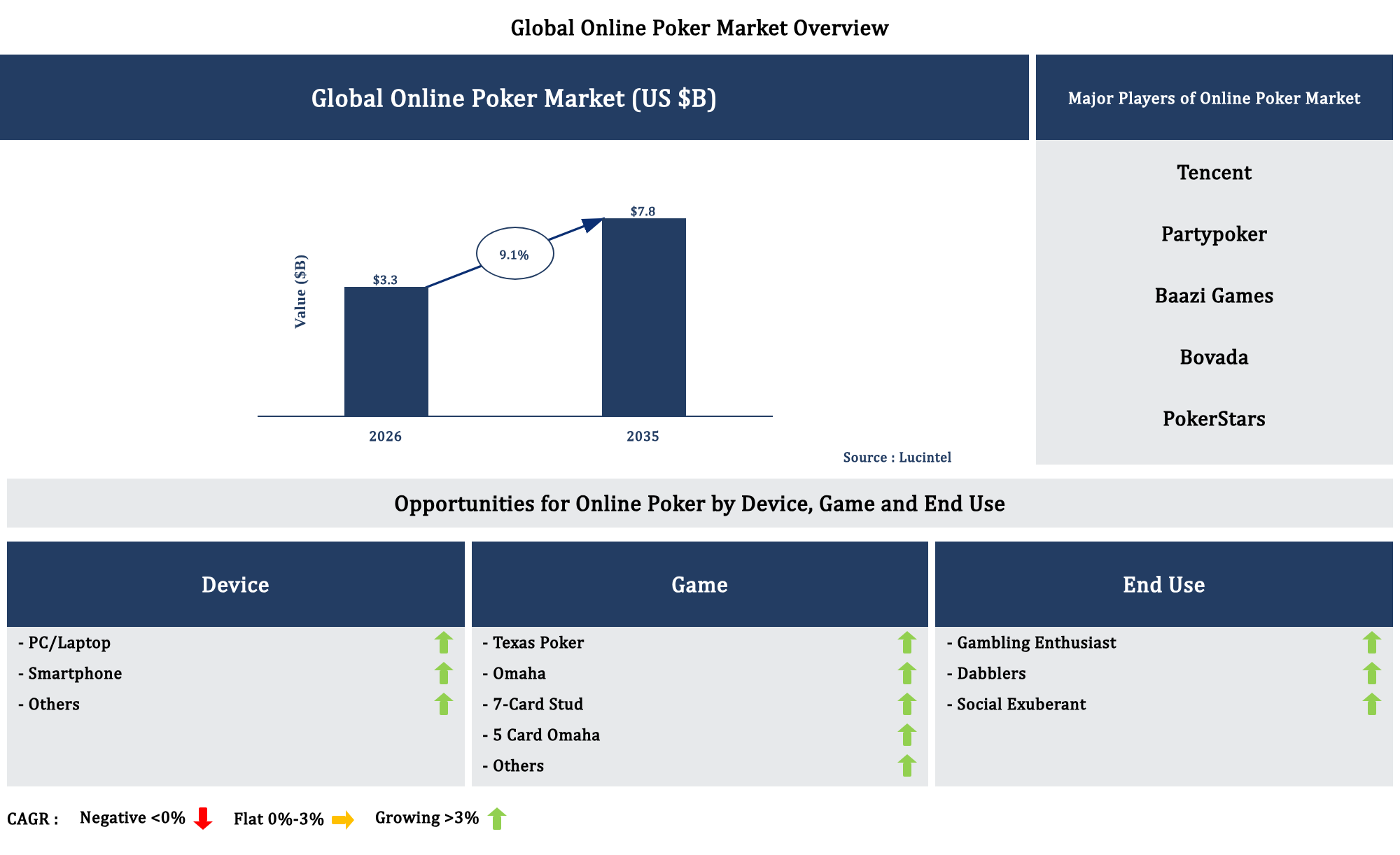
The future of the global online poker market looks promising with opportunities in the gambling enthusiast, dabbler, and social exuberant markets. The global online poker market is expected to reach an estimated $7,866 million by 2035 with a CAGR of 9.1% from 2026 to 2035. The major drivers for this market are the increasing use of secure payment gateways boosting user trust, the growing adoption of mobile-first gaming experiences, and the rising use for number of online poker platforms & apps.
• Lucintel forecasts that, within the device category, smartphone is expected to witness higher growth over the forecast period.
• Within the application category, gambling enthusiast is expected to witness the highest growth.
• In terms of region, APAC is expected to witness the highest growth over the forecast period.
Gain valuable insights for your business decisions with our comprehensive 150+ page report. Sample figures with some insights are shown below.
Emerging Trends in the Online Poker Market
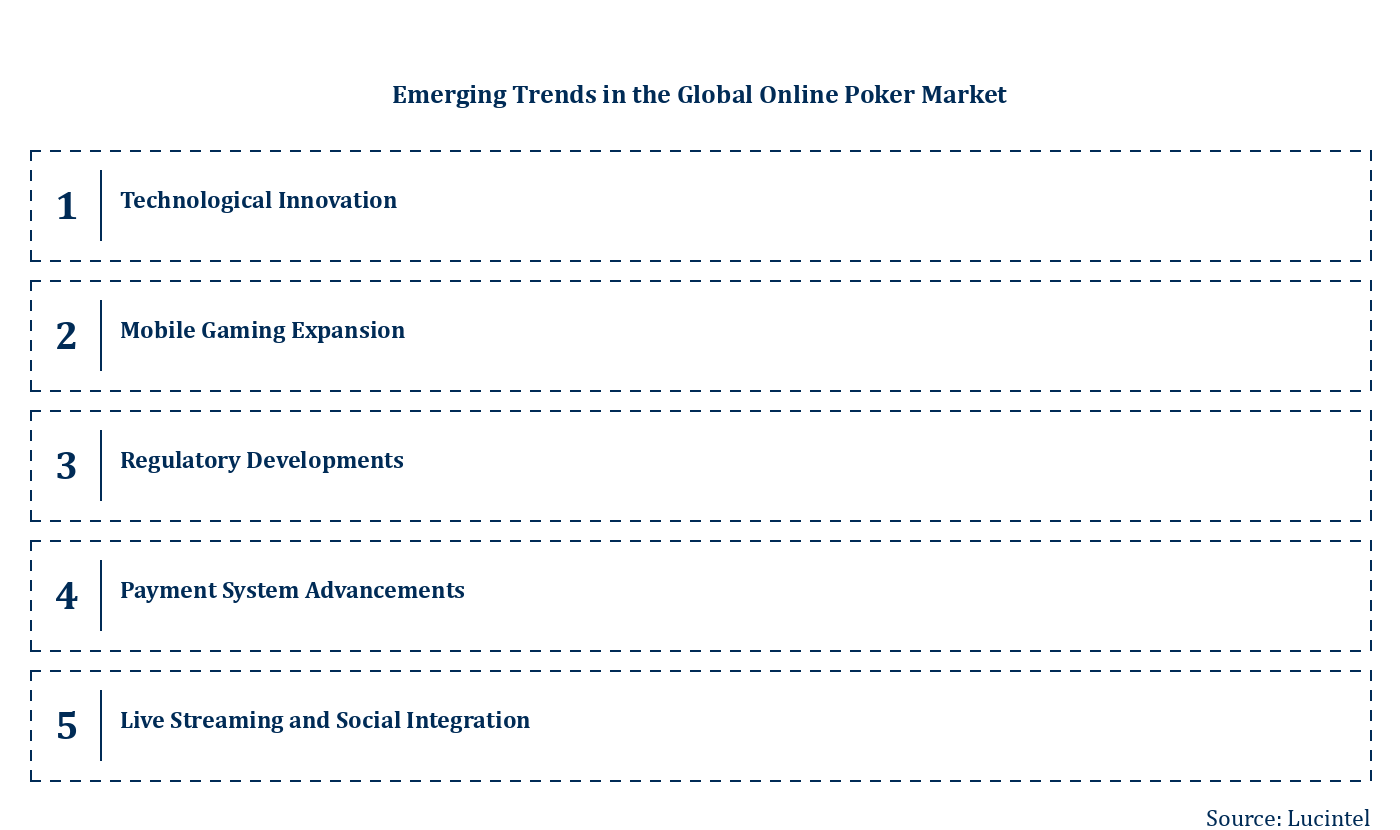
The online poker market is experiencing rapid evolution driven by technological advancements, changing consumer preferences, and regulatory shifts. As digital platforms become more sophisticated, players demand more immersive, secure, and accessible experiences. Innovations in payment systems, mobile gaming, and live streaming are transforming how players engage with poker online. Additionally, regulatory developments across different regions influence market growth and operational strategies. The market is also witnessing increased competition among operators, leading to improved services and promotional offers. These trends collectively are shaping a dynamic landscape that offers new opportunities and challenges for industry stakeholders, ultimately redefining the future of online poker.
• Technological Innovation: Enhanced user experience through AI and VR the integration of artificial intelligence and virtual reality is revolutionizing online poker by creating more realistic and engaging environments. AI-powered tools assist players with strategy and game analysis, improving skill levels and game fairness. VR technology offers immersive experiences that mimic live poker rooms, attracting more players seeking authentic interactions. These innovations increase user engagement, extend session durations, and attract new demographics, thereby expanding the market. As technology continues to evolve, online poker platforms are investing heavily to stay competitive and meet the rising expectations of tech-savvy players.
• Mobile Gaming Expansion: Growth of smartphone and tablet platforms the proliferation of smartphones and tablets has significantly contributed to the growth of online poker. Mobile-friendly interfaces and dedicated apps enable players to access games anytime and anywhere, increasing convenience and participation. This trend has led to a surge in casual players and those who prefer quick, on-the-go gaming sessions. Operators are optimizing their platforms for mobile devices, ensuring seamless gameplay and secure transactions. The convenience of mobile gaming is also attracting younger audiences, diversifying the player base. As mobile technology advances, the market is expected to see continued growth and innovation in mobile poker offerings.
• Regulatory Developments: Impact of legal frameworks and licensing regulatory changes across various jurisdictions are shaping the online poker landscape by either opening new markets or imposing restrictions. Countries legalizing online poker create opportunities for operators to expand their services legally, boosting market size. Conversely, stringent regulations and licensing requirements can pose barriers to entry and increase compliance costs. Responsible gambling initiatives and player protection laws are also influencing platform operations. These regulatory shifts require operators to adapt their strategies, invest in compliance, and foster trust with players. Overall, evolving legal frameworks are a critical factor influencing market growth and stability.
• Payment System Advancements: Secure and diverse transaction options innovations in payment technology are facilitating smoother, faster, and more secure transactions for online poker players. The adoption of cryptocurrencies, e-wallets, and instant banking options enhances user convenience and privacy. These advancements reduce transaction times and increase trust, encouraging more deposits and withdrawals. Additionally, regional payment preferences influence platform offerings, requiring operators to diversify payment methods to cater to global audiences. Secure payment systems are vital for regulatory compliance and customer confidence, directly impacting player retention and market expansion. As payment technology continues to evolve, it will further streamline the online poker experience.
• Live Streaming and Social Integration: Enhancing community engagement yhe integration of live streaming and social features is transforming online poker into a more interactive and community-driven experience. Platforms now host live tournaments, allowing viewers to watch and learn from professional players, increasing engagement. Social features such as chat rooms, leaderboards, and sharing options foster a sense of community among players. These elements attract new users and retain existing ones by making the experience more social and entertaining. The rise of influencer partnerships and online poker communities also amplifies market visibility. This trend is making online poker more accessible, engaging, and competitive, thereby expanding its appeal and market reach.
In summary, these emerging trends—technological innovation, mobile expansion, regulatory changes, payment advancements, and social integration—are collectively reshaping the online poker market. They are driving growth, enhancing user experience, and broadening the market scope, positioning online poker as a more dynamic and accessible form of entertainment.
Recent Developments in the Online Poker Market
The online poker market has experienced rapid evolution driven by technological advancements, changing consumer preferences, and regulatory shifts. These developments are shaping the industry landscape, creating new opportunities for operators and investors alike. As digital platforms become more sophisticated, the market is poised for significant growth, attracting a broader demographic and increasing revenue streams. Understanding these key developments is essential for stakeholders aiming to capitalize on emerging trends and maintain competitive advantage in this dynamic environment.
• Growth of Mobile Poker Platforms: The proliferation of smartphones and improved mobile technology have made online poker more accessible, allowing players to enjoy games anytime and anywhere. Mobile platforms offer seamless user experiences, increasing player engagement and retention. This shift has expanded the market reach to a broader demographic, including casual players and younger audiences. As mobile usage continues to rise, operators investing in mobile-optimized platforms are positioned for substantial growth and increased market share.
• Integration of Artificial Intelligence (AI): AI technologies are transforming online poker by enhancing game fairness, security, and personalized user experiences. AI-driven algorithms detect cheating and fraud more effectively, building trust among players. Additionally, AI provides tailored game recommendations and real-time analytics, improving player engagement and satisfaction. This technological integration boosts operational efficiency and helps operators differentiate themselves in a competitive market, ultimately driving revenue growth and customer loyalty.
• Adoption of Cryptocurrency Payments: The acceptance of cryptocurrencies like Bitcoin and Ethereum is gaining traction in the online poker industry, offering faster, more secure, and anonymous transactions. Cryptocurrency payments reduce transaction costs and processing times, attracting international players and expanding market reach. This development also appeals to a tech-savvy demographic seeking privacy and innovative payment options. As regulatory frameworks evolve, the integration of cryptocurrencies is expected to further facilitate global expansion and increase transaction transparency.
• Regulatory Developments and Legalization: Progressive regulatory changes and legalization efforts in various jurisdictions are opening new markets for online poker operators. Clear legal frameworks provide legitimacy, boost consumer confidence, and attract investment. Regulatory compliance ensures fair play and player protection, fostering sustainable growth. As more regions legalize online poker, operators can expand their services, increase market penetration, and develop localized offerings, significantly impacting overall industry revenue and competitiveness.
• Emergence of Live Dealer Poker: Live dealer poker combines the convenience of online play with the social interaction of traditional casinos, offering real-time, human-hosted games streamed via high-quality video. This format enhances player trust and engagement by providing transparency and a more authentic experience. The rise of live dealer options attracts high-value players and casual gamers alike, boosting revenue and customer retention. As technology advances, live dealer poker is expected to become a key differentiator, driving industry growth and innovation.
The overall impact of these developments is a more dynamic, accessible, and secure online poker market. Increased technological integration, regulatory clarity, and innovative payment options are expanding the player base and revenue streams. These opportunities are fostering industry growth, attracting new demographics, and enhancing user experiences, positioning the online poker market for sustained expansion and competitive strength in the evolving digital landscape.
Strategic Growth Opportunities in the Online Poker Market
The online poker market is experiencing rapid expansion driven by technological advancements, increasing internet penetration, and evolving consumer preferences. The proliferation of mobile devices and secure payment options has made online poker more accessible globally. Strategic investments, innovative platforms, and regulatory developments are shaping growth trajectories. Market players are focusing on enhancing user experience and expanding into emerging regions to capitalize on untapped potential, creating a highly competitive landscape with significant opportunities for revenue generation and market dominance.
• Growing Popularity of Mobile Poker Apps: The widespread adoption of smartphones and tablets has facilitated easy access to online poker platforms. Mobile apps offer convenience, real-time gameplay, and seamless user interfaces, attracting a broader demographic. Enhanced mobile security features and optimized gaming experiences are further boosting user engagement. As mobile usage continues to rise globally, the online poker market benefits from increased participation, especially among younger audiences and casual players, driving overall market growth.
• Expansion into Emerging Markets with Increasing Internet Access: Emerging economies in Asia, Africa, and Latin America present significant growth opportunities due to rising internet penetration and smartphone adoption. Regulatory relaxations and government initiatives are creating favorable environments for online gambling. Localized platforms tailored to regional preferences and payment methods are attracting new players. This expansion helps companies diversify revenue streams, tap into large customer bases, and establish early market presence, fueling long-term growth prospects.
• Integration of Advanced Technologies like AI and VR for Enhanced Gaming Experience: Incorporating artificial intelligence (AI) and virtual reality (VR) into online poker platforms offers immersive, personalized, and secure gaming environments. AI-driven algorithms improve game fairness, fraud detection, and customer support, while VR creates realistic casino experiences from home. These innovations increase user engagement, retention, and attract tech-savvy players. As technology adoption accelerates, online poker providers can differentiate themselves and capture higher market share through innovative offerings.
• Strategic Partnerships and Acquisitions to Expand Market Reach: Collaborations between online poker platforms, payment providers, and technology firms enable market expansion and service diversification. Acquisitions of smaller players help consolidate market share and acquire new customer bases. Strategic alliances facilitate entry into regulated markets and enhance brand visibility. These initiatives support product innovation, improve operational efficiency, and foster customer trust, ultimately strengthening competitive positioning and accelerating growth in a highly dynamic industry.
• Implementation of Stricter Regulations and Licensing to Ensure Market Legitimacy: Regulatory frameworks are evolving to promote responsible gaming, prevent fraud, and ensure fair play. Licensing requirements increase market credibility and attract serious players. Compliance with local laws enables companies to operate legally and expand into new jurisdictions. While regulations may pose challenges, they also create barriers to entry for unlicensed competitors, fostering a safer environment that encourages sustained growth and investor confidence in the online poker market.
The overall impact of these opportunities is a robust, innovative, and expanding online poker market. By leveraging technological advancements, regional growth, strategic collaborations, and regulatory compliance, industry players can enhance user experiences, increase market penetration, and ensure sustainable development. These opportunities collectively drive revenue growth, market stability, and global competitiveness, shaping a promising future for online poker worldwide.
Online Poker Market Driver and Challenges
The online poker market is influenced by a variety of technological, economic, and regulatory factors that shape its growth and sustainability. Advances in internet infrastructure and mobile technology have made online poker more accessible to a global audience. Economic factors such as disposable income levels and the rise of digital payment systems facilitate user engagement and transaction ease. Regulatory frameworks across different regions impact market expansion, with some countries embracing online gambling while others impose restrictions. Additionally, technological innovations like AI and data analytics enhance user experience and security. These drivers and challenges collectively determine the market‘s trajectory, requiring stakeholders to adapt strategies accordingly to capitalize on opportunities and mitigate risks.
The factors responsible for driving the online poker market include:
• Technological Advancements: The proliferation of high-speed internet, smartphones, and secure payment gateways has significantly expanded access to online poker platforms. Innovations such as live streaming, augmented reality, and AI-driven game personalization enhance user engagement and experience. These technological improvements reduce barriers to entry, attract new players, and foster loyalty among existing users. As technology continues to evolve, online poker becomes more immersive, reliable, and secure, encouraging sustained growth and market penetration across diverse demographics and geographies.
• Increasing Smartphone Penetration: The widespread adoption of smartphones globally has been a key driver for the online poker market. Mobile devices enable players to access poker games anytime and anywhere, increasing participation rates. The convenience of mobile gaming, coupled with user-friendly apps and optimized interfaces, attracts a broader audience, including casual players and professionals. This shift from desktop to mobile platforms has led to higher engagement levels, increased revenue streams for operators, and expanded market reach, especially in emerging economies with growing smartphone adoption.
• Growing Popularity of Online Gaming and Esports: The rising popularity of online gaming and esports has positively impacted the online poker market. The gaming community‘s familiarity with digital platforms and competitive environments translates well to online poker. Marketing collaborations, tournaments, and social features foster community building and brand loyalty. The integration of social media and live streaming further amplifies visibility and user interaction. As online gaming continues to grow, it creates a fertile environment for online poker to attract new players, retain existing ones, and develop innovative formats to stay competitive.
• Regulatory Developments and Legal Frameworks: Evolving regulatory landscapes significantly influence the online poker market. Countries adopting favorable laws and licensing regimes create a secure environment for operators and players, boosting market confidence and participation. Conversely, stringent regulations, bans, or ambiguous legal statuses hinder growth and limit market access. Regulatory clarity around issues such as licensing, taxation, and anti-money laundering measures is crucial for sustainable expansion. Market players often seek to operate within compliant frameworks to avoid legal risks and build trust with users, which directly impacts market stability and growth prospects.
• Increasing Investment and Mergers & Acquisitions: The online poker market has seen substantial investments from venture capitalists, private equity firms, and established gaming companies. These investments facilitate platform upgrades, marketing campaigns, and geographic expansion. Mergers and acquisitions enable companies to consolidate market share, diversify offerings, and leverage technological synergies. Such financial activities boost innovation, improve service quality, and enhance competitive positioning. As investment flows increase, the market is poised for rapid growth, although it also faces challenges related to integration, regulatory compliance, and market saturation.
The challenges facing online poker market include
• Regulatory Uncertainty: The online poker industry faces significant regulatory challenges due to inconsistent laws across regions. Some countries have outright bans, while others have complex licensing procedures, creating an uncertain environment for operators. This inconsistency hampers market expansion, limits cross-border operations, and increases compliance costs. Regulatory uncertainty also deters new entrants and affects investor confidence. Companies must navigate a patchwork of legal frameworks, which can delay product launches and restrict market access, ultimately impacting revenue growth and market stability.
• Security and Fraud Risks: Online poker platforms are vulnerable to cyber threats, hacking, and fraudulent activities. Ensuring the security of user data, financial transactions, and gameplay integrity is paramount. Breaches can lead to loss of customer trust, legal penalties, and financial damages. The industry must invest heavily in cybersecurity measures, fraud detection systems, and responsible gaming practices. Failure to address these risks can result in reputational damage and regulatory sanctions, posing a significant challenge to sustainable growth.
• Market Saturation and Intense Competition: As the online poker market matures, it faces saturation in key regions, leading to increased competition among operators. Differentiating offerings becomes difficult, and customer acquisition costs rise. Market players must innovate continuously to retain users and attract new ones, which can be resource-intensive. Additionally, the emergence of alternative gambling options and entertainment platforms diverts potential players. This competitive landscape pressures profit margins and necessitates strategic investments in marketing, technology, and customer experience to maintain market share.
The online poker market is driven by technological innovations, increased mobile adoption, and favorable regulatory developments, which collectively foster growth and expansion. However, challenges such as regulatory uncertainty, security concerns, and market saturation pose significant hurdles. The interplay of these factors will shape the market‘s future trajectory, requiring stakeholders to adapt proactively. Strategic investments, technological advancements, and regulatory compliance will be essential for sustained success, while addressing security and competitive pressures will determine long-term stability and profitability. Overall, the market holds promising growth potential amid evolving technological and regulatory landscapes, provided challenges are effectively managed.
List of Online Poker Companies
Companies in the market compete on the basis of product quality offered. Major players in this market focus on expanding their manufacturing facilities, R&D investments, infrastructural development, and leverage integration opportunities across the value chain. With these strategies online poker companies cater increasing demand, ensure competitive effectiveness, develop innovative products & technologies, reduce production costs, and expand their customer base. Some of the online poker companies profiled in this report include-
• Tencent
• Partypoker
• Baazi Games
• Bovada
• PokerStars
• American Cardroom
• Ignition
• Pocket52
• Arkadium
• Delta
Online Poker Market by Segment
The study includes a forecast for the global online poker market by device, game, end use, and region.
Online Poker Market by Device [Value from 2019 to 2035]:
• PC/Laptop
• Smartphone
• Others
Online Poker Market by Game [Value from 2019 to 2035]:
• Texas Poker
• Omaha
• 7-Card Stud
• 5 Card Omaha
• Others
Online Poker Market by End Use [Value from 2019 to 2035]:
• Gambling Enthusiast
• Dabblers
• Social Exuberant
Online Poker Market by Region [Value from 2019 to 2035]:
• North America
• Europe
• Asia Pacific
• The Rest of the World
Country Wise Outlook for the Online Poker Market
The online poker market has experienced significant growth and transformation globally, driven by technological advancements, changing consumer preferences, and regulatory shifts. As digital platforms become more sophisticated, countries are adopting new policies and innovations to enhance user experience and expand market reach. The United States, China, Germany, India, and Japan are key players, each showing unique trends and developments that shape the future of online poker. These countries‘ evolving landscapes reflect broader trends in digital entertainment, regulatory environments, and consumer engagement, making the online poker market a dynamic and competitive sector worldwide.
• United States: The US online poker market has seen increased legalization in several states, such as Pennsylvania and Michigan, leading to a surge in player participation and revenue. Technological innovations like mobile gaming and live dealer options are gaining popularity, enhancing user engagement. Regulatory frameworks are becoming clearer, encouraging more operators to enter the market and fostering competition. Additionally, partnerships with major sports leagues and online platforms are expanding the market’s reach and visibility.
• China: China’s online poker market remains largely restricted due to strict gambling laws, but underground and grey-market activities persist. Recent efforts focus on developing legal online gaming platforms that comply with regulations, emphasizing skill-based games to avoid gambling classifications. Technological advancements in secure payment systems and user verification are improving the safety and integrity of online poker. The market is also witnessing increased interest from domestic developers creating localized platforms to cater to Chinese players.
• Germany: Germany has implemented comprehensive regulations governing online poker, emphasizing player protection and fair play. The market has seen growth through licensed operators offering a variety of poker variants and tournaments. Innovations include integration of live streaming and social features to boost user engagement. The country’s focus on responsible gaming and data security has strengthened consumer trust, attracting more players to licensed platforms. Cross-border collaborations within the European Union are also expanding market opportunities.
• India: The Indian online poker market is rapidly expanding, driven by a large youth demographic and increasing internet penetration. Several domestic platforms have gained popularity by offering localized content and seamless payment options. Recent legal clarifications have created a more favorable environment, encouraging startups and established operators to enter the space. Innovations such as AI-driven game customization and secure digital wallets are enhancing user experience. The market is also witnessing a rise in live tournaments and sponsorships, further boosting its profile.
• Japan: Japan’s online poker market is emerging, with regulatory developments gradually opening the sector. The government is considering licensing frameworks to regulate online gambling activities, which could legitimize online poker. Local companies are developing platforms tailored to Japanese players, incorporating features like language support and culturally relevant content. Technological advancements in mobile gaming and secure payment systems are facilitating market entry. The growing interest in eSports and digital entertainment is also contributing to the potential expansion of online poker in Japan.
Features of the Global Online Poker Market
Market Size Estimates: Online poker market size estimation in terms of value ($M).
Trend and Forecast Analysis: Market trends (2019 to 2025) and forecast (2026 to 2035) by various segments and regions.
Segmentation Analysis: Online poker market size by device, game, end use, and region in terms of value ($M).
Regional Analysis: Online poker market breakdown by North America, Europe, Asia Pacific, and Rest of the World.
Growth Opportunities: Analysis of growth opportunities in different device, game, end use, and regions for the online poker market.
Strategic Analysis: This includes M&A, new product development, and competitive landscape of the online poker market.
Analysis of competitive intensity of the industry based on Porter’s Five Forces model.
FAQ
Q1. What is the online poker market size?
Answer: The global online poker market is expected to reach an estimated $7,866 million by 2035.
Q2. What is the growth forecast for online poker market?
Answer: The global online poker market is expected to grow with a CAGR of 9.1% from 2026 to 2035.
Q3. What are the major drivers influencing the growth of the online poker market?
Answer: The major drivers for this market are the increasing use of secure payment gateways boosting user trust, the growing adoption of mobile-first gaming experiences, and the rising use for number of online poker platforms & apps.
Q4. What are the major segments for online poker market?
Answer: The future of the online poker market looks promising with opportunities in the gambling enthusiast, dabbler, and social exuberant markets.
Q5. Who are the key online poker market companies?
Answer: Some of the key online poker companies are as follows:
• Tencent
• Partypoker
• Baazi Games
• Bovada
• PokerStars
• American Cardroom
• Ignition
• Pocket52
• Arkadium
• Delta
Q6. Which online poker market segment will be the largest in future?
Answer: Lucintel forecasts that, within the device category, smartphone is expected to witness higher growth over the forecast period.
Q7. In online poker market, which region is expected to be the largest in next 8 years?
Answer: In terms of region, APAC is expected to witness the highest growth over the forecast period.
Q8. Do we receive customization in this report?
Answer: Yes, Lucintel provides 10% customization without any additional cost.
This report answers following 11 key questions:
Q.1. What are some of the most promising, high-growth opportunities for the online poker market by device (PC/laptop, smartphone, and others), game (texas poker, omaha, 7-card stud, 5 card omaha, and others), end use (gambling enthusiast, dabblers, and social exuberant), and region (North America, Europe, Asia Pacific, and the Rest of the World)?
Q.2. Which segments will grow at a faster pace and why?
Q.3. Which region will grow at a faster pace and why?
Q.4. What are the key factors affecting market dynamics? What are the key challenges and business risks in this market?
Q.5. What are the business risks and competitive threats in this market?
Q.6. What are the emerging trends in this market and the reasons behind them?
Q.7. What are some of the changing demands of customers in the market?
Q.8. What are the new developments in the market? Which companies are leading these developments?
Q.9. Who are the major players in this market? What strategic initiatives are key players pursuing for business growth?
Q.10. What are some of the competing products in this market and how big of a threat do they pose for loss of market share by material or product substitution?
Q.11. What M&A activity has occurred in the last 5 years and what has its impact been on the industry?
For any questions related to Online Poker Market, Online Poker Market Size, Online Poker Market Growth, Online Poker Market Analysis, Online Poker Market Report, Online Poker Market Share, Online Poker Market Trends, Online Poker Market Forecast, Online Poker Companies, write Lucintel analyst at email: helpdesk@lucintel.com. We will be glad to get back to you soon.