
Market Report · July 22, 2026

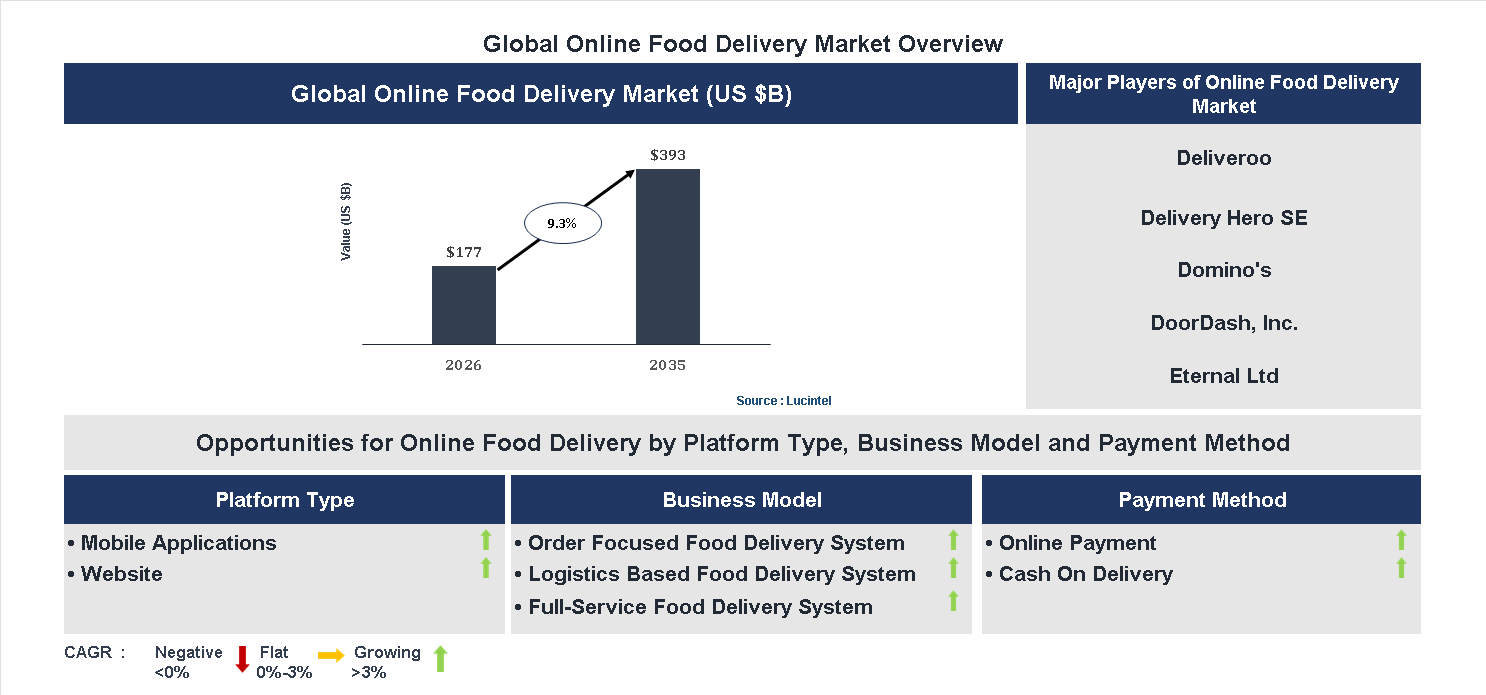
Key data points: The market size in 2035 = $393 billion, growth forecast = 9.3% annually for the next 8 years. Scroll below to get more insights. This market report covers trends, opportunities and forecasts in online food delivery market to 2035 by platform type (mobile applications and website), business model (order focused food delivery system, logistics based food delivery system, and full-service food delivery system), payment method (online payment and cash on delivery), and region (North America, Europe, Asia Pacific, and the Rest of the World)
We'll send your sample report shortly.
• Lucintel forecasts that, within the platform type category, mobile application is expected to witness higher growth over the forecast period.
• Within the payment method category, online payment is expected to witness higher growth.
• In terms of region, APAC is expected to witness the highest growth over the forecast period. Gain valuable insights for your business decisions with our comprehensive 150+ page report. Sample figures with some insights are shown below.
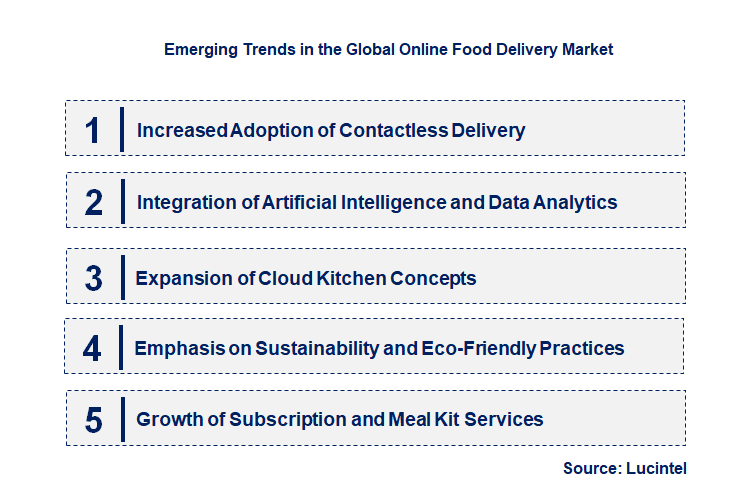
• Increased Adoption of Contactless Delivery: The pandemic accelerated the adoption of contactless delivery methods, which minimize physical interaction between customers and delivery personnel. This trend enhances safety and convenience, leading to higher customer satisfaction. Companies are investing in contactless payment systems and digital handoff solutions, making the process seamless. As health concerns persist, contactless delivery is expected to become a standard feature, influencing customer preferences and operational protocols across the industry.
• Integration of Artificial Intelligence and Data Analytics: AI and data analytics are transforming the online food delivery landscape by enabling personalized recommendations, efficient route planning, and demand forecasting. These technologies help companies optimize delivery times, reduce costs, and improve customer experience through tailored marketing and menu suggestions. The use of AI-driven chatbots and virtual assistants also enhances customer service. As data-driven decision-making becomes more prevalent, businesses that leverage these tools will gain a competitive edge in understanding and meeting consumer needs.
• Expansion of Cloud Kitchen Concepts: Cloud kitchens, also known as ghost kitchens, are dedicated delivery-only facilities that reduce overhead costs and increase operational flexibility. This trend allows brands to expand their reach without traditional storefronts, catering to specific local tastes and demands. Cloud kitchens facilitate rapid scaling and experimentation with new cuisines, enabling companies to adapt quickly to market trends. As urbanization and demand for quick service grow, cloud kitchens are reshaping the supply chain and delivery infrastructure within the industry.
• Emphasis on Sustainability and Eco-Friendly Practices: Consumers are increasingly conscious of environmental impacts, prompting companies to adopt sustainable practices. This includes eco-friendly packaging, optimized delivery routes to reduce carbon emissions, and sourcing ingredients responsibly. Brands that prioritize sustainability are gaining favor among eco-conscious customers, which can lead to increased loyalty and brand differentiation. The push for greener operations is influencing industry standards and encouraging innovation in sustainable packaging and logistics solutions.
• Growth of Subscription and Meal Kit Services: Subscription-based models and meal kits are gaining popularity as consumers seek convenience and variety. These services offer curated meals, pre-portioned ingredients, and flexible plans, catering to busy lifestyles and health-conscious consumers. They foster customer loyalty and provide predictable revenue streams for companies. The rise of these services is also encouraging innovation in packaging, delivery logistics, and menu customization, further diversifying the market and appealing to a broader demographic. These emerging trends are fundamentally reshaping the online food delivery market by enhancing safety, personalization, operational efficiency, sustainability, and consumer engagement. As these developments continue to evolve, they will drive innovation, expand market reach, and redefine customer expectations, ensuring the industry remains dynamic and competitive.
• Growth in Mobile App Usage: Increased smartphone penetration and improved app interfaces have made food delivery more accessible. Consumers now prefer seamless, quick ordering experiences, leading companies to invest heavily in mobile app development. This shift has resulted in higher order volumes, improved customer engagement, and expanded market reach, especially among younger demographics. The convenience of mobile ordering continues to drive industry growth and customer loyalty.
• Integration of Artificial Intelligence: AI technologies are transforming order processing, personalized recommendations, and customer service. AI-driven algorithms analyze user preferences to suggest tailored options, enhancing user satisfaction. Chatbots and virtual assistants provide 24/7 support, reducing operational costs. AI also optimizes delivery routes, decreasing delivery times and costs. These innovations improve efficiency, boost sales, and foster customer retention, positioning companies for competitive advantage in a crowded market.
• Focus on Sustainability Initiatives: Companies are adopting eco-friendly practices such as biodegradable packaging, optimized delivery routes, and reduced carbon emissions. These efforts appeal to environmentally conscious consumers and comply with regulatory standards. Sustainability initiatives also include partnerships with local suppliers to reduce food miles. Such practices enhance brand reputation, attract eco-aware customers, and contribute to long-term operational cost savings, aligning industry growth with environmental responsibility.
• Expansion of Cloud Kitchen Models: Cloud kitchens, or ghost kitchens, enable food delivery without traditional dine-in spaces, reducing overhead costs. This model allows rapid market entry and scalability, especially in urban areas with high demand. It also facilitates menu diversification and quick adaptation to consumer preferences. The expansion of cloud kitchens has increased delivery capacity, lowered prices, and improved service speed, making food delivery more accessible and profitable for operators.
• Strategic Partnerships and Mergers: Collaborations between food aggregators, restaurants, and logistics providers have strengthened market positioning. Mergers and acquisitions enable resource sharing, technological integration, and expanded geographic coverage. These partnerships improve service quality, reduce costs, and enhance competitive advantage. They also facilitate innovation and diversification, ensuring sustained growth amid market saturation and evolving consumer demands. The recent developments in mobile technology, AI integration, sustainability, cloud kitchens, and strategic partnerships are collectively transforming the online food delivery market. These innovations enhance customer experience, operational efficiency, and environmental responsibility, driving industry expansion. As companies adapt to these trends, the market is poised for continued growth, increased competitiveness, and greater consumer engagement, shaping a resilient and innovative future for online food delivery.
• Expansion into Emerging Markets: The online food delivery industry has significant growth potential in developing regions where internet access and smartphone usage are increasing rapidly. Companies can tap into these markets by customizing offerings to local tastes, establishing partnerships with local restaurants, and investing in infrastructure. This expansion not only broadens customer bases but also diversifies revenue streams, helping companies establish a strong foothold early in these high-growth areas.
• Integration of AI and Data Analytics for Personalized Services: Leveraging artificial intelligence and data analytics enables companies to offer highly personalized food recommendations, targeted marketing, and optimized delivery routes. These technologies improve customer experience, increase loyalty, and reduce operational costs. By analyzing consumer preferences and behavior patterns, businesses can tailor their offerings, predict demand, and enhance efficiency, ultimately driving higher sales and competitive advantage in a crowded market.
• Diversification of Service Offerings Through Value-Added Features: Introducing value-added services such as subscription plans, meal customization, and loyalty programs can attract and retain customers. Additionally, integrating features like contactless payments, real-time order tracking, and eco-friendly packaging enhances convenience and sustainability. These innovations differentiate brands, foster customer engagement, and generate additional revenue streams, positioning companies as comprehensive food service providers rather than just delivery platforms.
• Strategic Partnerships with Restaurants and Brands: Collaborating with popular restaurants, cloud kitchens, and retail brands can expand menu options and improve service quality. Such partnerships enable faster delivery times, exclusive menu items, and co-branded marketing campaigns, attracting diverse customer segments. Strengthening these alliances also helps in negotiating better commission rates and expanding geographic reach, ultimately boosting market share and brand visibility in competitive landscapes.
• Adoption of Sustainable and Eco-Friendly Practices: Consumers increasingly prioritize sustainability, prompting companies to adopt eco-friendly packaging, reduce carbon emissions, and implement green logistics solutions. Investing in sustainable practices not only aligns with consumer values but also enhances brand reputation and compliance with regulations. This focus on environmental responsibility can lead to increased customer loyalty, open new market segments, and provide a competitive edge in an industry under growing scrutiny for its ecological impact. The online food delivery markets growth opportunities are vast and multifaceted, offering avenues for innovation, expansion, and differentiation. By capitalizing on emerging markets, technological advancements, value-added services, strategic partnerships, and sustainability initiatives, companies can strengthen their market position. These opportunities collectively promise to drive sustained growth, improve customer satisfaction, and foster long-term industry resilience amid evolving consumer and technological landscapes.
• Technological Advancements: The proliferation of smartphones, high-speed internet, and user-friendly apps has revolutionized food ordering. These technologies enable seamless, real-time ordering, tracking, and payment options, enhancing customer experience. Innovations like AI and machine learning optimize delivery routes and personalize recommendations, increasing efficiency and customer satisfaction. As technology continues to evolve, market players can leverage data analytics for targeted marketing and operational improvements, fueling growth and expanding market reach.
• Changing Consumer Lifestyles: Modern consumers prioritize convenience due to busy schedules, urbanization, and a preference for on-demand services. The rise of dual-income households and increased reliance on digital platforms have shifted dining habits toward online food ordering. Consumers seek diverse cuisine options, quick delivery, and contactless payment methods, which online food delivery services readily provide. This shift in consumer behavior significantly boosts demand, encouraging market expansion and the development of innovative service models.
• Economic Growth and Disposable Income: Rising disposable incomes, especially in emerging markets, have increased consumers ability to spend on dining experiences outside traditional settings. Economic stability encourages spending on convenience services like online food delivery. Additionally, promotional offers and discounts attract price-sensitive customers, further expanding the customer base. As economies grow, the market benefits from increased consumer spending, leading to higher revenues and investment in infrastructure and technology.
• Strategic Partnerships and Market Expansion: Collaborations between food aggregators, restaurants, and logistics providers facilitate wider reach and improved service quality. Strategic alliances enable access to new geographic markets and customer segments, fostering growth. Market players are also investing in cloud kitchens and localized services to cater to specific regional tastes and preferences. These partnerships streamline operations, reduce costs, and enhance brand visibility, thereby accelerating market penetration and competitiveness.
• Regulatory Environment and Food Safety Standards: Stringent regulations related to food safety, hygiene, and delivery practices influence operational protocols. Compliance with local laws ensures consumer trust and reduces legal risks. Data privacy regulations also impact how companies handle customer information. Adapting to evolving regulatory frameworks requires continuous monitoring and investment in quality assurance, which can increase operational costs but ultimately strengthen market credibility and consumer confidence. The challenges facing the online food delivery market include:
• Intense Competition and Market Saturation: The online food delivery industry is highly competitive, with numerous global and local players vying for market share. Price wars, promotional battles, and differentiation strategies create pressure on profit margins. Market saturation in urban areas limits growth opportunities, forcing companies to innovate continuously and diversify offerings. Maintaining customer loyalty amid fierce competition requires significant marketing expenditure and service differentiation, which can strain resources and impact profitability.
• Logistics and Delivery Challenges: Ensuring timely and efficient delivery remains a critical challenge, especially in densely populated or traffic-congested areas. Managing a vast network of delivery personnel, maintaining food quality during transit, and handling peak demand periods require sophisticated logistics solutions. Failures in delivery can lead to customer dissatisfaction and damage brand reputation. Additionally, rising fuel costs and labor shortages further complicate logistics management, impacting operational costs and service reliability.
• Regulatory and Legal Risks: Evolving regulations related to food safety, labor laws, data privacy, and licensing pose ongoing compliance challenges. Non-compliance can result in hefty fines, legal actions, and loss of consumer trust. Navigating different regulatory environments across regions adds complexity to operations, especially for international players. Staying ahead of regulatory changes demands continuous legal oversight and adaptation, which can increase operational costs and hinder rapid expansion. The online food delivery market is driven by technological innovations, changing consumer lifestyles, economic growth, strategic partnerships, and regulatory standards. However, it faces significant challenges such as intense competition, logistical complexities, and evolving legal frameworks. These drivers and challenges collectively influence the markets trajectory, requiring stakeholders to innovate, adapt, and strategically navigate the evolving landscape to sustain growth and competitiveness. The markets future will depend on how effectively companies can leverage technological advancements while managing operational and regulatory risks.
• Deliveroo
• Delivery Hero SE
• Dominos
• DoorDash, Inc.
• Eternal Ltd
• Grab
• Grubhub Inc.
• Just Eat Takeaway.com
• McDonalds Corporation
• Papa Johns International, Inc.
• Mobile Applications
• Website
• Order Focused Food Delivery System
• Logistics Based Food Delivery System
• Full-Service Food Delivery System
• Online Payment
• Cash On Delivery
• North America
• Europe
• Asia Pacific
• The Rest of the World
• United States: The US market has seen increased adoption of contactless delivery and AI-driven logistics. Major players like Uber Eats and DoorDash expanded their services, integrating grocery and convenience store deliveries. There’s a focus on sustainability, with eco-friendly packaging and delivery options gaining popularity. Regulatory efforts around gig worker rights also influence operational models. The market continues to innovate with drone delivery trials and enhanced app features for personalized experiences.
• China: China remains the largest online food delivery market, with rapid growth fueled by platforms like Maiduan and Ele.me. Innovations include AI-powered recommendations and integrated super-app ecosystems. The sector benefits from widespread smartphone use and high internet penetration. New delivery methods, such as autonomous vehicles and robots, are being tested. The market also sees increased competition, leading to aggressive marketing and discount strategies, alongside efforts to improve food safety and delivery efficiency.
• Germany: The German market is characterized by a focus on quality, sustainability, and regulatory compliance. Companies like Delivery Hero and Lie Ferando are expanding their offerings, emphasizing organic and locally sourced food options. There’s a growing trend toward eco-friendly packaging and carbon-neutral deliveries. The market faces regulatory challenges related to gig economy labor laws, prompting companies to adapt their employment models. Digital innovation includes app improvements and partnerships with local restaurants to enhance customer experience.
• India: The Indian online food delivery market is rapidly expanding, driven by urbanization and smartphone penetration. Major players like Swiggy and Zomato are investing in logistics infrastructure and regional expansion. Innovations include cashless payments, real-time order tracking, and AI-based customer service. The market is also witnessing increased focus on cloud kitchens and dark stores to optimize delivery times. Regulatory developments around data privacy and gig worker rights are shaping operational strategies, with a push toward more sustainable practices.
• Japan: Japan’s market emphasizes quality, safety, and customer loyalty. Companies like Uber Eats and Demie-can are expanding their services, integrating contactless payments and AI for efficient delivery routing. The market is driven by a high-tech consumer base and a preference for premium and healthy food options. Innovations include robotic delivery and smart kitchen partnerships. Regulatory frameworks focus on food safety standards and worker protections, influencing service models. The market continues to evolve with a focus on convenience and technological integration to meet consumer expectations.


• Deliveroo
• Delivery Hero SE
• Dominos
• DoorDash, Inc.
• Eternal Ltd
• Grab
• Grubhub Inc.
• Just Eat Takeaway.com
• McDonalds Corporation
• Papa Johns International, Inc. Q6. Which online food delivery market segment will be the largest in future? Answer: Lucintel forecasts that, within the platform type category, mobile application is expected to witness higher growth over the forecast period. Q7. In online food delivery market, which region is expected to be the largest in next 5 years? Answer: In terms of region, APAC is expected to witness the highest growth over the forecast period. Q8. Do we receive customization in this report? Answer: Yes, Lucintel provides 10% customization without any additional cost.


Choose a license that fits your team. Instant PDF delivery.
Prices exclude taxes. Instant delivery. Custom licensing available on request.
Market Report · July 22, 2026
Market Report · July 22, 2026
Market Report · July 22, 2026
Trusted partner for strategic intelligence and business growth


Receive a complimentary market analysis tailored to your industry. Our analysts will identify key growth opportunities and competitive dynamics specific to your business.

Market size, growth rate, and key trend analysis for your specific sector.

Top competitor positioning and market share analysis.

Strategic recommendations backed by data-driven insights.
Get curated market intelligence and competitive moves straight to your inbox.
By subscribing, you agree to receive our monthly insights. Unsubscribe anytime.
Receive a complimentary market analysis tailored to your industry. Our analysts will identify key growth opportunities and competitive dynamics specific to your business.
Market size, growth rate, and key trend analysis for your specific sector.
Top competitor positioning and market share analysis.
Strategic recommendations backed by data-driven insights.
Get curated market intelligence, emerging trends, and competitive moves straight to your inbox each month.
By subscribing, you agree to receive our monthly insights. Unsubscribe anytime.
We'll send your sample report shortly.