
Market Report · July 20, 2026

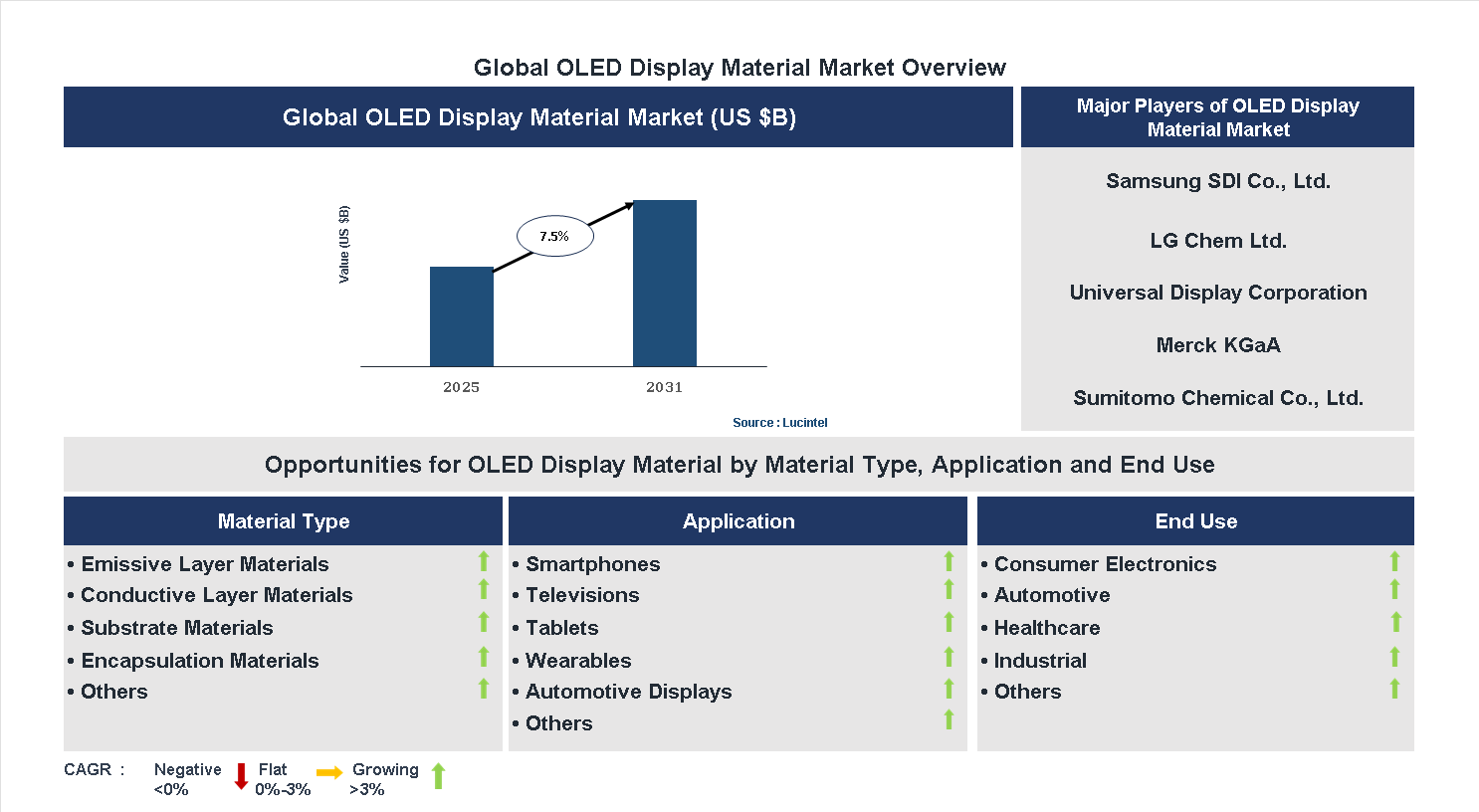
Key data points: The growth forecast = 7.5% annually for the next 7 years. Scroll below to get more insights. This market report covers trends, opportunities and forecasts in OLED display material market to 2031 by material type (emissive layer materials, conductive layer materials, substrate materials, encapsulation materials, and others), application (smartphones, televisions, tablets, wearables, automotive displays, and others), end use (consumer electronics, automotive, healthcare, industrial, and others), and region (North America, Europe, Asia Pacific, and the Rest of the World)
We'll send your sample report shortly.
• Lucintel forecasts that, within the material type category, emissive layer material is expected to witness the highest growth over the forecast period.
• Within the end use category, consumer electronics is expected to witness the highest growth.
• In terms of region, APAC is expected to witness the highest growth over the forecast period. Gain valuable insights for your business decisions with our comprehensive 150+ page report. Sample figures with some insights are shown below.
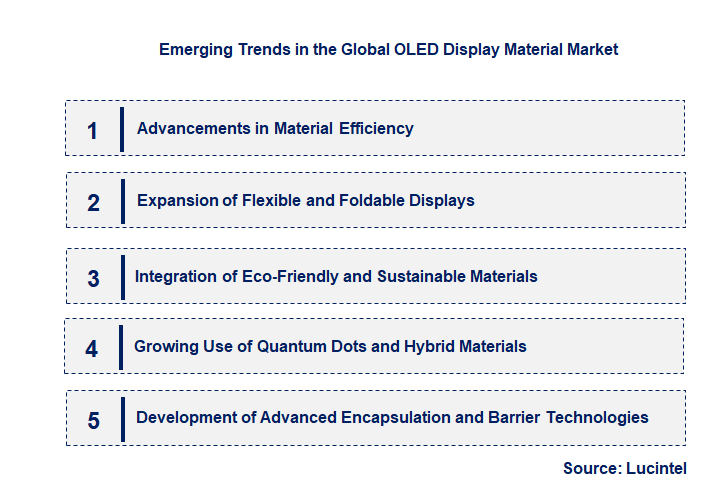
• Advancements in Material Efficiency: The focus is on developing more efficient organic materials that enhance brightness and color accuracy while reducing power consumption. This trend improves device performance and extends battery life, which is crucial for portable electronics. Innovations include new phosphorescent and thermally activated delayed fluorescence (TADF) materials that offer higher efficiency and longer lifespan. As a result, manufacturers can produce more vibrant, energy-efficient displays, meeting consumer expectations for high-quality visuals and sustainability standards. This trend is expected to drive market growth by enabling the production of more durable and eco-friendly OLED displays.
• Expansion of Flexible and Foldable Displays: The demand for flexible, bendable, and foldable OLED displays is rising, driven by the popularity of foldable smartphones and wearable devices. This trend necessitates the development of specialized materials that can withstand repeated bending without degradation. Innovations include flexible encapsulation layers and stretchable organic compounds that maintain performance under mechanical stress. The impact is significant, as it opens new avenues for product design and form factors, attracting consumers seeking innovative and portable devices. This trend is reshaping the market by pushing the boundaries of display technology and material capabilities.
• Integration of Eco-Friendly and Sustainable Materials: Environmental concerns are prompting the industry to adopt sustainable materials in OLED production. This includes biodegradable substrates, non-toxic organic compounds, and recyclable encapsulation layers. The shift aims to reduce the environmental footprint of OLED manufacturing and disposal, aligning with global sustainability goals. The adoption of eco-friendly materials not only appeals to environmentally conscious consumers but also complies with stricter regulations. This trend is fostering innovation in green chemistry and material science, ultimately leading to a more sustainable OLED display market that balances performance with environmental responsibility.
• Growing Use of Quantum Dots and Hybrid Materials: The integration of quantum dots with OLED technology is enhancing color purity, brightness, and energy efficiency. Hybrid materials combining organic compounds with inorganic nanomaterials are also gaining traction, offering improved stability and performance. These innovations enable displays with richer colors and higher contrast ratios, which are highly desirable in high-end devices. The impact extends to sectors like automotive and medical displays, where superior visual clarity is critical. This trend is expanding the functional capabilities of OLED displays and driving market competitiveness through advanced material innovations.
• Development of Advanced Encapsulation and Barrier Technologies: To improve the lifespan and durability of OLED displays, new encapsulation materials and barrier layers are being developed. These materials protect against moisture, oxygen, and other environmental factors that can degrade organic components. Innovations include thin-film encapsulation and atomic layer deposition techniques that provide superior barrier properties while maintaining flexibility. The impact is significant, as it extends the operational life of OLED devices and reduces manufacturing costs. This trend is crucial for commercial viability, especially in demanding applications like automotive and outdoor displays, and is reshaping the market by enabling more robust and long-lasting products. In summary, these emerging trends are collectively transforming the OLED display material market by enhancing performance, sustainability, and versatility. They are driving innovation, expanding application possibilities, and fostering a competitive environment that benefits consumers and manufacturers alike. As these trends continue to evolve, the market is poised for significant growth and technological breakthroughs.
• Advancements in Blue OLED Materials: Development of more stable and efficient blue OLED materials has improved display lifespan and color accuracy, leading to enhanced consumer satisfaction and broader application in high-end devices.
• Introduction of Eco-friendly Materials: Companies are focusing on sustainable OLED materials with reduced environmental impact, which is driving market growth by appealing to eco-conscious consumers and complying with stricter regulations.
• Enhanced Manufacturing Techniques: Innovations such as solution processing and inkjet printing are reducing production costs and increasing scalability, making OLED displays more affordable and accessible to a wider market.
• Integration of Flexible and Foldable Displays: The development of flexible OLED materials has enabled the creation of foldable and curved displays, opening new avenues in consumer electronics and automotive sectors.
• Rising Use of Phosphorescent and TADF Materials: The adoption of phosphorescent and thermally activated delayed fluorescence (TADF) materials has significantly increased OLED efficiency and lifetime, boosting their competitiveness against other display technologies. These developments are collectively transforming the OLED display material market by improving product quality, reducing costs, and expanding application possibilities. As a result, the market is experiencing accelerated growth, increased innovation, and greater adoption across diverse industries.
• Consumer Electronics: Growing demand for smartphones, tablets, and wearable devices is driving the need for advanced OLED materials. Enhanced color accuracy, flexibility, and durability are critical, prompting innovation in emissive and encapsulation materials. This growth boosts market revenue and encourages R&D investments, leading to more vibrant, energy-efficient displays that meet consumer expectations for high performance and aesthetic appeal.
• Automotive Displays: The automotive industry is increasingly adopting OLED displays for dashboards and infotainment systems due to their superior contrast and flexibility. The development of heat-resistant and long-lasting OLED materials is essential for automotive applications. This opportunity enhances vehicle interior design, improves user experience, and opens new revenue streams for display material manufacturers, fostering industry growth and technological progress.
• Healthcare Devices: OLED technology is gaining traction in medical devices such as portable monitors and wearable health trackers. The need for lightweight, flexible, and biocompatible materials is driving innovation in OLED formulations. This growth supports improved diagnostic accuracy, patient comfort, and device portability, expanding the application scope and market size within healthcare.
• Signage and Advertising: The demand for eye-catching, energy-efficient digital signage is increasing across retail, transportation, and public spaces. Flexible and transparent OLED materials enable innovative display designs, including curved and foldable screens. This opportunity enhances visual impact, reduces energy costs, and broadens the application landscape, fueling market expansion in advertising and signage sectors.
• Lighting Applications: OLED materials are increasingly used for ambient and decorative lighting solutions due to their thin, flexible, and diffuse light emission. Advancements in phosphorescent and hybrid materials improve efficiency and lifespan. This growth opens new avenues for sustainable, design-oriented lighting, influencing interior design, architecture, and commercial spaces, and contributing to overall market diversification. In summary, these growth opportunities across applications are significantly impacting the OLED display material market by driving innovation, expanding application areas, and increasing demand. They foster technological advancements, support sustainable development, and enable manufacturers to meet diverse consumer and industry needs, ensuring continued market growth and competitiveness.
• Technological Innovation: The continuous development of advanced OLED materials enhances display quality, durability, and energy efficiency. Innovations such as flexible and foldable displays are expanding application possibilities across smartphones, wearables, and large screens. These technological improvements attract manufacturers and consumers alike, fueling market growth. Moreover, research into new emissive materials and encapsulation techniques ensures longer device lifespans and better performance, further boosting demand for specialized OLED materials.
• Rising Consumer Electronics Demand: The increasing adoption of smartphones, tablets, and wearable devices drives the need for high-quality displays. Consumers seek devices with vibrant colors, high contrast ratios, and energy efficiency, all of which OLED technology provides. As the global middle class expands and disposable incomes rise, demand for premium electronic devices grows, directly impacting the OLED display material market. This trend is particularly prominent in emerging economies, where smartphone penetration is rapidly increasing.
• Automotive and Lighting Applications: The expanding use of OLED displays in automotive dashboards, interior lighting, and signage presents new growth avenues. OLEDs offer advantages such as flexibility, thinness, and superior visual quality, making them ideal for innovative automotive designs. Additionally, OLED lighting solutions are gaining popularity due to their energy efficiency and design flexibility. These applications are expected to significantly contribute to market expansion as industries seek more versatile and efficient display and lighting options.
• Environmental and Regulatory Factors: Increasing regulations aimed at reducing hazardous substances and promoting sustainability influence material development. Manufacturers are compelled to develop eco-friendly OLED materials that comply with environmental standards. This regulatory landscape encourages innovation in biodegradable and non-toxic materials, which can also enhance brand reputation and market competitiveness. Compliance with international standards ensures broader market access and reduces legal risks, shaping the development and adoption of OLED materials. The challenges facing this OLED display material market include:-
• Raw Material Price Volatility: The OLED display material market depends heavily on rare and expensive raw materials such as indium, gallium, and organic compounds. Fluctuations in their prices due to geopolitical tensions, supply chain disruptions, or scarcity can significantly impact production costs. This volatility hampers profit margins for manufacturers and can lead to increased product prices, potentially slowing market growth and affecting consumer adoption.
• Technological Complexity and Manufacturing Costs: Developing high-quality OLED materials involves complex processes and significant investment in research and development. Manufacturing OLED displays requires precise control over material deposition and encapsulation, which increases production costs. These high costs can limit the entry of smaller players and restrict economies of scale, thereby impeding widespread adoption, especially in price-sensitive markets.
• Environmental and Safety Concerns: The use of certain chemicals in OLED materials raises environmental and health safety issues. The disposal and recycling of OLED displays pose challenges due to potentially hazardous substances. Regulatory pressures to minimize environmental impact can lead to stricter standards and increased compliance costs. Addressing these concerns requires innovation in eco-friendly materials and waste management practices, which can slow down market development and increase overall costs. In summary, the OLED display material market is driven by technological advancements, rising consumer demand, and expanding application areas, which collectively foster growth. However, challenges such as raw material price fluctuations, high manufacturing costs, and environmental concerns pose significant hurdles. Balancing innovation with sustainability and cost-efficiency will be crucial for sustained market expansion. Overall, the markets future depends on how effectively stakeholders can navigate these drivers and challenges to capitalize on emerging opportunities.
• Samsung SDI Co., Ltd.
• LG Chem Ltd.
• Universal Display Corporation
• Merck KGaA
• Sumitomo Chemical Co., Ltd.
• Idemitsu Kosan Co., Ltd.
• DuPont de Nemours, Inc.
• BASF SE
• Novaled GmbH
• Hodogaya Chemical Co., Ltd.
• Emissive Layer Materials
• Conductive Layer Materials
• Substrate Materials
• Encapsulation Materials
• Others
• Smartphones
• Televisions
• Tablets
• Wearables
• Automotive Displays
• Others
• Consumer Electronics
• Automotive
• Healthcare
• Industrial
• Others
• North America
• Europe
• Asia Pacific
• The Rest of the World
• United States: The US market has seen increased investment in OLED research, with major tech companies focusing on developing flexible and foldable displays. Innovation centers are working on improving organic materials lifespan and brightness, while startups are exploring eco-friendly manufacturing processes. The US also emphasizes intellectual property rights, fostering a competitive environment for OLED advancements.
• China: China remains a dominant force in OLED material production, with several leading manufacturers expanding their capacity to meet global demand. The country is investing heavily in R&D to develop cost-effective materials and improve device performance. Chinese firms are also focusing on integrating OLED displays into smartphones, TVs, and automotive applications, driving market growth domestically and internationally.
• Germany: Germanys market is characterized by a focus on high-end, precision OLED components, especially for automotive and industrial applications. German companies are pioneering in the development of durable organic materials and encapsulation techniques to enhance display longevity. The country also emphasizes sustainable manufacturing practices and collaboration with research institutions to innovate in OLED technology.
• India: The Indian market is emerging as a significant player in OLED material adoption, primarily driven by the consumer electronics sector. Local manufacturers are investing in technology transfer and joint ventures to develop affordable OLED displays. The government’s initiatives to boost electronics manufacturing are expected to accelerate the adoption and innovation in OLED materials within the country.
• Japan: Japan continues to lead in OLED material innovation, focusing on high-performance organic compounds and flexible display substrates. Japanese firms are advancing in the development of transparent and ultra-thin OLED panels for various applications, including wearable devices and signage. The country also emphasizes sustainable and energy-efficient materials, maintaining its position as a key innovator in the global OLED market.


• Samsung SDI Co., Ltd.
• LG Chem Ltd.
• Universal Display Corporation
• Merck KGaA
• Sumitomo Chemical Co., Ltd.
• Idemitsu Kosan Co., Ltd.
• DuPont de Nemours, Inc.
• BASF SE
• Novaled GmbH
• Hodogaya Chemical Co., Ltd. Q5. Which OLED display material market segment will be the largest in future? Answer: Lucintel forecasts that, within the material type category, emissive layer material is expected to witness the highest growth over the forecast period. Q6. In OLED display material market, which region is expected to be the largest in next 5 years? Answer: In terms of region, APAC is expected to witness the highest growth over the forecast period. Q7. Do we receive customization in this report? Answer: Yes, Lucintel provides 10% customization without any additional cost.


Choose a license that fits your team. Instant PDF delivery.
Prices exclude taxes. Instant delivery. Custom licensing available on request.
Market Report · July 20, 2026
Market Report · July 16, 2026
Market Report · July 15, 2026
Trusted partner for strategic intelligence and business growth


Receive a complimentary market analysis tailored to your industry. Our analysts will identify key growth opportunities and competitive dynamics specific to your business.

Market size, growth rate, and key trend analysis for your specific sector.

Top competitor positioning and market share analysis.

Strategic recommendations backed by data-driven insights.
Get curated market intelligence and competitive moves straight to your inbox.
By subscribing, you agree to receive our monthly insights. Unsubscribe anytime.
Receive a complimentary market analysis tailored to your industry. Our analysts will identify key growth opportunities and competitive dynamics specific to your business.
Market size, growth rate, and key trend analysis for your specific sector.
Top competitor positioning and market share analysis.
Strategic recommendations backed by data-driven insights.
Get curated market intelligence, emerging trends, and competitive moves straight to your inbox each month.
By subscribing, you agree to receive our monthly insights. Unsubscribe anytime.
We'll send your sample report shortly.