
Market Report · July 22, 2026

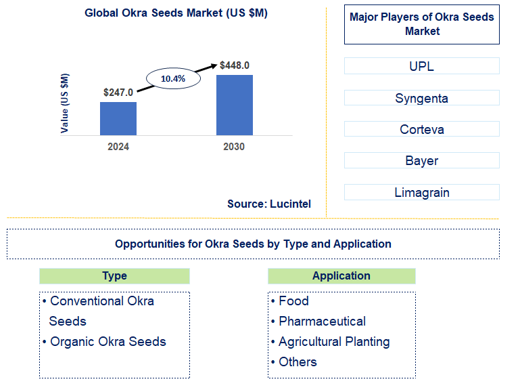
Key data points: The market size in 2030 = $448 million, growth forecast = 10.4% annually for the next 6 years. Scroll below to get more insights. This market report covers trends, opportunities, and forecasts in the global okra seeds market to 2030 by type (conventional okra seeds and organic okra seeds), application (food, pharmaceutical, agricultural planting, and others), and region (North America, Europe, Asia Pacific, and the Rest of the World)
We'll send your sample report shortly.
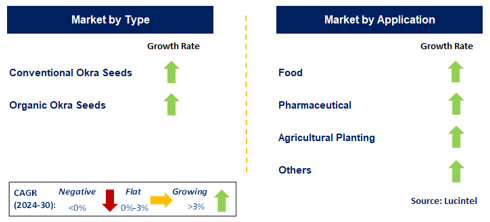
• Lucintel forecasts that, within the type category, conventional okra seeds is expected to witness a higher growth over the forecast period.
• In terms of region, APAC is expected to witness the highest growth over the forecast period. A more than 150-page report is developed to help in your business decisions.
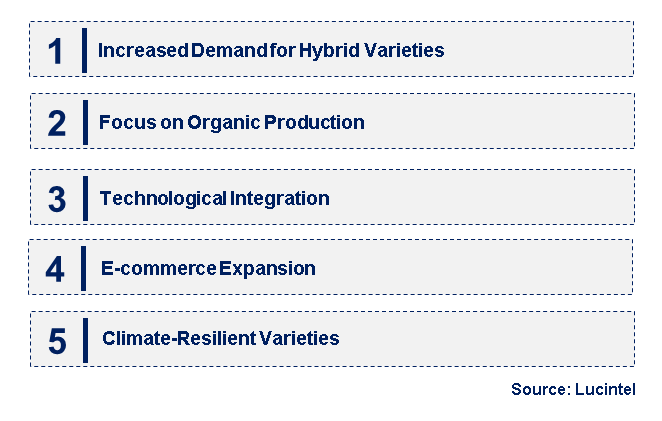
• Increased Demand for Hybrid Varieties: The demand for hybrid okra seeds is rising due to their higher yields and better disease resistance. Farmers are increasingly adopting hybrid varieties to improve productivity and profitability. This trend encourages seed companies to invest in research and development, resulting in the introduction of more resilient and high-performing varieties tailored to specific climatic conditions.
• Focus on Organic Production: Growing consumer awareness of health and sustainability is driving demand for organic okra. Farmers are transitioning to organic practices, prompting seed companies to develop organic-certified seeds. This trend not only supports eco-friendly farming but also meets the preferences of health-conscious consumers, ultimately expanding market opportunities for organic okra.
• Technological Integration: The integration of precision agriculture technologies is revolutionizing okra farming. Tools such as drones, soil sensors, and data analytics enable farmers to optimize irrigation, fertilization, and pest control. This trend improves resource efficiency, reduces costs, and enhances overall crop quality, making it easier for farmers to manage their fields effectively.
• E-commerce Expansion: The rise of e-commerce is transforming how okra seeds are marketed and sold. Online platforms provide farmers with greater access to quality seeds and a wider range of choices. This trend enhances competition among suppliers and simplifies the purchasing process for smallholder farmers, ultimately increasing market participation.
• Climate-Resilient Varieties: As climate change impacts agriculture, the development of climate-resilient okra varieties is gaining importance. Breeding programs focused on traits such as drought tolerance and pest resistance are essential for maintaining productivity under changing environmental conditions. This trend supports food security and allows farmers to adapt to increasingly unpredictable weather patterns. These trends are collectively reshaping the okra seeds market, promoting sustainability, efficiency, and adaptability in production practices.
• Advanced Breeding Techniques: Innovations in breeding techniques, such as marker-assisted selection and CRISPR, are enabling the development of superior okra varieties. These techniques allow for faster breeding cycles and the introduction of desirable traits, such as improved yield and resistance to diseases. As a result, farmers have access to more robust seeds that enhance productivity and profitability.
• Organic Seed Production: The growth of organic farming is prompting seed companies to focus on organic okra seed production. The introduction of organic-certified seeds aligns with the increasing consumer demand for sustainably sourced produce. This development not only promotes eco-friendly practices but also provides farmers with higher market prices for organic crops.
• Precision Agriculture Adoption: The adoption of precision agriculture technologies is revolutionizing okra cultivation. Farmers are using data-driven approaches to monitor crop health, optimize inputs, and manage resources efficiently. This development leads to higher yields and reduced environmental impact, helping farmers maximize productivity while minimizing costs.
• Enhanced Pest Management Solutions: Recent advancements in pest management technologies are improving the health of okra crops. Integrated pest management (IPM) strategies, including biopesticides and pheromone traps, are being implemented to reduce chemical pesticide use. This approach not only protects the environment but also enhances the quality of the produce.
• Global Market Expansion: The okra seeds market is witnessing global expansion as countries like India and China increase production capabilities. The rising demand for okra in international markets is driving seed companies to enhance their export potential. This development facilitates knowledge sharing and the dissemination of best practices across borders. These developments are contributing to a more dynamic and sustainable okra seeds market, positioning it for future growth and resilience.
• Organic Farming Initiatives: The increasing demand for organic produce presents a significant opportunity for the okra seeds market. Farmers adopting organic practices can benefit from premium prices for organic okra. Seed companies can focus on developing organic-certified seeds, catering to health-conscious consumers and enhancing market share in this growing segment.
• Technological Innovations: Investing in technological innovations, such as precision agriculture tools, provides growth opportunities for okra seed producers. By developing seeds that integrate seamlessly with modern farming technologies, companies can enhance the efficiency and productivity of okra cultivation, attracting a tech-savvy farmer demographic.
• Export Markets: Expanding into international markets represents a lucrative growth opportunity for okra seed producers. As global demand for okra rises, particularly in developing countries, producers can tap into export channels. This expansion not only increases revenue potential but also fosters international collaboration in agricultural practices.
• Value-Added Products: The development of value-added products, such as frozen or processed okra, opens new avenues for market growth. By partnering with food processing companies, seed producers can promote high-yield varieties tailored for processing. This opportunity enhances market demand and ensures a consistent supply chain.
• Climate-Smart Agriculture: Investing in climate-smart agricultural practices creates growth opportunities within the okra seeds market. Developing seeds with traits suited for climate resilience can attract farmers facing environmental challenges. This focus not only supports food security but also positions seed companies as leaders in sustainable agriculture. These strategic growth opportunities are poised to enhance the okra seeds market, driving innovation and sustainability while meeting the evolving needs of farmers and consumers.
• Increasing health consciousness: Growing consumer awareness of health and nutrition is a major driver of the okra seeds market. As consumers seek fresh, nutrient-rich vegetables, the demand for okra is rising. This trend encourages farmers to invest in quality seeds, boosting overall market growth.
• Technological advancements: Rapid advancements in agricultural technology, such as precision farming and advanced breeding techniques, drive the okra seeds market. These innovations enhance productivity, reduce resource use, and improve crop resilience. Consequently, farmers are more likely to adopt high-quality seeds that maximize yields.
• Rising demand for organic products: The surge in demand for organic produce is driving the need for organic okra seeds. Consumers increasingly prefer sustainably sourced products, prompting farmers to transition to organic practices. This shift creates opportunities for seed companies to develop and market organic-certified seeds.
• Global market expansion: The globalization of agriculture provides opportunities for okra seed producers to reach international markets. As trade barriers decrease, producers can access a broader customer base and diversify their revenue streams. This global perspective fosters innovation and knowledge exchange among agricultural stakeholders.
• Supportive government policies: Government initiatives promoting agricultural research and innovation are key drivers in the okra seeds market. Policies that support sustainable farming practices and research funding encourage investment in seed technology, ultimately benefiting farmers and enhancing market growth. Challenges in the okra seeds market include:
• Regulatory barriers: Complex regulatory frameworks surrounding genetically modified organisms (GMOs) and pesticide usage can hinder market growth. Navigating these regulations can slow down the introduction of innovative seed varieties, limiting farmers' access to advanced technologies.
• Climate change effects: Climate change poses significant challenges to okra cultivation, impacting yield and crop quality. Fluctuating weather patterns and extreme conditions require farmers to adapt quickly. The development of climate-resilient varieties becomes essential to mitigate these risks.
• Competition in the market: Intense competition among seed producers can pressure profit margins. As new entrants and established companies vie for market share, maintaining product differentiation and quality becomes crucial. Continuous innovation is essential for staying competitive in this dynamic market. These drivers and challenges significantly impact the okra seeds market, shaping its future trajectory. By leveraging opportunities and addressing challenges, stakeholders can effectively navigate this evolving landscape.
• UPL
• Syngenta
• Corteva
• Bayer
• Limagrain
• Mahyco
• Sakata Seed Corporation
• Conventional Okra Seeds
• Organic Okra Seeds
• Food
• Pharmaceutical
• Agricultural Planting
• Others
• North America
• Europe
• Asia Pacific
• The Rest of the World
• United States: In the U.S., the okra seeds market has experienced a surge in interest due to the growing popularity of plant-based diets. Recent advancements in hybrid okra varieties have led to improved disease resistance and higher yields. The integration of precision agriculture technologies has enabled farmers to optimize cultivation practices, enhancing productivity. Additionally, there is a growing trend toward organic okra production, aligning with consumer demand for healthier, sustainably sourced vegetables.
• China: China’s okra seeds market is expanding rapidly, driven by increasing domestic consumption and export potential. The government has supported research initiatives to develop high-yield and pest-resistant varieties, enhancing local production capabilities. As consumers become more health-conscious, the demand for fresh and nutritious okra has risen, prompting farmers to adopt improved seed technologies. E-commerce platforms are also facilitating easier access to quality seeds for smallholder farmers.
• Germany: Germany is focusing on sustainable agriculture practices in the okra seeds market. The rise in organic farming has prompted seed companies to develop organic-certified okra seeds. Technological advancements in seed production and processing are streamlining supply chains, improving accessibility for farmers. Furthermore, government policies promoting eco-friendly farming methods have encouraged research into climate-resilient okra varieties, ensuring long-term sustainability and productivity.
• India: India remains one of the largest producers of okra, and recent developments in the seeds market are largely driven by hybridization efforts. Seed companies are focusing on developing high-yield varieties that can withstand local climatic conditions. The government’s initiatives to promote agricultural research have led to the introduction of innovative pest management practices. Additionally, the increasing demand for processed okra products is encouraging farmers to invest in quality seeds.
• Japan: Japan’s okra seeds market is evolving with a focus on high-quality, premium varieties that cater to niche markets. Innovations in seed breeding are resulting in varieties that offer better taste and texture. The market is also witnessing a rise in consumer interest for locally sourced vegetables, prompting farmers to adopt advanced cultivation practices. Collaborations between agricultural research institutions and seed companies are fostering advancements that enhance the overall quality of okra production.


• UPL
• Syngenta
• Corteva
• Bayer
• Limagrain
• Mahyco
• Sakata Seed Corporation Q6. Which okra seeds market segment will be the largest in future? Answer: Lucintel forecasts that conventional okra seeds is expected to witness higher growth over the forecast period. Q7. In okra seeds market, which region is expected to be the largest in next 5 years? Answer: APAC is expected to witness the highest growth over the forecast period. Q.8 Do we receive customization in this report? Answer: Yes, Lucintel provides 10% customization without any additional cost.


Choose a license that fits your team. Instant PDF delivery.
Prices exclude taxes. Instant delivery. Custom licensing available on request.
Market Report · July 22, 2026
Market Report · July 20, 2026
Market Report · July 20, 2026
Trusted partner for strategic intelligence and business growth


Receive a complimentary market analysis tailored to your industry. Our analysts will identify key growth opportunities and competitive dynamics specific to your business.

Market size, growth rate, and key trend analysis for your specific sector.

Top competitor positioning and market share analysis.

Strategic recommendations backed by data-driven insights.
Get curated market intelligence and competitive moves straight to your inbox.
By subscribing, you agree to receive our monthly insights. Unsubscribe anytime.
Receive a complimentary market analysis tailored to your industry. Our analysts will identify key growth opportunities and competitive dynamics specific to your business.
Market size, growth rate, and key trend analysis for your specific sector.
Top competitor positioning and market share analysis.
Strategic recommendations backed by data-driven insights.
Get curated market intelligence, emerging trends, and competitive moves straight to your inbox each month.
By subscribing, you agree to receive our monthly insights. Unsubscribe anytime.
We'll send your sample report shortly.