
Market Report · May 16, 2026

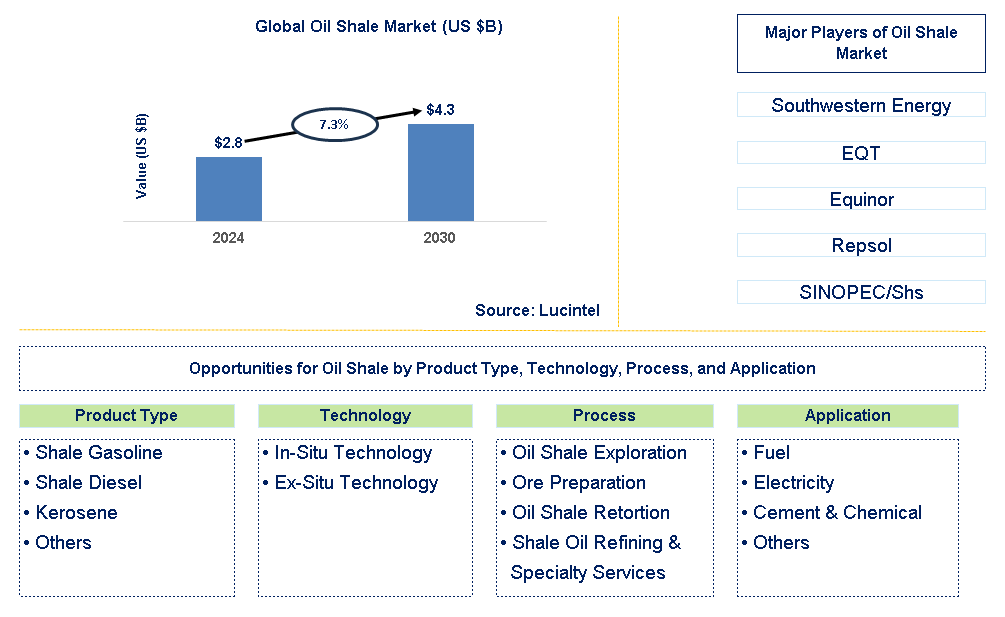
Key data points: The market size in 2030 = $4.3 billion, growth forecast = 7.3% annually next 6 years. Scroll below to get more insights. This market report covers trends, opportunities, and forecast in the global oil shale market to 2030 by product type (shale gasoline, shale diesel, kerosene, and others), technology (in-situ technology and ex-situ technology), process (oil shale exploration, ore preparation, oil shale retortion, and shale oil refining & specialty services), application (fuel, electricity, cement & chemical, and others), and region (North America, Europe, Asia Pacific, and the Rest of the World)
We'll send your sample report shortly.
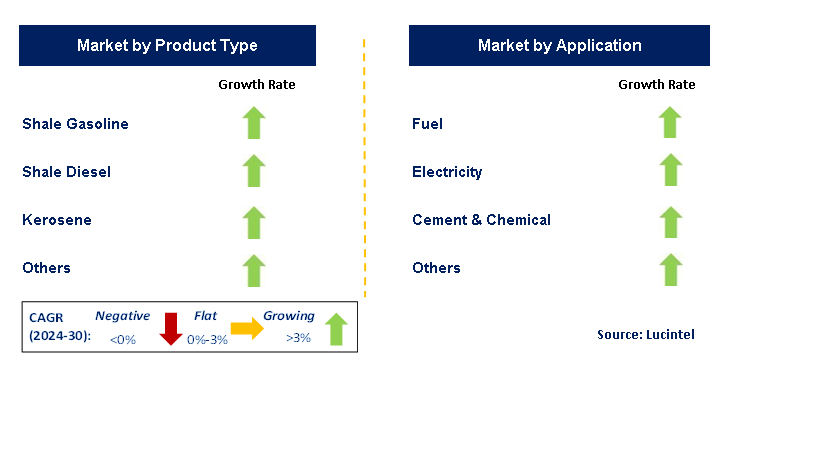
• Lucintel forecasts that shale gasoline will remain the largest segment over the forecast period due to widespread use in transportation and high demand for gasoline.
• Within this market, fuel will remain the largest segment due to population growth and greater reliance on fuels.
• North America is expected to witness highest growth over the forecast period due to horizontal drilling and the creation of new oil shale resources. A more than 150-page report is developed to help in your business decisions.
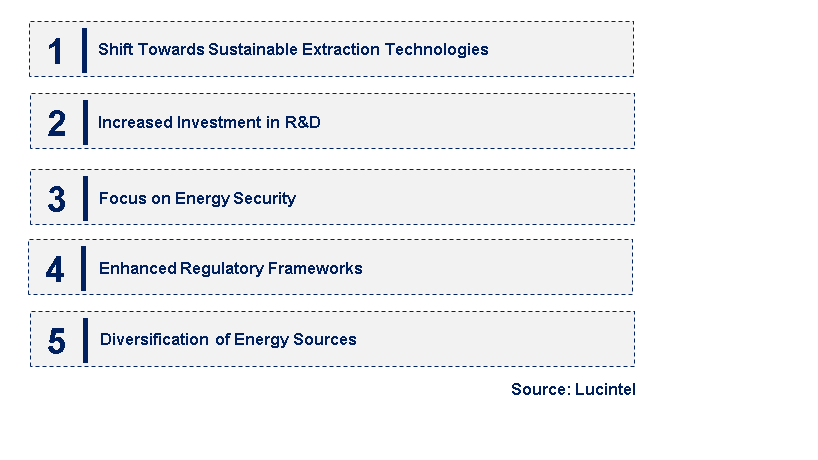
• Shift Towards Sustainable Extraction Technologies: Companies are increasingly adopting environmentally friendly extraction technologies to minimize ecological impacts. This shift not only enhances the sustainability of oil shale production but also addresses regulatory concerns, enabling companies to align with global environmental standards.
• Increased Investment in R&D: Significant investments in research and development are driving innovations in oil shale extraction and processing. This trend is leading to more efficient technologies, reducing production costs and environmental footprints, ultimately making oil shale a more attractive energy source.
• Focus on Energy Security: Countries are prioritizing energy security amid geopolitical tensions and fluctuating oil prices. This focus is driving investments in domestic oil shale resources, as nations seek to reduce dependence on foreign oil and bolster energy independence through local resources.
• Enhanced Regulatory Frameworks: Stricter environmental regulations are shaping oil shale development strategies. Companies are adapting to comply with these regulations, leading to innovations in sustainable practices and increased transparency in operations, which help to build public trust.
• Diversification of Energy Sources: There is a growing trend towards diversifying energy portfolios to include oil shale. This diversification is driven by the need for reliable energy sources, pushing governments and companies to explore oil shale as a complementary option alongside renewables. These emerging trends are fundamentally reshaping the oil shale market, emphasizing sustainability, innovation, and energy security. Stakeholders that embrace these trends are likely to gain a competitive advantage and position themselves favorably in the evolving energy landscape.
• Technological Innovations in Extraction: New extraction technologies, such as advanced fracking and in-situ combustion, are improving recovery rates from oil shale deposits. These innovations are enhancing the economic viability of oil shale projects, making them more competitive with conventional oil sources.
• Government Support for Research: Various governments are increasing funding for research into oil shale technologies. This support aims to accelerate the development of efficient and environmentally friendly extraction methods, ensuring that oil shale can play a role in future energy strategies.
• Environmental Impact Assessments: There is a growing emphasis on conducting comprehensive environmental impact assessments before commencing oil shale projects. This focus helps address public concerns and ensures compliance with regulatory standards, fostering a more sustainable approach to development.
• International Collaborations: Collaborative efforts between countries and companies are emerging to share best practices and technologies related to oil shale extraction. These partnerships are crucial for overcoming technical challenges and enhancing knowledge sharing within the industry.
• Shift to Cleaner Production Methods: Companies are increasingly investing in cleaner production methods to mitigate the environmental impact of oil shale extraction. This shift not only complies with regulatory pressures but also aligns with the broader trend towards sustainability in energy production. These developments signify a transformative phase in the oil shale market, driven by technological advancements and a commitment to sustainability. Companies that capitalize on these developments are well-positioned to thrive in an increasingly competitive and environmentally conscious landscape.
• Energy Production: The demand for energy security is driving interest in oil shale as a reliable energy source. Companies can capitalize on this opportunity by developing efficient extraction and processing technologies to produce oil and gas from shale deposits.
• Petrochemical Feedstock: Oil shale can serve as a valuable feedstock for petrochemical production. This application offers growth potential for companies looking to diversify their product offerings and tap into the lucrative petrochemical market.
• Industrial Applications: The use of oil shale derivatives in various industrial applications presents growth opportunities. Companies can explore innovative uses in sectors like construction and manufacturing, broadening their market reach.
• Carbon Capture and Storage: Developing technologies that integrate carbon capture with oil shale extraction can enhance sustainability. This approach not only addresses environmental concerns but also aligns with global initiatives to reduce carbon emissions.
• Environmental Remediation: Oil shale resources can be utilized in environmental remediation projects, providing an avenue for companies to contribute to sustainability efforts. This application can enhance corporate social responsibility profiles and open new market opportunities. These growth opportunities highlight the diverse potential of oil shale across various sectors, allowing companies to align their strategies with market demands and contribute to a more sustainable energy future.
• Southwestern Energy
• EQT
• Equinor
• Repsol
• SINOPEC/Shs
• Chesapeake Energy
• Royal Dutch Shell
• Exxon Mobil
• Chevron
• PETROCHINA/Shs
• Shale Gasoline
• Shale Diesel
• Kerosene
• Others
• In-Situ Technology
• Ex-Situ Technology
• Oil Shale Exploration
• Ore Preparation
• Oil Shale Retortion
• Shale Oil Refining & Specialty Services
• Fuel
• Electricity
• Cement & Chemical
• Others
• North America
• Europe
• Asia Pacific
• The Rest of the World
• United States: The U.S. continues to lead in oil shale development, with advancements in fracking technologies enhancing extraction efficiency. Recent policy support for cleaner energy and investments in research are fostering innovations aimed at reducing environmental impacts, positioning the U.S. as a key player in the global oil shale market.
• China: China is ramping up its exploration of oil shale resources to address energy security concerns. The government has increased funding for research into extraction technologies, focusing on environmentally friendly methods. This strategic shift aims to reduce reliance on imported oil and enhance domestic energy production.
• Germany: Germany is investing in oil shale as part of its broader energy transition strategy. The government is supporting research into sustainable extraction methods, aiming to integrate oil shale development within its renewable energy framework. This approach seeks to balance energy security with environmental sustainability.
• India: India is exploring its oil shale potential to improve energy self-sufficiency. Recent government initiatives have focused on assessing reserves and attracting foreign investments to develop extraction technologies. The emphasis on energy independence is driving interest in oil shale resources as a viable alternative to conventional sources.
• Japan: Japan is investigating oil shale as part of its efforts to diversify energy sources post-Fukushima. The government is supporting research into extraction technologies that minimize environmental impacts. This development aims to enhance energy security while reducing dependence on fossil fuel imports.


• Southwestern Energy
• EQT
• Equinor
• Repsol
• SINOPEC/Shs
• Chesapeake Energy
• Royal Dutch Shell
• Exxon Mobil
• Chevron
• PETROCHINA/Shs Q6. Which oil shale market segment will be the largest in future? Answer: Lucintel forecasts that shale gasoline will remain the largest segment over the forecast period due to widespread use in transportation and high demand for gasoline. Q7. In oil shale market, which region is expected to be the largest in next 5 years? Answer: North America is expected to witness highest growth over the forecast period due to horizontal drilling and the creation of new oil shale resources. Q.8 Do we receive customization in this report? Answer: Yes, Lucintel provides 10% customization without any additional cost.


Choose a license that fits your team. Instant PDF delivery.
Prices exclude taxes. Instant delivery. Custom licensing available on request.
Market Report · May 16, 2026
Market Report · May 16, 2026
Market Report · May 16, 2026
Trusted partner for strategic intelligence and business growth


Receive a complimentary market analysis tailored to your industry. Our analysts will identify key growth opportunities and competitive dynamics specific to your business.

Market size, growth rate, and key trend analysis for your specific sector.

Top competitor positioning and market share analysis.

Strategic recommendations backed by data-driven insights.
Get curated market intelligence and competitive moves straight to your inbox.
By subscribing, you agree to receive our monthly insights. Unsubscribe anytime.
Receive a complimentary market analysis tailored to your industry. Our analysts will identify key growth opportunities and competitive dynamics specific to your business.
Market size, growth rate, and key trend analysis for your specific sector.
Top competitor positioning and market share analysis.
Strategic recommendations backed by data-driven insights.
Get curated market intelligence, emerging trends, and competitive moves straight to your inbox each month.
By subscribing, you agree to receive our monthly insights. Unsubscribe anytime.
We'll send your sample report shortly.