
Market Report · July 16, 2026

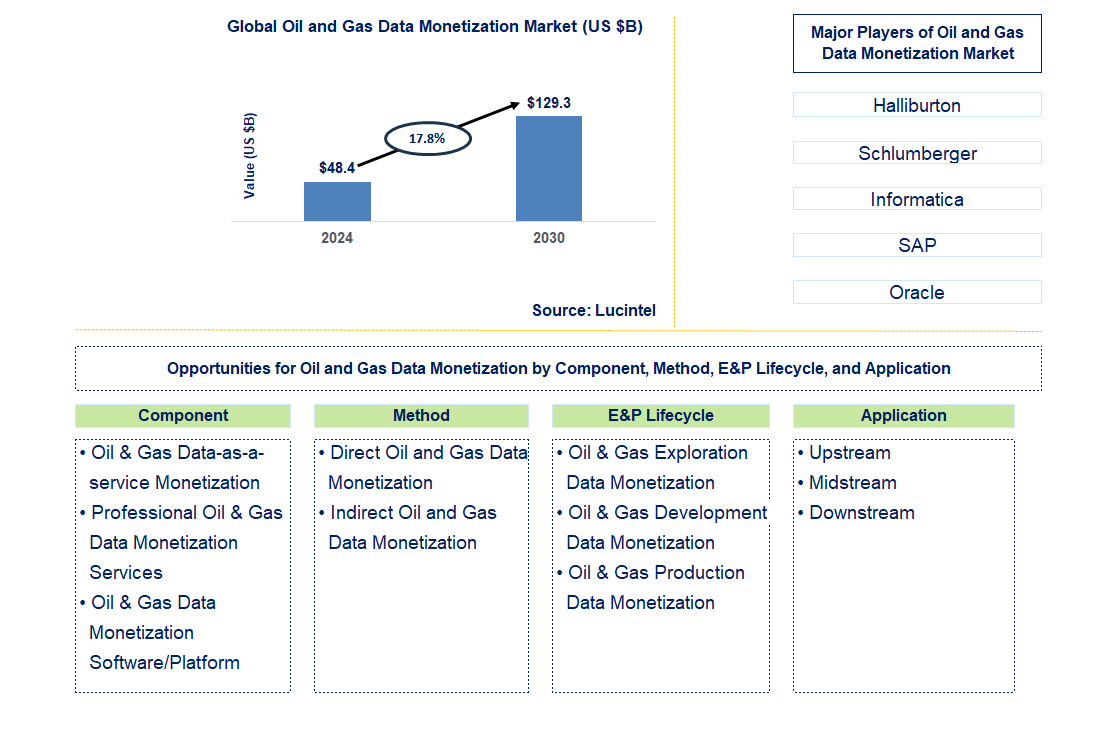
Key data points: The market size in 2030 = $129.3 billion, growth forecast = 17.8% annually next 6 years. Scroll below to get more insights. This market report covers trends, opportunities, and forecast in the global oil and gas data monetization market to 2030 by component (oil & gas data-as-a-service monetization, professional oil & gas data monetization services, and oil & gas data monetization software/platform), method (direct oil and gas data monetization and indirect oil and gas data monetization), E&P lifecycle (oil & gas exploration data monetization, oil & gas development data monetization, and oil & gas production data monetization), application (upstream, midstream, and downstream), and region (North America, Europe, Asia Pacific, and the Rest of the World)
We'll send your sample report shortly.
• Lucintel forecasts that, within the component category, oil & gas data monetization software/platform is expected to witness the largest growth over the forecast period because SaaS and IoT installations continue to quickly develop, and providers demand flexibility to embrace new business models.
• In terms of regions, North America is expected to witness the largest growth over the forecast period due to increasing oil production, availability of required infrastructure, and utilization of indirect data monetization within the region. A more than 150-page report is developed to help in your business decisions.
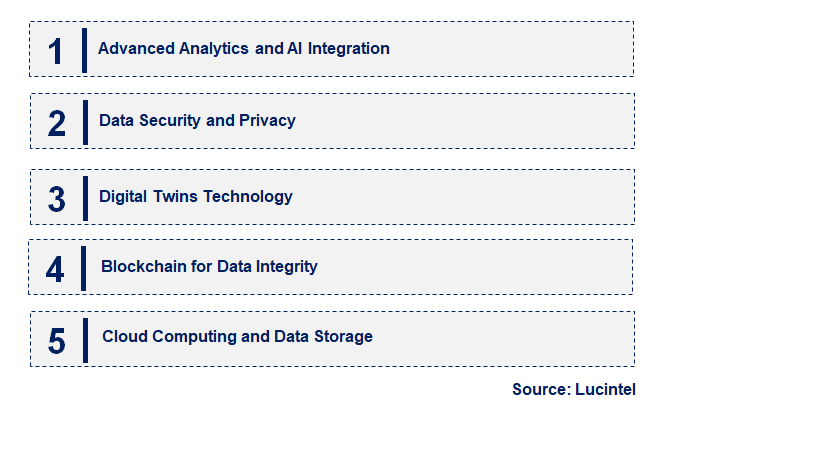
• Advanced Analytics and AI Integration: The integration of advanced analytics and AI is revolutionizing the Oil and Gas Data Monetization market. AI algorithms and machine learning models are employed to analyze vast datasets, predict equipment failures, and optimize production processes. This trend enables companies to make data-driven decisions, reduce operational costs, and improve efficiency. Predictive maintenance, real-time monitoring, and enhanced reservoir management are some key applications benefiting from these technologies. As AI continues to advance, its role in driving strategic insights and operational excellence is expected to grow.
• Data Security and Privacy: With the increasing reliance on data, data security and privacy have become paramount concerns in the Oil and Gas Data Monetization market. Companies are investing in advanced cybersecurity measures to protect sensitive data from breaches and cyberattacks. Encryption, secure access controls, and regular security audits are becoming standard practices. The implementation of robust data governance frameworks is also gaining traction to ensure compliance with regulatory requirements and protect intellectual property. As cyber threats evolve, maintaining data security and privacy will remain a critical focus for industry players.
• Digital Twins Technology: The use of digital twins technology is transforming how oil and gas companies manage and optimize their operations. Digital twins are virtual replicas of physical assets, processes, or systems that provide real-time insights and simulations. This technology allows for improved monitoring, predictive maintenance, and scenario analysis. By creating a digital twin of their assets, companies can simulate different conditions, predict potential issues, and optimize performance. The growing adoption of digital twins enhances operational efficiency and decision-making in the oil and gas sector.
• Blockchain for Data Integrity: Blockchain technology is gaining traction in the oil and gas data monetization market for its ability to ensure data integrity and transparency. Blockchain provides a decentralized and immutable ledger that records transactions and data exchanges securely. This technology is used to track the provenance of oil and gas products, facilitate secure data sharing, and streamline supply chain management. The transparency and security offered by blockchain enhance trust among stakeholders and reduce fraud. As blockchain technology matures, its applications in the oil and gas sector are expected to expand.
• Cloud Computing and Data Storage: Cloud computing plays a significant role in the oil and gas data monetization market by providing scalable and cost-effective data storage solutions. The adoption of cloud platforms allows companies to store, analyze, and access large volumes of data from anywhere. Cloud-based analytics tools enable real-time data processing and collaboration across geographically dispersed teams. This trend drives operational efficiency and reduces infrastructure costs. As cloud technology continues to evolve, its integration with data analytics and machine learning will further enhance the capabilities of oil and gas companies. These emerging trends reshape the oil and gas data monetization market by driving technological advancements and strategic innovations. The integration of advanced analytics, AI, and digital twins, combined with heightened data security and the adoption of blockchain and cloud computing, creates new opportunities for companies to optimize operations and drive profitability. As these trends continue to evolve, they will play a crucial role in defining the future of data monetization in the oil and gas sector, fostering greater efficiency, transparency, and resilience.
• Advancement in Data Analytics: Advancements in data analytics revolutionize the Oil and Gas Data Monetization market. Companies increasingly utilize sophisticated analytical tools to extract actionable insights from vast amounts of data. Predictive analytics, big data analytics, and real-time data processing enable more accurate forecasting, improved operational efficiency, and enhanced decision-making. By leveraging these tools, companies optimize production schedules, reduce downtime, and enhance overall performance. The growing sophistication of analytics technologies drives competitive advantage and fosters innovation in the oil and gas sector.
• AI and Machine Learning Implementation: AI and machine learning are becoming integral to the Oil and Gas Data Monetization market. These technologies are implemented to automate and optimize various aspects of operations, from exploration and drilling to production and maintenance. AI algorithms are used for predictive maintenance, anomaly detection, and optimization of resource allocation. Machine learning models enhance data interpretation and decision-making processes. The adoption of AI and machine learning leads to significant cost savings, increased efficiency, and improved safety across the industry.
• Enhanced Data Security Measures: Enhanced data security measures are crucial as the oil and gas industry becomes more data-dependent. Companies invest in advanced cybersecurity technologies to protect their data assets from cyber threats and breaches. Implementing encryption, multi-factor authentication, and regular security audits is becoming standard practice. The rise of data privacy regulations is also driving the adoption of comprehensive data protection strategies. By bolstering data security, companies can safeguard sensitive information, maintain regulatory compliance, and build trust with stakeholders.
• Cloud Computing Adoption: The adoption of cloud computing is a significant development in the Oil and Gas Data Monetization market. Cloud platforms provide scalable and flexible solutions for data storage, processing, and analytics. Companies leverage cloud-based tools to manage large volumes of data, collaborate across teams, and perform advanced analytics. The scalability and cost-effectiveness of cloud computing drive its widespread adoption, enabling companies to streamline operations and reduce IT infrastructure costs. Cloud computing enhances the accessibility and efficiency of data management in the oil and gas sector.
• Blockchain Technology Adoption: Blockchain technology gains traction in the oil and gas data monetization market for its ability to enhance data transparency and security. Blockchain’s decentralized ledger system tracks transactions, verifies data integrity, and streamlines supply chain management. The technology facilitates secure and transparent data exchanges among stakeholders, reducing fraud and improving trust. The adoption of blockchain helps companies address challenges related to data provenance and compliance, driving greater efficiency and accountability in the industry. These recent developments transform the oil and gas data monetization market by introducing innovative technologies and strategies. Advancements in data analytics, AI and machine learning, enhanced data security measures, cloud computing, and blockchain technology reshape how companies manage and utilize their data. These developments drive operational efficiencies, reduce costs, and improve overall performance, ultimately creating a more data-centric and technology-driven industry landscape.
• Exploration and Production Optimization: Exploration and production (E&P) optimization presents a significant growth opportunity in the Oil and Gas Data Monetization market. Advanced data analytics and AI can optimize drilling operations, reduce exploration costs, and improve reservoir management. By leveraging real-time data and predictive analytics, companies enhance decision-making processes, minimize risks, and maximize production efficiency. Enhanced seismic imaging, automated drilling systems, and data-driven insights into reservoir conditions enable more accurate and cost-effective exploration and production activities, driving growth in this application area.
• Predictive Maintenance: Predictive maintenance is another key growth area in oil and gas data monetization. By utilizing sensor data, machine learning, and advanced analytics, companies can anticipate equipment failures and perform maintenance before breakdowns occur. This proactive approach reduces downtime, lowers maintenance costs, and extends the lifespan of critical assets. Real-time monitoring and predictive analytics help identify potential issues early, enabling more efficient maintenance schedules and reducing the risk of costly unplanned outages. The adoption of predictive maintenance solutions drives significant advancements in operational efficiency and reliability.
• Supply Chain and Logistics Management: Supply chain and logistics management is a crucial application for data monetization in the oil and gas sector. Advanced data analytics and IoT technologies optimize supply chain operations, enhance inventory management, and improve logistics efficiency. Real-time data provides insights into supply chain performance, enabling companies to streamline operations, reduce costs, and improve delivery times. The integration of data-driven solutions in supply chain management helps address challenges related to transportation, storage, and distribution, leading to more efficient and cost-effective logistics operations.
• Health, Safety, and Environmental (HSE) Compliance: Health, Safety, and Environmental (HSE) compliance represents a significant growth opportunity for data monetization in the oil and gas industry. Leveraging data analytics and IoT sensors, companies enhance safety measures, monitor environmental impacts, and ensure regulatory compliance. Real-time data collection and analysis improve hazard detection, emergency response, and environmental monitoring. Advanced analytics support proactive safety measures and compliance with stringent regulations, reducing the risk of incidents and penalties. The focus on HSE compliance drives the development and adoption of data-driven solutions for safer and more sustainable operations.
• Financial and Operational Performance Management: Financial and operational performance management is a key growth opportunity driven by data monetization. Companies increasingly use data analytics to monitor financial performance, optimize budgets, and enhance operational efficiency. Advanced financial modeling and real-time performance tracking enable more informed decision-making and strategic planning. By analyzing financial and operational data, companies identify cost-saving opportunities, optimize resource allocation, and improve overall profitability. This focus on performance management drives the adoption of data-driven strategies and technologies, leading to better financial and operational outcomes. These strategic growth opportunities transform the oil and gas data monetization market by enhancing various aspects of industry operations. By focusing on exploration and production optimization, predictive maintenance, supply chain management, HSE compliance, and performance management, companies leverage data to drive efficiency, reduce costs, and improve safety. The impact of these opportunities is profound, as they foster innovation and create new value streams, ultimately shaping the future of data monetization in the oil and gas sector.
• Halliburton
• Schlumberger
• Informatica
• SAP
• Oracle
• Accenture
• IBM
• EMC
• Microsoft
• Tata Consultancy Services
• Oil & Gas Data-as-a-service Monetization
• Professional Oil & Gas Data Monetization Services
• Oil & Gas Data Monetization Software/Platform
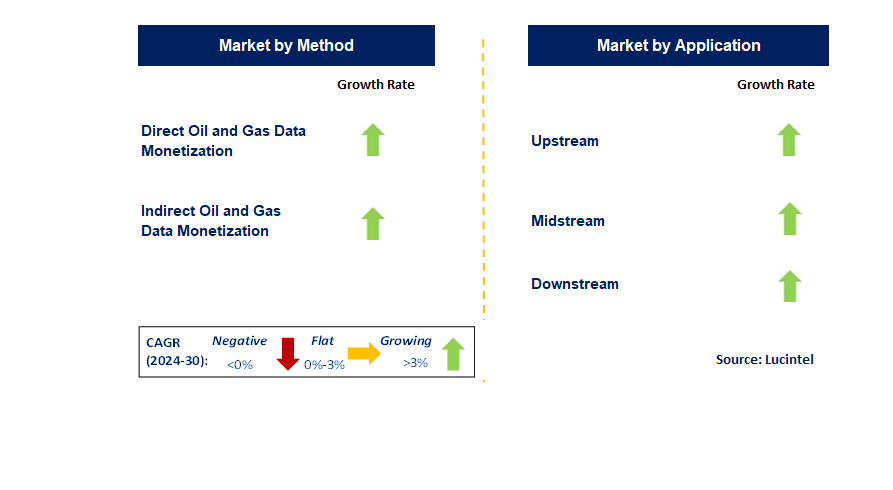
• Direct Oil and Gas Data Monetization
• Indirect Oil and Gas Data Monetization
• Oil & Gas Exploration Data Monetization
• Oil & Gas Development Data Monetization
• Oil & Gas Production Data Monetization
• Upstream
• Midstream
• Downstream
• North America
• Europe
• Asia Pacific
• The Rest of the World
• United States: In the United States, the oil and gas data monetization market has seen significant advancements driven by technology integration. Major oil and gas companies adopt advanced analytics, AI, and machine learning to optimize production and reduce operational costs. Companies like Chevron and ExxonMobil use predictive maintenance and real-time data analytics to enhance efficiency and safety. The rise of digital twins and IoT sensors improves asset management and decision-making processes. Additionally, regulatory changes and a focus on sustainability encourage greater transparency and data sharing.
• China: China aggressively pursues data monetization in the oil and gas sector as part of its broader digital transformation strategy. National oil companies like CNPC and Sinopec invest heavily in big data and AI technologies to optimize exploration and production. The Chinese government supports these initiatives through policies aimed at enhancing energy efficiency and security. China’s focus on developing a digital energy infrastructure includes the use of blockchain for secure data transactions and the integration of cloud computing for large-scale data analysis.
• Germany: The German oil and gas data monetization market is marked by a strong emphasis on digitalization and sustainability. German companies such as Wintershall Dea leverage advanced data analytics to improve operational efficiency and reduce environmental impact. The integration of Industry 4.0 technologies, including IoT and big data, helps companies optimize supply chains and enhance predictive maintenance. Germany’s strict environmental regulations drive the adoption of data solutions that help in compliance and monitoring, promoting a shift toward greener practices in the oil and gas sector.
• India: In India, the oil and gas data monetization market is growing with a focus on digital transformation and infrastructure development. Major Indian oil and gas companies like ONGC adopt data analytics and AI to enhance exploration and production efficiency. The Indian government’s initiatives to boost digital infrastructure, such as the Digital India campaign, support these advancements. There is also a growing emphasis on using data to improve safety standards and regulatory compliance. However, challenges remain, including data security concerns and the need for skilled personnel.
• Japan: The oil and gas data monetization market in Japan is evolving with a focus on technological innovation and efficiency. Japanese companies like JX Nippon Oil and Gas integrate advanced data analytics and AI to streamline operations and improve decision-making. Japan explores the use of data to enhance energy efficiency and reduce carbon footprints. The country’s emphasis on technological development and energy security drives investments in digital tools and platforms. Additionally, Japan’s collaboration with international partners fosters the exchange of data-driven best practices and technologies.


• Halliburton
• Schlumberger
• Informatica
• SAP
• Oracle
• Accenture
• IBM
• EMC
• Microsoft
• Tata Consultancy Services Q6. Which oil and gas data monetization market segment will be the largest in the future? Answer: Lucintel forecasts that oil & gas data monetization software/platform will remain the largest segment over the forecast period because SaaS and IoT installations continue to quickly develop, and providers demand flexibility to embrace new business models. Q7. In the oil and gas data monetization market, which region is expected to be the largest in the next 5 years? Answer: North America will remain the largest region over the forecast period due to increasing oil production, availability of required infrastructure, and utilization of indirect data monetization within the region. Q.8 Do we receive customization in this report? Answer: Yes, Lucintel provides 10% customization without any additional cost.


Choose a license that fits your team. Instant PDF delivery.
Prices exclude taxes. Instant delivery. Custom licensing available on request.
Market Report · July 16, 2026
Market Report · May 18, 2026
Market Report · May 18, 2026
Trusted partner for strategic intelligence and business growth


Receive a complimentary market analysis tailored to your industry. Our analysts will identify key growth opportunities and competitive dynamics specific to your business.

Market size, growth rate, and key trend analysis for your specific sector.

Top competitor positioning and market share analysis.

Strategic recommendations backed by data-driven insights.
Get curated market intelligence and competitive moves straight to your inbox.
By subscribing, you agree to receive our monthly insights. Unsubscribe anytime.
Receive a complimentary market analysis tailored to your industry. Our analysts will identify key growth opportunities and competitive dynamics specific to your business.
Market size, growth rate, and key trend analysis for your specific sector.
Top competitor positioning and market share analysis.
Strategic recommendations backed by data-driven insights.
Get curated market intelligence, emerging trends, and competitive moves straight to your inbox each month.
By subscribing, you agree to receive our monthly insights. Unsubscribe anytime.
We'll send your sample report shortly.