
Market Report · July 31, 2026

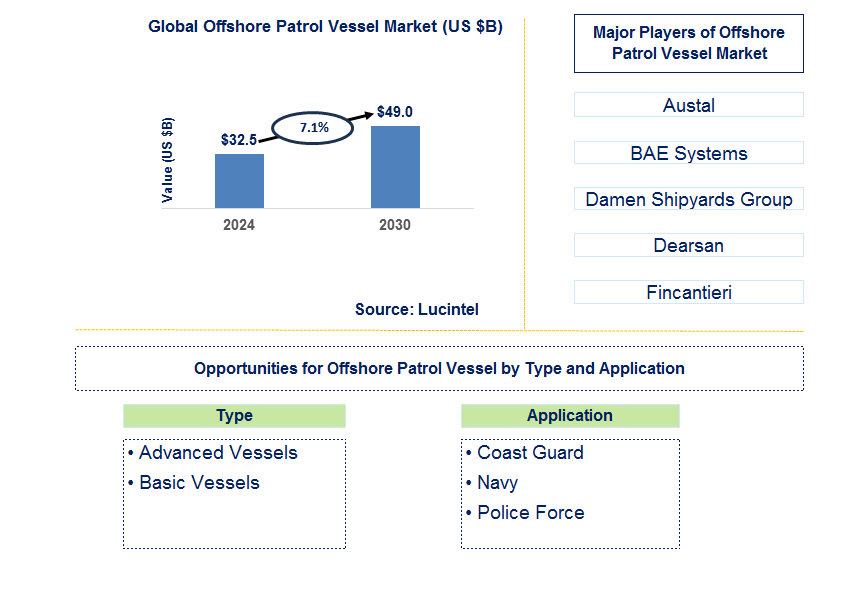
Key data points: The market size in 2030 = $49.0 billion, growth forecast = 7.1% annually for the next 6 years. Scroll below to get more insights. This market report covers trends, opportunities, and forecasts in the global offshore patrol vessel market to 2030 by type (advanced vessels and basic vessels), application (coast guard, navy, and police force), and region (North America, Europe, Asia Pacific, and the Rest of the World)
We'll send your sample report shortly.
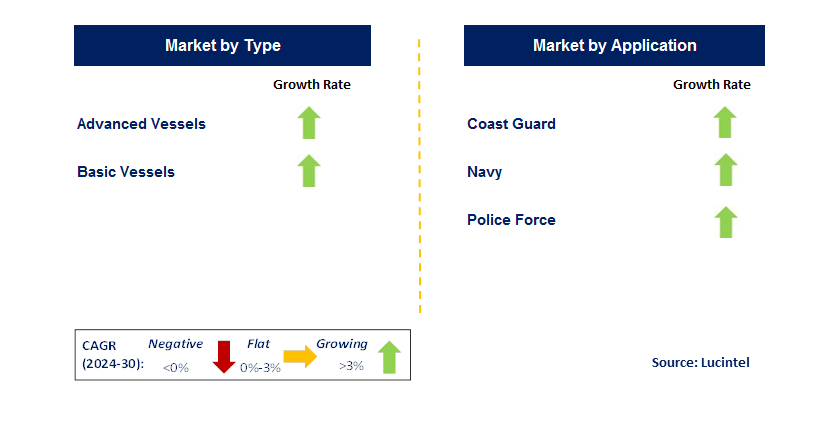
• Lucintel forecasts that, within the type category, basic vessels is expected to witness the highest growth over the forecast period.
• Within the application, navy will remain the largest segment.
• In terms of regions, APAC is expected to witness the highest growth over the forecast period due to increasing investments by governing agencies in the region. Gain valuable insight for your business decisions with our comprehensive 150+ page report
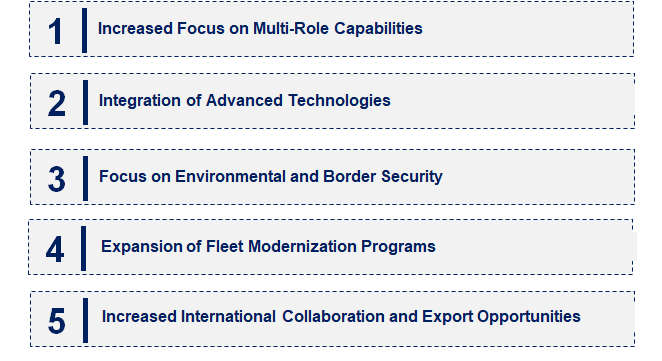
• Increased Focus on Multi-Role Capabilities: Modern offshore patrol vessels are increasingly designed to perform multiple roles, from maritime security to humanitarian assistance. This trend indicates a shift from specialized platforms to multi-mission platforms. Advanced offshore patrol vessels feature modular systems and flexible arrangements that can serve various operational needs, such as anti-piracy, search and rescue, or environmental monitoring. This adaptation of the multi-role concept allows navies to remain adaptable in the face of changing mission requirements.
• Integration of Advanced Technologies: The integration of advanced technologies such as sophisticated radar systems, communication systems, and armament is a significant trend in the offshore patrol vessel market. These technologies enhance operational aspects of surveillance, navigation, and combat functions related to offshore patrol vessels. By employing state-of-the-art mechanisms, offshore patrol vessels respond faster during emergencies, making them more efficient and capable of addressing threats. This sets the stage for building more effective and technologically superior patrol boats.
• Focus on Environmental and Border Security: There is growing emphasis on using offshore patrol vessels for environmental protection and border security. Offshore patrol vessels are increasingly used for countering smuggling activities, pollution control, and marine conservation. These vessels may include oil spill response systems and environmental sensors. Offshore patrol vessels are being modified to address environmental and border security concerns, contributing to comprehensive maritime management.
• Expansion of Fleet Modernization Programs: Many countries are undertaking fleet modernization programs to enhance their naval capabilities, including the procurement and upgrading of offshore patrol vessels. Modernization efforts involve replacing old vessels with new, technologically advanced ones. These programs ensure operational readiness, enhance mission effectiveness, and address evolving threats. Therefore, fleet modernization is critical for ensuring the performance of a navy's maritime security and surveillance functions.
• Increased International Collaboration and Export Opportunities: International collaboration and export opportunities are becoming more prominent in the offshore patrol vessel market. More nations are partnering with foreign shipbuilders through joint ventures to develop or acquire offshore patrol vessels. Consequently, some countries have exported patrol boats to allies seeking affordable means of acquiring maritime security. This trend demonstrates how globalization influences the naval defense industry, serving as an important strategy for forming alliances and expanding overseas markets. The emerging trends in the offshore patrol vessel market are reshaping the industry by driving advancements in multi-role capabilities, technology integration, environmental and border security, fleet modernization, and international collaboration. This reflects growing demand for versatile, technologically advanced platforms capable of operating under various conditions across the oceans. Stakeholders must closely monitor these changes to keep up with market dynamics while capitalizing on new opportunities in marine defense services.
• Introduction of Advanced Offshore Patrol Vessel Designs: The introduction of new offshore patrol vessel designs reflects a focus on improving capabilities and performance. For instance, some nations have developed next-generation offshore patrol vessels featuring sophisticated sensor systems, communication technologies, and weaponry. These vessels are designed to be flexible and expeditionary, enabling them to undertake a wide range of missions, including counter-piracy and environmental monitoring.
• Expansion of Offshore Patrol Vessel Fleets: Many countries are expanding their offshore patrol vessel fleets as part of broader naval modernization programs. For example, the US Navy, Indian Navy, and others are investing in new offshore patrol vessels to enhance maritime security and surveillance. This expansion involves procuring new vessels and upgrading existing ones, reflecting strategic efforts to improve maritime presence and address evolving threats.
• Adoption of Modular and Flexible Platforms: The adoption of modular and flexible offshore patrol vessel platforms is a significant development in this market. Modular arrangements allow customization of patrol vessels to meet specific mission requirements by integrating multiple systems and equipment. This adaptability enables offshore patrol vessels to perform various functions, such as search-and-rescue operations, combat missions, and environmental protection.
• Increased Collaboration with Private Sector: Collaboration between navies and the private sector within the offshore patrol vessel market has grown considerably. Joint ventures in offshore patrol vessel design, construction, and maintenance are becoming more common. Private sector involvement fosters innovation, efficiency, and cost-effectiveness in the patrol vessel development process, thereby improving overall capacity and performance.
• Enhanced Focus on Autonomous Systems: The integration of autonomous systems into offshore patrol vessels is a key development in the market. Technologies such as unmanned surface vehicles (USVs) and drones are being incorporated to enhance operational efficiency and mission capabilities. These systems provide advanced surveillance, reconnaissance, and operational support, resulting in improved maritime operations. Recent developments in the offshore patrol vessel market have included sophisticated designs, fleet expansion, modularity, private sector collaboration, and the introduction of autonomous systems. These changes are increasing the capabilities and versatility of offshore patrol vessels, making them more operationally efficient. As various navies adjust to emerging security threats and technological advancements, the offshore patrol vessel market will continue to evolve, underlining its growing significance in modern defense strategies.
• Anti-Piracy Operations: The use of offshore patrol vessels for anti-piracy operations has been on the rise, particularly in areas prone to piracy. Their capabilities as guard ships, warships, and surveillance platforms make them effective against pirates. In regions where piracy remains a major concern, demand for offshore patrol vessels equipped with advanced detection systems and response capabilities is increasing.
• Search and Rescue Missions: Offshore patrol vessels are ideal for search and rescue missions, providing a significant business opportunity. They can operate safely in extreme conditions, making them well-suited for rescue efforts. Features such as operational flexibility in any weather, medical accommodations, and safety measures enhance their value in search-and-rescue operations.
• Environmental Protection and Monitoring: Offshore patrol vessels are increasingly being equipped for environmental protection and monitoring activities. This includes capabilities for pollution control, marine conservation, and environmental surveillance. Given growing concerns about ecological imbalances and global warming, demand for offshore patrol vessels with environmental monitoring systems is rising.
• Border Security and Surveillance: Offshore patrol vessels play a vital role in border security and surveillance, patrolling vast waters to identify illegal activities and enforce maritime laws. Their importance in securing national boundaries drives demand for high-tech offshore patrol vessels, which can prevent smuggling, trafficking, and other illicit activities.
• International Collaboration and Export Opportunities: International collaboration and export opportunities are important growth areas for the offshore patrol vessel market. Countries are engaging in partnerships with foreign manufacturers or purchasing offshore patrol vessels from overseas markets to enhance their naval capabilities. The growing emphasis on international collaboration and export opportunities is expanding the market's reach. In summary, growth opportunities in the offshore patrol vessel sector include anti-piracy operations, search-and-rescue missions, environmental protection, border security, and international collaboration. These trends demonstrate the increased importance and diverse applications of offshore patrol vessels in modern maritime scenarios. Stakeholders can leverage these opportunities to expand into new markets and meet the evolving needs of naval and maritime security.
• Technological Advancements: Technological advancements are among the key drivers of the offshore patrol vessel market. Improvements in ship design, sensor technologies, and weapon systems enhance offshore patrol vessel capabilities and performance. The incorporation of advanced technologies such as radar systems, communication networks, and autonomous systems makes these vessels more efficient operationally. The rise in demand for modern patrol vessels contributes to the growth of this sector by facilitating more versatile maritime platforms.
• Growing Maritime Security Needs: Increasing concerns about maritime security drive demand for offshore patrol vessels. Rising global tensions, caused by territorial conflicts and other sea-based threats, require heightened surveillance and security capabilities. Through patrols, surveillance, and support to various security operations, offshore patrol vessels address these emerging needs. As concerns over the protection of maritime interests, including ensuring security in strategic waterways, grow, countries require more sophisticated patrol vessels, driving market expansion.
• Investment in Naval Modernization: Naval modernization programs have led many states to acquire or upgrade their existing offshore patrol vessels. Modernizing naval forces involves replacing outdated resources with new ones capable of better performance. This investment reflects an operational approach toward managing evolving marine risks while maintaining preparedness, especially during peacetime. Ongoing naval modernization efforts increase the demand for new offshore patrol vessels and the modernization of existing fleets.
• Expansion of Fleet Capabilities: The expansion of fleet capabilities, including offshore patrol vessel fleets, is a major market driver. Countries are enhancing their maritime security, surveillance, and operational capabilities by expanding their inventories of offshore patrol vessels. This expansion includes purchasing new vessels and upgrading or modifying older ones to meet evolving mission requirements. Emphasizing fleet expansion supports market growth by increasing demand for sophisticated offshore patrol vessels and improving overall naval effectiveness.
• International Partnerships and Collaboration: International partnerships and collaborations play a crucial role in the offshore patrol vessel market. Through joint ventures, technology transfers, and cooperative activities, countries develop these vessels together. Sharing knowledge reduces costs and improves access to high-tech equipment. Such international collaborations contribute to market growth and encourage innovative solutions for offshore patrol vessels. Challenges in the offshore patrol vessel market include:
• Budget Constraints: Budget constraints pose a significant challenge for the offshore patrol vessel market. Defense budgets may be impacted by fiscal pressures or economic limitations, leading to delays in procurement or modernization programs. Defense needs can take precedence over other budgetary priorities in some nations, creating a need for cost-effective solutions and affecting the demand for advanced patrol vessels. Careful planning is required to navigate these financial challenges to ensure naval spending remains stable.
• Regulatory and Compliance Issues: Regulatory and compliance issues can present challenges for the offshore patrol vessel market. International norms on arms, export controls, and acquisition regulations can hinder the development, use, or sale of these vessels. Strict adherence to legal systems is necessary but may create obstacles. To avoid delays and ensure smooth operations, it is essential to fully understand and comply with relevant rules in the offshore patrol vessel market.
• Integration of Advanced Technologies: Incorporating advanced technologies into existing offshore patrol vessels can be difficult. Modern systems such as sensors, communication networks, and weapons may pose integration challenges that affect operational efficiency. Successful integration enhances the performance capabilities of offshore patrol vessels. These challenges should be addressed through careful planning, testing, and coordination to achieve optimal operational effectiveness. Technological advancements, growing maritime security needs, and investments in naval modernization are key factors influencing the offshore patrol vessel market.
• Austal
• BAE Systems
• Damen Shipyards Group
• Dearsan
• Fincantieri
• Fr. Fassmer
• Fr. Lürssen Werft
• Garden Reach Shipbuilders & Engineers
• Israel Shipyards
• Naval Group
• Advanced Vessels
• Basic Vessels
• Coast Guard
• Navy
• Police Force
• North America
• Europe
• Asia Pacific
• The Rest of the World
• United States: The United States has increased its offshore patrol capabilities with the inclusion of Constellation-class frigates, which have offshore patrol vessel variants. These vessels aim to improve maritime security while supporting diverse activities such as humanitarian missions and anti-piracy operations. The US Navy plans to integrate advanced sensing, weapon, and communication systems into these patrol vessels, enhancing mission capabilities across global waterways.
• China: As part of its broader sea-based strategy, China has been expanding its offshore patrol vessel fleet. China is constructing larger offshore patrol vessels with advanced surveillance and combat systems. The introduction of Type 056 corvettes, equipped with high-tech radar and missile systems, forms the backbone of Chinese ocean patrols and security efforts. China’s ambition to establish a blue-water navy explains its significant investment in sophisticated offshore patrol vessel platforms.
• Germany: To address maritime threats, Germany has recently upgraded several offshore patrol vessels. The German Navy has incorporated advanced radar and communication systems into its patrol vessels. Notable recent developments include the introduction of the K130 corvette, equipped with enhanced sensors and weaponry for improved patrol and surveillance capabilities. Germany's efforts are aimed at maintaining competitiveness in maritime operations.
• India: India’s procurement of offshore patrol vessels is part of its larger naval modernization program. The Indian Navy has added new offshore patrol vessels, such as the Vikram-class, with improved surveillance and communication capabilities. These vessels enhance India’s maritime domain awareness (MDA) and support roles ranging from anti-piracy operations to humanitarian missions. India’s expansion of its offshore patrol vessel fleet underscores its strategic priority of protecting maritime interests.
• Japan: Japan has been actively developing offshore patrol vessels to strengthen its security and defense. The Japan Maritime Self-Defense Force (JMSDF) has introduced several new offshore patrol vessels equipped with advanced radar systems for improved combat effectiveness. Recent developments include the deployment of P-1 maritime patrol planes and enhancements to Japan’s marine monitoring capabilities. Japan aims to maintain a strong presence in the Indo-Pacific region and address regional maritime security challenges.


• Austal
• BAE Systems
• Damen Shipyards Group
• Dearsan
• Fincantieri
• Fr. Fassmer
• Fr. Lürssen Werft
• Garden Reach Shipbuilders & Engineers
• Israel Shipyards
• Naval Group Q6. Which offshore patrol vessel market segment will be the largest in future? Answer: Lucintel forecasts that basic vessels is expected to witness the highest growth over the forecast period. Q7. In offshore patrol vessel market, which region is expected to be the largest in next 5 years? Answer: APAC is expected to witness the highest growth over the forecast period due to increasing investments by governing agencies in the region. Q.8 Do we receive customization in this report? Answer: Yes, Lucintel provides 10% customization without any additional cost.


Choose a license that fits your team. Instant PDF delivery.
Prices exclude taxes. Instant delivery. Custom licensing available on request.
Market Report · July 31, 2026
Market Report · July 31, 2026
Market Report · July 31, 2026
Trusted partner for strategic intelligence and business growth


Receive a complimentary market analysis tailored to your industry. Our analysts will identify key growth opportunities and competitive dynamics specific to your business.

Market size, growth rate, and key trend analysis for your specific sector.

Top competitor positioning and market share analysis.

Strategic recommendations backed by data-driven insights.
Get curated market intelligence and competitive moves straight to your inbox.
By subscribing, you agree to receive our monthly insights. Unsubscribe anytime.
Receive a complimentary market analysis tailored to your industry. Our analysts will identify key growth opportunities and competitive dynamics specific to your business.
Market size, growth rate, and key trend analysis for your specific sector.
Top competitor positioning and market share analysis.
Strategic recommendations backed by data-driven insights.
Get curated market intelligence, emerging trends, and competitive moves straight to your inbox each month.
By subscribing, you agree to receive our monthly insights. Unsubscribe anytime.
We'll send your sample report shortly.