
Market Report · July 22, 2026

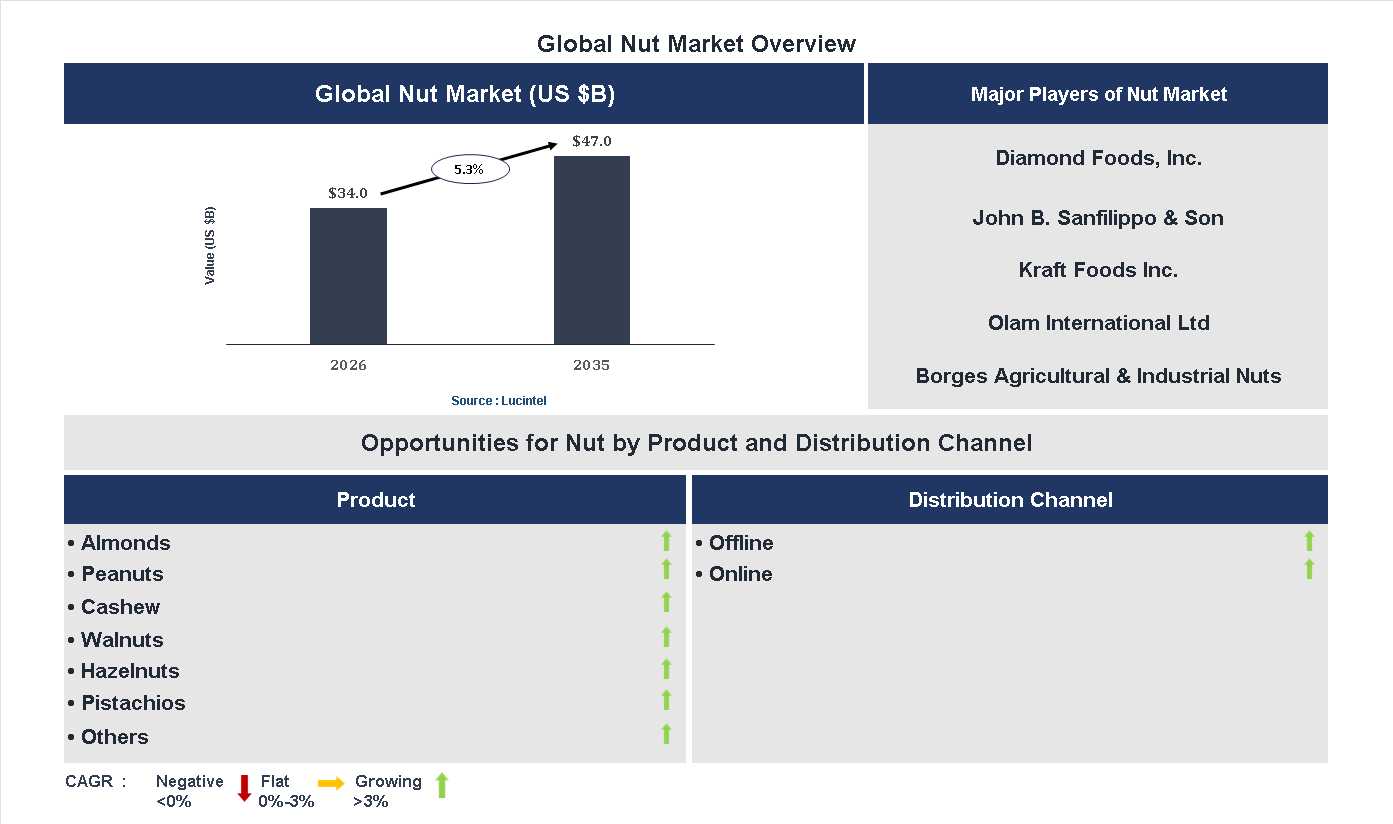
Key data points: The market size in 2035 = $47 billion, growth forecast = 5.3% annually for the next 8 years. Scroll below to get more insights. This market report covers trends, opportunities and forecasts in nut market to 2035 by product (almonds, peanuts, cashew, walnuts, hazelnuts, pistachios, and others), distribution channel (offline and online), and region (North America, Europe, Asia Pacific, and the Rest of the World)
We'll send your sample report shortly.
• Lucintel forecasts that, within the product category, peanut is expected to witness the highest growth over the forecast period.
• Within the distribution channel category, offline is expected to witness higher growth.
• In terms of region, Europe is expected to witness the highest growth over the forecast period. Gain valuable insights for your business decisions with our comprehensive 150+ page report. Sample figures with some insights are shown below.
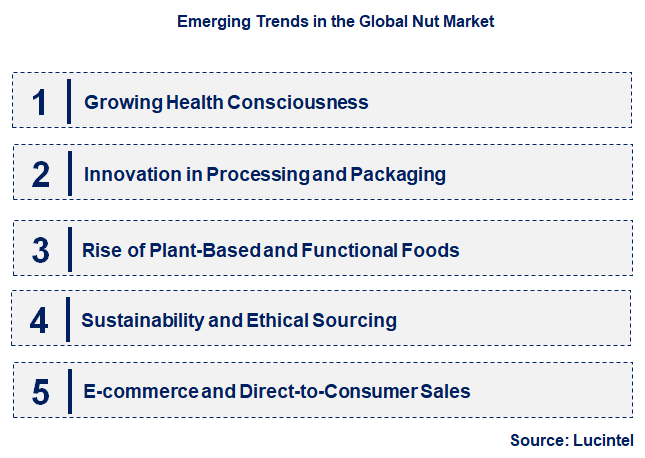
• Growing Health Consciousness: Consumers are increasingly prioritizing health and wellness, leading to higher demand for nuts due to their nutritional benefits. Nuts are rich in healthy fats, protein, fiber, vitamins, and minerals, making them a popular choice for health-conscious individuals. This trend is driving product innovation, such as organic, non-GMO, and fortified nut products. Retailers are expanding their offerings to include snack packs, trail mixes, and nut-based spreads, catering to on-the-go lifestyles. The focus on health is also encouraging the development of low-sugar, allergen-free, and functional nut products that support specific health goals like heart health and weight management.
• Innovation in Processing and Packaging: Advances in processing technology are improving the quality, safety, and shelf life of nut products. Techniques such as vacuum roasting, cold-pressing, and natural preservatives help retain nutrients and enhance flavor. Packaging innovations, including resealable pouches and eco-friendly materials, improve convenience and sustainability. These innovations reduce waste, extend product freshness, and appeal to environmentally conscious consumers. Additionally, innovative packaging allows for portion control and on-the-go consumption, aligning with modern lifestyles. Such technological progress enhances consumer experience and broadens market reach, making nuts more accessible and appealing across various segments.
• Rise of Plant-Based and Functional Foods: The increasing popularity of plant-based diets is boosting demand for nuts as a primary protein source and ingredient in plant-based products. Nuts are incorporated into dairy alternatives, meat substitutes, and snack foods, emphasizing their versatility. Furthermore, nuts are recognized for their functional benefits, such as anti-inflammatory properties and cholesterol reduction. Companies are developing nut-based spreads, milks, and energy bars that cater to health-focused consumers. This trend is expanding the market beyond traditional snack segments, positioning nuts as essential ingredients in functional and plant-based food innovations, thereby driving growth and diversification.
• Sustainability and Ethical Sourcing: Consumers are increasingly concerned about the environmental impact and ethical practices involved in nut production. There is a rising demand for sustainably farmed nuts, fair trade certifications, and transparent supply chains. Producers are adopting eco-friendly farming practices, reducing water usage, and minimizing pesticide use to meet these expectations. Ethical sourcing not only appeals to environmentally conscious consumers but also helps brands differentiate themselves in a competitive market. Certification programs and traceability initiatives are gaining importance, fostering trust and loyalty. Sustainability efforts are reshaping supply chain dynamics and encouraging industry-wide adoption of responsible practices.
• E-commerce and Direct-to-Consumer Sales: The growth of online retail platforms is transforming how nuts are marketed and sold. Consumers prefer the convenience of purchasing nuts directly from brands through e-commerce channels, which offer a wider variety, detailed product information, and personalized options. Subscription services and online marketplaces are expanding their reach to niche markets and international customers. Digital marketing strategies, including social media and influencer collaborations, are increasing brand visibility. This shift enables producers to gather consumer data, tailor offerings, and build stronger relationships. E-commerce is thus playing a crucial role in expanding market access and accelerating growth in the nut industry. In summary, these emerging trends are collectively reshaping the nut market by emphasizing health, innovation, sustainability, and digital engagement. They are driving product diversification, enhancing consumer experience, and fostering responsible practices, ultimately creating a more dynamic and competitive industry landscape.
• Growing Health Consciousness: Nut consumption is rising as consumers seek healthy, nutrient-dense snacks, boosting demand for almonds, walnuts, and other varieties. This trend encourages product innovation and marketing focused on health benefits, expanding market reach. The increased awareness of nuts role in heart health, weight management, and overall wellness is driving sales across retail and foodservice sectors, fostering sustained growth.
• Product Innovation and Diversification: Companies are introducing new nut-based products, including flavored, roasted, and organic options, to cater to diverse consumer preferences. This diversification enhances market appeal and encourages repeat purchases. Innovative packaging and ready-to-eat formats improve convenience, attracting busy consumers. Such developments are expanding the market beyond traditional segments, creating new revenue streams and competitive advantages.
• Expansion of Organic and Sustainable Sourcing: The demand for organic and sustainably sourced nuts is rising, driven by environmentally conscious consumers. Producers adopting eco-friendly practices and transparent supply chains are gaining market share. Certification and traceability initiatives boost consumer trust and brand loyalty. This shift promotes sustainable agriculture, reduces environmental impact, and aligns with global trends toward responsible consumption, thereby strengthening market resilience.
• Increasing Investment in Processing Technologies: Advances in processing, such as improved roasting, coating, and packaging technologies, enhance product quality and shelf life. Automation and innovative machinery reduce costs and increase efficiency. These technological improvements enable manufacturers to meet rising demand and expand product offerings. Investment in R&D fosters innovation, helping companies stay competitive and responsive to evolving consumer preferences.
• Rising E-commerce and Retail Expansion: The growth of online retail platforms and supermarkets broadens access to nut products globally. E-commerce facilitates direct-to-consumer sales, personalized marketing, and wider product availability. Retail expansion into emerging markets introduces nuts to new consumer bases. This digital and retail proliferation accelerates market penetration, boosts sales volume, and supports brand visibility, contributing to sustained industry growth. The overall impact of these developments is a robust, innovative, and sustainable nut market that caters to health-conscious consumers worldwide. Increased product diversity, technological advancements, and expanded distribution channels are driving growth, creating new opportunities for stakeholders. As consumer preferences evolve, the market is poised for continued expansion, with sustainability and innovation at its core.
• Growing Demand for Healthy Snacks and Functional Foods: The increasing consumer focus on health and wellness is boosting demand for nutritious snack options, including nuts. Nut-based products are perceived as healthy, convenient, and versatile, leading to expanded applications in bars, spreads, and dairy alternatives. This trend encourages manufacturers to develop innovative, health-oriented nut products, tapping into the expanding functional food segment. The rise in health-conscious consumption patterns is expected to sustain long-term growth in the nut market.
• Expansion of Organic and Sustainable Nut Products: Consumers are increasingly seeking organic, non-GMO, and sustainably sourced nuts, driven by environmental concerns and health considerations. This demand encourages producers to adopt sustainable farming practices and obtain organic certifications, creating a premium product segment. The focus on transparency and eco-friendly sourcing enhances brand loyalty and market differentiation. As awareness grows, the organic nut segment is poised for rapid expansion, attracting both health-conscious and environmentally aware consumers.
• Technological Innovations in Nut Processing and Packaging: Advances in processing technologies improve nut quality, shelf life, and safety, enabling manufacturers to offer higher-quality products. Innovative packaging solutions, such as resealable and eco-friendly materials, enhance product appeal and convenience. Automation and precision processing reduce waste and costs, increasing profitability. These technological improvements support product diversification, meet consumer expectations for freshness and sustainability, and open new avenues for market expansion.
• Rising Demand for Nut-Based Dairy Alternatives: The increasing popularity of plant-based diets and lactose intolerance awareness drives demand for nut-based dairy substitutes like almond, cashew, and hazelnut milks. These products cater to health-conscious consumers seeking dairy-free options with added nutritional benefits. The growth of vegan and flexitarian lifestyles further fuels this trend. Nut-based dairy alternatives are expanding into mainstream retail channels, creating opportunities for innovation in flavor, fortification, and packaging to capture a broader customer base.
• Regional Market Expansion and Emerging Economies: Developing regions such as Asia-Pacific, Latin America, and Africa present untapped growth potential due to rising disposable incomes, urbanization, and changing dietary habits. Increasing awareness of nut health benefits and expanding retail infrastructure facilitate market penetration. Local sourcing and adaptation to regional tastes are key strategies for success. Expanding distribution networks and strategic partnerships will enable companies to capitalize on these emerging markets, driving overall industry growth and diversification. The overall impact of these opportunities is a dynamic, expanding nut market characterized by innovation, sustainability, and regional growth. Stakeholders who leverage health trends, technological advancements, and regional expansion strategies will be well-positioned to capture new customer segments and sustain long-term growth. As consumer preferences continue to evolve towards healthier, natural, and sustainable options, the nut market is set to experience robust development globally.
• Increasing Health Awareness: Growing consumer awareness about the health benefits of nuts, such as high protein, healthy fats, and antioxidants, has significantly boosted demand. Consumers are shifting towards natural, organic, and plant-based diets, which favor nut consumption. This trend is supported by marketing campaigns and nutritional research emphasizing nuts role in weight management and heart health. As a result, the market experiences steady growth across retail and foodservice sectors, with innovations in product offerings like nut butters, snacks, and fortified foods expanding market reach.
• Rising Disposable Income and Urbanization: As disposable incomes rise, especially in developing regions, consumers are willing to spend more on premium and healthy food products, including nuts. Urbanization also leads to changing lifestyles, with increased snacking and convenience food consumption. This economic shift encourages manufacturers to develop diverse nut-based products tailored to urban consumers preferences, thereby expanding market size. Additionally, increased retail penetration and e-commerce platforms facilitate easier access to a wide variety of nut products, further fueling growth.
• Technological Advancements in Processing: Innovations in nut processing, such as improved roasting, grinding, and packaging technologies, have enhanced product quality, shelf life, and safety. These advancements enable manufacturers to produce a broader range of products, including flavored, roasted, and organic nuts, catering to diverse consumer tastes. Automation and quality control systems also reduce costs and waste, increasing profitability. Moreover, technology-driven supply chain improvements ensure better sourcing, storage, and distribution, making nuts more accessible globally and supporting market expansion.
• Growing Demand for Plant-Based and Vegan Products: The rising popularity of plant-based diets and vegan lifestyles has significantly contributed to the nut market growth. Nuts serve as essential ingredients in dairy alternatives, vegan snacks, and protein supplements. The demand for plant-based protein sources has led to innovations in nut-based products like vegan cheeses, milks, and protein powders. This trend aligns with consumer preferences for sustainable and cruelty-free foods, encouraging manufacturers to invest in nut-based product development, thereby expanding the market and diversifying product portfolios.
• Expansion of E-commerce and Retail Channels: The proliferation of online shopping platforms and modern retail outlets has made nut products more accessible to consumers worldwide. E-commerce offers convenience, a wide product variety, and competitive pricing, attracting a broader customer base. Retail chains and specialty stores focus on premium and organic nut products, catering to niche markets. This channel expansion facilitates market penetration in emerging regions and enhances brand visibility. As a result, manufacturers can reach a larger audience, increase sales, and respond swiftly to changing consumer preferences, driving overall market growth. The challenges facing the nut market include:-
• Supply Chain Disruptions: The Nut Market faces significant challenges from supply chain disruptions caused by factors such as climate change, geopolitical tensions, and pandemics. Nuts are often sourced from specific regions vulnerable to weather variability, pests, and crop diseases, which can lead to inconsistent supply and price volatility. Transportation delays and logistical bottlenecks further complicate distribution, impacting product availability and profitability. These disruptions threaten to hinder market growth, increase costs, and create uncertainty for producers and retailers alike, necessitating strategic sourcing and risk management measures.
• Regulatory and Food Safety Standards: Stringent regulations related to food safety, labeling, and import-export policies pose ongoing challenges. Different countries have varying standards, requiring manufacturers to adapt their processes and documentation, which can increase compliance costs. Food safety incidents or non-compliance can lead to recalls, legal penalties, and damage to brand reputation. As consumer demand for transparency and quality rises, companies must invest in quality assurance and traceability systems, adding to operational complexities and costs, potentially limiting market expansion.
• Environmental and Sustainability Concerns: Growing awareness of environmental impacts associated with nut cultivation, such as deforestation, water usage, and pesticide use, presents challenges for sustainable sourcing. Consumers and regulators are increasingly demanding eco-friendly practices, prompting companies to adopt sustainable farming and sourcing methods, which can be costly and complex. Failure to meet sustainability standards may result in consumer backlash, reduced market access, and reputational damage. Balancing environmental responsibility with cost-effective production remains a critical challenge for industry stakeholders. In summary, the nut market is driven by health consciousness, economic growth, technological innovation, and shifting consumer preferences toward plant-based diets. However, it faces challenges from supply chain vulnerabilities, regulatory complexities, and environmental sustainability concerns. These factors collectively influence market dynamics, requiring stakeholders to adapt strategies for sustainable growth. While expansion opportunities are substantial, addressing these challenges is crucial to ensure long-term resilience and competitiveness in the evolving nut industry landscape.
• Diamond Foods, Inc.
• John B. Sanfilippo & Son
• Kraft Foods Inc.
• Olam International Ltd
• Borges Agricultural & Industrial Nuts
• Hines Nut Company
• Mariani Nut Company
• WeAreBio
• Germack Pistachio Company
• Hampton Farms, Inc.
• Almonds
• Peanuts
• Cashew
• Walnuts
• Hazelnuts
• Pistachios
• Others
• Offline
• Online
• North America
• Europe
• Asia Pacific
• The Rest of the World
• United States: The US nut market has seen increased demand for organic and non-GMO products, driven by health-conscious consumers. Innovations in packaging and processing have improved shelf life and convenience. Major brands are expanding their product lines to include plant-based and protein-rich nut options, aligning with dietary trends. Sustainability initiatives focus on responsible sourcing and reducing environmental impact, with many companies adopting eco-friendly practices. E-commerce sales of nuts have grown substantially, supported by online grocery shopping trends. Overall, the US market is characterized by product diversification and a focus on health and sustainability.
• China: China’s nut market is rapidly expanding, fueled by rising disposable incomes and urbanization. Consumers are increasingly seeking premium and imported nuts, especially almonds and cashews, for snacking and cooking. Local production is improving quality standards, while imports continue to dominate the market. E-commerce platforms are playing a crucial role in distribution, making nuts more accessible nationwide. Health benefits and traditional uses are boosting demand for nuts in traditional medicine and culinary applications. Companies are investing in branding and marketing to capture the growing middle-class segment. Sustainability and traceability are gaining importance among consumers.
• Germany: The German nut market is characterized by a strong preference for organic and fair-trade products. Consumers are highly conscious of quality, origin, and environmental impact. Innovations include new flavor combinations and convenient snack formats. Retailers are expanding their organic and specialty nut sections, reflecting demand for premium products. The market also sees a rise in plant-based diets, increasing nut consumption as a protein source. Sustainability initiatives focus on responsible sourcing and reducing packaging waste. E-commerce sales are growing, with consumers valuing transparency and product information. Overall, Germany’s market emphasizes quality, sustainability, and health benefits.
• India: The Indian nut market is experiencing rapid growth, driven by increasing health awareness and changing dietary habits. Cashews, almonds, and peanuts are popular, with local production expanding to meet demand. The market is witnessing a shift toward premium and organic nuts, especially among urban consumers. Traditional uses of nuts in festivals and cuisine continue to support demand. Retail and e-commerce channels are expanding, making nuts more accessible. Government initiatives promote nut cultivation to reduce import dependency. Consumers are increasingly interested in health benefits, leading to innovations in product offerings. Sustainability and fair-trade practices are gradually gaining attention.
• Japan: Japan’s nut market is growing steadily, with a focus on health and wellness. Consumers prefer high-quality, organic, and locally sourced nuts. Innovative products such as nut-based snacks, spreads, and functional foods are gaining popularity. The market emphasizes sustainability, with companies adopting eco-friendly sourcing and packaging. Traditional uses of nuts in confectionery and cuisine remain strong, complemented by modern health trends. E-commerce and specialty stores are key distribution channels. The aging population is driving demand for nutritious, easy-to-consume products. Overall, Japan’s market is characterized by quality, innovation, and a focus on health benefits.


• Diamond Foods, Inc.
• John B. Sanfilippo & Son
• Kraft Foods Inc.
• Olam International Ltd
• Borges Agricultural & Industrial Nuts
• Hines Nut Company
• Mariani Nut Company
• WeAreBio
• Germack Pistachio Company
• Hampton Farms, Inc. Q6. Which nut market segment will be the largest in future? Answer: Lucintel forecasts that, within the product category, peanut is expected to witness the highest growth over the forecast period. Q7. In nut market, which region is expected to be the largest in next 5 years? Answer: In terms of region, Europe is expected to witness the highest growth over the forecast period. Q8. Do we receive customization in this report? Answer: Yes, Lucintel provides 10% customization without any additional cost.


Choose a license that fits your team. Instant PDF delivery.
Prices exclude taxes. Instant delivery. Custom licensing available on request.
Market Report · July 22, 2026
Market Report · July 22, 2026
Market Report · July 22, 2026
Trusted partner for strategic intelligence and business growth


Receive a complimentary market analysis tailored to your industry. Our analysts will identify key growth opportunities and competitive dynamics specific to your business.

Market size, growth rate, and key trend analysis for your specific sector.

Top competitor positioning and market share analysis.

Strategic recommendations backed by data-driven insights.
Get curated market intelligence and competitive moves straight to your inbox.
By subscribing, you agree to receive our monthly insights. Unsubscribe anytime.
Receive a complimentary market analysis tailored to your industry. Our analysts will identify key growth opportunities and competitive dynamics specific to your business.
Market size, growth rate, and key trend analysis for your specific sector.
Top competitor positioning and market share analysis.
Strategic recommendations backed by data-driven insights.
Get curated market intelligence, emerging trends, and competitive moves straight to your inbox each month.
By subscribing, you agree to receive our monthly insights. Unsubscribe anytime.
We'll send your sample report shortly.