
Market Report · July 22, 2026

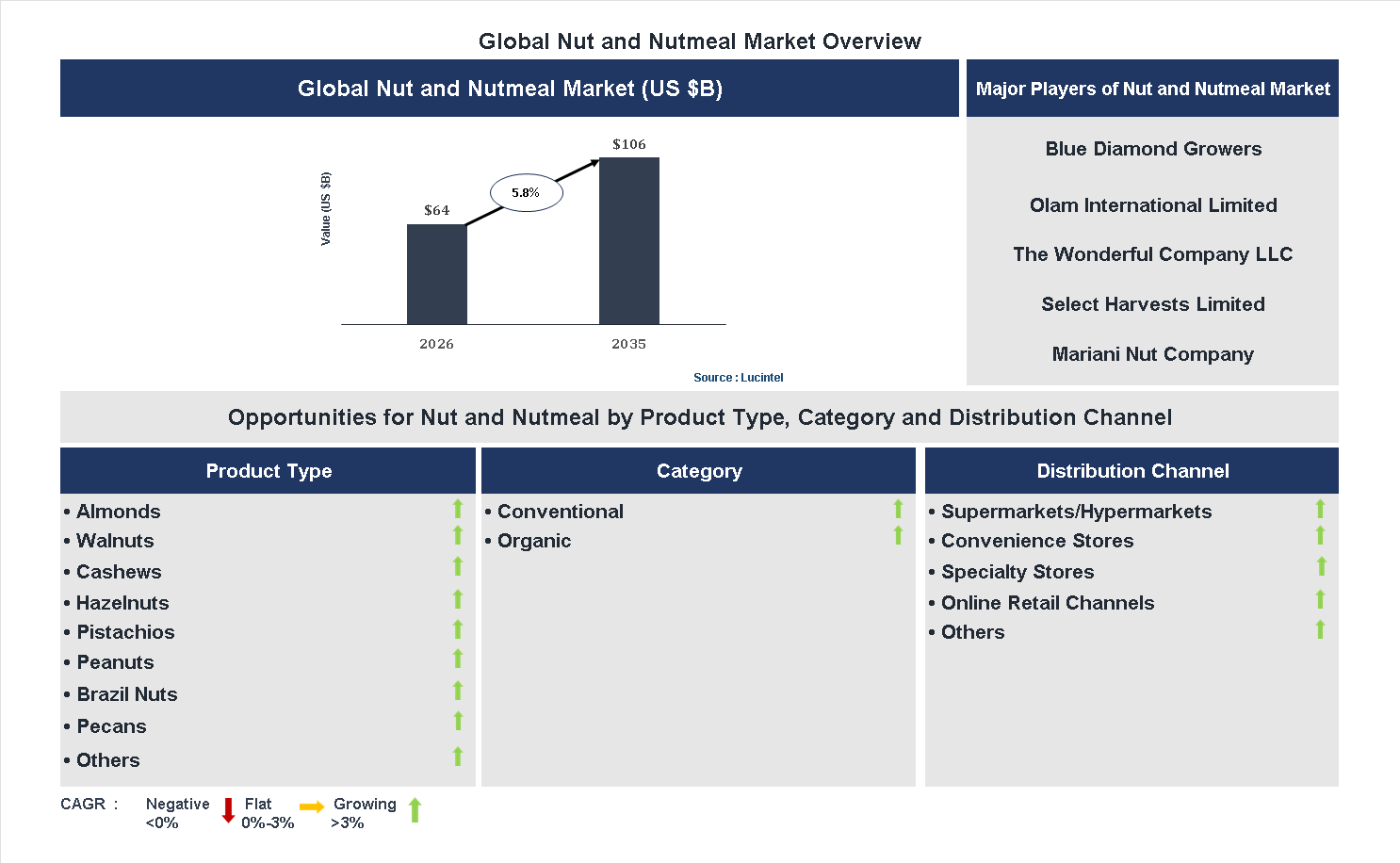
Key data points: The market size in 2035 = $106 billion, growth forecast = 5.8% annually for the next 8 years. Scroll below to get more insights. This market report covers trends, opportunities and forecasts in nut and nutmeal market to 2035 by product type (almonds, walnuts, cashews, hazelnuts, pistachios, peanuts, brazil nuts, pecans, and others), category (conventional and organic), distribution channel (supermarkets/hypermarkets, convenience stores, specialty stores, online retail channels, and others), and region (North America, Europe, Asia Pacific, and the Rest of the World)
We'll send your sample report shortly.
• Lucintel forecasts that, within the distribution channel category, supermarket/hypermarket is expected to witness the highest growth over the forecast period.
• Within the product type category, almond is expected to witness the highest growth.
• In terms of region, APAC is expected to witness the highest growth over the forecast period. Gain valuable insights for your business decisions with our comprehensive 150+ page report. Sample figures with some insights are shown below.
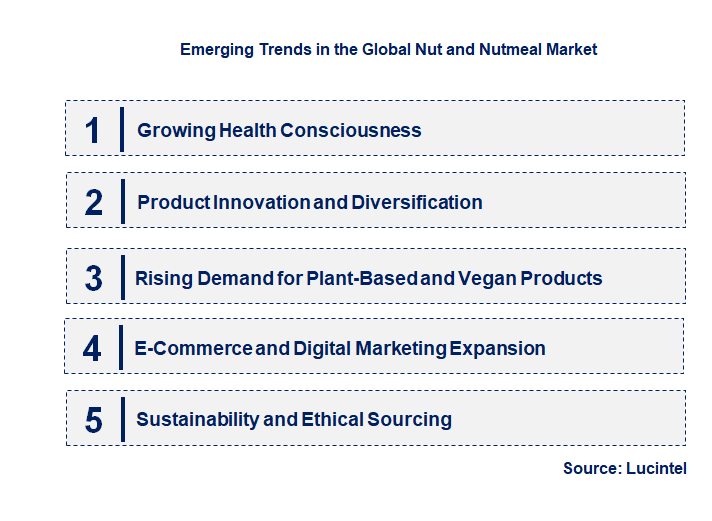
• Growing Health Consciousness: Consumers are increasingly prioritizing health and wellness, leading to higher demand for natural, organic, and minimally processed nuts and nutmeals. This trend is driven by awareness of the nutritional benefits such as high protein, healthy fats, and antioxidants. As a result, companies are focusing on organic certifications and clean-label products to attract health-conscious buyers. This shift is expanding the market to include more premium and functional nut-based products, influencing product development and marketing strategies.
• Product Innovation and Diversification: The market is witnessing a surge in innovative nut products, including flavored, roasted, and fortified options. Nutmeals are being incorporated into various food categories like snacks, cereals, and bakery items. Companies are experimenting with new formats such as nut butters, spreads, and snack bars to cater to diverse consumer preferences. This diversification enhances consumer engagement and opens new revenue streams, making the market more competitive and dynamic.
• Rising Demand for Plant-Based and Vegan Products: The increasing adoption of plant-based diets is significantly impacting the nut and nutmeal market. Nuts serve as essential ingredients in vegan and dairy-free alternatives, such as plant-based milks and cheeses. This trend boosts demand for specific nuts like almonds, cashews, and walnuts. Manufacturers are developing specialized products to meet the needs of vegan consumers, which broadens market reach and encourages sustainable sourcing practices aligned with ethical consumption.
• E-commerce and Digital Marketing Expansion: The proliferation of online retail channels is transforming how consumers access nut products. E-commerce platforms offer convenience, a wider product range, and personalized shopping experiences. Digital marketing strategies, including social media campaigns and influencer collaborations, are increasing brand visibility and consumer engagement. This trend enables companies to reach niche markets and younger demographics more effectively, accelerating market growth and fostering direct-to-consumer relationships.
• Sustainability and Ethical Sourcing: Consumers are increasingly concerned about the environmental impact and ethical considerations of their food choices. This has led to a rise in demand for sustainably sourced nuts, fair trade certifications, and eco-friendly packaging. Companies are adopting sustainable farming practices and transparent supply chains to meet these expectations. This trend not only enhances brand reputation but also encourages responsible consumption, influencing market standards and fostering long-term growth. These emerging trends are collectively reshaping the nut and nutmeal market by emphasizing health, innovation, sustainability, and digital engagement. They are driving product development, expanding consumer bases, and fostering sustainable practices. As these trends continue to evolve, they will create new opportunities for growth, influence market dynamics, and redefine industry standards, ensuring the market remains competitive and aligned with consumer values.
• Growing Health Consciousness: Increased awareness of health benefits from nuts and nutmeals is boosting demand. Consumers are seeking nutrient-dense snacks rich in proteins, healthy fats, and antioxidants, leading to higher consumption of almonds, cashews, and mixed nut products. This trend encourages product innovation, such as fortified nut butters and snack bars, expanding market reach. The focus on health is also driving sales in organic and non-GMO segments, contributing to overall market growth and diversification.
• Expansion of Plant-Based Diets: The rising popularity of plant-based diets is significantly impacting the nut and nutmeal market. Consumers are replacing animal proteins with plant-based alternatives, increasing demand for nut-based products like nut milks, spreads, and protein powders. This shift is encouraging manufacturers to develop innovative, sustainable, and allergen-free options, broadening consumer base. The trend supports market growth in both developed and emerging regions, with a focus on eco-friendly sourcing and production practices.
• Product Innovation and Diversification: Companies are introducing new nut-based products to meet evolving consumer preferences. Innovations include flavored nuts, roasted and seasoned varieties, nut-based snack mixes, and functional nut butters with added superfoods. These developments enhance product appeal and open new revenue streams. Diversification also involves packaging innovations, such as resealable pouches and single-serve options, improving convenience and shelf life. Such innovations are crucial for capturing market share and satisfying diverse consumer demands.
• Technological Advancements in Processing: Advances in processing technologies are improving product quality, safety, and shelf life. Techniques like cold-pressing, roasting, and vacuum packaging preserve nutrients and flavor while reducing spoilage. Automation and quality control systems enhance efficiency and consistency. These technological improvements enable manufacturers to meet strict safety standards and reduce costs, facilitating wider distribution. Enhanced processing also allows for the development of premium and specialty nut products, boosting market competitiveness and consumer trust.
• Growing E-commerce and Distribution Channels: The rise of online retail platforms is transforming market access and consumer engagement. E-commerce offers convenience, wider product variety, and direct-to-consumer sales, boosting sales of nuts and nutmeals. Retailers are expanding their online presence, offering subscription services and personalized product options. Additionally, strategic partnerships with health food stores and supermarkets are increasing product visibility. This digital shift is enabling market players to reach new demographics, increase sales volume, and adapt swiftly to changing consumer preferences, fueling overall market expansion. The overall impact of these developments is a robust, diversified, and innovative nut and nutmeal market. Increased consumer demand for health, sustainability, and convenience is driving product innovation and expanding distribution channels. Technological advancements and evolving dietary trends are fostering new opportunities, ensuring sustained growth and competitiveness in the global market.
• Growing Demand For Healthy Snacks And Nut-Based Products: The increasing consumer focus on health and wellness is boosting demand for nutritious snack options like trail mixes, nut bars, and roasted nuts. Nutmeals are gaining popularity as energy-boosting, protein-rich ingredients in various food products. This trend encourages manufacturers to innovate with organic, gluten-free, and non-GMO nut products, expanding their market reach. The rise in on-the-go consumption and convenience foods further supports this growth, making nuts a preferred choice for health-conscious consumers.
• Expansion Of Nut And Nutmeal Applications In Bakery And Confectionery: Nut ingredients are increasingly incorporated into baked goods, confectionery, and dairy products to enhance flavor, texture, and nutritional value. Nut butters, inclusions, and coatings are popular in cookies, cakes, and chocolates. The bakery segment benefits from the trend toward premium, artisanal, and gluten-free products, creating opportunities for specialty nuts like pistachios and almonds. This diversification helps manufacturers tap into new customer segments and elevate product offerings with added health benefits.
• Rising Preference For Organic And Premium Nut Products: Consumers are shifting toward organic, sustainably sourced, and premium nut products due to health, environmental, and ethical considerations. Organic nuts command higher prices and attract a niche market willing to pay for quality and transparency. Premium nutmeals, such as those with unique flavors or from specific regions, are gaining traction in gourmet and health food sectors. This trend encourages producers to invest in sustainable sourcing, certification, and branding to differentiate their products and meet consumer expectations.
• Technological Innovations In Nut Processing And Packaging: Advances in processing technologies, such as cold-pressing and roasting, improve nut quality and shelf life. Innovative packaging solutions like resealable pouches and modified atmosphere packaging extend freshness and convenience. Automation and quality control systems enhance efficiency and product consistency. These innovations reduce waste, lower costs, and improve consumer appeal, enabling manufacturers to deliver high-quality, innovative products that meet safety standards and consumer demands for freshness and sustainability.
• Increasing Adoption Of Nut And Nutmeal In Plant-Based And Dairy-Free Products: The rise of plant-based diets is driving demand for nut-based ingredients in dairy alternatives like nut milks, yogurts, and cheeses. Nutmeals are used as protein sources in vegan products, smoothies, and meal replacements. This trend aligns with consumer preferences for clean-label, allergen-friendly, and sustainable foods. Companies are investing in R&D to develop innovative, tasty, and nutritious plant-based products, expanding the market scope and creating new revenue streams in the growing vegan and flexitarian segments. The overall market growth is propelled by these opportunities, fostering innovation, diversification, and sustainability. As consumer preferences evolve toward health, convenience, and ethical sourcing, the nut and nutmeal market is poised for continued expansion, offering substantial potential for industry players to capitalize on emerging trends and applications.
• Increasing Health Consciousness: Consumers are becoming more aware of the health benefits associated with nuts and nutmeals, such as high protein, healthy fats, and essential nutrients. This shift towards healthier eating habits has led to a surge in demand for natural, organic, and minimally processed nut products. The growing prevalence of lifestyle-related health issues like obesity and cardiovascular diseases further propels consumers to incorporate nuts into their diets. Manufacturers are responding by offering a wider range of health-oriented products, including gluten-free, non-GMO, and organic options, which significantly boost market growth.
• Rising Disposable Income and Urbanization: As disposable incomes rise globally, consumers are willing to spend more on premium and nutritious food products, including nuts and nutmeals. Urbanization also plays a crucial role, as city dwellers tend to have busier lifestyles and seek convenient, healthy snack options. The increased purchasing power enables consumers to access a broader variety of high-quality nuts, often at premium prices, thereby expanding market revenue. Additionally, urban markets often have better retail infrastructure, facilitating easier distribution and availability of nut products.
• Technological Advancements in Processing: Innovations in processing technologies, such as roasting, flavoring, and packaging, have improved the quality, taste, and shelf life of nut products. Advanced sorting and cleaning techniques ensure higher purity and safety standards, boosting consumer confidence. Moreover, developments in packaging materials enhance product freshness and convenience, encouraging repeat purchases. These technological improvements enable manufacturers to diversify product offerings, target niche markets, and reduce wastage, thereby driving overall market expansion.
• Growing E-commerce and Retail Channels: The proliferation of online retail platforms has made nuts and nutmeals more accessible to a global consumer base. E-commerce offers convenience, a wider product variety, and competitive pricing, attracting tech-savvy and health-conscious buyers. Retail chains and specialty stores are also expanding their product ranges to include premium and organic nut options, increasing visibility and availability. This omnichannel approach broadens market reach, stimulates sales, and fosters brand loyalty, significantly contributing to market growth.
• Product Innovation and Diversification: Companies are continuously innovating by introducing new flavors, formats, and functional nut products, such as nut butters, snack bars, and fortified nut mixes. These innovations cater to evolving consumer preferences for convenience, taste, and health benefits. Diversification into organic, non-GMO, and allergen-free segments further broadens the consumer base. Such product development not only attracts new customers but also encourages existing consumers to purchase more frequently, thereby fueling market expansion. The challenges facing the nut and nutmeal market include:
• Supply Chain Disruptions: The market heavily relies on the global supply of nuts, which is susceptible to disruptions caused by weather conditions, pests, and geopolitical issues. Droughts, wildfires, and inconsistent harvests can lead to shortages and price volatility, affecting production and profitability. Additionally, logistical challenges such as transportation delays and trade restrictions can hinder timely distribution, impacting product availability and consumer satisfaction. Managing supply chain risks is crucial for maintaining steady growth and competitive pricing in this market.
• Regulatory and Food Safety Standards: Stringent regulations regarding food safety, labeling, and organic certification pose compliance challenges for manufacturers. Variations across regions can complicate international trade and increase operational costs. Ensuring adherence to these standards requires continuous monitoring, quality control, and certification processes, which can be resource-intensive. Non-compliance risks product recalls, legal penalties, and damage to brand reputation, thereby creating barriers to market entry and expansion.
• Consumer Allergies and Health Concerns: While nuts are popular for their health benefits, they are also common allergens, which can limit consumer segments and pose liability risks for manufacturers. The rising awareness of nut allergies necessitates clear labeling and allergen management, increasing production complexity. Additionally, concerns over pesticide residues and contaminants require rigorous testing and quality assurance. Addressing these health concerns is vital to maintain consumer trust and avoid potential legal issues, but it can also restrict product formulations and innovation. The nut and nutmeal market is driven by increasing health awareness, rising incomes, technological innovations, expanding distribution channels, and product diversification. However, it faces challenges such as supply chain vulnerabilities, regulatory complexities, and health-related concerns. These factors collectively influence market dynamics, requiring stakeholders to innovate, adapt, and implement robust risk management strategies. Overall, the markets growth potential remains significant, provided that companies effectively navigate these drivers and challenges to meet evolving consumer demands and regulatory requirements.
• Blue Diamond Growers
• Olam International Limited
• The Wonderful Company LLC
• Select Harvests Limited
• Mariani Nut Company
• Diamond Foods, LLC
• Archer Daniels Midland Company
• Hormel Foods, LLC
• Bob’s Red Mill Natural Foods
• Royal Nut Company
• Almonds
• Walnuts
• Cashews
• Hazelnuts
• Pistachios
• Peanuts
• Brazil Nuts
• Pecans
• Others
• Conventional
• Organic
• Supermarkets/Hypermarkets
• Convenience Stores
• Specialty Stores
• Online Retail Channels
• Others
• North America
• Europe
• Asia Pacific
• The Rest of the World
• United States: The U.S. market has seen a surge in organic and non-GMO nut products, driven by health-conscious consumers. Plant-based diets are fueling demand for nut butters and snack bars, with innovative packaging and flavor profiles gaining popularity. E-commerce sales have increased significantly, and major brands are investing in sustainable sourcing and transparency initiatives. The rise of gluten-free and allergen-free options is also notable, catering to diverse dietary needs.
• China: China’s nut market is expanding rapidly, supported by rising disposable incomes and increasing awareness of health benefits. Local and international brands are introducing a variety of roasted and flavored nuts to appeal to younger consumers. E-commerce platforms are playing a crucial role in distribution, with online sales channels growing faster than traditional retail. There is also a growing trend towards organic and premium nut products, reflecting changing consumer preferences.
• Germany: The German market emphasizes organic and fair-trade nuts, aligning with the country’s strong sustainability values. Consumers are increasingly seeking high-quality, minimally processed products, with a focus on transparency and ethical sourcing. The market is witnessing innovations in nut-based snacks and dairy alternatives, such as nut milks and spreads. Retailers are expanding their product ranges to include diverse nut varieties and health-oriented formulations.
• India: India’s nut and nutmeal market is experiencing rapid growth due to rising health awareness and urbanization. Traditional consumption of nuts like almonds and cashews is expanding into packaged and processed forms. The market is witnessing increased demand for organic and premium products, with local brands gaining prominence. Nut-based snacks and breakfast options are becoming popular, supported by a growing retail infrastructure and e-commerce platforms.
• Japan: Japan’s market is characterized by a focus on health and wellness, with consumers favoring low-sugar, natural, and organic nut products. Innovative nut snacks and functional foods with added health benefits are gaining traction. The country’s aging population is driving demand for nutritious, easy-to-consume products. Retailers are emphasizing sustainable sourcing and product transparency, while premium and specialty nuts are increasingly sought after by consumers.


• Blue Diamond Growers
• Olam International Limited
• The Wonderful Company LLC
• Select Harvests Limited
• Mariani Nut Company
• Diamond Foods, LLC
• Archer Daniels Midland Company
• Hormel Foods, LLC
• Bob’s Red Mill Natural Foods
• Royal Nut Company Q6. Which nut and nutmeal market segment will be the largest in future? Answer: Lucintel forecasts that, within the distribution channel category, supermarket/hypermarket is expected to witness the highest growth over the forecast period. Q7. In nut and nutmeal market, which region is expected to be the largest in next 8 years? Answer: In terms of region, APAC is expected to witness the highest growth over the forecast period. Q8. Do we receive customization in this report? Answer: Yes, Lucintel provides 10% customization without any additional cost.


Choose a license that fits your team. Instant PDF delivery.
Prices exclude taxes. Instant delivery. Custom licensing available on request.
Market Report · July 22, 2026
Market Report · July 22, 2026
Market Report · July 22, 2026
Trusted partner for strategic intelligence and business growth


Receive a complimentary market analysis tailored to your industry. Our analysts will identify key growth opportunities and competitive dynamics specific to your business.

Market size, growth rate, and key trend analysis for your specific sector.

Top competitor positioning and market share analysis.

Strategic recommendations backed by data-driven insights.
Get curated market intelligence and competitive moves straight to your inbox.
By subscribing, you agree to receive our monthly insights. Unsubscribe anytime.
Receive a complimentary market analysis tailored to your industry. Our analysts will identify key growth opportunities and competitive dynamics specific to your business.
Market size, growth rate, and key trend analysis for your specific sector.
Top competitor positioning and market share analysis.
Strategic recommendations backed by data-driven insights.
Get curated market intelligence, emerging trends, and competitive moves straight to your inbox each month.
By subscribing, you agree to receive our monthly insights. Unsubscribe anytime.
We'll send your sample report shortly.