
Market Report · July 22, 2026

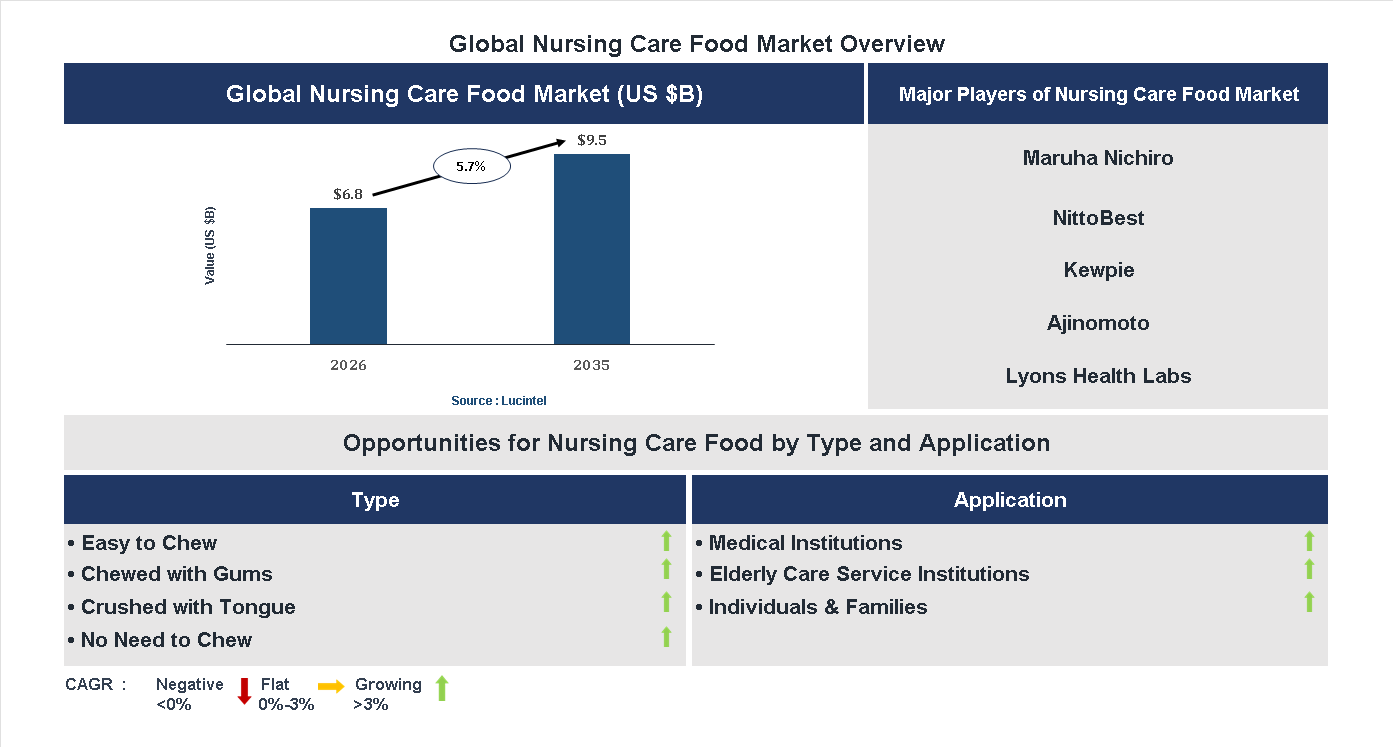
Key data points: The market size in 2035 = $9.5 billion, growth forecast = 5.7% annually for the next 8 years. Scroll below to get more insights. This market report covers trends, opportunities and forecasts in nursing care food market to 2035 by type (easy to chew, chewed with gums, crushed with tongue, and no need to chew), application (medical institutions, elderly care service institutions, and individuals & families), and region (North America, Europe, Asia Pacific, and the Rest of the World)
We'll send your sample report shortly.
• Lucintel forecasts that, within the type category, no need to chew is expected to witness the highest growth over the forecast period.
• Within the application category, individual & family is expected to witness the highest growth.
• In terms of region, APAC is expected to witness the highest growth over the forecast period. Gain valuable insights for your business decisions with our comprehensive 150+ page report. Sample figures with some insights are shown below.
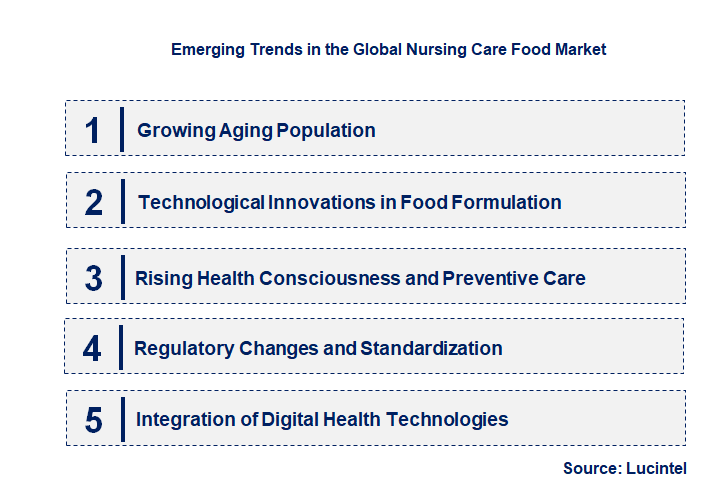
• Growing Aging Population: The increasing number of elderly individuals worldwide is driving demand for specialized nursing care foods. As age-related health issues become more prevalent, there is a need for nutrient-rich, easy-to-consume, and tailored food products that support health and recovery. This trend encourages manufacturers to develop functional foods that address specific conditions such as osteoporosis, cardiovascular diseases, and cognitive decline, thereby expanding market opportunities and emphasizing the importance of age-specific nutrition.
• Technological Innovations in Food Formulation: Advances in food technology, such as 3D printing, encapsulation, and personalized nutrition algorithms, are revolutionizing the nursing care food market. These innovations enable the creation of customized, nutrient-dense foods that cater to individual health profiles and dietary restrictions. The impact includes improved efficacy of nutritional interventions, enhanced palatability, and better compliance among patients, ultimately leading to improved health outcomes and increased market competitiveness.
• Rising Health Consciousness and Preventive Care: Consumers are increasingly aware of the importance of nutrition in maintaining health and preventing disease. This shift is prompting healthcare providers and food manufacturers to focus on functional foods that promote immunity, cognitive health, and overall wellness. The trend supports the development of preventive care products, which are gaining popularity in nursing care settings, thereby expanding the market beyond traditional therapeutic foods and fostering a proactive approach to health management.
• Regulatory Changes and Standardization: Governments and health authorities are implementing stricter regulations and standards for nursing care foods to ensure safety, efficacy, and nutritional adequacy. These regulatory developments influence product formulation, labeling, and marketing strategies, encouraging companies to innovate within compliance frameworks. The impact includes increased product credibility, consumer trust, and market transparency, which collectively drive growth and encourage higher quality standards across the industry.
• Integration of Digital Health Technologies: The incorporation of digital tools such as mobile apps, wearable devices, and telehealth platforms is transforming how nutritional care is delivered. These technologies facilitate real-time monitoring of patients nutritional status, personalized meal planning, and remote consultations. The integration enhances patient engagement, improves adherence to dietary regimens, and enables data-driven decision-making, thereby optimizing care outcomes and expanding the scope of nursing care food services in digital health ecosystems. These emerging trends are reshaping the nursing care food market by fostering innovation, enhancing personalization, and emphasizing preventive health. They are driving growth, improving patient outcomes, and setting new standards for quality and safety, ultimately leading to a more responsive and sustainable industry.
• Aging Population and Chronic Disease Management: The increasing number of elderly individuals and those with chronic illnesses is driving demand for specialized nursing care foods. These products are tailored to support health conditions such as diabetes, cardiovascular diseases, and malnutrition, improving patient outcomes. The market benefits from a growing awareness of nutritional needs in healthcare settings, leading to expanded product lines and increased sales. This trend encourages innovation and investment in functional, easy-to-consume foods that promote recovery and well-being.
• Innovation in Nutritional Formulations: Advances in food technology are enabling the development of nutrient-dense, palatable, and easy-to-digest products tailored for nursing care. These innovations include fortified foods, texture-modified options, and personalized nutrition solutions. The impact is significant, as it enhances patient compliance and health outcomes. Companies investing in research are gaining competitive advantages, and healthcare providers are better equipped to meet individual nutritional requirements, fostering market growth and product diversification.
• Regulatory and Policy Support: Governments and health authorities are implementing stricter regulations and guidelines to ensure safety, efficacy, and nutritional standards in nursing care foods. These policies promote quality assurance and transparency, boosting consumer confidence. The regulatory environment encourages innovation while maintaining safety standards, which benefits manufacturers and consumers alike. It also facilitates market entry for new products, fostering a competitive landscape that drives continuous improvement and innovation.
• Digital and Technological Integration: The adoption of digital tools, such as AI and data analytics, is transforming product development, personalization, and supply chain management in the nursing care food market. These technologies enable precise targeting of nutritional needs and streamline operations, reducing costs and improving efficiency. The impact includes enhanced product customization, better inventory management, and improved patient monitoring. This integration positions companies to respond swiftly to market demands and enhances overall service quality in healthcare nutrition.
• Growing Consumer Awareness and Preference for Healthy Foods: Consumers are increasingly seeking nutritious, functional, and convenient food options for nursing care. This trend is driven by heightened health consciousness and a desire for independence among elderly populations. The market responds with innovative, health-oriented products that emphasize natural ingredients, low sugar, and added health benefits. The impact is a broader product portfolio, increased market penetration, and a shift towards preventive health strategies, ultimately expanding the market scope and consumer base. The recent developments in the nursing care food market are significantly shaping its future, fostering innovation, regulatory improvements, and technological advancements. These factors collectively enhance product quality, safety, and personalization, leading to increased market growth. As consumer awareness and healthcare needs evolve, the market is poised for sustained expansion, offering new opportunities for stakeholders and improving nutritional care for vulnerable populations.
• Growing Demand For Specialized Nutritional Products: The increasing prevalence of chronic diseases and age-related health issues has heightened the need for specialized nursing care foods. These products are formulated to address specific nutritional deficiencies, support immune health, and promote recovery. The market is expanding as healthcare providers and caregivers prioritize tailored nutrition plans, leading to innovations in texture, flavor, and nutrient composition to meet diverse patient needs.
• Technological Innovations Enhancing Product Development: Advances in food technology enable the creation of more effective, palatable, and shelf-stable nursing care foods. Techniques such as microencapsulation, functional fortification, and personalized nutrition solutions are improving product efficacy and consumer acceptance. These innovations facilitate the development of targeted dietary options that cater to individual health conditions, thereby expanding market offerings and improving patient outcomes.
• Increasing Adoption Of Functional And Fortified Foods: Consumers and healthcare providers are increasingly favoring functional foods that offer additional health benefits beyond basic nutrition. Fortified nursing care foods enriched with vitamins, minerals, probiotics, and other bioactive compounds are gaining popularity. This trend supports better health management, disease prevention, and recovery, driving market growth as demand for such products rises across hospitals, nursing homes, and home care settings.
• Rising Focus On Convenience And Ready-To-Use Formats: The demand for easy-to-prepare, ready-to-eat nursing care foods is surging, especially among caregivers and elderly consumers. Convenience formats such as pre-packaged meals, nutritional drinks, and snack bars facilitate quick, hassle-free nutrition management. This shift enhances compliance, reduces preparation time, and ensures consistent nutrient intake, thereby expanding the market for portable, user-friendly products tailored for nursing care.
• Regulatory Support and Increasing Healthcare Expenditure: Governments and health organizations are implementing policies to promote nutritional standards in healthcare settings. Increased healthcare spending on elderly care and chronic disease management further fuels market growth. Regulatory approvals and quality standards ensure product safety and efficacy, boosting consumer confidence. These factors collectively create a favorable environment for market expansion, innovation, and the development of comprehensive nutritional solutions for nursing care. The overall impact of these opportunities is a robust, innovative market poised for sustained growth. As demand for tailored, convenient, and effective nutritional solutions increases, stakeholders can expect enhanced product development, improved patient outcomes, and expanded market reach. This evolution will support better health management and quality of life for vulnerable populations, reinforcing the strategic importance of the nursing care food sector.
• Technological Innovations: The integration of advanced food processing and preservation technologies has led to the development of specialized nursing care foods that meet specific nutritional needs. Innovations such as personalized nutrition, functional foods, and fortified products enhance health outcomes for patients requiring nursing care. These technological advancements enable manufacturers to produce safer, longer-lasting, and more effective products, thereby expanding market opportunities. As technology continues to evolve, the ability to customize and improve nutritional profiles will further stimulate market growth, especially in hospitals, nursing homes, and home care settings.
• Aging Population: The global increase in the elderly demographic is a significant driver for the nursing care food market. Older adults often require specialized diets to manage chronic conditions and nutritional deficiencies, creating a steady demand for tailored nursing care foods. This demographic shift results in higher healthcare expenditures and a greater need for convenient, nutrient-dense food options that support aging healthily. The rising prevalence of age-related health issues such as osteoporosis, cardiovascular diseases, and cognitive decline amplifies the need for specialized nutritional products, thereby fueling market expansion.
• Rising Healthcare Expenditure: Increasing healthcare costs worldwide are prompting healthcare providers and caregivers to focus on preventive and supportive nutrition. Nursing care foods are seen as essential in managing health conditions and reducing hospital readmissions. The economic pressure to improve patient outcomes while controlling costs encourages investment in specialized nutrition solutions. This trend supports the development and adoption of innovative nursing care foods, contributing to market growth as healthcare systems seek cost-effective ways to enhance patient care through nutrition.
• Regulatory Support and Standards: Governments and health authorities are establishing stringent regulations and quality standards for nursing care foods to ensure safety, efficacy, and nutritional adequacy. These regulations foster consumer confidence and encourage manufacturers to adhere to high-quality production practices. Regulatory support also facilitates market entry for new products and innovations, promoting competition and diversity in offerings. Compliance with these standards is crucial for market players to expand their reach and establish credibility, ultimately driving market growth through increased trust and product reliability.
• Growing Awareness of Nutritional Health: Increasing awareness among consumers, caregivers, and healthcare professionals about the importance of proper nutrition in disease management and aging is a key driver. Educational campaigns and digital health platforms promote the benefits of specialized nursing care foods, influencing purchasing decisions. This heightened awareness encourages demand for high-quality, nutrient-rich products tailored to individual health needs, thereby expanding market opportunities. As consumers become more health-conscious, the market is expected to see continued growth driven by demand for transparency, ingredient quality, and personalized nutrition solutions. The challenges facing the nursing care food market include:
• High Product Development Costs: Developing specialized nursing care foods requires significant investment in research, formulation, testing, and compliance with regulatory standards. These high costs can act as barriers for small and medium-sized manufacturers, limiting innovation and market entry. Additionally, the need for continuous product improvement to meet evolving health standards increases R&D expenses. Consequently, high development costs may restrict market competition and slow the pace of innovation, impacting the availability and affordability of nursing care foods.
• Regulatory Complexity and Compliance: Navigating the complex regulatory landscape across different regions poses a significant challenge. Variations in standards related to labeling, safety, and nutritional content require manufacturers to adapt products for each market, increasing time and costs. Non-compliance can lead to product recalls, legal penalties, and damage to brand reputation. The evolving regulatory environment demands ongoing monitoring and adjustments, which can hinder rapid product launches and innovation, thereby affecting overall market growth.
• Market Penetration and Consumer Acceptance: Despite the growing demand, penetrating traditional healthcare settings and convincing caregivers and patients to adopt specialized nursing care foods remains challenging. Factors such as cultural preferences, taste, and perceived value influence acceptance. Resistance from healthcare providers accustomed to conventional diets can slow adoption rates. Additionally, price sensitivity among consumers and healthcare institutions may limit access to premium products. Overcoming these barriers requires targeted marketing, education, and product customization, which can be resource-intensive and impact market expansion. The nursing care food market is shaped by technological advancements, demographic shifts, economic pressures, regulatory frameworks, and increasing health awareness. While these drivers present significant growth opportunities, challenges such as high development costs, regulatory complexities, and market acceptance hurdles must be addressed. The overall impact is a dynamic landscape that demands innovation, strategic compliance, and consumer engagement to sustain growth and meet the evolving needs of aging populations and healthcare providers.
• Maruha Nichiro
• NittoBest
• Kewpie
• Ajinomoto
• Lyons Health Labs
• apetito
• Asahi
• Ever Smile
• Forica Foods
• Maruhachi Muramatsu
• Easy to Chew
• Chewed with Gums
• Crushed with Tongue
• No Need to Chew
• Medical Institutions
• Elderly Care Service Institutions
• Individuals & Families
• North America
• Europe
• Asia Pacific
• The Rest of the World
• United States: The US market has seen a surge in demand for functional nursing care foods, including fortified and easy-to-consume products tailored for seniors. Major companies are investing in R&D to develop innovative formulations that address specific health conditions such as osteoporosis and cardiovascular issues. Regulatory agencies are emphasizing safety and efficacy, leading to stricter standards. The rise of e-commerce platforms has expanded access to specialized products, and collaborations between healthcare providers and food manufacturers are increasing to promote preventive care. Overall, the US market is characterized by technological innovation and a focus on personalized nutrition solutions.
• China: Chinas nursing care food market is rapidly expanding due to its aging population and increasing healthcare expenditure. Domestic companies are innovating with traditional ingredients combined with modern nutrition science to create culturally acceptable products. Government initiatives are supporting the development of elderly nutrition programs, and there is a growing emphasis on functional foods that improve immunity and cognitive health. The market is also witnessing a rise in premium and imported products, catering to affluent consumers seeking high-quality options. Distribution channels are diversifying, with online sales gaining prominence, facilitating wider access to specialized nursing care foods.
• Germany: Germanys market is driven by a strong focus on quality, safety, and scientific validation of nursing care foods. The country emphasizes products that support aging in place and address specific health conditions such as diabetes and malnutrition. Innovations include texture-modified foods and drinks designed for ease of swallowing and digestion. Regulatory frameworks are stringent, ensuring high standards for product safety and nutritional content. The German market also benefits from a well-established healthcare infrastructure, with collaborations between food manufacturers and healthcare providers. Sustainability and organic options are increasingly prioritized by consumers, influencing product development.
• India: The Indian nursing care food market is emerging, with a growing awareness of elderly nutrition needs amid a large aging population. Local companies are developing affordable, culturally relevant products that incorporate traditional ingredients like turmeric and herbs. The focus is on addressing malnutrition and boosting immunity, especially in rural areas with limited healthcare access. Government schemes and initiatives are promoting nutritional awareness and supplement programs. The market is witnessing increased penetration of organized retail and online channels, making specialized nursing care foods more accessible. Innovations are also driven by the need for cost-effective solutions tailored to diverse dietary preferences.
• Japan: Japans market is highly advanced, reflecting its status as one of the worlds most aged societies. There is a strong demand for specialized nursing care foods that support cognitive health, mobility, and overall well-being. Technological innovations include texture-modified foods and nutrient-dense beverages designed for ease of consumption by seniors. Regulatory standards are rigorous, ensuring product safety and efficacy. The market benefits from a high level of consumer awareness and a well-established healthcare system that integrates nutritional support into elderly care. Companies are investing in research to develop personalized nutrition plans, and sustainability practices are increasingly incorporated into product development.


• Maruha Nichiro
• NittoBest
• Kewpie
• Ajinomoto
• Lyons Health Labs
• apetito
• Asahi
• Ever Smile
• Forica Foods
• Maruhachi Muramatsu Q6. Which nursing care food market segment will be the largest in future? Answer: Lucintel forecasts that, within the type category, no need to chew is expected to witness the highest growth over the forecast period. Q7. In nursing care food market, which region is expected to be the largest in next 5 years? Answer: In terms of region, APAC is expected to witness the highest growth over the forecast period. Q8. Do we receive customization in this report? Answer: Yes, Lucintel provides 10% customization without any additional cost.


Choose a license that fits your team. Instant PDF delivery.
Prices exclude taxes. Instant delivery. Custom licensing available on request.
Market Report · July 22, 2026
Market Report · July 22, 2026
Market Report · July 22, 2026
Trusted partner for strategic intelligence and business growth


Receive a complimentary market analysis tailored to your industry. Our analysts will identify key growth opportunities and competitive dynamics specific to your business.

Market size, growth rate, and key trend analysis for your specific sector.

Top competitor positioning and market share analysis.

Strategic recommendations backed by data-driven insights.
Get curated market intelligence and competitive moves straight to your inbox.
By subscribing, you agree to receive our monthly insights. Unsubscribe anytime.
Receive a complimentary market analysis tailored to your industry. Our analysts will identify key growth opportunities and competitive dynamics specific to your business.
Market size, growth rate, and key trend analysis for your specific sector.
Top competitor positioning and market share analysis.
Strategic recommendations backed by data-driven insights.
Get curated market intelligence, emerging trends, and competitive moves straight to your inbox each month.
By subscribing, you agree to receive our monthly insights. Unsubscribe anytime.
We'll send your sample report shortly.