
Market Report · July 22, 2026

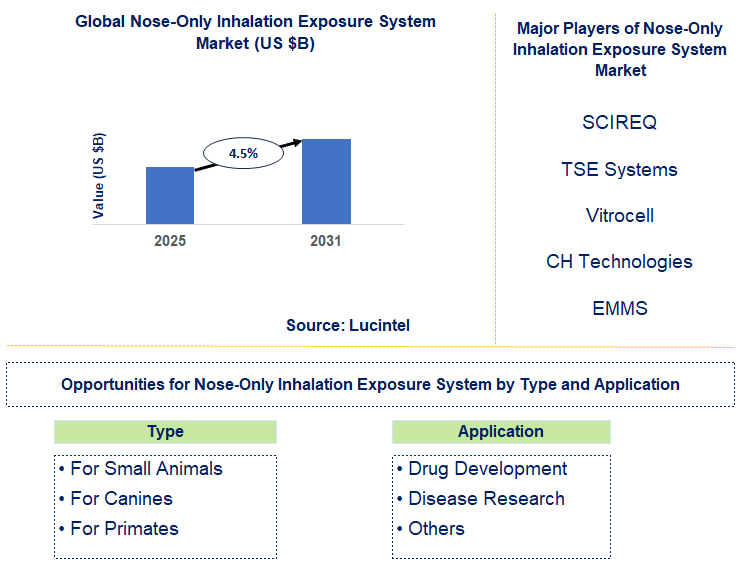
Key data points: The growth forecast = 4.5% annually for the next 7 years. Scroll below to get more insights. This market report covers trends, opportunities and forecasts in nose-only inhalation exposure system market to 2031 by type (for small animals, for canines, and for primates), application (drug development, disease research, and others), and region (North America, Europe, Asia Pacific, and the Rest of the World)
We'll send your sample report shortly.
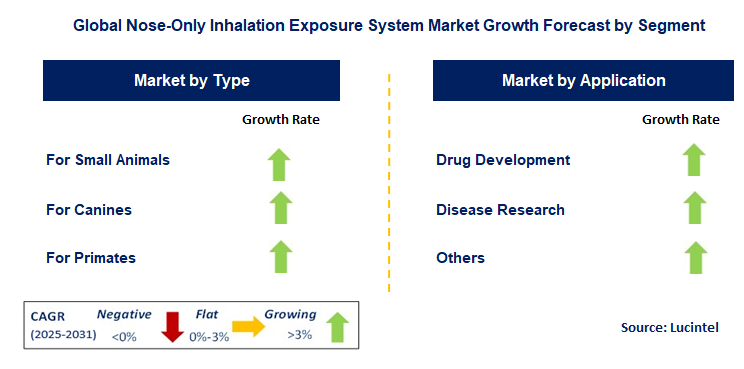
• Lucintel forecasts that, within the type category, for small animal is expected to witness the highest growth over the forecast period.
• Within the application category, drug development is expected to witness higher growth.
• In terms of region, APAC is expected to witness the highest growth over the forecast period. Gain valuable insights for your business decisions with our comprehensive 150+ page report. Sample figures with some insights are shown below.
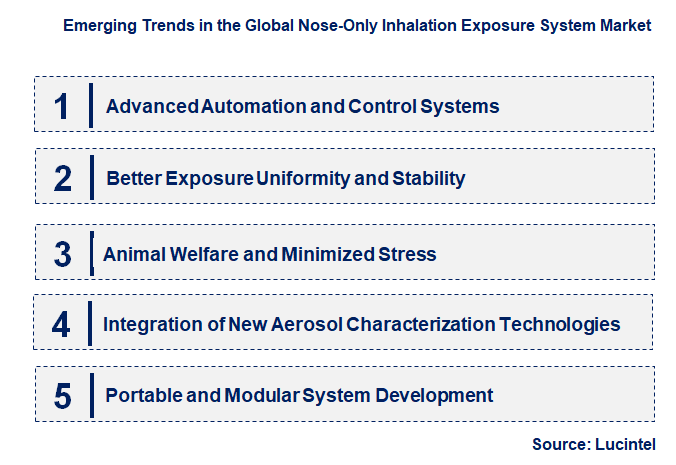
• Advanced Automation and Control Systems: One key trend is more incorporation of advanced automation and control systems into nose-only exposure systems. Automated aerosol generation, exposure concentration monitoring in real time, exact control of airflow and temperature, and data logging are some of the features that are being integrated. These enhance the accuracy, reproducibility, and efficiency of inhalation studies with less human intervention.
• Better Exposure Uniformity and Stability: Maintaining uniform and consistent exposure of animals to the test item is one of the most critical factors for obtaining accurate results. New trends lean towards sophisticated aerosol delivery systems as well as exposure chamber systems to reduce concentration gradients and ensure stable exposure conditions over the study period, resulting in better dose-response measurement.
• Animal Welfare and Minimized Stress: Reducing animal stress during inhalation exposure is growing in importance for scientific and ethical considerations. Trends include the use of more comfortable and less restricting restraint systems, quieter operation of the exposure system, and inclusion of features that permit observation and monitoring of animal welfare during exposure.
• Integration of New Aerosol Characterization Technologies: Proper characterization of the inhaled aerosol or gas is fundamental in the determination of the delivered dose. New trends include integration of real-time aerosol size distribution analyzers, concentration sensors, and chemical composition analysis systems into the exposure system directly, offering detailed information on the inhaled material.
• Portable and Modular System Development: Portable and modular nose-only inhalation exposure systems with the ability to bring flexibility and convenience to multiple laboratory environments are increasingly in demand. These systems facilitate simpler setup, relocation, and adaptation for unique study needs, making the technology more generally available to a broader number of research facilities. All these emerging trends are summed up to reshape collectively the nose-only inhalation exposure system market towards higher accuracy, efficiency, animal well-being, and availability. The advances in automation, uniformity of exposure, animal convenience, aerosol characterization, and portability of the system are proving to make the reliability and usability of nose-only inhalation studies higher across all the domains of research and regulations.
• High-Throughput System Development: To address the growing need for the quick screening of inhaled agents, vendors are designing high-throughput nose-only exposure systems capable of exposing numerous animals at once. This makes it more efficient and cuts down on both the cost and duration of inhalation toxicology studies.
• Incorporation of Real-Time Telemetry for Physiological Monitoring: Recent innovations involve the inclusion of real-time telemetry systems enabling continuous monitoring of physiological parameters in the exposed animals, e.g., heart rate, respiratory rate, and temperature. This offers useful information on the immediate impact of inhalation exposure without inducing further stress to the animals.
• Aerosol Generation Advances for Nanomaterials: The expansion of the field of nanotechnology has created a greater demand for controlled and accurate inhalation exposure to nanomaterials. Advances in aerosol generation technology are allowing for reproducible and stable delivery of nanoparticles with defined size distributions for toxicological evaluation.
• Systems for Inhalation Exposure to Vapors and Gases: While originally employed for aerosol use, nose-only systems are being modified and developed to provide accurate exposure to gases and vapors. Specialized delivery and control of gas concentration systems must be employed to deliver precise and stable exposure concentrations.
• Standardization and Validation Protocols: In order to enhance the quality and comparability of inhalation toxicology information between laboratories, there is increasing focus on establishing and using standardized operating procedures and validation protocols for nose-only inhalation exposure systems. These major advances are having a major impact on the nose-only inhalation exposure system market by enhancing study throughput, allowing for real-time physiological information, enabling accurate exposure to nanomaterials and gases, and enhancing overall quality and comparability of inhalation toxicology studies through standardization.
• Pharmaceutical Research and Development: One of the key growth areas is in the pharmaceutical sector with preclinical inhalation toxicology of new drug formulations administered through inhalation. Nose-only systems play an important role in the evaluation of safety and effectiveness of inhaled therapeutics for respiratory and systemic drug delivery disorders.
• Regulatory Toxicology Testing: Global regulatory authorities demand inhalation toxicology studies for safety evaluation of a range of substances such as industrial chemicals, pesticides, and consumer products. The necessity for precise and compliant data generates a continued demand for nose-only exposure systems in contract research organizations and government laboratories.
• Environmental Health Research: Nose-only inhalation systems are critical research tools for the investigation of the health effects of airborne pollutants, nanoparticles, and other environmental toxins. Environmental agencies and research institutions are a rising market sector.
• Agrochemical Safety Testing: The agrochemical industry applies nose-only inhalation systems to analyze the possible inhalation hazards of pesticides and other agricultural chemicals in order to ensure the protection of workers and the environment.
• Consumer Product Safety Test: Companies that produce consumer products, like aerosols, fragrances, and cleaning products, utilize nose-only inhalation systems to evaluate possible respiratory risks of their products in order to ensure safety for consumers and regulatory compliance. These growth opportunities through strategic growth are leading to the development of specialized nose-only inhalation exposure systems specifically suited to each application field. The pharmaceutical, regulatory, environmental, agrochemical, and consumer products markets are important for this technology with growth promoting innovation and market growth.
• SCIREQ
• TSE Systems
• Vitrocell
• CH Technologies
• EMMS
• Glas-Col
• Data Sciences International
• Ahujatech
• In-Tox Products
• Beijing Huironghe Technology
• For Small Animals
• For Canines
• For Primates
• Drug Development
• Disease Research
• Others
• North America
• Europe
• Asia Pacific
• The Rest of the World
• United States: The nose-only inhalation exposure systems market in the US is experiencing growth fueled by strict regulatory standards of bodies such as the EPA and FDA. Recent trends involve the incorporation of high-end software for real-time monitoring and exposure parameter control. There is also increasing need for systems having a broader range of animal species and exposure times, and efforts to reduce animal stress with better restraint and exposure chamber designs.
• China: China's market for nose-only inhalation exposure systems is growing at a fast rate, driven by expanding investment in pharmaceutical research and development, and tightening environmental regulations. Recent trends include the production of more affordable and locally made systems, increasing the availability of the technology for local research institutions and companies. There is also a greater focus on standardization and quality control to achieve global research standards.
• Germany: Germany's nose-only inhalation exposure system market is high tech and high quality, with major customers coming from the pharmaceutical, chemical, and contract research organization (CRO) industries. Examples of new developments include the use of more advanced aerosol generation and characterization technologies and an emphasis on ergonomic designs to enhance usability and animal well-being. Meeting the rigorous requirements of the European Union drives innovation.
• India: Indian nose-only inhalation exposure system market is in a developing but nascent phase, fueled by the growth of the pharmaceutical and chemical industries and heightened awareness of the need for inhalation toxicology studies. Recent changes involve the first adoption of such systems by research organizations and CROs, frequently through partnerships or imports. There is a potential for substantial expansion with more defined regulatory approaches to inhalation safety testing.
• Japan: The nose-only inhalation exposure system market in Japan is highly emphasis-oriented on precision and reliability, reflecting the high standards set by its established chemical and pharmaceutical industries. Recent trends involve the creation of highly specialized systems for individual research application, including studies of nanoparticle inhalation. Minimizing stress on animals and promoting ethical treatment in inhalation toxicology testing is also a focus.


• SCIREQ
• TSE Systems
• Vitrocell
• CH Technologies
• EMMS
• Glas-Col
• Data Sciences International
• Ahujatech
• In-Tox Products
• Beijing Huironghe Technology Q5. Which nose-only inhalation exposure system market segment will be the largest in future? Answer: Lucintel forecasts that, within the type category, for small animal is expected to witness the highest growth over the forecast period. Q6. In nose-only inhalation exposure system market, which region is expected to be the largest in next 5 years? Answer: In terms of region, APAC is expected to witness the highest growth over the forecast period. Q7. Do we receive customization in this report? Answer: Yes, Lucintel provides 10% customization without any additional cost.


Choose a license that fits your team. Instant PDF delivery.
Prices exclude taxes. Instant delivery. Custom licensing available on request.
Market Report · July 22, 2026
Market Report · July 22, 2026
Market Report · July 22, 2026
Trusted partner for strategic intelligence and business growth


Receive a complimentary market analysis tailored to your industry. Our analysts will identify key growth opportunities and competitive dynamics specific to your business.

Market size, growth rate, and key trend analysis for your specific sector.

Top competitor positioning and market share analysis.

Strategic recommendations backed by data-driven insights.
Get curated market intelligence and competitive moves straight to your inbox.
By subscribing, you agree to receive our monthly insights. Unsubscribe anytime.
Receive a complimentary market analysis tailored to your industry. Our analysts will identify key growth opportunities and competitive dynamics specific to your business.
Market size, growth rate, and key trend analysis for your specific sector.
Top competitor positioning and market share analysis.
Strategic recommendations backed by data-driven insights.
Get curated market intelligence, emerging trends, and competitive moves straight to your inbox each month.
By subscribing, you agree to receive our monthly insights. Unsubscribe anytime.
We'll send your sample report shortly.