
Market Report · July 22, 2026

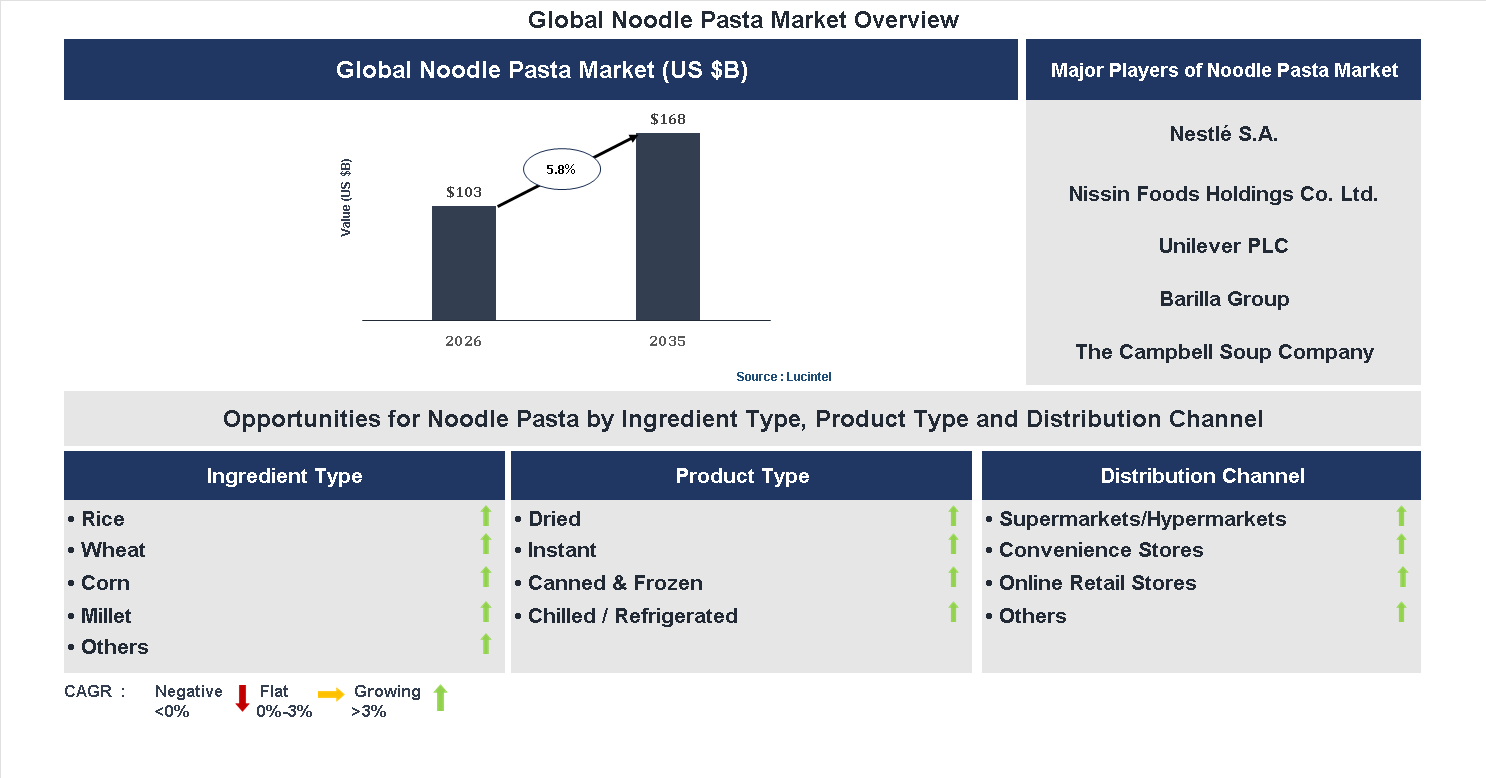
Key data points: The market size in 2035 = $168 billion, growth forecast = 5.8% annually for the next 8 years. Scroll below to get more insights. This market report covers trends, opportunities and forecasts in noodle pasta market to 2035 by ingredient type (rice, wheat, corn, millet, and others), product type (dried, instant, canned & frozen, and chilled / refrigerated), distribution channel (supermarkets/hypermarkets, convenience stores, online retail stores, and others), and region (North America, Europe, Asia Pacific, and the Rest of the World)
We'll send your sample report shortly.
• Lucintel forecasts that, within the ingredient type category, millet is expected to witness the highest growth over the forecast period.
• Within the product type category, instant is expected to witness the highest growth.
• In terms of region, APAC is expected to witness the highest growth over the forecast period. Gain valuable insights for your business decisions with our comprehensive 150+ page report. Sample figures with some insights are shown below.
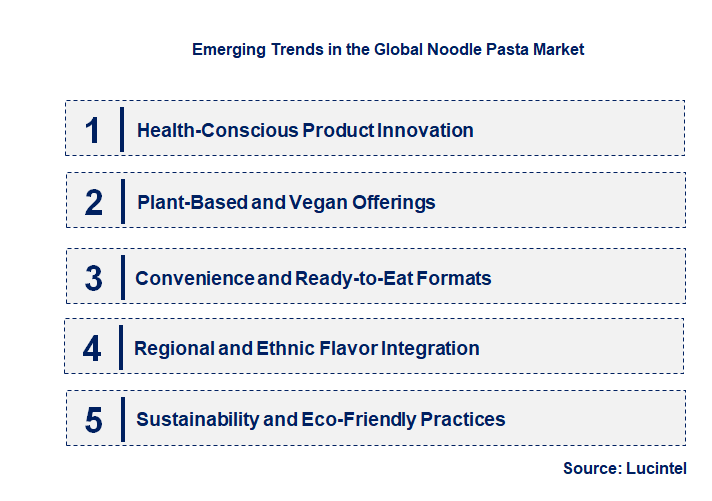
• Health-Conscious Product Innovation: Increasing demand for healthier options is prompting manufacturers to develop gluten-free, low-carb, and high-protein noodle pasta varieties. These products cater to consumers seeking nutritious alternatives, driving innovation in ingredients such as chickpea, lentil, and vegetable-based noodles. This trend enhances market growth by attracting health-conscious consumers and expanding the product range to include functional foods that support wellness and dietary needs.
• Plant-Based and Vegan Offerings: The rise of plant-based diets is significantly influencing the noodle pasta market. Companies are introducing vegan-friendly options made from plant proteins, such as soy, pea, and mung bean. These products appeal to ethical consumers and those with dietary restrictions, broadening the market base. The trend also encourages sustainable sourcing and environmentally friendly production practices, aligning with global sustainability goals and increasing consumer loyalty.
• Convenience and Ready-to-Eat Formats: Busy lifestyles are fueling demand for quick, easy-to-prepare noodle pasta products. Instant noodles, cup noodles, and pre-cooked varieties are gaining popularity across all age groups. Innovations in packaging and flavor profiles enhance convenience without compromising taste, making these products suitable for on-the-go consumption. This trend significantly boosts sales volume and market penetration, especially in urban and emerging markets.
• Regional and Ethnic Flavor Integration: Consumers are increasingly seeking diverse culinary experiences, prompting manufacturers to incorporate regional and ethnic flavors into noodle pasta products. Spicy, savory, and exotic flavor profiles from Asian, Mediterranean, and Middle Eastern cuisines are being integrated to cater to adventurous palates. This trend diversifies product offerings and appeals to a broader demographic, fostering cultural appreciation and expanding market reach.
• Sustainability and Eco-Friendly Practices: Environmental concerns are influencing production and packaging choices within the noodle pasta market. Companies are adopting sustainable sourcing of ingredients, reducing carbon footprints, and using biodegradable packaging materials. These practices resonate with eco-conscious consumers and enhance brand reputation. The shift towards sustainability is also driving innovation in ingredient sourcing and waste management, shaping a more responsible and resilient industry. These emerging trends are reshaping the noodle pasta market by fostering innovation, expanding consumer bases, and emphasizing sustainability. They are driving product diversification, enhancing convenience, and aligning with health and environmental priorities, ultimately creating a more dynamic and competitive industry landscape.
• Product Innovation: Introducing healthier and gluten-free options to meet health-conscious consumer demands, leading to increased market penetration and consumer loyalty.
• Regional Flavor Expansion: Incorporating local flavors and ingredients to cater to diverse tastes, boosting sales in emerging markets and enhancing brand relevance globally.
• Packaging Technology: Developing eco-friendly and convenient packaging solutions that improve shelf life and consumer experience, driving repeat purchases and brand differentiation.
• Digital Marketing Strategies: Leveraging social media and e-commerce platforms to reach wider audiences, increase brand awareness, and facilitate direct consumer engagement.
• Strategic Partnerships: Collaborating with foodservice providers and retail chains to expand distribution channels, increase visibility, and accelerate market growth. These developments are significantly impacting the noodle pasta market by fostering innovation, expanding consumer base, and enhancing competitive advantage. They enable brands to adapt to changing preferences, improve sustainability, and capitalize on emerging opportunities. Overall, these trends are expected to sustain growth momentum, diversify product offerings, and strengthen market positioning in the coming years.
• Product Innovation and Health-Conscious Offerings: Developing gluten-free, organic, and high-protein noodle options caters to health-conscious consumers. Incorporating functional ingredients like superfoods and fortification enhances product appeal. These innovations meet the demand for healthier alternatives, expanding the customer base beyond traditional markets. Companies investing in R&D to create unique flavors and textures can differentiate themselves and capture niche segments, driving overall market growth.
• Expansion in Emerging Markets: Growing urbanization, rising disposable incomes, and changing lifestyles in countries like India, China, and Southeast Asia present significant opportunities. Localized product offerings tailored to regional tastes and preferences can boost adoption. Establishing manufacturing facilities and distribution networks in these regions reduces costs and improves market reach. Strategic partnerships with local retailers and foodservice providers further enhance market penetration and brand recognition.
• Convenience and Ready-to-Eat Noodle Products: The demand for quick, easy-to-prepare meals is fueling growth in instant noodle segments. Innovations in packaging, such as microwaveable cups and single-serve sachets, cater to busy consumers. Expanding product lines to include healthier, low-sodium, and preservative-free options appeals to health-conscious buyers. Enhancing shelf life and convenience features can increase market share in retail and foodservice channels globally.
• Diversification into Premium and Gourmet Segments: Consumers are willing to pay more for premium, artisanal, and gourmet noodle products. Incorporating unique ingredients, organic certifications, and innovative flavors appeals to food enthusiasts. Offering premium packaging and storytelling around product origin and quality enhances brand value. This segment attracts affluent consumers seeking novel culinary experiences, thereby expanding the overall market scope.
• Strategic Collaborations and Brand Expansion: Forming alliances with foodservice providers, retail chains, and international brands accelerates market reach. Co-branding and licensing agreements can introduce noodle products into new categories and markets. Leveraging digital marketing and social media campaigns increases consumer engagement and brand loyalty. These strategies facilitate rapid growth, diversify product portfolios, and strengthen market positioning across various applications. These growth opportunities collectively shape a vibrant and expanding noodle pasta market. Innovation, regional expansion, convenience, premiumization, and strategic collaborations are key drivers that will enable market players to capitalize on evolving consumer preferences. Embracing these avenues will foster sustainable growth, enhance competitiveness, and unlock new revenue streams, ensuring the market’s resilience and long-term success.
• Technological Advancements: The integration of automation and innovative manufacturing techniques has significantly improved production efficiency and product quality. Automation reduces labor costs and minimizes errors, enabling manufacturers to meet increasing demand efficiently. Advanced packaging technologies extend shelf life and enhance product appeal. Moreover, innovations in flavoring and ingredient formulations cater to diverse consumer preferences, boosting market appeal. These technological improvements facilitate scalability and help companies stay competitive in a rapidly evolving market landscape.
• Rising Consumer Preference for Convenience Foods: Modern lifestyles have increased demand for quick, easy-to-prepare meals, making noodles and pasta highly popular. Busy schedules and urbanization have shifted consumer focus toward ready-to-eat and instant food options. The availability of a wide variety of flavors and health-conscious options, such as gluten-free or organic noodles, further fuels this trend. This shift encourages manufacturers to innovate and diversify product offerings, expanding market reach across different demographics and regions.
• Economic Growth and Urbanization: Rapid economic development in emerging markets has led to increased disposable incomes, enabling consumers to spend more on processed and convenience foods like noodles and pasta. Urbanization fosters a fast-paced lifestyle, creating a higher demand for quick meal solutions. As cities expand, retail outlets and supermarkets increase their shelf space for noodle products, boosting sales. Economic stability also encourages investment in marketing and distribution channels, further propelling market growth in these regions.
• Product Innovation and Diversification: Continuous innovation in flavors, ingredients, and packaging has expanded the product portfolio, attracting a broader consumer base. Introduction of health-oriented options such as low-fat, high-protein, or gluten-free noodles caters to health-conscious consumers. Regional flavor variations and premium offerings appeal to diverse tastes, increasing market penetration. Innovation also includes sustainable packaging and eco-friendly ingredients, aligning with environmental concerns and enhancing brand image, which collectively drive sales and market expansion.
• Growing E-commerce and Digital Marketing: The rise of online retail platforms and digital marketing strategies has broadened market access, especially in remote and emerging regions. E-commerce provides consumers with convenient access to a wide range of noodle products, along with reviews and detailed product information. Digital campaigns and social media influence purchasing decisions, enabling brands to engage directly with consumers. This channel also allows for targeted marketing and promotional activities, boosting sales and brand loyalty in a competitive landscape. The challenges facing the noodle pasta market include:
• Stringent Food Safety and Regulatory Standards: Increasing regulations concerning food safety, labeling, and ingredient transparency pose compliance challenges for manufacturers. Meeting diverse regional standards requires significant investment in quality control and certification processes. Non-compliance can lead to product recalls, legal penalties, and damage to brand reputation. Navigating these complex regulatory environments demands continuous monitoring and adaptation, which can increase operational costs and hinder rapid product launches.
• Fluctuating Raw Material Prices: The cost of key ingredients such as wheat, rice, and other grains is subject to volatility due to climatic conditions, supply chain disruptions, and global market dynamics. Price fluctuations impact profit margins and pricing strategies, forcing manufacturers to adjust their offerings or absorb costs. Securing stable supply chains and diversifying ingredient sources are essential but challenging measures that require strategic planning and investment.
• Intense Market Competition: The noodle pasta industry is highly competitive, with numerous local and international players vying for market share. Price wars, promotional activities, and product innovation are constant strategies to attract consumers. Smaller regional brands face challenges in scaling operations and establishing brand recognition against established multinational corporations. Maintaining differentiation and consumer loyalty in a crowded marketplace requires continuous innovation and effective marketing, which can strain resources. The noodle pasta market is driven by technological innovations, changing consumer lifestyles, economic growth, product diversification, and digital marketing. However, it faces challenges such as regulatory compliance, raw material price volatility, and intense competition. These factors collectively influence market dynamics, requiring stakeholders to adopt strategic approaches to capitalize on opportunities while mitigating risks. The overall impact is a complex but promising landscape that demands agility, innovation, and compliance to sustain growth and competitiveness.
• Nestlé S.A.
• Nissin Foods Holdings Co. Ltd.
• Unilever PLC
• Barilla Group
• The Campbell Soup Company
• Ebro Foods S.A.
• ITC Limited
• General Mills Inc.
• Ottogi Corporation
• CJ CheilJedang Corporation
• Rice
• Wheat
• Corn
• Millet
• Others
• Dried
• Instant
• Canned & Frozen
• Chilled / Refrigerated
• Supermarkets/Hypermarkets
• Convenience Stores
• Online Retail Stores
• Others
• North America
• Europe
• Asia Pacific
• The Rest of the World
• United States: The U.S. market has seen increased demand for gluten-free and organic noodle options, driven by health-conscious consumers. Innovative product launches include plant-based and protein-enriched noodles, with a focus on convenience and sustainability. E-commerce sales have surged, and major brands are investing in plant-based and clean-label products to meet evolving preferences. Additionally, there is a growing trend toward ethnic and artisanal noodle varieties, reflecting diverse culinary influences.
• China: China remains the largest consumer and producer of noodles, with a focus on modernization and diversification. Recent developments include the adoption of instant noodle innovations with reduced sodium and healthier ingredients. The market is witnessing a rise in premium and gourmet noodle products, catering to urban consumers seeking quality and authenticity. E-commerce platforms are expanding reach, and local brands are investing in sustainable packaging and production practices to meet environmental concerns.
• Germany: The German market emphasizes health and sustainability, with a rising preference for organic, vegan, and gluten-free noodles. Innovations include plant-based and whole-grain options, aligning with European health trends. Retailers are expanding product ranges to include regional and artisanal varieties, and there is increased interest in eco-friendly packaging. The market also sees growth in convenience products, such as ready-to-eat noodle meals, driven by busy lifestyles.
• India: India’s noodle market is rapidly expanding, driven by urbanization and changing dietary habits. Instant noodles remain popular, but there is a growing demand for healthier and regional flavors. Local brands are innovating with traditional spices and ingredients, catering to diverse tastes. The market is also witnessing increased penetration of online retail channels and a focus on affordability. Additionally, there is a rising trend toward organic and natural noodle options among health-conscious consumers.
• Japan: Japan continues to innovate with premium and traditional noodle varieties, emphasizing quality and authenticity. Recent developments include the integration of functional ingredients like collagen and probiotics. The market is also exploring sustainable packaging and eco-friendly production methods. Convenience remains key, with an increase in ready-to-eat and instant noodle products tailored for busy consumers. There is also a focus on regional specialties and artisanal craftsmanship, appealing to both domestic and international markets.


• Nestlé S.A.
• Nissin Foods Holdings Co. Ltd.
• Unilever PLC
• Barilla Group
• The Campbell Soup Company
• Ebro Foods S.A.
• ITC Limited
• General Mills Inc.
• Ottogi Corporation
• CJ CheilJedang Corporation Q6. Which noodle pasta market segment will be the largest in future? Answer: Lucintel forecasts that, within the ingredient type category, millet is expected to witness the highest growth over the forecast period. Q7. In noodle pasta market, which region is expected to be the largest in next 5 years? Answer: In terms of region, APAC is expected to witness the highest growth over the forecast period. Q8. Do we receive customization in this report? Answer: Yes, Lucintel provides 10% customization without any additional cost.


Choose a license that fits your team. Instant PDF delivery.
Prices exclude taxes. Instant delivery. Custom licensing available on request.
Market Report · July 22, 2026
Market Report · July 22, 2026
Market Report · July 22, 2026
Trusted partner for strategic intelligence and business growth


Receive a complimentary market analysis tailored to your industry. Our analysts will identify key growth opportunities and competitive dynamics specific to your business.

Market size, growth rate, and key trend analysis for your specific sector.

Top competitor positioning and market share analysis.

Strategic recommendations backed by data-driven insights.
Get curated market intelligence and competitive moves straight to your inbox.
By subscribing, you agree to receive our monthly insights. Unsubscribe anytime.
Receive a complimentary market analysis tailored to your industry. Our analysts will identify key growth opportunities and competitive dynamics specific to your business.
Market size, growth rate, and key trend analysis for your specific sector.
Top competitor positioning and market share analysis.
Strategic recommendations backed by data-driven insights.
Get curated market intelligence, emerging trends, and competitive moves straight to your inbox each month.
By subscribing, you agree to receive our monthly insights. Unsubscribe anytime.
We'll send your sample report shortly.