
Market Report · July 22, 2026

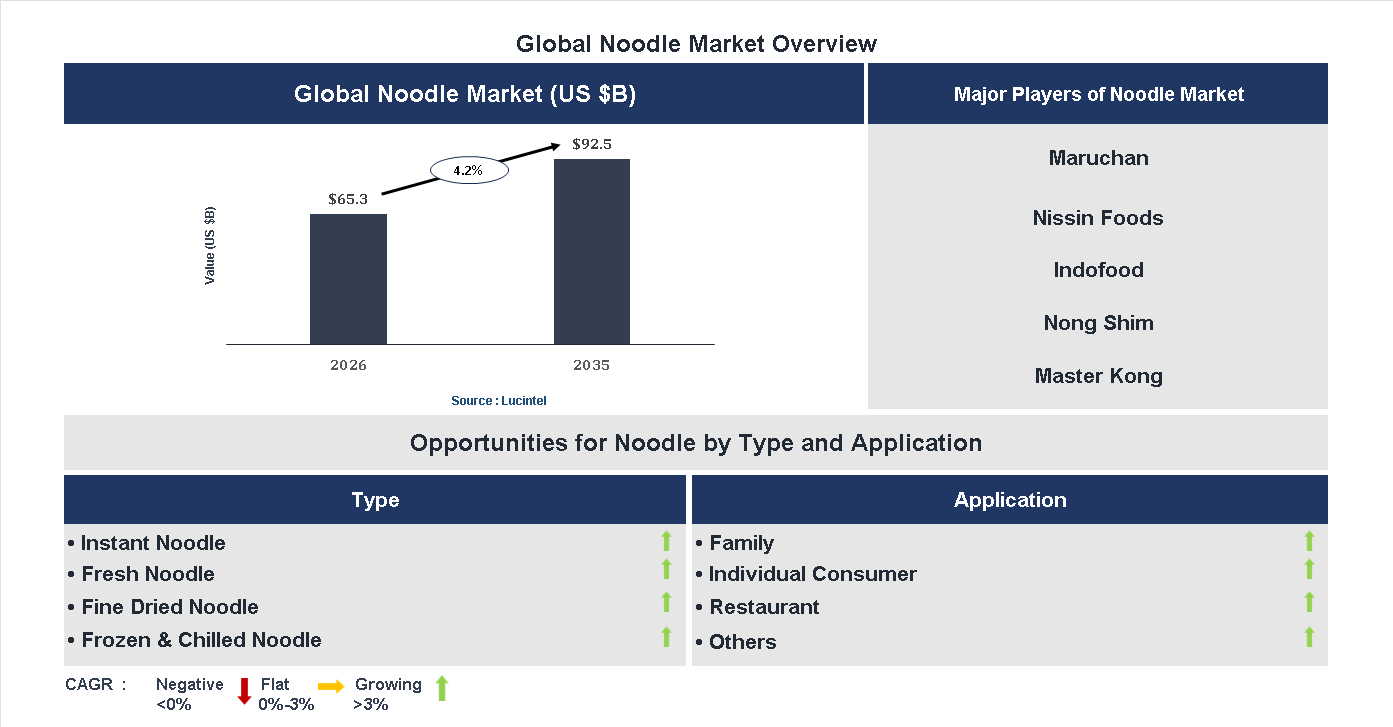
Key data points: The market size in 2035 = $92.5 billion, growth forecast = 4.2% annually for the next 8 years. Scroll below to get more insights. This market report covers trends, opportunities and forecasts in noodle market to 2035 by type (instant noodle, fresh noodle, fine dried noodle, and frozen & chilled noodle), application (family, individual consumer, restaurant, and others), and region (North America, Europe, Asia Pacific, and the Rest of the World)
We'll send your sample report shortly.
• Lucintel forecasts that, within the type category, instant noodle is expected to witness the highest growth over the forecast period.
• Within the application category, individual consumer is expected to witness the highest growth.
• In terms of region, APAC is expected to witness the highest growth over the forecast period. Gain valuable insights for your business decisions with our comprehensive 150+ page report. Sample figures with some insights are shown below.
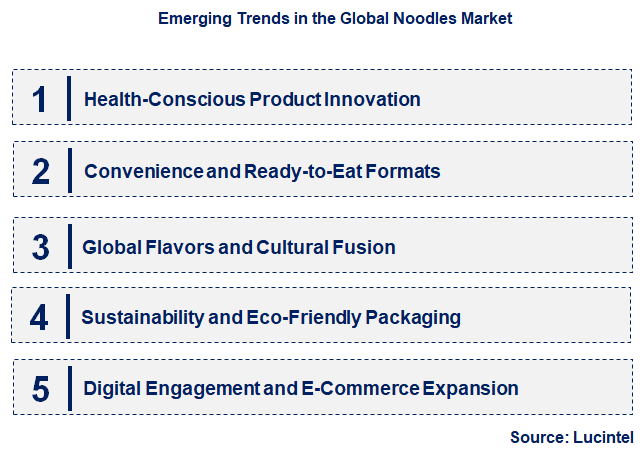
• Health-Conscious Product Innovation: Growing demand for healthier options has led to the development of gluten-free, low-carb, and organic noodles. Consumers are increasingly seeking products with natural ingredients, reduced preservatives, and added nutritional benefits. This trend encourages manufacturers to innovate with functional ingredients like superfoods and plant-based proteins, catering to health-conscious demographics. The impact is a shift towards cleaner labels and premium product offerings, which can command higher prices and foster brand loyalty.
• Convenience and Ready-to-Eat Formats: The busy lifestyles of consumers are driving the popularity of instant and ready-to-eat noodles. Innovations include microwaveable packaging, single-serve portions, and quick-cook varieties. These products offer convenience without compromising taste or quality, appealing to working professionals, students, and travelers. This trend boosts sales volume and expands market reach, especially in urban areas, while prompting companies to invest in packaging technology and supply chain efficiency to meet demand.
• Global Flavors and Cultural Fusion: Consumers are increasingly interested in diverse and authentic flavors inspired by global cuisines. This trend encourages the introduction of spicy, savory, and unique flavor profiles from regions like Asia, the Middle East, and Latin America. Cultural fusion in noodle products enhances consumer engagement and broadens market appeal. It also fosters innovation in product development, allowing brands to differentiate themselves and tap into niche markets, thereby increasing market share and consumer loyalty.
• Sustainability and Eco-Friendly Packaging: Environmental concerns are prompting companies to adopt sustainable practices, including biodegradable packaging, recyclable materials, and eco-friendly sourcing of ingredients. This trend aligns with consumer values around environmental responsibility and corporate transparency. The impact includes improved brand image, compliance with regulations, and reduced ecological footprint. Sustainability initiatives are becoming a key differentiator, influencing purchasing decisions and encouraging industry-wide shifts toward greener practices.
• Digital Engagement and E-Commerce Expansion: The rise of digital platforms and online shopping has transformed how consumers discover and purchase noodles. Brands are leveraging social media, influencer marketing, and e-commerce channels to reach wider audiences. Virtual cooking classes, online promotions, and direct-to-consumer sales are enhancing customer engagement and loyalty. This trend accelerates market penetration, especially among younger demographics, and provides valuable data insights for targeted marketing strategies, ultimately reshaping distribution channels and consumer interaction models. In summary, these emerging trends are fundamentally reshaping the noodles market by emphasizing health, convenience, cultural diversity, sustainability, and digital connectivity. They are driving innovation, expanding consumer choices, and fostering more sustainable and engaging market practices. As a result, the industry is becoming more dynamic, competitive, and aligned with contemporary consumer values and technological advancements.
• Growing Demand for Instant Noodles: The increasing need for quick, convenient meal options has boosted instant noodle sales worldwide. Consumers value affordability, ease of preparation, and variety, leading to a surge in demand. This trend is particularly prominent among busy professionals, students, and urban populations. Companies are expanding their product lines to include healthier, organic, and premium options to cater to evolving preferences. The markets expansion is driven by urbanization and changing lifestyles, making instant noodles a staple in many households.
• Innovation in Flavors and Ingredients: Manufacturers are continuously introducing new flavors and ingredients to attract diverse consumer segments. Fusion flavors, regional tastes, and health-focused ingredients like whole grains and plant-based proteins are gaining popularity. This innovation enhances product appeal and encourages repeat purchases. It also allows brands to differentiate themselves in a competitive market. The trend toward customization and unique flavor profiles is expanding the market’s reach, appealing to adventurous consumers seeking novel culinary experiences.
• Rising Health-Conscious Product Offerings: The shift toward healthier eating habits is prompting companies to develop low-calorie, gluten-free, and nutrient-enriched noodle options. These products cater to consumers with specific dietary needs and health concerns. The focus on clean labels and natural ingredients is also influencing product development. This trend broadens the consumer base, including health-conscious individuals and those with dietary restrictions. As a result, the market is diversifying, with health-oriented noodles gaining significant traction and expanding the overall market size.
• Expansion into Emerging Markets: Growing disposable incomes and urbanization in developing countries are opening new avenues for noodle manufacturers. These markets offer substantial growth potential due to increasing demand for affordable, convenient foods. Companies are localizing flavors and packaging to suit regional preferences, which enhances acceptance. Strategic investments and distribution expansion are facilitating market penetration. This trend is expected to significantly boost global sales, making emerging markets key drivers of future growth in the noodles industry.
• Adoption of Sustainable Packaging and Production: Environmental concerns are prompting brands to adopt eco-friendly packaging and sustainable manufacturing practices. Innovations include biodegradable packaging, reduced plastic use, and energy-efficient production processes. These initiatives appeal to environmentally conscious consumers and improve brand reputation. The shift toward sustainability is influencing industry standards and regulatory policies. As a result, the market is witnessing a transition toward greener practices, which not only benefits the environment but also enhances consumer loyalty and competitive advantage. The overall impact of these developments is a dynamic, expanding noodles market characterized by innovation, health focus, and global reach. Companies are better positioned to meet diverse consumer needs, driving increased sales and market share. Sustainability efforts and regional expansion are further strengthening industry resilience. These trends collectively foster a more competitive, innovative, and sustainable market environment, promising continued growth and diversification in the coming years.
• Expanding Product Varieties to Meet Diverse Consumer Preferences: Developing new noodle types, including gluten-free, organic, and plant-based options, caters to health-conscious and niche markets. Incorporating unique flavors and regional ingredients can attract a broader customer base. Customization and innovation in textures and formats also enhance appeal, encouraging repeat purchases and brand loyalty. This diversification helps manufacturers tap into emerging trends and adapt to evolving dietary needs, driving overall market growth.
• Leveraging Health and Wellness Trends for Market Penetration: Increasing consumer focus on health benefits creates opportunities for functional noodles enriched with vitamins, minerals, and superfoods. Offering low-calorie, high-protein, or fiber-rich options appeals to fitness enthusiasts and health-conscious buyers. Transparent labeling and clean ingredient lists build trust and meet demand for healthier convenience foods. Capitalizing on wellness trends enables brands to differentiate themselves and expand their market share in a competitive environment.
• Innovating Packaging for Sustainability and Convenience: Developing eco-friendly, biodegradable, and recyclable packaging aligns with environmental concerns and regulatory pressures. Convenient, easy-to-open packaging enhances user experience, especially for on-the-go consumption. Incorporating innovative designs that preserve freshness and extend shelf life adds value. Sustainable packaging not only appeals to environmentally conscious consumers but also strengthens brand reputation, fostering loyalty and encouraging repeat sales.
• Expanding Distribution Channels Through E-commerce and Modern Retail: Strengthening online presence and digital marketing strategies allows brands to reach wider audiences, especially in emerging markets. E-commerce platforms facilitate direct consumer engagement and provide data-driven insights for targeted marketing. Collaborations with supermarkets, convenience stores, and foodservice providers increase product accessibility. Expanding distribution channels ensures consistent market presence, boosts sales volume, and supports rapid growth in a competitive landscape.
• Capitalizing on Regional and Cultural Flavors for Market Differentiation: Introducing region-specific flavors and traditional recipes appeals to local tastes and cultural preferences. This strategy enhances product differentiation and attracts diverse consumer segments. Collaborations with local chefs and food influencers can boost authenticity and brand recognition. Emphasizing cultural relevance in marketing campaigns fosters emotional connections, encouraging trial and loyalty. This approach helps brands penetrate new markets and sustain growth through unique, localized offerings. The overall impact of these growth opportunities is a robust expansion of the noodles market, driven by innovation, health consciousness, sustainability, and strategic distribution. Companies that effectively leverage these opportunities can enhance their competitive edge, increase market share, and meet evolving consumer demands. This dynamic landscape promises sustained growth and diversification, ensuring long-term profitability and resilience in the global market.
• Increasing Consumer Demand for Convenience: The busy lifestyles of consumers worldwide have led to a surge in demand for quick, easy-to-prepare food options like noodles. This convenience factor appeals to working professionals, students, and families seeking time-saving meal solutions. The proliferation of instant noodles and ready-to-cook variants has expanded market reach across different demographics and regions. Moreover, innovative packaging and flavor options cater to diverse tastes, further boosting sales. As urbanization continues and lifestyles become more fast-paced, the demand for convenient food products is expected to sustain growth in the noodles market.
• Growing Health and Wellness Trends: Consumers are increasingly seeking healthier food options, prompting noodle manufacturers to innovate with healthier ingredients. The introduction of gluten-free, organic, and low-calorie noodles aligns with the rising health consciousness among consumers. Additionally, fortification with vitamins and minerals, as well as the use of natural preservatives, appeals to health-aware buyers. This trend encourages companies to diversify their product portfolios and develop functional noodles that meet nutritional needs. As health and wellness continue to influence purchasing decisions, the market is likely to see sustained growth driven by healthier product offerings.
• Expansion of E-commerce and Retail Channels: The rise of online shopping platforms has transformed the distribution landscape for noodles. E-commerce provides consumers with easy access to a wide variety of brands and flavors, often at competitive prices. Retail giants and specialty online stores facilitate direct-to-consumer sales, expanding market reach beyond traditional brick-and-mortar outlets. This channel expansion allows manufacturers to target new markets and demographics efficiently. Additionally, digital marketing strategies and social media influence consumer preferences and purchasing behavior. The growth of e-commerce is expected to further accelerate market penetration and product innovation in the noodles industry.
• Innovation in Flavors and Packaging: Continuous innovation in flavors, ingredients, and packaging is a key driver fueling consumer interest and market expansion. Manufacturers are experimenting with regional flavors, spicy profiles, and fusion cuisines to cater to diverse palates. Packaging innovations, such as eco-friendly materials and resealable pouches, enhance convenience and sustainability appeal. These developments attract new customer segments and encourage repeat purchases. The ability to offer unique, appealing products helps brands differentiate themselves in a competitive market. As consumer preferences evolve, ongoing innovation remains vital for sustaining growth and capturing market share.
• Rising Disposable Income and Urbanization: Economic growth in emerging markets has increased disposable incomes, enabling consumers to spend more on packaged and convenience foods like noodles. Urbanization further amplifies this trend by creating environments where quick, affordable meals are in high demand. As more people move to cities, the need for accessible, ready-to-eat food options grows, boosting market sales. This economic and demographic shift supports increased production, product diversification, and market expansion. The combination of rising incomes and urban lifestyles is expected to continue driving demand for noodles globally. The challenges facing the noodles market include:-
• Regulatory and Food Safety Concerns: Stringent regulations regarding food safety, labeling, and ingredient transparency pose significant challenges for noodle manufacturers. Compliance with diverse regional standards requires substantial investment in quality control and certification processes. Food safety scares or contamination issues can damage brand reputation and lead to recalls, affecting market stability. Additionally, increasing consumer demand for natural and clean-label products pressures companies to reformulate recipes and improve transparency. Navigating complex regulatory environments while maintaining product innovation and affordability remains a critical challenge for sustained market growth.
• Fluctuating Raw Material Prices: The cost of raw materials such as wheat, rice, and packaging materials directly impacts production costs. Price volatility driven by climate change, supply chain disruptions, and geopolitical tensions can lead to increased manufacturing expenses. These fluctuations may force companies to raise prices, potentially reducing consumer demand, or absorb costs, impacting profit margins. Managing supply chain risks and securing stable raw material sources are essential for maintaining competitive pricing and profitability. The unpredictability of raw material prices remains a persistent challenge for market players.
• Intense Market Competition and Brand Differentiation: The noodles market is highly competitive, with numerous local and international brands vying for consumer attention. Differentiating products through flavor, quality, and branding is crucial but challenging in a crowded marketplace. Price wars and promotional activities can erode profit margins, while maintaining consistent quality and innovation requires significant investment. Additionally, counterfeit products and imitations pose risks to brand integrity. Companies must continuously innovate and build strong brand loyalty to sustain their market position amid fierce competition, which can be resource-intensive and complex. In summary, the noodles market is driven by increasing consumer demand for convenience, health-conscious product innovations, expanding distribution channels, flavor and packaging innovations, and economic growth in emerging markets. However, it faces challenges such as regulatory compliance, raw material price volatility, and intense competition. These factors collectively influence market dynamics, requiring stakeholders to adapt strategically. While growth prospects remain promising, addressing regulatory and supply chain challenges is vital for long-term success. Overall, the markets evolution will depend on balancing innovation with risk management to capitalize on emerging opportunities.
• Maruchan
• Nissin Foods
• Indofood
• Nong Shim
• Master Kong
• Sanyo Foods
• Mandarin Noodle
• Nestle
• Beltek Foods
• Uni-President
• Instant Noodle
• Fresh Noodle
• Fine Dried Noodle
• Frozen & Chilled Noodle
• Family
• Individual Consumer
• Restaurant
• Others
• North America
• Europe
• Asia Pacific
• The Rest of the World
• United States: The U.S. noodles market has seen increased demand for gluten-free and organic options, driven by health-conscious consumers. Innovative products like plant-based noodles and ready-to-eat meals are gaining popularity. Major brands are expanding their product lines to include low-calorie and high-protein varieties, aligning with wellness trends. E-commerce sales have surged, with online platforms becoming primary distribution channels. Additionally, there is a growing interest in ethnic noodle varieties, such as ramen and soba, reflecting multicultural influences. Sustainability initiatives, including eco-friendly packaging, are also gaining traction among U.S. manufacturers.
• China: China remains the largest noodles market globally, with continuous innovation in instant and traditional noodle segments. There is a rising preference for premium and functional noodles, such as those enriched with vitamins or herbs. The market is witnessing a shift towards healthier options, including low-sodium and whole-grain noodles. E-commerce platforms are expanding their offerings, boosting sales through direct-to-consumer channels. Local brands are investing in R&D to develop new flavors and packaging to attract younger consumers. Additionally, sustainability practices are being integrated into production processes, aligning with government policies on environmental protection.
• Germany: The German noodles market is characterized by a growing demand for organic and gluten-free products, reflecting health and sustainability concerns. Consumers are increasingly interested in plant-based and vegan noodle options, driven by ethical and dietary considerations. Retailers are expanding their product ranges to include international varieties, such as Asian and Mediterranean noodles. Convenience remains a key factor, with ready-to-cook and microwaveable options gaining popularity. The market also sees a rise in premium and artisanal noodle products, catering to gourmet preferences. Digital marketing and e-commerce are playing vital roles in reaching health-conscious and busy consumers.
• India: The Indian noodles market is rapidly expanding, fueled by urbanization and changing lifestyles. Instant noodles remain popular among youth and working professionals due to their convenience and affordability. There is a growing demand for healthier variants, including multigrain and low-fat options. Local flavors and regional ingredients are increasingly incorporated into product offerings to cater to diverse tastes. The market is witnessing increased penetration of organized retail and online sales channels. Small and medium-sized players are innovating with new flavors and packaging to compete with established brands. Sustainability and eco-friendly packaging are gradually gaining importance among Indian consumers.
• Japan: Japans noodles market continues to evolve with a focus on traditional and innovative products. Ramen remains a cultural staple, with premium and instant varieties thriving. There is a rising trend towards healthier options, such as low-sodium and gluten-free noodles. Functional noodles with added health benefits, like collagen or vitamins, are gaining popularity. Convenience is key, with ready-to-eat and easy-to-prepare options expanding. Craft and artisanal noodles are also emerging, appealing to gourmet consumers. Digital marketing and collaborations with food influencers are enhancing brand visibility. Sustainability efforts include eco-friendly packaging and sustainable sourcing practices.


• Maruchan
• Nissin Foods
• Indofood
• Nong Shim
• Master Kong
• Sanyo Foods
• Mandarin Noodle
• Nestle
• Beltek Foods
• Uni-President Q6. Which noodle market segment will be the largest in future? Answer: Lucintel forecasts that, within the type category, instant noodle is expected to witness the highest growth over the forecast period. Q7. In noodle market, which region is expected to be the largest in next 5 years? Answer: In terms of region, APAC is expected to witness the highest growth over the forecast period. Q8. Do we receive customization in this report? Answer: Yes, Lucintel provides 10% customization without any additional cost.


Choose a license that fits your team. Instant PDF delivery.
Prices exclude taxes. Instant delivery. Custom licensing available on request.
Market Report · July 22, 2026
Market Report · July 22, 2026
Market Report · July 22, 2026
Trusted partner for strategic intelligence and business growth


Receive a complimentary market analysis tailored to your industry. Our analysts will identify key growth opportunities and competitive dynamics specific to your business.

Market size, growth rate, and key trend analysis for your specific sector.

Top competitor positioning and market share analysis.

Strategic recommendations backed by data-driven insights.
Get curated market intelligence and competitive moves straight to your inbox.
By subscribing, you agree to receive our monthly insights. Unsubscribe anytime.
Receive a complimentary market analysis tailored to your industry. Our analysts will identify key growth opportunities and competitive dynamics specific to your business.
Market size, growth rate, and key trend analysis for your specific sector.
Top competitor positioning and market share analysis.
Strategic recommendations backed by data-driven insights.
Get curated market intelligence, emerging trends, and competitive moves straight to your inbox each month.
By subscribing, you agree to receive our monthly insights. Unsubscribe anytime.
We'll send your sample report shortly.