
Report Feature
Non-Viral Drug Delivery Market Trends and Forecast
The future of the global non-viral drug delivery market looks promising with opportunities in the hospital and specialty clinic markets. The global non-viral drug delivery market is expected to grow with a CAGR of 9.2% from 2025 to 2031. The major drivers for this market are the increasing demand for safer drug delivery systems, the rising adoption of nanoparticles in therapeutics, and the growing focus on targeted drug delivery solutions.• Lucintel forecasts that, within the technology category, nanoparticle drug delivery system is expected to witness the highest growth over the forecast period.
• Within the end use category, specialty clinic is expected to witness the highest growth.
• In terms of region, APAC is expected to witness the highest growth over the forecast period. Gain valuable insights for your business decisions with our comprehensive 150+ page report. Sample figures with some insights are shown below.
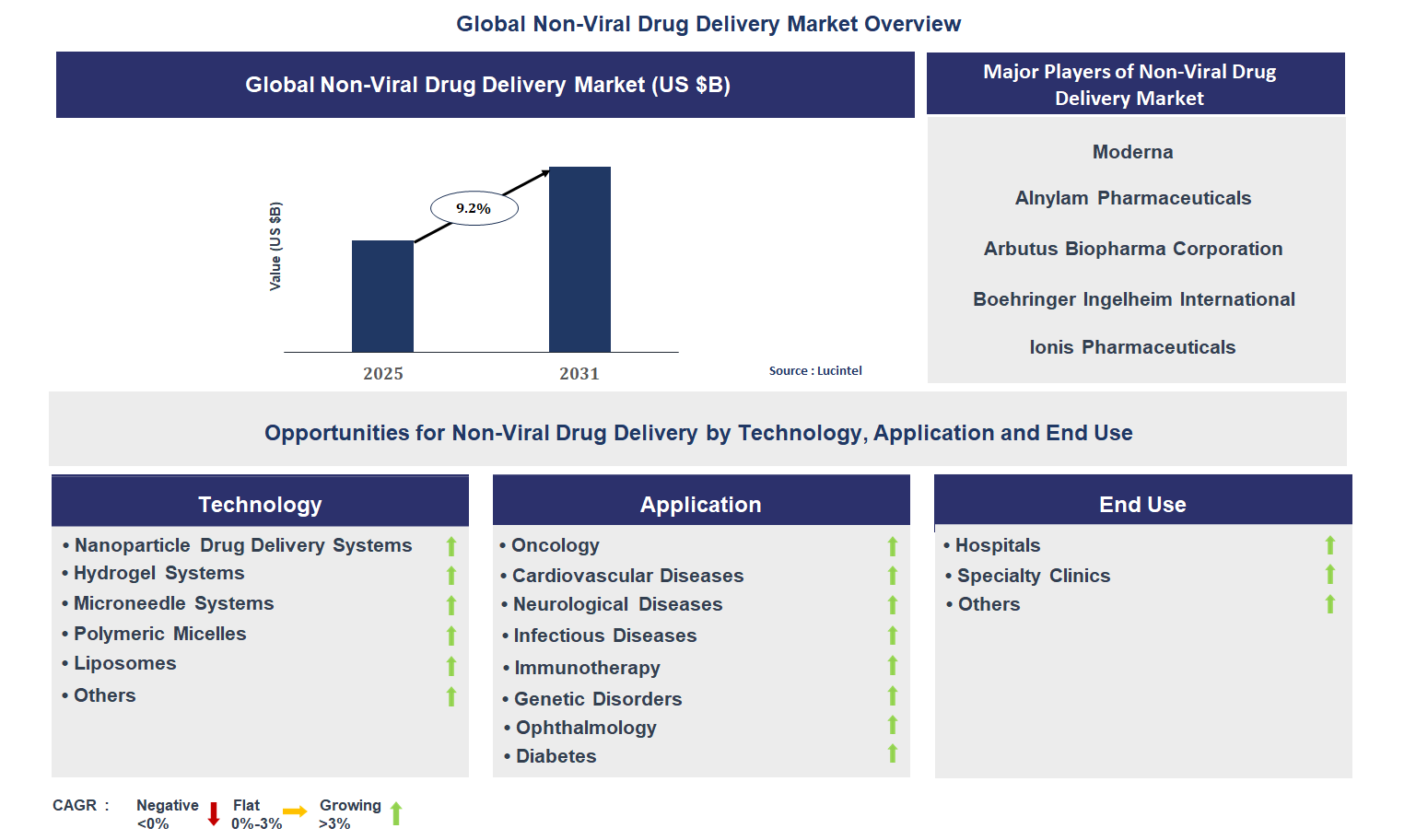
Emerging Trends in the Non-Viral Drug Delivery Market
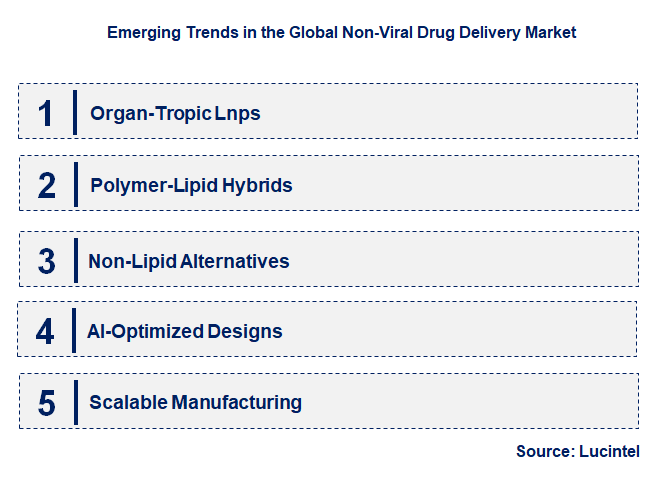
Emerging trends in non-viral drug delivery market emphasize lipid nanoparticle evolutions, hybrid materials, and targeted engineering to surpass viral limitations. Innovations unlock safer, versatile nucleic acid transports across therapeutics.• Organ-Tropic LNPs: Selective lipid compositions direct payloads to liver, lung, brain via ionizable lipids. Impacts enable tissue-specific gene editing, minimize off-targets, and broaden mRNA applications beyond vaccines.
• Polymer-Lipid Hybrids: Combines stability of polymers with LNP efficiency for siRNA/CRISPR. Revolutionizes sustained release, enhances endosomal escape, and supports combo therapies in oncology.
• Non-Lipid Alternatives: BubbleFect-like platforms avoid lipids for safer vectors. Transforms immunogenicity profiles, accelerates approvals, and diversifies gene therapy pipelines.
• AI-Optimized Designs: Computational modeling refines formulations rapidly. Boosts potency, cuts development times, and personalizes deliveries for rare diseases.
• Scalable Manufacturing: Automated synthesis scales clinical-grade LNPs affordably. Democratizes access, fuels trials, and bridges preclinical to market seamlessly. These trends forge non-viral dominance over virals, embedding intelligent, adaptable carriers. Market pivots to precision ecosystems, redefining accessible gene medicines globally.
Recent Development in the Non-Viral Drug Delivery Market
Landmark developments in non-viral drug delivery market, spotlight launches, awards, and expansions fortifying non-viral infrastructures amid therapy surges.• Moderna Rare Expansion: Strategic pivot deploys next-gen LNPs for rare disease therapeutics. Catalyzes mRNA diversification, accelerates pipelines, and validates platform versatility.
• PartitionBio BubbleFect Award: Lipid-free system wins ELRIG innovation prize for superior delivery. Pioneers safer alternatives, boosts investor interest, and challenges LNP hegemony.
• Genprex Diabetes Advance: Non-viral platform progresses with research milestones. Targets unmet needs, enhances insulin regulation, and exemplifies metabolic applications.
• Evonik LNP Progress: Unveils innovations in genetic drug carriers. Strengthens manufacturing, supports scalability, and empowers biotech partners.
• Cullis LNP Perspective: Reviews evolution of nucleic acid LNPs comprehensively. Guides industry, inspires optimizations, and sets future benchmarks. These catalysts propel clinical momentum, slashing barriers and embedding non-virals as gene therapy cornerstone.
Strategic Growth Opportunities in the Non-Viral Drug Delivery Market
Non-viral growth in non-viral drug delivery market‘s harnesses applications demanding safe nucleic acid transports, from oncology to metabolics.• Gene Therapy Dominance: LNPs enable CRISPR/siRNA for genetic fixes precisely. Accelerates cures, expands indications, and rivals virals effectively.
• Cancer Targeted Delivery: Polymers conjugate chemotherapeutics selectively. Improves survivals, reduces toxicities, and personalizes regimens dynamically.
• Vaccine Platforms Expansion: mRNA LNPs beyond COVID for flu, cancer. Fortifies prophylactics, speeds responses, and scales pandemics.
• Rare Disease Treatments: Organ-specific vectors address unmet voids. Unlocks incentives, trials, and patient accesses swiftly.
• Metabolic Disorders: Non-viral insulin regulators transform diabetes care. Sustains releases, minimizes injections, and enhances qualities. Application surges diversify pipelines, amplifying safety and reach to cement non-virals as therapeutic bedrock.
Non-Viral Drug Delivery Market Driver and Challenges
Major drivers and challenges in non-viral drug delivery market encompass LNP successes, gene therapy booms, manufacturing leaps, regulatory nods, tempered by efficiencies, toxicities, and scales. The factors responsible for driving the non-viral drug delivery market include: 1. mRNA Vaccine Triumphs: Proven LNPs validate platforms broadly. Ignites investments, adoptions, and nucleic acid expansions. 2. Gene Editing Demands: CRISPR/siRNA require safer vectors urgently. Propels innovations, trials, and precision therapeutics. 3. Safety Over Virals: Immunogenicity edges attract regulators. Builds trusts, fast-tracks approvals, and broadens uses. 4. Manufacturing Scalability: Automated processes cut costs dynamically. Democratizes access, fuels commercialization, and global supplies. 5. Personalized Medicine Shift: Tailored LNPs match patient profiles. Heightens efficacies, outcomes, and market premiums. Challenges in the non-viral drug delivery market are: 1. Delivery Efficiency Gaps: Endosomal escape limits potencies. Demands hybrid designs, ligands, and optimizations. 2. Toxicity Profiles Persist: Lipid accumulations pose risks. Necessitates purifications, alternatives, and monitoring. 3. Scale-Up Complexities: Clinical-grade production challenges persist. Hinders timelines, demands tech transfers, expertise. Drivers overwhelm challenges, catalyzing agile evolutions. Non-virals solidify as superior vectors, unlocking curative horizons ahead.List of Non-Viral Drug Delivery Companies
Companies in the market compete on the basis of product quality offered. Major players in this market focus on expanding their manufacturing facilities, R&D investments, infrastructural development, and leverage integration opportunities across the value chain. With these strategies non-viral drug delivery companies cater increasing demand, ensure competitive effectiveness, develop innovative products & technologies, reduce production costs, and expand their customer base. Some of the non-viral drug delivery companies profiled in this report include-• Moderna
• Alnylam Pharmaceuticals
• Arbutus Biopharma Corporation
• Boehringer Ingelheim International
• Ionis Pharmaceuticals
• CureVac
• Pfizer
• Silence Therapeutics
• Precision NanoSystems
• Cytiva Bioscience Holding
Non-Viral Drug Delivery Market by Segment
The study includes a forecast for the global non-viral drug delivery market by technology, application, end use, and region.Non-Viral Drug Delivery Market by Technology [Value from 2019 to 2031]:
• Nanoparticle Drug Delivery Systems
• Hydrogel Systems
• Microneedle Systems
• Polymeric Micelles
• Liposomes
• Others
Non-Viral Drug Delivery Market by Application [Value from 2019 to 2031]:
• Oncology
• Cardiovascular Diseases
• Neurological Diseases
• Infectious Diseases
• Immunotherapy
• Genetic Disorders
• Ophthalmology
• Diabetes
Non-Viral Drug Delivery Market by End Use [Value from 2019 to 2031]:
• Hospitals
• Specialty Clinics
• Others
Non-Viral Drug Delivery Market by Region [Value from 2019 to 2031]:
• North America
• Europe
• Asia Pacific
• The Rest of the World
Country Wise Outlook for the Non-Viral Drug Delivery Market
The non-viral drug delivery market accelerates with lipid nanoparticle refinements, polymer hybrids, and scalable platforms addressing gene therapy safety and efficacy. Investments in organ-specific targeting and manufacturing expansions propel clinical translations across oncology and rare diseases in key regions.• United States: United States dominates via Moderna expanding mRNA platforms into rare diseases using next-gen lipid nanoparticles alongside Genprex advancing non-viral systems for diabetes. Robust FDA guidances and biotech hubs optimize delivery efficiencies, accelerating approvals for personalized therapeutics.
• China: China bolsters self-reliance through WuXi expansions and genomic initiatives integrating non-viral vectors for biologics. Policy-driven investments scale lipid nanoparticle production, supporting domestic gene therapies and global partnerships in infectious applications.
• Germany: Germany excels in precision LNPs and polymer designs via research consortia. Facility upgrades enhance site-specific deliveries, positioning Europe for advanced RNA therapeutics in oncology and neurology.
• India: India advances biopharma via affordable nanoparticle platforms for vaccines and cancer. Government funding bridges scalability gaps, enabling diverse clinical trials with hybrid non-viral systems.
• Japan: Japan prioritizes lipid nanoparticles for stem cell synergies amid demographics. Collaborations refine brain-penetrating vectors, aligning with national priorities for chronic and neurodegenerative therapies.

Features of the Global Non-Viral Drug Delivery Market
Market Size Estimates: Non-viral drug delivery market size estimation in terms of value ($B). Trend and Forecast Analysis: Market trends (2019 to 2024) and forecast (2025 to 2031) by various segments and regions. Segmentation Analysis: Non-viral drug delivery market size by technology, application, end use, and region in terms of value ($B). Regional Analysis: Non-viral drug delivery market breakdown by North America, Europe, Asia Pacific, and Rest of the World. Growth Opportunities: Analysis of growth opportunities in different technologies, applications, end uses, and regions for the non-viral drug delivery market. Strategic Analysis: This includes M&A, new product development, and competitive landscape of the non-viral drug delivery market. Analysis of competitive intensity of the industry based on Porter’s Five Forces model.
FAQ
Q1. What is the growth forecast for non-viral drug delivery market? Answer: The global non-viral drug delivery market is expected to grow with a CAGR of 9.2% from 2025 to 2031. Q2. What are the major drivers influencing the growth of the non-viral drug delivery market? Answer: The major drivers for this market are the increasing demand for safer drug delivery systems, the rising adoption of nanoparticles in therapeutics, and the growing focus on targeted drug delivery solutions. Q3. What are the major segments for non-viral drug delivery market? Answer: The future of the non-viral drug delivery market looks promising with opportunities in the hospital and specialty clinic markets. Q4. Who are the key non-viral drug delivery market companies? Answer: Some of the key non-viral drug delivery companies are as follows:• Moderna
• Alnylam Pharmaceuticals
• Arbutus Biopharma Corporation
• Boehringer Ingelheim International
• Ionis Pharmaceuticals
• CureVac
• Pfizer
• Silence Therapeutics
• Precision NanoSystems
• Cytiva Bioscience Holding Q5. Which non-viral drug delivery market segment will be the largest in future? Answer: Lucintel forecasts that, within the technology category, nanoparticle drug delivery system is expected to witness the highest growth over the forecast period. Q6. In non-viral drug delivery market, which region is expected to be the largest in next 5 years? Answer: In terms of region, APAC is expected to witness the highest growth over the forecast period. Q7. Do we receive customization in this report? Answer: Yes, Lucintel provides 10% customization without any additional cost.
Table of Contents
List of Figures
List of Tables
Methodology
- In-depth interviews of the major players in this market
- Detailed secondary research from competitors’ financial statements and published data
- Extensive searches of published works, market, and database information pertaining to industry news, company press releases, and customer intentions
- A compilation of the experiences, judgments, and insights of Lucintel’s professionals, who have analyzed and tracked this market over the years.


Buy Now
Choose a license that fits your team. Instant PDF delivery.
Prices exclude taxes. Instant delivery. Custom licensing available on request.
Key Questions
- • What are some of the most promising, high-growth opportunities for the non-viral drug delivery market by technology (nanoparticle drug delivery systems, hydrogel systems, microneedle systems, polymeric micelles, liposomes, and others), application (oncology, cardiovascular diseases, neurological diseases, infectious diseases, immunotherapy, genetic disorders, ophthalmology, and diabetes), end use (hospitals, specialty clinics, and others), and region (North America, Europe, Asia Pacific, and the Rest of the World)?
- • Which segments will grow at a faster pace and why?
- • Which region will grow at a faster pace and why?
- • What are the key factors affecting market dynamics? What are the key challenges and business risks in this market?
- • What are the business risks and competitive threats in this market?
- • What are the emerging trends in this market and the reasons behind them?
- • What are some of the changing demands of customers in the market?
- • What are the new developments in the market? Which companies are leading these developments?
- • Who are the major players in this market? What strategic initiatives are key players pursuing for business growth?
- • What are some of the competing products in this market and how big of a threat do they pose for loss of market share by material or product substitution?
- • What M&A activity has occurred in the last 5 years and what has its impact been on the industry? For any questions related to Non-Viral Drug Delivery Market, Non-Viral Drug Delivery Market Size, Non-Viral Drug Delivery Market Growth, Non-Viral Drug Delivery Market Analysis, Non-Viral Drug Delivery Market Report, Non-Viral Drug Delivery Market Share, Non-Viral Drug Delivery Market Trends, Non-Viral Drug Delivery Market Forecast, Non-Viral Drug Delivery Companies, write Lucintel analyst at email: helpdesk@lucintel.com. We will be glad to get back to you soon.


