
Report Feature
Non-Invasive Blood Glucose Meter Market Trends and Forecast
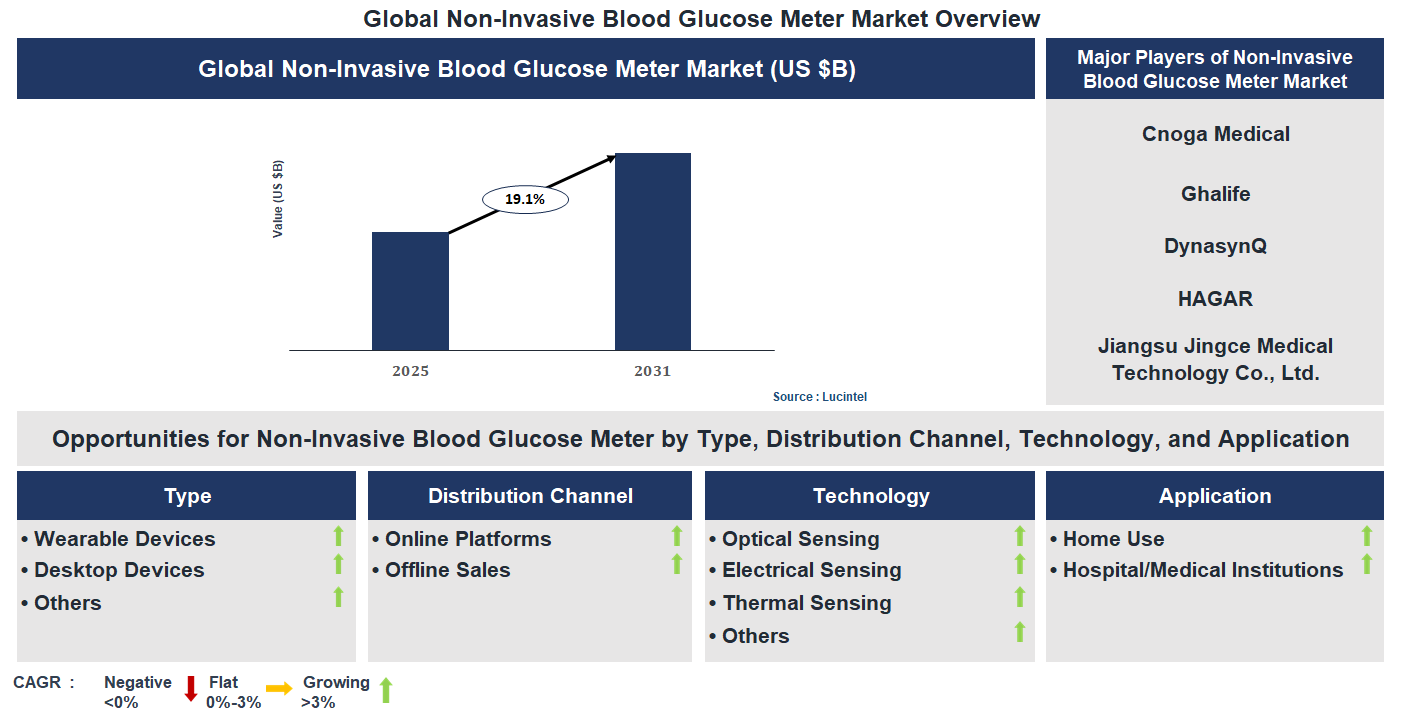
The future of the global non-invasive blood glucose meter market looks promising with opportunities in the home use and hospital/medical institution markets. The global non-invasive blood glucose meter market is expected to grow with a CAGR of 19.1% from 2025 to 2031. The major drivers for this market are the increasing prevalence of diabetes cases, the rising demand for pain-free monitoring, and the growing adoption of advanced sensing technologies.• Lucintel forecasts that, within the type category, wearable device is expected to witness higher growth over the forecast period.
• Within the application category, home use is expected to witness higher growth.
• In terms of region, APAC is expected to witness the highest growth over the forecast period. Gain valuable insights for your business decisions with our comprehensive 150+ page report. Sample figures with some insights are shown below.
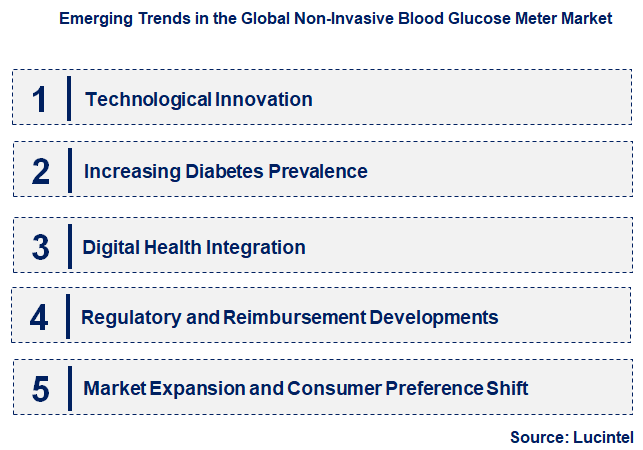
Emerging Trends in the Non-Invasive Blood Glucose Meter Market
The non-invasive blood glucose meter market is experiencing rapid growth driven by technological advancements, increasing diabetes prevalence, and a rising demand for pain-free, convenient monitoring solutions. As consumers seek more comfortable and accessible health management tools, companies are innovating to meet these needs. The market is also influenced by regulatory developments and the integration of digital health technologies, which are shaping future product offerings. These trends are not only transforming how diabetes is managed but also expanding the market’s scope beyond traditional devices, creating new opportunities for innovation and growth.• Technological Innovation: Advancements in sensor technology and optical methods are enabling more accurate, reliable, and user-friendly non-invasive glucose monitoring devices. Researchers are exploring spectroscopy, bioimpedance, and other novel techniques to measure glucose levels without skin penetration. These innovations are reducing costs and improving device performance, making non-invasive meters more accessible and appealing to consumers. As technology continues to evolve, the market is expected to see a surge in sophisticated, easy-to-use devices that can seamlessly integrate with smartphones and health apps, enhancing user experience and adherence.
• Increasing Diabetes Prevalence: The global rise in diabetes cases, particularly type 2 diabetes, is a significant driver for the non-invasive glucose monitoring market. As more individuals require regular blood sugar monitoring, there is a growing demand for painless, convenient solutions that encourage consistent use. Non-invasive meters address barriers associated with traditional finger-prick methods, such as discomfort and inconvenience, leading to better disease management. This trend is prompting manufacturers to develop devices that cater to a broader demographic, including children and elderly patients, thereby expanding market reach and adoption.
• Digital Health Integration: The integration of non-invasive glucose meters with digital health platforms and mobile applications is transforming diabetes management. These devices can sync data with smartphones, enabling real-time monitoring, data sharing with healthcare providers, and personalized health insights. This connectivity enhances patient engagement, improves treatment adherence, and facilitates remote healthcare delivery. The trend toward digital integration is also fostering the development of comprehensive health ecosystems, which combine glucose monitoring with other health metrics, thereby offering a holistic approach to chronic disease management and opening new revenue streams for market players.
• Regulatory and Reimbursement Developments: Evolving regulatory frameworks and reimbursement policies are shaping the market landscape. Governments and health authorities are increasingly supporting non-invasive technologies through approvals and reimbursement schemes, which boost consumer confidence and market penetration. Clear regulatory pathways are encouraging innovation and investment in research and development. Additionally, reimbursement coverage reduces out-of-pocket costs for patients, accelerating adoption. As regulatory clarity improves, more companies are likely to launch compliant products, further fueling market growth and encouraging the development of advanced, validated devices.
• Market Expansion and Consumer Preference Shift: The market is witnessing a shift toward consumer-centric products that emphasize ease of use, portability, and aesthetic appeal. Companies are designing sleek, compact devices that appeal to tech-savvy users and those seeking discreet monitoring options. Additionally, expanding distribution channels, including online platforms and direct-to-consumer sales, are making these devices more accessible. This shift is driven by increasing awareness and acceptance of non-invasive methods, as well as a desire for more autonomous health management. The focus on user experience is fostering broader adoption across diverse demographic groups, thereby expanding the market’s scope. In summary, technological advancements, rising diabetes prevalence, digital health integration, regulatory support, and changing consumer preferences are collectively reshaping the non-invasive blood glucose meter market. These trends are fostering innovation, expanding market reach, and improving patient outcomes, ultimately transforming how diabetes management is approached globally.
Recent Development in the Non-Invasive Blood Glucose Meter Market
The non-invasive blood glucose meter market is experiencing rapid advancements driven by technological innovations and increasing demand for convenient diabetes management solutions. These developments are transforming healthcare by offering safer, more accurate, and user-friendly devices. As the market evolves, key opportunities are emerging that promise to enhance patient outcomes, reduce healthcare costs, and expand accessibility. Stakeholders are focusing on integrating new technologies and expanding applications to meet growing global needs.• Technological Advancements in Sensor Technology: Innovative sensor materials and miniaturization are enabling more accurate, reliable, and faster glucose readings without skin penetration. These improvements reduce discomfort and increase user compliance, making glucose monitoring more accessible and less invasive. Enhanced sensor durability and sensitivity are also expanding device lifespan and performance, fostering greater adoption among diabetics and healthcare providers. This progress is expected to significantly boost market growth and patient satisfaction.
• Integration of Artificial Intelligence and Data Analytics: AI-driven algorithms are being incorporated into non-invasive glucose meters to improve accuracy and predictive capabilities. These systems analyze large datasets to identify patterns, forecast glucose fluctuations, and personalize treatment plans. The integration enhances real-time decision-making, reduces errors, and supports remote patient monitoring. As AI becomes more sophisticated, it will drive market expansion by offering smarter, more efficient solutions that improve disease management and patient outcomes.
• Growing Focus on Wearable and Portable Devices: The development of compact, wearable glucose monitors is making continuous monitoring more feasible and convenient. These devices seamlessly integrate with smartphones and health apps, providing real-time data and alerts. Their portability encourages consistent use and better disease management, especially for active lifestyles. The trend toward miniaturization and connectivity is expanding market reach, attracting tech-savvy consumers and healthcare providers seeking innovative solutions for chronic disease management.
• Regulatory Approvals and Reimbursement Policies: Increasing regulatory approvals and favorable reimbursement policies are facilitating market entry and adoption. Governments and health agencies are recognizing the benefits of non-invasive glucose monitoring, leading to streamlined approval processes and insurance coverage. These policies reduce financial barriers for patients and providers, accelerating market penetration. As regulatory landscapes evolve, they will continue to support innovation, increase trust, and expand access to non-invasive glucose monitoring technologies worldwide.
• Expansion into Emerging Markets: Companies are focusing on expanding their presence in emerging economies with rising diabetes prevalence and limited access to traditional monitoring methods. Affordable, easy-to-use non-invasive devices are being tailored to meet local needs, improving healthcare outcomes. Market entry strategies include partnerships with local distributors and adaptation to regional preferences. This expansion is expected to significantly increase market size, improve health management in underserved populations, and drive global growth of non-invasive blood glucose monitoring solutions. These developments are collectively transforming the non-invasive blood glucose meter market by enhancing device accuracy, usability, and accessibility. Technological innovations, AI integration, wearable device proliferation, supportive regulatory frameworks, and market expansion into emerging economies are fueling growth. These opportunities are not only improving patient quality of life but also reducing healthcare costs and expanding market reach. As a result, the industry is poised for sustained growth, innovation, and broader adoption worldwide.
Strategic Growth Opportunities in the Non-Invasive Blood Glucose Meter Market
The non-invasive blood glucose meter market is experiencing rapid growth driven by technological advancements, increasing diabetes prevalence, and a rising demand for pain-free monitoring solutions. Innovations in sensor technology and wearable devices are expanding application scopes, making glucose monitoring more accessible and convenient. Market players are focusing on product development, strategic collaborations, and regulatory approvals to capture emerging opportunities. This evolving landscape promises significant improvements in patient quality of life and healthcare efficiency, positioning the market for sustained expansion over the coming years.• Advancements in Sensor Technology Enable More Accurate and User-Friendly Devices: Innovations in optical, electromagnetic, and transdermal sensors are enhancing the accuracy and reliability of non-invasive glucose meters. These technological improvements reduce calibration needs and improve real-time monitoring, making devices more practical for daily use. As sensor technology becomes more sophisticated, manufacturers can develop compact, comfortable, and highly precise devices, broadening adoption among diabetics and healthcare providers. This progress is crucial for overcoming current limitations and establishing non-invasive meters as standard care tools.
• Growing Diabetes Prevalence Fuels Demand for Non-Invasive Monitoring Solutions: The rising global incidence of diabetes, especially type 2, increases the need for accessible, pain-free glucose monitoring options. Patients seek convenient alternatives to traditional finger-prick methods, driving demand for non-invasive devices. Healthcare systems also favor these solutions for their potential to improve compliance and early detection. As awareness and diagnosis rates grow, the market for non-invasive blood glucose meters is expected to expand significantly, supported by public health initiatives and increasing patient preference for comfortable monitoring.
• Technological Integration with Wearable Devices Expands Application Scope: Integration of non-invasive glucose sensors into wearable devices like smartwatches and fitness trackers broadens their application beyond clinical settings. These wearables enable continuous, real-time glucose monitoring, providing users with immediate insights and better disease management. The convenience of seamless integration encourages regular use, improves patient adherence, and facilitates remote healthcare monitoring. As wearable technology advances, the market will see increased innovation, making glucose management more accessible and personalized.
• Strategic Collaborations and Regulatory Approvals Accelerate Market Penetration: Partnerships between technology firms, healthcare providers, and regulatory bodies are crucial for product development and approval. Securing regulatory clearances ensures device safety and efficacy, boosting consumer confidence. Collaborations facilitate access to advanced research, funding, and distribution channels, accelerating market entry. As companies navigate regulatory pathways efficiently, they can introduce innovative non-invasive glucose meters faster, expanding market reach and fostering trust among users and healthcare professionals.
• Rising Investment in R&D Drives Innovation and Market Growth: Increased funding from private investors, government agencies, and industry players fuels research into new sensing technologies and device miniaturization. R&D efforts focus on improving accuracy, reducing costs, and enhancing user experience. Breakthroughs in nanotechnology, AI, and material science are opening new avenues for non-invasive glucose monitoring. Continuous innovation ensures the market remains competitive, attracts new users, and meets evolving healthcare demands, ultimately supporting sustained growth and technological leadership. The overall impact of these opportunities is a transformative shift toward more accessible, accurate, and user-friendly glucose monitoring solutions. As technological, clinical, and strategic advancements converge, the market is poised for significant expansion, improving patient outcomes and reducing healthcare burdens globally. This evolution will foster innovation, increase adoption, and establish non-invasive blood glucose meters as essential tools in diabetes management.
Non-Invasive Blood Glucose Meter Market Driver and Challenges
The non-invasive blood glucose meter market is influenced by a variety of technological, economic, and regulatory factors. Advances in sensor technology, miniaturization, and data analytics are driving innovation, making devices more accurate and user-friendly. Economic factors such as the increasing prevalence of diabetes and rising healthcare costs are boosting demand for non-invasive solutions. Regulatory support and approvals facilitate market entry and growth, while consumer awareness about health monitoring encourages adoption. However, challenges such as technological limitations, high development costs, and regulatory hurdles pose significant barriers. Understanding these drivers and challenges is essential for stakeholders aiming to capitalize on market opportunities and address potential risks effectively. The factors responsible for driving the non-invasive blood glucose meter market include:• Technological Innovation: The rapid development of advanced sensors, wearable devices, and data integration technologies enhances measurement accuracy and user convenience. Innovations like optical sensors, spectroscopy, and bioimpedance are enabling truly non-invasive methods, reducing discomfort and increasing patient compliance. These technological advancements attract investments and foster product development, expanding market reach. As technology continues to evolve, the market is expected to see increased adoption, especially among diabetics seeking hassle-free monitoring options. The integration of AI and IoT further personalizes health management, making non-invasive meters more effective and appealing.
• Rising Prevalence of Diabetes: The global increase in diabetes cases, driven by sedentary lifestyles, unhealthy diets, and aging populations, significantly boosts demand for blood glucose monitoring solutions. Non-invasive meters offer a convenient alternative to traditional finger-prick methods, encouraging regular monitoring. Governments and healthcare providers are promoting early detection and continuous management, which fuels market growth. As awareness about diabetes management improves, more patients seek non-invasive options, creating a substantial market opportunity. This trend is expected to persist, with the market expanding as the diabetic population grows worldwide.
• Regulatory Approvals and Support: Regulatory agencies such as the FDA and EMA are actively approving and supporting non-invasive glucose monitoring devices, which accelerate market entry and consumer trust. Clear guidelines and standards ensure device safety, efficacy, and quality, encouraging manufacturers to innovate and invest. Regulatory support also facilitates reimbursement policies, making devices more accessible and affordable for patients. As regulatory frameworks evolve to accommodate new technologies, market players benefit from reduced barriers and increased credibility. This environment fosters innovation and accelerates the commercialization of advanced non-invasive glucose meters.
• Increasing Healthcare Expenditure: Rising healthcare spending globally, especially in emerging economies, enhances access to advanced medical devices, including non-invasive glucose meters. Governments and private insurers are increasingly covering preventive health tools, reducing out-of-pocket costs for consumers. This financial support encourages regular monitoring and early intervention, improving health outcomes. Additionally, the growing middle class and increased health awareness drive demand for innovative health management devices. As healthcare budgets expand, the market for non-invasive glucose meters is poised for significant growth, supported by increased affordability and accessibility.
• Consumer Preference for Non-Invasive Methods: Growing awareness about the discomfort and risks associated with traditional finger-prick testing has shifted consumer preferences toward non-invasive solutions. Patients seek more comfortable, pain-free, and discreet monitoring options, which non-invasive meters provide. The convenience of continuous monitoring and real-time data access appeals to tech-savvy users and those managing chronic conditions. This shift in consumer behavior encourages manufacturers to develop and market non-invasive devices, further expanding the market. As awareness and acceptance grow, the demand for user-friendly, non-invasive glucose monitoring solutions is expected to rise substantially. The challenges facing this non-invasive blood glucose meter market include:
• Technological Limitations: Despite advancements, achieving accurate, reliable, and truly non-invasive blood glucose measurement remains complex. Current technologies often face issues like calibration drift, interference from external factors, and limited precision, which hinder clinical acceptance. Overcoming these technical barriers requires significant research and development investment, prolonging product development timelines. The complexity of accurately measuring glucose levels without invasive methods poses ongoing challenges, impacting market growth and consumer confidence. Continuous innovation and validation are essential to address these technological hurdles effectively.
• High Development and Manufacturing Costs: Developing non-invasive glucose monitoring devices involves substantial investment in research, clinical testing, and regulatory approval processes. Manufacturing sophisticated sensors and wearable devices at scale also incurs high costs, which can translate into higher retail prices. These expenses may limit affordability and accessibility, especially in low-income regions. Additionally, the need for ongoing calibration and maintenance adds to the overall cost burden. High development and manufacturing costs can slow market penetration and reduce profit margins, posing a significant challenge for new entrants and established players alike.
• Regulatory and Reimbursement Challenges: Navigating complex regulatory pathways and obtaining approvals for innovative non-invasive devices can be time-consuming and costly. Variability in regulatory standards across regions further complicates global market expansion. Moreover, reimbursement policies for non-invasive glucose meters are still evolving, and a lack of coverage can hinder adoption. Without clear reimbursement pathways, patients and healthcare providers may be reluctant to adopt new technologies, limiting market growth. Ensuring compliance and securing reimbursement remains a critical challenge for manufacturers aiming to scale their products globally. In summary, the non-invasive blood glucose meter market is driven by technological advancements, increasing diabetes prevalence, regulatory support, rising healthcare expenditure, and changing consumer preferences. However, technological limitations, high development costs, and regulatory hurdles pose significant challenges. These factors collectively influence market dynamics, with opportunities for growth tempered by technical and regulatory complexities. Successful navigation of these drivers and challenges will determine the pace and extent of market expansion, shaping the future landscape of non-invasive glucose monitoring solutions.
List of Non-Invasive Blood Glucose Meter Companies
Companies in the market compete on the basis of product quality offered. Major players in this market focus on expanding their manufacturing facilities, R&D investments, infrastructural development, and leverage integration opportunities across the value chain. With these strategies non-invasive blood glucose meter companies cater increasing demand, ensure competitive effectiveness, develop innovative products & technologies, reduce production costs, and expand their customer base. Some of the non-invasive blood glucose meter companies profiled in this report include-• Cnoga Medical
• Ghalife
• DynasynQ
• HAGAR
• Jiangsu Jingce Medical Technology Co., Ltd.
Non-Invasive Blood Glucose Meter Market by Segment
The study includes a forecast for the global non-invasive blood glucose meter market by type, distribution channel, technology, application, and region.Non-Invasive Blood Glucose Meter Market by Type [Value from 2019 to 2031]:
• Wearable Devices
• Desktop Devices
• Others
Non-Invasive Blood Glucose Meter Market by Distribution Channel [Value from 2019 to 2031]:
• Online Platforms
• Offline Sales
Non-Invasive Blood Glucose Meter Market by Technology [Value from 2019 to 2031]:
• Optical Sensing
• Electrical Sensing
• Thermal Sensing
• Others
Non-Invasive Blood Glucose Meter Market by Application [Value from 2019 to 2031]:
• Home Use
• Hospital/Medical Institutions
Non-Invasive Blood Glucose Meter Market by Region [Value from 2019 to 2031]:
• North America
• Europe
• Asia Pacific
• The Rest of the World
Country Wise Outlook for the Non-Invasive Blood Glucose Meter Market
The non-invasive blood glucose meter market has seen significant advancements driven by technological innovation, increasing demand for convenient diabetes management solutions, and supportive regulatory policies. As healthcare systems evolve, countries are investing in research and development to improve device accuracy, affordability, and user-friendliness. The markets growth is also fueled by rising diabetes prevalence worldwide, prompting manufacturers to introduce more sophisticated and accessible products. Each country’s unique healthcare infrastructure and regulatory environment influence the pace and nature of these developments, shaping the global landscape of non-invasive glucose monitoring solutions.• United States: The US market has experienced rapid growth due to technological innovations and strong R&D investments. Major companies are launching advanced devices with improved accuracy and connectivity features, integrating with mobile health apps. Regulatory agencies like the FDA are streamlining approval processes for non-invasive devices, encouraging innovation. The increasing prevalence of diabetes and a focus on patient-centric solutions are driving market expansion. Additionally, collaborations between tech firms and healthcare providers are enhancing device capabilities, making non-invasive monitoring more accessible and reliable for consumers.
• China: China’s market is expanding swiftly, supported by government initiatives promoting healthcare digitization and innovation. Local companies are developing cost-effective, user-friendly, non-invasive glucose meters tailored for the large diabetic population. The government’s favorable policies and funding for medical device startups are accelerating product development. Increasing awareness and rising healthcare expenditure are also contributing to market growth. Moreover, partnerships with international firms are facilitating technology transfer and product localization, making non-invasive glucose monitoring more widespread across urban and rural areas.
• Germany: Germany’s market is characterized by high technological standards and stringent regulatory frameworks. Leading companies are focusing on integrating non-invasive glucose meters with digital health platforms, emphasizing data security and device precision. The country’s strong healthcare infrastructure and emphasis on quality assurance are fostering innovation. Additionally, Germany’s participation in European Union initiatives is promoting cross-border access to advanced monitoring solutions. The growing prevalence of diabetes and an aging population are further boosting demand for non-invasive, easy-to-use devices that improve patient compliance and quality of life.
• India: India’s market is witnessing rapid growth driven by increasing diabetes prevalence and a large, underserved population. Local manufacturers are developing affordable, portable, non-invasive glucose meters suitable for diverse socioeconomic groups. Government schemes aimed at improving healthcare access are supporting market expansion. The rising adoption of digital health technologies and smartphone penetration is facilitating remote monitoring and data management. Additionally, collaborations with international firms are helping to introduce innovative, cost-effective solutions tailored to India’s unique needs, making non-invasive glucose monitoring more accessible to a broader demographic.
• Japan: Japan’s market is characterized by high technological adoption and a focus on precision medicine. Companies are advancing non-invasive glucose meters with enhanced accuracy, comfort, and integration with wearable devices. The aging population and increasing diabetes cases are key drivers of demand. Regulatory agencies are supporting innovation through streamlined approval processes for new devices. Japan’s emphasis on healthcare quality and patient safety is fostering the development of reliable, user-friendly solutions. Moreover, collaborations between tech firms and healthcare providers are promoting the integration of non-invasive monitoring into comprehensive health management systems, improving patient outcomes and adherence.

Features of the Global Non-Invasive Blood Glucose Meter Market
Market Size Estimates: Non-invasive blood glucose meter market size estimation in terms of value ($B). Trend and Forecast Analysis: Market trends (2019 to 2024) and forecast (2025 to 2031) by various segments and regions. Segmentation Analysis: Non-invasive blood glucose meter market size by various segments, such as by type, distribution channel, technology, application, and region in terms of value ($B). Regional Analysis: Non-invasive blood glucose meter market breakdown by North America, Europe, Asia Pacific, and Rest of the World. Growth Opportunities: Analysis of growth opportunities in different types, distribution channels, technologies, applications, and regions for the non-invasive blood glucose meter market. Strategic Analysis: This includes M&A, new product development, and competitive landscape of the non-invasive blood glucose meter market. Analysis of competitive intensity of the industry based on Porter’s Five Forces model.
FAQ
Q1. What is the growth forecast for non-invasive blood glucose meter market? Answer: The global non-invasive blood glucose meter market is expected to grow with a CAGR of 19.1% from 2025 to 2031. Q2. What are the major drivers influencing the growth of the non-invasive blood glucose meter market? Answer: The major drivers for this market are the increasing prevalence of diabetes cases, the rising demand for pain-free monitoring, and the growing adoption of advanced sensing technologies. Q3. What are the major segments for non-invasive blood glucose meter market? Answer: The future of the non-invasive blood glucose meter market looks promising with opportunities in the home use and hospital/medical institution markets. Q4. Who are the key non-invasive blood glucose meter market companies? Answer: Some of the key non-invasive blood glucose meter companies are as follows:• Cnoga Medical
• Ghalife
• DynasynQ
• HAGAR
• Jiangsu Jingce Medical Technology Co., Ltd. Q5. Which non-invasive blood glucose meter market segment will be the largest in future? Answer: Lucintel forecasts that, within the type category, wearable device is expected to witness higher growth over the forecast period. Q6. In non-invasive blood glucose meter market, which region is expected to be the largest in next 5 years? Answer: In terms of region, APAC is expected to witness the highest growth over the forecast period. Q7. Do we receive customization in this report? Answer: Yes, Lucintel provides 10% customization without any additional cost.
Table of Contents
List of Figures
List of Tables
Methodology
- In-depth interviews of the major players in this market
- Detailed secondary research from competitors’ financial statements and published data
- Extensive searches of published works, market, and database information pertaining to industry news, company press releases, and customer intentions
- A compilation of the experiences, judgments, and insights of Lucintel’s professionals, who have analyzed and tracked this market over the years.


Buy Now
Choose a license that fits your team. Instant PDF delivery.
Prices exclude taxes. Instant delivery. Custom licensing available on request.
Key Questions
- • What are some of the most promising, high-growth opportunities for the non-invasive blood glucose meter market by type (wearable devices, desktop devices, and others), distribution channel (online platforms and offline sales), technology (optical sensing, electrical sensing, thermal sensing, and others), application (home use and hospital/medical institutions), and region (North America, Europe, Asia Pacific, and the Rest of the World)?
- • Which segments will grow at a faster pace and why?
- • Which region will grow at a faster pace and why?
- • What are the key factors affecting market dynamics? What are the key challenges and business risks in this market?
- • What are the business risks and competitive threats in this market?
- • What are the emerging trends in this market and the reasons behind them?
- • What are some of the changing demands of customers in the market?
- • What are the new developments in the market? Which companies are leading these developments?
- • Who are the major players in this market? What strategic initiatives are key players pursuing for business growth?
- • What are some of the competing products in this market and how big of a threat do they pose for loss of market share by material or product substitution?
- • What M&A activity has occurred in the last 6 years and what has its impact been on the industry? For any questions related to Non-Invasive Blood Glucose Meter Market, Non-Invasive Blood Glucose Meter Market Size, Non-Invasive Blood Glucose Meter Market Growth, Non-Invasive Blood Glucose Meter Market Analysis, Non-Invasive Blood Glucose Meter Market Report, Non-Invasive Blood Glucose Meter Market Share, Non-Invasive Blood Glucose Meter Market Trends, Non-Invasive Blood Glucose Meter Market Forecast, Non-Invasive Blood Glucose Meter Companies, write Lucintel analyst at email: helpdesk@lucintel.com. We will be glad to get back to you soon.


