
Market Report · September 3, 2026

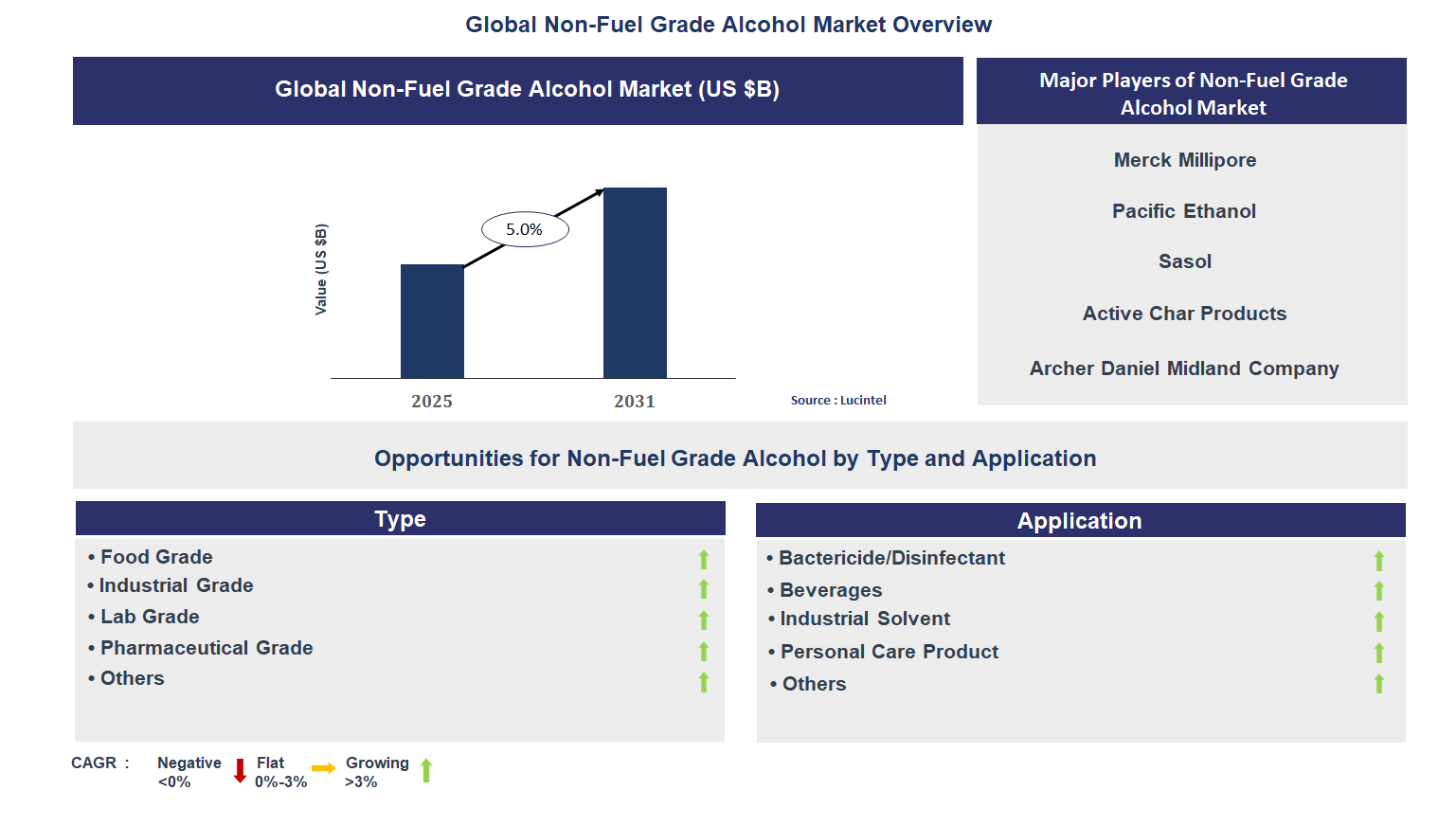
Key data points: The growth forecast = 5% annually for the next 7 years. Scroll below to get more insights. This market report covers trends, opportunities and forecasts in non-fuel grade alcohol market to 2031 by type (food grade, industrial grade, lab grade, pharmaceutical grade, and others), application (bactericide/disinfectant, beverages, industrial solvent, personal care product, and others), and region (North America, Europe, Asia Pacific, and the Rest of the World)
We'll send your sample report shortly.
• Lucintel forecasts that, within the type category, pharmaceutical grade is expected to witness highest growth over the forecast period.
• Within the application category, bactericide/disinfectant is expected to witness the highest growth.
• In terms of region, APAC is expected to witness the highest growth over the forecast period. Gain valuable insights for your business decisions with our comprehensive 150+ page report. Sample figures with some insights are shown below.
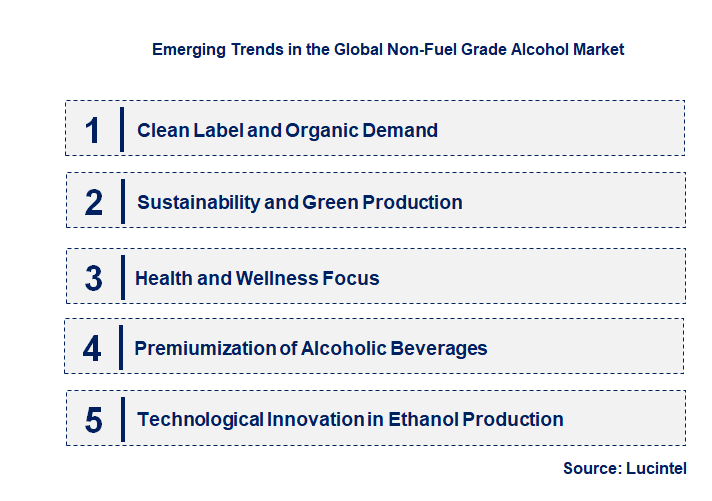
• Clean Label and Organic Demand: Consumers are increasingly looking for clean-label, organic alcohol products in the food and beverage sector. This demand is driving brands to focus on transparent sourcing and minimal processing. The shift toward organic alcohol is seen in everything from craft spirits to food ingredients, influencing both production practices and marketing strategies.
• Sustainability and Green Production: Environmental sustainability is a growing priority, with companies seeking greener methods of alcohol production. Ethanol derived from renewable resources, such as agricultural waste or algae, is gaining traction. This trend aligns with consumer expectations and regulatory pressures to reduce the carbon footprint, impacting both production processes and product offerings.
• Health and Wellness Focus: A rising awareness of health and wellness is reshaping the non-fuel alcohol market. Alcoholic beverages with functional benefits—such as low-calorie spirits, alcohol-free options, and low-sugar formulations—are becoming more popular. This shift is driven by consumer interest in healthier alternatives while still enjoying indulgent experiences.
• Premiumization of Alcoholic Beverages: Premium and craft spirits are gaining popularity across the globe, driven by consumer preferences for higher quality and unique, authentic experiences. This trend is prompting producers to innovate, offering small-batch, artisanal products and higher-proof spirits. It’s also increasing demand for high-quality ethanol used in these premium products.
• Technological Innovation in Ethanol Production: Advancements in biotechnology and fermentation technology are enhancing the production of non-fuel grade alcohol. These innovations lead to more efficient processes, reducing costs and improving product quality. Genetically modified yeast strains, for example, are enabling higher yields and faster production times, making the alcohol supply chain more efficient. These emerging trends are reshaping the non-fuel grade alcohol market by catering to evolving consumer preferences, technological innovations, and growing demand for sustainable and healthy options. Businesses that can adapt to these trends are better positioned to succeed in an increasingly competitive market.
• Rising Demand for Alcohol-Based Sanitizers: The COVID-19 pandemic accelerated the demand for alcohol-based sanitizers, particularly in healthcare and personal care sectors. This spike led to increased ethanol production, especially in the U.S., and highlighted the importance of non-fuel grade alcohol for public health. Manufacturers are now exploring long-term strategies to diversify production and meet fluctuating demand.
• Regulatory Changes in Food Safety: Stricter food safety regulations, particularly in the European Union and the U.S., have led to enhanced quality control measures in alcohol production. Food-grade ethanol, used in both beverages and as an ingredient in processed foods, must meet stringent purity standards. These changes have prompted refinements in distillation processes and increased regulatory oversight.
• Increased Focus on Sustainable Production: The shift towards sustainable and environmentally friendly production methods is a growing trend. Companies are exploring bio-based ethanol production, including using agricultural waste as feedstock. This development aligns with global sustainability goals and meets consumer demand for eco-friendly products. Sustainable production practices are becoming key selling points for alcohol brands.
• Technological Advancements in Fermentation: Advances in fermentation technologies, such as the use of genetically engineered yeast and improved distillation techniques, are boosting ethanol yield and quality. These technologies make the production process more efficient and cost-effective, lowering prices and expanding market access for smaller producers. This innovation is particularly significant for the beverage and pharmaceutical industries.
• Expansion of Alcoholic Beverage Categories: The rise in consumer interest in health-conscious alcoholic beverages, such as low-sugar, low-alcohol, and alcohol-free options, has led to the creation of new product categories. Producers are increasingly focusing on offering premium, low-alcohol spirits and functional drinks, driving demand for high-quality, non-fuel grade ethanol for these products. These key developments are significantly shaping the non-fuel grade alcohol market, from technological innovations to regulatory changes. As the market continues to evolve, these trends will help define the future direction of production and consumption, creating new opportunities and challenges across various sectors.
• Pharmaceutical Applications Growth: The pharmaceutical industry’s demand for alcohol-based products, such as solvents, disinfectants, and sanitizers, is expanding. Alcohol is also widely used in formulations for medications and vaccines. With increasing healthcare needs, there is significant potential for growth in this segment, particularly in regions like Asia-Pacific, where healthcare spending is rising.
• Organic and Craft Beverage Production: Consumers are increasingly seeking organic and craft alcoholic beverages, creating a lucrative growth area for producers of non-fuel grade alcohol. Premium spirits and organic wines, driven by consumer demand for authenticity and sustainability, are key drivers. This trend also presents opportunities for ethanol producers to cater to the growing craft spirits market.
• Food and Beverage Ingredient Usage: Alcohol is used as a flavor enhancer, preservative, and solvent in the food and beverage industry. The shift toward clean-label products and organic ingredients is pushing demand for high-quality ethanol in this sector. Additionally, alcoholic beverages with functional benefits (such as low-calorie or fortified with vitamins) are opening up new markets.
• Personal Care Product Development: The personal care industry is increasingly utilizing alcohol in the production of skincare and cosmetic products due to its solvent and antimicrobial properties. Alcohol-based products, such as perfumes, deodorants, and sanitizers, are in demand, especially in emerging markets. This offers growth potential for non-fuel grade alcohol in beauty and personal care segments.
• Ethanol for Bio-based Applications: The growing focus on bio-based products opens opportunities for non-fuel grade alcohol used in industrial and energy applications. Ethanol derived from renewable resources is becoming a key component in bio-plastics, biofuels, and biodegradable products. This development aligns with sustainability trends and offers new avenues for market growth. These growth opportunities underscore the diverse and expanding applications of non-fuel grade alcohol. As consumer preferences shift and new technologies emerge, these opportunities will continue to drive market growth across various industries. Producers that can adapt to these trends are well-positioned for long-term success.
• Merck Millipore
• Pacific Ethanol
• Sasol
• Active Char Products
• Archer Daniel Midland Company
• Mitsubishi Chemical Corporation
• Cristalco
• Archer Daniels Midland
• Sigma-Aldrich
• Wilmar International
• Food Grade
• Industrial Grade
• Lab Grade
• Pharmaceutical Grade
• Others
• Bactericide/Disinfectant
• Beverages
• Industrial Solvent
• Personal Care Product
• Others
• North America
• Europe
• Asia Pacific
• The Rest of the World
• United States: In the U.S., the non-fuel grade alcohol market has been influenced by strong demand for alcohol-based hand sanitizers, growing preference for organic and clean-label products, and evolving regulations around food-grade ethanol. Additionally, there has been an uptick in the use of alcohol in beverage production and industrial applications, driven by shifting consumer behaviors toward premium, craft spirits.
• China: Chinas market has expanded due to increasing domestic production of high-quality ethanol, spurred by rising demand for non-fuel grade alcohol in pharmaceuticals and beverages. The governments focus on stricter regulations for alcohol production and exports, especially with regard to food safety and purity standards, has also been a significant driver. Ethanol consumption for industrial applications continues to grow.
• Germany: Germany has seen growth in the non-fuel alcohol sector, mainly driven by rising interest in clean-label and sustainable products in the food and beverage industry. Stringent EU regulations, including those around food-grade alcohol standards and ethanols use in pharmaceuticals, have helped shape the market. Additionally, German consumers are increasingly gravitating towards organic spirits and wellness-based products.
• India: In India, the non-fuel grade alcohol market has experienced rapid growth, particularly in the pharmaceutical and food industries. The expansion of alcoholic beverage consumption, particularly premium spirits, has also contributed to the markets growth. India’s regulatory environment has become more supportive of alcohol-based products, and the trend toward modernization and industrialization is fueling demand for high-quality ethanol.
• Japan: Japans non-fuel alcohol market has been evolving with a rise in the demand for organic spirits and health-conscious alcoholic beverages. The Japanese government has introduced new quality control standards for alcohol used in consumer goods, enhancing the safety and integrity of these products. Industrial applications of ethanol, particularly in the pharmaceutical sector, have also seen an increase.


• Merck Millipore
• Pacific Ethanol
• Sasol
• Active Char Products
• Archer Daniel Midland Company
• Mitsubishi Chemical Corporation
• Cristalco
• Archer Daniels Midland
• Sigma-Aldrich
• Wilmar International Q5. Which non-fuel grade alcohol market segment will be the largest in future? Answer: Lucintel forecasts that, within the type category, pharmaceutical grade is expected to witness highest growth over the forecast period. Q6. In non-fuel grade alcohol market, which region is expected to be the largest in next 5 years? Answer: In terms of region, APAC is expected to witness the highest growth over the forecast period. Q7. Do we receive customization in this report? Answer: Yes, Lucintel provides 10% customization without any additional cost.


Choose a license that fits your team. Instant PDF delivery.
Prices exclude taxes. Instant delivery. Custom licensing available on request.
Market Report · September 3, 2026
Market Report · July 22, 2026
Market Report · July 22, 2026
Trusted partner for strategic intelligence and business growth


Receive a complimentary market analysis tailored to your industry. Our analysts will identify key growth opportunities and competitive dynamics specific to your business.

Market size, growth rate, and key trend analysis for your specific sector.

Top competitor positioning and market share analysis.

Strategic recommendations backed by data-driven insights.
Get curated market intelligence and competitive moves straight to your inbox.
By subscribing, you agree to receive our monthly insights. Unsubscribe anytime.
Receive a complimentary market analysis tailored to your industry. Our analysts will identify key growth opportunities and competitive dynamics specific to your business.
Market size, growth rate, and key trend analysis for your specific sector.
Top competitor positioning and market share analysis.
Strategic recommendations backed by data-driven insights.
Get curated market intelligence, emerging trends, and competitive moves straight to your inbox each month.
By subscribing, you agree to receive our monthly insights. Unsubscribe anytime.
We'll send your sample report shortly.