
Market Report · July 22, 2026

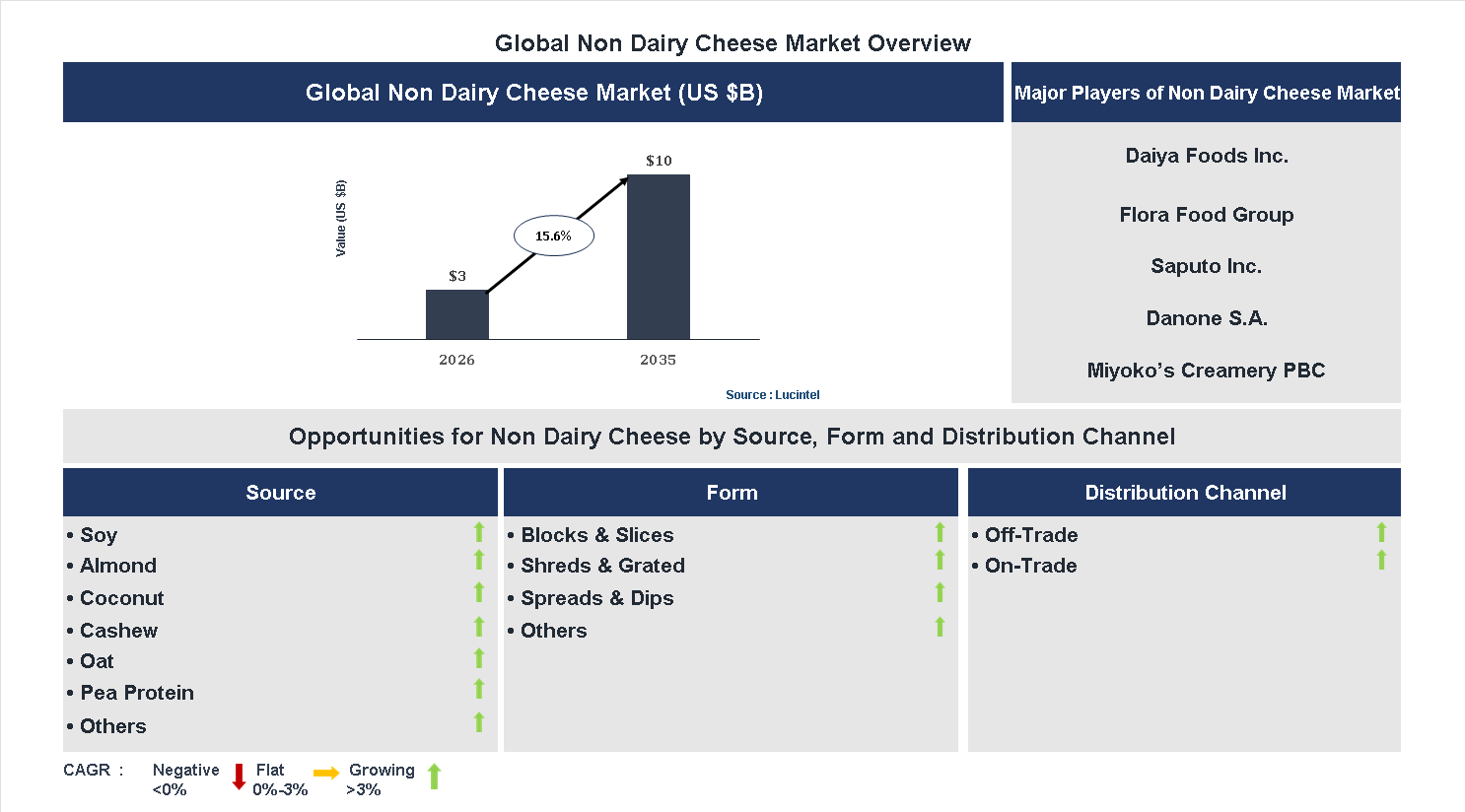
Key data points: The market size in 2035 = $10 billion, growth forecast = 15.6% annually for the next 8 years. Scroll below to get more insights. This market report covers trends, opportunities and forecasts in non dairy cheese market to 2035 by source (soy, almond, coconut, cashew, oat, pea protein, and others), form (blocks & slices, shreds & grated, spreads & dips, and others), distribution channel (off-trade and on-trade), and region (North America, Europe, Asia Pacific, and the Rest of the World)
We'll send your sample report shortly.
• Lucintel forecasts that, within the source category, soy is expected to witness the highest growth over the forecast period.
• Within the distribution channel category, on-trade is expected to witness higher growth.
• In terms of region, Europe is expected to witness the highest growth over the forecast period. Gain valuable insights for your business decisions with our comprehensive 150+ page report. Sample figures with some insights are shown below.
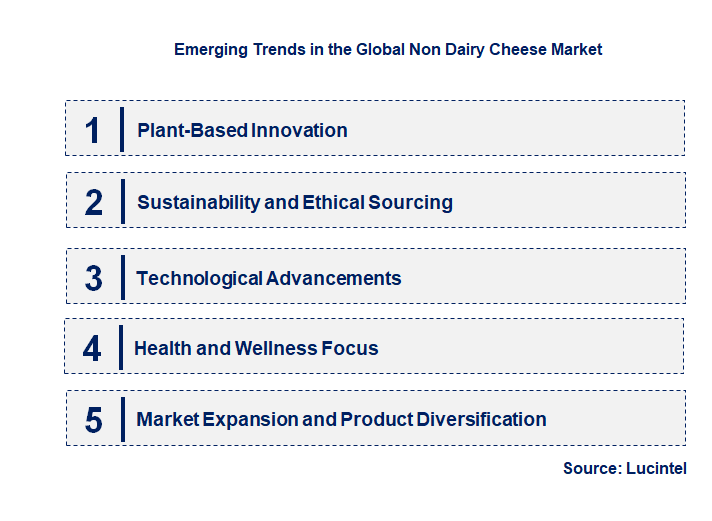
• Plant-Based Innovation: The rise of plant-based ingredients is revolutionizing non dairy cheese options. Companies are developing innovative formulations using nuts, soy, coconut, and other plant proteins to mimic traditional cheese textures and flavors. This trend caters to vegans, lactose-intolerant consumers, and those seeking healthier alternatives. The focus on clean-label, minimally processed ingredients enhances product appeal. As consumer awareness about animal welfare and environmental impact grows, plant-based non dairy cheeses are gaining popularity, leading to increased product diversity and market penetration.
• Sustainability and Ethical Sourcing: Consumers are increasingly prioritizing sustainability in their purchasing decisions. Non dairy cheese producers are adopting eco-friendly practices such as using renewable energy, reducing packaging waste, and sourcing ingredients ethically. Certifications like organic and fair trade are becoming more prevalent, boosting consumer trust. This trend not only reduces the environmental footprint but also aligns brands with ethical values, fostering brand loyalty. As sustainability becomes a key differentiator, companies investing in transparent supply chains and eco-conscious practices are gaining competitive advantage.
• Technological Advancements: Innovations in food processing and fermentation technologies are enhancing the quality and shelf life of non dairy cheeses. Techniques such as precision fermentation and enzyme technology enable better flavor development and texture optimization. These advancements allow for scalable production and consistent product quality, meeting increasing demand. Additionally, digital tools like AI and data analytics are helping companies understand consumer preferences and streamline R&D efforts. The integration of technology is crucial for product innovation, cost reduction, and maintaining a competitive edge in this rapidly evolving market.
• Health and Wellness Focus: Consumers are seeking healthier food options, driving demand for non dairy cheeses with functional benefits. Fortification with vitamins, minerals, probiotics, and superfoods is becoming common. Low-fat, low-sodium, and allergen-free formulations are also gaining traction. This trend aligns with the broader health and wellness movement, encouraging consumers to choose products that support their lifestyle and dietary needs. As health consciousness increases, non dairy cheese brands are emphasizing nutritional benefits and clean-label ingredients to attract health-focused buyers.
• Market Expansion and Product Diversification: The non dairy cheese market is expanding into new regions and retail channels. Emerging markets in Asia, Latin America, and Africa present significant growth opportunities due to rising awareness and urbanization. Additionally, product diversification includes spreads, slices, grated varieties, and specialty cheeses catering to different culinary uses. Collaborations with foodservice providers and retail chains are broadening distribution. This expansion is driven by changing consumer preferences, increased marketing efforts, and the desire for versatile, convenient plant-based options, ultimately reshaping the market landscape. These trends are collectively transforming the non dairy cheese market by fostering innovation, emphasizing sustainability, leveraging technology, focusing on health benefits, and expanding globally. These developments are not only broadening product offerings but also enhancing consumer engagement and operational efficiencies, positioning the market for sustained growth and increased competitiveness.
• Growing Consumer Demand for Plant-Based Alternatives: The rising awareness of health, environmental concerns, and animal welfare has significantly increased demand for plant-based cheeses. Consumers seek dairy-free options that mimic traditional cheese flavors and textures. This trend is encouraging companies to develop innovative products using ingredients like nuts, soy, and root vegetables. As a result, the market is expanding rapidly, with new product launches and increased shelf space in retail outlets. This growth is expected to continue as consumer preferences shift further towards sustainable and ethical foods.
• Innovation in Plant-Based Ingredients and Formulations: Advances in food technology are enabling the development of more authentic-tasting and textured non-dairy cheeses. Companies are experimenting with ingredients such as cashews, almonds, and coconut oil to improve flavor profiles and meltability. These innovations are making non-dairy cheeses more appealing to mainstream consumers. Additionally, fortification with vitamins and minerals enhances nutritional value, addressing health concerns. This progress is driving product diversification, attracting a wider audience, and increasing market penetration across various retail channels.
• Expansion of Product Varieties and Flavors: The market is witnessing a surge in diverse non-dairy cheese options, including slices, shreds, spreads, and blocks, with a variety of flavors like smoked, aged, and herb-infused. This variety caters to different culinary uses and consumer preferences. Specialty products targeting specific dietary needs, such as gluten-free or organic options, are also emerging. The expansion of flavors and formats enhances consumer choice, boosts sales, and encourages experimentation in cooking and snacking. This diversification is vital for capturing a larger market share.
• Increasing Focus on Sustainability and Ethical Production: Consumers are increasingly prioritizing environmentally friendly and ethically produced foods. Non-dairy cheese manufacturers are adopting sustainable sourcing practices, reducing carbon footprints, and using eco-friendly packaging. Certifications like organic and fair trade are gaining importance. These efforts resonate with eco-conscious consumers, strengthening brand loyalty and market reputation. Sustainability initiatives are also driving innovation in packaging and supply chain management, further aligning with consumer values. This focus is shaping the market’s future growth trajectory and competitive landscape.
• Rising Investment and Strategic Partnerships: Major food companies and startups are investing heavily in non-dairy cheese development. Strategic collaborations with ingredient suppliers, research institutions, and retail chains are accelerating product innovation and distribution. Funding rounds and acquisitions are fueling market expansion. These investments enable companies to scale production, improve quality, and expand into new markets globally. Strategic partnerships also facilitate access to advanced technologies and consumer insights, fostering continuous innovation. This financial and collaborative momentum is propelling the market toward sustained growth and diversification. The overall impact of these developments is transforming the non dairy cheese market into a dynamic, innovative, and sustainable sector. Consumer preferences for healthier, ethical, and environmentally friendly foods are driving product innovation and diversification. Increased investments and strategic collaborations are expanding market reach and capabilities. As a result, the market is experiencing rapid growth, with more options available to consumers and a broader global footprint, shaping the future of plant-based dairy alternatives.
• Product Innovation and Diversification: Developing new flavors, textures, and formats such as slices, spreads, and grated cheese enhances consumer appeal. Incorporating ingredients like nuts, soy, and root vegetables allows for a variety of taste profiles and dietary needs. This diversification attracts a broader customer base, including vegans, vegetarians, and those with dairy allergies. Continuous R&D efforts are crucial to improve meltability, shelf life, and nutritional content, ensuring competitiveness and market expansion.
• Expansion in Retail and Foodservice Channels: Increasing availability of non-dairy cheese in supermarkets, convenience stores, and specialty outlets broadens consumer access. Foodservice providers, including restaurants and cafes, are incorporating plant-based cheeses into menus, catering to diverse dietary preferences. Strategic partnerships with retail chains and foodservice operators can boost brand visibility and sales volume. This expansion supports mainstream acceptance and encourages trial among new consumers, driving overall market growth.
• Geographic Market Penetration in Emerging Economies: Rising awareness of vegan and health-conscious lifestyles in regions like Asia-Pacific and Latin America presents significant growth potential. Localizing product offerings to suit regional tastes and price points can facilitate market entry. Establishing distribution networks and educating consumers about plant-based benefits are essential steps. Expanding into these emerging markets can diversify revenue streams and establish early market dominance, fostering long-term growth.
• Focus on Sustainability and Ethical Sourcing: Consumers increasingly prioritize environmentally friendly and ethically produced products. Using sustainable ingredients, eco-friendly packaging, and transparent supply chains enhances brand reputation. Companies adopting carbon-neutral practices and supporting fair trade can differentiate themselves. Emphasizing sustainability appeals to eco-conscious buyers, fostering loyalty and premium pricing opportunities. This focus aligns with global trends toward responsible consumption, positively impacting market growth and corporate social responsibility.
• Strategic Mergers, Acquisitions, and Collaborations: Forming alliances with established dairy or plant-based brands accelerates innovation and market reach. Mergers can combine resources, R&D capabilities, and distribution channels to strengthen competitive positioning. Collaborations with food tech startups can introduce novel ingredients and processing techniques. These strategic moves enable rapid scaling, diversification, and entry into new markets, ensuring sustained growth and resilience amid competitive pressures. These growth opportunities collectively position the non dairy cheese market for substantial expansion. Innovation, channel expansion, geographic penetration, sustainability focus, and strategic partnerships are key drivers that will shape the future landscape. Embracing these avenues will enable market players to meet evolving consumer demands, enhance brand loyalty, and achieve long-term profitability in the dynamic plant-based food industry.
• Technological Innovations: The development of advanced food processing techniques and plant-based fermentation methods has enabled the creation of high-quality non-dairy cheeses that mimic traditional dairy flavors and textures. These innovations have expanded product variety and improved shelf life, attracting a broader consumer base. Continuous R&D efforts are expected to further enhance product appeal, making non-dairy cheese more accessible and appealing to mainstream markets. This technological progress is crucial for overcoming previous limitations related to taste and texture, thereby fueling market growth.
• Rising Vegan and Lactose-Free Consumer Demand: Increasing awareness of health, ethical, and environmental issues has led to a surge in demand for vegan and lactose-free products. Consumers are actively seeking dairy alternatives that align with their dietary preferences and lifestyle choices. This shift has prompted manufacturers to innovate and diversify their offerings, resulting in a broader product portfolio. The growing consumer base for plant-based diets is expected to sustain demand, encouraging market players to invest in product development and marketing strategies tailored to this demographic.
• Urbanization and Changing Lifestyles: Rapid urbanization has led to busier lifestyles, prompting consumers to seek convenient, ready-to-eat, and healthy food options. Non-dairy cheese products, often available in convenient packaging and versatile formats, cater to this need. The increasing adoption of on-the-go snacking and meal solutions in urban areas is driving demand for non-dairy cheese as a quick, nutritious addition to various dishes. This trend supports market expansion, especially in metropolitan regions where convenience foods are highly preferred.
• Environmental Sustainability and Ethical Considerations: Growing concerns over the environmental impact of traditional dairy farming, including greenhouse gas emissions and water usage, are encouraging consumers to opt for plant-based alternatives. Companies are emphasizing sustainable sourcing, eco-friendly packaging, and transparent supply chains to appeal to environmentally conscious buyers. These initiatives not only enhance brand reputation but also align with global sustainability goals, thereby boosting market growth. The emphasis on eco-friendly practices is expected to remain a key driver as consumers increasingly prioritize sustainability in their purchasing decisions.
• Expansion of Distribution Channels: The proliferation of online retail platforms and specialty health stores has improved product accessibility for consumers. E-commerce allows for wider reach, detailed product information, and direct engagement with customers, facilitating market penetration. Additionally, collaborations with supermarkets and foodservice providers have expanded the availability of non-dairy cheese products. This broad distribution network ensures that products reach diverse consumer segments, supporting overall market growth and enabling brands to build stronger customer relationships. The challenges facing the non dairy cheese market include:
• Regulatory and Labeling Complexities: Navigating diverse food safety standards and labeling regulations across different regions poses significant challenges for manufacturers. Stringent requirements regarding ingredient disclosure, health claims, and allergen labeling can complicate product development and marketing strategies. Non-compliance risks legal penalties and damage to brand reputation. Additionally, inconsistent regulations may hinder international trade and market expansion, requiring companies to adapt formulations and packaging to meet varying standards, which can increase costs and operational complexity.
• Taste and Texture Limitations: Despite technological advancements, replicating the taste and texture of traditional dairy cheese remains a challenge. Consumers often expect non-dairy cheese to closely mimic dairy flavors, and failure to meet these expectations can hinder adoption. Achieving the right meltability, creaminess, and flavor profile requires ongoing R&D investment. If these sensory attributes are not adequately addressed, consumer acceptance may be limited, restricting market growth and leading to potential product rejection in competitive markets.
• High Production Costs: The cost of raw materials, such as specialty plant proteins and natural flavorings, along with advanced processing technologies, results in higher production expenses. These costs are often passed on to consumers, making non-dairy cheese products relatively expensive compared to traditional cheese. Price sensitivity among consumers, especially in price-competitive markets, can limit demand and slow market penetration. Manufacturers must balance quality and affordability to sustain growth amid rising production costs and competitive pricing pressures. The non dairy cheese market is driven by technological innovations, shifting consumer preferences towards plant-based and lactose-free options, urbanization, sustainability concerns, and expanding distribution channels. However, regulatory complexities, sensory limitations, and high production costs pose significant challenges. These factors collectively influence market dynamics, requiring stakeholders to innovate continuously, adapt to regulatory landscapes, and manage costs effectively. The interplay of these drivers and challenges will determine the pace and sustainability of growth in this evolving industry, shaping future opportunities and competitive strategies.
• Daiya Foods Inc.
• Flora Food Group
• Saputo Inc.
• Danone S.A.
• Miyoko’s Creamery PBC
• Tofutti Brands Inc.
• Bel Group
• Kite Hill Inc.
• Good Planet Foods LLC
• Treeline Cheese LLC
• Soy
• Almond
• Coconut
• Cashew
• Oat
• Pea Protein
• Others
• Blocks & Slices
• Shreds & Grated
• Spreads & Dips
• Others
• Off-Trade
• On-Trade
• North America
• Europe
• Asia Pacific
• The Rest of the World
• United States: The US market has seen rapid growth with a surge in plant-based product demand. Major brands are launching innovative cheese alternatives, focusing on better taste and texture. Retailers are expanding shelf space, and new startups are entering the space, emphasizing organic and clean-label options. Consumer awareness about health and sustainability continues to drive adoption. Additionally, foodservice providers are incorporating non-dairy cheeses into menus, boosting visibility. Regulatory support and increased investment in R&D are further fueling market expansion, making the US a leader in non-dairy cheese innovation.
• China: Chinas non dairy cheese market is emerging, driven by urbanization and rising health consciousness. The growing vegan population and interest in Western diets are expanding demand. Local companies are developing affordable, locally sourced plant-based cheese options to cater to price-sensitive consumers. E-commerce platforms are playing a crucial role in distribution, increasing accessibility. International brands are entering the market, bringing advanced formulations and flavors. Government initiatives promoting sustainable food choices are also supporting growth. Overall, China’s market is poised for rapid expansion as consumer preferences shift towards plant-based diets.
• Germany: Germany remains a mature market with a strong focus on organic and high-quality non-dairy cheeses. Consumer preferences favor artisanal and traditional flavors, prompting companies to innovate with local ingredients. The market benefits from a well-established vegan community and increasing awareness of environmental issues. Retail chains are expanding their plant-based offerings, and specialty stores are showcasing premium products. Regulatory standards for organic and sustainable products are strict, encouraging high-quality production. Germany’s emphasis on sustainability and health continues to drive market growth, with innovations in flavor profiles and product formats gaining popularity among consumers.
• India: The Indian non dairy cheese market is in its nascent stages but shows promising growth potential. Rising awareness of lactose intolerance and vegan lifestyles is fueling interest. Local startups are developing affordable plant-based cheese options using indigenous ingredients like cashews and almonds. The increasing penetration of e-commerce and modern retail outlets is expanding access. Cultural shifts towards healthier eating habits and global cuisine influence consumer choices. Additionally, international brands are entering the market, offering a variety of flavors tailored to Indian tastes. Government initiatives promoting plant-based diets and sustainable food systems are expected to further support market development.
• Japan: Japan’s non dairy cheese market is gradually expanding, driven by health trends and environmental concerns. Consumers are seeking dairy-free options due to lactose intolerance and allergies. Innovative Japanese companies are developing unique flavors and textures, blending traditional ingredients with Western styles. The market is characterized by a focus on quality, natural ingredients, and functional benefits such as added vitamins. Retailers are increasing shelf space for plant-based cheeses, and foodservice outlets are experimenting with new recipes. Government campaigns promoting sustainable eating habits are also influencing market growth. Overall, Japan’s market is evolving with a focus on health, quality, and innovation.


• Daiya Foods Inc.
• Flora Food Group
• Saputo Inc.
• Danone S.A.
• Miyoko’s Creamery PBC
• Tofutti Brands Inc.
• Bel Group
• Kite Hill Inc.
• Good Planet Foods LLC
• Treeline Cheese LLC Q6. Which non dairy cheese market segment will be the largest in future? Answer: Lucintel forecasts that, within the source category, soy is expected to witness the highest growth over the forecast period. Q7. In non dairy cheese market, which region is expected to be the largest in next 8 years? Answer: In terms of region, Europe is expected to witness the highest growth over the forecast period. Q8. Do we receive customization in this report? Answer: Yes, Lucintel provides 10% customization without any additional cost.


Choose a license that fits your team. Instant PDF delivery.
Prices exclude taxes. Instant delivery. Custom licensing available on request.
Market Report · July 22, 2026
Market Report · July 22, 2026
Market Report · July 22, 2026
Trusted partner for strategic intelligence and business growth


Receive a complimentary market analysis tailored to your industry. Our analysts will identify key growth opportunities and competitive dynamics specific to your business.

Market size, growth rate, and key trend analysis for your specific sector.

Top competitor positioning and market share analysis.

Strategic recommendations backed by data-driven insights.
Get curated market intelligence and competitive moves straight to your inbox.
By subscribing, you agree to receive our monthly insights. Unsubscribe anytime.
Receive a complimentary market analysis tailored to your industry. Our analysts will identify key growth opportunities and competitive dynamics specific to your business.
Market size, growth rate, and key trend analysis for your specific sector.
Top competitor positioning and market share analysis.
Strategic recommendations backed by data-driven insights.
Get curated market intelligence, emerging trends, and competitive moves straight to your inbox each month.
By subscribing, you agree to receive our monthly insights. Unsubscribe anytime.
We'll send your sample report shortly.