
Report Feature
Night Guard Market Trends and Forecast
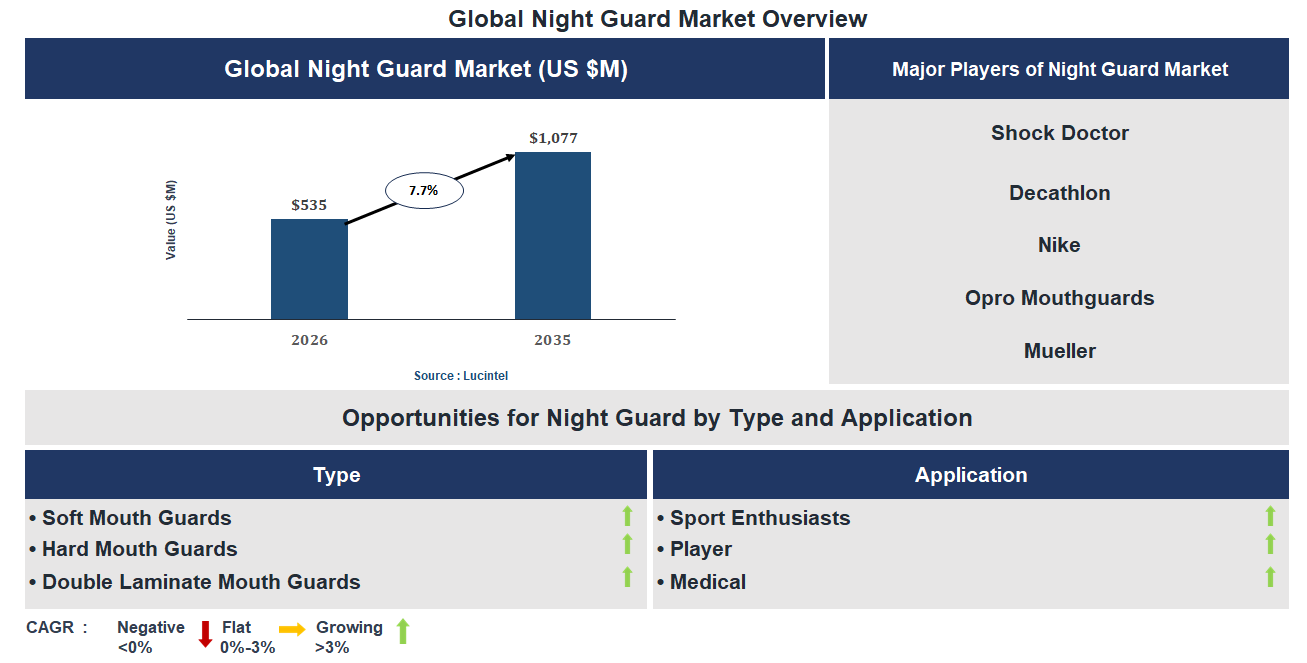
The future of the global night guard market looks promising with opportunities in the sport enthusiast, player, and medical markets. The global night guard market is expected to reach an estimated $1,077 million by 2035 with a CAGR of 7.7% from 2026 to 2035. The major drivers for this market are the increasing incidence of bruxism among adults, the rising awareness of dental protective devices, and the growing demand for customized night guards.• Lucintel forecasts that, within the type category, double laminate mouth guard is expected to witness the highest growth over the forecast period.
• Within the application category, medical is expected to witness the highest growth.
• In terms of region, APAC is expected to witness the highest growth over the forecast period. Gain valuable insights for your business decisions with our comprehensive 150+ page report. Sample figures with some insights are shown below.
Emerging Trends in the Night Guard Market
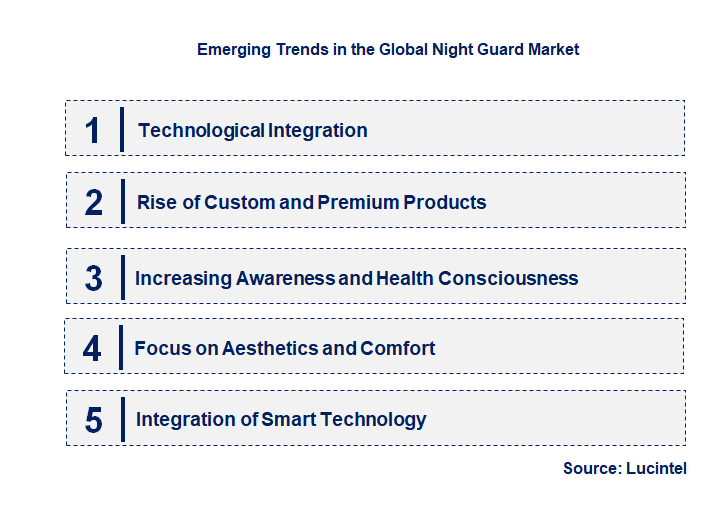
The night guard market is experiencing rapid evolution driven by technological advancements, increasing awareness of dental health, and changing consumer preferences. As more individuals seek effective solutions for teeth grinding, jaw clenching, and sleep-related issues, the market is adapting to meet these demands with innovative products and personalized services. The integration of digital technology, rising health consciousness, and a focus on comfort and aesthetics are shaping the future landscape of this industry. These developments are not only expanding market size but also enhancing product efficacy and user experience, ultimately transforming how consumers approach nighttime oral health care.• Technological Integration: The adoption of digital impressions and 3D printing is revolutionizing product customization. This trend allows for precise fitting, improved comfort, and faster production times. Digital technology reduces the need for traditional molds, making the process more efficient and less invasive. As a result, consumers benefit from personalized night guards that fit better and provide enhanced protection. This innovation is also enabling manufacturers to streamline operations and reduce costs, fostering greater accessibility and affordability for a broader customer base.
• Rise of Custom and Premium Products: Consumers are increasingly seeking tailored solutions that cater to their specific dental needs. Custom night guards, often prescribed by dentists, offer superior fit, comfort, and durability compared to over-the-counter options. The demand for premium products with advanced materials that provide better protection and aesthetics is growing. This trend reflects a shift towards personalized healthcare and a willingness to invest in higher-quality solutions for long-term oral health. It is also driving market segmentation and premium pricing strategies among manufacturers.
• Increasing Awareness and Health Consciousness: Growing awareness about the health risks associated with teeth grinding and sleep disorders is fueling market growth. Educational campaigns and dental consultations emphasize the importance of early intervention and proper management. Consumers are more informed about the benefits of using night guards to prevent dental damage, jaw pain, and sleep disturbances. This heightened awareness is encouraging more individuals to seek professional advice and invest in effective night guard solutions, thereby expanding the market.
• Focus on Aesthetics and Comfort: The market is shifting towards products that combine functionality with aesthetic appeal. Clear, discreet night guards made from transparent materials are becoming popular among users who prefer less conspicuous options. Additionally, comfort-enhancing features such as softer materials and ergonomic designs are prioritized to improve user compliance. This trend reflects consumer preferences for products that do not compromise on appearance or comfort, leading to increased adoption and satisfaction. Manufacturers are innovating to meet these aesthetic and comfort demands, differentiating their offerings in a competitive landscape.
• Integration of Smart Technology: The emergence of smart night guards equipped with sensors and connectivity features is opening new avenues in the market. These devices can monitor sleep patterns, teeth grinding intensity, and jaw movements, providing valuable data for users and healthcare providers. The integration of mobile apps allows for real-time feedback and personalized recommendations. This trend enhances user engagement, promotes better management of sleep-related issues, and supports data-driven healthcare. As technology advances, smart night guards are expected to become more sophisticated, offering enhanced functionality and contributing to a more proactive approach to oral health. These trends are collectively reshaping the night guard market by emphasizing customization, technological innovation, consumer awareness, aesthetics, and smart integration. They are driving growth, improving product efficacy, and enhancing user experience, ultimately leading to a more personalized, efficient, and health-conscious industry landscape.
Recent Development in the Night Guard Market
The night guard market is experiencing rapid growth driven by increasing awareness of dental health, rising cases of bruxism, and advancements in dental technology. Consumers are seeking effective solutions to prevent teeth damage and improve sleep quality. Innovations in materials and customization options are expanding market reach. Additionally, the integration of digital dentistry is streamlining production processes. The markets expansion is also fueled by rising disposable incomes and growing healthcare awareness worldwide. These developments are transforming the landscape, creating new opportunities for manufacturers and healthcare providers.• Growing Awareness of Dental Health: The increasing focus on oral health has led to a higher demand for night guards. Consumers are more informed about bruxism and its effects, prompting them to seek preventive solutions. This awareness is supported by dental professionals advocating for early intervention, which boosts market growth. As people prioritize health, the demand for customized, effective night guards rises, expanding market opportunities. The trend also encourages innovation in product design and materials, further driving sales and market expansion.
• Rising Prevalence Of Bruxism: The global increase in bruxism cases, often linked to stress and lifestyle factors, significantly impacts the night guard market. Patients seek reliable, comfortable devices to prevent tooth wear and jaw pain. This growing prevalence directly correlates with increased sales of night guards, especially custom-fitted options. Healthcare providers are more frequently recommending these devices, which enhances market stability. The trend also encourages manufacturers to develop advanced, durable products tailored to diverse patient needs, fueling market growth.
• Technological Advancements In Dental Manufacturing: Innovations such as digital impressions, 3D printing, and CAD/CAM technology are revolutionizing night guard production. These advancements enable faster, more precise customization, reducing turnaround times and costs. They also improve product fit and comfort, increasing patient satisfaction. The integration of digital tools allows for scalable manufacturing, meeting rising demand efficiently. As technology continues to evolve, the market benefits from higher-quality products and expanded accessibility, fostering sustained growth and competitive advantage for industry players.
• Increasing Adoption Of Custom-Made Night Guards: Customization offers superior fit, comfort, and effectiveness, making it the preferred choice among consumers and dental professionals. The shift from generic to tailored solutions enhances patient compliance and treatment outcomes. This trend is supported by advancements in digital dentistry, which streamline customization processes. As awareness of personalized healthcare grows, so does the demand for custom night guards. This shift boosts market revenue, encourages innovation, and fosters stronger relationships between manufacturers and dental clinics, further expanding the market.
• Impact of Digital Dentistry Integration: The adoption of digital dentistry tools, such as intraoral scanners and 3D printing, is transforming night guard manufacturing. These technologies enable precise, rapid, and cost-effective production of customized devices. They also facilitate remote consultations and digital workflows, improving patient experience. The integration reduces errors and enhances product quality, leading to higher customer satisfaction. As digital adoption accelerates, the market benefits from increased efficiency, broader reach, and the ability to meet growing demand with innovative, high-quality products. These recent developments are significantly impacting the night guard market by enhancing product quality, customization, and manufacturing efficiency. Increased awareness and technological innovations are driving higher demand, expanding market size globally. The integration of digital tools is streamlining production and improving patient outcomes. Overall, these opportunities are fostering a competitive, innovative environment that benefits consumers, healthcare providers, and manufacturers alike, ensuring sustained growth and evolution within the market.
Strategic Growth Opportunities in the Night Guard Market
The night guard market is experiencing significant growth driven by increasing awareness of dental health, rising cases of bruxism, and advancements in dental technology. Consumers seek effective, comfortable, and affordable solutions to protect their teeth during sleep. The markets expansion is also fueled by rising disposable incomes and the growing prevalence of sleep-related disorders. Companies are innovating to meet diverse consumer needs, creating new opportunities for market players to expand their product offerings and geographic reach.• Customization and Material Innovation Drive Market Growth: The development of personalized night guards using advanced materials like thermoplastics and durable composites enhances comfort and effectiveness. Custom-fit options cater to individual dental structures, increasing consumer satisfaction. Innovations in materials also improve durability and reduce costs, making night guards more accessible. This trend encourages manufacturers to invest in R&D, expand product portfolios, and capture a broader customer base.
• Increasing Prevalence of Bruxism and Sleep Disorders: Rising awareness of bruxism and sleep-related issues like sleep apnea boosts demand for night guards. As these conditions become more diagnosed, patients seek protective solutions to prevent dental damage and improve sleep quality. Healthcare providers are increasingly recommending night guards as part of treatment plans, further expanding the market. This trend underscores the importance of targeted marketing and product development tailored to specific sleep disorders.
• Growing Adoption of Over-the-Counter Night Guards: The availability of affordable, ready-to-wear night guards in retail stores and online platforms is expanding market reach. Consumers prefer convenient, cost-effective options for immediate relief, driving sales of OTC products. Manufacturers are focusing on designing user-friendly, effective products that appeal to a broad demographic. This shift reduces reliance on dental clinics for initial purchases, broadening the market scope and increasing accessibility.
• Technological Advancements in Manufacturing and Design: Innovations such as 3D printing and digital scanning enable precise, rapid, and cost-effective production of night guards. These technologies facilitate customization and improve fit, comfort, and durability. Enhanced manufacturing processes also allow for scalable production, meeting rising demand efficiently. As technology evolves, companies can offer more sophisticated, personalized solutions, strengthening their competitive edge and expanding market share.
• Rising Awareness and Preventive Dental Care Practices: Increased public awareness about dental health and the importance of preventive care encourages early adoption of night guards. Educational campaigns and dental professional endorsements promote their benefits, leading to higher consumer acceptance. Preventive use of night guards helps avoid costly dental procedures, making them a preferred choice among health-conscious consumers. This trend supports sustained market growth and encourages innovation in product design and marketing strategies. These growth opportunities collectively drive the expansion of the night guard market by addressing consumer needs, technological advancements, and increasing health awareness. Companies that capitalize on customization, affordability, and technological innovation are poised to strengthen their market position. The overall market outlook remains positive, with continuous growth expected as awareness and technological integration deepen, ultimately improving dental health outcomes globally.
Night Guard Market Driver and Challenges
The night guard market is influenced by a variety of technological, economic, and regulatory factors that shape its growth and development. Advances in security technology, increasing awareness of personal safety, and evolving regulations around security devices are key drivers. Economic factors such as rising disposable incomes and urbanization contribute to higher demand, while regulatory standards ensure product safety and efficacy. However, the market also faces challenges, including high product costs, technological obsolescence, and regulatory hurdles that can impede growth. Understanding these drivers and challenges is essential for stakeholders to navigate the market effectively and capitalize on emerging opportunities. The factors responsible for driving the night guard market include:-• Technological Advancements: The development of smart night guards equipped with sensors, AI, and connectivity features has revolutionized the market. These innovations offer enhanced security, real-time monitoring, and user convenience, making night guards more effective and appealing. As technology continues to evolve, manufacturers can introduce more sophisticated products, expanding market potential. The integration of IoT and AI also enables personalized security solutions, attracting a broader customer base and fostering market growth.
• Rising Awareness of Personal Safety: Increasing concerns about personal safety, especially in urban areas, have significantly driven demand for night guards. Consumers are more conscious of security threats such as theft, assault, and home invasions, prompting them to invest in reliable night security solutions. This heightened awareness is supported by media coverage and community safety initiatives, which further boost market adoption. As safety concerns grow, the demand for effective night guard products is expected to continue rising.
• Urbanization and Population Growth: Rapid urbanization has led to higher population densities and increased security risks in residential and commercial areas. This trend fuels demand for night guards as property owners seek reliable security measures to protect their assets and loved ones. Additionally, expanding urban infrastructure and commercial establishments require advanced security solutions, creating a substantial market opportunity. The growth of urban centers directly correlates with increased adoption of night guard products, supporting sustained market expansion.
• Economic Growth and Disposable Income: Rising disposable incomes across emerging economies enable consumers to invest in higher-quality security products, including night guards. Economic development also leads to increased construction of residential complexes and commercial buildings, which require security solutions. As affordability improves, a broader demographic can access advanced night guard systems, driving market growth. This economic trend ensures a steady increase in demand for both basic and sophisticated night guard products. The challenges in the night guard market are:
• High Product Costs: Advanced night guard systems, especially those with smart features, often involve significant manufacturing and technological expenses. These costs translate into higher retail prices, limiting accessibility for price-sensitive consumers. The high cost can restrict market penetration in developing regions and reduce overall adoption rates. Manufacturers need to balance innovation with affordability to sustain growth and reach a wider customer base.
• Technological Obsolescence: Rapid technological advancements pose a challenge for market players to keep their products up-to-date. As new features and innovations emerge, existing products may become outdated quickly, leading to increased R&D expenses and frequent product upgrades. This cycle can strain resources and impact profitability. Companies must continuously innovate to stay competitive, which can be challenging given the fast pace of technological change.
• Regulatory and Certification Barriers: The security industry is subject to strict regulations and certification requirements to ensure safety and efficacy. Navigating these regulatory landscapes can be complex and time-consuming, delaying product launches and increasing compliance costs. Variations in regulations across regions further complicate market expansion. Non-compliance risks legal penalties and damage to brand reputation, making regulatory adherence a critical challenge for market participants. The night guard market is driven by technological innovations, increasing safety awareness, urbanization, and economic growth, which collectively foster expansion opportunities. However, high costs, rapid technological changes, and regulatory hurdles pose significant challenges that could hinder growth if not effectively managed. Overall, the markets future depends on balancing innovation with affordability and regulatory compliance, ensuring sustainable development and wider adoption of night guard solutions.
List of Night Guard Companies
Companies in the market compete on the basis of product quality offered. Major players in this market focus on expanding their manufacturing facilities, R&D investments, infrastructural development, and leverage integration opportunities across the value chain. With these strategies night guard companies cater increasing demand, ensure competitive effectiveness, develop innovative products & technologies, reduce production costs, and expand their customer base. Some of the night guard companies profiled in this report include-• Shock Doctor
• Decathlon
• Nike
• Opro Mouthguards
• Mueller
• Venum
• Battle Sports Science
• Maxxmma
• ClearClub
• Fight Dentist
Night Guard Market by Segment
The study includes a forecast for the global night guard market by type, application, and region.Night Guard Market by Type [Value from 2019 to 2035]:
• Soft Mouth Guards
• Hard Mouth Guards
• Double Laminate Mouth Guards
Night Guard Market by Application [Value from 2019 to 2035]:
• Sport Enthusiasts
• Player
• Medical
Night Guard Market by Region [Value from 2019 to 2035]:
• North America
• Europe
• Asia Pacific
• The Rest of the World
Country Wise Outlook for the Night Guard Market
The night guard market has experienced significant shifts driven by technological innovations, increasing awareness of dental health, and evolving consumer preferences across the globe. Countries are adopting new materials, advanced manufacturing techniques, and digital customization to enhance product efficacy and comfort. Regulatory changes and rising healthcare expenditure also influence market dynamics. As the demand for personalized and effective night guards grows, key players are investing in research and development to capture market share. The following summarizes recent developments in the United States, China, Germany, India, and Japan, highlighting notable advancements and trends in each region.• United States: The US market has seen a surge in demand for custom-made night guards utilizing digital scanning and 3D printing technologies, improving fit and comfort. Increasing awareness about sleep disorders and dental health has driven growth, with many dental clinics adopting advanced materials like durable thermoplastics. Regulatory approvals for new products and the rise of online direct-to-consumer sales channels have expanded market reach. Additionally, collaborations between dental professionals and tech companies are fostering innovation in product design and customization options.
• China: China’s night guard market is rapidly expanding due to rising disposable incomes and growing awareness of oral health. Local manufacturers are investing in advanced manufacturing processes and affordable materials to cater to a broader consumer base. E-commerce platforms are playing a crucial role in distribution, making night guards more accessible. The government’s focus on healthcare infrastructure development and increasing dental clinics is further boosting market growth. Innovations in lightweight, flexible materials are also gaining popularity among Chinese consumers seeking comfort and affordability.
• Germany: The German market emphasizes high-quality, durable night guards with a focus on advanced materials and eco-friendly manufacturing practices. There is a strong preference for custom-fitted products made from biocompatible materials, driven by stringent regulatory standards. Technological integration, such as digital impressions and CAD/CAM systems, is prevalent among dental practitioners. Germany also leads in research collaborations aimed at developing innovative solutions for bruxism and sleep-related disorders. The market benefits from a well-established healthcare system and high consumer awareness of dental health.
• India: India’s night guard market is characterized by rapid growth fueled by increasing awareness of dental health and affordability. Local manufacturers are offering cost-effective, basic night guards, while premium options are gaining traction among urban populations. The rise of dental clinics and clinics offering specialized sleep disorder treatments contributes to market expansion. Innovations include the use of lightweight, flexible materials and digital customization. Government initiatives to improve healthcare access and the growing prevalence of stress-related dental issues are further propelling market development.
• Japan: Japan’s market is marked by a focus on technologically advanced, highly customized night guards that cater to a health-conscious population. The adoption of digital impression techniques and CAD/CAM technology ensures precise fitting and comfort. There is a strong emphasis on eco-friendly and biocompatible materials, aligning with Japan’s sustainability goals. The aging population’s increasing prevalence of sleep disorders and bruxism has driven demand for innovative solutions. Japanese companies are also investing in research to develop smart night guards integrated with sensors for monitoring sleep quality and dental health.

Features of the Global Night Guard Market
Market Size Estimates: Night guard market size estimation in terms of value ($M). Trend and Forecast Analysis: Market trends (2019 to 2025) and forecast (2026 to 2035) by various segments and regions. Segmentation Analysis: Night guard market size by type, application, and region in terms of value ($M). Regional Analysis: Night guard market breakdown by North America, Europe, Asia Pacific, and Rest of the World. Growth Opportunities: Analysis of growth opportunities in different types, applications, and regions for the night guard market. Strategic Analysis: This includes M&A, new product development, and competitive landscape of the night guard market. Analysis of competitive intensity of the industry based on Porter’s Five Forces model.
FAQ
Q1. What is the market size and growth forecast for night guard market? Answer: The global night guard market is expected to reach an estimated $1,077 million by 2035 and grow with a CAGR of 7.7% from 2026 to 2035. Q2. What are the major drivers influencing the growth of the night guard market? Answer: The major drivers for this market are the increasing incidence of bruxism among adults, the rising awareness of dental protective devices, and the growing demand for customized night guards. Q3. What are the major segments for night guard market? Answer: The future of the night guard market looks promising with opportunities in the sport enthusiast, player, and medical markets. Q4. Who are the key night guard market companies? Answer: Some of the key night guard companies are as follows:• Shock Doctor
• Decathlon
• Nike
• Opro Mouthguards
• Mueller
• Venum
• Battle Sports Science
• Maxxmma
• ClearClub
• Fight Dentist Q5. Which night guard market segment will be the largest in future? Answer: Lucintel forecasts that, within the type category, double laminate mouth guard is expected to witness the highest growth over the forecast period. Q6. In night guard market, which region is expected to be the largest in next 5 years? Answer: In terms of region, APAC is expected to witness the highest growth over the forecast period. Q7. Do we receive customization in this report? Answer: Yes, Lucintel provides 10% customization without any additional cost.
Table of Contents
List of Figures
List of Tables
Methodology
- In-depth interviews of the major players in this market
- Detailed secondary research from competitors’ financial statements and published data
- Extensive searches of published works, market, and database information pertaining to industry news, company press releases, and customer intentions
- A compilation of the experiences, judgments, and insights of Lucintel’s professionals, who have analyzed and tracked this market over the years.


Buy Now
Choose a license that fits your team. Instant PDF delivery.
Prices exclude taxes. Instant delivery. Custom licensing available on request.
Key Questions
- • What are some of the most promising, high-growth opportunities for the night guard market by type (soft mouth guards, hard mouth guards, and double laminate mouth guards), application (sport enthusiasts, player, and medical), and region (North America, Europe, Asia Pacific, and the Rest of the World)?
- • Which segments will grow at a faster pace and why?
- • Which region will grow at a faster pace and why?
- • What are the key factors affecting market dynamics? What are the key challenges and business risks in this market?
- • What are the business risks and competitive threats in this market?
- • What are the emerging trends in this market and the reasons behind them?
- • What are some of the changing demands of customers in the market?
- • What are the new developments in the market? Which companies are leading these developments?
- • Who are the major players in this market? What strategic initiatives are key players pursuing for business growth?
- • What are some of the competing products in this market and how big of a threat do they pose for loss of market share by material or product substitution?
- • What M&A activity has occurred in the last 7 years and what has its impact been on the industry? For any questions related to Night Guard Market, Night Guard Market Size, Night Guard Market Growth, Night Guard Market Analysis, Night Guard Market Report, Night Guard Market Share, Night Guard Market Trends, Night Guard Market Forecast, Night Guard Companies, write Lucintel analyst at email: helpdesk@lucintel.com. We will be glad to get back to you soon.


