
Market Report · July 22, 2026

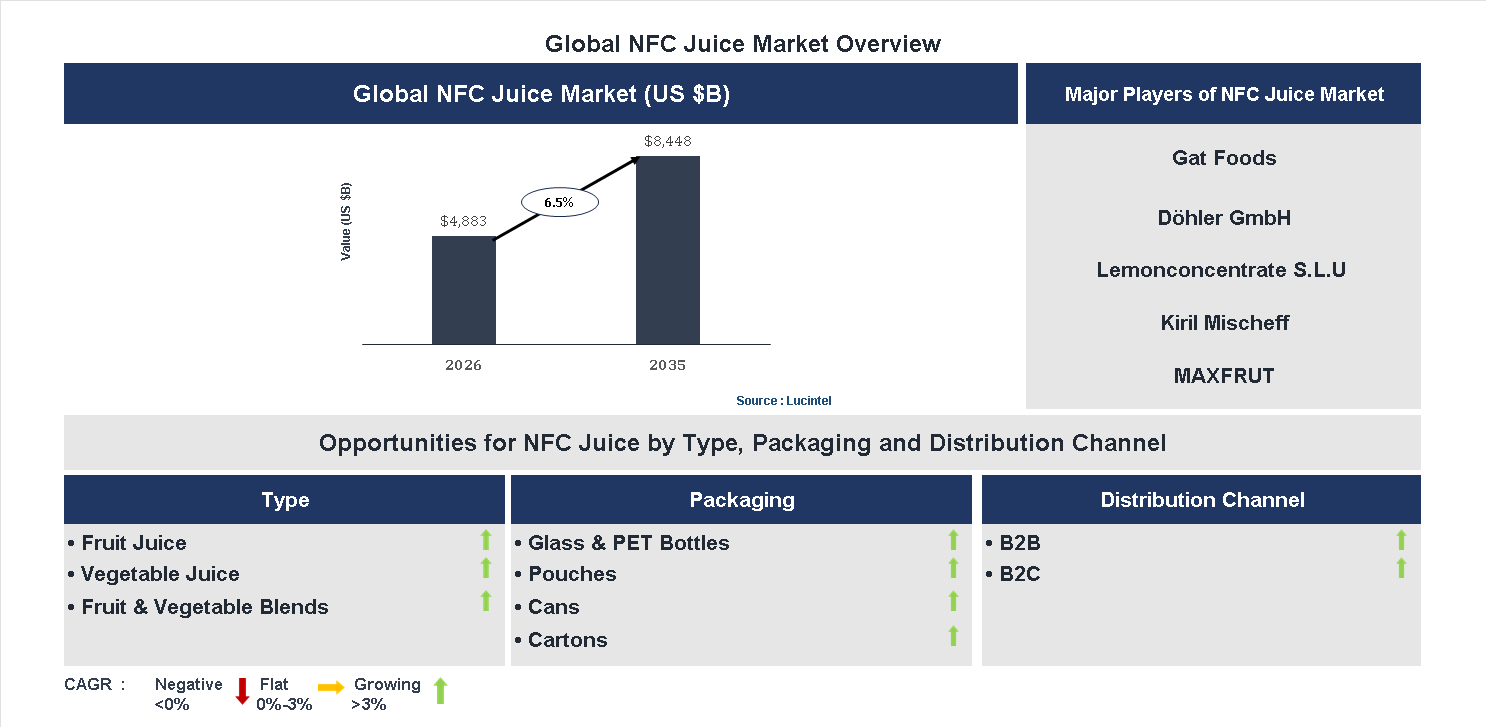
Key data points: The market size in 2035 = $8,448 billion, growth forecast = 6.5% annually for the next 8 years. Scroll below to get more insights. This market report covers trends, opportunities and forecasts in NFC juice market to 2035 by type (fruit juice, vegetable juice, and fruit & vegetable blends), packaging (glass & PET bottles, pouches, cans, and cartons), distribution channel (B2B and B2C), and region (North America, Europe, Asia Pacific, and the Rest of the World)
We'll send your sample report shortly.
• Lucintel forecasts that, within the type category, fruit juice is expected to witness the highest growth over the forecast period.
• Within the distribution channel category, B2B is expected to witness higher growth.
• In terms of region, North America is expected to witness the highest growth over the forecast period. Gain valuable insights for your business decisions with our comprehensive 150+ page report. Sample figures with some insights are shown below.
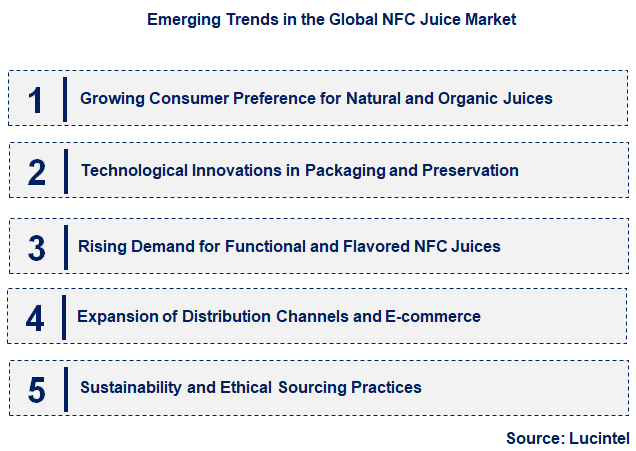
• Growing Consumer Preference for Natural and Organic Juices: Increasing health awareness and demand for clean-label products are driving consumers toward natural, organic NFC juices. This trend emphasizes minimally processed, preservative-free beverages that offer health benefits, boosting market growth. Brands are investing in organic certifications and transparent sourcing to meet consumer expectations, which enhances brand loyalty and market differentiation.
• Technological Innovations in Packaging and Preservation: Advances in packaging, such as aseptic and eco-friendly containers, are improving product shelf life and reducing environmental impact. These innovations enable longer storage without preservatives, maintaining juice freshness and nutritional value. Such technologies also appeal to eco-conscious consumers, fostering brand trust and expanding market reach.
• Rising Demand for Functional and Flavored NFC Juices: Consumers are seeking beverages with added health benefits, such as immunity boosting, detoxification, and energy enhancement. Functional NFC juices infused with vitamins, minerals, and botanicals are gaining popularity. This trend encourages product diversification and allows brands to target niche markets, increasing overall market revenue.
• Expansion of Distribution Channels and E-commerce: The growth of online retail platforms and direct-to-consumer sales channels is making NFC juices more accessible. E-commerce enables brands to reach wider audiences, offer customized products, and gather consumer data for targeted marketing. This shift is crucial for market expansion, especially in emerging regions and among younger demographics.
• Sustainability and Ethical Sourcing Practices: Consumers are increasingly concerned about environmental impact and ethical sourcing. Brands adopting sustainable farming, eco-friendly packaging, and transparent supply chains are gaining a competitive advantage. These practices not only meet consumer expectations but also promote long-term industry sustainability, influencing market standards and corporate responsibility initiatives. These trends are reshaping the NFC juice market by fostering innovation, enhancing consumer engagement, and emphasizing sustainability. They are driving market expansion, encouraging product diversification, and setting new standards for quality and transparency, ultimately creating a more dynamic and competitive landscape.
• Growing Consumer Preference for Natural and Healthy Beverages: Increasing awareness of health benefits associated with natural, preservative-free juices is driving demand. Consumers are seeking clean-label products with minimal processing, which boosts NFC juice sales. This trend encourages manufacturers to innovate with organic ingredients and transparent labeling, expanding market reach. The shift towards health-conscious consumption is expected to sustain long-term growth, attracting new demographics and fostering product diversification.
• Technological Advancements in Juice Preservation: Innovations in cold-pressing and aseptic processing techniques enhance juice quality and shelf life without additives. These technologies preserve nutrients and flavors better, meeting consumer expectations for fresh-tasting products. They also reduce reliance on preservatives, aligning with clean-label trends. As a result, manufacturers can offer premium products with extended shelf life, opening new distribution channels and increasing market competitiveness.
• Expansion of Organic and Premium NFC Juice Segments: The rising demand for organic and premium juices is creating lucrative opportunities. Consumers are willing to pay higher prices for products perceived as healthier and more sustainable. Companies are launching organic-certified NFC juices with unique flavor profiles, targeting health-conscious and affluent consumers. This segments growth is fostering innovation and encouraging brands to differentiate through quality, branding, and sustainability initiatives, thereby expanding market share.
• Strategic Collaborations and Market Penetration: Partnerships between NFC juice producers and retail chains or beverage brands are facilitating wider distribution and brand visibility. These collaborations enable access to new markets and consumer bases, especially in emerging economies. Joint ventures and co-branding efforts are also fostering innovation and product diversification. Such strategies are crucial for market expansion, increasing consumer trust, and strengthening competitive positioning in a crowded marketplace.
• Focus on Sustainability and Eco-Friendly Packaging: Environmental concerns are prompting companies to adopt sustainable packaging solutions like biodegradable bottles and recyclable cartons. This shift appeals to eco-conscious consumers and enhances brand reputation. Sustainable practices reduce environmental impact and align with global regulatory standards. As a result, the market is witnessing increased adoption of eco-friendly packaging, which not only supports corporate social responsibility but also influences consumer purchasing decisions, driving overall market growth. The NFC juice markets recent developments are significantly impacting growth by enhancing product quality, expanding consumer base, and promoting sustainability. These opportunities are fostering innovation, improving market penetration, and strengthening competitive dynamics, ultimately leading to a more dynamic and resilient industry poised for sustained expansion.
• Growing Consumer Preference for Natural and Healthy Beverages: Increasing awareness of health benefits associated with natural, preservative-free juices is driving demand for NFC (Not From Concentrate) juices. Consumers seek minimally processed products with authentic flavors, prompting manufacturers to focus on high-quality, fresh NFC juice offerings. This trend encourages innovation in sourcing, processing, and packaging to meet consumer expectations for transparency and health benefits, thereby expanding market share and fostering brand loyalty.
• Expansion into Emerging Markets with Rising Urbanization: Rapid urbanization in developing regions presents significant growth opportunities for NFC juice companies. As urban populations adopt Western lifestyles, demand for convenient, healthy beverages increases. Companies are expanding distribution networks and localizing product offerings to cater to regional tastes and preferences. This strategic move allows brands to tap into new customer bases, increase sales volume, and establish a strong presence in emerging markets with high growth potential.
• Innovation in Packaging to Enhance Convenience and Shelf Life: Advances in packaging technology are crucial for extending shelf life and improving convenience for consumers. Lightweight, eco-friendly, and resealable packaging options are gaining popularity, making NFC juices more accessible and portable. These innovations help reduce waste, improve product safety, and meet consumer demand for sustainable solutions. Enhanced packaging also enables brands to differentiate themselves in a competitive market, boosting sales and consumer engagement.
• Strategic Collaborations and Partnerships for Market Penetration: Collaborations between NFC juice producers and retail chains, foodservice providers, or health-focused brands are vital for expanding reach. Strategic partnerships facilitate wider distribution, co-branding opportunities, and access to new customer segments. These alliances also enable shared innovation, marketing efforts, and resource optimization, helping companies strengthen their market presence and accelerate growth in a competitive landscape.
• Focus on Organic and Functional NFC Juice Products: The rising consumer interest in organic and functional beverages presents a lucrative growth avenue. NFC juice brands are developing products with added health benefits, such as immunity-boosting ingredients or superfoods, to meet this demand. Emphasizing organic certification and functional benefits appeals to health-conscious consumers, allowing brands to command premium pricing and differentiate themselves. This focus supports market expansion and aligns with global health and wellness trends. These growth opportunities are poised to significantly influence the NFC juice market by driving innovation, expanding geographic reach, and aligning with consumer health trends. Companies that strategically leverage these avenues can enhance their market share, foster brand loyalty, and sustain long-term growth in a competitive environment.
• Technological Innovation: The integration of NFC technology in juice packaging allows for enhanced consumer engagement through interactive labels, product authentication, and personalized marketing. This innovation improves brand loyalty and provides valuable data insights, fostering a more connected consumer experience. As technology becomes more affordable and scalable, manufacturers can implement these solutions widely, leading to increased market penetration and differentiation. The ability to offer secure, tamper-proof packaging also boosts consumer confidence, especially in premium and health-focused segments. Overall, technological advancements are pivotal in transforming traditional juice markets into more interactive and secure ecosystems, fueling growth and consumer interest.
• Rising Health Consciousness: Consumers are increasingly seeking healthier, natural, and organic beverage options, which significantly impacts the NFC juice market. The demand for clean-label products free from artificial additives and preservatives is rising, prompting manufacturers to innovate with healthier formulations. NFC technology supports this trend by enabling transparent sourcing and freshness verification, reassuring consumers about product quality. Additionally, the convenience of portable, ready-to-drink NFC juices aligns with busy lifestyles, further boosting sales. As health awareness continues to grow globally, the market is expected to expand, driven by consumer preferences for nutritious, safe, and authentic products.
• Economic Growth and Disposable Income: Economic development in emerging markets has led to increased disposable incomes, enabling consumers to spend more on premium and functional beverages like NFC juices. As income levels rise, consumers are willing to pay a premium for high-quality, health-oriented products, creating new opportunities for market expansion. This economic uplift also encourages retail and distribution channel growth, making NFC juices more accessible. Furthermore, the increasing urbanization and changing lifestyles contribute to higher demand for convenient, on-the-go beverage options. Overall, economic growth acts as a catalyst for market expansion by broadening consumer bases and encouraging innovation in product offerings.
• Regulatory Environment and Food Safety Standards: Stringent regulations concerning food safety, labeling, and sustainability influence the NFC juice market significantly. Compliance with standards such as HACCP, FDA regulations, and eco-labeling requirements necessitates investments in quality control, traceability, and sustainable sourcing. These regulations ensure consumer safety and build trust, but also pose challenges for smaller manufacturers due to compliance costs. Moreover, evolving regulations around packaging waste and environmental impact push companies toward eco-friendly materials and practices. Navigating these regulatory landscapes is essential for market players to avoid penalties, maintain brand reputation, and access global markets, ultimately shaping product development and marketing strategies.
• Sustainability and Eco-Friendly Packaging: Growing environmental concerns among consumers are driving demand for sustainable packaging solutions in the NFC juice market. Companies are adopting biodegradable, recyclable, and minimalistic packaging to reduce carbon footprints and appeal to eco-conscious buyers. This shift not only aligns with regulatory pressures but also enhances brand image and consumer loyalty. However, implementing sustainable packaging can involve higher costs and supply chain adjustments, posing challenges for manufacturers. Balancing sustainability with cost-effectiveness and product integrity remains a key strategic focus. Overall, sustainability initiatives are becoming integral to market competitiveness and long-term growth. The challenges in the NFC juice market are:
• High Production and Implementation Costs: Incorporating NFC technology into juice packaging involves significant investment in hardware, software, and integration processes. Small and medium-sized manufacturers may find these costs prohibitive, limiting their ability to adopt innovative solutions. Additionally, maintaining and updating NFC systems requires ongoing expenses, which can impact profit margins. The need for specialized technical expertise further complicates implementation. These financial barriers can slow down technological adoption, restrict market entry for new players, and hinder overall industry innovation, ultimately affecting market growth and competitiveness.
• Regulatory Compliance and Market Entry Barriers: Navigating complex regulatory frameworks across different regions presents a substantial challenge. Variations in food safety standards, labeling requirements, and environmental regulations can complicate product development and distribution. Compliance often involves extensive documentation, testing, and certification processes, which can delay product launches and increase costs. For international companies, understanding and adhering to diverse regulations pose additional hurdles. Failure to meet these standards can result in legal penalties, product recalls, and damage to brand reputation, making regulatory compliance a critical yet challenging aspect of market expansion.
• Consumer Privacy and Data Security Concerns: The deployment of NFC technology involves collecting and managing consumer data, raising privacy and security issues. Consumers are increasingly wary of how their personal information is used and protected, which can influence their acceptance of NFC-enabled products. Data breaches or misuse can lead to loss of consumer trust and legal repercussions. Companies must invest in robust cybersecurity measures and transparent data policies, which can be costly and complex to implement. Addressing these concerns is essential to sustain consumer confidence and ensure the successful integration of NFC technology in the market. The NFC juice market is shaped by technological innovations, health trends, economic growth, regulatory standards, and sustainability initiatives. While these drivers offer significant growth opportunities, challenges such as high implementation costs, regulatory complexities, and data security concerns pose hurdles. Navigating these factors requires strategic planning, investment, and compliance to capitalize on emerging trends. Overall, the markets future depends on how effectively companies can leverage technological advancements while managing regulatory and operational challenges, ensuring sustainable growth and consumer trust.
• Gat Foods
• Döhler GmbH
• Lemonconcentrate S.L.U
• Kiril Mischeff
• MAXFRUT
• Austria Juice
• BAOR PRODUCTS
• Sunimpex
• Prodalim Group
• Ariza BV
• Fruit Juice
• Vegetable Juice
• Fruit & Vegetable Blends
• Glass & PET Bottles
• Pouches
• Cans
• Cartons
• B2B
• B2C
• North America
• Europe
• Asia Pacific
• The Rest of the World
• United States: The U.S. NFC juice market has seen rapid expansion due to rising health awareness and demand for organic products. Innovations in cold-pressing and pasteurization techniques have improved product shelf life and nutritional value. Major players are investing in sustainable sourcing and eco-friendly packaging to meet consumer expectations. E-commerce platforms are increasingly used for distribution, boosting market reach. Regulatory standards are tightening to ensure product safety and transparency, fostering consumer trust. The market is also witnessing a surge in premium and functional NFC juice offerings, such as added vitamins and probiotics.
• China: China’s NFC juice market is experiencing robust growth driven by urbanization and rising disposable incomes. Local brands are expanding their product portfolios with innovative flavors and health-oriented formulations. The adoption of advanced extraction and preservation technologies has enhanced product quality and shelf stability. E-commerce and direct-to-consumer sales channels are expanding rapidly, facilitating wider access. Government initiatives promoting healthy lifestyles and food safety standards are supporting market development. Additionally, the integration of traditional Chinese ingredients with modern NFC processing techniques is creating unique product offerings that appeal to domestic consumers.
• Germany: The NFC juice market in Germany is characterized by a strong focus on organic and sustainable products. Consumer preferences favor minimally processed, natural juices with transparent labeling. Technological advancements in cold-pressing and filtration have improved product purity and nutritional content. The market is also witnessing increased demand for functional juices with added health benefits, such as antioxidants and vitamins. Regulatory frameworks emphasize food safety and environmental sustainability, encouraging companies to adopt eco-friendly practices. Retailers are increasingly offering NFC juices in premium segments, catering to health-conscious and environmentally aware consumers. Innovation in packaging, such as biodegradable bottles, is gaining traction.
• India: India’s NFC juice market is rapidly growing, driven by increasing health awareness and urbanization. Local brands are expanding their product lines with innovative flavors and health benefits tailored to regional tastes. Advances in extraction and preservation technologies have improved product quality and shelf life. The rise of organized retail and e-commerce platforms has expanded distribution channels. Government initiatives promoting nutrition and wellness are supporting market growth. The market also sees a rising demand for natural, preservative-free juices, with consumers seeking transparency and authenticity. Small-scale producers are adopting modern processing techniques to meet quality standards and expand their reach.
• Japan: Japan’s NFC juice market is marked by a focus on premium, health-oriented products. Consumers prefer high-quality, minimally processed juices with added functional benefits, such as antioxidants and dietary fibers. Technological innovations in cold-pressing and sterilization have enhanced product freshness and safety. The market emphasizes sustainability, with eco-friendly packaging and sourcing practices gaining importance. Regulatory standards ensure high safety and quality, fostering consumer confidence. The integration of traditional ingredients with modern NFC processing techniques is popular. Retail channels include specialty stores and online platforms, catering to a sophisticated, health-conscious demographic seeking innovative and premium beverage options.


• Gat Foods
• Döhler GmbH
• Lemonconcentrate S.L.U
• Kiril Mischeff
• MAXFRUT
• Austria Juice
• BAOR PRODUCTS
• Sunimpex
• Prodalim Group
• Ariza BV Q6. Which NFC juice market segment will be the largest in future? Answer: Lucintel forecasts that, within the type category, fruit juice is expected to witness the highest growth over the forecast period. Q7. In NFC juice market, which region is expected to be the largest in next 5 years? Answer: In terms of region, North America is expected to witness the highest growth over the forecast period. Q8. Do we receive customization in this report? Answer: Yes, Lucintel provides 10% customization without any additional cost.


Choose a license that fits your team. Instant PDF delivery.
Prices exclude taxes. Instant delivery. Custom licensing available on request.
Market Report · July 22, 2026
Market Report · July 22, 2026
Market Report · July 22, 2026
Trusted partner for strategic intelligence and business growth


Receive a complimentary market analysis tailored to your industry. Our analysts will identify key growth opportunities and competitive dynamics specific to your business.

Market size, growth rate, and key trend analysis for your specific sector.

Top competitor positioning and market share analysis.

Strategic recommendations backed by data-driven insights.
Get curated market intelligence and competitive moves straight to your inbox.
By subscribing, you agree to receive our monthly insights. Unsubscribe anytime.
Receive a complimentary market analysis tailored to your industry. Our analysts will identify key growth opportunities and competitive dynamics specific to your business.
Market size, growth rate, and key trend analysis for your specific sector.
Top competitor positioning and market share analysis.
Strategic recommendations backed by data-driven insights.
Get curated market intelligence, emerging trends, and competitive moves straight to your inbox each month.
By subscribing, you agree to receive our monthly insights. Unsubscribe anytime.
We'll send your sample report shortly.