
Market Report · July 22, 2026

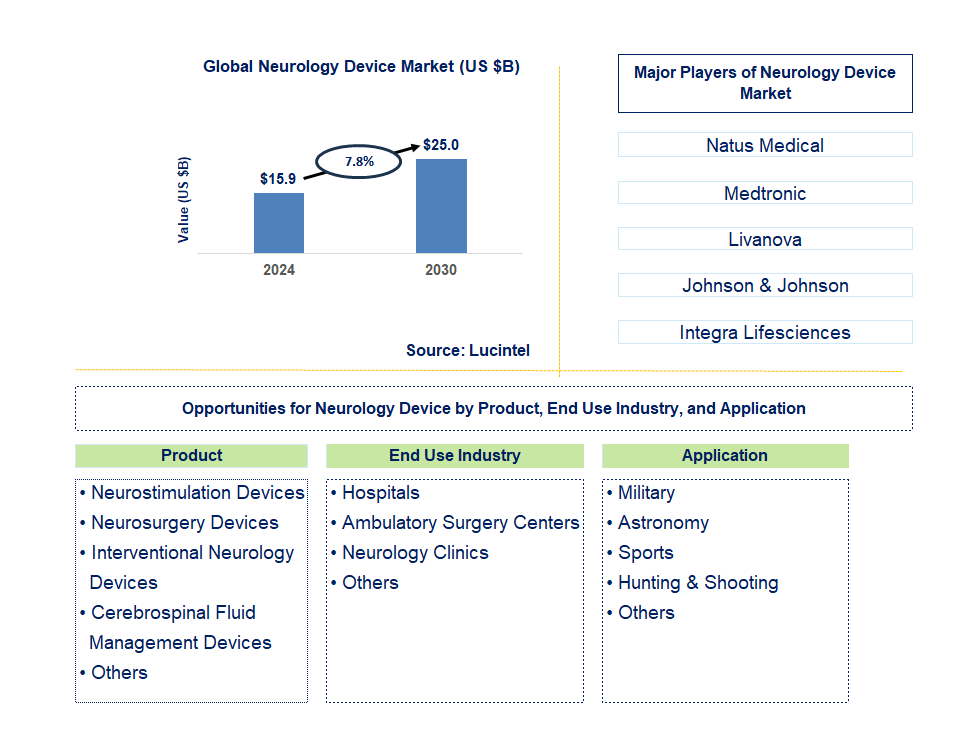
Key data points: The market size in 2030 = $25.0 billion, growth forecast = 7.8% annually for the next 6 years. Scroll below to get more insights. This market report covers trends, opportunities, and forecasts in the global neurology device market to 2030 by product (neurostimulation devices, neurosurgery devices, interventional neurology devices, cerebrospinal fluid management devices, and others), end use industry (hospitals, ambulatory surgery centers, neurology clinics, and others), and region (North America, Europe, Asia Pacific, and the Rest of the World)
We'll send your sample report shortly.
• Lucintel forecast that, within the product category, interventional neurology devices is expected to witness highest growth over the forecast period due to increasing adoption of this device to identify and treat brain and central nervous system vascular disorders.
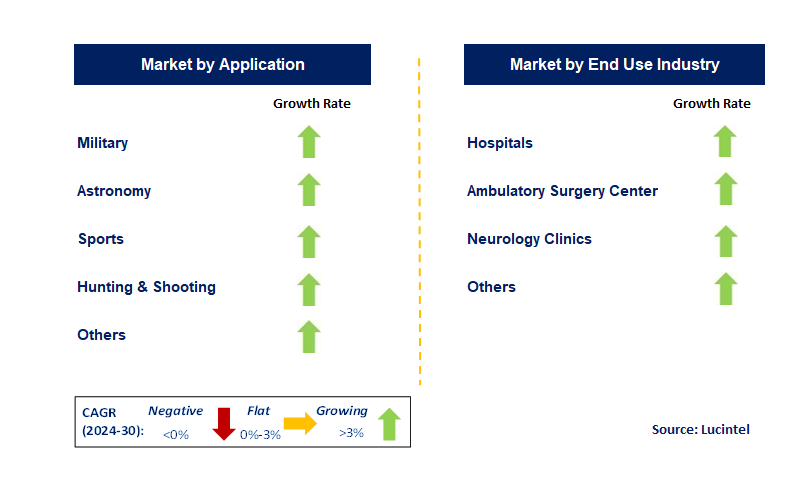
• Within the end use industry, Hospital will remain the largest segment due to presence of qualified healthcare professionals and specialized services and availability of modern medical technology.
• In terms of regions, North America is expected to witness highest growth over the forecast period due to growing prevalence of neurological disorders, robust improvement in the healthcare infrastructure, and presence of key players in this region. Gain valuable insights for your business decisions with our comprehensive 150+ page report
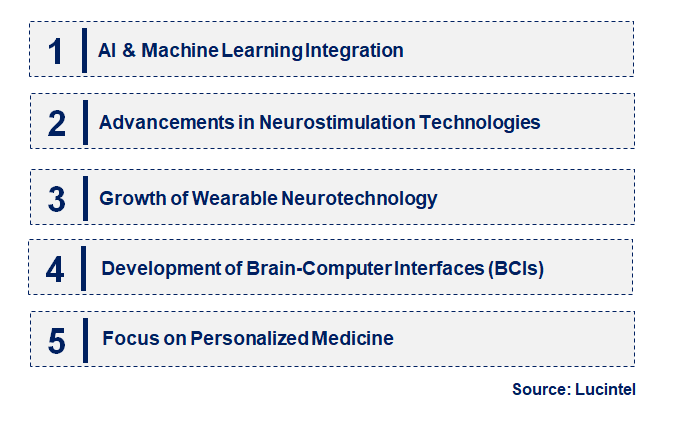
• AI & Machine Learning Integration: AI and machine learning are increasingly integrated with neurology devices to enhance diagnostics and personalize treatment. These technologies help analyze intricate neurological data, enabling more precise disease prognosis and treatment plans.
• Advancements in Neurostimulation Technologies: The management of brain disorders has improved due to the precision and flexibility of new developments in neurostimulation. These advancements provide better control and customization of therapies for conditions such as epilepsy and Parkinson’s disease.
• Growth of Wearable Neurotechnology: Wearable neurotechnology is experiencing rapid growth, offering continuous monitoring and real-time data collection. Devices like smart EEG headsets and portable neurostimulators have made proactive management of neurological conditions more feasible.
• Development of Brain-Computer Interfaces (BCIs): BCIs are advancing quickly, providing new ways to interface directly with the brain. These tools are facilitating communication and control for individuals with severe neurological impairments, opening up new possibilities for rehabilitation.
• Focus on Personalized Medicine: There is a growing shift toward personalized medicine in neurology, with devices being designed based on individual patient profiles. This has led to the development of tailored treatment plans, improving the effectiveness of neurology interventions. These trends are revolutionizing the neurology device market by integrating advanced technologies, expanding treatment alternatives, and enhancing patient outcomes.
• Advanced Neurostimulation Devices: New advancements in neurostimulation, such as high-definition deep brain stimulation (DBS) systems, are enhancing symptom control, improving quality of life, and providing more targeted treatments for neurological disorders than conventional methods.
• Wearable EEG Monitors: The introduction of wearable EEG monitors now allows continuous, non-invasive brain monitoring, aiding in the diagnosis of conditions like epilepsy and other brain disorders.
• AI-Powered Diagnostic Tools: AI-powered diagnostic tools are increasing the precision of neurological assessments and enabling the early detection of disorders through sophisticated data analysis and pattern recognition.
• Non-Invasive Brain-Computer Interfaces: Advances in non-invasive BCIs offer new avenues for communication and control among patients with severe motor impairments, enabling better interaction with their environment.
• Affordable Neurotechnology Solutions: The development of affordable neurotechnology solutions, such as low-cost EEG devices, is increasing access to neurological care, particularly in regions with limited healthcare infrastructure. These developments are driving innovation, expanding the capabilities of neurology devices, and improving patient care and treatment outcomes.
• Expansion of Wearable Devices: The growing adoption of wearable neurotechnology expands opportunities for continuous patient monitoring and real-time management of neurological conditions. This also enhances patient engagement and facilitates personalized care.
• Advancements in Neurostimulation Therapies: Investing in advanced neurostimulation therapies, such as next-generation DBS systems, can create growth opportunities by offering enhanced effectiveness and more personalized options for treating neurological disorders.
• Development of AI-Driven Solutions: Market growth can be driven by developing AI-driven diagnostic and treatment solutions that improve accuracy, personalization, and efficiency in neurological care delivery.
• BCI Growth: The expansion of BCI technology presents significant innovation opportunities for neurorehabilitation and communication aids, offering considerable benefits to patients with severe neurological impairments.
• Emphasis on Personalized Medicine: The increasing trend toward personalized medicine provides an opportunity for developing customized neurology devices and treatment plans tailored to individual patient needs, ultimately improving therapeutic outcomes. These growth opportunities are shaping the neurology device market by fostering innovation and improving patient care across various applications.
• Advancing Technologies: Rapid enhancements in technology involving AI, as well as neuroimaging, are driving changes in neurology devices. Consequently, such progressions enhance diagnosis accuracy and result effectiveness.
• Rising Incidence of Neurological Disorders: Increased prevalence of epilepsy as well as Parkinson’s disease among other neurological disorders has spurred demand for advanced neurology devices & modes of treatment.
• Digital Health Solutions’ Growth: Incorporation of digital health solutions e.g. wearables or telemedicine is expanding the potentialities of neurology devices making them better in managing patients.
• Rising Investment in R&D: The rise in investment in research and development is leading to the creation of innovative neurology devices and therapies, which is advancing the field and increasing treatment options.
• Focus on Personalized Medicine: The move towards personalized medicine is responsible for the rise of tailored neurology devices and treatment plans. This enhances patient care and outcomes. Challenges in the neurology device market are:
• High Costs of Advanced Devices: The high cost of sophisticated neurology devices may hinder their widespread adoption. Healthcare providers and patients face challenges balancing cost and accessibility, especially in resource-limited settings.
• Regulatory Hurdles: The complex regulatory landscape for medical devices can delay approval and market entry. This can significantly affect the timeline for new device development and distribution.
• Data Privacy Concerns: As neurology devices become more connected and integrated with digital health solutions, data privacy concerns are a major challenge. Strict regulations around patient data may affect the adoption of digital health solutions in neurology. These drivers and challenges are shaping the neurology device market, influencing innovation, adoption, and regulatory compliance.
• Natus Medical
• Medtronic
• Livanova
• Johnson & Johnson
• Integra Lifesciences
• Zimmer Biomet
• Stryker
• Abbott Laboratories
• Boston Scientific
• B.Braun
• Neurostimulation Devices
• Neurosurgery Devices
• Interventional Neurology Devices
• Cerebrospinal Fluid Management Devices
• Others
• Hospitals
• Ambulatory Surgery Centers
• Neurology Clinics
• Others
• Military
• Astronomy
• Sports
• Hunting & Shooting
• Others
• North America
• Europe
• Asia Pacific
• The Rest of the World
• United States: Neurology devices in the United States have advanced significantly, introducing innovative neurostimulation technologies and wearable EEG monitors. AI-powered diagnostic tools and advanced deep brain stimulation (DBS) systems are transforming the management of neurological disorders and improving patient outcomes.
• China: China has seen a rise in the use of next-generation neuroimaging equipment and non-invasive neuromodulation solutions. The country is also investing in developing intelligent neuroprosthetics and advanced brain-computer interfaces (BCIs) to better address neurological conditions.
• Germany: Germany is integrating digital health technologies into neurological devices, with advanced neuroimaging systems and data analytics platforms enabling personalized treatments for various neurological conditions.
• India: India is working to expand access to affordable neurology devices through innovative solutions. Key advancements include the development of low-cost EEG devices and portable neurostimulation devices, which help treat neurological diseases in remote or underserved areas.
• Japan: Japan is a leader in developing state-of-the-art neurology devices, such as sophisticated DBS systems and brainwave monitoring tools. The country is also exploring how robotics and artificial intelligence (AI) can improve treatment accuracy and outcomes for patients with neurological disorders.


• Natus Medical
• Medtronic
• LivaNova
• Johnson & Johnson
• Integra Lifesciences
• Zimmer Biomet
• Stryker
• Abbott Laboratories
• Boston Scientific
• B.Braun Q6. Which neurology device market segment will be the largest in future? Answer: Lucintel forecast that interventional neurology devices is expected to witness highest growth over the forecast period due to increasing adoption of this device to identify and treat brain and central nervous system vascular disorders. Q7. In neurology device market, which region is expected to be the largest in next 5 years? Answer: North America is expected to witness highest growth over the forecast period due to growing prevalence of neurological disorders, robust improvement in the healthcare infrastructure, and presence of key players in this region. Q.8 Do we receive customization in this report? Answer: Yes, Lucintel provides 10% customization without any additional cost.


Choose a license that fits your team. Instant PDF delivery.
Prices exclude taxes. Instant delivery. Custom licensing available on request.
Market Report · July 22, 2026
Market Report · July 22, 2026
Market Report · July 22, 2026
Trusted partner for strategic intelligence and business growth


Receive a complimentary market analysis tailored to your industry. Our analysts will identify key growth opportunities and competitive dynamics specific to your business.

Market size, growth rate, and key trend analysis for your specific sector.

Top competitor positioning and market share analysis.

Strategic recommendations backed by data-driven insights.
Get curated market intelligence and competitive moves straight to your inbox.
By subscribing, you agree to receive our monthly insights. Unsubscribe anytime.
Receive a complimentary market analysis tailored to your industry. Our analysts will identify key growth opportunities and competitive dynamics specific to your business.
Market size, growth rate, and key trend analysis for your specific sector.
Top competitor positioning and market share analysis.
Strategic recommendations backed by data-driven insights.
Get curated market intelligence, emerging trends, and competitive moves straight to your inbox each month.
By subscribing, you agree to receive our monthly insights. Unsubscribe anytime.
We'll send your sample report shortly.