
Report Feature
Network Video Recorder Market Trends and Forecast
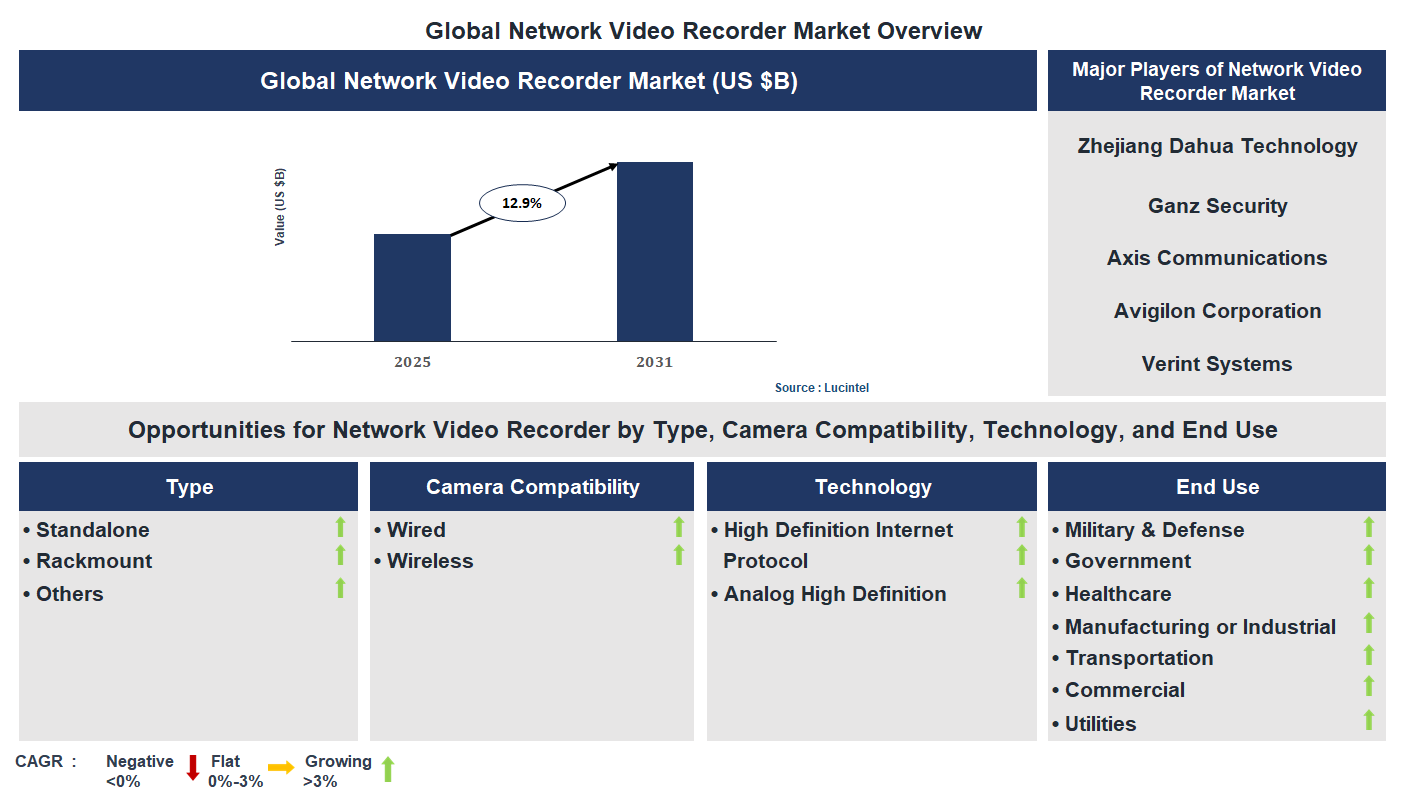
The future of the global network video recorder market looks promising with opportunities in the military & defense, government, healthcare, manufacturing or industrial, transportation, commercial, and utility markets. The global network video recorder market is expected to grow with a CAGR of 12.9% from 2025 to 2031. The major drivers for this market are the increasing demand for advanced surveillance systems, the rising adoption of IP-based security solutions, and the growing need for real-time video monitoring.• Lucintel forecasts that, within the type category, rackmount is expected to witness higher growth over the forecast period.
• Within the end use category, commercial is expected to witness the highest growth.
• In terms of region, North America will remain the largest region over the forecast period. Gain valuable insights for your business decisions with our comprehensive 150+ page report. Sample figures with some insights are shown below.
Emerging Trends in the Network Video Recorder Market
The network video recorder market is experiencing rapid evolution driven by technological advancements, increasing security concerns, and the growing adoption of smart surveillance solutions. As organizations and consumers seek more efficient, scalable, and intelligent security systems, the market is witnessing significant shifts. These emerging trends are shaping the future landscape of network video recording, influencing product development, deployment strategies, and user expectations. Understanding these key trends is essential for stakeholders aiming to stay competitive and leverage new opportunities in this dynamic environment.• Integration of Artificial Intelligence: AI-powered NVRs are transforming surveillance by enabling real-time analytics, facial recognition, and behavior analysis. This integration enhances security accuracy, reduces false alarms, and allows for proactive threat detection. AI-driven systems facilitate smarter decision-making and automate routine tasks, leading to improved operational efficiency and better resource allocation.
• Cloud-Based NVR Solutions: Cloud technology is increasingly being adopted for remote access, storage, and management of video footage. Cloud-based NVRs offer scalability, cost-effectiveness, and ease of deployment, especially for small and medium-sized enterprises. They enable users to access live feeds and recordings from anywhere, enhancing flexibility and security while reducing on-premises infrastructure costs.
• Increased Focus on Cybersecurity: As NVRs become more connected and integrated with IoT devices, cybersecurity concerns are rising. Manufacturers are implementing advanced encryption, multi-factor authentication, and regular firmware updates to protect against hacking and data breaches. Strengthening cybersecurity measures is critical to maintaining user trust and ensuring the integrity of surveillance systems.
• Adoption of 4K and Higher Resolution Cameras: The demand for high-resolution video footage is driving the adoption of 4K and even 8K cameras in NVR systems. These cameras provide clearer images, enabling better identification and analysis. Higher resolution enhances surveillance effectiveness in large areas and complex environments, supporting detailed investigations and improved security outcomes.
• Edge Computing and Decentralized Storage: To reduce latency and bandwidth usage, edge computing is being integrated into NVR systems. Processing data locally at the camera or edge device allows for faster analysis and decision-making. Decentralized storage solutions also improve system resilience and scalability, enabling more efficient handling of large data volumes and supporting real-time alerts. In summary, these trends are fundamentally reshaping the network video recorder market by making surveillance systems smarter, more flexible, and more secure. The integration of AI, cloud solutions, enhanced cybersecurity, high-resolution imaging, and edge computing is driving innovation, expanding market opportunities, and setting new standards for security and operational efficiency.

Recent Development in the Network Video Recorder Market
The network video recorder market has experienced significant growth driven by increasing demand for surveillance solutions across various sectors such as retail, transportation, and residential. Technological advancements, rising security concerns, and the integration of AI and IoT have transformed the landscape, making NVR systems more sophisticated, efficient, and user-friendly. Market players are focusing on innovation, strategic partnerships, and expanding their product portfolios to capture new opportunities. These developments are shaping the future of the NVR Market, making it more competitive and aligned with modern security needs. The following are five key recent developments influencing this market.• Adoption of AI-powered analytics: The integration of artificial intelligence in NVR systems enhances real-time video analysis, facial recognition, and behavior detection, leading to improved security and operational efficiency. This development allows for proactive threat detection, reducing false alarms and enabling faster response times, thereby increasing the value proposition for end-users and expanding market adoption.
• Expansion of cloud-based NVR solutions: Cloud integration offers scalable, remote access, and easier management of surveillance footage. This shift reduces infrastructure costs and simplifies deployment, especially for small and medium-sized enterprises. The growth of cloud-based NVRs is also driven by increasing data storage needs and the demand for flexible, accessible security solutions, significantly broadening market reach.
• Integration of IoT and smart devices: The convergence of IoT technology with NVR systems enables seamless connectivity with various smart devices and sensors. This integration enhances automation, data sharing, and system interoperability, leading to smarter security environments. It also opens new avenues for customized security solutions, boosting market growth and technological innovation.
• Focus on cybersecurity measures: As NVR systems become more connected, the risk of cyber threats increases. Market players are investing in advanced cybersecurity protocols, encryption, and regular updates to safeguard data and prevent breaches. Strengthening cybersecurity enhances user trust and compliance with data protection regulations, which is crucial for market stability and expansion.
• Strategic mergers and acquisitions: Leading companies are engaging in M&A activities to expand their technological capabilities, geographic presence, and product offerings. These strategic moves facilitate innovation, reduce competition, and enable faster market penetration. Such consolidation is shaping a more competitive landscape, fostering the development of comprehensive, integrated surveillance solutions. In summary, these developments are significantly impacting the network video recorder market by driving technological innovation, expanding accessibility, and enhancing security features. The integration of AI, cloud, IoT, and cybersecurity measures is making NVR systems more intelligent, flexible, and secure. Strategic M&A activities are fostering industry consolidation and growth. Overall, these trends are propelling the market toward a more advanced, efficient, and competitive future, meeting the evolving security needs of various sectors worldwide.
Strategic Growth Opportunities in the Network Video Recorder Market
The network video recorder market is experiencing rapid growth driven by increasing demand for advanced surveillance solutions across various industries. As security needs evolve, technological advancements and the integration of AI and IoT are creating new opportunities for market expansion. Key applications such as retail, transportation, healthcare, education, and government are pivotal in shaping this growth trajectory. These sectors are adopting innovative NVR solutions to enhance security, operational efficiency, and data management. Understanding these opportunities helps stakeholders capitalize on emerging trends and stay competitive in a dynamic market landscape.• Enhanced Loss Prevention : Retailers are deploying advanced NVR systems with AI analytics to monitor store activity, reduce theft, and improve customer experience, leading to increased sales and security.
• Improved Traffic Management : Transportation authorities utilize NVRs for real-time traffic monitoring, incident detection, and infrastructure management, resulting in safer and more efficient transit systems.
• Patient and Asset Security : Healthcare facilities adopt NVR solutions for safeguarding patient data, monitoring sensitive areas, and ensuring compliance with privacy regulations, thereby improving safety and operational efficiency.
• Campus Safety Enhancement : Educational institutions implement NVR systems to monitor campuses, prevent vandalism, and ensure student and staff safety, fostering a secure learning environment.
• Public Safety and Surveillance : Governments leverage NVR technology for city surveillance, law enforcement, and disaster management, enhancing public safety and response capabilities. In summary, these growth opportunities across key applications are significantly impacting the network video recorder market by driving innovation, expanding deployment, and increasing adoption rates. As industries prioritize security and operational efficiency, the market is poised for sustained growth, with technological integration and sector-specific solutions playing crucial roles in shaping its future.
Network Video Recorder Market Driver and Challenges
The network video recorder market is influenced by a variety of technological, economic, and regulatory factors. Rapid advancements in surveillance technology, increasing security concerns, and the proliferation of smart city initiatives are key drivers. Economic growth in emerging markets fuels infrastructure investments, while regulatory standards for data security and privacy shape market dynamics. Additionally, the integration of artificial intelligence and IoT enhances system capabilities, creating new opportunities. However, the market also faces challenges such as high implementation costs, concerns over data privacy, and technological compatibility issues. These factors collectively impact the growth trajectory and competitive landscape of the NVR Market. The factors responsible for driving the network video recorder market include:• Technological Advancements: The continuous development of high-definition recording, cloud integration, and AI-powered analytics significantly enhance NVR capabilities. These innovations improve security, enable remote monitoring, and facilitate smarter surveillance solutions. As technology evolves, demand for more sophisticated, user-friendly, and scalable NVR systems increases, driving market growth. The integration of IoT devices and edge computing further expands application possibilities, making NVRs more versatile and essential across various sectors.
• Growing Security Concerns: Rising crime rates, terrorism threats, and the need for enhanced security in public and private spaces propel the adoption of advanced surveillance systems. Governments, businesses, and individuals seek reliable monitoring solutions to safeguard assets and ensure safety. This heightened focus on security fuels demand for high-quality, real-time video recording and analysis, thereby expanding the NVR market. The increasing importance of cybersecurity also encourages the deployment of secure, tamper-proof NVR systems.
• Smart City Initiatives: Governments worldwide are investing in smart city projects to improve urban living standards. These initiatives require extensive surveillance infrastructure for traffic management, public safety, and infrastructure monitoring. NVRs are integral to these systems, providing scalable and efficient video management solutions. The push towards interconnected urban environments accelerates the adoption of networked surveillance, thereby boosting the NVR market as cities seek comprehensive security and monitoring solutions.
• Economic Growth and Infrastructure Development: Emerging economies are experiencing rapid urbanization and infrastructure expansion, leading to increased investments in security systems. The rising disposable income and government funding for public safety projects contribute to higher adoption rates of NVRs. This economic momentum creates a favorable environment for market expansion, especially in developing regions where modernization of security infrastructure is a priority. The challenges in the network video recorder market are:
• High Implementation and Maintenance Costs: Deploying advanced NVR systems involves significant capital expenditure, including hardware, software, and installation costs. Ongoing maintenance, upgrades, and technical support further add to expenses, which can be prohibitive for small and medium-sized enterprises. These costs may hinder widespread adoption, especially in price-sensitive markets, limiting market growth potential.
• Data Privacy and Security Concerns: The increasing volume of video data raises concerns over privacy violations and data breaches. Regulatory frameworks such as GDPR impose strict compliance requirements, complicating deployment. Organizations are cautious about data security, which can delay or restrict NVR adoption. Ensuring secure storage and transmission of sensitive footage remains a critical challenge for market players.
• Compatibility and Integration Issues: Integrating NVRs with existing security infrastructure and third-party devices can be complex. Variations in standards and protocols often lead to compatibility issues, requiring customization and additional investments. This fragmentation hampers seamless deployment and scalability, posing a significant obstacle for organizations seeking comprehensive surveillance solutions. In summary, the network video recorder market is driven by technological innovations, security needs, urban development initiatives, and economic growth. However, high costs, privacy concerns, and integration challenges present notable hurdles. These factors collectively shape the market’s evolution, demanding strategic responses from industry players. The overall impact is a dynamic landscape with substantial growth opportunities tempered by operational and regulatory complexities, requiring continuous innovation and adaptation to sustain momentum.
List of Network Video Recorder Companies
Companies in the market compete on the basis of product quality offered. Major players in this market focus on expanding their manufacturing facilities, R&D investments, infrastructural development, and leverage integration opportunities across the value chain. With these strategies network video recorder companies cater increasing demand, ensure competitive effectiveness, develop innovative products & technologies, reduce production costs, and expand their customer base. Some of the network video recorder companies profiled in this report include-• Zhejiang Dahua Technology
• Ganz Security
• Axis Communications
• Avigilon Corporation
• Verint Systems
• Teledyne FLIR
• IDIS Global
• Genetec
• VIVOTEK
• Milestone Systems
Network Video Recorder Market by Segment
The study includes a forecast for the global network video recorder market by type, camera compatibility, technology, end use, and region.Network Video Recorder Market by Type [Value from 2019 to 2031]:
• Standalone
• Rackmount
• Others
Network Video Recorder Market by Camera Compatibility [Value from 2019 to 2031]:
• Wired
• Wireless
Network Video Recorder Market by Technology [Value from 2019 to 2031]:
• High Definition Internet Protocol
• Analog High Definition
Network Video Recorder Market by End Use [Value from 2019 to 2031]:
• Military & Defense
• Government
• Healthcare
• Manufacturing or Industrial
• Transportation
• Commercial
• Utilities
Network Video Recorder Market by Region [Value from 2019 to 2031]:
• North America
• Europe
• Asia Pacific
• The Rest of the World
Country Wise Outlook for the Network Video Recorder Market
The network video recorder market has experienced significant growth driven by increasing demand for surveillance, advancements in technology, and the integration of AI and IoT solutions. As security concerns rise globally, countries are investing heavily in innovative video recording and management systems. The market’s evolution reflects a shift towards smarter, more efficient, and scalable solutions tailored to diverse applications such as commercial, residential, and public safety sectors. Each country’s developments are shaped by local regulations, technological capabilities, and market needs, contributing to a dynamic and competitive landscape.• United States: The US market has seen rapid adoption of AI-powered NVRs, with major players integrating facial recognition and analytics. Increased government and enterprise investments in smart city projects and infrastructure security have driven growth. Cloud-based NVR solutions are gaining popularity, offering remote access and scalability. Regulatory standards around data privacy are influencing product features and deployment strategies. The US also witnesses a surge in the adoption of 4K and high-definition recording systems for enhanced security.
• China: China remains a dominant force in the NVR market, driven by government initiatives and a large manufacturing base. The focus is on integrating AI and deep learning for real-time analytics and facial recognition. Domestic companies are expanding their product portfolios to include IoT-enabled and cloud-compatible NVRs. The government’s emphasis on smart city projects and public safety has accelerated market growth. Additionally, there is a rising trend of affordable, high-performance NVRs tailored for mass deployment across urban and rural areas.
• Germany: The German market emphasizes high-quality, reliable, and secure NVR solutions, aligning with strict EU data privacy regulations. There is a notable shift towards energy-efficient and environmentally friendly systems. The adoption of IP-based NVRs with advanced cybersecurity features is increasing. Germany’s focus on industrial security and smart manufacturing has led to customized surveillance solutions for industrial sites. The market also benefits from strong R&D activities and collaborations with technology providers to develop innovative, future-proof systems.
• India: India’s NVR market is expanding rapidly due to urbanization, infrastructure development, and increasing safety concerns. Affordable and scalable NVR solutions are in high demand, especially for small and medium enterprises. The government’s initiatives for smart cities and rural surveillance projects are boosting market growth. There is a rising adoption of cloud-based and AI-enabled NVRs to enhance security and operational efficiency. Local manufacturing and partnerships are also contributing to the availability of cost-effective products tailored to regional needs.
• Japan: Japan’s market is characterized by a focus on high-end, technologically advanced NVR systems with robust cybersecurity features. The adoption of AI and IoT integration is prominent, especially in transportation and industrial sectors. Japan emphasizes energy-efficient and environmentally sustainable solutions, aligning with its green technology initiatives. The market also sees increased use of NVRs in smart buildings and urban infrastructure projects. Regulatory compliance and data privacy are key considerations, prompting innovations in secure and reliable surveillance systems.

Features of the Global Network Video Recorder Market
Market Size Estimates: Network video recorder market size estimation in terms of value ($B). Trend and Forecast Analysis: Market trends (2019 to 2024) and forecast (2025 to 2031) by various segments and regions. Segmentation Analysis: Network video recorder market size by various segments, such as by type, camera compatibility, technology, end use, and region in terms of value ($B). Regional Analysis: Network video recorder market breakdown by North America, Europe, Asia Pacific, and Rest of the World. Growth Opportunities: Analysis of growth opportunities in different types, camera compatibility, technologies, end uses, and regions for the network video recorder market. Strategic Analysis: This includes M&A, new product development, and competitive landscape of the network video recorder market. Analysis of competitive intensity of the industry based on Porter’s Five Forces model.
FAQ
Q1. What is the growth forecast for network video recorder market? Answer: The global network video recorder market is expected to grow with a CAGR of 12.9% from 2025 to 2031. Q2. What are the major drivers influencing the growth of the network video recorder market? Answer: The major drivers for this market are the increasing demand for advanced surveillance systems, the rising adoption of ip-based security solutions, and the growing need for real-time video monitoring. Q3. What are the major segments for network video recorder market? Answer: The future of the network video recorder market looks promising with opportunities in the military & defense, government, healthcare, manufacturing or industrial, transportation, commercial, and utility markets. Q4. Who are the key network video recorder market companies? Answer: Some of the key network video recorder companies are as follows:• Zhejiang Dahua Technology
• Ganz Security
• Axis Communications
• Avigilon Corporation
• Verint Systems
• Teledyne FLIR
• IDIS Global
• Genetec
• VIVOTEK
• Milestone Systems Q5. Which network video recorder market segment will be the largest in future? Answer: Lucintel forecasts that, within the type category, rackmount is expected to witness higher growth over the forecast period. Q6. In network video recorder market, which region is expected to be the largest in next 5 years? Answer: In terms of region, North America will remain the largest region over the forecast period. Q7. Do we receive customization in this report? Answer: Yes, Lucintel provides 10% customization without any additional cost.
Table of Contents
List of Figures
List of Tables
Methodology
- In-depth interviews of the major players in this market
- Detailed secondary research from competitors’ financial statements and published data
- Extensive searches of published works, market, and database information pertaining to industry news, company press releases, and customer intentions
- A compilation of the experiences, judgments, and insights of Lucintel’s professionals, who have analyzed and tracked this market over the years.


Buy Now
Choose a license that fits your team. Instant PDF delivery.
Prices exclude taxes. Instant delivery. Custom licensing available on request.
Key Questions
- • What are some of the most promising, high-growth opportunities for the network video recorder market by type (standalone, rackmount, and others), camera compatibility (wired and wireless), technology (high definition internet protocol and analog high definition), end use (military & defense, government, healthcare, manufacturing or industrial, transportation, commercial, and utilities), and region (North America, Europe, Asia Pacific, and the Rest of the World)?
- • Which segments will grow at a faster pace and why?
- • Which region will grow at a faster pace and why?
- • What are the key factors affecting market dynamics? What are the key challenges and business risks in this market?
- • What are the business risks and competitive threats in this market?
- • What are the emerging trends in this market and the reasons behind them?
- • What are some of the changing demands of customers in the market?
- • What are the new developments in the market? Which companies are leading these developments?
- • Who are the major players in this market? What strategic initiatives are key players pursuing for business growth?
- • What are some of the competing products in this market and how big of a threat do they pose for loss of market share by material or product substitution?
- • What M&A activity has occurred in the last 5 years and what has its impact been on the industry? For any questions related to Network Video Recorder Market, Network Video Recorder Market Size, Network Video Recorder Market Growth, Network Video Recorder Market Analysis, Network Video Recorder Market Report, Network Video Recorder Market Share, Network Video Recorder Market Trends, Network Video Recorder Market Forecast, Network Video Recorder Companies, write Lucintel analyst at email: helpdesk@lucintel.com. We will be glad to get back to you soon.


