
Market Report · May 18, 2026

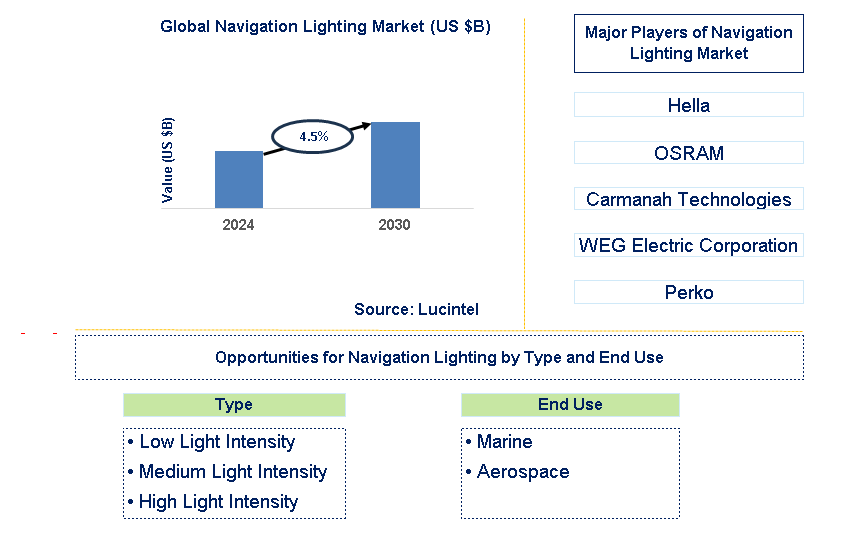
Key data points: The growth forecast = 4.5% annually for the next 6 years. Scroll below to get more insights. This market report covers trends, opportunities, and forecasts in the global navigation lighting market to 2030 by type (low light intensity, medium light intensity, and high light intensity), end use industry (marine and aerospace), and region (North America, Europe, Asia Pacific, and the Rest of the World)
We'll send your sample report shortly.
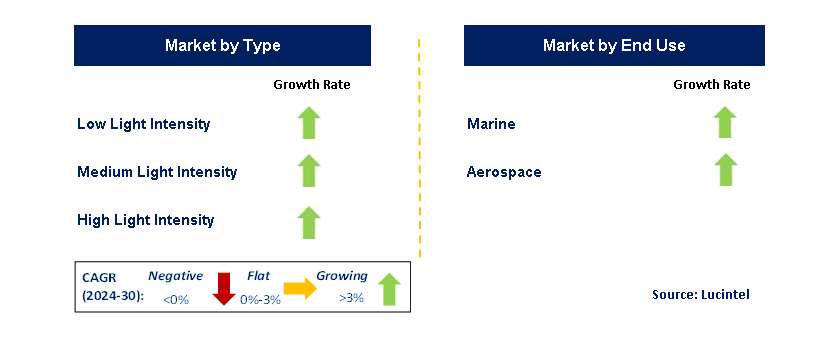
• Lucintel forecasts that, within the type category, medium light intensity is expected to witness the highest growth over the forecast period due to increasing demand for advanced feature navigation lighting in the aerospace and marine industries.
• Within the end use industry category, marine will remain a larger segment due to highest usage by water vessels for avoiding any accident and to provide information such as direction, position, and size of the vessels.
• In terms of regions, APAC is expected to witness the highest growth over the forecast period due to growing demand for air travel & tourism industries in the region. Gain valuable insights for your business decisions with our comprehensive 150+ page report.
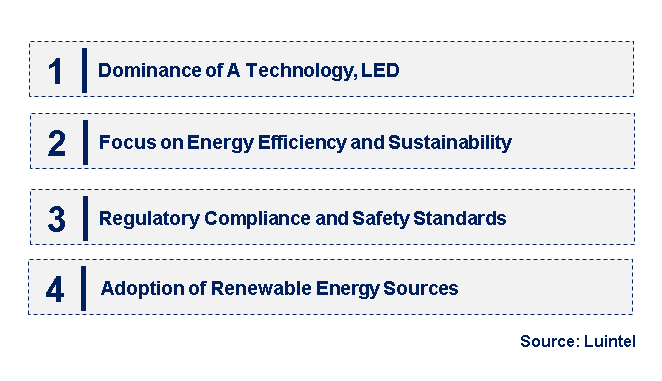
• Dominance of LED Technology: One key trend gaining traction in the navigation lighting sector is the use of LED technology. The introduction of LED lights has numerous advantages, such as lower power consumption, longer operation periods, and better visibility. As a result, these characteristics have made it the most widely used technology in navigation lighting systems in the marine and aviation industries. The conversion to LED lighting is also promoted by legislation that seeks to combat carbon emissions and cut energy costs. Thus, it can be expected that the trend of increased uptake of LED navigation lighting systems will continue, resulting in innovation and enhancement of safety within the sector.
• Focus on Energy Efficiency and Sustainability: Sustainability and energy efficiency are significant trends influencing the navigation lighting industry. As governments and industries focus on the necessity to cut down carbon footprints, the demand for energy-saving lighting that poses minimal environmental impact is increasing. This is primarily seen in the advent of LED technology, but there is also a rising clamor for generating alternatives like solar energy for the decoration of navigation lights. Sustainable lighting solutions can save on operational costs and support international climate change initiatives. This attention to sustainability will continue to spur market growth, leading to more innovative and efficient light sources.
• Regulatory Compliance and Safety Standards: Compliance with strict regulations and safety standards is changing factors in the navigation lighting market. Organizations like the International Maritime Organization (IMO) and the International Civil Aviation Organization (ICAO) are developing more robust specifications for navigation lighting systems to enhance safety and protect the environment. These policies are forcing manufacturers to create lights that meet or exceed these standards, resulting in innovation and improved quality of navigation lighting. New demands will also lead to more advanced lighting systems as new regulations emerge.
• Adoption of Renewable Energy Sources: A new trend in the market is the increasing use of renewable energy sources to power navigation lighting systems. Specifically, solar-powered navigation lights are gaining traction as they can be used in isolated areas or where conventional electricity sources are unavailable. In addition to being environmentally friendly, these systems can also reduce costs in terms of energy consumption and maintenance. There is a growing trend toward renewable energy-powered navigation lighting in the coming years, as more operators seek solutions that are both cost-effective and eco-friendly. A broader change is seen in the navigation lighting market, where progressive, energy-conserving, and environmentally friendly lighting systems are increasingly sought. The rise of LED technology, the use of smart lighting, energy and sustainability considerations, regulatory compliance, and the use of green energy technologies are all contributing to reshaping the market. These trends encourage innovations that enhance safety and lay the groundwork for future developments in navigation lighting.
• Moving towards LED Technology: In the navigation lighting market, the sustained movement toward LED technology has been another major development, offering various advantages such as lower energy use, longer lifespans, and increased efficiency. The preference of the maritime and aviation industries for light-emitting diodes (LEDs) is due to their high performance and low maintenance requirements. Policies related to energy and environmental sustainability also promote this evolution. Therefore, the gradual uptake of LED lighting is enhancing navigation safety and efficiency, introducing higher standards for the market and fostering a positive future.
• Integration of Smart Systems: Another milestone is the extension of smart systems to navigation lighting. Such systems facilitate remote monitoring, control, and even optimization of lighting for specific scenarios, thereby improving functionality and safety. At air and sea ports, where accuracy is crucial, smart lighting systems adapt to conditions onshore and in situ. This technology is pushing the market toward more advanced contour lighting systems that respond to advancements in navigation.
• Focus on Energy Efficiency: Energy efficiency has become a crucial consideration in the landscape of navigation lighting, largely fueled by the global agenda on sustainability and cost minimization. The use of energy-saving lighting devices, especially LEDs, has significantly reduced running costs and the environmental burden of navigation systems. Policies focusing on efficiency not only comply with legal obligations but also align with broader industry objectives related to environmental responsibility, explaining why energy-efficient lighting has emerged as a catalyst for market development and renewal.
• Compliance with Basic Regulations and Safety Requirements: Regulatory compliance and adherence to safety standards have become increasingly important in the navigation lighting market. International organizations such as the International Maritime Organization (IMO) and International Civil Aviation Organization (ICAO) have adopted more stringent policies that mandate the safety and ecological sustainability of navigation lighting systems. Consequently, manufacturers have had to adapt and develop lighting equipment that meets these needs to improve safety at sea. Navigating through the technological waves within the navigation lighting market, it can be noted that LED technology is being embraced, smart systems are being integrated, there is a quest for energy efficiency, compliance with standards is being observed, and alternative energy sources are being explored. All these changes are greatly improving safety, lowering costs, and enhancing environmental utility, positioning the market well for growth and future innovations.
• Development of Smart Port Infrastructure: The development of smart port infrastructure presents a valuable opportunity for the expansion of the navigation lighting market. With many ports globally embracing integrated digital and automated technologies, there is high demand for smart lighting systems that can work in conjunction with other systems. Such smart lighting systems enable real-time monitoring, control, and optimization, thereby increasing the safety and effectiveness of port operations. This trend will help the market grow substantially as port authorities upgrade the supporting infrastructure to meet the requirements of global shipping and logistics.
• Upgrading Aviation Lighting Systems: Upgrading aviation lighting systems is another opportunity that fosters growth in the navigation lighting market. Airports are transitioning to smart lighting systems and LEDs to improve safety, minimize energy consumption, and enhance compliance with established regulatory measures. This upgrade is particularly crucial for enhancing visibility in runway areas and overall airport security. It is anticipated that the ongoing trend of upgrading airport facilities will create considerable demand for higher navigation lighting systems.
• Integration of Renewable Energy Sources: The incorporation of renewable energy sources such as solar energy into navigation lighting systems is a growing phenomenon and serves as a springboard for growth. The advantage of solar navigation lights is that they are more effective and economical in remote areas or places lacking overhead power supply. As the industry increasingly focuses on eco-friendly practices, the demand for lighting solutions utilizing renewable energy is expected to grow, leading to the emergence of new products in the market.
• Opportunity for Adoption of Automated Lighting Controls: The navigation lighting market presents a development opportunity in the advancement of automated lighting controls. Such systems allow for the regulation of light used in specific areas according to the current conditions of the environment or the requirements of specific tasks. In modern airports and seaports, safety and operational efficiency are enhanced by automated lighting controls, which are becoming increasingly widespread and integral to design concepts. Once this trend gains traction, increased growth in the market will result from the operational benefits such technology provides. The growth opportunities in the navigation lighting market, including the deployment of smart port infrastructure, renewal and upgrading of lighting systems in airports, incorporation of renewable energy, adoption of automated lighting controls, and provision of customized solutions, are propelling the market toward greater innovation and efficiency. These opportunities not only contribute to safety and operational efficiency but also foster the initiative for sustainable development in the industry, promoting its growth and evolution in the future.
• Advances in LED Technology: Technological advancements in LEDs have significantly impacted the navigation lighting market. In terms of performance, lifespan, and energy efficiency, LEDs are superior to traditional lighting technologies. These advantages have made LEDs the preferred choice in navigation lighting systems within the maritime and aviation industries. Continued enhancements in LED technology, such as increased brightness and durability, are likely to drive further innovation and market expansion.
• Increasing Focus on Safety and Compliance: A major driving force in the navigation lighting market is the growing concern for safety and regulatory compliance. Both national and international safety rules and guidelines issued by the International Maritime Organization (IMO) and International Civil Aviation Organization (ICAO) require high standards and dependable navigation lighting systems. These rules are crucial safety factors for maritime and aviation operations. Safety and compliance have thus led to the innovation of lighting solutions that meet or exceed established standards set by manufacturers.
• Advancements in Intelligent Systems: The emergence of intelligent systems represents another major trend in the navigation lighting market. Smart lighting solutions facilitate remote monitoring, control, and optimization of operations, enhancing safety and effectiveness. Systems like these are particularly useful in complex environments such as airports and seaports, where precise light control is necessary. Consequently, the growing demand for smart lighting technologies is expected to spur the market, as they are associated with operational benefits and the ongoing movement toward digital and technological advancement. Challenges in the navigation lighting market include:
• Expensive Initial Costs: While many navigation lighting systems are desirable, the price point for LED and other smart lighting systems remains a significant hurdle. The initial investment required for these systems may deter many small operators or those in economically depressed areas. Nevertheless, the energy and maintenance savings achieved through these systems often offset installation costs. Addressing the cost hurdle through features like financing options or incentives could facilitate quicker adoption of basic lighting solutions.
• Difficulty Understanding Regulations: Navigating the regulatory landscape within the navigation lighting industry can be challenging. The wide range of navigation lighting standards applicable in diverse industries and regions complicates manufacturers' ability to create universally acceptable products. Focused efforts to meet various customer demands can heighten production costs and complicate product design. All companies must adhere to regulatory mandates, necessitating careful monitoring of the regulatory environment to avoid costly missteps.
• Technical Limitations: Some challenges in the navigation lighting market stem from technical limitations related to the durability and efficiency of lighting systems in harsh environments. These lights must withstand sub-zero temperatures, exposure to seawater, and other environmental factors. It is essential for lighting systems to remain effective under these conditions, necessitating the use of high-quality materials and improved designs. Addressing these challenges is critical for ensuring the overall stability and performance of the systems. The navigation lighting industry is influenced by various factors, including drivers of growth and barriers to advancement. These include the push toward environmentally friendly technologies, the potential of the LED industry, the need for security and legal compliance, the emergence of smart systems, and commitment to sustainability. However, factors such as high upfront costs, regulatory requirements, and competition present challenges. Understanding these elements is crucial for navigating market changes and identifying opportunities for development or innovation.
• Hella
• OSRAM
• Carmanah Technologies Corporation
• WEG Electric Corporation
• Perko
• Aqua Signal
• Oceanled
• Low Light Intensity
• Medium Light Intensity
• High Light Intensity
• Marine
• Aerospace
• North America
• Europe
• Asia Pacific
• The Rest of the World
• United States: The United States is at the forefront of introducing new technologies in navigation lighting design and use, especially in shipping and aviation. The country is investing in modernizing its facilities with LED lights, which are more efficient, cheaper to maintain, and provide better visibility. Agencies such as the FAA and U.S. Coast Guard are hastening the adoption of these systems by implementing strict safety measures. Additionally, there is a broader trend toward the use of centrally controlled and monitored smart systems to enhance safety and efficiency in navigation operations.
• China: The navigation lighting market in China is developing rapidly, driven by the growth of the maritime industry and increasing investments in airport facilities. The country is implementing LED screens as navigation lights to reduce losses and energy consumption. The Chinese government has plans for robust trade routes, creating sustained demand for effective navigation lights. Furthermore, custom smart port technologies include adjustable smart lighting systems for remote control, tailored to various operations and requirements.
• Germany: Germany was one of the first countries to adopt sustainable and energy-efficient technologies in navigation lighting. The country’s commitment to combating carbon emissions has spurred a shift toward LED-based navigation lighting systems in the aviation and maritime sectors. Germany's strong industrial foundation and comprehensive legal framework have facilitated the construction and installation of high-quality navigation lighting systems. The country is also exploring alternative energy sources, like solar energy, to enhance the efficiency of navigation lighting systems, especially in challenging environments.
• India: India’s navigation lighting market is booming due to growth in the marine and air transport sectors. Significant improvements in the country’s transport infrastructure, such as the modernization of ports and airports, have promoted the use of advanced navigation lighting systems, supported by government funding. There is a noticeable trend toward all-LED systems for increased energy efficiency and reduced maintenance. As safety and security at sea are enhanced, the country welcomes the implementation of navigation lighting standards that support the diversification of reliable systems in offshore and airport settings.
• Japan: Japan leads in advancing technologies in the navigation lighting market, particularly regarding safety and efficiency. The country is investing in the development of advanced LED navigation lighting systems that are more efficient and have longer lifespans. Smart lighting technologies designed for the maritime and aviation industries are being adopted, including systems capable of real-time monitoring and control. Japan's policies to reduce emissions further encourage the uptake of efficient lighting technologies. Additionally, exploration of AI and IoT in navigation lighthouses is underway to enhance the effectiveness of navigation lighting systems in various environmental conditions.


• Hella
• OSRAM
• Carmanah Technologies Corporation
• WEG Electric Corporation
• Perko
• Aqua Signal
• Oceanled Q5. Which navigation lighting market segment will be the largest in future? Answer: Lucintel forecasts that medium light intensity is expected to witness highest growth over the forecast period due to increasing demand for advanced feature navigation lighting in the aerospace and marine industries. Q6. In navigation lighting market, which region is expected to be the largest in next 5 years? Answer: APAC is expected to witness highest growth over the forecast period due to growing demand for air travel & tourism industries in the region. Q.7 Do we receive customization in this report? Answer: Yes, Lucintel provides 10% customization without any additional cost.


Choose a license that fits your team. Instant PDF delivery.
Prices exclude taxes. Instant delivery. Custom licensing available on request.
Market Report · May 18, 2026
Market Report · May 18, 2026
Market Report · May 18, 2026
Trusted partner for strategic intelligence and business growth


Receive a complimentary market analysis tailored to your industry. Our analysts will identify key growth opportunities and competitive dynamics specific to your business.

Market size, growth rate, and key trend analysis for your specific sector.

Top competitor positioning and market share analysis.

Strategic recommendations backed by data-driven insights.
Get curated market intelligence and competitive moves straight to your inbox.
By subscribing, you agree to receive our monthly insights. Unsubscribe anytime.
Receive a complimentary market analysis tailored to your industry. Our analysts will identify key growth opportunities and competitive dynamics specific to your business.
Market size, growth rate, and key trend analysis for your specific sector.
Top competitor positioning and market share analysis.
Strategic recommendations backed by data-driven insights.
Get curated market intelligence, emerging trends, and competitive moves straight to your inbox each month.
By subscribing, you agree to receive our monthly insights. Unsubscribe anytime.
We'll send your sample report shortly.