
Market Report · July 31, 2026

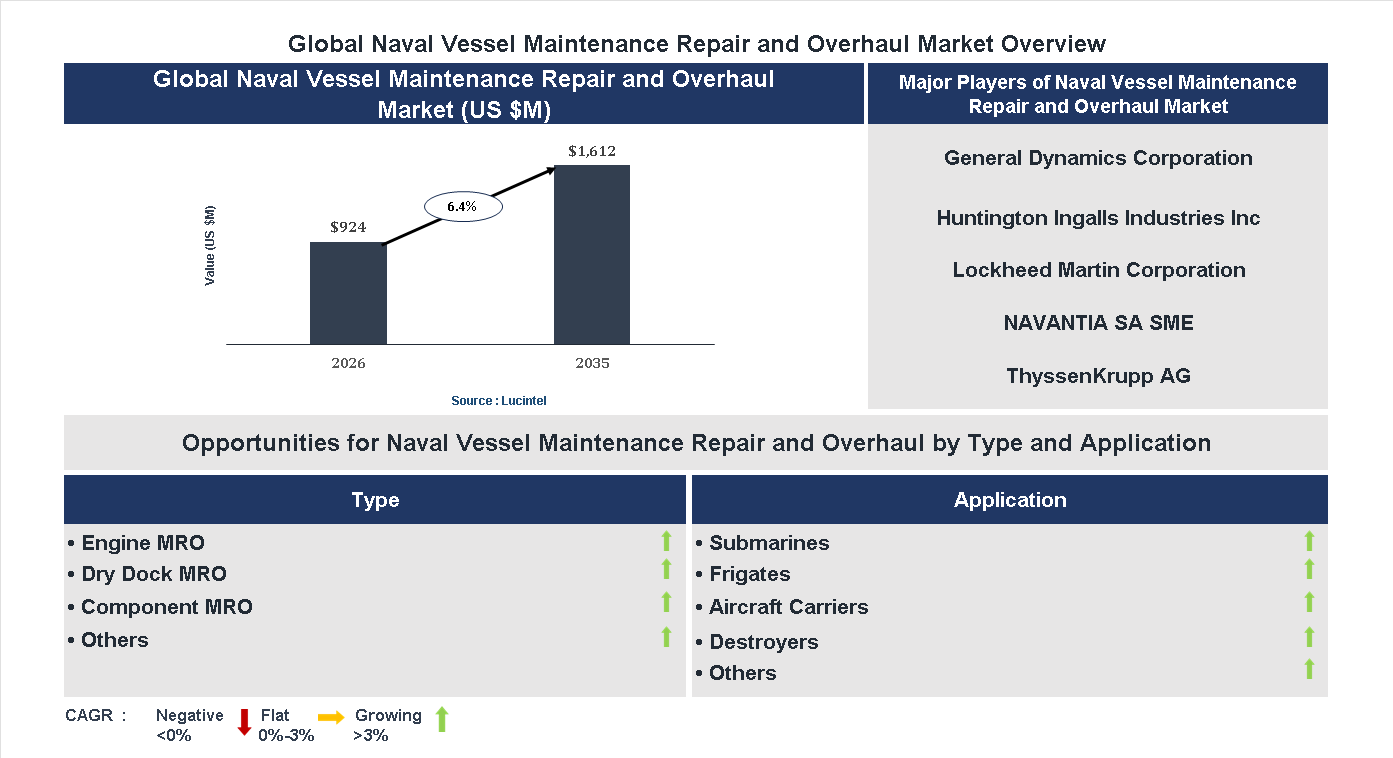
Key data points: The market size in 2035 = $1,612 million, growth forecast = 6.4% annually for the next 8 years. Scroll below to get more insights. This market report covers trends, opportunities and forecasts in naval vessel maintenance repair and overhaul market to 2035 by type (engine MRO, dry dock MRO, component MRO, and others), application (submarines, frigates, aircraft carriers, destroyers, and others), and region (North America, Europe, Asia Pacific, and the Rest of the World)
We'll send your sample report shortly.
• Lucintel forecasts that, within the type category, engine MRO is expected to witness the highest growth over the forecast period.
• Within the application category, submarine is expected to witness the highest growth.
• In terms of region, APAC is expected to witness the highest growth over the forecast period. Gain valuable insights for your business decisions with our comprehensive 150+ page report. Sample figures with some insights are shown below.
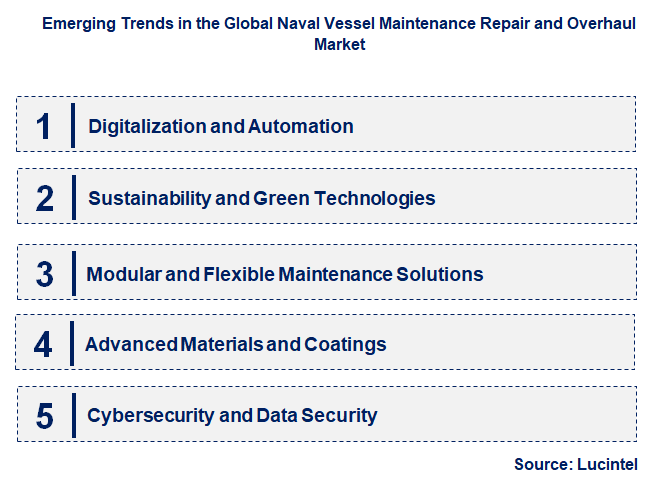
• Digitalization and Automation: The integration of digital technologies and automation tools is revolutionizing naval vessel maintenance. Advanced sensors, IoT devices, and data analytics enable predictive maintenance, reducing downtime and operational costs. Automated systems improve precision and efficiency during repairs, minimizing human error and enhancing safety. This trend allows navies to optimize resource allocation, extend vessel lifespans, and respond swiftly to maintenance needs, ultimately increasing fleet readiness and operational effectiveness.
• Sustainability and Green Technologies: Environmental concerns are prompting the adoption of eco-friendly practices in naval maintenance. The market is witnessing increased use of sustainable materials, energy-efficient systems, and green propulsion technologies. These innovations aim to reduce the carbon footprint of naval operations and comply with international environmental regulations. Incorporating renewable energy sources and environmentally conscious practices not only benefits the environment but also enhances the long-term sustainability and cost-effectiveness of naval fleets.
• Modular and Flexible Maintenance Solutions: The shift towards modular design in naval vessels facilitates easier upgrades and repairs. Modular components allow for quicker replacements and upgrades, minimizing vessel downtime. This approach offers flexibility to adapt to evolving technological requirements and operational needs. It also reduces costs associated with traditional, monolithic repair methods. The market is increasingly favoring modular solutions to improve maintenance efficiency, extend vessel service life, and ensure rapid deployment of new capabilities.
• Advanced Materials and Coatings: The development of innovative materials and protective coatings is a key trend in naval MRO. These materials enhance vessel durability, corrosion resistance, and overall performance in harsh maritime environments. Advanced coatings also provide stealth capabilities by reducing radar and infrared signatures. The adoption of such materials improves vessel longevity, reduces maintenance frequency, and enhances operational stealth, thereby providing strategic advantages and cost savings over the vessel lifecycle.
• Cybersecurity and Data Security: As naval vessels become more connected and reliant on digital systems, cybersecurity has become a critical focus. Protecting sensitive data and operational systems from cyber threats is paramount. The market is witnessing increased investment in cybersecurity solutions, secure communication networks, and robust data management practices. Ensuring the integrity and security of digital systems is essential for maintaining operational security, preventing cyber-attacks, and safeguarding national security interests. These emerging trends are fundamentally reshaping the naval vessel maintenance repair and overhaul market by promoting smarter, more sustainable, and resilient naval fleets. Digitalization, green technologies, modular solutions, advanced materials, and cybersecurity are driving efficiency, extending vessel lifespans, and enhancing strategic capabilities. As these trends continue to evolve, they will foster innovation, reduce costs, and improve the overall readiness and sustainability of naval forces worldwide.
• Growing Defense Budgets: Increased military spending worldwide is fueling demand for naval vessel maintenance, repair, and overhaul services, ensuring fleets remain operational and technologically up-to-date. Governments prioritize naval strength, leading to sustained investments in maintenance programs, which boost market growth and create opportunities for service providers to expand their portfolios and capabilities.
• Technological Advancements: Integration of advanced technologies such as automation, AI, and predictive maintenance is transforming naval vessel servicing. These innovations improve efficiency, reduce downtime, and lower costs, enabling providers to offer more sophisticated and reliable maintenance solutions. The adoption of digital tools enhances service quality, fostering long-term client relationships and opening new revenue streams.
• Aging Fleet Modernization: Many navies operate aging vessels requiring extensive repairs and upgrades to meet modern standards. This demand for modernization services creates a significant market opportunity for overhaul providers to extend vessel lifespans, incorporate new systems, and improve operational capabilities, thereby ensuring fleet readiness and compliance with international standards.
• Environmental Regulations and Sustainability: Stricter environmental policies are prompting navies to adopt greener maintenance practices and retrofit vessels with eco-friendly systems. This shift encourages innovation in sustainable materials and processes, opening avenues for specialized service providers. Emphasizing environmental compliance enhances fleet sustainability and aligns with global efforts to reduce maritime ecological impact.
• International Collaboration and Contracts: Increasing international defense collaborations and joint ventures are expanding market reach and service scope. Multinational projects and shared maintenance programs foster knowledge exchange and technology transfer, boosting market competitiveness. These collaborations facilitate access to new markets, diversify revenue sources, and promote standardization across naval fleets worldwide. These developments collectively are significantly transforming the naval vessel maintenance repair and overhaul market by driving innovation, expanding service scope, and fostering global collaborations. The market is poised for sustained growth as defense budgets increase, technological integration accelerates, and environmental considerations become central. Industry players that adapt to these trends will strengthen their market position and contribute to modernizing naval fleets worldwide.
• Growing Defense Budgets Drive Market Expansion: Increased defense spending worldwide is fueling demand for naval vessel maintenance, repair, and overhaul services. Countries aim to modernize and sustain their naval fleets, requiring extensive maintenance and upgrades. This trend ensures a steady flow of contracts for service providers, encouraging investments in advanced technologies and skilled workforce development. The focus on maritime security and defense readiness further amplifies the need for comprehensive maintenance solutions, making this a key growth driver.
• Technological Innovations Enhance Maintenance Efficiency: The integration of digital technologies such as IoT, AI, and predictive analytics is transforming naval vessel maintenance. These innovations enable real-time monitoring, predictive maintenance, and reduced downtime, leading to cost savings and improved vessel performance. Companies adopting these technologies can offer more efficient, reliable, and customized services. The shift towards smart maintenance solutions is expected to revolutionize the industry, opening new avenues for growth and competitive advantage.
• Increasing Demand for Sustainment and Lifecycle Extension: Naval vessels require ongoing maintenance to extend their operational lifespan and ensure safety. As vessels age, the need for repairs and overhauls intensifies, creating sustained demand for specialized services. Governments and defense agencies prioritize lifecycle management to maximize investments and operational readiness. This focus on sustainment services offers long-term revenue opportunities for market players, encouraging the development of innovative repair techniques and comprehensive lifecycle support packages.
• Strategic Partnerships and Collaborations Boost Market Reach: Collaborations between defense contractors, technology providers, and maintenance service companies are expanding market reach and capabilities. Partnerships facilitate access to advanced technologies, shared expertise, and broader service portfolios. Joint ventures and alliances also enable companies to bid for larger, more complex contracts. These strategic collaborations are crucial for navigating complex regulatory environments and enhancing service delivery, ultimately driving growth through increased market penetration and innovation.
• Rising Focus on Environmental Sustainability and Green Technologies: Environmental regulations and sustainability initiatives are prompting the adoption of eco-friendly maintenance practices and green technologies in naval vessel servicing. Use of environmentally safe materials, waste reduction, and energy-efficient processes are gaining importance. Companies investing in green innovations can differentiate themselves and meet regulatory compliance, opening new market segments. The shift towards sustainable practices aligns with global environmental goals, fostering long-term growth and responsible industry development. The overall impact of these opportunities is set to significantly shape the naval vessel maintenance repair and overhaul market, fostering innovation, expanding service capabilities, and ensuring strategic competitiveness in a rapidly evolving defense landscape.
• Technological Innovation: The integration of advanced technologies such as automation, artificial intelligence, and predictive maintenance tools enhances efficiency, reduces downtime, and extends vessel lifespan. These innovations enable naval forces to perform more precise diagnostics and repairs, minimizing operational disruptions. As defense budgets increase and technological capabilities evolve, the adoption of such solutions accelerates, creating a robust demand for specialized MRO services. This trend not only improves fleet readiness but also offers cost savings over traditional maintenance methods, making it a key growth driver.
• Increasing Naval Fleet Size and Modernization: Many countries are expanding and modernizing their naval fleets to address emerging security threats and geopolitical challenges. This expansion necessitates comprehensive maintenance and overhaul services to ensure vessels remain operational and compliant with current standards. The ongoing procurement of new ships and upgrades to existing vessels stimulate demand for specialized MRO services, fostering market growth. Additionally, the need for lifecycle management of aging ships encourages investments in maintenance infrastructure and expertise, further propelling the market forward.
• Defense Budget Allocations: Rising defense budgets across various nations enable increased spending on naval maintenance and modernization programs. Governments prioritize maintaining operational readiness, which directly impacts the demand for MRO services. Larger budgets facilitate investments in advanced repair facilities, skilled workforce development, and procurement of cutting-edge maintenance equipment. This financial support ensures sustained market growth, especially in regions with strategic maritime interests, and encourages private sector participation in naval MRO activities.
• Regulatory and Environmental Standards: Stringent safety, environmental, and maritime regulations influence maintenance practices and standards. Compliance with international standards such as IMO regulations and national safety protocols necessitates specialized maintenance procedures and equipment. These regulatory requirements drive the adoption of eco-friendly materials, waste management practices, and safety protocols, which can increase operational costs but also create opportunities for innovative service providers. Adapting to evolving standards ensures vessels meet legal requirements, thereby supporting market stability and growth.
• Strategic Military Alliances and International Cooperation: Alliances such as NATO and other international partnerships promote joint naval exercises and shared maintenance facilities. These collaborations facilitate knowledge exchange, standardization of maintenance procedures, and pooled resources, which reduce costs and improve efficiency. Such strategic cooperation expands the market by creating new opportunities for service providers to operate across borders and access larger contracts. It also encourages the development of standardized maintenance protocols, fostering a more integrated and resilient naval MRO industry. The challenges facing the naval vessel maintenance repair and overhaul market include:
• High Capital and Operational Costs: The specialized nature of naval MRO requires significant investment in infrastructure, equipment, and skilled personnel. Maintaining state-of-the-art repair facilities and acquiring advanced diagnostic tools involve substantial capital expenditure. Additionally, operational costs such as spare parts, training, and compliance with regulatory standards add to the financial burden. These high costs can limit market entry for smaller players and pose financial risks for existing providers, potentially constraining market growth and innovation.
• Rapid Technological Changes and Obsolescence: The fast pace of technological advancements in naval systems can render existing maintenance equipment and skills obsolete quickly. Keeping pace with new technologies demands continuous investment in training and equipment upgrades, which can be challenging and costly. Failure to adapt may lead to reduced service quality, delays, or increased costs, impacting customer satisfaction and competitiveness. This rapid evolution necessitates agile strategies and significant R&D investments to stay relevant in the market.
• Geopolitical and Security Concerns: Political instability, regional conflicts, and changing international relations can disrupt naval operations and maintenance schedules. Security concerns may restrict access to certain regions or facilities, complicating logistics and supply chains for spare parts and equipment. Additionally, classified or sensitive technologies involved in naval vessels can limit collaboration and information sharing, hindering maintenance efficiency. These geopolitical factors introduce uncertainties that can delay projects, increase costs, and impact overall market stability. The naval vessel maintenance repair and overhaul market is driven by technological advancements, fleet modernization, defense spending, regulatory compliance, and international cooperation. However, high costs, rapid technological changes, and geopolitical uncertainties pose significant challenges. The interplay of these factors shapes a dynamic environment where innovation and strategic adaptation are essential for sustained growth. Stakeholders must navigate these drivers and challenges carefully to capitalize on emerging opportunities and ensure the operational readiness of naval fleets worldwide.
• General Dynamics Corporation
• Huntington Ingalls Industries Inc
• Lockheed Martin Corporation
• NAVANTIA SA SME
• ThyssenKrupp AG
• BAE Systems PLC
• Naval Group
• Rolls-Royce Holdings PLC
• Rhoads Industries, Inc.
• Abu Dhabi Ship Building Company
• Engine MRO
• Dry Dock MRO
• Component MRO
• Others
• Submarines
• Frigates
• Aircraft Carriers
• Destroyers
• Others
• North America
• Europe
• Asia Pacific
• The Rest of the World
• United States: The US Navy is focusing on modernizing its fleet with advanced stealth ships and nuclear submarines, investing in automated maintenance systems, and expanding its repair facilities to support increased fleet readiness. Recent initiatives include upgrades to aircraft carriers and the integration of AI-driven diagnostics to enhance maintenance efficiency.
• China: China is rapidly expanding its naval capabilities, emphasizing indigenous vessel construction and maintenance. The country has increased investments in repair yards and modernization of existing facilities, aiming to reduce reliance on foreign technology. Recent developments include the overhaul of aircraft carriers and the development of automated repair techniques.
• Germany: Germany is prioritizing the maintenance of its Baltic and North Sea fleets, with a focus on sustainability and digitalization. The country has adopted eco-friendly repair practices and integrated digital twin technology for predictive maintenance, enhancing operational efficiency and reducing downtime.
• India: India is expanding its naval fleet and upgrading existing vessels through extensive repair and modernization programs. The government has increased investment in indigenous repair facilities and introduced advanced maintenance technologies, including automation and remote diagnostics, to improve fleet availability and operational readiness.
• Japan: Japan is emphasizing the maintenance of its aging fleet with a focus on technological upgrades and sustainability. Recent developments include the integration of advanced sensor systems for predictive maintenance and the modernization of repair yards to support new vessel classes, ensuring maritime security and fleet longevity.


• General Dynamics Corporation
• Huntington Ingalls Industries Inc
• Lockheed Martin Corporation
• NAVANTIA SA SME
• ThyssenKrupp AG
• BAE Systems PLC
• Naval Group
• Rolls-Royce Holdings PLC
• Rhoads Industries, Inc.
• Abu Dhabi Ship Building Company Q6. Which naval vessel maintenance repair and overhaul market segment will be the largest in future? Answer: Lucintel forecasts that, within the type category, engine MRO is expected to witness the highest growth over the forecast period. Q7. In naval vessel maintenance repair and overhaul market, which region is expected to be the largest in next 8 years? Answer: In terms of region, APAC is expected to witness the highest growth over the forecast period. Q8. Do we receive customization in this report? Answer: Yes, Lucintel provides 10% customization without any additional cost.


Choose a license that fits your team. Instant PDF delivery.
Prices exclude taxes. Instant delivery. Custom licensing available on request.
Market Report · July 31, 2026
Market Report · July 31, 2026
Market Report · July 22, 2026
Trusted partner for strategic intelligence and business growth


Receive a complimentary market analysis tailored to your industry. Our analysts will identify key growth opportunities and competitive dynamics specific to your business.

Market size, growth rate, and key trend analysis for your specific sector.

Top competitor positioning and market share analysis.

Strategic recommendations backed by data-driven insights.
Get curated market intelligence and competitive moves straight to your inbox.
By subscribing, you agree to receive our monthly insights. Unsubscribe anytime.
Receive a complimentary market analysis tailored to your industry. Our analysts will identify key growth opportunities and competitive dynamics specific to your business.
Market size, growth rate, and key trend analysis for your specific sector.
Top competitor positioning and market share analysis.
Strategic recommendations backed by data-driven insights.
Get curated market intelligence, emerging trends, and competitive moves straight to your inbox each month.
By subscribing, you agree to receive our monthly insights. Unsubscribe anytime.
We'll send your sample report shortly.