
Market Report · May 18, 2026

This market report covers trends, opportunities, and forecasts in the global natural language processing technology in artificial intelligence market to 2031 by technology (interactive voice response, optical character recognition, text analytics, speech analytics, classification, and categorization), end use industry (healthcare, retail, high tech and telecom, banking, financial services, and insurance, automotive & transportation, advertising & media, manufacturing, and others), and region (North America, Europe, Asia Pacific, and the Rest of the World)
We'll send your sample report shortly.
![Natural Language Processing Technology In Artificial Intelligence Market Trend and Forecast by End Use Industry [Value from 2019 to 2031]:](https://lucintel.com/images/Natural-Language-Processing-Technology-Market-Segment.png "Natural Language Processing Technology In Artificial Intelligence Market Trend and Forecast by End Use Industry [Value from 2019 to 2031]:")
• Transformer Models Revolution: Transformer-based architectures, BERT, GPT, and T5, have revolutionized NLP. These models can better perform tasks such as text summarization, sentiment analysis, and machine translation, and help in more accurate and context-sensitive language processing.
• Multilingual and Low-Resource Language Processing: New NLP technologies are addressing the challenge of processing multiple languages, including low-resource languages. Innovations in transfer learning and cross-lingual embeddings are improving inclusivity and expanding NLP applications globally.
• Real-Time and Conversational AI: Real-time NLP capabilities are enhancing virtual assistants and chatbots. This trend supports seamless human-computer interaction, improving user experiences in customer service, personal assistants, and interactive education tools.
• Ethical AI and Bias Mitigation: Reducing biases in NLP models has become an increasingly important theme. Increased fairness and ethical aspects are now becoming a prerequisite to deploying NLP technologies into sensitive domains such as hiring and social media monitoring.
• Multimodal AI: NLP is now being combined with computer vision and speech recognition to produce multimodal AI systems. These multimodal AI systems improve video analysis, sentiment extraction, and other applications involving interactive virtual environments. These trends reflect the advancement of natural language processing in AI in AI toward more advanced, inclusive, and ethical solutions. As transformer models, multilingual capabilities, and multimodal integration reshape the landscape, NLP technology is more impactful across industries, addressing language challenges with unprecedented accuracy and versatility.
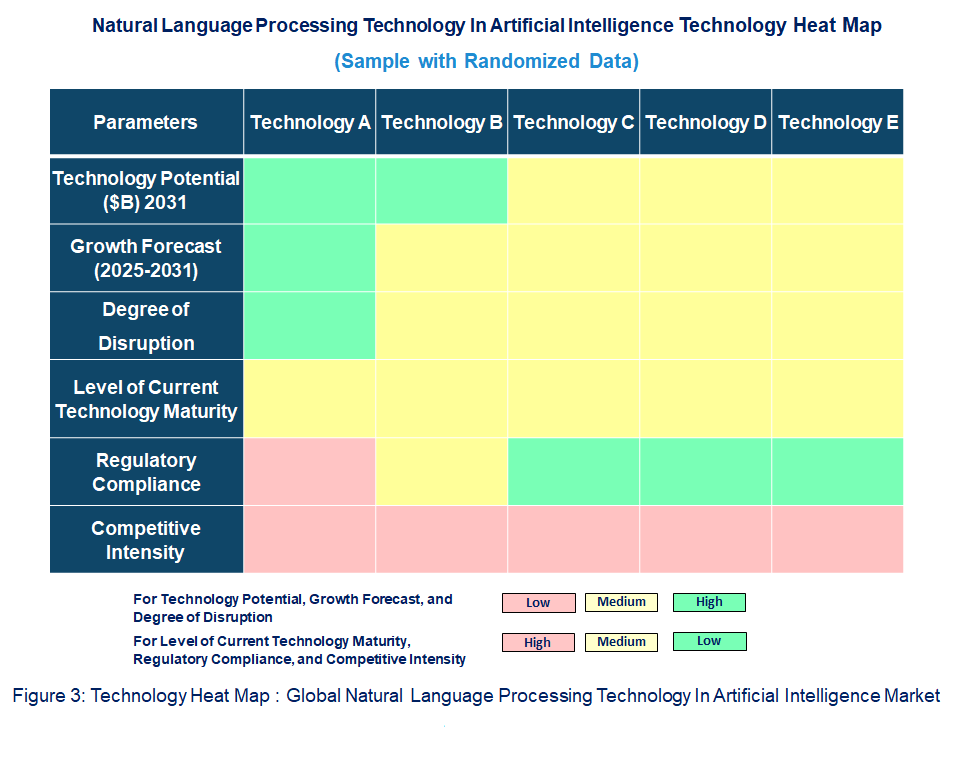
• Technology Potential: The power of NLP technology has been tremendous in revolutionizing how people interact with machines. Whether it is powering virtual assistants, real-time language translation, efficiency, personalization, or accessibility in digital communication, NLP plays a big role. Its applications to data analysis and knowledge extraction make it invaluable for all industries that require large-scale text processing.
• Degree of Disruption: NLP is disrupting traditional language processing approaches by replacing rule-based systems with advanced machine learning models like transformers. This shift enables faster, more accurate understanding and contextual analysis, transforming industries such as customer support, marketing, and research.
• Current Technology Maturity Level: NLP has matured for many applications, including text classification and sentiment analysis. Nevertheless, there are still low-resource languages, domain-specific nuances, and real-time processing requirements.
• Regulatory Compliance: There is a growing trend regarding regulatory compliance with advancements in NLP technology as it relates to data privacy, ethical AI, and bias mitigation. Adherence to these frameworks, such as GDPR, and ethical guidelines is important in gaining trust and ensuring that benefits are equitably applied.
• 3M: 3M has used NLP in health care to develop sophisticated coding and documentation tools that help ease clinical workflows. This benefits patients because it reduces administrative work and allows for more accurate medical recordkeeping.
• Apple: Apple has advanced its virtual assistant, Siri, with sophisticated NLP techniques that allow for better contextual understanding and personalized interactions. Improvements in this regard help users experience better interactions across Apple’s devices.
• AWS: AWS has unveiled some NLP capabilities for its AI services like Amazon Comprehend, to serve the industry-specific text analytics needs of businesses. The tools help businesses derive actionable insights from unstructured data.
• Baidu: Baidu launched advanced language models that were specifically optimized for Chinese NLP tasks, enhancing the quality of search, translation, and conversational AI in Baidu platforms, addressing regional language processing needs.
• Google LLC: Google has developed its transformer-based models, such as BERT and LaMDA, and has incorporated them into search and conversational AI systems. These technologies enhance accuracy and natural interactions across Google services.
• IBM Corporation: IBM’s Watson NLP services now include improved natural language understanding for business solutions, such as customer service and knowledge management, empowering enterprises with advanced automation tools.
• Meta: Meta has led the way in NLP for social media applications, such as more effective moderation, sentiment analysis, and real-time translation features, creating safer, more inclusive online communities.
• Microsoft: Microsoft has incorporated advanced NLP capabilities into Azure Cognitive Services to enhance productivity applications like Microsoft 365 with summarization tools, translation, and even real-time transcription.
• Oracle: Oracle created customized NLP solutions for enterprise applications. By bringing natural language querying to its cloud services, the company was able to advance business analytics and decision-making. Inbenta
• Inbenta specializes in conversational AI by using advanced NLP as a basis to power intelligent chatbots and search engines while providing tailored solutions for customer engagement and support. These developments highlight the continuous innovation in natural language processing (NLP) in artificial intelligence (AI), enabling transformative applications across industries and setting the stage for more intuitive and intelligent AI-driven solutions.
• Growing Demand for Conversational AI: Increased use of virtual assistants, chatbots, and interactive AI systems drives the adoption of NLP technologies to improve customer service, user engagement, and operational efficiency.
• Expanding Multilingual and Low-Resource Language Solutions: Increased globalization has led to a need for NLP solutions for handling multiple languages and catering to low-resource language processing, thereby increasing access to AI technologies across regions.
• Improvements in Machine Learning and Deep Learning Models: Innovations such as transformer-based architectures, BERT, and GPT revolutionized NLP, leading to better language understanding and complex contextual analysis. Key Challenges
• Data Privacy and Ethical Concerns: Regulatory requirements and ethical considerations surrounding data usage and bias mitigation create hurdles for deploying NLP solutions, particularly in sensitive domains like healthcare and finance.
• Computational Complexity and Resource Constraints: Advanced NLP models require vast computational power and energy, meaning the cost and scalability issues are major challenges for businesses in deploying those technologies. The NLP technology market drivers and challenges reflect the dynamic play of innovation and operational difficulties. As drivers like Conversational AI and machine learning breakthroughs come forward, challenges such as data privacy and resource demands must be managed for sustainable growth. The dynamics of these factors give rise to the development of NLP in AI.
• 3M
• Apple
• Aws
• Baidu
• Google LLC
• IBM Corporation
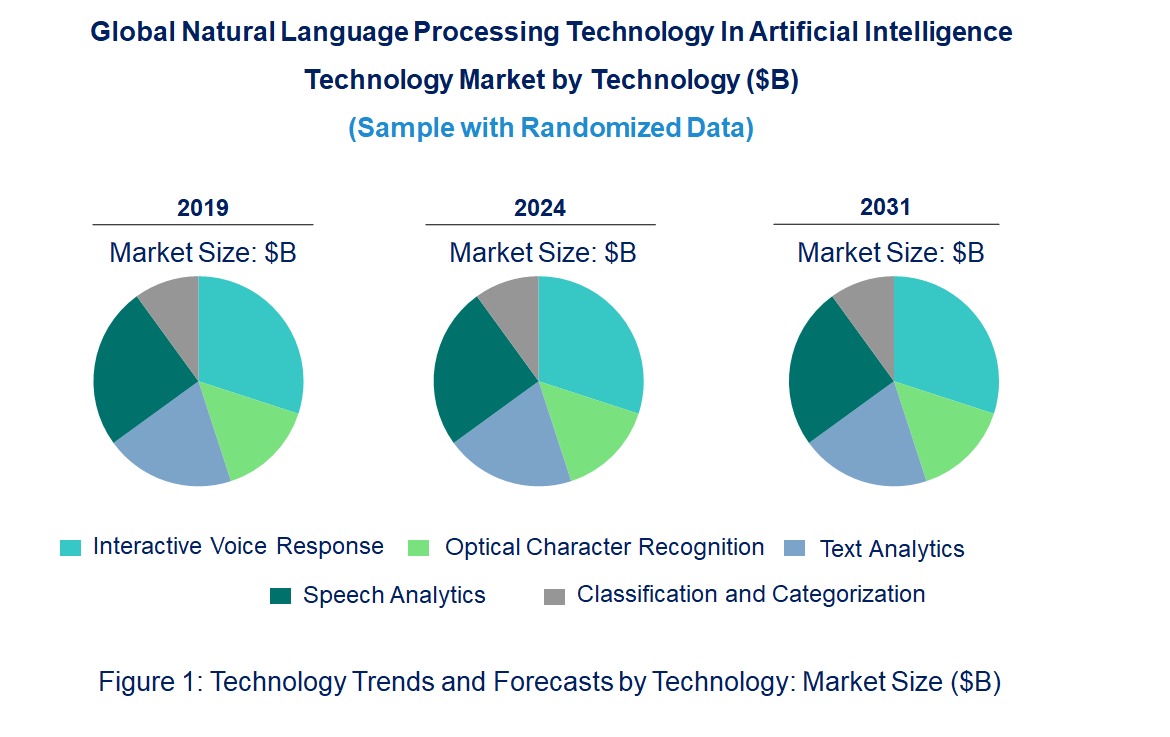
• Technology Readiness: IVR and Speech Analytics are mature technologies that are heavily deployed in customer service and call centers. OCR is also mature with document digitization, health care records, and legal data management. Text Analytics and Classification technologies are rapidly maturing and are increasingly applied to sentiment analysis, content moderation, and fraud detection. Speech Analytics has become an essential tool for monitoring compliance and quality assurance. While most of these technologies are application-ready, advancements in machine learning continue to enhance their accuracy, scalability, and efficiency, broadening their adoption across industries.
• Competitive Intensity and Regulatory Compliance: The natural language processing technology in AI competition level is high for the different types of technologies, such as IVR, OCR, Text Analytics, Speech Analytics, and Classification and Categorization, as they experience increasing demand across sectors, including healthcare, finance, and retail. Companies continue innovating to offer affordable solutions while remaining accurate. There are regulations also, mainly those that concern data privacy. Some of these laws are GDPR and HIPAA, which insist on safe data management. For instance, Speech Analytics solutions need to comply with recording regulations for calls, and OCRs have to ensure secure document processing. Therefore, compliance is highly crucial to maintain trust in such a fast-evolving environment.
• Disruption Potential: Technologies such as IVR, OCR, Text Analytics, Speech Analytics, and Classification and Categorization are those that hold the greatest disruption potential across industries. IVR changes the face of customer service by providing automated, scalable communication. OCR changes the way people process data by converting physical documents into digital formats that can be easily integrated. Text Analytics provides insights from unstructured data, enabling sentiment analysis and trend detection. Speech Analytics enhances the customer experience by analyzing calls in real-time and monitoring compliance. Classification and Categorization help to better manage information, thereby improving workflows and decision-making. All these technologies redefine operational efficiency and user experience in various sectors.
• Interactive Voice Response
• Optical Character Recognition
• Text Analytics
• Speech Analytics
• Classification and Categorization
• Healthcare
• Retail
• High Tech and Telecom
• Banking, Financial Services, and Insurance
• Automotive & Transportation
• Advertising & Media
• Manufacturing
• Others
• North America
• Europe
• Asia Pacific
• The Rest of the World
• Latest Developments and Innovations in the Natural Language Processing Technology In Artificial Intelligence Technologies
• Companies / Ecosystems
• Strategic Opportunities by Technology Type


Choose a license that fits your team. Instant PDF delivery.
Prices exclude taxes. Instant delivery. Custom licensing available on request.
Market Report · May 18, 2026
Market Report · May 18, 2026
Market Report · May 18, 2026
Trusted partner for strategic intelligence and business growth


Receive a complimentary market analysis tailored to your industry. Our analysts will identify key growth opportunities and competitive dynamics specific to your business.

Market size, growth rate, and key trend analysis for your specific sector.

Top competitor positioning and market share analysis.

Strategic recommendations backed by data-driven insights.
Get curated market intelligence and competitive moves straight to your inbox.
By subscribing, you agree to receive our monthly insights. Unsubscribe anytime.
Receive a complimentary market analysis tailored to your industry. Our analysts will identify key growth opportunities and competitive dynamics specific to your business.
Market size, growth rate, and key trend analysis for your specific sector.
Top competitor positioning and market share analysis.
Strategic recommendations backed by data-driven insights.
Get curated market intelligence, emerging trends, and competitive moves straight to your inbox each month.
By subscribing, you agree to receive our monthly insights. Unsubscribe anytime.
We'll send your sample report shortly.