
Market Report · July 22, 2026

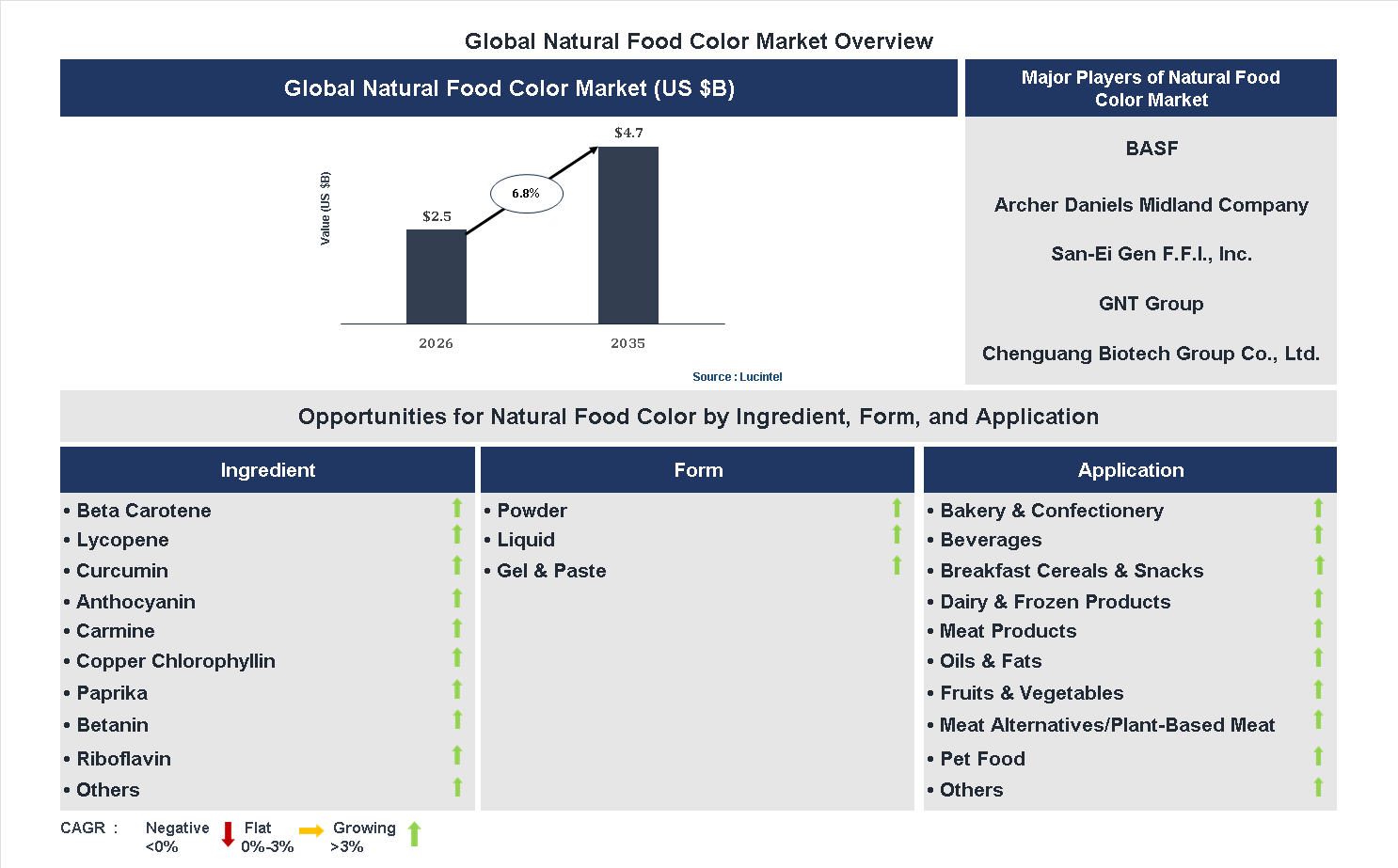
Key data points: The market size in 2035 = $4.5 billion, growth forecast = 6.8% annually for the next 8 years. Scroll below to get more insights. This market report covers trends, opportunities and forecasts in natural food color market to 2035 by ingredient (beta carotene, lycopene, curcumin, anthocyanin, carmine, copper chlorophyllin, paprika, betanin, riboflavin, and others), form (powder, liquid, and gel & paste), application (bakery & confectionery, beverages, breakfast cereals & snacks, dairy & frozen products, meat products, oils & fats, fruits & vegetables, meat alternatives/plant-based meat, pet food, and others), and region (North America, Europe, Asia Pacific, and the Rest of the World)
We'll send your sample report shortly.
• Lucintel forecasts that, within the ingredient category, beta carotene is expected to witness the highest growth over the forecast period.
• Within the application category, beverage is expected to witness the highest growth.
• In terms of region, North America is expected to witness the highest growth over the forecast period. Gain valuable insights for your business decisions with our comprehensive 150+ page report. Sample figures with some insights are shown below.
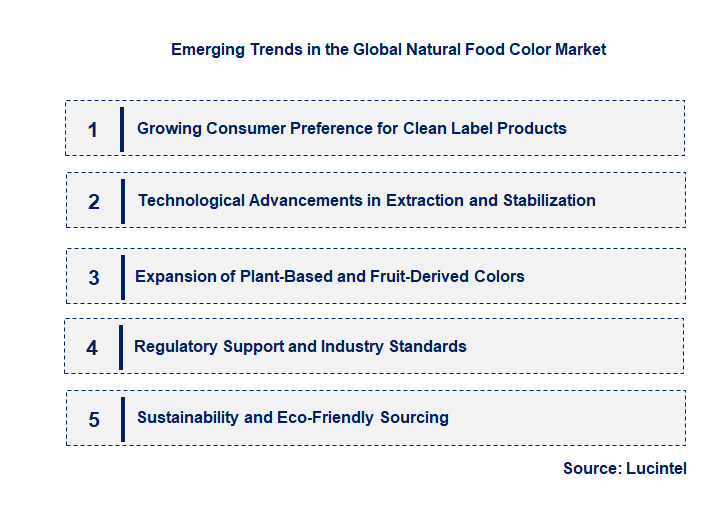
• Growing Consumer Preference for Clean Label Products: Consumers are increasingly seeking transparent, natural ingredients in their food. This trend is driven by health concerns and a desire to avoid artificial additives. As a result, brands are reformulating products with natural colors to meet these expectations, boosting demand for plant-based, non-synthetic options. This shift enhances brand trust and aligns with health-conscious lifestyles, encouraging manufacturers to innovate with natural color sources that are both appealing and safe.
• Technological Advancements in Extraction and Stabilization: Innovations in extraction methods, such as supercritical fluid extraction, are improving the efficiency and purity of natural colors. Additionally, stabilization techniques like microencapsulation extend shelf life and enhance color vibrancy. These technological improvements allow natural colors to match or surpass synthetic counterparts in performance, making them more viable for a wide range of food applications. This progress is crucial for overcoming previous limitations related to stability and intensity, broadening market adoption.
• Expansion of Plant-Based and Fruit-Derived Colors: There is a rising trend toward utilizing diverse plant sources, including fruits, vegetables, and herbs, for natural coloring agents. These sources offer vibrant hues and added nutritional benefits, appealing to health-conscious consumers. The diversification of raw materials also reduces dependency on traditional sources, ensuring supply stability. This trend encourages innovation in sourcing and processing, leading to a broader palette of natural colors that cater to various food products, from beverages to confectionery.
• Regulatory Support and Industry Standards: Governments and regulatory bodies are increasingly endorsing natural ingredients and setting stricter guidelines for food additives. This regulatory environment favors natural colors over synthetic ones, encouraging manufacturers to switch to compliant, safer options. Clear labeling requirements and safety assessments bolster consumer confidence and facilitate market growth. Industry standards are evolving to promote transparency and safety, which in turn accelerates the adoption of natural food colors across global markets.
• Sustainability and Eco-Friendly Sourcing: Sustainability concerns are influencing sourcing practices, with a focus on eco-friendly cultivation and harvesting of natural color ingredients. Companies are adopting sustainable farming methods and reducing environmental impact, aligning with consumer values. This trend also involves utilizing waste streams and by-products for color extraction, promoting circular economy principles. Sustainable sourcing not only enhances brand reputation but also ensures long-term supply stability, making natural colors a more attractive choice for environmentally conscious consumers and manufacturers. These trends are significantly transforming the natural food color market by fostering innovation, enhancing product safety and transparency, and aligning with consumer values of health and sustainability. As these developments continue, the market is poised for sustained growth, with natural colors becoming the preferred choice across diverse food and beverage sectors.
• Innovation in Plant-Based Color Sources: Development of new botanical extracts such as spirulina, beetroot, and turmeric enhances color variety and stability, meeting consumer demand for clean-label products. These innovations improve product appeal and nutritional value, expanding applications across food and beverage sectors. The increased availability of natural, vibrant colors supports brand differentiation and aligns with health-conscious trends, fostering market growth and consumer trust.
• Advances in Extraction Technologies: Modern extraction methods like supercritical fluid and cold-press techniques improve yield, purity, and color stability of natural dyes. These technological improvements reduce costs and environmental impact, making natural colors more accessible and sustainable. Enhanced extraction processes enable manufacturers to produce high-quality, consistent products, boosting consumer confidence and expanding market reach.
• Regulatory Support and Certification: Governments and industry bodies are establishing clearer standards and certifications for natural food colors, ensuring safety and transparency. This regulatory framework encourages manufacturers to adopt natural ingredients, boosting consumer confidence and market acceptance. Certification labels like organic or non-GMO further differentiate products, fostering trust and driving sales in health-conscious markets.
• Growing Consumer Preference for Clean Labels: Increasing awareness of food ingredients prompts consumers to seek transparent, natural options. This demand influences brands to reformulate products with natural colors, leading to a shift away from synthetic dyes. The trend enhances product credibility, supports premium pricing, and encourages innovation in natural color formulations, ultimately expanding market size and consumer loyalty.
• Expansion into New Markets and Applications: The rising adoption of natural colors in confectionery, dairy, beverages, and snacks opens new revenue streams. Emerging markets show significant growth potential due to rising disposable incomes and health awareness. Diversification into these sectors accelerates market expansion, encourages R&D investments, and fosters global competitiveness for natural food color producers. The overall impact of these developments is a robust, expanding market driven by consumer health concerns, technological progress, and regulatory clarity. These factors collectively enhance product quality, safety, and variety, positioning natural food colors as a preferred choice across diverse food and beverage segments. The market is poised for sustained growth, innovation, and increased consumer trust.
• Growing Consumer Preference for Clean-Label Products: The shift towards natural food colors is driven by consumers seeking transparency and health benefits. Increasing awareness of synthetic dye health risks encourages brands to adopt plant-based alternatives. This trend boosts demand for natural colors derived from fruits, vegetables, and spices, creating opportunities for innovative product development. Companies investing in R&D to improve color stability and vibrancy can capitalize on this shift, expanding their market share in natural food coloring.
• Advancements in Extraction and Processing Technologies: Innovative extraction methods such as supercritical fluid extraction and cold-pressing enhance the quality and yield of natural colors. These technologies improve color stability, brightness, and shelf life, making natural dyes more viable for diverse food applications. Investment in such advanced processing techniques allows manufacturers to meet industry standards, reduce costs, and offer high-quality, consistent products, thereby strengthening their competitive edge in the market.
• Expansion of Plant-Based and Organic Food Segments: The rising popularity of plant-based and organic foods drives demand for natural colors that align with clean-label and non-GMO standards. Food manufacturers are increasingly incorporating natural dyes to appeal to health-conscious consumers. This trend opens avenues for sourcing organic-certified ingredients and developing tailored color solutions, fostering growth in premium segments. The integration of natural colors in these products enhances brand value and consumer trust.
• Regulatory Support and Industry Standards: Governments and regulatory bodies are implementing stricter guidelines on food additives, favoring natural over synthetic colors. Certification programs and labeling requirements promote transparency and consumer confidence. Compliance with these standards encourages manufacturers to switch to natural dyes, fostering innovation and market expansion. This regulatory environment creates a competitive advantage for companies that proactively adopt natural coloring solutions, ensuring market access and consumer acceptance.
• Rising Demand in Beverages and Confectionery Applications: The food and beverage industry increasingly uses natural colors to meet consumer preferences for visually appealing, health-oriented products. Beverages, candies, and baked goods benefit from vibrant, stable natural dyes. The demand for colorful, functional, and clean-label products in these segments offers significant growth opportunities. Companies investing in versatile, stable natural color formulations can capture a larger share of the expanding market, catering to evolving consumer aesthetics and health trends. The overall impact of these opportunities is a robust growth trajectory for the natural food color market, driven by consumer preferences, technological innovations, regulatory support, and expanding application areas. Market players who strategically leverage these factors can enhance their competitiveness, foster innovation, and meet the increasing demand for safe, natural, and visually appealing food products worldwide.
• Increasing Consumer Preference for Natural Products: Consumers are shifting towards healthier lifestyles, demanding natural and organic food ingredients. This trend is driven by rising awareness of the health risks associated with artificial colors, leading to increased demand for natural food colors. Manufacturers are responding by reformulating products with natural alternatives, which boosts market growth. Additionally, the perception of natural colors as safer and more environmentally friendly enhances their appeal, encouraging food and beverage companies to adopt these ingredients to meet consumer expectations and gain a competitive advantage.
• Technological Advancements in Extraction and Stabilization: Innovations in extraction techniques, such as supercritical fluid extraction and enzymatic processes, have improved the efficiency and yield of natural color production. These advancements enable the extraction of vibrant, stable, and long-lasting colors from natural sources like fruits, vegetables, and spices. Improved stabilization methods, including encapsulation and emulsification, extend shelf life and maintain color integrity during processing and storage. These technological improvements reduce costs and enhance product quality, making natural colors more viable for widespread use across various food applications.
• Growing Demand from the Food and Beverage Industry: The food and beverage sector is increasingly incorporating natural colors to meet consumer demand for clean-label products. This includes applications in confectionery, beverages, dairy, bakery, and snacks. The desire for visually appealing products that are perceived as healthier is driving manufacturers to switch from synthetic to natural colors. The expansion of product portfolios with vibrant, natural hues helps brands differentiate themselves in competitive markets, thereby fueling the growth of the natural food color industry.
• Regulatory Support and Government Initiatives: Governments worldwide are implementing stricter regulations to limit or ban the use of artificial food colors due to health concerns. Regulatory agencies such as the FDA and EFSA are promoting the use of natural ingredients through guidelines and approvals. These policies encourage manufacturers to adopt natural food colors to comply with legal standards, thereby expanding market opportunities. Additionally, certifications and labeling requirements for organic and natural products further incentivize the use of natural colors, fostering market growth.
• Rising Investment in R&D and Product Innovation: Increased investment in research and development by companies aims to discover new natural color sources and improve extraction methods. Innovation in formulations, such as multi-color blends and functional colors with added health benefits, attracts consumer interest. R&D efforts also focus on enhancing color stability, solubility, and compatibility with various food matrices. These innovations enable the development of novel products, expand application scopes, and meet evolving consumer preferences, thereby propelling market growth. The challenges in the natural food color market are:
• Sourcing and Supply Chain Constraints: Natural colors are derived from specific plant sources, which can be seasonal, geographically limited, and susceptible to environmental factors. This variability affects the consistency and availability of raw materials, leading to supply chain disruptions and increased costs. Additionally, sourcing sustainable and organic raw materials poses challenges related to land use, biodiversity, and ethical harvesting practices. These constraints can hinder large-scale production and increase prices, impacting the competitiveness of natural food colors.
• High Production Costs and Price Volatility: The extraction and stabilization processes for natural colors are often more expensive than synthetic alternatives due to complex procedures and raw material costs. Fluctuations in raw material prices, driven by seasonal and environmental factors, contribute to price volatility. This economic challenge makes it difficult for manufacturers to offer competitive pricing, potentially limiting adoption among cost-sensitive food producers. Consequently, high costs can restrict market growth, especially in price-competitive segments.
• Regulatory and Labeling Challenges: While regulations favor natural ingredients, they also impose strict standards for safety, purity, and labeling. Compliance with diverse international standards can be complex and costly, especially for small and medium-sized enterprises. Mislabeling or contamination issues can lead to legal penalties and damage brand reputation. Additionally, the lack of standardized definitions for natural colors across regions complicates marketing and consumer trust, posing ongoing regulatory challenges that can slow market expansion. The natural food color market is driven by increasing consumer demand for natural and healthy ingredients, technological innovations, supportive regulations, and ongoing product development. However, sourcing difficulties, high costs, and regulatory complexities present significant hurdles. These factors collectively influence market dynamics, requiring stakeholders to innovate and adapt to sustain growth. Overall, the markets future hinges on balancing technological progress and regulatory compliance with sustainable sourcing and cost management, shaping a promising yet challenging landscape.
• BASF
• Archer Daniels Midland Company
• San-Ei Gen F.F.I., Inc.
• GNT Group
• Chenguang Biotech Group Co., Ltd.
• Oterra A/S
• Allied Biotech Corporation
• Givaudan Sense Colour
• Döhler GmbH
• Sensient Technologies Corporation
• Beta Carotene
• Lycopene
• Curcumin
• Anthocyanin
• Carmine
• Copper Chlorophyllin
• Paprika
• Betanin
• Riboflavin
• Others
• Powder
• Liquid
• Gel & Paste
• Bakery & Confectionery
• Beverages
• Breakfast Cereals & Snacks
• Dairy & Frozen Products
• Meat Products
• Oils & Fats
• Fruits & Vegetables
• Meat Alternatives/Plant-Based Meat
• Pet Food
• Others
• North America
• Europe
• Asia Pacific
• The Rest of the World
• United States: The U.S. market has seen a surge in demand for organic and clean-label food colors, driven by health-conscious consumers. Major food companies are investing in R&D to develop plant-based and allergen-free colorants. Regulatory agencies like the FDA are tightening standards, encouraging transparency and safety. Innovative products such as beetroot, turmeric, and spirulina-based colors are gaining popularity. The market is also witnessing increased adoption in the beverage and confectionery sectors, with brands emphasizing natural ingredients. E-commerce platforms are expanding access to a variety of natural color options, boosting market growth.
• China: China is experiencing rapid growth in the natural food color market, fueled by rising consumer awareness and a shift towards healthier eating habits. Local manufacturers are investing in advanced extraction and stabilization technologies to improve product quality and shelf life. The government’s support for organic and green food initiatives is encouraging industry expansion. Traditional ingredients like carotenoids from carrots and tomatoes are being increasingly utilized. The market is also benefiting from exports of natural colorants to international markets. Additionally, Chinese companies are focusing on innovative formulations to meet the demand for vibrant, stable, and cost-effective natural colors.
• Germany: Germany’s natural food color market is characterized by a strong emphasis on sustainability and organic certification. Consumers prefer products with transparent sourcing and eco-friendly production processes. The country’s strict regulations on food additives are driving innovation in natural alternatives. German companies are investing in research to develop stable, vibrant, and versatile natural colors suitable for various food applications. The demand for plant-based and allergen-free colors is rising, especially in organic and vegan product segments. Collaboration with European research institutions is fostering technological advancements, positioning Germany as a leader in sustainable natural food coloring solutions.
• India: India’s market for natural food colors is expanding rapidly, driven by increasing consumer preference for traditional and herbal ingredients. The use of natural colorants derived from turmeric, saffron, and beetroot is prevalent in local cuisine and confectionery. The government’s focus on promoting organic farming and herbal products is supporting industry growth. Small and medium enterprises are innovating with indigenous ingredients to develop cost-effective, vibrant, and stable natural colors. The rising popularity of ayurvedic and herbal products is also boosting demand. Export opportunities are emerging as Indian companies meet international standards for natural food colorants.
• Japan: Japan’s natural food color market is characterized by a focus on high-quality, safe, and innovative products. Consumers prefer colors derived from traditional ingredients like sakura, matcha, and yuzu. The market is driven by a strong trend toward health and wellness, with a preference for minimally processed, natural ingredients. Japanese companies are investing in advanced extraction techniques to enhance color stability and brightness. The demand for natural colors in confectionery, beverages, and functional foods is increasing. Regulatory standards are strict, encouraging the development of safe, natural, and sustainable coloring solutions. Innovation and tradition coexist, shaping Japan’s unique market landscape.


• BASF
• Archer Daniels Midland Company
• San-Ei Gen F.F.I., Inc.
• GNT Group
• Chenguang Biotech Group Co., Ltd.
• Oterra A/S
• Allied Biotech Corporation
• Givaudan Sense Colour
• Döhler GmbH
• Sensient Technologies Corporation Q6. Which natural food color market segment will be the largest in future? Answer: Lucintel forecasts that, within the ingredient category, beta carotene is expected to witness the highest growth over the forecast period. Q7. In natural food color market, which region is expected to be the largest in next 5 years? Answer: In terms of region, North America is expected to witness the highest growth over the forecast period. Q8. Do we receive customization in this report? Answer: Yes, Lucintel provides 10% customization without any additional cost.


Choose a license that fits your team. Instant PDF delivery.
Prices exclude taxes. Instant delivery. Custom licensing available on request.
Market Report · July 22, 2026
Market Report · July 22, 2026
Market Report · July 22, 2026
Trusted partner for strategic intelligence and business growth


Receive a complimentary market analysis tailored to your industry. Our analysts will identify key growth opportunities and competitive dynamics specific to your business.

Market size, growth rate, and key trend analysis for your specific sector.

Top competitor positioning and market share analysis.

Strategic recommendations backed by data-driven insights.
Get curated market intelligence and competitive moves straight to your inbox.
By subscribing, you agree to receive our monthly insights. Unsubscribe anytime.
Receive a complimentary market analysis tailored to your industry. Our analysts will identify key growth opportunities and competitive dynamics specific to your business.
Market size, growth rate, and key trend analysis for your specific sector.
Top competitor positioning and market share analysis.
Strategic recommendations backed by data-driven insights.
Get curated market intelligence, emerging trends, and competitive moves straight to your inbox each month.
By subscribing, you agree to receive our monthly insights. Unsubscribe anytime.
We'll send your sample report shortly.